Author Archives: socialinform

Photos: Women polo competition in Tehran, Iran

The Shirin Cup, a four team women polo tournament, is taking place on May 14 and May 21 at the Qasr-e Firoozeh Complex in Tehran. The referee of the competition is Tomás Guillermo Asher, coach and international referee from Argentina.

On Thursday, Khargoosh Darreh defeated Norooz Abad 3 to 2 and Qasr-e Firoozeh lost against Kanoon 1 to 5. The final round, on May 21, will have Kanoon facing Khargoosh Darreh for the first place of the tournament, while Qasr-e Firoozeh and Norooz Abad will be competing for the third place.

Another tournament, the Adab Polo Cup, was organized in March 2014, between Qasr-e Firoozeh and Norooz Abad, to enhance the handicap of novice women polo players. Qasr-e Firoozeh achieved first place winning 5 to 2.

Sources: Mehr News Agency | Photos 1, Mehr News Agency | Photos 2, Polo Federation of Iran | News 2015.05.17, Polo Federation of Iran | News 2014.03

Iran’s Alborz Province: Chamran’s Park Flower Garden in Karaj

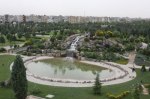
The park, located in the city of Karaj, is around 8 hectares and features one of the most beautiful tulips. Although tulips last only 10 to 15 days you can see flowerbeds all over the place, since it has perennial and also seasonal flowers. There is also a 2500 square meter artificial pond and a lawn maze. The pictures below are from this year’s Tulip Festival at Chamran Park:

Karaj is the capital of Karaj County, Alborz Province, is situated 20 kilometers west of Tehran, at the foothills of the Alborz mountains. Its population is 1.61 million (2011), making it the fourth-largest city in Iran.

Among its cultural heritage are the stony fire-temple of Takht-e-Rostam (Parthians and Sassanian eras), as well as the Soleimanieh Palace (currently part of the Agriculture Faculty of University of Tehran), Shah Abbasi Caravanserai, a pre-Islamic bridge and the Mausoleum of Shahzadeh Soleiman.

Karaj has traditionally been considered a tourism area particularly for the people from Tehran since the Alborz Mountains provide beautiful landscapes to this region. The city is also the starting point for a drive along the Chalous road that connects through the Alborz mountains to the city of Chalous at the Caspian Sea. It is one of the most beautiful roads of Iran, though slippery during winter.

A video by Press TV during this year’s Tulip Festival:

https://www.youtube.com/watch?v=-J-RpWhN-LY

Sources: Mehr News Agency | Photos | Tulip Festival 1, Mehr News Agency | Photos | Tulip Festival 2, Wikipedia | Karaj, Wikivoyage | Karaj, nbn.ir

The Fish & I: Awarded Iranian short film by Babak Habibifar

The Fish and I is an Iranian short film directed, written and acted by Babak Habibifar that recounts the story of a blind man trying to save his fish. The film, screened at the 2015 Clermont-Ferrand Film Festival (Young Audience Program), has won several international honors:

  • Young Jurors Prize; 20min|max Internationales Short Film Festival Ingolstadt, Germany (June, 2015)
  • Special Audience Award; 12th CLAM International Film Festival of Solidarity in Navarcles, Spain (May, 2015)
  • Best Short Film; 6th Skepto International Film Festival in Cagliari, Italy (April, 2015)
  • Honorable Mention; 11th Rengo International Film Festival, Rengo, Chile (February 2015)
  • Special Jury Mention, Young Jury Prize for the Best International Short Film and Mediterranean Diet Award (a cash prize dedicated by a Spanish Institution); 16th International Short Film Festival “City of Soria” in Soria, Spain (November, 2014)
  • Jury Grand Prize and Audience Award; Short Short Story Film Festival in Providence, USA (November, 2014)
  • Most Original Film; Uhvati Film Festival in Novi Sad, Serbia (September, 2014)

About Babak Habibifar
Babak Habibifar is an Iranian writer and director. His short fictions include The Fish and I (2014), After seventeen hours (2013), Somewhere up there (2013) and After fifteen years (also known as Crossword puzzle, 2012). This last film was highlighted by the Jury at the 2013 Strawberry Shorts Film Festival in Cambridge, England. Besides directing, Habibifar has worked as an actor and is also a gifted photographer, having won several photography awards in national competitions.

Sources: Mehr News Agency | News, Art Film Festival | Portfolio | Babak HabibifarGreen Film Festival in Seoul | The Fish and I, NacióDigital.cat | CLAM Festival, Skepto International Film Festival 2015 | Awards and Special Mentions, Rengo International Film Festival, Heraldo.es | Noticias, Press TV | News, Merging Arts Productions | SSS Film Festival, Uhvati Film Festival | Awards, The House of Films | News, 20min|max Film Festival, Odense Film Festival (OFF15), indiehometv.festhome.com (all awards and screenings)

Photos: Graduation ceremony of Sharif University of Technology in Tehran, Iran

The graduation ceremony took place this month at Tehran’s Milad Tower.

Sharif University of Technology (SUT) is a public research university in Tehran, Iran, known traditionally to be first choice of top ranked Iranian high school and university students in engineering and physical sciences.

Undergraduate admission to Sharif is limited to the top 1 percent of students who pass the national entrance examination.

The university was founded in 1966 with the name Aryamehr Technical University by Dr. Mohammad Ali Mojtahedi. At that time, there were 54 faculty members and a total of 412 students who were selected by national examination. Also only four departments were established: Electrical, Metallurgical, Mechanical, and Chemical Engineering. Following the 1979 revolution the university was named after Majid Sharif Vaghefi, a former student who was killed in 1975.

Today the university has grown to an elite school with over 9000 students, 700 of whom are studying for a doctorate, and over 500 faculty members in 15 main departments. Funding for Sharif University is provided by the government and through private funding. The main campus of the university is in Tehran and it has also an International Campus on Kish Island.

Sharif University is known for its large number of alumni who join the academic world. Maryam Mirzakhani, first woman to win the Fields medal (the ‘Nobel Prize’ of mathematics), is an alumni of Sharif University. Other notable alumni from SUT: Wikipedia | SUT | Notable alumni

Further read: The other Iran | Graduation ceremony at Amirkabir University of Technology

Sources: Tasnim News Agency | Photos, Sharif University of Technology, Wikipedia | Sharif University of Technology

Photos: Iran’s rowing team training at Azadi’s Sport Complex Lake

On another note, tests were held today to determine the best members of the kayak youth national team. After three competition rounds Mohammad Javad finished first with 37 points, second was Alireza Farmandeh (30pts) and third Mohammad Golpirah (29pts).

Below photos of Iran’s national rowing team training training at Azadi’s Sport Complex Lake:

About the Azadi Sport Complex
The Azadi Sport Complex (formerly Aryamehr Sport Complex) was designed by Architect Abdol-Aziz Farmanfarmaian and constructed by Arme Construction Company for the 7th Asian Games in 1974 with international criteria. It is located on a 450 hectares areal in West Tehran.

It is Iran’s national sports complex comprising following facilities: Azadi Stadium, Velodrome, Indoor Stadium, Swimming Pool Hall, Five Halls Complex (for indoor sports like Basketball, Volleyball, Wrestling…), Shooting Complex, Artificial Lake, Driving Court, Tennis Courts, Equestrian Court, Karting Court, Baseball Court, Azadi Football Training Pitches and the Olympic Hotel Tehran.

Sources:  IRNA | Photos, Wikipedia | Azadi Sport Complex, Wikipedia | Azadi Stadium | History, ICF (Iran Canoeing, Rowing & Sailing Federation) | News

Safi Yazdanian: Iranian film director

Safi Yazdanian, born 1960 in Tehran, is an Iranian film director, writer, translator and film critic. He graduated in Theater and Cinema Studies in 1988, starting his career as a reviewer and columnist in Iranian magazines.

In 1995 he ventured into filmmaking. His earliest films, documentaries and shorts, include:
In search of Scheherazade (Dar jostojouy-e shahrzad, 2002) with Leila Hatami as narrator
My boats (Ghayegh-ha-ye man, 35mm, 2005), with Ali Mosaffa as Farhad, was Yazdanian’s first short fiction. It won the Best Film Award at Tehran’s International Short Film Festival
Entracte, 2009.

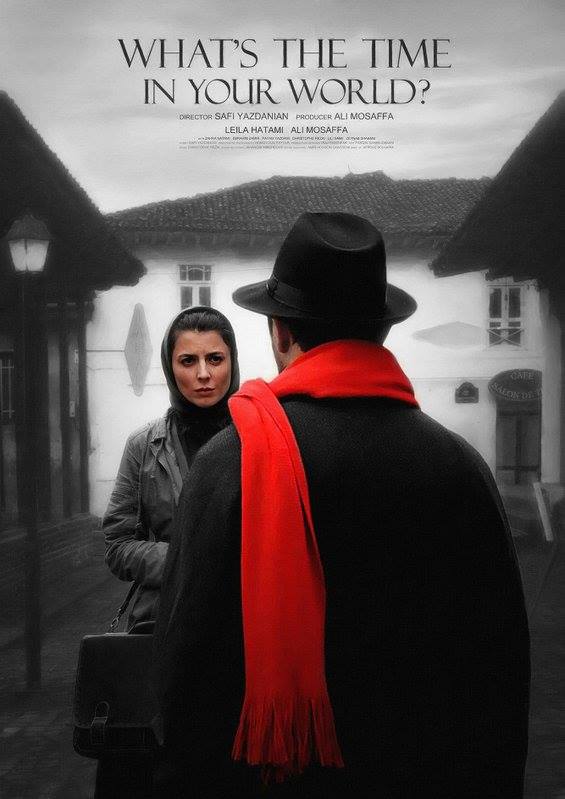
Yazdanian’s feature directorial debut was 2014 with What’s the time in your world? (Dar donya-ye to saát chand ast?). The movie premiered at the 19th Busan International Film Festival (BIFF 2014) and was honored with the FIPRESCI (Federation Internationale de la Press Cinematographique) Award.

Besides directing he also edited Nahid Reazaei’s documentaries The water and Atefeh (Ab va Atefeh, 2001) and Dream of silk (Khab-e abrisham, 2003) and wrote together with Ali Mosaffa Mosaffa’s first feature film Portrait of a lady far away (Sima-ye zani dar doordast).

Sources: IRNA | News, FIPRESCI | People | Safi Yazdanian, Festival Scope | Director | Yazdanian, Safi, International Documentary Film Festival Amsterdam | Industry, Clermont International Short Film Festival | Safi Yazdanian , Cinéma du Réel | Archives | Ab va Atefeh, Cinéma du Réel | Archives | Khab-e abrisham, IMDb | Portrait of a Lady Far Away, Guest List 2014 Busan International Film Festival (PDF), BIFF | History | 19th (2014) | Safi Yazdanian

Photos: BMX Competition at Ghaem Park in Tehran, Iran

The 1st official BMX Competitions at Tehran’s Qaem (Ghaem) Park was held on May 8th.

Qaem Park is located in Tehran’s 18th district covering an area of 50 hectares. It has a children’s playground, an artificial pond and hosts various types of trees (orange, elm, cedar, maple and olive trees, mulberries, acacia, pines, etc.)

Sources: Mehr News Agency | Photos, Tehran Municipality | Parks, Tehran Tochal International Trade | Projects: Ghaem Park

Photo Series: Spring in Iran – Kaleybar, East Azerbaijan

Kaleybar is a city of 9.030 inhabitants (2006) in East Azerbaijan Province, Iran. This county produces beautiful pomegranates, excellent figs and grapes that are dried on fires (because the sun is always obscured by thick clouds). In recent year the city has become a tourist destination thanks to its proximity to Babak Castle.

History
Kaleybar was the stronghold of Babak Khorramdin who in 816 AD revolted against the Arabs. Babak’s resistance was ended in 836 when he was defeated by the Iranian General Afshin. This events got the town into the reports of early Islamic historians.

Language
The spoken language in Kaleybar is the Azeri dialect of Turkish. The name Kaleybar could have Tati origins, meaning a town built on rocks. The Kaleybar region with mountainous terrain, shepherding and cultivation of hillside possess the isolating features for the development of a sophisticated whistled language. The majority of males are able, and perhaps addicted, to masterfully mimic the melodic sounds of musical instruments using fingerless whistle. Melodic whistling, indeed, appears to be a private version of the Ashug music for personal satisfaction.

Ashugh music
The mountainous region of Qaradagh, due to its remoteness and inaccessibility, was a guardian of Ashugh music. This frequent allusions of this music to mountains, with the intention of arousing an emotional state with a tone of mild melancholy, is consistent with the geography of Kaleybar.

Aşıq Hoseyn Javan, born in Oti Kandi near Kaleybar, is a legendary Ashik. Hoseyn Javan’s music emphasizes on realism and beauties of real life in line with the mainstream world view of Arasbaran culture.

Surroundings
The locals cherish the landscape of their town mingled with the vivid yellow blossoming zoghal (cornelian cherry) trees in early spring. The berries will be sun-dried on flat roof tops and sold to the market as an ingredient of ash reshteh. Unfortunately, the local version of this thick soup is not offered in restaurants. In recent years, the regional government has organized zoghal festivals as a means of promoting tourism.

The relatively well preserved Babak Castle at an altitude of 2300m is located some 3km away from Kaleybar. This Sassanid era fortress is named after the ninth century Iranian resistance leader, Babak Khorramdin, who resisted Arab armies until year 839.

The mountain ranges south-west of Kaleybar are still used as summer camp of pastoralists belonging to Arasbaran Tribes. This provides an opportunity for observing the relaxed idyllic life style of bygone times. They generally welcome visitors as long as their cultures and mode of life is not ridiculed. The visit should be on sunny days when the shepherd dogs feel lethargic.

Further links:

  1. The other Iran | Castles in Iran since pre-Islamic times
  2. The other Iran | Photo Series: Spring in Iran – Arasbaran, East Azerbaijan Province

Sources: Mehr News Agency | Photos, Wikipedia | Kaleybar

Iran’s Tehran Province: Chitgar Lake (photo gallery)

Chitgar Lake is an (artificial) recreational lake located in the north of Chitgar Park, north-west of Tehran City, Iran. Also known as the Lake of the Martyrs of the Persian Gulf, this complex has a total area of about 250 hectares; 130 hectares across the lake and 120 hectares on its coastal zone and resorts.

About 80% of the lake water comes from the Kan Creek. The remaining 20% comes from central areas and surface runoffs of the district.

History
Back in 1968 it was planned to construct a lake in western Tehran but due to technical and budgetary constraints the construction of the lake remained dormant for many years. From 2003 to 2010 were the uncertainties of the plan reviewed and operations of the lake area started in September 2010. The operations of the coastal zones started in June of 2012.

Interesting locations near Chitgar Lake
Chitgar Forest Park , Letmal-e Kan Forest Park, Eram Park, Chahar Bagh, the Azadi Sport Complex, Chitgar Equestrian Complex, Alborz waterfall (Abshar-e Alborz) and Kan Creek

Sources: Wikipedia | Chitgar Lake, Tehran Picture Agency | Chitgar Lake (photos by E. Rafati), tishineh.com | Tehran | Persian Gulf Martyrs Lake (Chitgar), ISNA | Photos 1 (by B. Ghasemi), ISNA | Photos 2 (by B. Ghasemi), Farhang News | Persian Gulf Martyrs Lake

Photos: The 28th International Book Fair kicked off in Tehran!

The event started on Wednesday May 6, in a 120,000 square meter venue at Tehran’s Grand Mosalla, and will continue until May 16, 2015.

Over 2800 publishers from Iran and 65 other countries have presented their latest publications at the fair. 300,000 Iranian books and 160,000 non-Iranian books were presented this year. The foreign publishers substantially offer their materials in English or Arabic however titles in French, German, Chinese, Korean or Japanese are also available.

Millions of visitors inspect the fair every year, including thousands of university students, scholars and families. It is currently the most significant cultural event in Iran as well as one of the most significant events of its kind in Asia and the Middle East. Heads of international book fairs from Oman, this year’s special guest, Paris, Bologna, Moscow, and other places are attending the 28th edition of TIBF.

Hundreds of cultural projects are carried out during the event as sidelines activities, including book review sessions, face-to-face meetings with Iranian authors, lecture sessions, and writing workshops.

Monday May 11, 2015 has been designated as Day of Africa  at the 28th TIBF. To mark the day, African exhibitors will hold an array of cultural programs. As part of the programs, a panel discussion will be staged in the TIBF section of Men of Letters’ House on existing cultural exchanges between Iran and African nations, sponsored by friendship associations established among Iran and a number of African nations, namely Nigeria, Tunisia, Uganda, Senegal, Ivory Coast and Comoros.

The works of illustrators participating at the 52nd Bologna International Children Book Fair will be displayed in an exhibition titled “Tehran-Bologna 2015”. According to IBNA (Iran’s Book News Agency), the illustrations which participated in the latest Bologna Children Book Fair as well as the illustrations by Roger Mellow, the winner of 2014 Hans Christian Anderson Award, will be showcased. Moreover, the works of the Iranian illustrators whose works have participated in the editions of Bologna Fair during the last 10 years are going to be put on public display in this event.

Tehran Metro and the public bus service boosted their cooperation during the 28th TIBF to facilitate the transportation of the visitors. Extra trains are being used and the arrival times of the trains is also reduced to 5 minutes at the weekends. The subway is deploying its maximum manpower particularly at the Beheshti and Mosalla stations, said Mohsen Nayebi, Head of Tehran urban and suburban Railway Operation Company. Public buses, dedicated particularly to transportation of the Book Fair visitors, are plying between the venue and the city’s main squares.

Sources: TIBF on Instagram, TIBF Official Site | News 1, TIBF Official Site | News 2, Tasnim News Agency| Tehran International Book Fair, Press TV | Tehran International Book Fair, irib.ir | Photogalleries, Tehran Municipality | News 1, Tehran Municipality | News 2,Expo Road | Tehran International Book Fair, Mehr News Agency | Photos by H. Razaqnejad , Tasnim News | Photos by M. Hassanzadeh, IRNA | Photos 1IRNA | Photos 2, ISNA | Photos by A. Khosroshahi

3rd International Bayan Programming Contest in Tehran, Iran

A total of 10,266 computer programmers from 103 countries participated in the competitions hosted by Bayan knowledge-based company.

After a qualification round held online during October 9-12, 2014 and an elimination round that took place online on October 19, sixty contestants from the top 20 countries advanced to the finals.

The finals took place in Tehran on May 1st, 2014. Evgenii Kapun from Russia, Ali Haghani from Iran and Nikola Djokic from Switzerland stood first to third respectively. Full scoreboard here: contest.bayan.ir | Final scoreboard

A total of 4,910 contestants from 54 countries participated in the contest during 2012-13.

About the contest
Talented programmers compete in solving problems inspired by real-world scenarios. Contestants are free to choose their programming language, which is not limited because of the output-only nature of problems. All accommodation expenses are covered by the company, while the flight expenses of the top ten participants will be met by the organizers.

About Bayan
Bayan is a privately held Information Technology and consulting company specializing in large-scale web applications. Bayan has developed many products and services since its establishment, including Blog.ir (hosted blog service), Hod.ir (web-mail service), BayanBox.ir (file hosting service), Sana (smart cloud storage system) and Salam.ir (meta search engine, focusing on retrieving relevant results for Persian search queries).
Awards: Best Iranian Software Company, Outstanding Iranian Brand in Information Technology, Organizational Excellency Award

Sources: Press TV, Iran Daily, Bayan | Contest, bayan.blog.ir, codeforces.com | Egor, codeforces.com | BYN, ISNA | Photos

Video: Awarded Iranian American Chef Ariana Bundy’s beautiful introduction to Persian cuisine on TV at Nat Geo People on May 8th

Iranian American Chef Ariana Bundy TV Show in NAT GEO People Ariana's Persian Kitchen 2Ariana Bundy, an award winning Iranian-American chef and cookbook author of ‘Pomegranates & Roses’, visits the vast and fascinating country of Iran to re-discover her heritage. From the lush green mountains of the Caspian sea, to the golden deserts of Yazd, Ariana eats her way through Persian delicacies in Bazaars, pastry shops, restaurants, and people’s homes.

Cooking alongside local women in palatial homes, countryside and in villages. She meets chefs, bazaar traders, farmers, food bloggers and home cooks and recreates the recipes she picks up along the way in her home in Dubai, by using common ingredients and short cuts to create exotic feasts.

About Ariana Bundy
TV Chef and cookbook author Ariana Bundy was brought up in New York, London, Switzerland and Paris. She inherited her love of food and cooking from her grandparents – who grew cherries, plums, apricots, apples, wheat and barley, bred sheep and goats for dairy, and had beautiful vineyards producing prized grapes – and from her father, who owned the first fine-dining French restaurant in Iran and later in Beverly Hills.

Ariana was Head Pastry Chef for the Mondrian Hotel in LA. Graduate of Le Cordon Bleu and Le Notre in Paris, she trained at Fauchon Patisserie and attended the European Business School in London. She has cooked for celebrities such as Tom Hanks, Nicole Kidman, President Clinton, Brad Pitt and Madonna to name a few.


Sources: Payvand News of Iran, Tehran Times

Photo gallery: Alvares Ski Resort in Iran’s Ardabil Province

Iran Sareyn Sarein MapAlvares is a ski resort in Iran’s northern province of Ardabil. It is the second standard ski resort in Iran and is situated in the village of Alvares which is located 24 kilometers away from the city of Sareyn.

Sources: TASNIM | Photos, Wikipedia | Sareyn

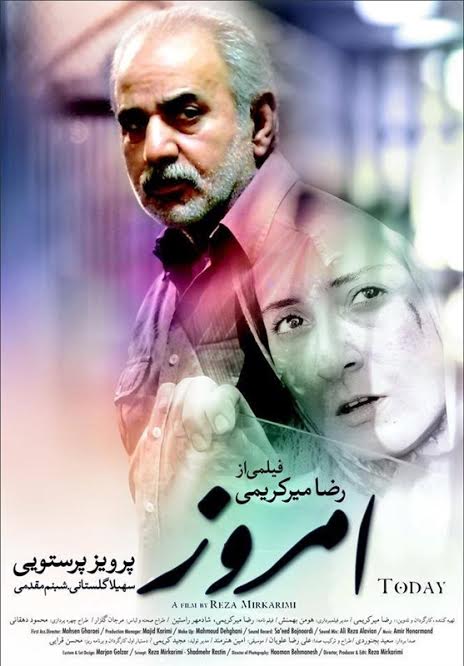
Reza Mirkarimi: Awarded Iranian film director

Reza Mirkarimi, born 1966 in Tehran, is an Iranian film writer and director. He graduated from Fine Arts University in Graphic Arts. His cinema activities began in 1987 with a series of shorts followed by two TV series aimed at young people.

His 1999 first feature, ‘The Child and The Soldier’, has won several national and international awards. In 2000 his second feature ‘Under the Moonlight’, dealing with social and religious issues won the Best Feature Award at the 40th Critics’ Week at the 2001 Cannes International Film Festival.

Three of his films have been presented by Iran for the Best Foreign Language Film Oscar: ‘ So Close, So Far’, ‘A Cube of Sugar’ and his current feature, ‘Today’ Reza Mirkarimi has also sat on several international film festival juries.

Filmography (as director)
– 2000: Koodak va Sarbaz (The Child And The Soldier)
– 2001: Zir-e Noor-e Maah (Under The Moonlight)
– 2002: Inja Cheraghi Roshan Ast (Here Is A Shining Light)
– 2005: Kheili Dour, Kheili Nazdik (So Close, So Far)
– 2008: Be Hamin Sadegi (A Simple as That)
– 2011: Yek Habe Ghand (A Cube of Sugar)
– 2014: Emrooz (Today)

Short Films, Documentary and TV Series
– For Him (Short / 1987)
– A Rainy Day (Short / 1987)
– Rooster (Short / 1987)
– The Adventures of Mrs. Aziz (TV Series / 1996)
– Hemmat School Kids (TV Series 1997)
– Iranian Carpet (Documentary / 2006)

Awards
Film: Koodak va Sarbaz (The Child And The Soldier)
Honor Diploma for Best Director – Fajr International Film Festival 2000
Silver Baloon – Three Continents Festival 2000
Golden Shoe – Zlín Film Festival 2001

Film: Zir-e Noor-e Maah (Under The Moonlight)
Best Director Award tied with Gjergj Xhuvani for Slogans – Tokyo International Film Festival 2001
Special Jury Prize – Beirut International Film Festival 2001
Special Jury Prize – Tokyo International Film Festival 2001
Special Jury Award – Fajr International Film Festival 2001
Critics Week Grand Prize – Cannes Film Festival 2001
Silver Peacock Special Prize of Jury – Delhi International Film Festival 2002

Film: Inja Cheraghi Roshan Ast (Here Is A Shining Light)
Best Screenplay – Asia-Pacific Film Festival 2002
Crystal Simorgh Best Director – Fajr International Film Festival 2003
Special Jury Prize – Bali International Film Festival 2004

Film: Kheili Dour, Kheili Nazdik (So Close, So Far)
Crystal Simorgh Best Film – National Competition, Fajr International Film Festival 2005
Best Film Award – Celebration House of Cinema 2005

Film: Be Hamin Sadegi (A Simple as That)
Golden St. George – 30th Moscow International Film Festival 2008
Russian Guild of Film Critics Award – International Competition, Moscow International Film Festival 2008
Crystal Simorgh Best Director – Fajr International Film Festival 2008
Crystal Simorgh Best Screenplay with Shadmehr Rastin – Competition of Asian Cinema, Fajr International Film Festival 2008
Crystal Simorgh Best Director – Competition of Asian Cinema, Fajr International Film Festival 2008
Crystal Simorgh Best Director – National Competition, Fajr International Film Festival 2008

Film: Yek Habe Ghand (A Cube of Sugar)
Special Jury Prize – Kazan International Festival of Muslim Cinema 2012
Best Film – Kazan International Festival of Muslim Cinema 2013

Film: Emrooz (Today)
Best Film Award Rabat International Film Festival 2014

Sources: Wikipedia | Reza Mirkarimi, Internet Movie Data Base | Reza Mirkarimi

Reza Attaran: Awarded Iranian actor, director, screenwriter and singer

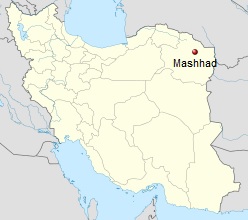
Reza Attaran (born 1968 in Mashhad) is an Iranian actor, director, screenwriter and singer. He won in 2008 the Best Actor Award at the Gol Agha Comedy Festival and is regarded as one of the most creative and prolific Iranian comedy actors.

He graduated from high school in Mashhad majoring in Economy and moved to Tehran to study Industrial Design at the University of Tehran. Despite enjoying his field of study he turned to acting. In 1980s he started playing theatre under Hassan Hamed, portraying non comic roles until 1992 when Hamed passed away.

Attaran made his television debut playing his first comedy role as Reza back in 1994 in the TV Series Happy Hour (Saate Khosh) directed by Mehran Modiri alongside actors like Reza Shafii Jam, Nasrollah Radesh, Arzhang Amirfazli and Nader Soleimani.

In 1994 he married Farideh Faramarzi, a film editor and actress. She played with her husband in the movie Absolute Rest (Esterahate Motlagh) directed by Abdolreza Kahani.

Between 1997 and 2003 he started directing his own TV series where he achieved great recognition and fame for his singing skills. At that time he formed a music band called Dampaei (Slippers) together with Youssef Teimouri and other artists. Since then he has become the most successful comedy series maker in Iranian TV.

Attaran made his debut as a film director in 2011 with I feel sleepy (Khabam Miad). In 2013 he directed and acted in Red Carpet (Farshe Ghermez); Attaran’s sarcastic take on film festivals, fame and stars.

He was nominated for Best Actor in a Leading Role at the 30th, 31st and 32nd Fajr International Film Festival: In 2012 for I feel sleepy (Khabam Miad), in 2013 for The Corridor (Dehliz) and in 2014 for Sensitive floor (Tabagheye Hasas).

TV shows
Happy Hour (Saate Khosh, as Reza, comedy, 1995-96)
Acacia Alley (as Faramaz, director: Reza Attaran, comedy, 2002-03)
Vagabond (as Ahmad, director: Reza Attaran, comedy, 2004)
The Accused Fled (as Ramin, director: Reza Attaran, comedy, 2005)
Shirin-va-Torsh (as Naser, director: Reza Attaran, comedy, 2007)
Turning Point (as Nader, director: Reza Attaran, comedy, 2008)
Ghalbe Yakhi (as Esfandiar, crime/drama, 2012)

Films
– 2015: Sperm whale (shooting, as Arjang, director: Saman Moghadam)
– 2015: Absolute Rest (Esterahate Motlagh, as Davoud, director: Abdolreza Kahani)
– 2014: Bar Bad Rafteh (Director: Reza Attaran)
– 2013: The Corridor (Dehliz, as Behzad, Director: Behrouz Shoaibi)
– 2013: Red Carpet (Farshe Ghermez, director: Reza Attaran)
– 2013: Sensitive Floor (Tabagheye Hasas, as Kamali, director: Kamal Tabrizi)
– 2013: Kalashnikov (Director: Kamal Tabrizi)
– 2012: By no reason (Bikhod & Bijahat, director: Abdolreza Kahani)
– 2011: I feel sleepy (Khabam Miad, as Reza, Director: Reza Attaran)
– 2010: Whatever God Wants (Harchi Khoda Bekhad, director: Navid Mihandoost)
– 2010: No men allowed (Voroode Aghayan Mamnoo, as Vahid Jebelli, director: Rambod Javan)
– 2010: Absolutely tame is a horse (Asb Heivane Najibi Ast, as Behruz Shakiba, director: Abdolreza Kahani)
– 2009: Az Ma Behtaroon (Director: Mehrdad Farid)
– 2009: Nish O Zanboor (Director: HR Slahmnd)
– 2009: Khoros Jangi (Director: Masood Atyabi)
– 2009: Bad Az Zohre Saghie Saghi
– 2008: Aghaye Haft Rang (Director: Shahram Shah-Hosseini)
– 2008: Empty chair (Sandali Khalli, director: Saman Astrky)
– 2007: Token (Neshani, director: Fereydoun Hassanpour)
– 2007: Tasvie Hesab (Director: Tamineh Milani)
– 2007: Tofighe Ejbari (as Ata, director: Mohammad Hossein Latifi)
– 2007: Quarantine (Gharantineh, director: Manouchehr Hadi)
– 2006: A hat for the rain Kolahi Baraye Baran (Director: Masood Navabi)
– 2006: Tigh Zan (Director: Alireza Davoodinejad)
– 2005: Havoo (Director: Alireza Davoudinejad)
– 2002: Kolah Ghermezi Va Sarvenaz (Director: Iraj Tahmasb)
– 2000: Cinderella (Director: Bijan Birang)
– 1997: Sarzamine Sabz (Director: Bijan Birang)

Awards
Best Actor Award at the 2008 Gol Agha Comedy Festival
Crystal Simorgh for Best Director in the New Vision section at the 30th International Fajr Film Festival for I feel sleepy (Khabam Miad), 2012
Statuette for Best Actor at the 15th House of Cinema Awards for Absolutely tame is a horse (Asb Heivane Najibi Ast)
Statuette of Golden Smile for Best Comedy Actor in the 2nd Sun’s Smile Awards for both Absolutely tame is a horse (Asb Heivane Najibi Ast) & No men allowed (Voroode Aghayan Mamnoo)
Diploma of Honor for Best Actor at the 6th Critics & Writers Guild’s Awards for By no reason (Bikhod & Bijahat), 2012

Sources: Wikipedia | Reza Attaran, Reza Attaran | Biography, picbazi.com | The legendary Attaran, Iran Novin Film | Red Carpet – Director’s Biography

Iranian Film “Dingomaro – Iran’s Black South” by Kamran Heidari

Since his Internet hit, “Bad Shans” (hard luck), Hamid Saeid has become one of the best-known Iranian musicians with African roots. He’s travelling by motorbike across the province of Hormozgan, which is situated in the South of the country on the Persian Gulf, in order to realize his dream. He wants to organize a concert with the best black musicians in the country.

Besides Persians, Indians, Arabs and Europeans, the province of Hormozgan, Iran’s “black south” has been influenced primarily by the descendants of slaves and merchants from Africa. Although Shiites, they still hold Voodoo ceremonies just as their African ancestors did and wakes in Hormozgan are more reminiscent of scenes from New Orleans, with the mourners dancing in an elated and joyous manner to black rhythms.

Filmmaker Kamran Heidari accompanies Hamid Saeid as he attempts to make his dream come true. He must overcome numerous hurdles along the way: Hormozgan’s landscape, which is as inhospitable as it is breathtaking, traveling from the coast over rugged mountains to the desert, the African spirit rites; and the resistance of his wife, who is completely against his plan.

In an Interview Mr. Heidari talks about the healing tradition of Zar in the south of Iran: “There are wild winds (Dingomaro) coming from Africa and these winds are always in movement. Sometimes these winds take over ones body and then they will stay inside. This is when the Zar ceremony becomes necessary”.

The healers and masters of Zar ceremonies are called Mama Zar or Baba Zar, depending on gender, and by beating the drums and chanting MamaZar or BabaZar will drive these wild winds away. During the filming of the documentary, Kamran Heidari was asked many times to let Mama Zar drive the Dingomaro away from his body but he declined saying that he has made peace with these African wind spirits and has made friends with them. He would like to keep them in his heart.

By incorporating African rhythms into the music that he plays, Saeid succeeds in preserving his heritage that he then shares with others. But, at the same time, cultures are dynamic: by mixing African and Iranian beats, he is recreating traditions and moulding them into a new form of hybrid identity. Holding an ‘African-style’ concert in an area where many have rejected, or forgotten about their roots can be challenging. Heidari, together with Saeid, show us how to value this cultural heritage and give it a meaning through music. It was screened as part of the UCLA Celebration of Iranian Cinema in May 2014.

Dingomaro – Iran’s Black South (trailer):

Director: Kamran Heidari
Film by: Kamran Heidari, Dariusch Rafiy
DoP: Sajjad Avarand
Camera: Kamran Heidari, Bahman Kiarostami, Hasan Rastin
Editor: Kamran Heidari, Martin Homel
Assistant: Tahereh Alavizadeh
Sound Recording: Mohamad Hossein Kaveh
Sound Mix: Kamyar Behbahani
Photography: Tahereh Alavizadeh
Producer: Dariush Rafi-y, Kambiz Khorram
Documentary / 66 min / Color / HD-Video / 16:9 / 2013 / IRAN

Sources: The Culture Trip | Kamran Heidari’s universal cinema beauty and humanity from Iran, Kamran Heidari Official Site | Films, Autentic | Dingomaro – Iran’s Black South, Blog Africa to Persia

Mehdi Fakhimi: Awarded Iranian architect

Iranian architect Mahdi FakhimiBorn on September 13, 1980, in Iran, Mohammad Mahdi Fakhimi got a Master’s degree in Architectural Engineering from Azad University in 2006.

He founded his first company named “Ideh-Pardazan Akad Group” in 2008 and continued his professional activity in three focused on three domains of architecture: urban planning, graphic interior design.

At that time his first book “Interior Design─From Architecture to Interior Decoration” was published.

He started teaching at Tehran Soore University as well as at Kish International Campus; the international branch of Tehran University located in Kish Island. His second book “Architecture & Urban Tele-democratic”, derived from his master thesis, was published in 2011.

Fakhimi resigned from teaching in 2013, working only as a supervisor and adviser for students who were looking forward to benefit from his knowledge for their theses.

Awards
Silver A Design Award in A’Design Award & Competition 2014-2015
Honorable Mention in 8th annual International Design Awards (IDA)
Jury Award of the Architecture and Urban Design Contest /2007
Winner of the 5th overall Architectural Photography Contest /2007

Sources: www.mahdifakhimi.com, A’ Design Award & Competition | Face Top Clinic

The Tehran Graphic Design Week 2015 started!

The Tehran Graphic Design Week 2015 started on April 26 at the Iranian Artists Forum (IAF) as tens of graphic art enthusiasts demonstrated support for the event by gathering outside the venue under the slogan “Graphic Art Needs Promotion”.

“Graphic designs are with us wherever we go. From the moment we wake up, graphic designs are before us telling us what to wear and what is attractive,” said graphics expert Akbar Alemi, a member on the selection committee and the ceremony host.

The head of Iran Graphic Designers Society (IGDS) Ali Rashidi said the extensive world of graphics can offer more than posters and logos and called for Iran to advance in all areas of this pragmatic form of art, Mehr News Agency reported. He took note of “motion graphics and economics of art” as two key areas of IGDS focus this year, and said “this society aims to promote non-still (non-print) graphics.”

French graphic designer Ruedi Baur, who was a guest invitee, said “motion graphics cannot be defined as they are out of our control”. Australian designer Ken Cato opposing the view, stated that motion graphics “even defines throwing up your business card up in the air,” and to prove a point, he did just that.

An introduction to motion graphics and its applications on DVDs was unveiled by Mahdi Mahdian, secretary of the event.

In addition to the two international guest invitees, a number of renowned figures attended the function, including graphic designers Ghobad Shiva, Majid Balouch, Amrollah Farhadi, Mostafa Asadollahi, typography designer Masoud Sepehr, and calligrapher Bahram Kalhornia.

The Tehran Graphic Design Week usually kicks off every year around the World Graphic Design Day which is on April 27. The Tehran Beautification Organization, Contemporary Art (Honar Moaser) Publications and Sepia Co. cooperated with IGDS running the event.

According to Mehdi Mahdian the works exhibited were selected by a committee composed of Akbar Alami, Bahram Azimi, Reza Alavi, Mehrdad Sheikhan and Amir Mohammad Dehetani.

Tehran Graphic Design Week 2015 features various programs such as commemoration of a veteran artist and exhibition of works by two international graphic designers. The Tehran Museum of Contemporary Art displays works by graphic designers Rudie Baur from France and Ken Cato from Australia in separate exhibitions.

Tehran Graphic Design Week 2015 runs for one week in the Iranian Artists’ Forum located on Musavi St., off Taleqani Ave, Tehran.

Program (in Persian): Iranian Graphic Design Society | Graphic Design Week 20015 – Program

Sources: Culture and Heritage National Agency, Tavoos Online, Tehran Times, ISNA | Photos

Iran’s North Khorasan Province: Aspakhu Fire Temple

North Khorasan, Iran – Aspakhu MapThe Aspakhu (Espakhou) Fire Temple is one of the oldest structures in Iran’s North Khorasan Province. According to studies and excavations it belongs to the Sassanid era (AD 224 to AD 651).

It is located by the village of Aspakhu (also romanized as Espakhou, Aspakhv), 65 kilometers west of Ashkhaneh, in Maneh and Samalqan County, North Khorasan Province, Iran.

The temple is built on top of a high hill next to a forest of pines and cedar trees. Beyond its entrance into a rectangular yard, a corridor leads to a domed room in the eastern part of the structure. The Fire Temple has a domed roof and consists of stones and mortar, further strengthening the assumption of its Sassanid origins. It is believed that the Fire Temple gets its name from the word Hasb which gradually evolved into Asb (meaning horse). The area and village in particular appeared to have been a training ground for horses.

Photos by Ehsan Kamaly for Mehr News Agency.

Locals refer to the Fire Temple as a church although there has been next to no evidence of any past Christian residents. Furthermore the domed roof, its scattered slits (presumably to allow smoke to escape), and its round altar give the Fire Temple theory more credibility.

A fire temple in Zoroastrianism is the place of worship for Zoroastrians. In the Zoroastrian religion, fire, together with clean water, are agents of ritual purity. Clean, white “ash for the purification ceremonies [is] regarded as the basis of ritual life,” which, “are essentially the rites proper to the tending of a domestic fire, for the temple [fire] is that of the hearth fire raised to a new solemnity” (Boyce, 1975:455).

In 2010-2011 studies were being made to research the feasibility of renovations to the Fire Temple. The Espakhoo Fire Temple has been registered as a national heritage site, with the number 1579, by Iran’s Cultural Heritage Department.

A beautiful photo of Aspakhu Fire Temple at night by Abbas Rastegar: National Geographic | Your Shot | Aspakhv fire

Sources: Mehr News Agency | Aspakhv Fire, Payvand News of Iran, Historical Iranian Sites and People | Espakhoo Fire Temple, Wikipedia | Aspakhu


Photos: International Equestrian Tournament for teenage jockeys in Tehran, Iran

Thirty eight jockeys competed in the 1st International Equestrian Tournament for Juniors (jockeys aged between 14 and 18) organized by the Equestrian Federation of Iran.

The tournament took place near Chitgar Park at Azadi Equestrian Complex, Tehran. Embassadors from Belgium, Belarus, Spain and Turkmenistan visited the event. The first place went to Sobhan Youssefi riding Fouravar, Arshia Tassafi riding Butterfly took the second place and Amir Azsalan Tambakoukar riding Jalisco the third.

In another competition, Salar Golestanian riding Anora won the first place, Mehrdad Ameri riding Karbeh the second and Sobhan Yousefi riding Fouravar the third place.

Sources: International Equestrian Federation | Calendar , IRNA | Photos, Equestrian Federation of Iran | News

Kamran Heidari: Iranian film director and photographer

Born in 1977, in Gachsaran, close to the old city of Shiraz, Heidari directs documentaries and films about the lives of the people who come from his region. In 2012, Heidari directed his very first full-length documentary about the life of the eccentric and touching figure of Negahdar Jamali from Shiraz.

In 2013, Heidari directed another documentary, also on the life of an eccentric and touching person with a dream; Hamid Saeed, one of the best-known Iranian musicians with African roots.

One day while I was taking photos in Shiraz’s old neighborhood near the bazaar where century-old houses were falling into ruin I saw some beautiful writing on a wall which said “don’t know”.

I took a picture of the wall. As I was editing the photo and looking again at the writing it made me wonder about the person who wrote it? Did he or she write the words in a good mood or were they in a philosophical state of mind?

Rumi, the great Persian poet and philosopher wrote that “I” is a euphoric state — “What I know, what I know”. This “I” is what I think about when I take photos — it has become my overall concept for the Shiraz Street Photos series.

These old neighbourhoods serve as my photo workshop, the walls are my interior design and I carry my studio on my back. The subjects of these portraits stand in front of walls scrawlled with text — text full of sadness, happiness, pleasure, love, but also full of hope for life.

Apart from text, these walls incorporate other elements such as telephone and electrical cables, heater vents, and cracks, which make this environment even more attractive to me. These people represent the “don’t know” text on the walls. One can view them from an anthropological perspective — the geographic sections of the city of Shiraz become the backdrops for its’ inhabitants. In all of the photos the subjects look somewhat surreal. Kamran Heidari’s on Shiraz Street Photo Series

EXHIBITION
2014: “Good News from Iran”, Pasinger Fabrik, Munich Germany (Isfahan Gate Series and Shiraz Street Photos Series) – Curators: Stefan-Maria Mittendorf and Mojgan Endjavi-Barbé

FILMOGRAPHY
2004: “Dash Akol” (Documentary, 18min)
2006: Mohammad Bahman Beigi (Documentary, 40min)
2006: The Big Red (Short film, 14min)
2007: Comfortably Numb (Feature, 85min)
2008: At the End of Perfect day (Documentary, 50min)
2010: The Dead Sea (Documentary, 30min)
2011: Mola Sadra (Documentary, 30min)
2012: My name is Negahdar Jamali and I make westerns (Documentary, 65min)
2014: Dingomaro – Iran’s Black South (Documentary, 45min)

Sources: The Culture Trip | Kamran Heidari’s universal cinema beauty and humanity from Iran, Endjavi-Barbé Art Projects | Kamran Heidari, Kamran Heidari Official Site

Iran’s Tehran Province: Persian Garden Park in Tehran – Part 2

Here the second batch of pictures of the Persian Garden Park in Tehran. Enjoy!

The Persian Garden Park is a 3.4ha (8.4 acres) areal in Tehran that was designed based on the pattern of a Persian Garden.The reconstruction project planned passages for the disabled and dedicated 2.5ha (6 acres) to green spaces, preserving the old trees and planting new species. The park has six fountains, a restaurant and tea house, a public library, a children’s playground and other facilities.

More information and photos:
The other Iran | Iran’s Tehran Province: Persian Garden Park in Tehran – Part 1

Sources: TEHRAN Picture Agency | Growing tulips in the Persian Garden, TEHRAN Picture Agency | Persian Garden on a rainy day, Tasnim News | Photos

Iranian Armenians rally in Tehran to commemorate the 100th Anniversary of the Armenian Genocide

Thousands of Iranian Armenians rallied in Tehran on Friday, protesting in front of the Turkish Embassy to commemorate the 100th anniversary of the Armenian genocide.

Many in the crowd, who marched from the Armenian Church in Tehran to the Turkish Embassy, held signs in Farsi and English asking the international community to recognize the genocide, while others chanted slogans calling for justice and the downfall of the Turkish government. “What Armenians demand now is that the Turkish government recognize [the massacre] as genocide and accept its legal consequences,” Karen Khanlari told Iran’s Press TV during the protests.

There were different events organized to commemorate the 100th Anniversary of the Armenian Genocide on April 23 and April 24. In Tehran were the religious ceremonies held at the St. Sarkis Cathedral.

Following sovereign countries have officially recognized the Armenian Genocide: Argentina (2003) , Austria (2015), Belgium (1998), Bolivia (2014), Canada (1996), Chile (2007), Cyprus (1975) was the first country to raise the issue to the UN General Assembly, Czech Republic (2015), France (1998), Germany (2015), Greece (1999), Holy See (2000), Italy (2000), Lithuania (2005), Lebanon (1997), Netherlands (2004), Poland (2005), Russia (1995), Slovakia (2004), Sweden (2010), Switzerland (2003), Uruguay (1965) was the first country to recognize the events as genocide, Venezuela (2005). On Apr 24, 2015 the Bulgarian parliament approved a resolution using the phrase “mass extermination of the Armenian People in the Ottoman Empire”. The United States of America, Israel, the United Kingdom, Australia or Spain do not use the term genocide to refer to these facts.

Robert Beglaryan and Karen Khanlaryan, MPs of Armenian origin, have also had speeches in Iran Majlis concerning the Armenian Genocide Centennial. “We call on the government and the President Rouhani in particular to call the real facts by their name. That will make it possible to support the security in the region,” Robert Beglaryan said in his speech.

Iran has been conducting a moderate and cautious policy regarding the Armenian Genocide over the last years. Remarkably, though, the MPs of the 6th Majlis of Iran condemned the Armenian Genocide. Seyyed Mohammad Khatami, then President of Iran, visited Tsitsernakaberd during his official visit to Yerevan on September 9, 2004. Vice president of Iran, Hamid Baghaei, pronounced the word ‘genocide’ during the conference ‘Iran: The Bridge of Victory’ in August 2010. “The government of Ottoman Turkey committed genocide in 1915; and a certain number of Armenians fell victim to it,” he said although the statement was refuted not to aggravate the relations with Turkey.

However, both the political and religious elite of Iran, as well as ordinary citizens admit the fact of the Armenian Genocide, as according to the Iranian sources, the Ottoman Turks have not only perpetrated genocide against the Armenians, Assyrians and Greeks, but also have slaughtered many Iranians in Urmia Region in 1918.

In Iran there are Armenian Genocide Memorials in Abadan, Ahraz, Arak, Isfahan, Tehran and Urumieh, all of them on Armenian Churches ground. In Abadan the Genocide Memorial was renovated since it was next to the church damaged during the Iran Iraq war.

Other Commemoration events worldwide:
1. Los Angeles Times | Armenian Genocide Anniversary Apr 24, 2015
2. The Huffington Post | Poignant photos from around the world show Armenian Genocide has not been forgotten

Sources: www.hyeli.com, Wikipedia | Armenian Genocide recognitionarmenian-genocide.org | Recognition countries, Mehr News Agency (MNA) 1, MNA 2, IRNA 1, IRNA 2, ISNA 1, Tasnim News Agency, panorama>>am | Asory Genocide, panorama>>am | Rouhani letter, armenian-genocide.org | Genocide Memorials in Iran, uacla.com | Armenian Genocide Memorials, team-aow.discuforum.info | Monuments Commemoratifs du Genocide Armenien

Iran’s East Azerbaijan Province: Saint Stepanos Monastery near Jolfa

The St. Stepanos Monastery (Armenian: Maghardavank) is an Armenian monastery about 15 km northwest of Jolfa, East Azarbaijan Province, northwestern Iran. It is situated in a deep canyon along the Arax river on the Iranian side of the border between Nakhchivan Autonomous Republic and Iran. Since 2008 it is on UNESCO’s World Heritage List together with the St. Thaddeus Monastery and the Chapel of Dzordzor.

The general structure mostly resembles Armenian and Georgian architecture and the inside of the building is adorned with beautiful paintings by Honatanian, a renowned Armenian artist. Hayk Ajimian, an Armenian scholar and historian, recorded that the church was originally built in the ninth century AD, but repeated earthquakes in Azarbaijan completely eroded the previous structure. The church was rebuilt during the rule of Shah Abbas the Second.

History
The first monastery was built in the seventh century (AD 649) and completed in the tenth century. However, St Bartholomew first founded a church on the site around AD 62 but it was partly destroyed during the wars between the Seljuks and the Byzantine Empire in the eleventh and twelfth centuries.

Following the conquest of the region by the Mongols of Hulagu, grandson of Genghis Khan, in the middle of the thirteenth century, Christians benefited from the favorable Ilkhanid dynasty, and a peace agreement is signed between the Armenian Church and the Ilkhans. The monastery was restored in the second half of the thirteenth century.

The monastery was completely rebuilt in 1330 under the leadership of Zachariah. St. Stepanos Monastery found the height of its cultural and intellectual influence in the fourteenth and fifteenth centuries. The monastery produced paintings and illuminated manuscripts, in areas as diverse as religion, history and philosophy.

In the early fifteenth century, the new Safavid dynasty protected the Armenians but the region is at the center of the rivalry between the Safavids and the Ottomans, who invaded Western Armenia in 1513. St. Stepanos in the sixteenth century observed a gradual decline until Shah Abbas I decided to evacuate the region from its inhabitants in 1604. The monastery then was abandoned. From 1650, the Safavids, however, decided to occupy the region again, and the damaged and abandoned St. Stepanos monastery was restored in the middle of the century.

At the beginning of the eighteenth century, the area became a challenge for the conquest of the Russian Empire. Yerevan was conquered by the Russians in 1827. The border between Persia and Russia was established on the Araxes by the Treaty of Turkmenchay. Consequently part of the population was displaced by force to Russian Armenia. The Qajar rulers continued to protect the Armenians. They encouraged the rebuilding of St. Stepanos Monastery between 1819 and 1825.

The monastery has undergone several restorations recently twentieth and twenty-first centuries, especially since 1974.

On UNESCO World Heritage List
The Armenian monasteries in Northwestern Iran have borne continuous testimony, since the origins of Christianity and certainly since the 7th century, to Armenian culture in its relations and contact with the Persian and later the Iranian civilizations. They bear testimony to a very large and refined panorama of architectural and decorative content associated with Armenian culture, in interaction with other regional cultures: Byzantine, Orthodox, Assyrian, Persian and Muslim. The monasteries have survived some 2,000 years of destruction, both of human origin and as a result of natural disasters. They have been rebuilt several times in a spirit in keeping with Armenian cultural traditions.

Further information: Iran Chamber Society | Church of Saint Stephanos

Sources: Wikipedia | Saint Stepanos MonasteryIran Chamber Society | Historical Churches in Iran, Tishineh | St. Stepanos Monastery, Wikimedia Commons | Saint Stepanos Monastery, UNESCO World Heritage List | Armenian Monastic Ensembles of Iran, IRNA | Photos 1, IRNA | Photos 2

Iranian female researcher Soudabeh Davaran awarded a UNESCO Medal

UNESCO Director-General Irina Bokova presented the UNESCO Medal “For the Development of Nanoscience and Nanotechnologies” to eight laureates during a ceremony organized at UNESCO Headquarters on 10 April 2015.

The laureates of this 4th edition are Mr. Valentin Bukhtoyarov, Mr. Vladimir Fortov, Mr. Mikhail Kovalchuk and Mr. Mikhail Selyanin (Russian Federation), Ms. Constance Chang-Hasnain (United States), Ms. Tebello Nyokong (South Africa), Mr. Shem Wandiga (Keny) and Ms. Soodabeh Davaran (Iran).

The Medal was established in 2010 at the initiative of the Thematic group on “Nanoscience and Nanotechnologies” of the International Commission on the Development of the Encyclopedia of Life Support Systems (EOLSS) – one of the world’s largest knowledge bases on sustainable development, evolving under the aegis of UNESCO.

About Prof. Soudabeh Davaran
She got her Master of Science in Chemistry in 1990 and in 1996 her PhD in Polymer Chemistry from Tabriz University, Tabriz, Iran, where she is a Professor of Medicinal Chemistry since 2010. Her books include Dyehouse in Textile Industry, Advanced Nanoparticles in Biomedical Sciences and Impacts of Biodegradable Polymers Towards Biomedical Applications. She was considered one of the TOP 100 SCIENTISTS of 2008 and 2012 by the International Biographical Center of Cambridge.

She is currently researching in following fields:
– Preparation of biodegradable polymeric micro and nanoparticles for drug delivery
– Synthesis of polymeric nano-particles for application in detection and treatment of human cancer
– Synthesis, characterization of functionalized magnetic nano-particles for drug delivery
– Synthesis and evaluation of biodegradable polymers for protein-peptide drug delivery
– Bio-material Scaffold Development for regenerative medicine and drug delivery
– Development of oral insulin delivery systems

Sources: UNESCO Media Services | Eight UNESCO Medals awarded to nanotechnology and nano-science specialists, Faculty of Pharmacy at Tabriz University | Soudabeh Davaran

Photo Series: Spring in Iran – Arasbaran, East Azerbaijan Province

Arasbaran, formerly known as Qaradagh or Qaraja dagh, is a large mountainous area stretching from the Qusha Dagh massif, south of Ahar, to the Aras River in East Azerbaijan Province of Iran. The region is confined to Aras River in the north, Meshgin Shahr County and Moghan in the east, Sarab County in the south, and Tabriz and Marand counties in the west.

Since 1976, UNESCO has registered 72,460 hectares of this region as biosphere reserve. Arasbaran is home to 215 species of birds, 29 species of reptiles, 48 species of mammals and 17 species of fish. The local flora include hornbeam, sumac and berberis. The large walnut and cornelian cherry (zoghal) trees, wildly grown alongside water-streams, provide an important income source for inhabitants but there are also more exotic plant species, such as redcurrant, truffle and herbs with application in traditional medicine.

There were several Turkic tribes in this area and characteristic aspects of their culture, developed around Nomadic pastoralism, have persisted to our times. Nomadic population at present has been estimated to be about 36000.

The spoken languages are Azerbaijani or Oghuz, a branch of the Turkic language family but most inhabitants are familiar with Persian language.

Arasbaran carpets are in between Persian carpets and Azerbaijani rugs. Still, there is also an indigenous style known as Balan Rug. The peak of carpet weaving art in Arasbaran is manifested in Verni (Azerbaijani rug), a carpet-like kilim with a delicate and fine warp and woof, which is woven without a previous sketch.

Verni weavers employ the image of birds and animals in simple geometrical shapes, imitating the earthenware patterns that were popular in prehistoric times. A key décor feature is the S-element that means “dragon” among the nomads. At present, Verni is woven by the girls of Arasbaran Tribes, often in the same room where the nomadic tribes reside and is a significant income source for about 20000 families.

Many elements of the indigenous culture, particularly local music, have survived to the present day. More recently a slow but persistent cultural revival has been in progress. The Ashughi music is central to this shared identity.

A recent study has indicated that Mikandi valley, Aynali forests and Babak Castle have the highest potential for ecotourism. Another potential touristic attraction could be the summer camps of semi-settled tribes of Arasbaran, known as Ilat, who spend 5 months of year in uplands for grazing their livestock. There are also cornelian cherry (zoghal) festivals in Kaleybar and a yearly pomegranate festival in Mardanaqom village with Ashugh music performances.

See also: List of biosphere reserves in Iran

Sources: Wikipedia | Arasbaran, Mehr News Agency | Photos, IRNA | Photos, ISNA | Photos

Iranian architect Mahdi Fakhimi from AKAD Design winner of a Silver A’ Design Award in Italy

The design of Face Top by Mahdi Fakhimi from AKAD Design won the notable Silver A’ Design Award at Interior Space and Exhibition Design Competition in 2014-2015

The design, construction and execution contract of this project entitled Face Top Clinic, was concluded in summer 2011 for a cosmetic surgery consultation clinic in Tehran, Iran. Farzaneh Moghadasi, Sara Savar, Masoumeh Chakeri, Elham Sabetghadam, Mohammad Razaghdoust and Tahmineh Vesal are, alongside Mahdi Fakhimi, the team that was involved in this project.

Fakhimi, Mahdi - AKAD Design Group 1

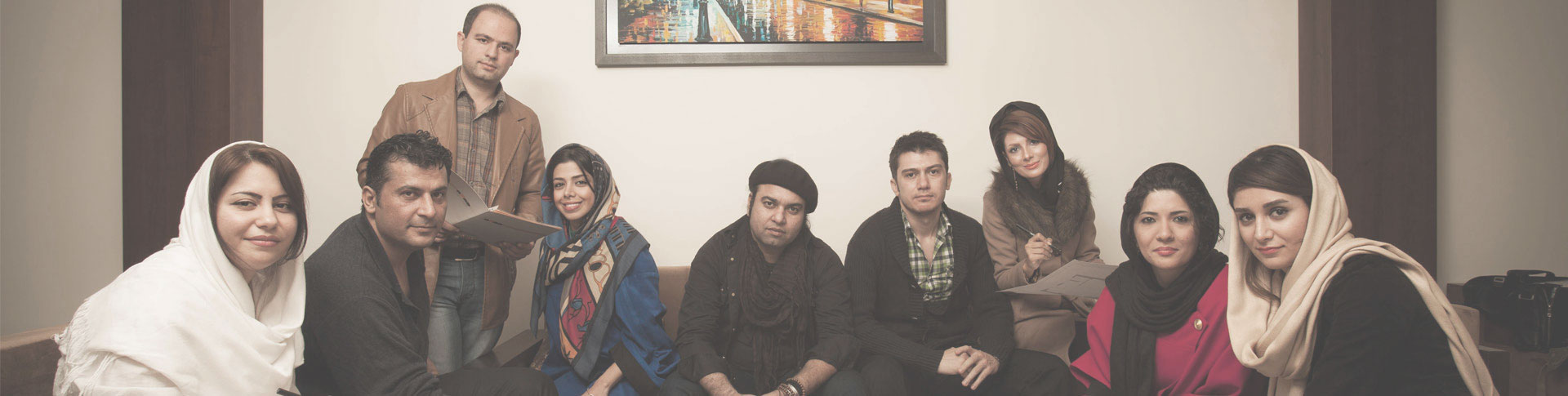
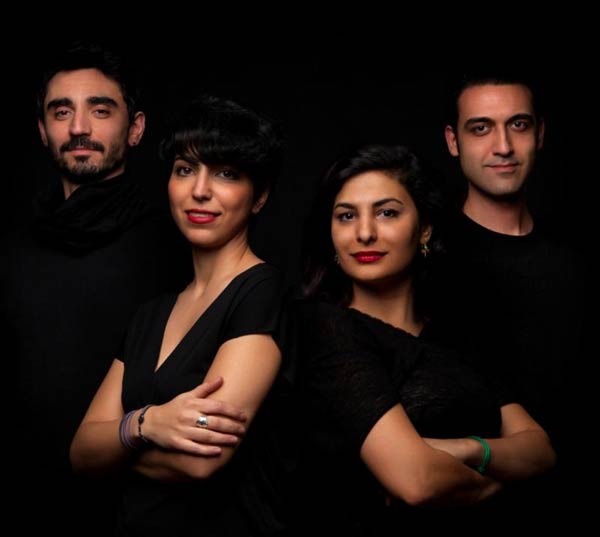
The team from AKAD Design (Mahdi Fakhimi, 4th from right)

“The key point in the design of this project was the utilization of continuous surface style which is different from most of the works which have been done up to now, the continuous surface style requires soft surfaces and avoidance of sharp and angular lines, to create a flow” said Mahdi Fakhimi about the design.

It is not the first time that this team receives a design award for Face Top. It had already won bronze at the 7th Annual International Design Awards in 2014 in the category “Interior Design – Renovation”.

Hormoz Luxury Restaurant in Tehran, a runner-up in the Luxury Design Category in the same competition, is also a project by Mahdi Fakhimi along with Farzaneh Moghadasi, Sara Savar, Masoumeh Chakeri, Elham Sabetghadam and Hamid Ghorbani. It started in spring 2013 and finished by end of 2013.

About A’ Design Award and Competitions
The designs are judged by a panel of three different jury which is composed of Academic, Professional and Focus Group Members. A’ Design Award & Competitions, aims to highlight the excellent qualifications of best designs, design concepts and design oriented products. A’ Design Award & Competitions are organized and awarded annually and internationally in multiple categories to reach a wide, design-oriented audience. The Platinum A’ Design Award is given to the top 1% runner-up candidates (N° 1: 1st place, N° 2: 2nd and N° 3: 3rd place), the Golden A’ Design Award is given to top 3% candidates, the Silver A’ Design Award to top 5%, the Bronze A’ Design Award to top 10% and the A’ Design Award to top 20% runner-up candidates.

About AKAD Design Group
In 2002 a group of students beginning their careers started to work in teams using their knowledge from different fields. By 2008 AKAD Design Group was founded focusing on architecture, interior and graphic design.

Sources: A’ Design Award & Competition | Press release 36434, A’ Design Award & Competition | Mohammad Mahdi Fakhimi, AKAD Design | About, Mahdi Fakhimi | Projects, International Design Awards (iDA) 2014 | Renovation

UCLA Celebration of Iranian Cinema 2015

UCLA Celebration of Iranian Cinema 2015The UCLA Film and Television Archive is pleased to once again explore the diverse currents of Iranian cinema with its annual series highlighting recent and classic films from Iran and the Iranian diaspora.

The Program “UCLA Celebration of Iranian Cinema”, funded by the Farhang Foundation, will take place from April 25, 2015 to May 16, 2015 at the Billy Wilder Theater in Westwood Village, Los Angeles, USA.

Film directors Rakhshan Banietemad (4/25), Shahram Mokri (4/26), Kamran Heidari (4/27), Sepideh Farsi (5/8), Zhinous Pedram (5/10) and Amir Badie (5/16) will be attending in-person to discuss their work.

In the wake of Asghar Farhadi’s Best Foreign Language Film Oscar win for A Separation in 2011, the depth and breadth of Iranian cinema today continues to amaze even as the challenges faced by its filmmakers remain of concern.

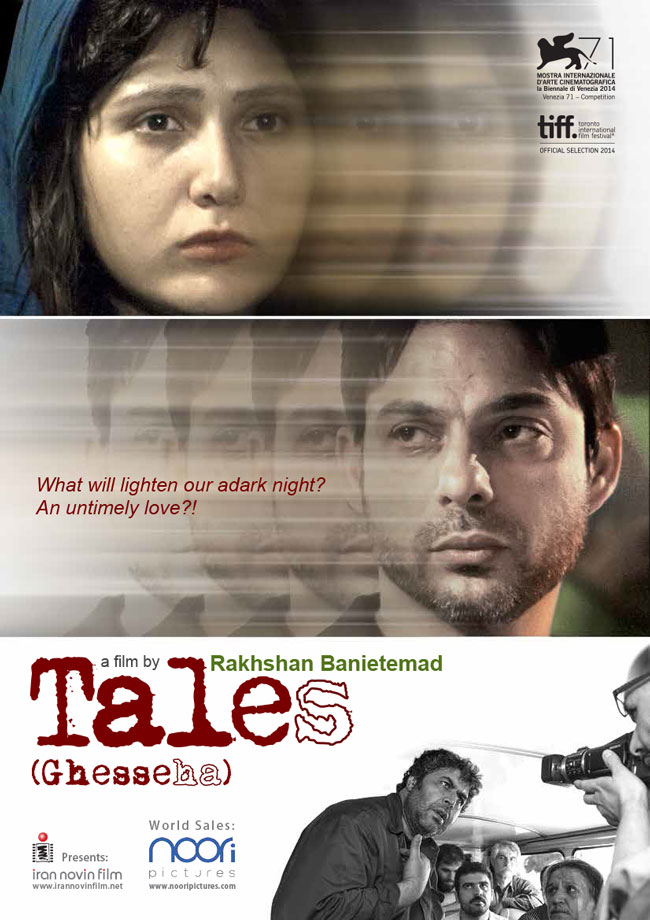
While established masters continue to make their unique voices heard, including writer-director Rakhshan Banietemad, whose award-winning Tales opens this year’s series, newer filmmakers continue to captivate.  Farhadi’s influence can be felt in a number of outstanding, tightly-wound contemporary dramas by emerging directors (Melbourne, I’m Not Angry), while others are charting radically different paths visually and narratively (Fish & Cat, 316).

Screening schedule:

Saturday, April 25
Bani-E'temad, Rakhshan - Film 2014 - Tales (Ghesse-ha)TALES (Ghesse-ha) / 7:30 PM /
In person: Rakhshan Bani-Etemad (DIR)
Iran, 2014 / 91 min. / DIR: Rakhshan Banietemad /
CAST: Fatemeh Motamed Aria, Peyman Moaadi, Baran Kosari

Winner of the Best Screenplay award in Venice, writer, writer-director Rakhshan Banietemad’s return to fiction filmmaking is a tour-de-force portrait of a people and a society at the breaking point.

Sunday, April 26
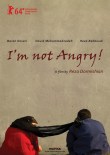
Dormishian, Reza - Film 2014 - I'm not angry (Asabani nistam!)I’M NOT ANGRY (Asabani nistam!) / 3:00 PM

Iran, 2014 / 110 min. / DIR: Reza Dormishian /
CAST: Baran Kosari, Navid Mohammadzadeh, Reza Behoudi

Director Reza Dormishian’s second feature bluntly depicts the seething frustrations of a generation through the emotional and personal struggles of a student activist trying to get his life on track.
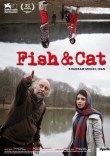
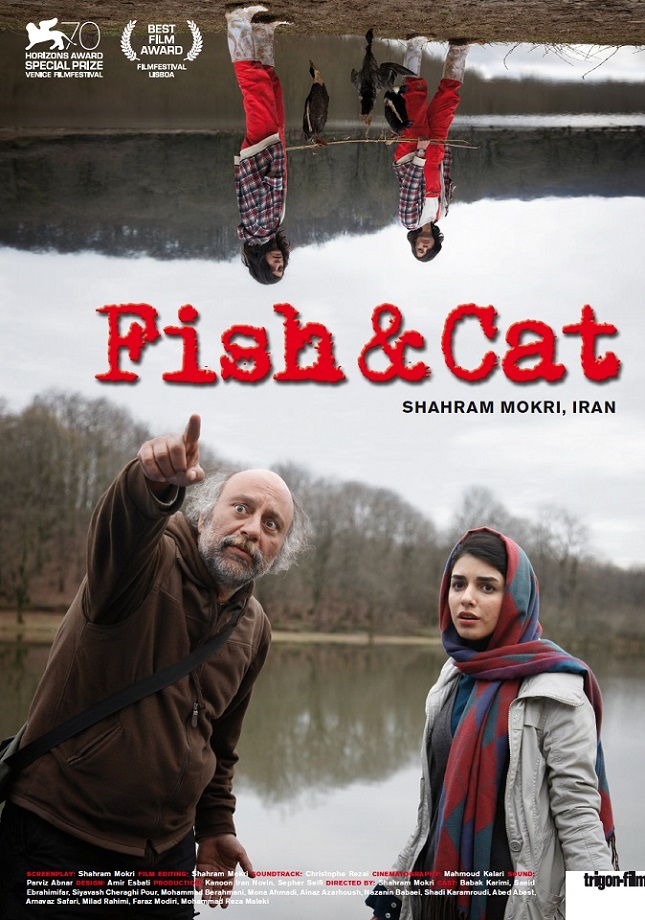
Mokri, Shahram - Film 2013 - Fish & Cat (Mahi va gorbeh)FISH & CAT (Mahi va gorbeh) / 7:00 PM /
In person: Shahram Mokri (DIR)
Iran, 2013 / 134 min. / DIR: Shahram Mokri /
CAST: Babak Karimi, Saeed Ebrahimifar, Siavash Cheraghipoor

With Fish & Cat, writer-director Shahram Mokri emerges as an original new voice in Iranian cinema, blending bravura technical skills with a boldly absurdist, apocalyptic vision.

Monday, April 27
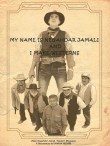
Heidari, Kamran - Film 2012 - My name is Negahdar Jamali and I make westerns - PosterMY NAME IS NEGAHDAR JAMALI AND I MAKE WESTERNS / 7:30 PM /
In person: Kamran Heidari (DIR)

Iran, 2013 / 65 min. / DIR: Kamran Heidari / CAST: Negahdar Jamali

Utterly unexpected and thoroughly charming, director Kamran Heidari’s debut documentary about an amateur filmmaker in southwestern Iran explodes preconceived notions and illuminates the universal power of cinema.

Friday, May 1
Mirkarimi, Reza - Film 2014 - Today (Emrouz) 2TODAY (Emrouz) / 7:30 PM
Iran, 2014 / 88 min. / DIR: Reza Mirkarimi /
CAST: Parviz Parastui, Soheila Golestani, Shabnam Moghadami

Iran’s official submission for Oscar consideration, writer-director Reza Mirkarimi’s tense, powerful drama unfolds over a single day after a cab driver allows himself to be drawn into the personal crisis of a woman who jumps into his backseat.

Saturday, May 2
Attaran, Reza - Film 2014 - Red Carpet (Farshe Ghermez)RED CARPET (Farshe Ghermez) / 7:30 PM
Iran, 2014 / 80 min. / DIR: Reza Attaran /
CAST: Reza Attaran, Marc Ansari, Susan Parvar

One of Iran’s most famous comedians, Reza Attaran, takes on Hollywood and the international media in this hilarious but gentle satire.


Wednesday, May 6
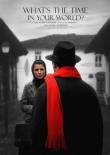
Yazdanian, Safi - Film 2014 - What's the time in your world (Dar donyaye to sa’at chand ast) - Poster 2WHAT’S THE TIME IN YOUR WORLD? (Dar donyaye to sa’at chand ast?) / 7:30 PM
Iran, 2014 / 101 min. / DIR: Safi Yazdanian / CAST: Leila Hatami, Ali Mosaffa, Ebrahim Zamir

Leila Hatami stars as Goli, a woman who returns to her hometown after decades living abroad to find a mysterious guide waiting to take her on a journey of self-discovery suffused with romantic melancholy.

Friday, May 8
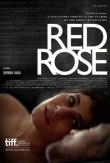
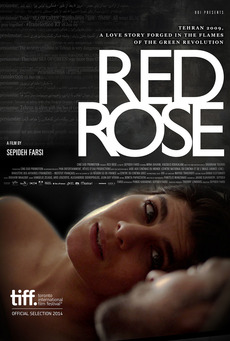
Farsi, Sepideh - Film 2014 - Red Rose - PosterRED ROSE / 7:30 PM / In person: Sepideh Farsi (DIR)
France/Greece/Iran, 2014 / 87 min. / DIR: Sepideh Farsi / CAST: Mina Kavani, Vassilis Koukalani

Writer-director Sepideh Farsi ingeniously employs a single setting to dramatize the vicissitudes of political idealism in intimate and deeply personal ways amid the explosive passions of the Green Revolution.

Sunday, May 10
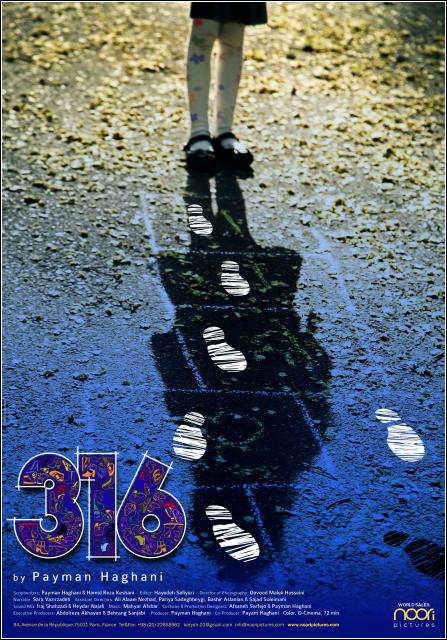
Haghani, Payman - Film 2014 - 316 - Poster316 / 7:00 PM
Iran, 2014 / 72 min. / DIR: Payman Haghani / CAST: Sara Vazirzadeh (narrator)

Writer-director Payman Haghani reflects on recent Iranian experience through one woman’s singular passion for shoes with a film as beguiling as it is moving.

Preceded by:
PINK NAIL POLISH / In person: Zhinous Pedram (DIR)

Iran, 2014 / 6 min. / DIR: Zhinous Pedram

Slowly, cautiously, a young girl makes her way out into the world in director Zhinous Pedram’s beautifully shot paean to girlhood.

Friday, May 15
Javidi, Nima - Film 2014 - MelbourneMELBOURNE / 7:30 PM
Iran, 2014 / 91 min. / DIR: Nima Javidi / CAST: Payman Maadi, Negar Javaherian, Mani Haghighi

Writer-director Nima Javidi’s remarkable debut feature is one of the most nerve-wracking, nail-biting, what-would-you-do ethical thrillers in recent memory.

Saturday, May 16
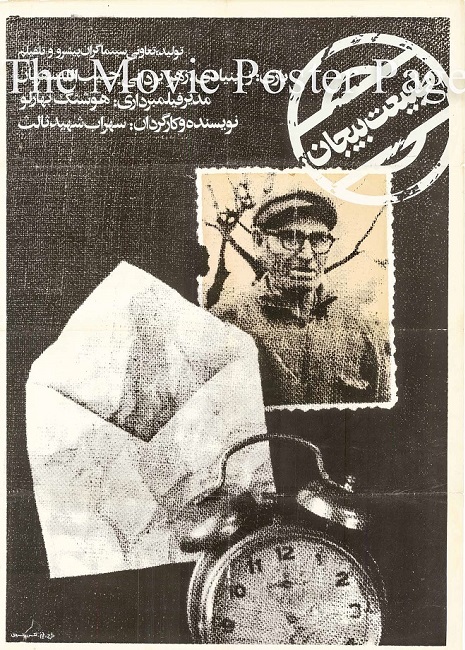
Shahid Saless, Sohrab - Film 1974 - Still life (Tabiate bijan) - PosterSTILL LIFE (Tabiate bijan) / 7:30 PM
Iran, 1974 / 93 min. / DIR: Sohrab Shahid Saless / CAST: Zadour Bonyadi, Mohammed Kani, Hibibollah Safarian

Winner of the Silver Bear at Berlin in 1974, Still Life tells the story of an elderly railroad employee forced into retirement, and confirmed Sohrab Shahid Saless as a “leading visionary of his generation.”

Preceded by:
MOHSEN BADIE: ARTISAN OF CINEMA / In person: Amir Badie

Iran, 2009 / 45 min. / DIR: Aziz Saati / CAST: Naser Malek Motiei, Bahman Farmanara, Houshang Kavoosi

This heartfelt tribute pays homage to Iranian cinema pioneer Mohsen Badie, founder of what film scholar Hamid Naficy described as “perhaps the best film lab in Iran.”

Sources: UCLA Film and Television Archive | UCLA Celebration of Iranian Cinema, Farhang Foundation

Iranian film “My Name Is Negahdar Jamali And I Make Westerns” by Kamran Heidari

“My name is John Ford and I make westerns” this is how John Ford introduced himself at the American Film Directors’ Association gathering. Negahdar Jamali, an Iranian from Shiraz introduced himself the same way when I first met him without knowing John Ford that well.

“MY NAME IS NEGAHDAR JAMALI AND I MAKE WESTERNS” he introduced himself with self-confidence and without any weakness in his statement; not in the Monument Valley or in the Grand Canyon but in Shiraz and the deserts surrounding the city. He has been making Western films continuously for the past 35 years under hard conditions, and this film is about the struggle with his family, friends and society to make what he likes the most in his life “Western Movies”.

While “My Name is Negahdar…” might begin as an oddity it soon evolves into a moving tribute to a man who will let nothing separate him from his art. “I almost fell into the trap of making a social documentary but then I realised that with this film cinema is the only thing that matters,” said Heidari.

“It is about a man and his love for cinema and for making cinema. His love for cinema is just so pure. He doesn’t want to make money out of them, he just wants to make these films and he puts everything he has into it,” he said. “It’s inspiring and a lot more honest to just tell his story.”

My Name Is Negahdar Jamali And I Make Westerns (trailer):

Director: Kamran Heidari
Cast: Negahdar Jamali
Movie type: Documentary
Photography: Kamran Heidari
Editor: Bahman Kiarostami
Sound recorder: Sasan Kaveh
Sound mix: Kamyar Behbahani, Farshid Zarmehr
Music selection: Ennio Morricone, Hamid Saeed
Production Manager: Tahereh Alavizadeh
Producer: Mehrdad Monavarian
Color, SD-Video, 16:9, 65 min, 2012, IRAN

Sources: Iranian Film Festival in Germany, The Daily Star Lebanon, My name is Negahdar Jamali and I make westerns (Photos), Kamran Heidari Official Site | Films

Iran’s Tehran Province: Persian Garden Park in Tehran – Part 1

The tradition and style in the design of Persian Gardens (Persian: باغ ایرانی transliterated as Bagh-e Irani) has influenced the design of gardens from Andalusia to India and beyond.

The Persian Garden Park in Tehran, located on north Sheikh Bahai Street – District 3, is a 3.4ha (8.4 acres) areal that was designed based on the pattern of a Persian Garden. The two main entrances are located on the eastern and the western side of the park but it has also two other gates on the northern and southern side.

The reconstruction project planned passages for the disabled and dedicated 2.5ha (6 acres) to green spaces, preserving the old trees and planting new species such as bay leaf, berberis, firethorn (pyracantha), eglantine (sweet briar), milkweeds (asclepias), shrubs and other seasonal and perennial plants.

The park has six fountains, a restaurant and tea house, a public library, a children’s playground, a sports ground, bathroom and dressing room facilities as well as a prayer room.

Sources: IRNA | Photos, Tehran Municipality, Tishineh | Bagh-e Irani Park, Wikipedia | Persian Gardens

Iranian film “Fish & Cat” (Mahi va gorbeh) by Shahram Mokri

Fish & Cat (from Persian transliterated as Mahi va Gorbeh) is a 2013 mystery drama slasher Iranian film directed by Shahram Mokri. The film was first premiered at the 70th Venice Film Festival in September 2013.

“Selected in 2014 for New Directors/New Films (the annual spring showcase from the Film Society of Lincoln Center and the Museum of Modern Art in New York, USA), Fish & Cat heralds the emergence of a fresh and original new voice in Iranian cinema combining formal experimentation with a sly sense of humour.”

Shahram Mokri’s second feature initially seems as if it might be the first Iranian slasher movie, but things are not always as they appear. Filmed in one long, bravura shot by top cinematographer Mahmoud Kalari (A Separation), it plays mind-bending games with time and place while a pair of potential serial killer cannibals stalk a group of camping students at a lake.

“In my short films I was trying to define a new meaning of time, of it being on one plane—very similar to the perspective Escher revealed in his paintings. I attempt to make type of experimental film that shows a new side of what the audience is used to seeing. On the other hand, Fish & Cat was produced due to my interest in slasher and genre films. I wanted to make a movie that would challenge our regular thoughts about time, and also one that used the same old genre structures. For Fish & Cat I took a real-life case and made it my own. It’s also a film that focuses on the Iranian youth generation. Because the film was been shot using just a single one, we rehearsed the film for two months exactly like we would have a theater performance. I decided to prepare with long rehearsals and we ran through the full movie twice a day. The actors do have theatrical backgrounds, so their experience being in front of an audience was helpful throughout.” – Shahram Mokri

Awards
– Special Prize, Venice Horizons Award: 70th Venice Film Festival (2013)
– Best Film Award: Lisbon & Estoril Film Festival 2013
– Muhr Asia Africa Special Jury Prize: Dubai International Film Festival 2013
– FIPRESCI Prize and Youth Jury Award: Fribourg International Film Festival 2014
– Best Film Award (International !f Inspired Competition) and SIYAD (Turkish Film Critics Association) Jury Award: 13th Istanbul Independent Film Festival (2014)

Fish & Cat (Mahi va gorbeh) (trailer):

Director: Shahram Mokri
Cast: Babak Karimi, Saeid Ebrahimifar, Siyavash Cheraghi Pour, Mohammad Berahmani
Producer: Sepher Seifi
Executive Producer: Shahrzad Seifi
Screenwriter: Shahram Mokri
Director of Photography: Mahmoud Kalari
Production Designer: Amir Esbati
Music: Christophe Rezai
Sound: Parviz Abnar
Production Company: Kanoon Iran Novin

Sources: Wikipedia | Fish & Cat, trigon-film.org (Photos), UCLA Happenings | Fish & Cat, The Hollywood Reporter, 13th !f Istanbul Independent Film Festival, Vancouver International Film Festival (VIFF) 2014 | Fish & Cat, Houston Iranian Film Festival | Fish & Cat

Shahram Mokri: Iranian film director and screenwriter

Shahram Mokri (Persian: شهرام مکری‎) is an Iranian writer and film director. Born 1977 in Marand, Iran, Shahram Mokri is a graduate of cinema from Tehran’s Soureh College.

Raised in a family of movie lovers, director Shahram Mokri took multiple filmmaking workshops in his native Iran before enrolling in Tehran at the university to study cinema. He started making short films in 2000 and also edited television series and more than 20 short and documentary films.

“I belong to the group of movie lovers who cut out photos of movie stars from magazines,” recalls Mokri. “I’d hang them on my bedroom wall or stick them on my school notebooks. I’ve loved to make movies since I was a child and I’m so happy to still be doing it now.”

His short films brought him national and international recognition along with his debut feature film, Ashkan, The Charmed Ring And Other Stories, which had its international premiere at Busan International Film Festival (BIFF) in 2009.

Mokri’s second film, Fish & Cat, premiered at the 70th Venice Film Festival and was awarded the Special Orizzonti Award for innovative content. He was nominated for the 2013 Asia Pacific Screen Award for Achievement in Directing for Fish & Cat. For his short film The Dragonfly Storm, Mokri won Best Director at the 2007 Noor Iranian Film Festival.

Filmography
– 2000: Electric Shock And Fly (short)
– 2002: Toofan-e Sanjaghak (The Dragonfly Storm) (short)
– 2005: Mahdoodeh-ye Dayereh (Limit of circle) (short)
– 2006: This is the question (documentary)
– 2007: Andosi (Ando-C) (short)
– 2009: Ashkan, angoshtar-e motebarek va dastan-haye digar (Ashkan, the charmed ring and other stories)
– 2011: Kham, pekhth, swkhth (Raw, cooked and burnt) (short)
– 2013: Mahi va Gorbeh (Fish & Cat)

Sources: Wikipedia | Shahram Mokri, Asia Pacific Screen Academy | Shahram Mokri, Houston Iranian Film Festival | Fish & Cat, Film Society Lincoln Center | Meet the (New) Director: Shahram Mokri

Iranian film “Tales” (Ghesseh-ha) by Rakhshan Bani-Etemad

What will lighten our dark night? An untimely love?!

Rakhshan Bani-Etemad’s latest film Tales is a collection of stories highlighting the difficulties the lower classes face in today’s society, from unemployed factory workers to poor or drug-addled women or those at risk of domestic violence.

The stories take us all over Tehran, with tales of patriarchal abuse, forced imprisonment and prostitution unfolding in taxis, trains and buses — each marked by fear, but also acts of courage and love.

After three decades of filmmaking the characters of my documentary and feature films are still alive to me and I live with them. “Tales” is returning to the characters of my previous films under today’s circumstances. Even though “Tales” is a complete independent version, but for me and the people who have seen my previous movies, is a review of the people’s fate and social conditions over the past three decades. Rakhshan Banietemad, director

Awards
– Best Screenplay Award: 71st Venice Film Festival (2014)
– Jury Grand Prize: 8th Asia Pacific Screen Awards (2014)

Tales (Ghasseh-ha) (trailer):

Director& Producer: Rakhshan Banietemad
Screenplay: R. Banietemad, Farid Mostafavi
Production Designer: Amir Esbati
Director of Photography: Koohyar Kalari
Sound Recorder: Yadollah Najafi
Sound Mix: Amirhossein Ghassemi
Editor: Sepideh Abdolvahab
Music: Siamak Kalantari
Make-Up Designer: Mehrdad Mirkiani
Production Manager: Nava Rohani
Executive Producer: Kanoon Iran Novin
Cast: Golab Adineh, Saber Abar, Farhad Aslani, Foojan Arefpoor, Bahareh Daneshgar, Mohammadreza Forootan, Shahrokh Forootanian, Babak Hamidian, Mehdi Hashemi, Negar Javaherian, Baran Kosari, Fatemeh Motamedaria, Peiman Moadi, Hassan Majooni, Habib Rezaei, Atefeh Razavi, Mehraveh Sharifinia, Khosro Shahraz, Rima Raminfar
Color, D-Cinema, 16:9, 88 min, 2014, Iran

Sources: Noori Pictures | Feature | “Tales” (Ghesseha), Aquila Style

Winners of 2015 Farhang Short Film Festival in Los Angeles, California

Maryam Farahzadi’s The Role of Each Fret (Iran) was this year’s winning short film and awarded the top prize of $10,000. Commotion (Osyan) (Canada) by KAJART was the runner up and recipient of the $5,000 award. Rounding out the top three was Ali Azimi’s & Arash Ashtiani’s Prelude (Pishdaramad) (UK), which nabbed the $3,000 award.

Nearly 100 short film were submitted this year, representing a diverse range of genres and styles and hailing from Canada, Germany, Iran, Italy, Sweden, the United Kingdom, and the United States.

“We could not be more pleased with the results of this year’s film festival,” said Mark Amin, Farhang Foundation board member and Film Festival Committee chair. “The top three submissions came to us from various corners of the world, each demonstrating a unique talent for expressing a very keen understanding of Iranian culture. We congratulate the winning filmmakers and thank our panel of jurors for their dedicated service.”

The 2015 festival jury included Hassan Ildari, an assistant professor at Emerson College; Beejan Land, an actor and award winning playwright; Shaeda Moghaddam, President of Triangle Road Entertainment; Shaun Toub, a veteran actor appearing in hit films including Bad Boys, Iron Man, and the Oscar-winning film Crash; and Mark Amin, Chairman and CEO of Sobini Films and Vice Chairman of the Board of Trustees at Farhang Foundation.

Since inception in 2009, the Farhang Short Film Festival has called on filmmakers from all backgrounds and walks of life to submit short films that explore, capture, or celebrate some aspect of Iranian culture.

Maryam FarahzadiMaryam Farahzadi
Born in 1990, Maryam holds a BFA in graphic design from Faculty of Fine Arts (University of Tehran). She has been working as an animator and character designer in “Pouya Negar” animation studio for 5 years and has taken part in different animation projects for Iranian national TV in addition to some personal projects.

The role of each fret by Maryam Farahzadi (1st prize):


KajartKAJART
Kajart is a creative production studio based in Toronto, Canada. Formed by four friends (Hajar Moradi, Kajeh Mehrizi, Taravat Khalili, Vahid Fazel) whom share a similar taste of arts. One of our prominent works besides art & design is to make animation films. We love and enjoy giving life to objects and materials, and we always look for a new challenge in technique, concept and style.

Commotion (Osyan) by Kajart (2nd prize):


Ashtiani, ArashArash Ashtiani
Born on August 1983 in Tehran, Iran. He attended script writing classes of Nasser Taghvaei, an acclaimed Iranian film director/writer, followed later by participating in a workshop given by Abbass Kiarostami and made his first short film during that time. He later moved to London to study Filmmaking at London Film School. “Only sound Remains” his graduation film was nominated for a BAFTA award along number of other nominations. He has made short films, documentaries and music videos since his graduation and is currently writing his first feature script.

Azimi, AliAli Azimi
Leader of the band “Ali Azimi and the Needs”. An Iranian rock and alternative band with all British musicians. He also was the singer-songwriter of the band Radio Tehran which became noticed after their first album 88, released in the Persian year 1388. Born and raised in Tehran, Iran. Ali Azimi began his interest in music at a young age. Coming from a musical family, he self learned to play the Piano and studied classical guitar with Kazem Moazen. Ali got his bachelors in engineering at Tehran University and Masters in United Kingdom in the same field.

Prelude (Pishdaramad) by Ali Azimi & Arash Ashtiani (3rd prize):

About Farhang Foundation
Farhang Foundation is a non-religious, non-political and not-for-profit foundation established in 2008 to celebrate and promote Iranian art and culture for the benefit of the community at large. The foundation supports a broad range of academic activities in Southern California by funding university programs, publications and conferences. The foundation also supports diverse cultural programs such as the celebration of Nowruz and Mehregan, theater, dance performances, film screenings and poetry reading in Southern California. And, in cooperation with various cultural and academic institutions, Farhang Foundation funds major programs and exhibitions about Iran and its culture.

Source: Farhang Foundation

Photo Series: Spring in Iran – Bojnourd, North Khorasan Province

Iran, Bojnord MapBojnord (Bojnourd) is the capital of the northeastern Iranian province of North Khorasan on the border with Turkmenistan. Located 1070m above sea level, north of the Alborz mountain range and south of the Koppeh Dagh (Kopetdag) mountains, it is about 750km away from Tehran.

The city is quite famous for its multicultural background. Many people speak at least 2 different languages including Persian, Tati, Khorasani Turkic, Kurmanci Kurdish, and Turkmen. Intermarriage between said ethnic groups is common.

The city contains many historical and natural attractions, such as mineral water springs, small lakes, recreational areas, caves and protected regions, and various hiking areas. Most of the historical relics are from the Qajar era, as earthquakes continue to ravage older relics.

Some of the popular attractions of Bojnurd are:
Besh Qardash (five brothers) mineral spring
Baba Aman Spring and Jungle Park
Mufakham mirror house, built during the Qajar era
– Mufakham Historical Hospital, built during the Qajar era
– Mausoleum of Sultan Seyed Abbas (brother of Imam Reza)
– Bazkhaneh valley
– Ayyub mineral spring
– Ruwin village

Sources: Wikipedia | Bojnord, Mehr News Agency | Photos,

Video: Impressions of US musician Bob Belden on Iran

The audience members in Tehran’s Vahdat concert hall rose from their seats, clapping wildly as the frontman Bob Belden, a fun-loving New Yorker with a predilection for loud shirts, rested his soprano saxophone on a nearby stand.

“We love you Bob!” someone shouted in English from the balcony after Mr. Belden, 58, finished his third song of the night. A Grammy Award-winning producer, composer and jazz performer, he smiled broadly. “It is an utter honor to be here in Iran,” Mr. Belden said, drawing even more cheers.

The concert last Friday was the first by an American musician in Iran since the 1979 revolution.

View Bob’s impressions on Video (Playlist: 4 short videos – keep on watching):

Officials from the Ministry of Culture and Islamic Guidance sat in the front row, nodding their heads to renditions of tunes by Miles Davis, Herbie Hancock and Mr. Belden’s own compositions. The Iranians who filled the 1,200-seat theater clapped and cheered. They recorded video with their mobile phones of Mr. Belden and his four bandmates, who did little to suppress their own enthusiasm, waving, smiling and taking their own pictures of the audience.

The Tehran gig was the end of a short, wild tour through a country that officially considers the United States its enemy, but where people go out of their way to please guests, especially when they are American.

“This guy comes up to me, an Iranian; asks me where I’m from. I say, ‘America!’ He says, ‘I love you!’ ”

Mr. Belden said before Friday’s concert. “I tell him I’m a jazz musician. He says, ‘I love jazz!’ ”. “Everybody is nice to us here,” he added.

Source: The New York Times | Rebirth of the cool: American music makes a return to Iran

Iran’s Razavi Khorasan Province: Mashhad’s Spring Flower Festival (Photos)

Each year, the city of Mashhad celebrates spring with a Flower Festival. More than eight million bulbous flowers (e.g. tulips) are being planted in parks and streets and can be enjoyed until mid-May.

Razavi Khorasan, Iran - Mashhad - MapMashhad (Persian: مشهد‎) with 3.150.000 inhabitants is the second most populous city in Iran and capital of Razavi Khorasan Province. It is located in the northeast of the country, close to the borders of Turkmenistan and Afghanistan. It was a major oasis along the ancient Silk Road connecting with Merv in the East.

Every year, millions of pilgrims visit the Imam Reza shrine. Mashhad is also known as the city of Ferdowsi, the Iranian poet of Shahnameh, which is considered to be the national epic of Iran.

The city is located in the valley of the Kashaf River near Turkmenistan, between the two mountain ranges of Binalood and Hezar-masjed. The city benefits from the proximity of the mountains, having cool winters, pleasant springs, mild summers, and beautiful autumns. It is only about 250km (160 mi) away from Ashgabat, Turkmenistan.

Long a center of secular and religious learning, Mashhad has been a center for the arts and for the sciences. The Ferdowsi University of Mashhad, the Madrassa of Ayatollah Al-Khoei, originally built in the seventeenth century, and the Razavi University of Islamic Sciences, founded in 1984, are located here.

Mashhad is also home to one of the oldest libraries of the Middle-East with a history of over six centuries. The Astan-e Quds Razavi Museum, which is part of the Astan-e Quds Razavi Complex, is home to over 70,000 rare manuscripts from various historical eras. There are some six million historical documents in the foundation’s central library.

Apart from Imam Reza shrine, there are a number of large parks, the tombs of historical celebrities in nearby Tus and Nishapur, the tomb of Nadir Shah, Kooh Sangi park and the Koohestan Park-e-Shadi Complex.

Some points of interest lie outside the city: the tomb of Khajeh Morad, the tomb of Khajeh Rabi’ where there are some inscriptions by the renowned Safavid calligrapher Reza Abbasi and the tomb of Khajeh Abasalt. In Tus, 24km away from Mashhad, is the tomb of Ferdowsi. The summer resorts at Torghabeh, Torogh, Akhlamad, Zoshk and Shandiz are also nearby.

The Shah Public Bath, built during the Safavid era in 1648, is an outstanding example of the architecture of that period. It was recently restored, and is to be turned into a museum.

Other articles about Razavi Khorasan Province: The other Iran | Razavi Khorasan Province

Sources: IRNA | Photos, Wikipedia | Mashhad, Tasnim News Agency | Photos

Iran’s North Khorasan Province: Bojnourd – Besh Qardash (Five Brothers) mineral spring

Besh Qardash (or Besh Ghardash) (Persian: بش قارداش) is a monument and mineral spring in Bojnord, northeastern Iran. The place is an entertainment and historical tourism attraction and labeled as a national heritage by Iran Cultural Heritage, Handcrafts and Tourism Organization.

The Besh Qardash is 7km away from the city of Bojnord. The place is close to the villages of Qeri Janlu, Mehnan and Asadli.

The term “Besh Qardash” means “Five Brothers” in the regional Khorasani Turkic language. It refers to the mythic history of the place. According to the myth, there had been five brothers fighting against then-brutal-government and when they harbored to a hillside, they disappeared and five water springs started welling.


During the Qajar era, Naser al-Din Shah passed the place in his state visit and ordered Yar Mohammad Khan Shadlou (also known as Sardar Mufakham) to construct a monument right next to the springs. A crown shaped swimming pool was built afterwards.

Other articles about North Khorasan Province: The other Iran | North Khorasan

Sources: Wikipedia | Besh Qardash, Tishineh | Besh Qardash Park

US Americans introduced to Iranian food by Armenian Iranian

Iran’s North Khorasan Province: Bojnourd – Mofakham Mirror House and Building

The Mofakham Mirror House (Persian: Ayeneh Khaneh Mofakham) in Bojnourd, the capital of North Khorasan Province on the border with Turkmenistan, served as official residence. In 1975 the Mirror House was included in the list of National Monuments of Iran.

The building, completed mid-1870s, is an oblong-shaped two-story construction consisting of nine chambers. Famous for its mirrorwork used for interior decoration as well as its rich tile design, belonged to Sardar Mofakham, a senior official of the late Qajar period.

“The House of Mirrors Mofakham” is one of the architectural jewels of the Nasser-e-Din Shah Qajar era. In the past it was located in the middle of a large orchard at a close distance to other buildings as the Hozkhaneh, “The Garden of fountains”, and the Kolah Farangi Building. Together they constituted the “Dar-ol-Hokumeh” (House of power).

The Kolah Farangi Building collapsed following the earthquake that shook the city of Bojnourd but Mafkham Mirror House and Building remained to this day.

The Mafkham Building was constructed as Sardar’s Mofakham residence. It maintains thirty-four chambers and two large halls. The façade is covered with tile works, depicting humans, animals, and geometrical shapes. The building is fully covered with tiles in different shapes and forms in blue, yellow, pink, purple, white, red, and black colors, while each pillar has been decorated with particular patterns and designs.

The building now houses the Museum of Ethnography Bojnord (Mofakham Museum). The video below is a visit of Press.TV to the Mofakham Museum:

https://www.youtube.com/watch?v=5Zr0i5cYBjI

Sources: Tishineh, Iran Daily, Wikimedia Commons | Bojnord, Wikipedia | Spiegelhaus Mofakham, La Revue de Téhéran | N°12/2006, irib.ir

Photo Series: Spring in Iran – Paveh, Kermanshah Province

Kermanshah, Iran – Paveh MapPaveh is the capital of Paveh County in Kermanshah Province, Iran. At the 2011 census its population was 23.704 inhabitants.

Paveh is located in the west of Iran, 112km from Kermanshah. It lies in a sub-region along the Iran-Iraq border commonly referred to as Hewraman situated within the larger geographical region of Kurdistan. The city is considered by inhabitants of the region as the capital of the Hewraman. The inhabitants of Paveh are mostly Kurds that speak Auramani.

As a mountainous town, Paveh has cold winters and cool springs. The surrounding mountains are normally filled with fresh spring water from March to June. The town is also encircled with large fruit gardens which create beautiful sceneries during summers.

An old myth regarding the name of the city is that the Emperor Yazdgerd III sent his son named Pav to this area to renew his religious Zoroastrian faith. Both Persians and the local Kurdish inhabitants practiced Zoroastrianism during the Persian Empire’s Sasanian era from which this myth is derived.

Sources: Wikipedia | Paweh, Mehr News Agency | Photos

Tabiat (Nature) pedestrian bridge in Tehran, Iran by Leila Araghian from Diba Tensile Architecture

Tabiat Pedestrian Bridge is located in the northern part of Tehran in a zone called Abbas Abad Lands; this is a 559Ha area which is mainly dedicated to cultural spaces such as libraries and museums, as well as public parks. ‘Tabiat’ means ‘Nature’ in Persian language.

The bridge crosses Modarres Highway and connects Abo Atash Park on the west to Taleghani Park on the east. The intention was to design a pedestrian route that was completely separate from the highway. The 270 meters long bridge is the largest pedestrian bridge built so far in Iran.Design of this bridge was the result of a two-phase competition which started in May 2008. The winning design was selected in August of the following year. It was inaugurated in October 2014.

The architect’s idea was to create multiple paths on each park that would lead people on to the bridge. On the east side there are multiple paths branching from both levels of the bridge and connecting to other paths within Taleghani Park. On the west where it connects to Abo Atash Park, the bridge becomes 55 meters wide forming a plaza; here it is not clear and not easy to recognize where the park ends and where the bridge starts.

This bridge is a space intended to be a place to linger rather than just one to pass through, and to act as an extension of the parks, so seating areas and green spaces are on all parts of the bridge. There are a coffee shop and a restaurant on both sides of the lower level. The second level is mainly designed for those who are crossing from a park to the other and the third level areas act as viewing platforms, providing a wide open space which can also be used for public performances.

All the levels are connected to each other by stairs and ramps, providing multiple paths throughout the bridge to get from each level to another.

Leila Araghian - Architect - Diba Tensile Architecture, Iran

Leila Araghian – Architect and Design Manager from Diba Tensile Architecture

Architects: Leila Araghian from Diba Tensile Architecture
Project: Tabiat Pedestrian Bridge
Location: Tehran, Iran
Architectural Team: Alireza Behzadi, Sahar Yasaei
Collaborators: Homa Soleimani, Mina Nikoukalam, Masoud Momeni, Adel Mohammadi, Nader Naghipour, Payam Golfeshan, Farhad Elahi
Structural Engineer: Maffeis Engineering spa
Design: September 2009-December 2010
Construction: September 2010-October 2014
Length: 270 meters
Area: 7680 m2
Weight: 2000 tons

Sources: DIBA | Projects | Tabiat Pedestrian Bridge, Mehr News Agency | Photos, www.archdaily.com, www10.aeccafe.com

Iranian actress Roshanak Gerami

Roshanak Gerami (born on September 23, 1983 in Tehran) is an actress, known for The Rule of Accident (2013), Melbourne (2014) and No Where No Body (2013).

Posts on other interesting Iranian women: https://theotheriran.com/tag/women/

Sources: IMDB | Roshanak-Gerami, whatsupiran | Roshanak-Gerami

Interview with Thomas Erdbrink a New York Times Journalist working in Iran

Erdbrink, Thomas and van Broekhoven, Roel - Onze Man in Teheran

Thomas Erdbrink and Roel van Broekhoven in Iran

Thomas Erdbrink and Roel van Broekhoven, the director of the series on the Dutch television channel VPRO, answered some of your questions about living and reporting in Iran.

Q. What do you think Americans and Iranians would be most surprised to learn about each other if we could sit down for dinner in each other’s homes?
A. For starters, the Americans would learn that crisp rice from the bottom of the pot in which it is cooked is a delicacy here. In fact, Iranians love it so much that whole families fight over it during lunch, the main meal of the day in Iran.

Around the dinner table it’s all about family in Iran. Relatives come together often, especially these weeks, as Iranians celebrate their new year, which started on March 21. If they were to visit America, they’d expect food courts in shopping malls. These have also sprouted up in Tehran and other cities.

I guess what they’d learn is that, across the world, families are really not that different. They all like to sit down together, eat and talk. — Thomas Erdbrink

Q. Is there a Sunni population there or other minorities? How are they treated?
A. My mother-in-law, who taught me to speak Persian, is an Iranian Kurd. She is a proud and strong woman, loves Iranian Kurdistan just as much as she loves Iran. Kurds are Sunni, but not like Arab Sunnis. Her husband is Shia. They have been happily married for almost 38 years.

Now while there are issues for religious minorities, such as Christians, Zoroastrians and Jews, they are in much better positions compared with minorities in other countries in the region.

In Iran, those minorities have their own members of Parliament and are granted their places of worship. There are dozens of synagogues in Tehran, and thousands of Jews here — the most in the region after Israel. — T.E.

Q. How does an average Iranian feel about Jews and Israel?
A. Iran’s leaders often call for the end of Israel, calling the country a “tumor” that needs to be removed. They are against Zionism, the national movement for the return of the Jewish people to their homeland and the resumption of Jewish sovereignty in Israel. But Iran’s leaders almost never speak out against Jews.

Why would they, as Iran is home to the largest population of Jews in the Middle East after Israel? Where Jews have left most other countries, thousands have remained in Iran, where they are not persecuted. Ordinary Iranians have no specific ideas about Jews, though some Iranians might have the same prejudice you would hear elsewhere in the world.
Continue reading the main story

The policies of Israel are, however, widely despised here. Many Iranians might not feel drawn to Arab issues, but last summer’s war in Gaza turned many moderate Iranians against Israel. The speech by Israeli Prime Minister Benjamin Netanyahu in Congress also made many Iranians angry, as they heard him trying to undermine the nuclear deal that so many people here are hoping will happen. — T.E.

Q. You try to bring perspective in our view about Iran. How do Iranians look at our Western society? Is there any perspective, despite the government-controlled media?
A. Over the past decade, riding a wave of technological changes such as the wider availability of the Internet and satellite television, and inexpensive travel, Iranians have become more in tune with the world. Many Iranians in the cities are up-to-date on the news, the latest music and trends. Generally, Iranians know that in the West, contrary to what many here believed in the past, the streets are not paved with gold. Still, state television is the largest medium in the country and has the widest reach. Its broadcasts are often anti-Western and highly ideological. — T.E.

Q. Have these reports been vetted/censored in any way by the Iranian authorities?
A. No, there was no censorship, nor were the films vetted or seen before they were first broadcast on Dutch television.

We worked with a local production company. They organized permission for us to visit the places and people we were interested in. Sometimes they told us some locations or people they didn’t want us to come and film, or it was impossible to visit.

On the whole, we were pretty free to film whatever we wanted. There was no demand to see what we did film, or to show them the edited material in advance. Of course, Thomas has been living there long enough to judge what stories we could tell. — Roel van Broekhoven

Q. Are you free to discuss anything you want with friends and acquaintances? Do they share their views on politics, government, society, religion freely with you, or is there a culture of fear?
A. Step into a shared taxi here in Tehran and your fellow passengers will start talking about everything, from the weather to the effect of the sanctions to their opinion of the president. People talk very freely here, in small groups. There is no culture of fear. But that definitely doesn’t mean that everything can be said, all the time, not only politically, also culturally. — T.E.

Q. Is there a start-up or tech community in Tehran? What are entrepreneurs like?
A. Yes. There is the Tehran start-up weekend, which brings together tech entrepreneurs. Iran has a large number of highly educated engineers, some of whom are doing quite well in tech. Iran’s Amazon is called Digikala. There is Fidelio, a restaurant guide, and many more. — T.E.

Q. Can Iranians have Gmail accounts? Can artists do business w/Americans?
A. Google still blocks its business email accounts in Iran, as part of American-imposed sanctions. The answer to this question is written on such an account, which I can only access using software that makes it look as if I — an employee of an American news organization — am actually online in San Jose, Calif. For artists, there are no restrictions, but credit cards are blocked under U.S. sanctions, as are international bank transfers. — T.E.

Sources: New York Times, Nrc.nl, Image: VPRO | Programmas | Onze Man in Teheran

Mahlagha Mallah: 96 year old Iranian environmental activist

Mahlagha Mallah, 96, is an environmental activist who has not produced any waste over the past 60 years.

Mahlagha Mallah

Earlier in March, Mehr News Agency ran a report on the founding mother of Iran’s environmental protection and her waste minimization efforts.

Mahlagha Mallah, who holds a Ph.D. from Sorbonne in Sociology, is the founder and managing director of Women’s Society against Environmental Pollution. She was praised as the 2010 personality of the year in the field of “Natural Heritage and Environment” for her decades-old struggle to preserve the environment.

Back from France where she got her Ph.D. and learned library science, she started to work in a Tehran University library.

“I asked all embassies [in Tehran] to provide me with the environmental information of their countries. After studying the issue, I came to the conclusion that collective measures are needed to do something for the environment. I wanted to teach people how to protect the environment.”

Dr. Mallah was not the first in her family who tried not to produce waste. “My mom would not place the waste outside the house. Back then people produced less garbage and each family would recycle –one way or another – their waste at home. They used to give food leftovers to the poultry.

A rural lifestyle helped people to use less paper and plastic and do less damage to the environment in the process. But today new sources of pollution cause new diseases. Something must be done about it.”

For the past 60 years, Mrs. Mallah and her family have not placed any waste in the garbage can to be collected unless it was recyclable. They bury the waste in a pit in their yard to let it turn into fertilizer.

“We still don’t use plastic bottles. In the past I used to take a cloth shopping bag to store to help the environment, and I’d encourage others to follow suit. We need to stop harming the environment so that future generations can use this natural heritage.”

Mrs. Mallah talks with people in different neighborhoods and teachers at schools about the need for waste sorting. […] We can run environmental programs to raise public awareness. We love nature and the environment and we do not work to get money in return.

Dr. Mallah has always offered great ideas about environment protection. “We can do more for a plan which segregates the [dry and wet] waste at households. We can teach women in this regard. […]

“Municipalities can separately collect disposable batteries, which leave a destructive impact on the environment. The used cooking oil – which harms the environment after entering the sewage system – can be collected, refined and reprocessed, exactly like used engine oil.” […]

Mrs. Mallah says the waste produced in Tehran is too much. Everyone can do their share and help reduce waste production. People can turn the waste to compost –a fertilizer for plants in organic farming – or Vermicompost – which is light and odorless. […]

Other great Iranian women: The other Iran | Women

Source: Iran Front Page

Photo gallery: Sizdah Be-dar – The Iranian national picnic day

Sizdah Be-Dar (frequently stylized as “13 Bedar”) means in Persian literally 13th in outdoors. It is a festival in the Iranian culture and part of the Nowruz new year celebration rituals, held on the 13th of Farvardin (the 1st month of the Iranian calendar), during which people spend time picnicking outdoors.

Sizdah Bedar is the day Tir (The Blessed day) of the month Farvardin from ancient Persian (Iranian) calendar, which was the first day of agricultural activity in ancient Persia. Be-dar in Persian means going out. Nowadays, Iranians go out to have fun with their families all the day long.

Sizdeh Bedar is celebrated in Iraq, Armenia, Azerbaijan, Central Asia, and elsewhere. An increasing number of participants are taking part in the holiday. In cities like Los Angeles with large populations of Iranians, a growing number of parks are set up by the city to accommodate the large number of people.

Sources:
Wikipedia | Sizdah Be-dar, Mehr News Agency | Photos 1, Mehr News Agency | Photos 2, IRNA | Photos 1, IRNA | Photos 2, IRNA | Photos 3, IRNA | Photos 4

Iran’s Golestan Province: Kordkuy and Gonbad-e Kavus Counties (Photos)

Kordkuy’s County protected area, Khalid Nabi Cemetery and Gonbad-e Qabus Tower are among the attractions that helped Golestan’s tourism growth.

Jahan Nama is a village with 99 inhabitants (2006) in Chaharkuh Rural District, Golestan Province, Iran. This area is situated in the southern heights of Gorgan and the southeast of Kord Kooy (the Mountain of Kurd). In 1973 30,650 ha in this region were declared protected area.

Wild goat, wild sheep, vension, panther, wolf, beer, owl, eagle, shoulca, weasel, and porcupine belong to the wildlife of this region and some of its plants are: Rosh, Azad, Barberry, Sorkhdar, Kolahe Mir Hassan, Bolandmaza Namdar, Borage Cowslipe, Ras, and Darmaneh. Several studies in the area found 1350 specimens, which included a total number of 607 vascular plant species.

The most important rivers and springs are: Sefid Rood, Tarkan, Mahzi, Chaar Baq, Ziyarat, Marsang, Sbumargah, Shahpasand, Haji Abad, Gachian, Mord Cheshmeh, Vara, Khosh Dasti, Kalichal, Qormehtou, Pazeebon.

Gonbad-e Qabus Tower is a monument in Gonbad-e Qabus, Iran, and a UNESCO World Heritage Site since 2012. The Tower in the central part of the city reaches 72 metres (236 ft) (including the height of the platform).

The baked-brick-built tower is an enormous decagon building with a conic roof, which forms the golden ratio Phi, that equals 1.618. The interiors contain the earliest examples of Muqarnas decorative styles. The decagon with its 3 meter-thick wall, divided into 10 sides, has a diameter of 17 m . The Tower was built on such a scientific and architectural design that at the front of the Tower, at an external circle, one can hear one’s echo.

The tower was built in 1006 AD on the orders of the Ziyarid Amir Shams ol-Ma’āli Qabus ibn Wushmgir. It is located 3 km north of the ancient city of Jorjan, from where the Ziyarid dynasty ruled. The tower is over 1000 years old.

Khalid Nabi Cemetery (in Persian: cemetery of the prophet Khaled) is a cemetery in northeastern Iran’s Golestan province, roughly 65km northeast of Gonbad-e Kavous, in the Gokcheh Dagh hills of Turkmen Sahra. It is mainly situated on a mountain ridge about 1 km distance from the mausoleum called “Khaled Nabi” who according to oral tradition of the Yomut Turkomans was a pre-Islamic prophet (payghambar).

The cemetery was visited in 1979 and 1980 by the archeologist David Stronach . He found over 600 standing stones which are spread out in several locations. About half of them are on the ridge which he calls ” High Plateau ” South and south-east of that are small groups of stones on several other ridges and hillocks. At some distance there is another group of perhaps 150 stones which are distributed over a wide area on the south side of the mountain. Stronach noted two types of gravestones on the site. In both he saw “highly stylized representations of people.”

In popular media the stones are often described as examples of phallic architecture and a major tourist attraction. Touristic visitors often have perceived the cylindrical shafts with the thicker top as depictions of male phalli. This gave rise to popular guesses about preislamic fertility cults as background to such perceived depictions. Consequently the rounded, second type of stones were attributed to female forms and graves. Such descriptions have added to the popularity of the site for visitors from distant parts of Iran. The cemetery is now a national heritage site protected by the Iranian government.

Sources: Mehr News Agency | Photos, Wikipedia | Khalid Nabi Cemetery, Wikipedia | Gonbad-e Qabus Tower, Wikipedia | Jahan Nama

Awarded film “13” by Iranian director Hooman Seyedi will be screened on Tiburon International Film Festival in California, USA

Struggling to deal with his parent’s divorce and constant abuse at school, thirteen-year-old Behmani lashes out. He finds solace in a group of older street kids. They treat him as an adult and as one of their own. He soon gets in over his head when he becomes entangled in their own complex lives. Not truly understanding the consequences of his involvement within the group and their affiliates, Behmani finds himself stuck amid a murder. The film is a burst of youthful rage and an indictment of modern adolescence.

13 (Sizdah) / Dir: Hooman Seyedi / 2014 / Iran / Drama / 90 min
Cast: Amir Jafari, Azadeh Samdi, Rima Raminfar, Amir Jadidi, Navid Mohammadzadeh, Vishka Asayesh, Yasna Mirtahmasb

Venue: Tiburon Playhouse Theater, 40 Main Street
Showtime: Saturday, April 11, 2015 @ 08:30 PM

Awards
– 2014 Busan International Film Festival: New Currents Award
– 2014 Warsaw International Film Festival: NETPAC Award

About director Hooman Seyyedi
Born in 1980 in Rasht, Hooman Seyedi holds diploma in Graphics. He has made few short films and tele-movies. 13 is his debut feature film.

Sources: Payvand News of Iran, Tiburon Film Festival

Iran’s beach soccer national team qualified to Portugal 2015

Iran's Beach Football Team - Qualified to Portugal 2015

Iran have booked their ticket to the 2015 FIFA Beach Soccer World Cup, after an 8-3 victory over Lebanon in the third-placed play-off at the 2015 AFC Beach Soccer Championship in Doha, Qatar.

After a slow start, Iran took a 2-0 lead after the end of the first period before making it 4-0. Lebanon battled to reduce the deficit and scored two goals but Iran kept their foot on the accelerator as they ended the match with an 8-3 win.

Iran will be playing in their sixth FIFA Beach Soccer World Cup while the Lebanese will have to wait to appear at their first global finals on the sand. Iran joins Oman and Japan as Asia’s final representative in Portugal.

Iran’s beach soccer squad list ( as of March 2015 in fifa.com)
1 Peyman HOSSEINI
2 Amir AKBARI
3 Hassan ABDOLLAHI
4 Mehdi HASSAN
5 Ali NADERI
6 Mostafa KIANI
7 Mehran MORSHEDI
8 Farid BOULOKBASHI
9 Mohammad MOKHTARI
10 Moslem MESIGAR
11 Mohammad AHMADZADEH
12 Mohammad HAJIPOUR
Coach: Marco OCTAVIO (BRA)

Source: FIFA

Other sports related articles: https://theotheriran.com/tag/sports/

Iran’s Hamedan Province: Ali Sadr Cave – The world’s largest water cave

Hamedan Province, Iran - MapThe Ghar-e Ali Sadr is the world’s largest water cave which attracts millions of visitors every year. It is located in Ali Sadr Kabudarahang County about 100 kilometers north of Hamedan, western Iran.

Excavations and archeological studies of the cave have led to the discovery of ancient artworks, jugs and pitchers dating back to 12,000 years ago. Animals, hunting scenes and bows and arrows are depicted on the walls and passages of the exit section. These images suggest primitive man used the cave as their abode. The cave was known during the reign of Darius I (521-485 BC) which can be verified by an old inscription at the entrance of the tunnel. However, the knowledge of the existence of the 70 million-year-old cave was lost, and it was only rediscovered in 1963 by Iranian mountaineers.

The cave is entered at the side of a hill called Sari Ghiyeh which also includes two other caves called Sarab and Soubashi, each 7 and 11 kilometers from Ali Sadr Cave.

Apparently, the water in Ali Sadr cave stems from a spring in Sarab. In the summer of 2001, a German/British expedition surveyed the cave, finding to be 11 kilometers long. The main chamber of the cave is 100 meters by 50 meters and 40 meters high.

The cave walls can extend up to 40 meters high, and it contains several large, deep lakes. The cave has a river flowing through it and most travel through the cave system is done by boat. More than 11 kilometers of the cave’s water canals have been discovered so far. Some routes are 10 to 11 kilometers long and all lead to “The Island”, a centrally located large atrium.

More articles on Iran’s nature: The other Iran | Nature

Sources: Wikipedia | Ali-Sadr Cave, IRNA | Photos, Alisadr Toursim Co | Portfolio, Wikimedia Commons | Ali Sadr Cave