Author Archives: socialinform

Iran wins gold at World Youth Chess Olympiad (Photos)

The World Youth under-16 Chess Olympiad 2016 was held in Slovakia from July 21st to July 30th and attracted 261 players from 40 countries.

Iran faced Slovakia 2, Austria, Canada, Hungary, Armenia, Russia, Belarus, Serbia and Romania. Parham Maghsoodloo, Alireza Firouzja, FM Aryan Gholami, Arash Tahbaz, WFM Anahita Zahedifar and team captain Khosro Harandi finished first winning gold for Iran for the second consecutive year. Silver went to Russia and bronze to Armenia.

The Iranian team achieved very good performances in recent years at this event: 2016 (1st), 2015 (1st), 2014 (3rd), 2013 (8th), 2012 (2nd) and 2011 (3rd). As of August 2016, Iran has five top 100 junior players (FIDE).

Iranian team results after each round
Round 1 – Iran 4 : 0 Slovakia 2
Round 2 – Austria 2 : 2 Iran
Round 3 – Iran 4 : 0 Canada
Round 4 – Hungary 1 : 3 Iran
Round 5 – Iran 3 : 1 Armenia
Round 6 – Russia 1 : 3 Iran
Round 7 – Belarus 1 : 3 Iran
Round 8 – Iran 3 ½ : ½ Serbia
Round 9 – Iran 2 ½ : 1 ½ Romania

Sources: World Youth Chess Olympiad (WYCO) 2016 (Gallery), WYCO 2016 (Results by country), WYCO 2016 (Best players by board), FIDE (Top 100 junior players – Aug. 2016)

Photos: Women’s cross country competition in Shiraz, Iran

Athletes in adults and youth categories competed in Shiraz, Fars Province to qualify for a place in Iran’s national team.

Sources: Young Journalists Club (YJC) 1, YJC 2, IRNA 1, IRNA 2, ISNA, iribnews.ir, Mehr News Agency, Borna News

Jangal-e Abr: Beautiful cloud forest in northern Iran (Photos)

Jangal-e Abr (Cloud Forest or Cloud Jungle) is one of the oldest and most beautiful forests in Iran. It is located on the eastern part of Alborz mountains, on the border between the provinces of Semnan and Golestan, 45km north east of Shahrud.

Sprawling on an area of 35,000 hectares, the Cloud Forest is a remnant of the ancient Caspian and Hyrcanian forests, encircling the northern slopes of the Alborz Mountains like a belt, covering the southern coasts of the Caspian Sea. Inside the thick woods, it is hard to imagine that the forest is located in the semi-arid province of Semnan, close to the Central Desert and Khar-Turan National Park.

When the temperature falls, two or three hours before sunset, clouds rush into the forest. They are so thick that you may not see an arm lenght in front of you. Above them Ghale Maran, a peak of high altitude, seems to be floating on the sea of clouds. It is said that there was ancient castle located on top of this mountain, south of Ramian. After a while into the night, the clouds usually scatter away, letting a clear view of the surrounding valleys, if the moon is up.

Sources: ISNA 1, ISNA 2, irpedia.com, financialtribune.com, tishineh.comiranlandmark.ir, instagram @chamgir, instagram @yasin_0500, instagram @sshnzk, instagram @arsalanpartovianobanini.com, Wikipedia | Jangal-e Abr (in Persian)

Hiking in Iran: Landi waterfall in Chahar Mahal and Bakhtiari Province (Photos)

Landi is a 700-inhabitants village surrounded by beautiful nature in Ardal County, Chaharmahal and Bakhtiari Province, Iran. A one night hiking trip away from a waterfall surrounded by pristine nature.

Photos: Road and hiking trip – From Tehran to Landi Waterfall

Sources: Mehr News, Wikipedia | Landi Village, anobanini.com 1, anobanini.com 2 (in Persian)

Marcos Grigorian’s “Earthworks” on display in Tehran

Dastan +2 is hosting “Earth Works” by Iranian-Armenian artist Marcos Grigorian. The exhibition will be open from June 10th to July, 2nd.

Marcos (better known as Marco) Grigorian was an Iranian-Armenian artist, actor, teacher, gallery owner, and collector who played a pioneering role in the development of Iranian modern art. As a modernist pop artist, he turned to ordinary objects and popular ethnic forms and approaches. He used ethnic food such as “nan sangak” and “abghousht” to evoke authenticity in his work. Grigorian was a trend setter in experimenting with Earth Art in Iran.

Other posts on Iranian Armenians: https://theotheriran.com/tag/armenian/

Biography
Grigorian was born in Kropotkin, Russia in 1925, to an Armenian family from Kars who had fled that city when it was captured by Turkey in 1920. The family moved to Iran when Grigorian was five, living first in Tabriz, then Tehran and settling later in Julfa, the Armenian district of Isfahan. In 1940 his family moved back to Tehran where he attended Alborz College and later Kamal-al-Molk Art School in 1948.

After finishing pre-university education in Iran, in 1950, Grigorian went to Rome, and enrolled at the Academia di Belle Arti. He studied with cubist sculptor Roberto Melli (1885-1958). Upon graduation in 1954, he returned to Iran and opened Gallery Esthetique, one of the first modern galleries in Tehran.

In 1958, under the auspices of the Ministry of Culture, he organized the first Tehran Biennial. Grigorian was also an influential teacher at the Fine Arts Academy, where he disseminated his enthusiasm for local popular culture, including coffee-house paintings, a type of folk art named after the locations in which they were often displayed.

In 1959, after two years of intensive work, Grigorian completed a succession of enormous murals centering on the topic of the Holocaust. During the same period, he started applying dirt to the center of his canvases. This became the starting point of his celebrated “Earthworks Series”.

In 1960 he started acting in several Iranian films as Gregory Mark. An energetic and talented performer, he played villains in many movies, soon specializing in anti-hero roles and conspicuously contrary characters.

After moving to the USA in 1962 Grigorian started a new phase in his artistic career. He worked and lived in New York until 1970, when he returned to Tehran and joined the Faculty of Fine Arts at Tehran University. Grigorian left Iran in 1977.

In 1980 he returned to New York and established Arshile Gorky Gallery, named after the Armenian abstract expressionist painter who committed suicide in the U.S.A. in 1948. There he exhibited the works of Iranian and Armenian artists for several years.

In 1986 Grigorian lost his daughter to a massive heart attack. The tragedy caused a shift in Grigorian’s entire perspective and artistic priorities. He immersed himself in his other passion, that of Armenian folk art and rug weaving. He later donated 5,000 of his artworks to the government of Armenia.

In 1993 established the “Sabrina Near East Museum of Yerevan”, where he housed his own works and exquisite collection. Known as the Middle East Museum, the Museum displays 2,600 exhibits containing works of Russian, European and Middle Eastern applied arts. In particular the Persian Section is unique. Persian Pre-Islamic Zoroastrian culture, Islamic culture, Ghadjarac art is on display as well.

Some of his works are now on display at the Museum of Modern Art in New York, the Tehran Museum of Contemporary Art, the Museum of Contemporary Art in Kerman, and the National Gallery of Armenia. Grigorian died on August 2007 in Yerevan, Armenia.

Sources: dastan+2, Facebook | Dastan’s Basement, HonarOnline, Encyclopaedia Iranica | Grigorian, Marcos, Wikipedia | Marcos Grigorian, armeniainfo.am

Iranian movies at Munich Filmfest

A lineup of Iranian movies will go on screen from June 23rd to July 2nd in various sections of the 34th Filmfest München.

Asghar Farhadi’s acclaimed drama “The Salesman” will be shown in the CineMasters Competition. The social drama won awards for best screenplay and best actor at the 69th Cannes Film Festival in May.

Two other highlights will go on screen in the International Independents section: “Avalanche” by Morteza Farshbaf and “Yahya Didn’t Keep Quiet” by Kaveh Ebrahimpur.

The festival is also presenting a retrospective of Bahman Ghobadi’s work with films like “A time for drunken horses” (2000), “Turtles can fly” (2004), “No one knows about Persian cats” (2009), and “Rhino season” (2012).

Bahman Ghobadi is an Iranian film director of Kurdish ethnicity born in 1969 in Baneh, near the Iraqi border. He belongs to the “new wave” of Iranian cinema. His first feature film “A time for drunken horses” won the Camera d’Or in Cannes in 2000.

Source: Filmfest München | Iranian Films, Tehran Times

“The Salesman” crew received a warm welcome in Iran after winning two awards at Cannes Festival (Photos)

Filmmaker Asghar Farhadi and actors Shahab Hosseini and Taraneh Alidoosti got an overwhelming welcome in Tehran after arriving home from the 69th Cannes Film Festival, where Farhadi won the best screenplay prize and Shahab Hosseini received the Palme d’Or for best actor.

The film, whose screenplay was also written by Farhadi, is about Emad (Hosseini) and Rana (Taraneh Alidoosti) who move into a new flat in the center of Tehran. An incident linked to the previous tenant dramatically changes the young couple’s life.

Shahab Hosseini and Asghar Farhadi had worked together in “A Separation“. The first Iranian film to win the Academy Award for Best Foreign Language Film in 2012. “A Separation” also won the Golden Globe for Best Foreign Language Film and the Golden Bear for Best Film and the Silver Bears for Best Actress and Best Actor (Shahab Hosseini and Peyman Moaadi), becoming the first Iranian film to win the Golden Bear. Farhadi’s “The Past” (Le Passé) had been nominated for a Palme d’Or in 2013.

Sources: Festival de Cannes, Tehran Times 1, Payvand Iran News, Wikipedia | A Separation, Facebook | Festival de Cannes – Page OfficielleTehran Times 2, Mehr News Agency 1, ISCA, Tehran Picture Agency, Mehr News Agency 2,

Photo Series: Spring in Iran – Ardabil Province

The province of Ardabil is located in the north-west of Iran, bordering the Republic of Azerbaijan and the provinces of East Azarbaijan, Zanjan and Gilan. The Talesh mountain range on the east separates Ardabil from Gilan. The majority of its population are Azeris.

The origins of the city Ardabil go back 4000 to 6000 years, but its golden age was in the Safavid period. The name of Ardabil came from a Zoroastrian name of “Artavil” (mentioned in Avesta) which means a holy place. Meshgin Shahr, called “Khiav”, “Orami”, and “Varavi” in the past, is the closest city to the Sabalan mountains.

Sabaland, an inactive volcano in the Alborz mountains, is Ardabil’s most famous natural region but the province offers many other beautiful natural landscapes, mineral and hot springs (Sareyn, Khalkhal, Sardabeh, Booshli) and lakes (Neor, Shoorabil, Shoorgel, Noushahr, Alooche).

The weather in the province varies drastically. The city of Ardabil has very cold winters (-23°C) and very pleasant summers. Bilasuar and Parsabad have hot summers and warm winters. But generally this province is considered the coldest province in Iran though large parts of the province are green and forested.

Other nature posts: The other Iran | Nature

Sources: Iran Chamber Society, Wikipedia | Ardabil Province, IRNA 1, IRNA 2, Tasnim News Agency (TNA) 1, TNA 2, ISNA

Rio 2016: Iran men’s volleyball team realise Olympic dream after 52 years of waiting (Photos)

Iran achieved a historic feat as they earned their first-ever Olympic Games qualification, after they handed world champion Poland their first defeat in the tournament 3-1 (25-20, 25-18, 20-25, 34-32) at Tokyo Metropolitan Gymnasium.

Hosts Japan were joined by the three best ranked Asian teams (Iran, Australia and China), the second and third teams from the European Olympic Qualification Tournament (France and Poland), as well as the second placed teams from the South American and NORCECA Olympic Qualification Tournaments (Venezuela and Canada).

Mohammad Mousavi was the tournament’s best blocker, Saeid Marouf was best setter and Milad Ebadipour was best receiver.

The foundation of the current Iranian team was created nearly 10 years ago. At that time, Iran was 26th in the FIVB Rankings, behind other Asian teams. Today, Iran is ranked 8th in the world  and, as the strongest Asian team, they have won the 2011 and 2013 Asian Volleyball Championships and the 2014 Asian Games.

Sources: FIVB, FIVB Men World Olympic Qualification Tournament (WOQT) Japan 2016, WOQT Japan 2016, The Japan Times, Wikipedia | Iran men’s national volleybal team, FIVB World Rankings (2015.10), WOQT Japan 2016 (Iran-Venezuela), WOQT Japan 2016 (Iran-Poland), Tasnim News Agency (Iran-Poland), Tasnim News Agency (Iran-Japan), WOQT Japan 2016 (Iran-France)

Tehran was turned again into an art gallery (Photos)

Tehran hosted for its second consecutive year “A Gallery as big as a City”, an art event that turns the Iranian capital into a city-wide gallery where large-scale reproductions of hundreds of well-known artworks – both Western and Iranian – hang randomly along the city’s main arteries.

800 copies of artworks by artists across the world have been put on display on 2000 billboards in Tehran. Some of the billboards are dedicated to pictures of objects of cultural heritage, such as reproductions of traditional Persian miniatures, carpets and calligraphy but other also to paintings of Iranian artists like Jafar Rouhbakhsh.

Two-third of the works are from Iran and the rest have been selected from the world’s major artists, some of which may be famous enough to be recognized by nearly half of the population, such as Van Gogh’s The Starry Night or Johannes Vermeer’s Girl with a Pearl Earring.

Other international artists included are Americans Jackson Pollock and Andy Warhol, Austrians Egon Schiele and Joseph Anton Koch, Belgian René Magritte, British Lucian Freud, French Claude Monet, Camille Pissarro, Paul Cézanne and Henri Matisse, Germans Käthe Kollwitz and Caspar David Friedrich and Paul Klee, Italians Leonardo da Vinci (The last supper), Giorgio de Chirico, Japanese Gyokusen (artist name: Gyokkei) and Katsushika Hokusai and Spanish Pablo Picasso.

Related article: The other Iran | Photos compilation: A gallery as big as Tehran

Sources: kojaro.com, IRNA, shahrekhabar.com, Tehran Picture Agency, Payvand Iran News 1, Payvand Iran News 2, Hamshari Photo Agency, Iran Economist, Etemad Online, zibasazi.ir 1, zibasazi.ir 2, zibasazi.ir 3zibasazi.ir 4zibasazi.ir 5zibasazi.ir 6, Tehran Times, sothebys.com


Iranian cartoonist wins top award at contest in Luxembourg

The theme of the 9th International Contest of Caricature and Cartoon in Vianden, Luxembourg was “My Home Is My Castle”. A six-member jury selected the three winners and three trophies from 1312 submitted drawings by 504 artists from 33 countries, including caricaturists and cartoonists from Russia, Syria, Turkey, Poland, Portugal, Nicaragua, Peru, many artists from Iran, China, Croatia, Germany, Canada, Cuba, Italy, Portugal, Romania and Ukraine.

Iranian cartoonist Mohammad Habibi has won the first prize, Angel Boligan from Mexico and Klaus Pitter Austria were awarded the second and third prizes. Agim Sulaj from Italy, Raúl Zuleta from Colombia and Zbigniew Kolaczek from Poland received honorable mentions.

The winning works and a selection of entries were displayed at the Museum of Caricature and Cartoon of Vianden. The museum was initiated by Florin Balaban and his wife Sandra. Balaban is a known Luxembourgian political cartoonist.

Sources: Payvand Iran News, Der Trierer (in German),

Photo Series: Spring in Iran – North Khorasan Province

North Khorasan Province, located in northeastern Iran with Bojnord as its capital, is one of the most multicultural territories in the country: Kurdish speakers make a 46.1% of the population, followed by Persian speakers (27.8%), Khorasani Turks (20.6%), Turkmens (3.3%) and other Iranians (2.2%).

Photos: Early spring days across North Khorasan Province (Borna)

Sources: Wikipedia | North Khorasan, Borna News Agency

Tehran Contemporary Music Festival (Photos)

The first edition of the Tehran International Contemporary Music Festival was held last April at Roudaki Hall (Vahdat Hall), Tehran Museum of Contemporary Art and Iranian Artists’ Forum. The festival, an independent cultural and artistic endeavor that is planned to be held annually, included lectures about contemporary music and art in general, different stage performances and experimental improvised presentations by more than thirty ensembles.

A wide spectrum of national musicians like Mehdi Behboudi, Mohammadreza Govahi, Sina Shoaei, Siavash Sojoudi, Kian Hosseini, groups like “Arvand”, “A4” and “Trans-Modern” string quartets, “O.R.P. Quartet” and “Anil Guitar Quartet”, along flute recitals by Firouzeh Navaei and Ali Choupani, violin by Arash Asadnejad, guitar by Farzin Tehranian, double bass by Farshid Patinian and more performed at the week-long event.

The festival welcomed also many artists from abroad, including Geert Callaert (Piano) and Bert Helsen (Bassoon) from Belgium, the Stockholm Saxophone Quartet, Opia Ensemble with Aleksandra Pykacz (Cello) from Poland and Ioana Mandrescu (Piano) from Romania, Reso Kiknadze from Georgia (Saxophone and Free Improvisation), Lugano Ensemble from Switzerland and Martyna Kosecka (Piano and Electronics) from Poland.

Sources: Tehran Contemporary Music Frestival, Iran Daily, Facebook | Spectro Center,
(in Persian): tiwall.com, musicema.com 1, musicema.com 2, musicema.com 3, musicema.com 4, musicema.com 5, Honar Online 1, Honar Online 2, Honar Online 3, Honar Online 4, Honar Online 5, Honar Online 6, Honar Online 7, Honar Online 8, Honar Online 9, Honar Online 10

Iran wins multiple medals at Asian Youth Chess Championship 2016 in Mongolia

The Asian Youth Chess Championship 2016 was held in April in Ulaanbaatar, Mongolia. More than 470 players from 18 countries competed in blitz, rapid and classical chess.

Iran got twenty three top 10 spots and took home a total of eight medals. Artin Ashraf was the most succesful Iranian player winning two times gold (u8 Open, u8 Open Rapid) and Mobina Alinasab was the most succesful Iranian girl winning one gold and one silver medal (u16 Girls, u16 Girls Blitz). Mersad Khodashenas won one gold and one bronze (u18 Open, u18 Open Blitz), Arash Tahbaz one gold (u16 Open), Mahdi Gholami Orimi one silver (u14 Open Blitz) and Nima Ferendeski one bronze medal (u16 Open Blitz).

Detailed results
Fatemeh Mashhadi (4th U8 Girls Blitz, 6th U8 Girls, 32nd U8 Girls Rapid)
Artin Ashraf (1st U8 Open, 1st U8 Open Rapid, 16th U8 Open Blitz)

Fatemeh Khodadadi (4th U10 Girls, 19th U10 Girls Blitz, 23rd U10 Girls Rapid)
Soshiyant Nejatpour (11th U10 Open Blitz, 19th U10 Open, 22U10 Open Rapid)

Seyede Setare Sebt Rasoul (6th U12 Girls Blitz, 7th U12 Girls Rapid, 9th U12 Girls)
Mani Jahedi (4th U12 Open Blitz, 6th U12 Open Rapid, 14th U12 Open)

Mitra Asgharzadeh (8th U14 Girls, 25th U14 Girls Rapid, 29th U14 Girls Blitz)
Mahdi Gholami Orimi (2nd U14 Open Blitz, 4th U14 Open, 23rd U14 Open Rapid)

Mobina Alinasab (1st U16 Girls, 2nd U16 Girls Blitz, 21st U16 Girls Rapid)
Nima Ferendeski (3rd U16 Open Blitz, 7th U16 Open Rapid, 14th U16 Open)
Arash Tahbaz (1st U16 Open, 5th U16 Open Blitz, 13th U16 Open Rapid)

Mohadeseh Alijanzadeh (6th U18 Girls Rapid, 9th U18 Girls, 12th U18 Girls Blitz)
Mersad Khodashenas (1st U18 Open, 3rd U18 Open Blitz)
Seyed Khalil Mousavi (19th U18 Open)

Sources: chess-results.com (Blitz), chess-results.com (Rapid), chess-results.com (Classical chess), Facebook | Asian Youth Chess Championship 2016 – Mongolia

Iran’s Fajr International Film Festival – Winners (Photos)

The closing ceremony of 34th Fajr International Film Festival was held at Tehran’s Vahdat Hall. 150 international guests from 20 countries attended the festival, watched films and participated at different sections of the six day long event.

In the main competition section, “Rams”, a humanist drama by Icelandic director Grimur Hákonarson, won the Golden Simorgh for Best Film and its protagonists, actors Sigurður Sigurjónsson and Theódór Júlíusson, shared the Best Actor award. “Frenzy” by Emin Alper from Turkey was awarded the Silver Simorgh for Best Director and Iranian actress Pantea Panahiha won the Best Actress award for her role in “Breath” by Narges Abyar.

Spanish film “Amama: When a tree falls” written and directed by Asier Altuna Iza won the Silver Simorgh for Best Script. “Arvand” by Iranian director Pouria Azarbayjani received the Special Jury Prize. “Seen” by Soheil Amirsharifi from Iran won the Best Short Film award.

In Eastern Vista Kazakh filmmaker Yerlan Nurmukhambetov received the Best Film Trophy for “Walnut Tree”. “Madam Courage” by Algerian director Merzak Allouache won the Best Director award. Iranian documentary “A157” by Behroz Nouranjipour received a Special Mention.

“Zemnaco” by Iranian director Mehdi Ghorbanpour won the Interfaith Award. “Hasti” directed by Kamal Parnak from Iran and “Love Marriage in Kabul” by Australian filmmaker Amin Palangi received a Special Mention Diploma. His film was the winner in the Muhammad Al-Ameen section.

“Dawn” by Latvian director Laila Pakalnina was awarded the Trophy for Best Film and “Figura” directed by Katarzyna Gondek from Poland received the   Trophy for Best Short Film in the Art and Experience category.

The 34th edition of Fajr International Film Festival was held from April 20th to April 25th, 2016 in Tehran’s Charsou Cineplex, under supervision of Iranian filmmaker, Reza Mirkarimi, current Managing Director of Khaneh Cinema, Iran’s Alliance of Motion Picture Associations.

Sources: FIFF 2016, Azad News AgencyBorna News, Fars NewsIRNA, ISCA, ISNAMehr News Agency (MNA) 1MNA 2, Tasnim News Agency, Young Journalists Club

Rio 2016: Iran secured three table tennis spots (Photos)

The 2016 Asian Table Tennis Olympic Qualification Tournament was held this April in Hong Kong, with a total of eleven places available in each of the Men’s Singles and Women’s Singles events, divided into East Asia, South East Asia, South Asia, West Asia and Middle Asia Zones.

Neda Shahsavari and Nima Alamian got two direct spots to Rio 2016, as winners in the Middle Asia Zone. Noshad Alamiyan had to face his brother Nima in the finals and lost. However, in the second stage, he recorded a 4-1 success over Hong Kong’s Jiang Tianyi, securing Iran’s third Olympic spot.

Rio 2016 will mark Nima Alamian’s first appearance at the Olympic Games. Noshad Alamiyan and Neda Shahsavari will participate for the second time. Shahsavari became in London 2012 the first woman to represent Iran in table tennis at the Olympic Games.

Earlier this year, the Iranian women’s team surprised many as they got the gold medal in the third division of the 54th World Team Table Tennis Championships in Malaysia. The trio formed by Mahjobeh Omrani, Neda Shahsavari and Maryam Samet recorded a three matches to nil win against Uzbekistan.

The World Team Championships are played on a “Division” system with 24 teams in each of the first three divisions while all other teams form a 4th Division. The first division is also the Championship Division as only teams in this division can compete for the title of World Champions.

Photos: Iranian table tennis players at 2016 ITTF Asia Olympic Games Qualification Tournament and Iran women’s table tennis team at 2016 World Team Table Tennis Championship in Malysia

Sources: Mehr News Agency (MNA) 1, MN 2, ittf.com 1, Flicker | ITTF World, hktta.org.hk, ittf.com 2MNA 3, ittf.com 3, IRNA, perfectwttc2016.com.my

Iran’s Tehran Province: Park-e Shahr in Tehran

Park-e Shahr, literally the City Park, is one of the oldest parks in Tehran, located just a few blocks north of the Grand Bazaar. The park covers over 25 hectares and, besides its 17.3 hectares dedicated to green space, it houses a lake, a library, a small aviary garden and a traditional restaurant.

The Tehran Peace Museum, a member of the International Network of Museums for Peace, is also located within Park-e Shahr. The main objective of the museum is to promote a culture of peace through raising awareness about the devastating consequences of war. The museum coordinates a peace education program that holds workshops on humanitarian law, disarmament, tolerance, and peace education.

Sources: Wikipedia | Park-e Shahr, The Culture Trip, Untold Iran, Tehran Picture Agency (TPA) 1, TPA 2, Wikipedia | Tehran Peace Museum

Fajr International Film Festival: Overview (Photos)

A wide range of movies, documentaries and shorts by directors from around the globe were screened this April during the 34th Fajr International Film Festival.

Fifteen featured films competed in the official section, including “Guaraní” by Luis Zorraquín (Argentina, Paraguay), “1944” by Elmo Nüganen (Estonia, Finland), “El Clásico” by Halkawt Mustafa (Iraq, Norway), “Norfolk” by Martin Radich (United Kingdom) and “The Treasure” by Corneliu Porumboiu (Romania, France), the winner of the Prix Un Certain Talent prize at the Cannes Film Festival in 2015. (Details: FIFF 2016 | International competition | Featured films)

This section also included eighteen short films from Argentina, Belarus, Belgium, Czech Republic, Iran, Ireland, Russian Federation, Sweden, Taiwan, Turkey, United Kingdom and Venezuela. (Details: FIFF 2016 | International competition | Short films)

Directors Majid Majidi and Nasser Taqvai from Iran, Chinese filmmaker and producer Tian Zhuangzhuang, Spanish director José Luis Guerín, producers Ivo Felt from Estonia and Zeynep Ozbatur Atakan from Turkey and Canadian writer Emmanuel Prevost were the official competition’s jury members.

Eastern Vista, a segment dedicated to films from Asian and Muslim nations, included “Solomon” by Zaza Khalvashi from Georgia and “My Sister, the Pig Lady” by Jang Moon-il from South Korea. A jury formed by Iranian actress Golab Adine, Afghan filmmaker Sahra Karimi, Indian actor and producer Jaaved Jaaferi, French-Moroccan director Ismael Feroukhi and Italian writer Teresa Cavina selected the winners of Best Asian Film and Best Asian Director from a total of sixteen movies from twelve different countries. (Full list: FIFF 2016 | Eastern Vista)

Directors Andrew Lau from Hong Kong, Alexander Sokurov from Russia and French journalist and critic Jean-Michel Frodon attended the festival. Special Screenings, a section focusing on documentaries, presented Sokurov’s new feature, Francofonia and Jia Zhang-ke by Brazilian director Walter Salles, writtern by Salles and Frodon. (Full list: FIFF 2016 | Special screenings)

Ten films were screened outside competition, including “The Assassin”, a martial arts drama by Taiwanese director Hou Hsiao-Hsien and “Lamb” by American director Ross Partridge. (Full list: FIFF 2016 | Festival of Festivals)

The festival highlighted French cinema, as one of its side section programs, screening “The Fear” by Damian Odoul (2015), “Rabid Dogs” by Eric Hannezo (2015), “The Little Prince” by Mark Osborne (2015), “The Measure of a Man” by Stéphane Brizé (2015), “The Clearstream Affair” by Vincent Garenq (2014) and “Anton Chekhov 1890” Rene Feret (2015).

A restored version of Dariush Mehrjui’s acclaimed 1969 drama “The Cow” was screened along with “The Lover’s Wind” by French filmmaker Albert Lamorisse (1978) and “The Country of Lion and Sun: Persia” by Vladimir Erofeev (1935). A photo exhibition with selected scenes of “The Cow” and “The Lover’s Wind” was also held at Charsou Cineplex.

A number of top Iranian cineastes, including Oscar-winning director Asghar Farhadi , actress Fatemeh Motamed-Arya, actor Reza Kianian and Oscar-nominated filmmaker Majid Majidi, have held a series of workshops on the sidelines of the festival. Over 100 students from Afghanistan, Tajikistan, Iraq, Lebanon, Palestine, Syria, Turkey, Pakistan, Azerbaijan and Iran attended the six-day workshop program entitled “Dar ul-Funun”, the name of the Iranian polytechnic established in 1851.

The 34th edition of Fajr International Film Festival was held from April 20th to April 25th, 2016 in Tehran’s Charsou Cineplex, under supervision of Iranian filmmaker, Reza Mirkarimi, current Managing Director of Khaneh Cinema, Iran’s Alliance of Motion Picture Associations.

Sources: Tehran Times, Fajr International Film Festival, kinokultura.com, Mehr News Agency (MNA) 1, MNA 2, Young Journalists Club (YJC) 1, YJC 2, YJC 3, YJC 4, YJC 5, YJC 6, Azad News Agency (ANA) 1, ANA 2, Borna News Agency (BNA) 1, BNA 2, BNA 3, BNA 4, BNA 5, BNA 6, Fars News Agency (FNA) 1, FNA 2, FNA 3FNA 4, IRNA 1, IRNA 2, IRNA 3, IRNA 4, IRNA 5, IRNA 6. IRNA 7, IRNA 8, ISCA 1, ISCA 2, ISNA 1, ISNA 2, ISNA 3, ISNA 4, ISNA 5, ISNA 6, ISNA 7, Tasnim News Agency (TNA) 1, TNA 2, TNA 3, TNA 4, TNA 5, TNA 6, TNA 7, TNA 8, TNA 9, Borna News Agency (BNA) 1, BNA 2, BNA 3, BNA 4, BNA 5, BNA 6, Tehran Picture Agency (TPA) 1, TPA 2, TPA 3, TPA 4, TPA 5

Painting exhibition by Iranian students in Tehran

“Jokal”, a national art festival organized by Tehran University of Art addressed to young artists, was launched at Pardis Mellat Gallery in Tehran.

The members of the jury, veteran Iranian artists Farah Ossouli, Behnam Kamrani, Babak Etminani, Masoumeh Mozaffari and Jamal Arabzadeh, selected 79 out of 1.212 submitted works.

Sources: Financial Tribune, Honar Online 1, Honar Online 2, Honar Online 3 (in Persian)

Commemoration of the Armenian Genocide in Iran (Photos)

Iranian Armenians rallied to commemorate the 101st anniversary of the Armenian genocide by the Ottoman Empire, demanding the Turkish government to recognize the Armenian Genocide. In Tehran a memorial service was held at the St. Sarkis Cathedral.

Related article: The other Iran | Iranian Armenians rally in Tehran to commemorate the 100th Anniversary of the Armenian Genocide

Sources: Mehr News Agency, Azad News Agency, Jam-e Jam Online, Tasnim News Agency, Young Journalists Club

Iran’s Alborz Province: Dizin Ski Resort hosts snowboard competition (Photos)

Iran hosted earlier this month a snowboard and freestyle ski competition event in Dizin Ski Resort, north of the capital Tehran. Eight female and twenty eight male athletes competed alongside, defying the unexpected, unfavorable weather conditions at the beginning of the tournament.

Dizin, established in 1969, is one of the larger Iranian ski resorts in the Alborz mountain range, 120km from Tehran by car. The ski season in Dizin lasts from December to May, because of the resort’s high altitude.

Related article: The other Iran | Dizin Ski Resort

Sources: IRNA, Mehr News Agency (MNA) 1, MNA 2, Tasnim News Agency, Fars News Agency, Young Journalists ClubISNA, PressTV

French orchestra touring in Iran

The Orchestre de l’Alliance, under the baton of Pejman Memarzadeh, performed at Vahdat Hall in Tehran earlier this week. Other performances are scheduled in the Iranian cities of Isfahan, Kerman and Shiraz.

In 1995 Pejman Memarzadeh, conductor and cellist of Iranian origin, founded the Association Les Musiciens de la Prée, with the aim of proposing a humanistic and innovative approach to classical music. In 2000 it became the Orchestre de l’Alliance.

All music related posts on the blog: https://theotheriran.com/tag/music/

Sources: Tavoos Online, Wikipedia | Orchestre de l’Alliance, Fars News, Honar Online

Photo Series: Sudden spring rain in Tehran

Sources: Azad News Agency (ANA) 1, ANA 2, ISNA, IRNA, Fars News, Young Journalists Club

Winners at RoboCup IranOpen 2016 (Photos)

The 11th edition of RoboCup IranOpen took place at Tehran International Fairground. Around 2000 university and high school students from different countries competed in three categories including humanoids, flying robots and rescuers, divided into different leagues and difficulty levels. A total of 320 teams, 306 from Iran and 14 teams from abroad (Afghanistan, Canada, China, Germany, the Netherlands, Peru, South Korea, United Kingdom and the USA), competed at this event.

The IranOpen has been organized by the Iranian RoboCup National Committee and Qazvin Azad University. The Committee was officially formed in July 2006 with the objective of promoting robotics and artificial intelligence research.

Winners RoboCup Soccer – 2D Simulation League
1st – Nexus 2D (Ferdowsi University Mashhad, Iran)
2nd – Miracle 2016 (Hefei Normal University, China)
3rd – MT2016 (Hefei University, China)
Technical challenge: Shiraz (Shiraz, Iran)

Winners RoboCup Soccer – 3D Simulation League
1st – UTAustinVilla (University of Texas at Austin, USA)
2nd – Apollo3D (Nanjing University of Posts and Telecommunications, China)
3rd – Kylinsky3D (Hohai University Wentian College, China)

Winners RoboCup Soccer – Small Size Robot League
1st – Immortals (Robotics Engineering Center, University of Tehran)
2nd – MRL (Azad University of Qazvin, Iran)
3rd – ZJUNLict (Zhejiang University, China)
Small Size robot soccer (or F180) focuses on the problem of intelligent multi-agent cooperation and control in a highly dynamic environment with a hybrid centralized/distributed system.

Winners RoboCup Soccer – Humanoid League (Adult, teen and kid size)
Adult: 1st – Baset Adult-Size (Baset Pazhuh Tehran Co, Iran)
Teen: 1st – AUTMan Teen (Amirkabir University, Iran / University of Manitoba, Canada)
Kid Size
1st – Bold Hearts (University of Hertfordshire, United Kingdom)
2nd – Parand Kid-Size (Azad University of Parand, Iran)
3rd – FUmanoids (Freie Universität Berlin, Germany)

Winners RoboCup Soccer – Standard Platform League
1st – Nao Team HTWK (HTWK Leipzig, Germany)
2nd – DAlnamite (TU Berlin / DAI-Labor, Germany)
Innovation challenge: MRL-SPL (Azad University of Qazvin, Iran)
The RoboCup Standard Platform League is a RoboCup robot soccer league, in which all teams compete with identical robots.

Winners RoboCup Rescue – Rescue Agent Simulation League
1st MRL (Azad University of Qazvin, Iran)
2nd S.O.S (Amirkabir University of Technology Tehran, Iran)
3rd Poseidon (Farzanegan High School Tehran, Iran)
Technical challenge: RAS-ROSHD (Roshd High School Tehran, Iran)

Winners RoboCup Rescue – Rescue Robot League
1st – MRL (Azad University of Qazvin, Iran)
2nd – YRA (Azad University of Yazd, Iran)
3rd – VRU (Vali-e-Asr University of Rafsanjan, Iran)
Skill, discovery and mobility challenge: MRL
Flying rescue challenge: YRA

Winners RoboCup@Work
1st – ACE IAUK (Azad University of Kerman, Iran)
2nd – MEC (Shariati Technical College Tehran, Iran)

Winners RoboCup Junior – Soccer Open
1st – Helli Afra (Allameh Helli High School 10, Tehran, Iran)
2nd – AMOS (Salam Zeynoddin High School, Iran)
3rd – Allameh Tabatabaei (Allameh Tabatabaei High School)

Winners IranOpenDeminer – Tele-Operated Deminer Robots
1st – YRA (Azad University of Yazd, Iran)
2nd – Pasargad (Amirkabir University of Technology, Iran)
3rd (joint) – SRC (Azad University of Tabriz, Iran) and Malayer University (Malayer University, Hamedan, Iran)

Winners IranOpenDeminer – Small Size Intelligent Deminer Robots
1st – khayyam Robotic (Azad University of Neyshabur, Iran)
2nd – ROBOSINA (Bu-Ali Sina University, Hamedan, Iran)
3rd – RTL (Azad University of Arak, Iran)

Winners IranOpenUAV
1st (joint) – MRL (Azad University of Qazvin, Iran) and KN2C (K.N.Toosi University Tehran, Iran)
3rd – Cyrus UAV (Azad University of Kermanshah, Iran)

Winners IranOpenROV
1st – MRL (Azad University of Qazvin, Iran)
2nd – anZan Of Persian Gulf (Applied Science University of Ahvaz, Iran)

Related articles: The other Iran | Robocup

Video: Mehr News Agency | RoboCup IranOpen 2016

Sources: 2016 IranOpen; Mehr News Agency (MNA) 1; MNA 2; BORNA News; Fars News; IRNA 1; IRNA 2; ISNA 1; ISNA 2 (in Persian); Jam-e Jam Online 1; Jam-e Jam Online 2; dai-labor.de; Baltimore Sun; Epoch Times (in Persian); Facebook | DAI-Labor

Iranian students win 3rd place at FISU World University Chess Championship (Photos)

The 14th FISU World University Chess Championship (WUCC) was held from April 9th to April 15th, 2016 in Abu Dhabi, UAE.

Eight students represented Iran at the tournament. The women’s chess team consisted of WGM Atousa Pourkashiyan, WGM Mitra Hejazipour, WIM Ghazal Hakimifard and Khalaji Hanieh. GM Pouya Idani, IM Amirreza Pourramezanali, FM Nima Javanbakht and Ali Faghirnavaz formed the men’s team.

In the women’s division all three best placed players attained 6,5 points. WGM Ni Shiqun of China won gold, WIM Ghazal Hakimifard won silver, Iran’s best result at FISU WUCC 2016, and WIM Anna Warakomska of Poland bronze.

GM Hovhannes Gabuzyan of Armenia won the men’s gold medal with 8 points. GM Vladimir Fedoseev of Russia secured silver (7 points) and GM Pavel Ponkratov of Russia got bronze with 6,5 points. Iran’s best player in the men’s division, IM Amirreza Pourramezanali, finished in sixth place attaining 6 points like Serbian IM Marko Nenezic (4th) and GM Samvel Ter-Sahakyan of Armenia (5th).

WIM Alina Bivol placed fourth to complete the three best results for the team award for Russia. Her result combined with those of Fedoseev and Ponkratov garnered the first place team trophy for Russia (19,5 points). The Armenian team of GM Gabuzyan, GM Ter-Sahakyan and WIM Maria Gevorgyan won the runner-up trophy (19 points). The Iranian team of WIM Ghazal Hakimifard, WGM Mitra Hejazipour and IM Amirreza Pourramezanali won third place (18,5 points).

Sources: chess-results.com, FISU | Chess, iusf.ir (in Persian), Borna News

Photos: Sand sculptures in Kish Island, Iran

Kish is a duty-free, resort island in the Persian Gulf 19 kilometers from mainland Iran, in Hormozgan Province. It has a population of 26,000 residents and about 1 million visitors annually. The island is located on a narrow strip of tropical vegetation in the Northern Hemisphere and has a semi-equatorial climate. Along its coast are coral reefs and many other small islands.

Sources: kish.ir, Tasnim News Agency, Mehr News Agency, Wikipedia | Kish Island

Three Iranian films won awards at Garden State Film Festival in New Jersey

The Garden State Film Festival (GSFF) is a film festival in the United States held in Atlantic City, New Jersey which showcases over 150 independent films annually. Three Iranian movies won awards at the 14th GSFF held this year from March 31st to April 3rd.

“Oblivion Season” by director Abbas Rafei and “Ashes” by Alan Coulson from the UK shared the International Narrative Feature Award. The movie “Oblivion Season”, starring Sareh Bayat and Pejman Bazeghi, is about an ex-prostitute who starts a new life by marrying her lover but leaving the shadow of her dark past turns out not to be as easy as it had seemed beforehand.

“Lima” by Afshin Roshanbakht and Vahid Jafari received the International Animated Short Film Award. Lima repeats old memories trying to remember his lost father until he himself gets old.

“Blue-Eyed Boy” directed by Amir-Masoud Soheili won the International Narrative Short Film Award. The film tells the story of a young boy suffering from an unusual type of color blindness that causes him to see the world in blue.

Sources: Tehran Times, Wikipedia | Garden State Film Festival, Mehr News Agency, imdb, gsff.org

Iranian Zoroastrians celebrate Farvardinegan (Photos)

Farvardinegan or Farvardog (Furudog) is a Zoroastrian ceremony that takes place on Farvardin 19th (April 8th) to remember the deceased. It is celebrated as a feast, and the spirits of the deceased are called to unite in their joy.

Farvardin is the name of the first month of the year in the Iranian calendar and derives from the word “Fravahar”. It refers to the choice of leading a moral life. To Iranian Zoroastrians, Fravahar is used to describe the soul of an individual. It is the guiding spirit of human beings assigned by God that returns to God after death. Thus, the festival of Farvardinegan is the remembrance day for the Fravahars and the souls of the departed.

From the morning of the 19th of Farvardin, Zoroastrians from different neighborhoods and villages head to the graves of their dear ones and revere their departed, pray to Ahura Mazda, recite Avesta (the sacred book of the Zoroastrians) for the Fravahars. They burn agarwood and olibanum for the peace of the souls and put plants, fruits, candles and laraks (a combination of seven dried fruits) on the graves.

Photos: Farvardinegan Ceremony across Iran, 2016

They also bake and cook local breads and foods which are served in traditional ceremonies. A tablecloth (Sofreh) is strecthed for the loved ones to pay respects and homage in special rooms allocated for this purpose. Feeling the absence of their loved ones, the families pray for the happiness of their departed soul and bring flowers, fruits and sweets.

Thousands of Zoroastrians across Iran participate in this ceremony in cities like Yazd, Shiraz, Isfahan, Ahvaz, Tehran, Kerman, Taft, etc.

Sources: amordadnews.com (Yazd), amordadnews.com (Isfahan), amordadnews.com (Tehran), amordadnews.com (Kerman), Honar Online (Tehran), berasad.com (Tehran I), berasad.com (Tehran II), berasad.com (Yazd), berasad.com (Cham Village, Yazd), berasad.com (Kerman), Wikipedia | Farvardinegan, berasad.com

Photos: Spaghetti bridge competition in Tehran

The 3rd National Spaghetti Bridge Competition, organized by SBC, was held at Tehran’s Milad Tower. 670 students in 108 teams participated at the event.

A spaghetti bridge is a small scale model bridge made of spaghetti or other hard, dry, straight noodles. The aim is usually to construct a bridge with a specific quantity of materials over a specific span, that can sustain a load. In heavyweight competitions, the bridge that can hold the greatest load for a short period of time wins the contest.

Iranian civil engineering students ranked second in 2004 (load held: 19.17kg) and 2010 (load held: 184.3kg / 406.31lbs) at the Heavyweight Contest organized by Okanagan College in British Columbia, Canada. This competition, that started in 1983, is open to contestants around the world, however the rules state that contestants must be full-time secondary or post-secondary students.

Sources: Wikipedia | Spaghetti bridge, IRNA, Okanagan College 1, Okanagan College 2 (pdf), Azad News Agency, SBC (in Persian)

Photos: Nowruz and the Year of the Monkey combined in Hamedan

Nowruz, as the Iranian New Year is called in Persian, means “new day” and falls on the first day of the spring equinox every year. It is an ancient ritual dating back 2500 years and is rooted in Zoroastrianism. The Chinese Lunar New Year is also known as Spring Festival, as the season signifies a new start from the depths of winter, carrying the same meaning as in Iranian culture.

This is the Year of the Monkey in Chinese zodiac. Hence, the city of Hamedan included it in its urban decoration for Nowruz, placing monkeys along the different haft-seen elements.

Haft-Seen is the traditional table setting of Nowruz in Iran. It includes seven items starting with the letter S (called seen in Persian alphabet): sabzeh (greenery: wheat, barley or lentil sprouts grown in a dish), samanu (a sweet pudding made from germinated wheat), senjed (the dried fruit of the oleaster tree), sir (garlic), sib (apples), somagh (sumac berries) and serkeh (vinegar).

Other symbolic items which are usually set along the Haft Seen are candles, a mirror, decorated coins (sekkeh in Persian), spring flowers like hyacinth (sonbol in Persian) or tulips, decorated eggs, a bowl of water with goldfish, a holy book and/or a poetry book, rose water and pomegranates.

Related articles: The other Iran | Customs & Traditions

Sources: IRNA, Nafee.ir, Wikipedia | Nowruz

Photos: Sizdah bedar ( Nature day ) in Iran

Sizdah Be-dar, literally “thirteenth in outdoors”, is an Iranian festival, and part of the Nowruz celebration rituals, held annually on the thirteenth day of the first month of the Iranian calendar (Farvardin). It is celebrated by leaving the house to spend the day outdoors, picnicking and enjoying nature. Thus this festival is also known as “Nature Day”.

A ritual performed at the end of the picnic is to throw away the sabzeh (greenery on the haft-sin table) part of the traditional table setting for Nowruz in Iran. Doruq-e Sizdah, the Iranian version of the prank-playing April Fools’ Day is also celebrated on this day.

Sizdah Bedar is customary to Iraq, Armenia, Azerbaijan and some parts of Central Asia. In cities with large populations of Iranians, like Los Angeles, it is common to see families celebrating Sizdah Bedar across the city.

Related article: The other Iran | Sizdah Bedar 2015

Photos: Sizdah Bedar 2016 in Iran – Picnicking outdoors on a sunny, rainy and even a snowy day!

Sources: Wikipedia | Sizdah Be-dar, kish.ir 1, kish.ir 2, IRNA 1, IRNA 2, IRNA 3, IRNA 4ISNA 1, ISNA 2, ISNA 3, ISNA 4, ISNA 5ISCA News, Mehr News Agency (MNA) 1, MNA 2, MNA 3, MNA 4, MNA 5, Fars News Agency, Tehran Picture Agency (TPA) 1, TPA 2, TPA 3, TPA 4, TPA 5, TPA 6, Borna News 1, Borna News 2, Borna News 3, Borna News 4, Borna News 5, Borna News 6, Tasnim News Agency (TNA) 1, TNA 2, TNA 3, TNA 4JameJam Online, Young Journalists Club (YJC) 1, YJC 2, Azad News Agency (ANA) 1, ANA 2

Iran’s Fajr International Festival of Visual Arts: Exhibition

The 8th Fajr International Festival of Visual Arts displayed at Saba Art and Cultural Institute works by over 200 Iranian and foreign artists coming from different countries including Tunisia, Pakistan, Turkey, Italy, Cuba and Kyrgyzstan.

The Niavaran Cultural Center hosted a side-section exhibit of calligraphy and miniature works under the title “Fajr and National Art” and a selection of documentaries focusing on different visual arts including painting, sculpture, miniature, pottery and ceramics was screened at the Saba Institute as well as at the cinematheque of the Tehran Museum of Contemporary Art.

A day dedicated to Mexican art, organized in collaboration with the Mexican Embassy, included thirty five lithographies by José Guadalupe Posada (1852–1913), considered the precursor of Mexican folk art, photos by Tina Modotti (1896-1942) that reflect the struggle of the less privileged of the post-Mexican Revolution period and sculptures by Gabriela Rodríguez, fifteen pieces commemorating the International Year of Light, celebration promoted by Mexico at the United Nations.

Short video by PressTV dedicated to this year’s Fajr International Festival of Visual Arts:

Sources: Mehr News Agency (MNA) 1, MNA 2, IRNA 1, IRNA 2, Honar Online 1, Honar Online 2, Financial Tribune, Tehran Times 1, Tehran Times 2, El Universal (in Spanish)

Photo Series: Spring in Iran – Marivan, Kurdistan Province

Marivan is a city on the Zagros mountain range, in Kurdistan Province, western Iran. West from the city, to the feet of high mountains and surrounded by thick forests lies Lake Zarivar.

Related articles: The other Iran | Landscape

Photos: Early spring days in Marivan, Kurdistan Province, Iran

Sources: Mehr News Agency, Wikipedia | Marivan, Wikipedia | Kurdistan Province

Photos: Earth Hour 2016 across Iran

Tehran and other major cities like Rasht, Shiraz, Kerman, Ahvaz, Urmia, and Isfahan celebrated Earth Hour 2016. Iran has taken part of this universal movement, switching of the lights of important elements all over the country since 2011.

Earth Hour is a worldwide movement for the planet organized by the World Wide Fund for Nature (WWF). The event is held annually encouraging individuals, communities, households and businesses to turn off their non-essential lights for one hour, from 8:30 to 9:30 p.m. towards the end of March, as a symbol for their commitment to the planet. It was famously started as a lights-off event in Sydney, Australia in 2007. Since then it has grown to engage more than 7000 cities and towns worldwide.

Related article: Photos: Earth Hour 2014 in Iran

Sources: earthhour.orgWikipedia | Earth Hour, IRNA 1, IRNA 2, IRNA 3earth-hour.ir, pgnews.ir, kojaro.com

Photos: Painted eggs across Tehran

Hundreds of Nowruz eggs painted by Iranian artists were placed in five of Tehran’s parks (Mellat, Laleh, Abbas Abad, Park Shahr and Bagh-e Ferdows) during Baharestan, an urban art event to welcome spring as part of the Persian New Year celebrations. Charities have organized a workshop at the Iranian Artists’ Forum where visual artists and 120 children have painted Nowruz eggs.

Painted eggs symbolize fertility and are displayed on the Nowruz table, called Haft-Seen together with various other symbolic objects. In ancient times Zoroastrians painted eggs for Nowruz, their New Year celebration, which falls on the Spring equinox. Nowadays this Nowruz tradition is common to Iranians of Islamic, Zoroastrian, and other faiths.

Related article: Urban art event to welcome spring in Tehran

Sources: Borna News, Fars NewsISNA, Tasnim News 1, Tasnim 2, Mashregh NewsWikipedia | Easter egg, Honar Online 1 (Persian), Honar Online 2, Honar Online 3, Honar Online 4, Honar Online 5, IRNA 1IRNA 2, Tehran Picture Agency (TPA) 1, TPA 2, TPA 3zibasazi.ir 1, zibasazi.ir 2, zibasazi.ir 3, zibasazi.ir 4, zibasazi.ir 5, zibasazi.ir 6, zibasazi.ir 7, Azad News AgencyYoung Journalists Club (YJC) 1, YJC 2, ISCA News, Mehr News Agency

Iran ranks first in IPC Athletics Asia-Oceania Championships

IPC Athletics Asia-Oceania Championships 2016 was held in Dubai, UAE. Iran was ranked first with a total of 23 gold, 10 silver and 7 bronze. China finished second with 16 gold, 9 silver and 5 bronze. India was third, Japan finished in fourth place and the UAE took the fifth spot.

The event brought together about 300 athletes from almost 30 countries. A total of 29 athletes, 23 men and 6 women, represented Iran at the 2016 IPC Athletics Asia-Oceania Championships.

New Asian records set by Iranian athletes
Amini Nogourani, Mahnaz – Women’s Shot Put F57 (Result: 8.10m)
Motaghian Moavi, Hashemiyeh – Women’s Discus Throw F56 (Result: 20.83m)
Amiri, Hamed – Men’s Shot Put F54 (Result: 9.69m)
Arekhi, Nour Mohammad – Men’s Discus Throw F11 (Result: 35.16m)
Mokhtari Hemami, Alireza – Men’s Shot Put F53 (Result: 7.61m)

Medals won by Iranian athletes
Women
Amini Nogourani, Mahnaz – 1 gold medal: shot put F56/57
Kermani, Faezeh – 1 silver medal: javelin throw F34; 1 bronze medal: shot put F32-34
Motaghian Moavi, Hashemiyeh – 2 gold medals: javelin throw F55/56, discus throw F54-57
Sedghi Saghinsara, Marziyeh – 1 gold medal: shot put F52-55
Soltani, Maryam – 1 gold medal: javelin throw F34
Men
Abdolpour, Amin – 1 gold medal: 1500m T37/38/46
Aliasghar, Seyed – 1 gold medal: shot put F35/36
Alikhani Faradonbeh, Ahmadreza – 1 bronze medal: 200m T37
Alizadeh, Mehdi – 1 gold medal: shot put F32/33; 1 silver medal: javelin throw F33/34
Alvanpour, Mohammad – 1 gold medal: javelin throw F55/56
Amiri, Hamed – 3 gold medals: javelin throw F53/54, shot put F53/54, discus throw F54-56
Arekhi, Nour Mohammad – 2 gold medals: shot put F11/12, discus throw F11-13; 1 silver medal: javelin throw F11-13
Asghari, Mahdi – 1 gold medal: shot put F42/44
Beit Sayah, Sadegh – 1 silver medal: shot put F40/41
Doolabi, Ramezanali – 1 gold medal: shot put F46
Elahi, Ali (Guide: Marghashi, Javad) – 1 gold medal: 1500m T13
Eslami, Hamid (Guide: Salehimanesh, Hossein) – 1 silver medal: 5000m T11
Golpasandhagh, Parviz – 2 bronze medals: shot put F55/56, discus throw F54-56
Hashemzadeh Shadyari, Mahdi – 1 silver medal: discus throw F46; 1 bronze medal: shot put F46
Jokar, Abdolreza – 1 silver medal: javelin throw F53/54
Khosravi, Arash (Guide: Marghashi, Javad) – 2 gold: 100m T11, 200m T11; 1 silver: 400m T12
Lotfi, Arian – 1 silver medal: shot put F11/12; 1 bronze medal: discus throw F11-13
Mokhtari Hemami, Alireza – 1 gold medal: discus throw F51-53; 1 silver medal: shot put F53/54
Moradikoochi, Mahdi – 1 bronze medal: 100m T13
Ojaghlou, Ahmad – 3 gold medals: 100m T47, 200m T47, 400m T47

Sources: Wikipedia | IPC Athletics Asia-Oceania Championship 2016, paralympic.org, Press TV, parasport-news.com, Facebook | IPC Athletics, Instagram @saaiy_92, Instagram @dcduae, insidethegames.biz, paralympics.org | Medalists by event, paralympics.org | Records

Photos: Urban art event to welcome spring in Tehran

Baharestan, a spring urban art event, has started as part of the Persian New Year celebrations. Projects by five hundred artists are being displayed until late April across the Iranian capital.

Sources: Borna News, Fars News, ISNA 1, ISNA 2, IRNAHonar Online (in Persian), Honar Online 2, Honar Online 3, Honar Online 4, Honar Online 5, Honar Online 6, Mehr News Agency, Tehran Picture Agency (TPA) 1, TPA 2, Azad News Agency, Tasnim News 1, Tasnim News 2, zibasazi.ir 1, zibasazi.ir 2zibasazi.ir 3zibasazi.ir 4, zibasazi.ir 5, zibasazi.ir 6zibasazi.ir 7zibasazi.ir 8zibasazi.ir 9, zibasazi.ir 10, zibasazi.ir 11zibasazi.ir 12zibasazi.ir 13zibasazi.ir 14zibasazi.ir 15zibasazi.ir 16zibasazi.ir 17zibasazi.ir 18zibasazi.ir 19zibasazi.ir 20zibasazi.ir 21zibasazi.ir 22, zibasazi.ir 23zibasazi.ir 24zibasazi.ir 25zibasazi.ir 26zibasazi.ir 27zibasazi.ir 28

Chaharshanbe Suri – Ancient Iranian Fire Festival (Photos)

Chaharshanbe Suri is an ancient ceremony dating back to at least 1700 BCE. Iran’s largest dictionary, Dehkhoda, describes it as: “A festival arranged on the last Tuesday evening of the old year, where you light fires and jump over them, to achieve happiness and good health in the New Year.”

The celebration usually starts in the evening and people leap over the flames, singing “zardi-ye man az toh, sorkhi-ye toh az man”, literal translated as “my yellow is yours, your red is mine”, asking the fire to take their pallor, sickness, and problems and in turn give them redness, warmth, and energy.

Traditionally, it is believed that the living were visited by the spirits of their ancestors on the last day of the year. Many people specially children, wrap themselves in shrouds symbolically reenacting the visits. By the light of the bonfire, they run through the streets banging on pots and pans with spoons (“Gashog-Zani”) to beat out the last unlucky Wednesday of the year, while they knock on doors to ask for treats. Sometimes the treat is a mixture of seven dried nuts and fruits (pistachios, roasted chic peas, almond, hazelnuts, figs, apricots, and raisins) and is called “Ajeel-e Chahar Shanbeh Suri”. The practices are very similar to Halloween, which is a Celtic version of similar festivals celebrated throughout the area in ancient times.

Photos: Chaharshanbe Suri in Iran, 2016

Families customarily enjoy snacks during the evening and a supper at night after the end of the festivities. In Ker­man and Shiraz the main dish is usually polow with pasta soup (“ash reshte“); the longer the pasta strands, the better the chances for a long life for each member of the family.

The ancient Iranians celebrated the last 10 days of the year in their annual feast of all souls, Hamaspathmaedaya (Farvardigan). They believed Foruhars (faravahar), the guardian angels for humans and also the spirits of dead would come back for reunion. These spirits were entertained as honored guests in their old homes, and were bidden a formal ritual farewell at the dawn of the New Year. The ten-day festival also coincided with festivals celebrating the creation of fire and humans. Flames were burnt all night to ensure the returning spirits were protected from the forces of Ahriman. This was called Suri festival. Zoroastrians today still follow this tradition.

The celebration was not held on this night before Islam and might be a combination of different rituals to make them last. Wednesday is likely to have been prompted by an Arab superstition where it represents a bad omen day with unpleasant consequences. This is contrary to Zoroastrian cosmology where all days were sacred and named after a major deity. By celebrating in this manner Iranians were able to preserve the ancient tradition. The festival is celebrated on Tuesday night to make sure all bad spirits are chased away and Wednesday will pass uneventfully.

Today, there is no religious significance attached to it any more and is a purely secular festival for all Iranians (Persians, Azerbaijani people, Armenians, Kurdish people, Assyrians, Bahá’í, Jews, Christian and Zoroastrians). The night will end with more fire works and feasts where family and friends meet and enjoy music and dance.

Chaharshanbe Suri in Tehran, Iran – 2016

Fire Festival in Sweden
In Gothenburg, Stockholm and Malmö, Sweden they celebrate Eldfesten, a Swedish version of the Persian Chaharshanbe Soori. This year, 2016, is the 25th anniversary of the festival in the city of Gothenburg, where it has become one of the most popular public cultural celebrations in the city. Thousands of people, including non-Iranians, attend each year to celebrate the arrival of spring with crackling fires, music, fireworks and fragrant Persian dishes.

Photos: Eldfesten 2016 in Sweden

Sources: Iran Chamber Society, Enciclopædia Iranica, Wikipedia | Chaharshanbe Suri, IRNA 1, IRNA 2, IRNA 3, IRNA 4, IRNA 5, ISNA 1, ISNA 2, Mehr News AgencyFacebook | Eldfesten 2016, Göteborgs-Posten, goteborg.com, Huffington Post Canada

Snowboard freestyle competition in Tehran, Iran

The Golden Games were organized for its second consecutive year at Tochal Ski Resort, Tehran.

Sources: Instagram @goldengames.ir, Tasnim News Agency,

Photo series: Winter in Iran – First spring signs

Nowruz, the Iranian New Year celebrated on the day of the spring equinox in the northern hemisphere, has almost arrived and with it we can enjoy the first blossoms across the country: From Rumeshgan in Lorestan, Estur in Kerman, Khaledah and Shiraz in Fars to the gardens of Qazvin.

Sources: Mehr News Agency (MNA) 1, MNA 2, MNA 3, MNA 4, Tasnim News Agency, ISNA, IRNA, Jamejam Online

Iran’s Fajr International Theatre Festival: Performances

Fajr International Theater Festival (FITF) is a golden opportunity to enjoy theatre projects from other cultural backgrounds. This year over 300 plays from Japanese, Hungarian, Spanish, German, Norwegian, Polish, French as well as Iranian artists were presented on all theater stages as well as some outdoor public spaces in Tehran.

The members of the jury panel for the international section – Stefan Schmid from Germany, Jerzy Limon from Poland, Oleg Loevski from Russia and Iranians Masoud Delkhah and Farrindokht Zahedi – honored “Hamlet” with two awards; German director Thomas Ostermeier received the Grand Prix of the festival and Lars Eidinger won the Best Actor Award. The play had three completely sold-out performances.

Photos: “Hamlet” directed by Thomas Ostermeier, Germany

Norway participated with a powerful performance of Henrik Ibsen’s “Hedda Gabler” by Visjoner Teater, founded by Juni Dahr in 1988. The play was staged at a house and not at a theatre to allow the site specific artistic concept of this production. The shows were sold out, thus an extra performance was organized. Actress and artistic director Juni Dahr won in 2014 the Jury’s FITF Special Prize for “Ibsen Women”.

Photos: “Hedda Gabler” by Visjoner Teater, Norway

“The Shadow Game” written by Koichiro Iizuka and directed by Tatsuya Hasegawa from Japan’s Dazzle Dance Company took the stages by storm with four sold out shows at Tehran’s Vahdat Hall, leaving the audience breathless long after the actors have left the stage.

The play, about the clash between positive and negative energy to highlight the effects of the natural disasters in Japan, used a magnificent combination of street dance, electronic music, theater, elements of video games and anime plot with Japanese commentary all wrapped up in street and contemporary dance styles choreographed by Hasegawa himself. In 2012 Hasegawa’s “Misty Mansion” won the FITF Best Play Award.

Photos: “The Shadow Game” directed by Tatsuya Hasegawa, Japan

Hungary’s “Becoming Butterfly – Conspiracy” written and directed by Zsófia Bérczi, has taken the audience through an existential journey on the wings of imagination and visual aesthetics. There was something universal and deep about the play that made it connect with the audience no matter from which country and culture. “Human beings are not the most beautiful creation on earth, but they are the most beautiful dream of all creations on earth.” Bérczi also staged Living Surface at this year’s festival.

Photos: “Living Surface” and “Becoming a Butterfly – Conspiracy” directed by Zsófia Bérczi, Hungary

“Peregrinus” from Poland’s KTO Theater is a performance without dialogue, illustrated by music that depicts a single day in the life of an individual of the 21st century. The contemporary “Everyman”, whose life is “suspended” between home and work for a corporation, identifies his or her “pathway through life” as a “pathway to work”. Homo Peregrinus is a formatted human being, stripped of emotionality, predictable and bereft of individual characteristics. Perigrinus’s belongings can be packed in one piece of hand luggage.

Photos: “Peregrinus” from KTO Theater, Poland

“Katastrophe” and “A House in Asia” were presented by Agrupación Serrano, a Spanish theatre company that creates original productions based on stories drawn from contemporary times, blending stage performance, text, video, sound, and scale models to stage stories about discordant aspects of today’s human experience.

The FITF international section also included “Dance of Death B La La”, a joint Iranian-German production by Iranian director Yaser Khaseb from Crazy Body Group, “Body Revolution” by Belgium based Iraqi director Mokhallad Rasem, the monologue “Monsters” by Laurent Fraunie from France, Georgian “Me-Medea” written and directed by Salome Joglidze and more.

Photos: 34th Fajr International Theater Festival in Iran

Sources: Mehr News Agency (MNA) 1, MNA 2, MNA 3, MNA 4, Tehran Times 1, Tehran Times 2, srserrano.com, na-weekly.com, fitf.theater.ir, tiwall.com | 34th FITF (in Persian), tiwall.com | Dance of Death B La La (in Persian), teatrktro.pl, Honar Online, swr.de, Facebook | Visjoner Teater, Instagram @crazybodygroup, IRNA, Facebook | Teatr KTO

Joint celebration of Chinese and Iranian New Year in Tehran (Photos)

The Chinese Embassy in Tehran and the Iran-China Friendship Association have held a combined celebration marking Chinese New Year as well as Nowruz, Iranian upcoming New Year at Niavaran Cultural Complex.

Chinese cooks and artists offered traditional dishes and handicrafts to the visitors and Iranian artists performed traditional Persian music to celebrate the event. Iran’s Red Dragon International Wushu Association performed lion dance, a tradition in Chinese culture in which performers mimic a lion’s movements in a lion costume. Another part of the celebration was bian lian (literally: face changing), an ancient Chinese dramatic art where performers wear colored masks which they change from one face to another almost instantaneously with the swipe of a fan, a movement of the head, or wave of the hand.

Chinese Lunar New Year is also known as Spring Festival, as the season signifies a new start from the depths of winter, and the corresponding holiday carries the same meaning in Iranian culture. Nowruz, as the Iranian New Year is called in Persian, means “new day” and falls on the first day of the spring equinox every year. It is an ancient ritual dating back 2500 years and is rooted in Zoroastrianism.

There are remarkable similarities in the ways Chinese and Iranians celebrate their spring festivals, according to Alireza Salarian, consul general for Iran in Guangzhou: It is a time for family reunions, people who live away from their hometowns return for a family dinner. Fish is a common holiday dish, as is a version of the saying, “May you get more than you wish for every year.” Like the Chinese, Iranians enjoy a week long holiday, and children wear new clothes as they accompany their parents on visits to relatives.

While Chinese attach scrolls of blessing couplets on gateposts and offer guests nuts and candy in exquisite boxes, Iranians traditionally present an elaborate table setting with seven items starting with the letter “s” in the Persian alphabet.

Sources: China Daily, Mehr News Agency, Tehran Times, Wikipedia | Bian lian

Iranian documentary wins Amnesty International Film Prize

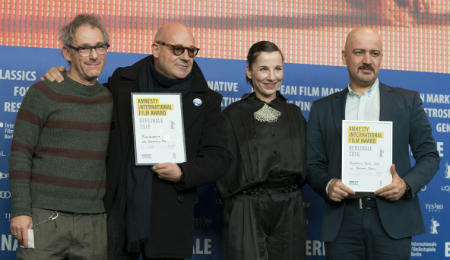
Mehrdad Oskouei’s ‘Starless Dreams’ (Royahaye Dame Sobh) along with ‘Fuocoammare’ (Fire at Sea) by Gianfranco Rosi have won the Amnesty International Film Prize at the 66th Berlin International Film Festival. Rosi’s documentary film about the refugee crisis in the Mediterranean off the Italian island of Lampedusa, won also the Golden Bear prize for Best Film.

Oskouei, one of Iran’s best documentary filmmakers, explores in ‘Starless Dreams’ the anguish and joys of girls in a juvenile correctional facility on the outskirts of Tehran. His small, all-male crew spent 20 days talking to the young women who gave them surprising access to their lives and feelings. The film won in Iran the Best Documentary Director Award at the 34th Fajr Film Festival earlier this year.

The German branch of Amnesty International has awarded the Amnesty International Film Prize for the first time at the Berlinale 2005. The aim of the prize is to draw the attention of audiences and representatives of the film industry to the theme of human rights and encourage filmmakers to tackle this topic. German actress Meret Becker, Swiss film maker Dani Levy and Markus Beeko, Director of Campaigns and Communications for Amnesty International Germany were the members of this independent jury at the Berlinale 2016.

Iranian filmmaker Mehrdad Oskouei (1st R) and Italian director Gianfranco Rosi (2nd L) with Jury members Dani Levy (1st L) and Meret Becker (2nd R) in Berlin - Feb 20, 2016. Photo credits: Henning Schacht / Amnesty International

Iranian filmmaker Mehrdad Oskouei (1st R) and Italian director Gianfranco Rosi (2nd L) with Jury members Dani Levy (1st L) and Meret Becker (2nd R) in Berlin – Feb 20, 2016. Photo credits: Henning Schacht / Amnesty International

About Mehrdad Oskouei
Oskouei, an independent producer, filmmaker, photographer and researcher, was born in Tehran, Iran in 1969. He has a B.A. in film direction from the University of Arts, starting in the theatre in 1981 and the film world in 1988. In 2010, Oskouei received the Prince Claus Award from the Netherlands.

Sources: Tavoos Online, Berlinale, Hollywod Reporter, Reuters, Wikipedia | Starless Dreams, Fajr Film Festival (in Persian)

Photo series: Winter in Iran – Youth Alpine Ski Championship in Tehran

Tochal Ski complex hosted a competition attended by more than eighty young athletes.

Other winter photo galleries: The other Iran | Winter

Sources: Borna News Agency, Sport Tehran

Isfahan Music Museum (Photos)

The Music Museum in Isfahan is a private museum opened thanks to the efforts of two masters in traditional Iranian music. The museum is divided in different sectors: national and local instruments, photgraphs, a teaching music hall and a rehearsal hall.

Listen to traditional Iranian music here: The other Iran | Music

Sources: Mehr News Agency, isfahanmusicmuseum.com (in Persian)

Photo series: Winter in Iran – Savadkuh County, Mazandaran

The Veresk Bridge and the Three Golden Lines, a railway spiral passing three times by the same area at different heights are located in Savadkuh County, Mazandaran Province. They are part of the Trans-Iranian Railway, a major railway building project that started in 1927 and completed in 1938. It links the capital Tehran with the Persian Gulf and Caspian Sea.

The Danish firm Kampsax began constructing Veresk Bridge in 1934. The structure stands at 110m height and has a 66m long arch. It connects two mountains in the Abbas Abad region.

The construction of this bridge included craftsmen of many nationalities. The name of the bridge is derived from the name of a Czechoslovakian technician whose name was hard to pronounce for Iranians. Near the bridge is a memorial for the workers who lost their life while building the bridge and its nearby tunnels. The Chief Engineer, Austrian Walter Aigner, following his wishes, is buried in the local cemetery of Veresk.

During World War II, it was known as the Pol-e-Piroozi, or the bridge of victory. During the course of the war, Reza Shah was asked by Hitler to blow up all tunnels and bridges, including the Veresk Bridge, on Iran’s railway lines in order to delay the transfer of goods and reinforcement troops to the north for the Russians. He furthermore promised to replace and reconstruct all of such demolished structures following the Germans’ victory in the war. Reza Shah rejected the request. Today trains connecting Tehran to Gorgan or Sari pass over this bridge an average of four times a day.

Sources: Wikipedia | Veresk Bridge, Borna News, highestbridges.com, fouman.com, Wikipedia | Trans-Iranian-Railway

“Fridges of kindness” across Iran

Thousands of volunteers all over Iran are helping to eliminate homelessness through a group called Payane Kartonkhabi, ending homelessness, or more literally, ‘ending sleeping in cardboard boxes’. The group not only distributes food among the homeless but also installs fridges on the street so that the neighbours can leave homemade meals for those in need. Payane Kartonkhabi is active in more than 20 cities including Tabriz, Isfahan, Kermanshah, Arak, and Shiraz, thanks to Instagram, Facebook and mostly Telegram.

In Tehran, some shops have reportedly put out refrigerators and invited people to leave food they do not want for homeless people to take. At least one bakery has put out a box of bread for those who cannot afford it. “Bread is free for those who can’t pay,” reads a sign on the box.

A combination of the “wall of kindness” with this initiative has lead to build cottage-like frames with not only a fridge in it but also a closet where people can put their spare clothes. Some even have bookshelves for books donations and others have cabinets where kids can leave their extra toys for others.

About Payane Kartonkhabi
Ali Heidari, an advertising manager in Tehran, told The Guardian about the tragedy he saw when he delivered meals to the homeless living in Harandi, a neighborhood in south Tehran, with his wife and son in May 2015. After going to friends and relatives, he used social media to ask for help.

On a Wednesday in July, the first group of volunteers went to south Tehran and distributed food. This is now regular. Every Wednesday, at 10pm, volunteers take thousands of food portions to Shoush neighbourhood. “Our record is 5,000 meals in one night,” says Heidari.
The installing of fridges began in October. The idea is simple: those who can afford it will put food in the fridge, and anyone who’s hungry, be it a homeless person or a neighbour, can open the fridge and take something to eat. In addition to that, the group also helps fight addiction among the homeless, taking an approach different from the official organisations. Payane Kartonkhoabi’s goal is to put an end to homelessness in Iran. It holds training workshops for those who are drug-free and tries to find jobs for them.

Sources: The Guardian 1The Guardian 2Borgen Project, Mehr News Agency (MNA) 1, MNA 2, Instagram @payane_kartonkhabi, Tasnim News

Photo series: Winter in Iran – Enjoying the snow in Sepidan, Fars Province

Sepidan, which means “The Whiteland” in Persian, is a County located in the Zagros Mountains, in Iran’s Fars Province.

The beauty of the region – Sheshpir Lake, vineyards, forests and rivers – coupled with the mild climate in the summer makes Sepidan a popular destination for ecotourism. Roanj and Barmefirooz, 3.720 and 3.706 meters above sea level, are the highest peaks of the county and are covered with snow throughout the year. Margoon Waterfall, Beheshte Gomshodeh (Lost Paradise) and Pooladkaf, one of the best ski resorts in south Iran are at the foothills of these peaks.

Though Sepidan is visited mostly for its nature and landscapes, it can be a destination for historical and archeological tourists. Anshan, which is considered the Cradle of the Achaemenid Empire and Golbahar Tower, built by the Safavids are located also in this county.

Sources: Borna News, ISNA 1, Wikipedia | Sepidan (in French), Wiki Voyage | Sepidan

“Walls of kindness” across Iran (Photos)

Walls typically create divisions but also the opposite is possible. With the addition of a few hooks and a splash of paint, walls across Iran are being reinvented as part of an outdoor charity initiative in which strangers leave goods they no longer want for those who need them.

The message above a row of hooks reads “Wall of Kindness”. It is a place where passersby are invited to “leave what you do not need” or “take it if you need”. Similar messages have turned up throughout the country as Iranians take matters into their own hands to help homeless people.

In Mashhad, where someone installed a few hooks and hangers on a wall, next to the words: “If you don’t need it, leave it. If you need it, take it.” Donations of coats, trousers and other warm clothing started to appear. The man, who wishes to remain anonymous, set up his charity wall on his own property in October, he told Hamshahri: “I saw a picture from Gilan [Province] where a place was designated for people to leave their extra clothes for whoever needed them. I also heard that in Tehran they’ve installed a fridge where people leave food [for the needy].”

It is not clear who started the trend, but in a country where use of social media networks is widespread, it has swiftly caught on. In Tehran, some shops have reportedly put out refrigerators and invited people to leave food they do not want for homeless people to take. At least one bakery has put out a box of bread for those who cannot afford it. “Bread is free for those who can’t pay,” reads a sign on the box.

Civil society in Iran is strong, and a number of non-governmental charities have had a significant impact recently, including the Mahak society, a Tehran-based organisation founded by the philanthropist Saeedeh Ghods that supports children with cancer.

Some charitable organisations have been hampered by sanctions imposed on Iran. One unintended consequence was that imports of life-saving medicine were made difficult as international banks refused to handle any money associated with the country. With sanctions relief, there are rising hopes that such charities will once again be able to work as normal.

Sources: The Guardian, BBC News, Payvand News of Iran, ABC, CNN, Mehr News Agency (MNA) 1, MNA 2, MNA 3, MNA 4, MNA 5, MNA 6, MNA 7, MNA 8, MNA 9, Tasnim News Agency (TNA) 1, TNA 2, TNA 3, ISNA 1, ISNA 2

Iran’s Markazi Province: Mahallat, the capital of flowers

Located in Markazi Province, almost 300km south west of Tehran, Mahallat was in ancient times an important location for Zoroastrianism. There are remains of Hellenistic architecture from Alexander the Great’s time as well as fire temple ruins dated from the Zoroastrianism era.

Today, the city is famous for its large flower gardens and hold a flower festival every September; some even call Mahallat ‘Holland of Iran’. Professional floriculture in the city dates back to the late 1920’s: A simple worker named Yahyakhan learned about growing flowers from his Dutch foreman in Tehran and took the knowledge with him to his birthplace, Mahallat.

The art of growing flowers was promoted and expanded by Yahyakhan and was later pursued by others. Eight years ago florists of Mahallat won a gold medal for their fresh gladiolus at an international exhibition held in Osaka, Japan.

Photos of Mahallat’s Daisies Festival, with more than 600 varieties of flowers, in November 2015

The city is one of the major producers and exporters of flowers in Iran. Out of 35,500 inhabitants, 40 percent are either growers or sellers of flowers or engaged in jobs that are indirectly associated with the flower industry. The region is also the top Chrysanthemums producer in the country, Mahallat’s florists plant 28 million Chrysanthemums annually and from 172 million flowers produced anually the city exports 6 million.

Mahallat also has the country’s largest cactus farm. Cactuses of diverse shapes and colors are found here. The city is an oasis and has a cold climate with strong winds during spring and summer.

Sources: Mehr News Agency, Wikipedia | Mahallat, IRIB, Iran Daily