Tag Archives: Photos

Photo gallery: Graduation ceremony at Amirkabir University of Technology in Tehran, Iran

Amirkabir University of Technology (AUT), formerly called the Tehran Polytechnic, is a public research university located in Tehran, Iran. AUT is one of the most prestigious universities, and the first established technical university in Iran, referred to as “Mother of Industrial Universities”.

Over 500 students of the Amir Kabir University of Technology celebrated their graduation in the university’s campus on Wednesday, January 14th.

The university was first founded by Habib Nafisi in 1958 and then developed by Dr. Mohammad Ali Mojtahedi, during the reign of the Pahlavi dynasty. Originally named the Tehran Polytechnic, it began its activities with five engineering departments. In 1978 the Tehran Polytechnic was renamed after the famed Iranian Prime Minister Amir Kabir (1807–1852).

Presently the university has grown to an elite school of science and engineering education with the capacity of about 10,000 students in 35 undergraduate majors, around 90 M.Sc. majors and 36 Ph.D. and post-doc programs. Acceptance in all levels of education in AUT is very competitive and only top students can enroll.

AUT has 15 departments including electrical engineering, biomedical engineering, polymer engineering, mathematics and computer science, chemical engineering, industrial engineering, civil and environmental engineering, physics and energy engineering, computer and information technology, mechanical engineering, mining and metallurgical engineering, textile engineering, petroleum engineering, ship engineering, and aerospace engineering. AUT has a well-equipped educational site in Bandar Abbas as well as an academic unit in Mahshahr.

The library and document center at AUT, the largest technical and engineering library in Iran’s capital, is one of the richest academic libraries in the technical and engineering field in the region. This library includes a central library and 16 satellite libraries in Tehran and Bandar Abbas. This library includes more than 5 million books which are mostly about computer.

Sources: Wikipedia | Amirkabir University of Technology, IRNA | Photos, Amirkabir University of Technology

“A Few Cubic Meters of Love” an award winning movie produced by two Afghan refugees that fled to Iran 30 years ago

“A Few Cubic Meters of Love” is a drama on migration and love directed and produced by Afghan brothers Jamshid Mahmudi and Navid Mahmudi who have lived in Iran for the past 30 years. The story of the film is set somewhere in the outskirts of Tehran, where a small factory illegally employs Afghan asylum seekers, who live with their families in old containers or modest shacks in nearby shanty towns. Saber, a young Iranian worker, secretly meets Marona, daughter of Abdolsalam, an Afghan worker. A love story unfolds. “A Few Cubic Meters of Love” is Jamshid Mahmudi’s debut film, which premiered at the 32nd Fajr International Film Festival in Tehran in February 2014. The film won him the Simorgh for best director in the New View section of the festival. “I would have felt bad had we not won any award at this event,” Jamshid Mahmudi said during the review session. “Because we did our best to make the film be warmly received,” he added.

The film is currently on screen at Iranian movies theaters. “The reason behind why Iranian people like this film, is that it is a real-life drama,” Jamshid Mahmudi stated. The film was selected to represent Afghanistan at the 87th Academy Awards in the Best Foreign Language Film category, but was not nominated. http://www.youtube.com/watch?v=Fqz41QkdG4c UNHCR about refugees in Iran: Iran is host to one of the world’s largest and most protracted refugee populations. […] The global economic downturn, removal of subsidies, and intensified international sanctions have caused hyperinflation, affected the delivery of basic services, and resulted in a dramatic rise in living costs in the Islamic Republic of Iran. Some 24 per cent of registered refugees are considered vulnerable, a rate that is expected to increase due to the economic situation. […] Sanctions also continue to negatively impact UNHCR’s ability to provide humanitarian assistance in an effective and timely manner. High inflation rates have substantial consequences for both the operation and partners. Comparison: Refugee numbers – GDP (nominal) per capita with richer and bigger regional neighbor country

Country GDP (nominal) per capita in US dollars Number of hosted refugees
Iran   6,363$ 868,242
Saudi Arabia 25,962$ 550

Must read regarding Afghan refugees in Iran: https://theotheriran.com/tag/afghanistan/ Sources: Payvand News of Iran United Nations High Commissioner for Refugees The Guardian

Photo gallery: Iranian football fans at the 2015 Asian Cup in Australia

The 2015 Asian Cup started on January 9th and ends on January 31st. Iran reached the quarterfinals but lost to Iraq on penalties in a nerve-wrecking match.

As a goodbye to this year’s Asian Cup a compilation of photos of Iranian fans:

Sources: mostafagraphy.tumblr.com, Iran beat Bahrain in 2015 Asian Cup opener – in pictures, Asian Cup – The fans of Iran, Bing Image Search

Iran’s Isfahan Province: Kashan – Fin Garden Series (Photo gallery)

The tradition and style in the design of Persian Gardens has influenced the design of gardens from Andalusia to India and beyond. Unesco declared the Fin Garden in Kashan a World Heritage Site on July 18, 2012.

Related post about Bagh-e Fin (Fin Garden) with background information and more photos:
Kashan – Fin Garden Series

Source: Wikipedia | Persian Gardens

Photo gallery: Exhibition showcasing ancient Iranian artifacts returned from Belgium

Iran’s President Hassan Rouhani has opened an exhibition at the National Museum of Iran showcasing hundreds of ancient Iranian artifacts returned to the country from Belgium after decades of legal battles.

The antique collection was returned to Iran on Thursday Dec. 24. This came after an appeals court in Belgium’s eastern city of Liège ruled in September 2014 that the country’s authorities restitute 349 smuggled artifacts to Iran. The legal process has lasted 33 years.

Praising the efforts made by the Iranian legal team in returning the valuble antiques, Rouhani said the move showed the resolve of the government in “safeguarding the rights of the Iranian nation.” He noted that such cultural exhibitions can help “defuse Iranophobia” in the world.

The stolen artifacts comprising of 221 clay and 128 bronze antiques had been discovered in Khorvin, Savojbolagh County, Alborz Province, 80 kilometers (49 miles) northeast of the Iranian capital and date back to the end of the second millennium and the first millennium BC and are some 3000 years old.

In 1965, a French woman who had acquired an Iranian nationality due to her marriage to an Iranian professor and had been living in Iran for some 18 years, with the help of a Belgian diplomat began to gradually transfer to Belgium the collection.

After the Iranian government was informed of the existence of this antique collection in a Museum in Ghent, Belgium, it filed a lawsuit in the Belgian courts in 1981 and made the claims that these artifacts had been illegally transferred out of the country, belonged to Iran, and as such must be returned home.

Following Iran’s demand in 1981, a Brussels court ordered the seizure of the pieces and their preservation at the Museum of Brussels University, pending a final verdict. The court of first instance ruled out Iran’s claims as the rightful owner in 1998 and again in 2012 the claims were rejected due to pass of time. Iran made an appeal to the Belgian court and finally in September 2014, the court of Appeals established Iran’s ownership of Khorvin’s collection of antique artifacts and ruled that they be returned to Iran.

Iranian officials have filed several other lawsuits in courts in Britain, France, Turkey, and Pakistan for the return of smuggled artifacts over the past years.

Sources:
Press TV
Mehr News Agency
realiran.org
Photos by E. Naredipour for IRNA

Photo Series: Winter in Iran – Marivan, Kurdistan Province

Snowman Festival in Marivan – With the first snowfall of this year’s winter in Marivan, people gathered to celebrate a snowman festival.

Marivan is a city in Kurdistan Province, Iran. At the 2006 census, its population was 91,664 inhabitants. The native language of the city is the central dialect of Kurdish (Sorani) with a minority of Hawrami dialect. The religion of the people is Shafi’i Sunni.

The city lies close to the Iraqi border and due to the official border market of Bashmaq which is between the Kurdish region of Iraq and Iran, it serves a destination for shoppers in neighbor provinces. Lake Zarivar lies west of Marivan. With a length of 5km and a maximum width of 1.6km it is a major touristic attraction in the region. The lake’s water is fresh and has a maximum depth of 6m.

Sources: Wikipedia | Marivan, Mehr News Agency | Photos

Iran’s Ancient City Nishapur in Razavi Khorasan Province

Nishapur or Nishabur from Middle Persian “New-Shabuhr” (meaning New City of Shapur, Fair Shapur, or Perfect built of Shapur) is a city in the Razavi Khorasan Province, in northeastern Iran, situated in a fertile plain at the foot of the Mount Binalud. It has an estimated population of 239.000 (as of 2011). Nearby are the turquoise mines that have supplied the world with turquoise for at least two millennia.

The city was founded in the 3rd century by Shapur I. Nishapur later became the capital of Tahirid dynasty and was reformed by Abdullah Tahir in 830. In 1037 it was selected as the capital of Seljuq dynasty by Tughril.

It reached the height of its prosperity under the Samanids in the 10th century, but was destroyed by Mongols in 1221, and further ruined by other invasions and earthquakes in the 13th century.

After that time, a much smaller settlement was established just north of the ancient town, and the once bustling metropolis lay underground—until a team of excavators from the Metropolitan Museum arrived in the mid-twentieth century. They worked at Nishapur between 1935 and 1940, returning for a final season in the winter of 1947–48.

The excavators had been drawn to the city because of its fame in the medieval period, when it flourished as a regional capital and was home to many religious scholars. It was also known as an economic center—Nishapur was located on the Silk Road.

The city was an important center for the manufacture of glass, metal, and stone vessels. The distinctive ceramics produced in Nishapur were traded around the region, and have been found at Herat, Merv, and Samarqand.

In addition, Nishapur was a source of turquoise and a center for growing cotton, producing cotton textiles as well as several types of fabric incorporating silk. One of the most unusual products of Nishapur, however, was its edible earth, which was believed to have curative properties.

Images of some artefacts found in Nishapur during the Metropolitan Museum’s excavations there

Sources: Wikipedia | Nishapur, Mehr News Agency, The Metropolitan Museum of Art

Iran’s West Azerbaijan Province: Saholan Cave

Ghar Saholan is located in West Azerbaijan Province, Iran, near to the village of Saholan that lies some 43 Kilometres east of the city of Mahabad. Situated in a small hill of limestone the cave has two entrances at an altitude of 1,780m. The cave has a total surveyed (mapped) passage length of 771.1m and a vertical range of 45.8m.

Geomorphological evidence within the cave would strongly suggest that it has been formed under phreatic conditions by still water and not by flowing water. Originally the cave would have been completely flooded. In the latter stages in its development the water levels have dropped to create airspace within the chambers and passages and further passage enlargement would have been stimulated by the gentle rising and falling of the water table and subsequent water level. Throughout the cave there are horizontal ledges of calcite deposits along the walls that are indicative of former (higher) water levels.

Sources: Tasnim News | Photos, www.caving-in-iran.org

Photo gallery + Video: Rastak – Iranian Band plays in Gorgan

Here you can enjoy them in action:

http://www.youtube.com/watch?v=zZAQe8jKhwg

Rastak a new ensemble for contemporary Persian folk music was formed as an experimental music group in 1997. The group seeks to collect, record and interpret traditional Persian folk music for a global audience, incorporating language, culture and history also merging traditional instruments and forms with contemporary rhythms. The musicians who comprise Rastak have graduated from the best universities in Iran and have done extensive research into Persian folk music.

History
It all began when Siamak and Behzad became friends on a winter’s day in 1994. Three years later, Siamak and Behzad were discussing the idea of forming an ensemble for folk music based on research, collection and interpretation. In 1997 Rastak Music Group was founded in Tehran. …
2002 marks Rastak’s meeting with renowned musicians in folk music from all around Iran such as: Khalifeh Aghe Ghosi from Kurdistan, Noor Mohammad Dorpoor from Khorasan, Shir Mohammad Espandar From Sistan and Balouchestan, Mohsen Heidarieh from Booshehr, Ashigh Imran & Ashigh Hasan from azerbaidjan, Faroogh Kiani from Khorasan, Abolhasan Khoshroo & Mohammadreza Es’haghi from Mazandaran, Dr. Tekkeh & Ghlich Anvar from Turkemen Sahra. Along with these meetings, Rastak began field recording and collecting folk music pieces. These endeavors prepared the material for one of Rastak’s major productions published under the name of ” minimalism in persian folk music “. These recordings demanded a studio, therefor the group made one.

In 2006, Rastak took new members: Mohammad Mazhari, Yavar Ahmadifar, Akbar Esmaeelipour, Sahar Ebrahim, Sara Naderi, Kaveh Sarvarian and Hale Seyfizade. In addition to the new album, two concerts were conducted which gained considerable popularity.After Majid left and Sara Ahmadi joined the group , Rastak continued hiring educated and versatile musicians in terms of vocal and instrumental skills and capabilities for its international appearances. Eversince this time, Rastak has held worldwide concerts and made numerous recordings.

Sources:

http://irna.ir/fa/Photo/2799616/

http://www.whatsupiran.com/Profile/Rastak/About

Another good read is this beautiful travel blog by a german mexican couple who met Rastak accidently while traveeling through Iran:

http://www.tastingtravels.com/rastak-iranian-music/


“Timeloss” by Iranian theater group Mehr to go on stage in New York and Los Angeles

The Mehr Theater Group led by Iranian director and writer Amir-Reza Kuhestani will perform “Timeloss” in the American cities of New York and Los Angeles. “Timeloss”, a fiery story about the passage of time, is another version of “Dance on Glass”, which Kuhestani staged in 2001.

Iranian play “Timeloss” on stage in the US: 16th to 18th January 2015 / Under The Radard Festival, New York 21st and 22nd January 2015 / Off Center Festival, Segerstrom Center for the Arts, Los Angeles

The play is an entry to “Under the Radar Festival”, a festival tracking new theater from around the world that is taking place at the Public Theater in New York from January 7 to 18.

The troupe will have their first performance Friday night. They will have three more performances at the Public Theater until January 18. Their next performance will be in the Segerstrom Center for the Arts in Los Angeles on January 21 and 22.

Starring Hassan Majuni and Mahin Sadri, the play will be performed in Persian with English supertitles. The play was staged at the Paris Autumn Festival in November 2014. It has also been staged in Hamburg, Brussels, Frankfurt, Geneva and Rotterdam.

Kuhestani is one of Iran’s most successful and prolific playwright-directors. His “Dance on Glass” won international acclaim and toured for four years. He is the first director to win two consecutive awards for the best theater production of the year in Iran for his play “Ivanov” (2011) and “The Fourth Wall” (2012).

Source: Payvand News of Iran

Other interesting related read:
The Guardian | Intimacy, love and separation in contemporary Iranian theatre

Photo gallery: Narcissus harvest season in Iran

The first season of harvesting Narcissus started in Jahrom, Fars province. This beautiful flower is called ‘Narges’ in Persian and has a prominent place in Persian poetry, literature, and culture as a symbol of beauty and innocence.
 http://en.mehrnews.com/detail/Photo/105264#ad-image-0

Series: Iranian Food – Isfahanian Biryani

In the central Iranian city of Isfahan, Biryani is made with cooked mutton or lamb, which is stewed and minced separately, and then grilled in special small round shallow pans in an oven or over a fire. The meat is generally served with powdered cinnamon in a local bread, usually “nan-e taftoun”, but also occasionally “nan-e sangak”.

You can see some pictures taken during a festival of biryani cooking held in Isfahan:

Source:
Tasnim News
wikipedia

Photo gallery: Winter in Iran – Chahar Bagh, Golestan

Chahar Bagh is a village in the Central District of Gorgan County, Golestan Province, Iran. Gelestan, located in the north-east of the country south of the Caspian Sea, enjoys a temperate climate most of the year. Geographically, it is divided into two sections: The plains, and the mountains of the Alborz range.

Source: Mehr News Agency | Photos, Wikipedia | Golestan Province

Photo gallery: Armenian Iranian Christians celebrate Christmas on 6th of January in Isfahan, Iran

Some Iranian Christians celebrate Christmas on Dec. 25 and New Years’ on Jan. 1, while Armenians celebrate Christmas at the same time as the Epiphany on Jan. 6.

More content on Iranian Christians on this blog: The other Iran | Christians

Sources: Mehr News Agency | Photos, Al-Monitor: the pulse of the Middle East | Iran’s Christians celebrate Christmas

Photo gallery: Christmas 2014 in Iran – Christmas shopping part 3

Some Iranian Christians celebrate Christmas on Dec. 25 and New Years’ on Jan. 1, while Armenians celebrate Christmas at the same time as the Epiphany on Jan. 6.


More content on Iranian Christians on this blog: https://theotheriran.com/tag/christians/

Sources: MEHR, IRNA

Iran’s Christians celebrate Christmas (Text & Photos)

As Christians around the world celebrate Christmas, the holiday season is also observed in Iran, a predominantly Muslim nation where Christians make up less than 1% of the country’s approximate population of 77.5 million.

Christmas trees decorated with red, green and gold gift boxes placed behind shop windows or at the entrances of different shopping malls and hotels can be seen, especially in the Christian neighborhoods of Tehran.

Decorated trees, along with Nativity scenes of the Virgin Mary, Joseph and baby Jesus, can also be seen in shops along Mirza Shirazi Avenue and Ostaad Nejatollahi (Villa Avenue) and its surrounding neighborhoods in central Tehran, where many Iranian Christians reside.

Shermin, an Iranian Christian, told Al-Monitor, “Like other Christians in the world, we celebrate Christmas at home along with our family and friends, exchange gifts and party.” She added, “There are a lot of good things to eat at this joyful time of the year.”

Some Iranian Christians celebrate Christmas on Dec. 25 and New Years’ on Jan. 1, while Armenians celebrate Christmas at the same time as the Epiphany on Jan. 6.

Despite being a minority, Iran’s Christians, Jews and Zoroastrians are recognized as established religious minorities and are represented in parliament, and also enjoy freedom to practice their religions and perform their religious rituals.

“You can’t celebrate Christmas in any Islamic country the way we do in Iran,” Rafi Moradians, an Iranian Armenian in Tehran, told Al-Monitor. Referring to the community’s exclusive sport and cultural club, Rafi said, “Authorities don’t impose any restrictions on us. We attend church services and there are also special celebrations at the Ararat Club.”

The festive mood, however, is not just limited to the Christian neighborhoods of Tehran, as some shops, especially those in the northern parts of the city, dedicate at least some section of their shop windows to decorations such as candy canes, snow globes and Santa Claus figures.

In recent years, municipal authorities have also put up banners celebrating the birth of Jesus on many main streets and at the St. Sarkis Armenian Church on Villa Avenue, where a service is held every year.

Unlike other countries in the region where public celebration of Christmas is limited to hotels frequented by foreigners, there is no such restriction in Tehran. The sale of Christmas ornaments, which during the first years of the Islamic Revolution was limited to Christian districts, can now be seen around town.

In fact, festive Christmas decoration and celebration take place throughout the country, specifically in major cities such as Esfahan, Shiraz, Tabriz and even religious cities such as Mashhad.

Over the past decade, celebrating Christmas has become increasingly popular among young Iranians, regardless of their religion. Of course, the trend has a partly religious basis, as Muslims acknowledge the birth of Jesus Christ and recognize him as one of God’s holy messengers. But another reason for taking part in Christmas celebrations seems to be rooted in the Iranian youth’s desire to “keep up with the rest of the world.”

“I get so excited when I see shops decorated with Christmas trees. It gives me the same good feeling and joy that I get during the Persian New Year, Nowruz,” Venus, a Muslim student who studies Iranian art at one of Tehran’s universities, told Al-Monitor.

Ordinary Iranians are not alone in the holiday celebrations and in exchanging greetings at Christmas time. This year, President Hassan Rouhani sent season’s greetings to Pope Francis and world leaders. Through his Twitter account, Rouhani reached out to ordinary Christians around the globe, as well as those in Iran.

“May Jesus Christ, the prophet of peace and love, bless us all on this day. Wishing Merry #Christmas to those celebrating, esp #Iranian Christians,” he tweeted.

Also, Iran’s Foreign Minister Mohammad Javad Zarif used his 100th tweet to express hope for a more peaceful 2015.

The Twitter account belonging to the office of Supreme Leader Ayatollah Ali Khamenei also featured a series of messages on the occasion of Christmas. One of the messages read: “It’s time for all caring Muslims, Christians & Jews to obey the prophets & truly honor #Jesus’ birthday by standing up against Israeli crimes.”

Covering Christmas and New Year’s events has also become routine for Iranian media in the past decade. For instance, the state news agency IRNA published a photo report of celebrations across the world this year. A similar photo report was published by the conservative Tasnim news agency and videos of Christmas celebrations around the globe were broadcast on state TV channels.

“As an Armenian, I’ve never felt any discrimination and I’ve been treated just as other Iranians,” said Rafi, who is a Western-educated Armenian and has worked in various government organizations, including as a senior adviser in one of Iran’s ministries.

“If I had any problems living as an Armenian in Iran, I would have left the country a long time ago,” he told Al-Monitor.

This year’s Christmas coincided with a mourning period for Muslims, Shiites in particular. But Iranian Christians say they have not encountered any restrictions on their celebration of Christmas or their preparations for the New Year.

Source: AL-Monitor, MEHR, IRNA

The wrinkled Mona Lisa on display in a gallery in Tehran, Iran

Wrinkles are not a reflection of death, annihilation; rather they are a sure sign of life. They represent aging which is still beautiful.

In an introductory booklet of the exhibition, Omid Rouhani, an art critic and actor said, “These portraits depict centuries-old aristocrats and the elite of the Renaissance who are still bathed in glow of pride. They have been detached from their world to appear on a background which is devoid of time and space to let their beauty and glory shine and reflect the height of their individuality, elegance and grandeur. […] By marring their apparent beauty, the artist has sought to explore new esthetics.”

Mohammad Hamzeh is 51 years old. The exclusive exhibition which displays his wrinkled portraits painted through the acrylic technique is his 12th. Earlier, Tehran Museum of Contemporary Art and art galleries in New York and Germany displayed his works along with those of other artists.

Read more on IRAN FRONTPAGE

Photo gallery: Christmas 2014 in Iran – Christmas Shopping, Part 2

Many shops in Tehran are displaying colorful Christmas decorations and ornaments welcoming the Christians who are busy shopping ahead of the the Armenian Christmas on January 6.

Although a minority religious group in Iran, Christians of Iran are free to practice their religion and perform their religious rituals.


Source: http://www.payvand.com/news/14/dec/1166.html

Christmas 2014 in Iran – Christmas Shopping, Part 1 can be found here: https://theotheriran.com/2014/12/25/photo-gallery-christmas-2014-in-iran-christmas-shopping/

Another good read on Iranian Christians is available here: http://www.al-monitor.com/pulse/originals/2014/12/iran-christians-armenians-christmas-rouhani.html##ixzz3NFNpgGCg

Iran’s Kerman Province: Mahan – Shazdeh Garden (Photos)

The tradition and style in the design of Persian Gardens has influenced the design of gardens from Andalusia to India and beyond.

Shazdeh Garden meaning Prince’s Garden (in Persian: Bagh-e Shazdeh) is a historical Persian garden located 6km away from the city of Mahan in Kerman province, Iran. It is a rectangular green oasis surrounded by brown desert and a good example of Persians gardens that take advantage of suitable natural climate.

It was built originally for Mohammad Hasan Khan Qajar Sardari Iravani ca. 1850 and was extended ca. 1870 by the governor of Kerman, Abdolhamid Mirza Naserodoleh, during the eleven years of his governorship in the Qajar dynasty. Its location was selected strategically as it was placed on the way between the Bam Citadel and Kerman.

The construction was left unfinished, due to the death of Abdolhamid Mirza in the early 1890s. It is rumored that upon hearing the news of the Governor’s death, the masons immediately abandoned their work and as a result the main entrance still shows some unfinished areas.

Shazdeh Garden is a rectangular shaped, 5.5 hectares areal surrounded by a wall. It consists of an entrance structure and gate at the lower end and a residential structure (once the summer palace of a now unknown prince) at the upper end. The distance between these two buildings has a collection of pools ornamented with water fountains. There are pavilions and a central canal. The residence is now mostly derelict but partly converted to a nice restaurant. The design looks best in an aerial photograph.

The garden itself consists of a variety of pine, cedar, elm, buttonwood and fruit trees which benefit from the appropriate soil, light breezes and qanat[1] water which enables such an environment in contrast to the dry surroundings.

The water enters the Garden at the upper end and while irrigating the trees and plants along its way, flows down through a series of steps and falls. On the two ends of the water path – meaning at the main entrance and the residential structure – there’s a pool that collects and subsequently redistributes the water. All together from top to bottom there are eight levels/falls along the water path.

In 1991, the premises were completely renovated due to the commemoration ceremony of Khaju Kermani. A traditional guesthouse has been constructed in the city center for tourists and visitors.

Some damage to the Garden was caused as a result of Kerman’s 2004 earthquake. In 2005 experts of the Research Center for Historical Sites and Structures were preparing documents to register Shazdeh Garden, amongst other gardens under the denomination “The Persian Garden”, on the UNESCO World Heritage List. It was finally inscribed in June of 2011.

Remark
[1] Qanat (also known as kariz or karez): The development of qanats probably began about 2.500 or 3.000 years ago in Iran and the technology spread eastward to Afghanistan and westward to Egypt. It is an ancient type of water-supply system, developed and still used in arid regions of the world. A qanat taps underground mountain water sources trapped in and beneath the upper reaches of alluvial fans and channels the water downhill through a series of gently sloping tunnels, often several kilometres long, to the places where it is needed for irrigation and domestic use. Although new qanats are seldom built today, many old qanats are still used in Iran and Afghanistan, chiefly for irrigation. (Source: Encyclopaedia Britannica)

Sources: Wikipedia | Shazdeh Garden, Iran Tour Online, Historical Iranian sites and people | Shazdeh Garden, Wikimedia | Shazdeh Garden, IRNA | Photos, Wikipedia | Persian Gardens

Jewish Lexicographer Soleiman Hayyim commemorated in Tehran, Iran

Persian literary monthly Bokhara paid tribute to Iranian Jewish lexicographer and translator, Soleiman HayyimThe Persian literary monthly Bokhara paid tribute to Iranian Jewish lexicographer and translator, Soleiman Hayyim (1887-1970) at the Mahmud Afshar Foundation on Sunday.

A number of literati including Managing Director of Bokhara Ali Dehbashi, the director of the Academy of Persian Language and Literature Gholam-Ali Haddad-Adel, and Department of Islamic Sciences of the Academy of Sciences of Iran Director Mostafa Mohaqqeq-Damad attended the ceremony, the Persian service of MNA reported on Monday.

Hayyim had studied at an American college and his English was good so he worked as a translator in the then ministry of finance, Dehbashi said.

It was during those years he felt a great need for an English-Persian bilingual dictionary, upon which he usually spent 8 hours a day, he added.

“Hayyim was expert in finding Persian synonyms for English words and phrases, and he was highly interested in Persian literature,” Dehbashi said.

His two-volume dictionaries especially the English-Persian one has been the first bilingual dictionary over the past years and has always been a good model for the future lexicographers, he stated.

Mostafa Mohaqqeq-Damad also gave a brief explanation about Hayyim and his works and efforts in compiling the dictionary.

Iranian Jewish Rabbi Younes Hamami Lalehzar who was also present at the ceremony talked about the recently-published Hayyim Persian-Hebrew Dictionary, which was introduced at the end of the ceremony, and said, “Hayyim had prepared the preliminaries for the dictionary and his manuscripts are still available.”

It took about 12 years to complete the dictionary, he added.

Lexicographer Mohammadreza Bateni, also attending the ceremony, said that almost all the dictionaries by Hayyim have been re-edited and refreshed.

The ceremony was brought to an end by unveiling the Hayyim Persian-Hebrew Dictionary.

Source: Payvand News of Iran


Photo gallery: Winter in Iran – Khalkhal-Asalem region

Khalkhal, with a population of 38,521 (2006), is the capital of Khalkhal County, in Ardabil Province, Iran. Asalem is a city in Talesh County, Gilan Province, Iran. Its population is 3,347 (2006). The road from Asalem to Khalkhal is known for its beautiful landscapes. This region, not far from the Caspian Sea, attracts many visitors every year.

Tasnim News Agency on December 26 dedicated its Iran’s Beauties in Photos section to pictures from winter in the northern part of Iran. Take a look:

Sources: Wikipedia | Asalem, Wikipedia | Khalkhal, Iran Front Page

Iran’s Tehran Province: Tochal Complex (Photos)

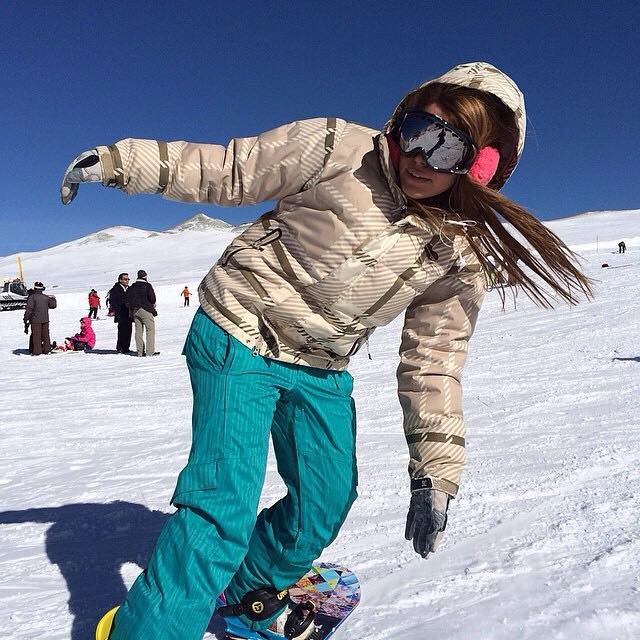
Young woman snowboarding in Tochal, Iran

Young woman snowboarding in Tochal, Iran

Tochal Complex is located in Velenjak, North of Tehran, Iran and consists of many recreational and sports facilities.

The Tochal Telecabin Project started in 1974 and has been open to the public since 1978. It starts at the Velenjak valley in north of Tehran at an altitude of 1900m. and ends at the last station at an altitude of 3740m, near the main ridge of Mount Tochal. This 7500m long gondola lift is used for accessing ski resorts and other recreational centres on the mountain to enjoy this area’s beautiful landscape, mountain fresh air and a multitude of fresh water springs.

The gondola lift has four stations:
Station 1 is at an elevation of 1900m and located at the beginning of Velenjak valley (end of Velenjak Street). Parking, inns and some other facilities are available.
Station 2 is at 2400m and has very limited facilities.
Station 5 is at 2935 m. There is a restaurant and a rescue centre. This station is also accessible through several climbing paths like Shirpala shelter, Osoon valley and Palang-chal shelter. In order to get to Station 7 you have to change here.
Station 7 is at 3740 m. and very close to the Tochal main ridge. It is the last station of the gondola lift. This station is in the middle of the Tochal ski slope. The Tochal main peak is a 30-minute walk from this point. This station is also reachable from Hezar-cham climbing path from Station 5.

Tochal Skiing Resort is one of the popular recreational places in Tehran. The main ski slopes are located in Station 7:
Peak: This 1200m slope starts from the foot of Tochal (at 3850m) and ends at the hotel (3550m). There is one Doppelmayr chairlift and one teleski for transferring skiers and a half pipe. Because of the height of the ski slope in station 7 (more than 3500m above sea level), similar to the Alvares Ski Resort in Sabalan, Ardabil Province, Iran, these slopes are covered with snow for more than 8 months during the year.
Western Foothill: This slope is located on the western foothill of the Tochal Mountain. The length of the ski slope is 900m, having its peak at 3750m above sea level and its lowest spot at Tochal Hotel (3550m above sea level). A Poma chairlift is built in this slope for skiers.

Sources: Wikipedia | Tochal Complex, Mehr News Agency | Photos, ISNA | Photos, Tasnim News Agency | Photos

Photo gallery: Christmas 2014 in Iran – Armenian Christmas Food

Every holiday has its own traditional food, in Iran or anywhere else in the world. Iranian Christians, including Armenians, celebrate Christmas and the Christian new year with special dishes, pastries and drinks.

Many Iranians are under the impression that Iranian Armenians, like many other Christians in the world — and especially Americans — celebrate the new year, Christmas and Easter by feasting on turkey. In fact, turkey is as  popular among Armenians as it is among other Iranians in general.

So what is an Armenian Christmas dinner like? The Iranian calendar year starts with the spring equinox, on March 20 or 21, and Iranians celebrate with a dish of herb rice and fish. As it happens, this dish is also a staple of the Armenian Christmas dinner in Iran.

But the Armenian Christmas table has other dishes as well. A key part of the meal is vegetable kuku, an Iranian dish consisting of eggs, vegetables, herbs and sometimes nuts and dried berries. If you ask an Armenian where this tradition comes from the answer is more often than not “I don’t know”.

“On their Christmas eve, Iranian Armenians often dine on rice, fish and vegetable kuku,” writes the Iranian Armenian writer and documentary filmmaker Robert Safarian. “Since childhood we thought that this was a Christmas tradition until the borders to Armenia opened and we learned that there is no dish in Armenia called vegetable kuku. It is an Iranian dish that  has become an Armenian tradition.”

Armenian Christmas pastries follow a tradition too. The two most well known and popular ones are perok (or pirok) marmalade cake and gata pastry. In the past, these two dishes were only popular among Armenians but now they are among the highest-selling pastries in Tehran confectionaries.

Coins of Fortune

Gata varies in its ingredients, size and in how it is decorated, depending on the region or the cook’s preferences. It consists of layers of dough with alternating layers of butter or margarine. Ingredients include flour, sugar, butter, eggs, yeast, milk and salt. Sometimes rosewater or spices such as cardamom are added, though they are not part of the standard recipe. After about an hour in the oven, the layers rise and the final gata takes shape.

One of the most popular variations of gata is made with nuts, especially walnuts. Sometimes a coin is hidden at the center of the gata and the belief is that fortune will smile on whoever finds the coin in her or his gata.

Gata is generally known as a sweet pastry but a salty version is popular too; many Armenian households prepare them for Christmas or the new year.

Perok, the other favorite holiday pastry, is made from a dough very similar to that used to make pie. Its center consists of marmalade; variations in perok are defined by the type of marmalade used.

The ingredients for perok are: pastry flour, sugar, eggs, baking powder, vanilla, grated orange peel, grated walnut, and marmalade. First you mix the butter and sugar, then add eggs one by one as you continue to mix. Then mix flour, baking powder, vanilla, grated orange peel and walnuts together in a separate bowl. For the third step, pour the contents of the bowl into a mixer. After a short while, turn the mixer off and continue to combine the ingredients by hand. Put about one-fourth of the dough aside and place the rest in a Pyrex dish and cover it with marmalade.

Cut the dough you have put aside into narrow ribbons and place them on the marmalade surface, making an “X” pattern. Put into an oven pre-heated to about 175 degrees centigrade and bake for about 40 minutes, or when the perok is golden.

Do-It-Yourself Wine

Like many Christians in the world, cookies and chocolates shaped like Christmas trees, Santa Claus or other symbols of the holiday are popular with Armenians. Families put them under Christmas trees and give them to children as treats and gifts.

You must add coffee and wine to this feast — they have a religious significance for all Christians. Under the Islamic Republic of Iran, trade in alcoholic beverages is forbidden, so the Armenian community makes its own wine and other alcoholic drinks. The law allows religious minorities to make wine for religious purposes.

One last point. The Armenians celebrate Christmas on January 6, so after the new year. As to why, well, that is another story, as they say.

This article was originally published in IranWire

Photo gallery: Christmas 2014 in Iran – Christmas Shopping

Mirza Shirazi Avenue, formerly known as Nader Shah, is located in one of the main Armenian neighborhoods in Tehran. At the moment, the avenue is decorated for Christmas and the approaching new year. Shop windows display Santa Claus dolls and the sidewalks are filled with pine trees, which will decorate the homes of Iranian Christians.

But Christmas is not only visible in this central Tehran street. It is also being celebrated in the east Tehran neighborhood of Majidieh, where many residents are preparing for Christmas and the new year period, now just a few days away.

Every year, starting in late November, shops in the two streets are decorated with gifts, pine trees, Santa Claus dolls and other seasonal items —  and shoppers are ready.

Pictures of Christmas Season in different Iranian cities. Click the photos to open them in enlarged gallery mode:

“From the first day of Azar (November 22), we get ready and make sure we have the merchandise,” says K., a shopkeeper on Mirza Shirazi Avenue. […] “The shoppers are not only Armenians and Christians. Many Muslims buy pine trees, Santa Clauses and other Christmas items and celebrate the holidays,” he explains. “They say it is a joyous and beautiful celebration. I don’t find it unusual, because Armenians celebrate the Iranian new year and participate in some Muslim religious ceremonies as well.” […]

“If you have an Armenian friend, remember not to call him on December 25, when all the radios and TVs and newspapers talk about Christmas and congratulate Christians on the birth of Jesus,” wrote the Armenian writer and documentary filmmaker Robert Safarian on his blog a few years ago. “The Armenian Christmas is on January 6, when probably nobody calls anyone to celebrate the holiday.”

“On their Christmas Eve, Iranian Armenians often dine on rice, fish and vegetable kuku (an Iranian dish made with whipped eggs, vegetables and herbs),” wrote Safarian. “Since childhood, we thought that this was a Christmas tradition until the borders to Armenia were opened and we learned that there is no dish in Armenia called vegetable kuku. It is an Iranian dish that has become an Armenian tradition.”

Because religious occasions in Iran are observed according to the Islamic lunar calendar, this year’s Christmas coincides with a mourning period for Muslims, and Shias in particular. But Iranian Christians have not encountered any restrictions in their preparations for Christmas and the new year. It continues to be a celebration that manifests itself in color and light in a few streets in the center of the Iranian capital.
This text is part of an article published on IranWire

Sources
DeutscheWelle
IranWire

Iran’s Hormozgan Province: Minab – Harvesting Watermelons for Yalda

Minab is a city in Hormozgan Province, Iran. At the 2006 census, its population was 76,776. In ancient times Minab had the name of Harmosia (or Harmozeia).

Minab is not far from Bandar Abbas. It is famous for fishing (especially shrimps) and for agriculture (especially date palms and mangoes). It lies on the main official road connecting Bandar Abbas, the Makran and the Baluchistan Province. The population are mainly Shi’a Muslims but there is also a Sunni minority, and the language they speak is Minabi (locally Minow), a dialect which is something between Bandari and Balochi and Persian. Once a week, a well known bazaar called “Panjshambe bazar” or in Minabi language “Peyshambe Bazar” (English: Thursday’s Bazaar) attracts people from all over Hormozgan, and beyond.

Sources: wikipedia | Minab, Mehr News Agency | Photos

Preparations in Iran for Yalda – The Longest Night of the Year (Photos)

Shab-e Chella(-e bozorg) (“night of (the great) forty”‎) or Shab-e Yalda (“Yalda night”‎) is an Iranian festival celebrated on the “longest and darkest night of the year,” that is, in the night of the Northern Hemisphere’s winter solstice. Calendarically, it is celebrated in the night between the last day of the ninth month (Azar) and the first day of the tenth month (Dae) of the Iranian civil calendar, which corresponds to the night of December 20 or 21 each year.

The longest and darkest night of the year is a time when friends and family gather together to eat, drink and read poetry (especially Hafez) until well after midnight. Fruits and nuts are eaten and pomegranates and watermelons are particularly significant. The red color in these fruits symbolizes the crimson hues of dawn and glow of life. The poems of Divan-e-Hafez, which can be found in the bookcases of most Iranians families, are intermingled with peoples’ life and are read or recited during various occasions like this festival and at Nowruz.

In the 1st-3rd centuries, significant numbers of Eastern Christians settled in Arsacid and Sassanid territories, where they had received protection from religious persecution. Through them, Western Iranians came in contact with Christian religious observances, including, it seems, Nestorian Christian Yalda, which in Syriac (a Middle Aramaic dialect) literally means “birth” but was also one of the Syriac words for Christmas, which — because it fell nine months after Annunciation — was celebrated on eve of the winter solstice. Although it is not clear when and where the Syriac word was adopted into Persian, gradually ‘Shab-e Yalda’ and ‘Shab-e Cheleh’ became synonymous and the two are used interchangeably.

An association with the 40-day “chella” period is preserved amongst Iranian Azerbaijanis, who call it Chilla Gejasi, which means the beginning of the first 40 days of winter. The Iranian concept also survives in Urdu-speaking Kashmir, India, where Chillai Kalan designates the 40-day harshest winter period.

In pre-Islamic Zoroastrian tradition the longest and darkest night of the year was a particularly inauspicious day, and the practices of what is now known as “Shab-e Chelleh/Yalda” were originally customs intended to protect people from evil (see dews) during that long night. People were advised to stay awake most of the night, lest misfortune should befall them, and people would then gather in the safety of groups of friends and relatives, share the last remaining fruits from the summer, and find ways to pass the long night together in good company. The next day (i.e. the first day of Dae month) was then a day of celebration. Although the religious significance of the long dark night have been lost, the old traditions of staying up late in the company of friends and family have been retained in Iranian culture to the present day.

Food plays a central role in the present-day form of the celebrations. In most parts of Iran the extended family comes together and enjoys a fine dinner. A wide variety of fruits and sweetmeats specifically prepared or kept for this night are served. Foods common to the celebration include watermelon, pomegranate, nuts, and dried fruit. These items and more are commonly placed on a korsi, which people sit around.

After dinner the older individuals entertain the others by telling them tales and anecdotes. Another favourite and prevalent pastime of the night of Chelleh is divination by the Divan of Hafez (fal-e Hafez). It is believed that one should not divine by the Divan of Hafez more than three times, however, or the poet may get angry.

Since the first night of winter ( 21th of December) is the longest night and from that night on the days get longer and the warmth and light of the sun increases, that night was supposed to be the time for the re-birth of sun. The Aryan tribes, in India, Iran and Europe celebrated sun’s birth at the beginning of winter. Yalda is a Syriani word meaning birth. The Roman used the word natalis for birth.

Sources
wikipedia
Tasnim News
ISNA
IRNA

Photo Series: Autumn in Iran – Snowfall in Zanjan

Photos of autumn snow in Zanjan, Iran. Click on the pictures to start the gallery:

Source: Mehr News Agency

Photo Series: Autumn in Iran – Hamedan Province (Part 2)

Some beautiful pictures of Hamedan in autumn:

You can find another photo gallery of this beatiful region and some information about Hamedan in: The other Iran | Photo Series: Autumn in Iran – Hamedan Province (Part 1)

Source: IRNA

Memorial honoring Jewish heroes of Iraq-Iran war unveiled in Tehran, Iran

Earlier this week, authorities in Tehran unveiled a monument to slain Iranian Jewish soldiers who died during the country’s long and bitter war with Iraq between 1980 and 1988. Death tolls for the hideous conflict differ, but casualty counts usually reach more than 1 million for both countries.

A public ceremony marked the memorial’s opening on Monday, with speeches that took place at a dais flanked by the Iranian flag and a menorah. Banners showed the images of fallen soldiers, hailed as “martyrs” in Farsi and Hebrew inscriptions.

[…]

After Israel, Iran has the Middle East’s second-largest community of Jews — with its current population estimated between 20,000 and 30,000.

“We are not tenants in this country. We are Iranians, and we have been for 30 centuries,” Ciamak Morsadegh, the Iranian Jewish parliamentarian, told Washington Post reporter Rezaian last year.

“There is a distinction between us as Jews and Israel,” added a shopkeeper in the historic city of Isfahan. “We consider ourselves Iranian Jews, and it has nothing to do with Israel whatsoever. This is the country we love.”

Sources:
Washington Post
IRNA

Iran’s Gilan Province: Anbu – Pomegranate Harvest

Anbu (also known as Anbuh-e Mashayekh) is a village in Talesh County, Gilan Province, Iran. At the 2006 census it had a population of 385 inhabitants.

Citizens of Anbu, a village in the south of Gilan, harvest pomegranates as fall arrives.

Sources: Wikipedia | Anbu, Iran, Mehr News Agency | Photos

Iran’s Sistan and Baluchestan Province: Lipar’s pink wetland (Photos)

The pink wetland of Lipar in southeastern Iran is a great place for those fond of marine environment.

The pink wetland of Lipar is located just 200 meters from the northern edge of the Sea of Oman and south of a namesake village in Chabahar, in Sistan and Baluchistan province.

The wetland is one of the alluring natural attractions of the area where those who are fond of the marine environment can catch a glimpse of beautiful scenery. What stands out about the wetland, which sits on the edge of Lipar’s seasonal lagoon 20 kilometers to the east of Chabahar, is its water which looks pink.

This body of water which is 10 hectares in area accounts for 90 percent of herbal planktons in the region and is home to a large number of species, flora and fauna.

The following is a collection of the pictures of the wetland Irandesert.com posted online:

Source: Iran Front Page

Iranian actress Merila Zarei wins award at the 2014 Asia Pacific Screen Awards in Australia

Merila Zarei has won the Best Actress Award at the 8th Asia Pacific Screen Awards for her role in the Iranian war drama ‘Track 143’ directed by female filmmaker Narges Abyar.

Iranian actress Merila Zarei has been honored at the 8th Asia Pacific Screen Awards (APSA) festival held in Australia. She won the APSA for Best Actress for her role in the acclaimed Iranian war drama ‘Track 143’ directed by female filmmaker Narges Abyar.

The movie premiered at Iran’s 2014 Fajr International Film Festival and garnered rave reviews from critics and audiences. Track 143 is a screen adaptation of Abyar’s novel, The Third Eye, which tells the story of a woman during Iran’s sacred defense. The film has been presented at a number of international festivals and has won several awards.

Iranian film ‘I’m Not Angry’ directed by Reza Dormishian was also awarded the APSA Academy NETPAC Development Prize.

Iranian cinematic productions were nominated for awards in five categories at this year’s APSA. ‘Melbourne’, directed by Nima Javidi, was nominated for the best screenplay award. Rakhshan Bani-Etemad was also one of the nominees for the best director at this year’s festival for her celebrated drama ‘The Tales’.

Award-winning Iranian filmmaker Asghar Farhadi presided over the six-member jury panel of this year’s APSA. He is a three-time APSA winner including Best Screenplay and the Jury Grand Prize for ‘About Elly’ in 2009, as well as Best Film for ‘A Separation’ in 2011.

Some 36 screen productions from 21 regional countries competed in this year’s festival. The 2014 APSA was held in Brisbane’s historic City Hall on December 11.

Sources: Iran Front Page, Bing Image Search

Works by three US American painters exhibited at Tehran’s Ovissi gallery

"Winter Opera" by Fernando DeOliveira

“Winter Opera” by Fernando DeOliveira

An exhibition displaying works by three U.S. abstract painters are currently underway at Tehran’s Ovissi Gallery. Thirteen works by Sheila Rice, Fernando DeOliveira and Brian Xavier will be on display until December 17 at the exhibit.

“My work is about the flow of joy and consciousness that animates my inner world,” DeOliveira wrote in a catalogue for his exhibition, which was held at the Alternative Art Space in Boston from December 2 to 7.

“I am an emotional person who believes that we can meet through art, and my art attempts to share my emotions and perceptions with each viewer in a very personal, intimate way,” he added.

Ovissi Gallery is located at 7 Azar Alley, Nateq-Nuri St., Gol-Nabi St., Pasdaran Ave.

The works are scheduled to another exhibition, which will open at Tehran’s Sheis Gallery on December 18.

The exhibition will run for five days at the gallery, which can be found at 10 Shirzad Alley, near Daneshju Park, Vali-e Asr Ave.

Source: Payvand News of Iran

Iran’s Gilan Province: Masuleh Village

Masuleh is a village in Gilan Province, Iran, founded in the 10th century AD. Historical names for the city include Masalar and Khortab. It has 554 inhabitants (as of 2006). The native people of Masuleh speak Talysh.

Masuleh is near the southern coast of the Caspian Sea, approximately 60km southwest of Rasht and 32km west of Fuman. It is 1.050m above sea level in the Alborz (or Elburz), surrounded by forest from valley to mount. The village itself has a difference in elevation of 100 meters. Fog is the predominant weather feature.

Masouheh-Rood-Khan is the river passing through the city, with a waterfall located just 200 meters away from the village. Many other springs are found nearby.

The  architecture in Masuleh is unique. The buildings have been built into the mountain and are interconnected. Courtyards and roofs both serve as pedestrian areas similar to streets. Masuleh does not allow any motor vehicles to enter, due to its unique layout popularly known as “the yard of the building above is the roof of the building below”.

Yellow clay coats the exterior of most buildings in Masuleh. This allows for better visibility in the fog. Buildings are mostly two stories (1st floor and ‘ground’ floor) made of adobe, rods and bole. A small living room, big guest room, winter room, hall, WC and balcony are usually found in 1st floor. A cold closet, barn and stable are located on the floor below, which are connected to the upper floor by several narrow steps inside the building.

Although it has been written that the community was established around 10 AD, the first village of Masuleh was established around 1006 AD, 6 km northwest of the current city, and it is called Old-Masuleh (Kohneh Masuleh in Persian). People moved from Old-Masuleh to the current city because of pestilence and attacks from neighbouring communities.

There are four main local communities at the city named: “Maza-var” (meaning beside the Mosque) at the south, “Khana-var” (beside homes) at the East, “Kasha-sar” (stretched on top) at the North, and, “Assa-mahala” (Assad community) at the West. Apparently, down town is the Market (Bazaar) area and also the main mosque of the city built in 969 AD.

Sources: Wikipedia | Masuleh, Wikicommons | Masouleh, Mehr News | Photos, IRNA | Photos

Iran’s Golestan Province: Gorgan County – Sunflower Farm (Photos)

Beautiful pictures from a sunflower farm in Gorgan County

Source: IRNA

Iran’s Kurdistan Province: Zhivar – Pomegranate Harvest

Zhivar is a village in Iran, Kurdistan Province, approximately 750km west of Tehran Province. At the 2006 census it had 1.764 inhabitants. Pomegranate is one of the quality products of Zhivar and the majority of people of this village earn a living from this product.

Sources:
wikipedia
IRNA

Farzan Ashourzadeh Fallah aka “Tsunami”: the Iranian highscholer who won the World Taekwondo Grandprix 2014 in Mexico

In the final bout of the men’s -58kg category on Dec. 3, 2014 in an event that is considered the pinnacle of elite taekwondo, the gold medal was won by an Iranian who can boast skill and talent in spades – but is a mere lad who is not only still at high school, but as a 4th poom, does not even hold a black belt.

[…] Despite his soaring ambition and remarkable talent, off the mats “The Tsunami” is menacing neither to look at nor to listen to: The laid-back teenager is tall and gangly, softly spoken and polite.

[…] With regards to his personal training, he takes two rest days a week. His conditioning focuses on bodybuilding for strength (his tall, thin frame looks deceptively fragile); plyometrics for explosiveness; and of course running: long distance for overall endurance and sprint work in the run-up to competitions.

He started with Taekwondo at the age of six and made it onto the junior national team at the age of 12. The year 2014 – Ashour Zadeh Fallah’s 18th year – has seen him reach maturity as both a man and an athlete. In addition to his Queretaro first- place finish, he struck gold at both the Manchester Grand Prix and the Incheon Asian Games.

[…] After graduating from high school, the 18-year old plans to study physical education at university. In his down time, Ashour Zadeh Fallah likes to hang out with friends and travel with his family.

Source: World Taekwondo Federation


Photo Gallery: Veterinary Hospital in Tehran, Iran

The Tehran Pet Hospital was opened in 2004 as the first private pet hospital in Iran.

Sources: IRNA

Photo Gallery: Saffron Farms in Iran

Four corners of Iran, home to saffron

Northeastern provinces of Iran are known for being saffron producers in Iran while the most expensive spice of the world is planted in four corners of the country, wherever the climate agrees with its requirements. Saffron requires little water and saffron plant blossoms several times a year.

The product is used for both treatment and nutrition. Derived from the dried stigmas of the purple saffron crocus, it takes anything from 70.000 to 250.000 flowers to make one pound of saffron. Moreover, the flowers have to be individually hand-picked in the autumn when fully open. Fortunately, only a little needs to be added to a dish to lend it color and aroma.

Iran now accounts for approximately 90% of the world production of saffron followed by Spain, Egypt, Kashmir, Morocco and Turkey.

Sources:
ISNA
Mehr News Agency
Mehr News Agency Photos

Iran’s Fars Province: Margoon Waterfall

Margoon (Margun) Waterfall (in Farsi: Abshare Margoon) is located in the Fars Province of Iran near the city of Sepidan, in the village Margoon, 48 kilometers far from the city Ardakan.

Its name means in Persian “snake like”. This waterfall is the main attractive of the Abshare Margoon protected area. It falls from the heart of a rocky mountain and has about 70m height and 100m width. It is one of the largest and most beautiful waterfalls in Iran. The area is mountainous and has an elevation of over 2.200m above sea level.

The weather is cold between November and April and in winter parts of the waterfall often freezes. Most tourists visit this area in the hot months of the year, when the temperature is 40°C in most of the country but hardly reaches 25°C at Abshare Margoon. Besides visiting the waterfall there are several activities to enjoy in this area: mountain climbing, rock climbing, camping, landscape photography etc.

As Abshare Margoon lies within the Zagros Mountain range, it has diverse flora and fauna. Oak is the main plant of the forests of the area and brown bear, Persian leopard, wolf, fox, wild boar, wild goat and porcupine are some of its fauna.

Sources:
wikivoyage
sh.wikipedia.org
en.wikipedia.org
Tasnim News

Photo Series: Autumn in Iran – Gorgan’s Alang Darreh Park, Golestan Province

Gorgan is the capital of Golestan Province, Iran. It lies approximately 400km to the north east of Tehran and some 30km away from the Caspian Sea. It has a population of ca. 270.000 inhabitants. Some 150 km (93 mi) east of Gorgan is the Golestan National Park.

The city was named Hyrcania in ancient Greek records, the equivalent of the local name Varkâna “Land of the Wolves” in Old Persian. Although modern Gorgan is only a city and county sharing the same name, ancient Hyrcania was the name of a greater region on the southern shores of the Caspian Sea (encompassing all of the present day Golestan province, as well as some eastern parts of the Mazandaran province, and some southern parts of the present day Republic of Turkmenistan). Until 1937 the city used to be known as Astarabad.

Only 5km southwest from Gorgan, covering an area of approximately 185 hectares is Alangdareh Park. These beautiful autumn pictures were taken there.

In general, Golestan has a moderate and humid climate known as “the moderate Caspian climate.” There exist three different climates in the region: plain moderate, mountainous, and semi-arid. Gorgan valley has a semi-arid climate.

Gorgan (as well as the whole Golestan province) has a world-famous carpet and rug industry, made by Turkmen. The patterns of these carpets are derived from the ancient Persian city of Bukhara, which is now in Uzbekistan. Jajim carpets are also crafted in this province.

Sources: Wikipedia | Gorgan, Mehr News Agency | Photos

Theater Performance: “London, Tehran, Rome, Amsterdam” opened in Tehran, Iran

“London, Tehran, Rome, Amsterdam, Reconsider Your Image Of Me” will play from November 16 to December 12 of 2014, every night (apart from Saturdays), at 21:00 o’clock in the Hafez Hall, Tehran.

This performance, a co-production between the Virgule Performing Arts Company (Iran) and STET The English Theatre (Netherlands) is supported by the Embassy of the Kingdom of the Netherlands. The opening ceremony was held on Sunday, Nov. 16 with the Dutch ambassador to Tehran attending the ceremony.

The performance examines a current topic between Iran and the West, namely what are the images that we have of ‘the Other’ and to what extent fears, fantasies and imaginations are based on truth. By initiating a direct meeting with the Other and listening to each other’s stories, this group aims to create new images, based on the stories of the people who wouldn’t usually make the headlines.

The piece is a multi-media, highly physical, speech performance. It includes the actors’ own stories, dialogue between the actors, video installations with short documentaries about daily life in the countries of origin of the actors and video collages of cultural milestones from these cultures. The physical form of the piece produces a third language.

The project has brought together an international cast to create this piece during a 2 month rehearsal period in Tehran. The company includes Dutch actress Marene van Holk, Italian actress Marta Paganelli, British actress Amy Strange, Iranian actresses Melodie Aramnia and Neda Jebreilli and Iranian actor Meysam Mirzaei, and the piece has been conceived and directed by Arvand Dashtaray.

The production will be performed in the Netherlands in the autumn of 2015.

Sources
Embassy of the Kingdom of the Netherlands in the Islamic Republic of Iran
Mehr News Agency

Photo Series: Autumn in Iran – Hamedan Province (Part 1)

Hamedan Province is one of the 31 provinces of Iran. It covers an area of 19,546 km² and has a population of over 1,82 million (2008). Its capital is Hamedan city. Hamedan province is one of the most ancient parts of Iran and its civilization. The city of Hamedan laid on the Silk Road.

The province lies in an elevated region with the ‘Alvand’ mountains running from the north west to the south west. These are part of the Zagros mountain range. Hamedan enjoys temperate warm summers and relatively cold winters.

According to local Jewish traditions, the City of Hamedan is mentioned in the Book of Esther as the capital of Ancient Persia in the days of King Ahasuerus. It was then known as Shushan. The Tombs of Mordecai and Esther are located in modern-day Hamedan.

Today’s Hamedan is what is left of Ecbatana, The Medes’ capital before they formed a union with the Persians. The poet Ferdowsi says that Ecbatana was built by King Jamshid. During the Parthian era Hamedan became the summer capital and residence of the Parthian rulers. After the Parthians, the Sassanids constructed their summer palaces in Hamedan as well.

Sources: ISNA, Mehr News Agency, Wikipedia | Hamedan Province

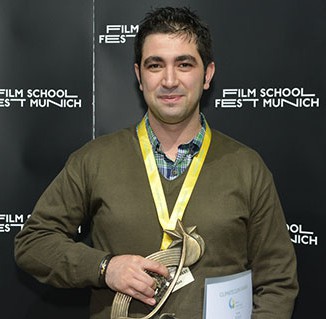
Iranian Director Amin Rahbar receives the “Climate Clips Award” at the 2014 International Film School Fest Munich

Rahbar, Amin - Iranian Film Director, Azad University of Central Tehran - Scale (Tarazoo)Amin Rahbar’s animation Scale scooped the prestigious Climate Clips Award at the 2014 International Festival of Munich Film Schools, running from November 16-22 in Germany. […]

“Some 42 films from 22 countries took part in this festival, and my production with an environmental theme was selected among the top three and ultimately managed to win the best film award” said Amin Rahbar to Mehr News.

“Scale is 2-minute long and produced with cutout animation technique. In this technique, flat characters and backgrounds are cut from materials such as paper, or if on a computer, with scanned images” explained Rahbar.

Climate-Clips-Jury (Brigitte Bruns, Veronika Nagelschneider and Beatrice Scola): Amin Rahbar’s enchanting animated film SCALE (in Farsi TARAZOO), shows us the dramatic changes industrialization has wrought upon our planet. Our transformation from an agricultural society to today’s skyscraper-studded megacities is brought to life by the sophisticated and original use of an old and relatively simple technique: paper cutouts. In just one and a half minutes, the clip illustrates how drastically our environment has changed, the severe damage that has been done to it and the current consequences such as climate change. The jury congratulates Amin Rahbar on the successful artistic and technical realization of his film.

Winner: Scale | Tarazoo
The story of human life from the beginning to the beginning…
by Amin Rahbar from Azad University of Central Tehran, Iran

Scale has been previously featured and awarded in other international festivals including Hamburg Festival in Germany, con i minuti contati Festival in Italy, and SHNIT Festival in Switzerland. It has also won the Best Film Award at Iran’s Short Film Festival for Children.

The International Festival of Film Schools established in 1981 is now one of the most important festivals for young filmmakers in the world. About 60 films are presented at the festival annually, and each year approximately 100 foreign students and professors have the opportunity to meet, enter into discussions and share their experiences with each other.

Sources: Film School Fest Munich, Mehr News Agency

Haft Negah art exhibition, held in Tehran, closes tomorrow (Nov 28)

The Niavaran Culture Center in Tehran is hosting the 7th annual edition of Iran’s Seven Views (Haft Negah), an art expo coordinated since 2006 by seven major art galleries.

This year, fourteen galleries  take part in the expo. The Aria, Elaheh, Dey, Golestan, Haft Samar, Valli, Mah-e Mehr, The Aran, Etemad, Hanna, Dastaan Basement, Seen, Seyhun, and Tarrahan-e Azad galleries will all participate in this years celebrations taking place from November 14 to 28.

The exhibition will showcase paintings, sculptures, and calligraphy from 350 artists featuring 400 works that respond to this year’s exhibition motto, “Every Iranian Home, One Artwork”.

Some of the well-known artists showcasing their artworks this year include Sohrab Sepehri, Mohammad Ehsaii, Aidin Aghdashlu, Parviz Tanavoli, Iran Darrudi, Farideh Lashaii and Parvaneh Etemadi.

Make sure not to miss this one of a kind artistic event!

Sources: Tara Gallery, Mehr News Agency

Photo Series: Autumn in Iran – Golestan Province

Golestan Province is one of the 31 provinces of Iran, located in the north-east of the country south of the Caspian Sea. It has a population of 1.6 million (2006) and an area of 20,380 km². Its capital is Gorgan. Present-day Gorgan was called Esterabad or Astarabad until 1937.

Golestan enjoys mild weather and a temperate climate most of the year. Geographically, it is divided into two sections: The plains, and the mountains of the Alborz range. In the eastern Alborz section, the direction of mountains faces northeast and gradually decreases in height. The highest point of the province is Shavar, with a height of 3,945 meters.

Sources: Wikipedia | Golestan, Tasnim News Agency | Photos

Photo Gallery: Iranian Cyclists Mark World Diabetes Day

TEHRAN (Tasnim) – Iranian cyclists gathered to pedal in the streets of the capital, Tehran, to mark the World Diabetes Day (WDD).

World Diabetes Day is the primary global awareness campaign of the diabetes world and is held on November 14 of each year. It was introduced in 1991 by the International Diabetes Federation and the World Health Organization in response to the alarming rise of diabetes around the world. World Diabetes Day is a campaign that features a new theme chosen by the International Diabetes Federation each year to address issues facing the global diabetes community. While the campaigns last the whole year, the day itself marks the birthday of Frederick Banting who, along with Charles Best, first conceived the idea which led to the discovery of insulin in 1922.

Sources:
http://multimedia.tasnimnews.com/Media/Gallery/557647
http://en.wikipedia.org/wiki/World_Diabetes_Day

Iran’s Sareh Javanmardi named Asia’s top female athlete of 2014

Sareh Javanmardi

Iran’s Paralympic shooter, Sareh Javanmardi, has been named Asia’s best female athlete of the year thanks to two gold medals she won at the 2014 Asian Para Games which were held in Incheon, South Korea in October.

The Iranian Student News Agency (ISNA) reported on November 22 that Sareh’s brilliant performance in the Asian Games earned her the much-coveted title.

She claimed a gold medal in the Mixed 50 meter pistol SH1 and finished first in the Women’s P2-10m Air Pistol-SH1.

Also, Iran’s Paralympic Committee won the Asian Paralympic Committee (APC) award in 2014. It was credited for the remarkable showing of the Iranian Men’s Team in Incheon Asian Para Games.

The awarding ceremony will take place in Asian Paralympic Committee (APC) on December 2 in Abu Dhabi, UAE.

Source: Iran Front Page

Iranian Lili Golestan received France’s Order of Academic Palms

French Order of Academic Palms awarded to Lili Golestan
Source: Tehran Times

Iranian translator Lili Golestan, who is also the curator of Tehran’s Golestan Gallery, received France’s Order of Academic Palms during a ceremony at the Embassy of France in the Iranian capital on Monday November 17, 2014.

French Ambassador Bruno Foucher delivered a short speech before honoring Golestan with the order, which is awarded by the French Minister of Education to those who have rendered eminent service to French education and have contributed actively to the prestige of French culture, Honaronline reported on Tuesday.

Iranian translator and artist Lili Golestan (R) with the French Ambassador Bruno Foucher (photo by Shargh daily)

“In the animated and rich cultural atmosphere of Tehran, in which you can find no day without an event, Golestan Gallery has a special place,” Foucher stated.

He also praised Golestan for the efforts she made to introduce French writers, including Albert Camus, Jean Giraud and Romain Gary, to Persian readers.

“Your achievements show that you are among the very eminent women and France praises such persons. Indeed, such brilliant activities in the promotion of Iranian art and such a will for the introduction of French literature luminaries deserve appreciation,” he added.

Foucher then presented the order to Golestan and she also made a short speech.

“French literature is part of my soul,” she said and added that she has tried to introduce it to Persian readers.

“I have had a small gallery in this mega city for over a quarter of a century. This night’s meeting caused me to take a glance at the past and for the first time to ask myself exactly how many times I have organized exhibitions at this gallery. The result surprised me and I also felt more exhausted: 1040 exhibits. But, due the decoration I received tonight, I feel that it’s time to forget the 1040 exhibitions and also to shelve the forty books that I translated and the 340 articles that I wrote for newspapers and magazines, in order to ease my exhaustion for a while, only for a short while,” she stated.

She translated many books from world literature into Persian. Among the works are Eugene Ionesco’s “Story Number 3″, Maurice Druon’s “Tistou of the Green Thumbs”, Miguel Angel Asturias’ “The Man that Had it All, All, All”, Gabriel Garcia Marquez’ “The Smell of the Guava Tree” and “Chronicle of a Death Foretold”.

Iranian author Mahmud Dowlatabadi was also awarded the Chevalier of the Legion of Honor in Tehran on Sunday evening.

France has decorated three Iranian personalities with the Chevalier of the Legion of Honors over the past six months: Vocalist Mohammadreza Shajarian received the order in June, cartoonist Kambiz Derambakhsh and filmmaker Dariush Mehrjuii are the other honorees.


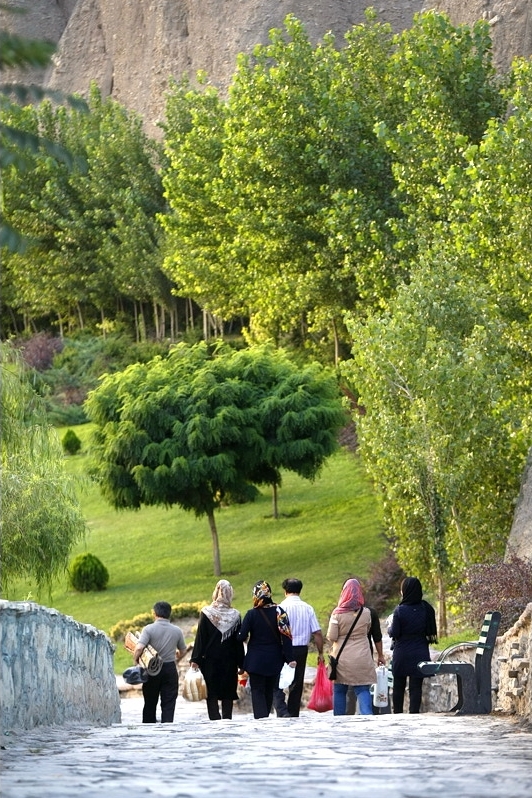
Series: Tehran’s parks and gardens – Javanmardan Garden

Tehran, Iran - Tehran City - Javanmardan Garden 02

Javanmardan Garden – Tehran, Iran

Javanmardan Garden

Javanmardan-e-Iran garden with a total area of 150 hectares is one of the largest gardens located at the northwest area of the capital.

A total area of over 20 hectares is devoted to green space and the complex is powered by solar energy.

There are different special spaces: from a musical fountain with mechanical technologies and laser shows to the house of health and sports or the pond of birds.

The complex has also a 24km walking route, an 8km recreational carriage route and a 8.7km cycling route.

There is a children’s playground, soft games and a Highland Park for children under 14 years old. For youths over 14 years old: a 4600m2 training and professional skate park, a rappel complex , a playground with mechanical games, multifunctional playgrounds, a chess playing site, table tennis and table football playgrounds.

In the botanical garden and all over the garden, the plants and trees have been introduced with special plaques in order to increase the botanical knowledge of the visitors.

The Artists Garden has a traditional tea house and reception pavilion, cultural pavilion and available forestation green spaces.

Sources:
http://www.untoldiran.com/tehran/attractions/park/javanmardan%20park.shtml
http://en.irna.ir/PhotoDetail.aspx?NID=02733085