Category Archives: People & Society

Photo gallery: Lunar eclipse July 2018 in Iran

A total lunar eclipse took place on 27 July 2018: The Moon has passed through the centre of the Earth’s shadow.

This eclipse was the longest total lunar eclipse in the 21st century, since it occurred near apogee (the Moon’s orbit point farthest from the Earth). It lasted approximately 103 minutes. The moon remained at least partially in Earth’s shadow for a total of four hours. The eclipse occurred simultaneously with the perihelic opposition of Mars (Mars is closest to the Sun and particularly close to Earth), a coincidence that happens once every 25,000 years.

A lunar eclipse occurs when the Moon passes within Earth’s umbra (shadow). As the eclipse begins, Earth’s shadow first darkens the Moon slightly. Then, the Earth’s shadow begins to “cover” part of the Moon, turning it a dark red-brown color (typically – the color can vary based on atmospheric conditions). The Moon appears to be reddish because of Rayleigh scattering (the same effect that causes sunsets to appear reddish) and the refraction of that light by Earth’s atmosphere into its umbra. The Moon’s brightness is exaggerated within the umbral shadow.

Sources: ANA, Fars News Agency 1, Fars 2, Fars 3, Fars 4, Fars 5, IRNA 1, IRNA 2, IRNA 3, ISNA, Mehr News Agency 1, MEHR 2, MEHR 3, MEHR 4, Tasnim News Agency 1, Tasnim 2, Young Journalists Club (YJC) 1, YJC 2, YJC 3, Wikipedia, timeanddate.com, NASA

Photo gallery: Fans in Iran celebrate the 2018 FIFA World Cup

During the world cup many Iranians watched the matches in cafés, restaurants, shops or public screenings. After each match people flooded the streets to celebrate and show their support for the team; Iran achieved their best performance at a world cup. They finished third in their group with four points and overall in 18th place out of 32 squads.*

An own goal by Aziz Bouhaddouz (90+5′) allowed Iran to win their first match 1:0 against Morocco. Spain won the second match 1:0 (Diego Costa 54′) but the Europeans struggled to create chances against a very disciplined Iran that defended brilliantly, showed plenty of tactical cohesion and looked dangerous going forward. Saeid Ezatolahi had a goal disallowed for offside.

The third match against Portugal ended in a draw 1:1 (Quaresma 45′; penalty Karim Ansarifard 90+3′). Morteza Pouraliganji rose up to the challenge and kept Cristiano Ronaldo in check. In the second half, Ali Beiranvand managed to save Ronaldo’s penalty kick. Seconds before the final whistle, Iran went all out for the winner and a desperate Saman Ghoddos effort was deflected onto the path of Mehdi Taremi who found himself one-on-one with Portuguese goalkeeper Rui Patricio. Taremi hit the wrong side of the netting, consigning his side to finishing third in their group. Iran needed all three points to advance to the knock-out stage.

In The Guardian, Paul Doyle rated Ali Beiravand’s overall performance with an 8 and chose the Iranian goalkeeper in his best eleven of the group stage.

*Note: In 1978, Iran finished in 14th place out of 16 participants on their first World Cup appearance.

Sources: Borna News Agency, Fars News Agency (FNA) 1, FNA 2, IRNA 1, IRNA 2, IRNA 3, IRNA 4, IRNA 5, IRNA 6, IRNA 7, ISNA 1, ISNA 2, ISNA 3, ISNA 4, ISNA 5, ISNA 6, Mehr News Agency (MNA) 1, MNA 2, MNA 3, MNA 4, MNA 5, MNA 6, MNA 7, MNA 8, MNA 9, Tasnim News Agency (TNA) 1, TNA 2, Tehran Picture Agency (TPA) 1, TPA 2, TPA 3, Young Journalists Club (YJC) 1, YJC 2, YJC 3, YJC 4, YJC 5, YJC 6, YJC 7, AFC, The Guardian (TG) 1, TG 2, Wikipedia 1, Wikipedia 2, Wikipedia 3

Easter 2017 in Iran (Photos)

This Easter was celebrated by all Christian denominations on the same day, which is unusual. The date usually differs, often even by weeks, between Eastern and Western Christianity, since the calculations are based on the Julian calendar and Gregorian calendar respectively.

Like last Christmas, Muslims in Abadan joined on Easter Sunday the single Christian family in the city at Surp Karapet Church.

The majority of Iranian Christians are ethnic Armenians and Assyrians, who follow the Armenian Apostolic Church and the Assyrian Church of the East respectively. Armenians celebrate the Nativity and baptism of Jesus on January 6, at the same time as the Epiphany. The Assyrians today celebrate Christmas on December 25.

Photos: St. Grigor Lusavoritch Church and St. Sarkis Cathedral in Tehran

Sources: Tasnim News, IRNA, Mehr News, Fars News, Payvand News, Wikipedia

U.S Wrestlers welcomed by chanting Iranian fans with gifts and flowers at the Freestyle World Cup 2017

The applause began as Team USA walked into the crowded stadium here at the Freestyle World Cup Wrestling championships in Kermanshah, Iran. The Iranians in the crowd whooped, cheered, and began chanting the name of Jordan Burroughs, the best known athlete here. […]

So it was again in Kermanshah, as Iranian fans welcomed Team USA — a powerhouse of the sport — with gifts and flowers. […]

“The welcome has been so gracious, it’s great being here,” said Burroughs, who has more Instagram followers from the Iranian capital Tehran than any other city in the world. “The reaction I get from fans here is more than what I get back in the States.” […]
— Source: Time

Unlike in politics, in wrestling there is a great deal of awe and respect between the US and Iran. “I have been wrestling overseas for three years now and every Iranian I have ever come in contact with has been extremely respectful, extremely polite,” US Olympic gold medalist Kyle Snyder said during a training session. “[While] there’s a little bit of turmoil politically, you definitely don’t see that within the sport. We respect each other as competitors and as people,” Snyder told CNN.

Wrestling is one of Iran’s favorite sports and many of team USA’s wrestlers are celebrities here. “In America we are misfits. In Iran we are heroes, so it is really cool to see,” Burroughs said. We’ve come to win before any political stance, but we think it’s an opportunity to show how cool and how great of a relationship we have on such an intricate level, “Burroughs said before Friday’s final. “[It’s about] seeing the people, being engaged with them and understanding their culture as much as we can before we make any big decisions about who they truly are.”
— Source: CNN

Winning the Freestyle Wrestling World Cup title for the sixth time in a row, Iran defeated USA in the 2017 final match, while Azerbaijan placed third with a victory over Turkey.

Later the US team wrote on their Instagram: “Thank you to the wonderful Iranian fans for cheering on our men throughout the World Cup & being gracious hosts!”

Detailed finals results: IRAN (IRI) 5 : 3 UNITED STATES (USA)
57 kg – Hassan Sabzali RAHIMI (IRI) df. Anthony Joseph RAMOS (USA), 6-0
61 kg – Masoud Mahmoud ESMAEILPOORJOUYBARI (IRI) df. Logan Jeffery STIEBER (USA), 6-2
65 kg – Meisam Abolfazl NASIRI (IRI) df. Frank Aniello MOLINARO (USA), 5-4
70 kg – Mostafa Mohabbali HOSSEINKHANI (IRI) df. James Malcolm GREEN (USA), 2-0
74 kg – Jordan Ernest BURROUGHS (USA) df. Peyman Morteza YARAHMADI (IRI), 3-2
86 kg – David Morris TAYLOR III (USA) df. Hassan Aliazam YAZDANICHARATI (IRI) by FALL, 10-4
97 kg – Kyle SNYDER (USA) df. Amir MOHAMMADI (IRI), 6-0
125 kg – Komeil GHASEMI (IRI) df. Nicholas Edward GWIAZDOWSKI (USA), 5-0

Other sources: teamusa.org, Instagram @alliseeisgold, Instagram @usawrestling, Instagram @unitedworldwrestling, unitedworldwrestling.org, Azad News Agency, BORNA, FARS 1, FARS 2, IRNA, ISNA, Tasnim News

Photo series: Winter in Iran – Snow sliding

Iranians enjoying winter in Alborz, Markazi, Hamedan and other provinces.

Sources: Mehr News Agency (MNA) 1, MNA 2, MNA 3, MNA 4, ISNA 1, ISNA 2

Photos: Christians and Muslims celebrate Christmas in Iran

The bell of Surp Karapet Church in Abadan, Khuzestan Province, rang before noon of Christmas Day on December 25, for the only Christian family of the city. Muslim citizens of Abadan joined the feast to wish this family a happy Christmas and to celebrate the birth of Jesus Christ with them.

Surp Karapet, the church of Abadan’s Gregorian Armenians, lies adjacent to Imam Musa Ibn Ja’far Mosque. It was constructed in the 1950s, repaired in 1996 and reopened in 1999, since 40% of the building was damaged during the eight-year war. It is registered as an Iranian national monument and used to serve as the largest hall of meetings for Abadan’s Armenians.

Iran is one of the safest places in the Middle East for Christians with many Iranians loving the flashy side of Christmas. Shoppers gathered over the past month in the Armenian districts of Somayeh and New Julfa — the biggest Christian areas in Tehran and Isfahan — to pick up fake trees and stock up on baubles, reindeer toys and plastic snowmen.

The majority of Iranian Christians are ethnic Armenians and Assyrians, who follow the Armenian Apostolic Church and the Assyrian Church of the East respectively. Armenians celebrate the Nativity and baptism of Jesus on January 6, at the same time as the Epiphany. The Assyrians today celebrate Christmas on December 25.

Early traditions observed the birth of Jesus Christ on January 6 but by the end of the 3rd century, Christmas in Rome was moved to December 25, to override a pagan feast dedicated to the birth of the sun. Since 1923, the Armenian Apostolic Church has mainly used the Gregorian Calendar. The only exception is the Armenian Patriarchate of Jerusalem, where the old Julian calendar is used, putting Nativity celebrations on 19 January in the Gregorian calendar.

Photos: Christmas shopping in Tehran and Isfahan, Surp Karapet Church in Abadan (Khuzestan) and liturgies at Surp Mesrob Church in Arak (Markazi), Vank Cathedral in Isfahan, and St. Grigor Lusavoritch Church, St. Joseph Church, St. Sarkis Cathedral, St. Targmantchats Church and Surp Vardanantz Church in Tehran

Sources: France 24, armenianchurch-ed.net, Wikipedia | Christianity in the Middle East (Iran), Wikipedia | Christmas traditions (Assyrians), Wikipedia | Armenian Apostolic Church, Mehr News Agency (in Persian), Tehran (BORNA 1, BORNA 2, ISNAIRNA, ANA), Isfahan (IRNA), Surp Karapet Church, Abadan (Iran Front Page, Twitter @afptehran, instagram @sara_kaabii, instagram @majid.rahimi1), Surp Mesrob, Arak (ISNA), Vank Cathedral, Isfahan (IRNA, Tasnim News Agency), St. Grigor Lusavoritch, Tehran (BORNA), St. Joseph’s, Tehran (Twitter @ali_noorani_teh, Mail Online), St. Sarkis Cathedral, Tehran (Mehr News Agency, IRNA 1, ANA, IRNA 2), St. Targmantchats, Tehran (ANA), Surp Vardanantz, Tehran (BORNA)

Autumn snow in northern and central Iran (Photos)

Sources: IRNA 1, IRNA 2, ISNA 1, ISNA 2, ISNA 3, ISNA 4, Mehr News Agency (MNA 1), MNA 2, MNA 3, MNA 4, MNA 5, MNA 6, Tasnim News Agency (TNA) 1, TNA 2, TNA 3, TNA 4, TNA 5, Young Journalists Club

Iran’s Kermanshah Province: Paveh – Pomegranate Harvest

Paveh, with a population of 19,800 inhabitants, is a city in Kermanshah Province, Iran. It is located in a sub-region along the Iran-Iraq border commonly referred to as Hewraman situated within the larger geographical region of Kurdistan. The city is considered by inhabitants of the region as the capital of the Hewraman. The inhabitants of Paveh are mostly Kurds that speak Auramani.

As a mountainous town, Paveh has cold winters and cool springs. The surrounding mountains are normally filled with fresh spring water from March to June. The town is also encircled with large fruit gardens which create beautiful sceneries during summers.

An old myth regarding the name of the city is that the Emperor Yazdgerd III sent his son named Pav to this area to renew his religious Zoroastrian faith. Both Persians and the local Kurdish inhabitants practiced Zoroastrianism during the Persian Empire’s Sasanian era from which this myth is derived.

Sources: ISNA, Wikipedia | Paweh

Commemoration of the Armenian Genocide in Iran (Photos)

Iranian Armenians rallied to commemorate the 101st anniversary of the Armenian genocide by the Ottoman Empire, demanding the Turkish government to recognize the Armenian Genocide. In Tehran a memorial service was held at the St. Sarkis Cathedral.

Related article: The other Iran | Iranian Armenians rally in Tehran to commemorate the 100th Anniversary of the Armenian Genocide

Sources: Mehr News Agency, Azad News Agency, Jam-e Jam Online, Tasnim News Agency, Young Journalists Club

Photo Series: Sudden spring rain in Tehran

Sources: Azad News Agency (ANA) 1, ANA 2, ISNA, IRNA, Fars News, Young Journalists Club

Photos: Sand sculptures in Kish Island, Iran

Kish is a duty-free, resort island in the Persian Gulf 19 kilometers from mainland Iran, in Hormozgan Province. It has a population of 26,000 residents and about 1 million visitors annually. The island is located on a narrow strip of tropical vegetation in the Northern Hemisphere and has a semi-equatorial climate. Along its coast are coral reefs and many other small islands.

Sources: kish.ir, Tasnim News Agency, Mehr News Agency, Wikipedia | Kish Island

Iranian Zoroastrians celebrate Farvardinegan (Photos)

Farvardinegan or Farvardog (Furudog) is a Zoroastrian ceremony that takes place on Farvardin 19th (April 8th) to remember the deceased. It is celebrated as a feast, and the spirits of the deceased are called to unite in their joy.

Farvardin is the name of the first month of the year in the Iranian calendar and derives from the word “Fravahar”. It refers to the choice of leading a moral life. To Iranian Zoroastrians, Fravahar is used to describe the soul of an individual. It is the guiding spirit of human beings assigned by God that returns to God after death. Thus, the festival of Farvardinegan is the remembrance day for the Fravahars and the souls of the departed.

From the morning of the 19th of Farvardin, Zoroastrians from different neighborhoods and villages head to the graves of their dear ones and revere their departed, pray to Ahura Mazda, recite Avesta (the sacred book of the Zoroastrians) for the Fravahars. They burn agarwood and olibanum for the peace of the souls and put plants, fruits, candles and laraks (a combination of seven dried fruits) on the graves.

Photos: Farvardinegan Ceremony across Iran, 2016

They also bake and cook local breads and foods which are served in traditional ceremonies. A tablecloth (Sofreh) is strecthed for the loved ones to pay respects and homage in special rooms allocated for this purpose. Feeling the absence of their loved ones, the families pray for the happiness of their departed soul and bring flowers, fruits and sweets.

Thousands of Zoroastrians across Iran participate in this ceremony in cities like Yazd, Shiraz, Isfahan, Ahvaz, Tehran, Kerman, Taft, etc.

Sources: amordadnews.com (Yazd), amordadnews.com (Isfahan), amordadnews.com (Tehran), amordadnews.com (Kerman), Honar Online (Tehran), berasad.com (Tehran I), berasad.com (Tehran II), berasad.com (Yazd), berasad.com (Cham Village, Yazd), berasad.com (Kerman), Wikipedia | Farvardinegan, berasad.com

Photos: Nowruz and the Year of the Monkey combined in Hamedan

Nowruz, as the Iranian New Year is called in Persian, means “new day” and falls on the first day of the spring equinox every year. It is an ancient ritual dating back 2500 years and is rooted in Zoroastrianism. The Chinese Lunar New Year is also known as Spring Festival, as the season signifies a new start from the depths of winter, carrying the same meaning as in Iranian culture.

This is the Year of the Monkey in Chinese zodiac. Hence, the city of Hamedan included it in its urban decoration for Nowruz, placing monkeys along the different haft-seen elements.

Haft-Seen is the traditional table setting of Nowruz in Iran. It includes seven items starting with the letter S (called seen in Persian alphabet): sabzeh (greenery: wheat, barley or lentil sprouts grown in a dish), samanu (a sweet pudding made from germinated wheat), senjed (the dried fruit of the oleaster tree), sir (garlic), sib (apples), somagh (sumac berries) and serkeh (vinegar).

Other symbolic items which are usually set along the Haft Seen are candles, a mirror, decorated coins (sekkeh in Persian), spring flowers like hyacinth (sonbol in Persian) or tulips, decorated eggs, a bowl of water with goldfish, a holy book and/or a poetry book, rose water and pomegranates.

Related articles: The other Iran | Customs & Traditions

Sources: IRNA, Nafee.ir, Wikipedia | Nowruz

Photos: Sizdah bedar ( Nature day ) in Iran

Sizdah Be-dar, literally “thirteenth in outdoors”, is an Iranian festival, and part of the Nowruz celebration rituals, held annually on the thirteenth day of the first month of the Iranian calendar (Farvardin). It is celebrated by leaving the house to spend the day outdoors, picnicking and enjoying nature. Thus this festival is also known as “Nature Day”.

A ritual performed at the end of the picnic is to throw away the sabzeh (greenery on the haft-sin table) part of the traditional table setting for Nowruz in Iran. Doruq-e Sizdah, the Iranian version of the prank-playing April Fools’ Day is also celebrated on this day.

Sizdah Bedar is customary to Iraq, Armenia, Azerbaijan and some parts of Central Asia. In cities with large populations of Iranians, like Los Angeles, it is common to see families celebrating Sizdah Bedar across the city.

Related article: The other Iran | Sizdah Bedar 2015

Photos: Sizdah Bedar 2016 in Iran – Picnicking outdoors on a sunny, rainy and even a snowy day!

Sources: Wikipedia | Sizdah Be-dar, kish.ir 1, kish.ir 2, IRNA 1, IRNA 2, IRNA 3, IRNA 4ISNA 1, ISNA 2, ISNA 3, ISNA 4, ISNA 5ISCA News, Mehr News Agency (MNA) 1, MNA 2, MNA 3, MNA 4, MNA 5, Fars News Agency, Tehran Picture Agency (TPA) 1, TPA 2, TPA 3, TPA 4, TPA 5, TPA 6, Borna News 1, Borna News 2, Borna News 3, Borna News 4, Borna News 5, Borna News 6, Tasnim News Agency (TNA) 1, TNA 2, TNA 3, TNA 4JameJam Online, Young Journalists Club (YJC) 1, YJC 2, Azad News Agency (ANA) 1, ANA 2

Photos: Earth Hour 2016 across Iran

Tehran and other major cities like Rasht, Shiraz, Kerman, Ahvaz, Urmia, and Isfahan celebrated Earth Hour 2016. Iran has taken part of this universal movement, switching of the lights of important elements all over the country since 2011.

Earth Hour is a worldwide movement for the planet organized by the World Wide Fund for Nature (WWF). The event is held annually encouraging individuals, communities, households and businesses to turn off their non-essential lights for one hour, from 8:30 to 9:30 p.m. towards the end of March, as a symbol for their commitment to the planet. It was famously started as a lights-off event in Sydney, Australia in 2007. Since then it has grown to engage more than 7000 cities and towns worldwide.

Related article: Photos: Earth Hour 2014 in Iran

Sources: earthhour.orgWikipedia | Earth Hour, IRNA 1, IRNA 2, IRNA 3earth-hour.ir, pgnews.ir, kojaro.com

Photos: Painted eggs across Tehran

Hundreds of Nowruz eggs painted by Iranian artists were placed in five of Tehran’s parks (Mellat, Laleh, Abbas Abad, Park Shahr and Bagh-e Ferdows) during Baharestan, an urban art event to welcome spring as part of the Persian New Year celebrations. Charities have organized a workshop at the Iranian Artists’ Forum where visual artists and 120 children have painted Nowruz eggs.

Painted eggs symbolize fertility and are displayed on the Nowruz table, called Haft-Seen together with various other symbolic objects. In ancient times Zoroastrians painted eggs for Nowruz, their New Year celebration, which falls on the Spring equinox. Nowadays this Nowruz tradition is common to Iranians of Islamic, Zoroastrian, and other faiths.

Related article: Urban art event to welcome spring in Tehran

Sources: Borna News, Fars NewsISNA, Tasnim News 1, Tasnim 2, Mashregh NewsWikipedia | Easter egg, Honar Online 1 (Persian), Honar Online 2, Honar Online 3, Honar Online 4, Honar Online 5, IRNA 1IRNA 2, Tehran Picture Agency (TPA) 1, TPA 2, TPA 3zibasazi.ir 1, zibasazi.ir 2, zibasazi.ir 3, zibasazi.ir 4, zibasazi.ir 5, zibasazi.ir 6, zibasazi.ir 7, Azad News AgencyYoung Journalists Club (YJC) 1, YJC 2, ISCA News, Mehr News Agency

Chaharshanbe Suri – Ancient Iranian Fire Festival (Photos)

Chaharshanbe Suri is an ancient ceremony dating back to at least 1700 BCE. Iran’s largest dictionary, Dehkhoda, describes it as: “A festival arranged on the last Tuesday evening of the old year, where you light fires and jump over them, to achieve happiness and good health in the New Year.”

The celebration usually starts in the evening and people leap over the flames, singing “zardi-ye man az toh, sorkhi-ye toh az man”, literal translated as “my yellow is yours, your red is mine”, asking the fire to take their pallor, sickness, and problems and in turn give them redness, warmth, and energy.

Traditionally, it is believed that the living were visited by the spirits of their ancestors on the last day of the year. Many people specially children, wrap themselves in shrouds symbolically reenacting the visits. By the light of the bonfire, they run through the streets banging on pots and pans with spoons (“Gashog-Zani”) to beat out the last unlucky Wednesday of the year, while they knock on doors to ask for treats. Sometimes the treat is a mixture of seven dried nuts and fruits (pistachios, roasted chic peas, almond, hazelnuts, figs, apricots, and raisins) and is called “Ajeel-e Chahar Shanbeh Suri”. The practices are very similar to Halloween, which is a Celtic version of similar festivals celebrated throughout the area in ancient times.

Photos: Chaharshanbe Suri in Iran, 2016

Families customarily enjoy snacks during the evening and a supper at night after the end of the festivities. In Ker­man and Shiraz the main dish is usually polow with pasta soup (“ash reshte“); the longer the pasta strands, the better the chances for a long life for each member of the family.

The ancient Iranians celebrated the last 10 days of the year in their annual feast of all souls, Hamaspathmaedaya (Farvardigan). They believed Foruhars (faravahar), the guardian angels for humans and also the spirits of dead would come back for reunion. These spirits were entertained as honored guests in their old homes, and were bidden a formal ritual farewell at the dawn of the New Year. The ten-day festival also coincided with festivals celebrating the creation of fire and humans. Flames were burnt all night to ensure the returning spirits were protected from the forces of Ahriman. This was called Suri festival. Zoroastrians today still follow this tradition.

The celebration was not held on this night before Islam and might be a combination of different rituals to make them last. Wednesday is likely to have been prompted by an Arab superstition where it represents a bad omen day with unpleasant consequences. This is contrary to Zoroastrian cosmology where all days were sacred and named after a major deity. By celebrating in this manner Iranians were able to preserve the ancient tradition. The festival is celebrated on Tuesday night to make sure all bad spirits are chased away and Wednesday will pass uneventfully.

Today, there is no religious significance attached to it any more and is a purely secular festival for all Iranians (Persians, Azerbaijani people, Armenians, Kurdish people, Assyrians, Bahá’í, Jews, Christian and Zoroastrians). The night will end with more fire works and feasts where family and friends meet and enjoy music and dance.

Chaharshanbe Suri in Tehran, Iran – 2016

Fire Festival in Sweden
In Gothenburg, Stockholm and Malmö, Sweden they celebrate Eldfesten, a Swedish version of the Persian Chaharshanbe Soori. This year, 2016, is the 25th anniversary of the festival in the city of Gothenburg, where it has become one of the most popular public cultural celebrations in the city. Thousands of people, including non-Iranians, attend each year to celebrate the arrival of spring with crackling fires, music, fireworks and fragrant Persian dishes.

Photos: Eldfesten 2016 in Sweden

Sources: Iran Chamber Society, Enciclopædia Iranica, Wikipedia | Chaharshanbe Suri, IRNA 1, IRNA 2, IRNA 3, IRNA 4, IRNA 5, ISNA 1, ISNA 2, Mehr News AgencyFacebook | Eldfesten 2016, Göteborgs-Posten, goteborg.com, Huffington Post Canada

Joint celebration of Chinese and Iranian New Year in Tehran (Photos)

The Chinese Embassy in Tehran and the Iran-China Friendship Association have held a combined celebration marking Chinese New Year as well as Nowruz, Iranian upcoming New Year at Niavaran Cultural Complex.

Chinese cooks and artists offered traditional dishes and handicrafts to the visitors and Iranian artists performed traditional Persian music to celebrate the event. Iran’s Red Dragon International Wushu Association performed lion dance, a tradition in Chinese culture in which performers mimic a lion’s movements in a lion costume. Another part of the celebration was bian lian (literally: face changing), an ancient Chinese dramatic art where performers wear colored masks which they change from one face to another almost instantaneously with the swipe of a fan, a movement of the head, or wave of the hand.

Chinese Lunar New Year is also known as Spring Festival, as the season signifies a new start from the depths of winter, and the corresponding holiday carries the same meaning in Iranian culture. Nowruz, as the Iranian New Year is called in Persian, means “new day” and falls on the first day of the spring equinox every year. It is an ancient ritual dating back 2500 years and is rooted in Zoroastrianism.

There are remarkable similarities in the ways Chinese and Iranians celebrate their spring festivals, according to Alireza Salarian, consul general for Iran in Guangzhou: It is a time for family reunions, people who live away from their hometowns return for a family dinner. Fish is a common holiday dish, as is a version of the saying, “May you get more than you wish for every year.” Like the Chinese, Iranians enjoy a week long holiday, and children wear new clothes as they accompany their parents on visits to relatives.

While Chinese attach scrolls of blessing couplets on gateposts and offer guests nuts and candy in exquisite boxes, Iranians traditionally present an elaborate table setting with seven items starting with the letter “s” in the Persian alphabet.

Sources: China Daily, Mehr News Agency, Tehran Times, Wikipedia | Bian lian

Photo series: Winter in Iran – Youth Alpine Ski Championship in Tehran

Tochal Ski complex hosted a competition attended by more than eighty young athletes.

Other winter photo galleries: The other Iran | Winter

Sources: Borna News Agency, Sport Tehran

“Fridges of kindness” across Iran

Thousands of volunteers all over Iran are helping to eliminate homelessness through a group called Payane Kartonkhabi, ending homelessness, or more literally, ‘ending sleeping in cardboard boxes’. The group not only distributes food among the homeless but also installs fridges on the street so that the neighbours can leave homemade meals for those in need. Payane Kartonkhabi is active in more than 20 cities including Tabriz, Isfahan, Kermanshah, Arak, and Shiraz, thanks to Instagram, Facebook and mostly Telegram.

In Tehran, some shops have reportedly put out refrigerators and invited people to leave food they do not want for homeless people to take. At least one bakery has put out a box of bread for those who cannot afford it. “Bread is free for those who can’t pay,” reads a sign on the box.

A combination of the “wall of kindness” with this initiative has lead to build cottage-like frames with not only a fridge in it but also a closet where people can put their spare clothes. Some even have bookshelves for books donations and others have cabinets where kids can leave their extra toys for others.

About Payane Kartonkhabi
Ali Heidari, an advertising manager in Tehran, told The Guardian about the tragedy he saw when he delivered meals to the homeless living in Harandi, a neighborhood in south Tehran, with his wife and son in May 2015. After going to friends and relatives, he used social media to ask for help.

On a Wednesday in July, the first group of volunteers went to south Tehran and distributed food. This is now regular. Every Wednesday, at 10pm, volunteers take thousands of food portions to Shoush neighbourhood. “Our record is 5,000 meals in one night,” says Heidari.
The installing of fridges began in October. The idea is simple: those who can afford it will put food in the fridge, and anyone who’s hungry, be it a homeless person or a neighbour, can open the fridge and take something to eat. In addition to that, the group also helps fight addiction among the homeless, taking an approach different from the official organisations. Payane Kartonkhoabi’s goal is to put an end to homelessness in Iran. It holds training workshops for those who are drug-free and tries to find jobs for them.

Sources: The Guardian 1The Guardian 2Borgen Project, Mehr News Agency (MNA) 1, MNA 2, Instagram @payane_kartonkhabi, Tasnim News

Photo series: Winter in Iran – Enjoying the snow in Sepidan, Fars Province

Sepidan, which means “The Whiteland” in Persian, is a County located in the Zagros Mountains, in Iran’s Fars Province.

The beauty of the region – Sheshpir Lake, vineyards, forests and rivers – coupled with the mild climate in the summer makes Sepidan a popular destination for ecotourism. Roanj and Barmefirooz, 3.720 and 3.706 meters above sea level, are the highest peaks of the county and are covered with snow throughout the year. Margoon Waterfall, Beheshte Gomshodeh (Lost Paradise) and Pooladkaf, one of the best ski resorts in south Iran are at the foothills of these peaks.

Though Sepidan is visited mostly for its nature and landscapes, it can be a destination for historical and archeological tourists. Anshan, which is considered the Cradle of the Achaemenid Empire and Golbahar Tower, built by the Safavids are located also in this county.

Sources: Borna News, ISNA 1, Wikipedia | Sepidan (in French), Wiki Voyage | Sepidan

“Walls of kindness” across Iran (Photos)

Walls typically create divisions but also the opposite is possible. With the addition of a few hooks and a splash of paint, walls across Iran are being reinvented as part of an outdoor charity initiative in which strangers leave goods they no longer want for those who need them.

The message above a row of hooks reads “Wall of Kindness”. It is a place where passersby are invited to “leave what you do not need” or “take it if you need”. Similar messages have turned up throughout the country as Iranians take matters into their own hands to help homeless people.

In Mashhad, where someone installed a few hooks and hangers on a wall, next to the words: “If you don’t need it, leave it. If you need it, take it.” Donations of coats, trousers and other warm clothing started to appear. The man, who wishes to remain anonymous, set up his charity wall on his own property in October, he told Hamshahri: “I saw a picture from Gilan [Province] where a place was designated for people to leave their extra clothes for whoever needed them. I also heard that in Tehran they’ve installed a fridge where people leave food [for the needy].”

It is not clear who started the trend, but in a country where use of social media networks is widespread, it has swiftly caught on. In Tehran, some shops have reportedly put out refrigerators and invited people to leave food they do not want for homeless people to take. At least one bakery has put out a box of bread for those who cannot afford it. “Bread is free for those who can’t pay,” reads a sign on the box.

Civil society in Iran is strong, and a number of non-governmental charities have had a significant impact recently, including the Mahak society, a Tehran-based organisation founded by the philanthropist Saeedeh Ghods that supports children with cancer.

Some charitable organisations have been hampered by sanctions imposed on Iran. One unintended consequence was that imports of life-saving medicine were made difficult as international banks refused to handle any money associated with the country. With sanctions relief, there are rising hopes that such charities will once again be able to work as normal.

Sources: The Guardian, BBC News, Payvand News of Iran, ABC, CNN, Mehr News Agency (MNA) 1, MNA 2, MNA 3, MNA 4, MNA 5, MNA 6, MNA 7, MNA 8, MNA 9, Tasnim News Agency (TNA) 1, TNA 2, TNA 3, ISNA 1, ISNA 2

Photo series: Winter in Iran – Dizin Ski resort

Dizin is one of the larger Iranian ski resorts in the Alborz mountain range, near Tehran (43 miles north of the capital city) and also near the city of Karaj. It was established in 1969.

The ski season in Dizin lasts longer than in European ski resorts, from December to May, because of the resort’s high altitude. The highest ski lift reaches 3,600 m (11,800 ft), making it one of the 40 highest ski resorts in the world.

The lowest point of the region is 2650m, while its highest point is 3600m, (which equates to 11,811 feet above the sea level). The snow quality at Dizin is fantastic powder and rivals that of many European and Rocky Mountain snow areas.

The Dizin ski complex is the first ski and winter sport resort in Iran which has been officially recognized and granted the title by the International Ski Federation (FIS) for its capability in administrating official and international competitions. At the present, the Dizin ski region is administered by Iran Ski Federation. The FIS Grass Skiing World Cup is also organized in Dizin since 2012.

Sources: Wikipedia | Dizin, Mehr News Agency | Photos 1, Mehr News Agency | Photos 2

More info on: TripAdvisor | Attraction Review | Dizin

Photo gallery: Domino competitions in Hamedan, Iran

Different domino tournaments were organized at Hamedan’s Azad University during the last weeks. The competitions for middle and high schoolers took place early November with around one hundred participants in twenty five teams from Hamedan and Lalejin. Twelve teams competed late November during the tournament for university students.

Sources: ISNA 1, ISNA 2, Tasnim News Agency, hamedan.ir, Young Journalists Club

Youth Music Festival 2015 in Tehran, Iran – Part 2: Winners (Photos)

Close to 250 young musicians participated in this festival which was held in two main sections of classical and traditional Iranian music. The competition was held in three age groups ranging from 10-27 years old.

In the classical section, the highest number of instrumentalists played the piano, violin and guitar, while in the traditional section santur, tar and setar were mostly present. Traditional Persian music was held in eight sub-categories, including seven instrumental and a vocal section.

Related article: Youth Music Festival Practice & Performance (Photos) – Part 1 https://theotheriran.com/2015/09/22/youth-music-festival-2015-in-tehran-iran-part-1-practice-performance-photos/

Sources: tavoosonline.com, MEHR | Photos, nay.ir

12th International Open Chess Tournament “Avicenna Cup” in Hamedan, Iran (Photos)

The 12th Avicenna International Open Chess Tournament was organized by the Hamedan Chess Association and Iranian Chess Federation from September 2-9, 2015, in the Iranian city of Hamedan.

The event was an 11-round Swiss open with time control 90′ + 30″.

GM Oleg Korneev from Spain emerged a sole winner with 9.5/11 points, leaving the runner-up, 2015 Iranian champion GM Ehsan Ghaem Maghami, half a point behind.

The 15-year-old Parham Maghsoodloo clinched the bronze medal on a superior tie-break score, after sharing 3-7th place with 8.5 points. Maghsoodloo has just qualified for the FIDE World Cup 2015.

Top 10:

1 GM Korneev Oleg 2578 ESP 9.5
2 GM Ghaem Maghami Ehsan 2596 IRI 9
3 Maghsoodloo Parham 2447 IRI 8.5
4 FM Mousavi Seyed Khalil 2427 IRI 8.5
5 Mosadeghpour Masoud 2416 IRI 8.5
6 Dalir Alireza 2297 IRI 8.5
7 IM Asgarizadeh Ahmad 2402 IRI 8.5
8 GM Toufighi Homayoon 2400 IRI 8
9 Sedaghati Mehrdad 2238 IRI 8
10 Faghirnavaz Ali 2298 IRI 8

Sources: ISNA | Photos, MEHR| Photos, Tasnim | Photos, Chessdom.com

Youth Music Festival 2015 in Tehran, Iran – Part 1: Practice & Performance (Photos)

Close to 250 young musicians participated in this festival which was held in two main sections of classical and traditional Iranian music. The competition was held in three age groups ranging from 10-27 years old.

In the classical section, the highest number of instrumentalists played the piano, violin and guitar, while in the traditional section santur, tar and setar were mostly present. Traditional Persian music was held in eight sub-categories, including seven instrumental and a vocal section.

Sources: MEHR | Photos, nay.ir, honaronline.ir 1, honaronline.ir 2, Tavoos Online

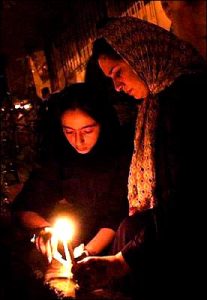
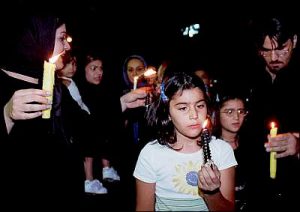
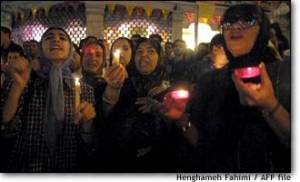
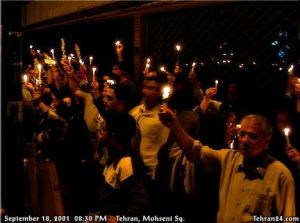
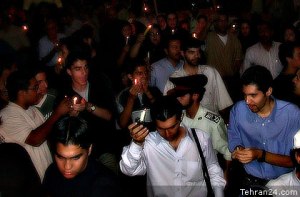
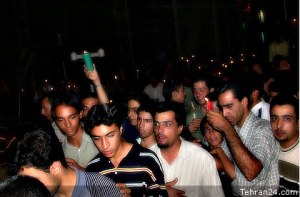
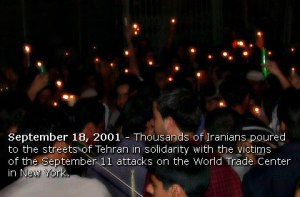
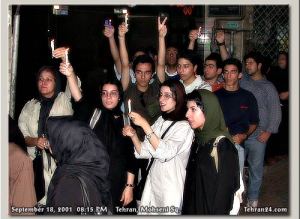
Iran’s exceptional reaction to 9/11 attacks: candlelit vigils for the victims and 60k soccer fans respected a minute’s silence

“Iran’s sympathetic response to the American tragedy has been exceptional for a country under US economic siege for two decades. Only hours after the Sept. 11 attack, President Muhammad Khatami condemned it, as did Supreme Leader Ayatollah Ali Khamenei. Other officials have sent sympathetic messages, including one from the mayor of Tehran to the mayor of New York – the first public official contact between Iran and the US since the 1979 Iranian revolution. […]

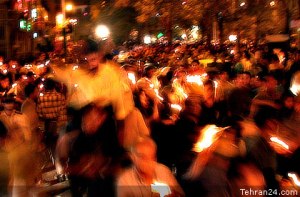
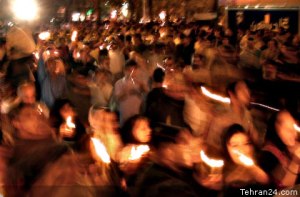
More important, 60,000 spectators observed a minute of silence during a soccer match in Iran’s Azadi Stadium, and hundreds of young Iranians held a candle-lit vigil in Tehran.”
Source: The Christian Science Monitor | US and Iran must work together against Taliban by R. K. Ramazani – September 24, 2001

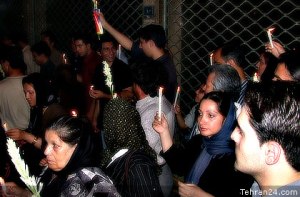
“Iranian women light candles in Tehran’s Mohseni Square in memory of the victims of the terror attacks on the World Trade Center in New York and the Pentagon in Washington DC. [see first picture above] […]

Even the most hardline Islamic clerics, who despise the United States, have been shocked into silence by the attacks. President Mohammad Khatami set the tone for Iran’s reaction with a statement that in Persian rang with deep compassion: ‘On behalf of the Iranian people and the Islamic Republic, I denounce the terrorist measures, which led to the killing of defenseless people, and I express my deep sorrow and sympathy with the American people.’ […]

Iran’s supreme leader Ayatollah Ali Khamenei condemned the attacks which have been blamed on Saudi-born Osama bin Laden. […]

‘Why should Americans deserve this? That’s a sick thought. They are just ordinary people like us,’ said Massoud Moshiri, as he bought cigarettes at a juice stand.” […]
Source: Times.com | Photoessay | Iran mourns America’s dead – September 18, 2001

On Tuesday, Ayatollah Khamenei, in his first public remarks on last week’s attacks, markedly failed to brand the United States an enemy. ‘Islam condemns the massacre of defenseless people, whether Muslim or Christian or others, anywhere and by any means,’ he said, adding pointedly: ‘And so Iran condemns any attack on Afghanistan that may lead to another human tragedy.’ […]

On Tuesday, more than than 3,000 mostly young people held a candlelight vigil in Tehran for the victims of the terror attacks, closely watched by security forces.

One reformist member of Parliament, Ahmad Borghani, even went to the United States interest section at the Swiss Embassy on Tuesday with a wreath of white flowers to sign the memorial book in sympathy with the family’s of the victims. ‘This tragedy has brought the two countries closer,’ he said. ‘But the United States must not expect Iran to cooperate in a military attack — considering our past relations.’
Source: The New York Times | World | A NATION CHALLENGED: TEHRAN; Iran Softens Tone Against the United States by Nazila Fathi – September 21, 2001

“IRAN — President Mohammad Khatami condemned ‘terrorist’ attacks on the United States”
Source: The New York Times | US | Reaction from around the world – September 12, 2001

“Leaders of Middle Eastern nations, including U.S. foes Libya and Iran, have condemned the terror attacks on the U.S. […] Mohammad Khatami, the Iranian president, said he felt ‘deep regret and sympathy with the victims.’ ”
Source: CNN.com | World | Attacks draw mixed response in Mideast – September 12, 2001

“Iranian President Mohammad Khatami, a moderate who is struggling for power against the country’s hard-line Islamic leaders, expressed ‘deep regret and sympathy with the victims’ and said ‘it is an international duty to try to undermine terrorism.’ ”
Source: FoxNews.com – September 12, 2001

“And in Iran, Tehran’s main football stadium observed an unprecedented minute’s silence in sympathy with the victims. Iran’s Ayatollah Imami Kashani spoke of a catastrophic act of terrorism which could only be condemned by all Muslims, adding the whole world should mobilise against terrorism.”
Source: BBC News | World | Americas | Islamic world deplores US losses – September 14, 2001

“Even in Tehran, where anti-American chants are all too common, thousands of people attending a World Cup qualifying match between Bahrain and Iran observed a moment of silence.”
Source: The New York Times | US | AFTER THE ATTACKS: THE VIGILS; Surrounded by Grief, People Around the World Pause and Turn to Prayer by Dan Barry – September 15, 2001

“In Iran, antipathy toward the United States was set aside as 60,000 spectators and players observed a minute of silence at the Tehran soccer stadium before a World Cup qualifying match.”
Source: Spartanburg Herald-Journal | REACTION ABROAD | World grieves along with America by Audrey Woods from Associated Press – September 15, 2001

“Iran’s Supreme Leader, Ayatollah Ali Khamenei, has strongly condemned the suicide terrorist attacks in New York and Washington. ‘Mass killings of human beings are catastrophic acts which are condemned’ he said ‘wherever they may happen and whoever the perpetrators and the victims may be’. ”
Source: BBC News | World | Middle East | Iran condemns attacks on US – September 17, 2001

“Last week, Ayatollah Ali Khamenei of Iran, one of the most conservative and anti-American Muslim clerical leaders, called the fight against terrorism a ‘holy war.’ He joins a host of learned Muslims who have loudly condemned terrorism as forbidden in Islamic law in the wake of the attacks on Sept. 11.”
Source: The New York Times | Opinion | Islam and the opposition to terrorism by Roy Mottahedeh – September 30, 2001

“After news of the Sept. 11 terrorist attacks spread to Tehran, hundreds of Iranians, students, merchants and housewives joined in a candlelight vigil in a downtown square. Many were crying. Three weeks later, I am still approached by ordinary Iranians, in restaurants, Internet cafes and on the street, telling me how sorry they are, and how worried they are about the ‘American war’ that is about to begin, just next door.”
Source: NBC News | Inside Iran, a nation conflicted by Jim Maceda – October 7, 2001

“On the evening of September 11, 2001, about two hundred young people gathered in Madar Square, on the north side of Tehran, in a spontaneous candlelight vigil to express sympathy and support for the United States. A second vigil, the next night, was attacked by the basij, a volunteer force of religious vigilantes, and then dispersed by the police. […]

The statement that Mohammad Khatami, Iran’s popularly elected President, made was extraordinary — extraordinary to American ears, at least. ‘My deep sympathy goes out to the American nation, particularly those who have suffered from the attacks and also the families of the victims,’ he said. ‘Terrorism is doomed, and the international community should stem it and take effective measures in a bid to eradicate it.’ ”
Source: The New Yorker | Letter from Tehran | Shadow Land by Joe Klein – February 18, 2002

“Iranian Students are calling for pro-american demonstrations, marking 9/11
A Public Call For Rememberance of the 9/11 Tragedy […]
Now, with the first anniversary of 9/11 tragedy upon us, as SMCCDI expresses its sympathy to the families of the victims and survivors of that ungodly event, and the honorable nation of America; it invites all free spirited Iranians to honor the memory of the victims of that day by gathering and lighting a candle in front of the main entrance of the Tehran university and major public squares in Tehran, and the main squares in other cities and townships, from 6:00 PM till 9:00 PM, on Wednesday 11 September.”
Source: daneshjoo.org | Post 1873 by SMCCDI Political Committee – September 10, 2002

“Finally, I’ve found a pro-American country. Everywhere I’ve gone in Iran, with one exception, people have been exceptionally friendly and fulsome in their praise for the United States […]. Iran is also the only Muslim country I know where citizens responded to the 9/11 attacks with a spontaneous candlelight vigil as a show of sympathy. ”
Source: The New York Times | Opinion | OP-ED Columnist: Those Friendly Iranians by Nicholas D. Kristof – May 5, 2004

“Ordinary Iranians have long had a softer stance toward the West than their leaders; after the Sept. 11 attacks, Iranians held a spontaneous candlelight vigil in Tehran.”
Source: Chicago Tribune | News | Contenders for Iranian presidency talk up U.S. by Evans Osnos – June 12, 2005

“In Iran, vast crowds turned out on the streets and held candlelit vigils for the victims. Sixty-thousand spectators respected a minute’s silence at Tehran’s football stadium.”
Source: BBC News | Middle East | Iran-US: Gulf of misunderstanding by Gordon Corera – September 25, 2006

“Mourners held a spontaneous candlelight vigil as thousands of people took to the streets of north Tehran chanting, ‘Death to terrorists.’ Iranian soccer fans observed a minute of silence before a match with Bahrain. Even Supreme Leader Ayatollah Ali Khamenei condemned the attacks: ‘Mass killing is wrong, whether it’s in Hiroshima, Bosnia, New York, or Washington.’ During Friday prayers at Qom, Ayatollah Ibrahim Amini said that the Iranian people grieved with the relatives of those killed, and the traditional slogan ‘Death to America’ was absent from the crowds’ mantras.
Source: Command Posts | Focus on: 9/11, Iran | After 9/11: The United States and Iran by David Crist – September 11, 2012

“Iranians mourn 9/11 victims”
Sources: shabhaft.blogfa.com | Post 134 and LiveLeak.com | Forgotten fact: night of 9/11, Iran – Spontaneous candlelight vigil to express sympathy and support for the American people

Other must read Iran-USA news: The other Iran | Tag | USA

” 2001/09/11, thousands and thousands Iranians went instantly in the streets with candles in homage to the victims ”
http://news.blogs.cnn.com/category/terrorism/september-11/” iranians mourn 9/11 victims ”
http://shabhaft.blogfa.com/post-134.aspx” Iranian Students are calling for pro-american demonstrations, marking 9/11 ”
http://daneshjoo.org/article/publish/printer_1873.shtml
Read more at http://www.liveleak.com/view?i=44b_1359356589&comments=1#DDqQZ5dOfJ70MPYf.99
” 2001/09/11, thousands and thousands Iranians went instantly in the streets with candles in homage to the victims ”
http://news.blogs.cnn.com/category/terrorism/september-11/” iranians mourn 9/11 victims ”
http://shabhaft.blogfa.com/post-134.aspx” Iranian Students are calling for pro-american demonstrations, marking 9/11 ”
http://daneshjoo.org/article/publish/printer_1873.shtml
Read more at http://www.liveleak.com/view?i=44b_1359356589&comments=1#DDqQZ5dOfJ70MPYf.99In Iran, vast crowds turned out on the streets and held candlelit vigils for the victims. Sixty-thousand spectators respected a minute’s silence at Tehran’s football stadium. http://news.bbc.co.uk/2/hi/middle_east/5377914.stm

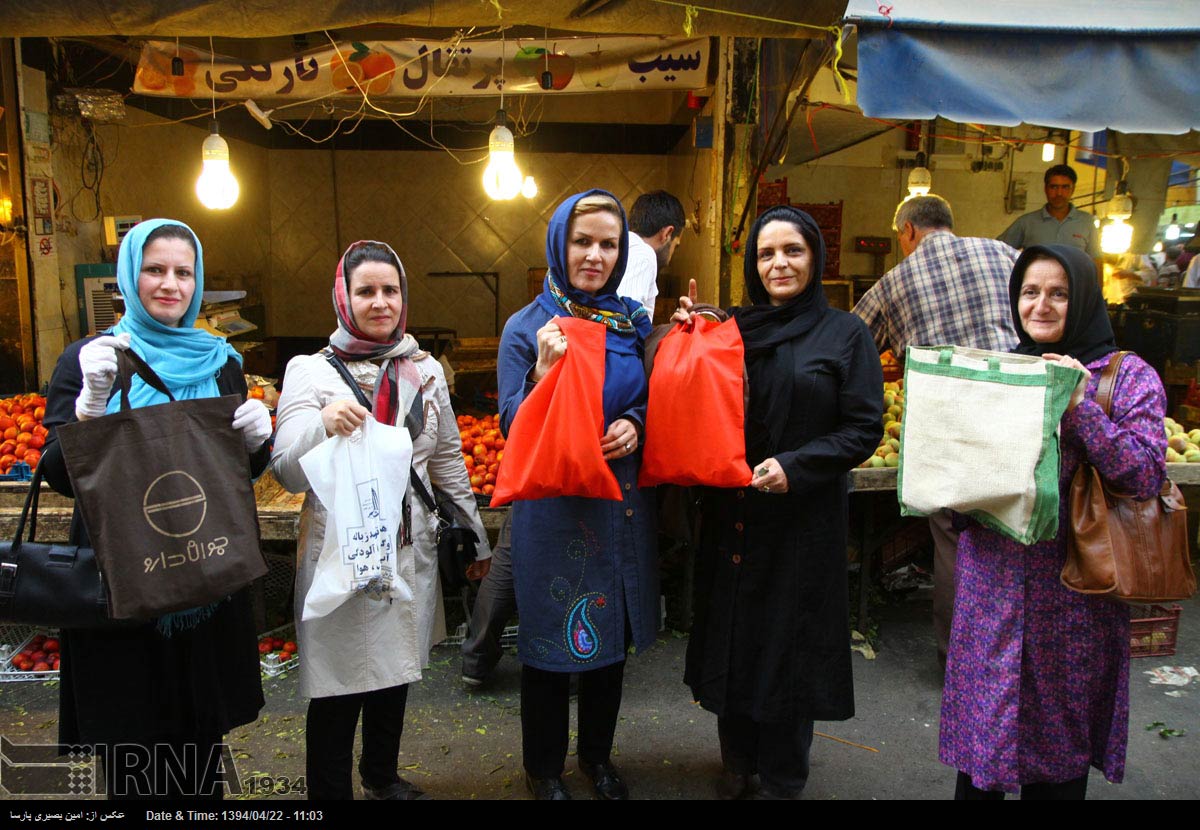
Plastic-Bag Free Day in Iran: Campaign promotes stopping use of plastic bags

On July 12, which is Plastic-Bag Free Day in Iran, several organizations once again geared up to raise public awareness about the environmental problems posed by plastic bags. For a week, Tehran and several other provinces implemented a program of using biodegradable bags in stores and markets bearing the logo “less plastic, cleaner earth, better health”.

Plastic-Bag Free Day was launched in Iran following a proposal by the Fruit and Vegetable Markets in 2012, which immediately found the support of Tehran City Development offices and the Department of the Environment. The markets have since completely stopped using plastic bags. All plastic bags have been replaced with paper and cloth bags in 15 fruit and vegetable markets across the capital, eliminating the use of 400 million plastic bags.

Plastic-Bag-Free-Day-in-Hamadan-Iran-1

Statistics indicate that 177,000 tons of plastic bags are produced each year in Iran. Across the world, 3.5 million tons of waste is produced each day, and Iran’s contribution to that is now pegged at 40,000 tons a day.

The international Plastic-Bag Free Day is observed on July 3.

Source: Payvand | News

Iran’s Golestan Province: Turkmen Sahra (Photos)

Turkmen Sahra (meaning Plain of Turkmen) is a region located mainly in Golestan Province, reaching to the Provnice of Razavi Khorasan and North Khorasan. It is situated in the northeast of Iran, near the Caspian Sea, bordering Turkmenistan. The majority of the inhabitants of the Turkmen Sahra are ethnic Turkmen. The biggest city is Gorgan which is dominated by Persian inhabitants, though in recent years there has been immigration of Turkmen and Zabuli from southern Iran. Other cities of Turkmensahra are Gonbad (called Kummet in Turkmen), Aqqala (Ak Qala), Kalaleh (Kelala), Gomishan (Kumushdepe), meaning the “silvery hill” in Turkmen, and Bandar Torkaman (Bender Turkmen), generally just called Bandar.

Sources: Tasnim News | Photos, Wikipedia |  Turkmen Sahra, Wikipedia | Iranian Turkmen

Rice fields in Iran (Photos)

Iran is a vast country, covering 1,648,000 km2 (164.8 million ha). Its topography is dominated by two mountain ranges – Alborz and Zagros – while two great deserts extend over much of the central region, leaving about 20 million ha for crop production. On account of the highly diverse climatic and soil conditions, only 12.5 million ha are cultivated annually with a wide range of food crops. Wheat, rice and barley are the most important cereals cultivated.

Rice is the staple food in Iran, with the quality of cooked rice outweighing all other considerations for Iranian consumers. The total area under rice is more than 600 thousand ha and rice is now grown in varying degrees in nearly all provinces of Iran. However, more than 80 percent of rice area is distributed in the two northern provinces of Mazandaran and Gilan.

Iran’s rice production in 2011 was 2.4 million tons, which increased from a total of 2.3 million tons in the previous year. Iran has 3,800 rice milling units (2009). Iran has imported about 1.4 million tons of rice from UAE, Pakistan and Uruguay worth $800 million in 2009. Iran’s rice imports drop by 40% in 2010. The average per capita consumption of rice in Iran is 45.5 kg, which makes Iranians the 13th biggest rice consumers.

The photos were taken in different Iranian provinces: Qazvin, Gilan, Kurdistan, North Khorasan, Fars and Kohgiluyeh and Boyer-Ahmad.

Sources: Food and Agriculture Organization of the United Nations (FAO) | The rice situation in Iran by N. Shobha Rani, Wikipedia | Agriculture in Iran, Encyclopaedia Iranica | Berenj “rice”, Mehr News Agency | Photos, MNA | Photos, Tasnim News Agency | Photos 1, Tasnim | Photos 2, Tasnim | Photos 3, Tasnim | Photos 4, IRNA | Photos, ISNA | Photos 1, ISNA | Photos 2

Iranian actress’ Motamed-Arya portrait displayed at UN exhibit in New York (Photos)

A portrait of the acclaimed Iranian actress Fatemeh Motamed-Arya is displayed besides 15 international figures at a multimedia exhibition titled ‘The Transformative Power of Art’ at the UN Exhibits in New York. The exhibition features sculptures and large fresco portraits of artists who have stood up for human rights.

Motamed-Arya, 54, is involved in humanitarian activities and helps raise funds for different charities. Her latest gesture is putting up her Crystal Simorgh award, presented to her for the role of best actress in ‘Gilaneh’ in 2005, on sale to support people deprived of a home in Iran. She has been nominated nine times for the best actress award at the Fajr International Film Festival and won the Crystal Simorgh four times. She had a role in Rakhshan Bani-Etemad’ celebrated film ‘The Tales’ and played the lead character in ‘Nabaat’, Azerbaijan’s nominee for the Best Foreign Language Film in the 2014 Academy Awards.

The objective of the exhibition – curated by painter and sculptor Fabrizio Ruggiero – is to demonstrate that art creates bridges where politics divide. It takes place under the United Nations “2015: Time for Global Action” campaign, primarily destined to raise awareness about climate change and our fragile ecosystems.

The sculptures are made of many natural elements and the 16 accompanying portraits represent people from all continents who, during their lifetime, contributed to the common good of humanity in one way or another and have transformed the way we think. The men and women who are represented never lost sight of the most vulnerable.

They are: Pierre-Claver Akendengué (Gabon), Maya Angelou (USA), Joan Baez (USA), Audrey Hepburn (UK), Vassily Kandinsky (Russia), Umm Kulthum (Egypt), Gong Li (China), Miriam Makeba (South Africa), Edgar Morin (France), Fatemeh Motamed-Arya (Iran), Okot p’Bitek (Uganda), Satyajit Ray (India), Sebastião Salgado (Brazil), Wole Soyinka (Nigeria), Ngugi Wa Thiong’o (Kenya), and Malala Yousafzai (Pakistan).

Sources: IRNA | News, United Nations | News

Interview with US Jazz saxophonist Bob Belden (first American musician to perform in Iran after 35 years)

Before the New York-based multi-instrumentalist, composer and producer Bob Belden brought his band ANIMATION to Tehran, Iran, last month, it had been more than 35 years since American musicians had performed in the Middle Eastern country. Belden and his group performed to a sold-out, ecstatic audience of appreciative fans at Tehran’s Vahdat Auditorium and also got the chance to see parts of the country and meet with local residents.

Here parts of the Interview with the bands lead Bob Belden:

Did you have any resistance or other challenges from either American or Iranian officials?
BB: We never met nor saw any American officials and the Iranians officials we met and worked with were fantastic; a beautiful sense of humor, visionary, erudite and very open about our music. No challenges at any point during our stay in Iran. None! Smooth sailing from day one till we left on day nine, excepting some logistical issues beyond our control (huge traffic jams and the lingering effects of jet lag). Actually the only real challenge we had was eating all of the food that was laid out before us for breakfast, lunch and dinner. The city of Isfahan gave us credit to purchase gifts to take back home.

Where did you perform and what was the venue and the audience like?
BB: We had three gigs, only one with ANIMATION. The first “gig” was at a private school in Isfahan where young kids (ages 6-14) learn classical Iranian music. We listened to them perform and then jammed with them at the end of the informal concert. The second gig was only myself and Pete Clagett on trumpet and we performed at the Azadi Sports Complex in Tehran during the World Greco-Roman Championships. What was significant about that gig was the group we played with: eight Iranian musicians including three women in the group. We performed the traditional Iranian national anthem (“Ey Iran”) but what made this moment special was the inclusion of women at a sporting event in a Muslim country. Never happened before. Our final gig, the gig that was our purpose for being in Iran, was held at the old Tehran Opera House now named Vahdat Hall. A classical opera house by German design, the acoustics and the sound system were perfect. The stage crew was first-rate all the way. Great gear and a fantastic Iranian-American engineer Hamidreza Maleki recorded the event.

Were the Iranian people welcoming to American musicians?
BB: Incredibly welcoming. Everywhere we went the people we met we very happy to see us and then astounded that we were musicians and then euphoric that we played jazz. The word jazz means a lot to people outside the U.S. And we did come in contact with a lot of Iranians from all walks of life. We hung out at a Starbucks in Isfahan and met a lot of younger Iranians and we ended up posing for a lot of photos with those at the cafe. The Starbucks is not official but a personal note to Starbucks in the U.S.: huge market in Iran for your coffee and brand! (I don’t drink coffee but the cafe also had tea!).

There’s a photo of the audience giving the band a standing ovation. What did the people you spoke to there say about the music?
BB: The applause spoke for everyone at the concert. We got a lot of hits on Facebook from Iran and even people from the audience posting photos and sending pictures to the guys in the band. We did not go there to find exacting understanding of what we played (this does not exist in the U.S. either) but to find a common need for expression. Everyone in the audience at the hall just enjoyed the music outright and, most important, the Ministers of Culture and Guidance were in the front row applauding not only our concert but their effort to bring us there. We all made the gig!!

What was your perception of the Iranian people’s understanding of and appreciation for jazz?
BB: There has been a gap of information as to the specific development and nature of jazz in the U.S. since the Iranian Revolution in 1979. Mostly the Iranians have been exposed to Europeans as the travel restrictions were not as difficult for musicians from Europe. That is why in Europe what we did is not deemed so important. I can’t speak for an entire country’s understanding of any music so I have no real idea of their appreciation of what anyone in the U.S. calls “jazz.” But it did not matter as the music culture in Iran is very deep and is thousands of years old. So they could relate to us based on pure musicianship, beyond the contextually limited language of jazz.

Did you get a chance to interact with Iranian musicians, and if so, what did they tell you?
BB: We interacted with some kids in Isfahan and also some classical musicians in Tehran. As this was an expeditionary trip we could not meet with musicians en masse. We did play with Iranian musicians at the Azadi Sports Complex. We did meet some Iranian musicians backstage at our concerts with the promise of returning to work with and record with Iranian musicians.

What would you like Americans, many of whom have been taught that Iran is not a U.S.-friendly nation, to know about the country and its people now that you’ve seen it first-hand?
BB: Perception is easy to create. Misperception is hard to break. In the U.S., for the most part since the Iranian Revolution, Iran has been subjected to a political and cultural analysis that is always shone in a negative light. It was as if thousands of years of history were negated to a footnote and the only history we intend to maintain in the U.S. is from 1979 onwards. This myopic view is not based on logic but composed of a systemic ignorance of global culture that is enabled by a weak education system in the U.S. and intense partisan calibrations meant to maintain a dark cloak of intrigue about Iran by people or entities that have agendas not expressed in their public statements. But a country is also made up of people, actual human beings, and this is what is most important for American citizens to understand. At the human level Iranians are the same as Americans. They eat food, they drink water, they have children and send them to schools. The parents fret over their kids just as parents here. People work for a living, they go to the movies, watch TV, ride the subways or buses to get to and from work. Young women scream at rock concerts for their favorite band. The traffic is similar to Los Angeles. English is spoken openly and quite well. Street signs are in Farsi and English. Magazines are in English and there are English newspapers. They have their own Burger Kings (called King Burger!), KFCs and pizza joints mixed with traditional Iranian food. And we ate at a truck stop that was emblazoned with the words FAST FOOD. For jazz musicians the words Truck Stop and Fast Food make you homesick!!

We could not sum up an entire country’s psyche in a week’s experience inside the country. Iran is a glorious and complicated country that lives in many different worlds at the same time, from the ancient to the modern. The people we met and worked with are beautiful people by any cultural definition. Sincere charm, subtle elegance and a very cosmopolitan demeanor were common in many of the people we met. Iran possesses a graceful and pastoral understanding of Islam. What we understood from being in an Islamic country is that if you use common sense and display an open respect for others then there is no problem at all reconciling the two views.

Source: Jazz Times | Bringing cultures together in peace

Photography: Sheed Award – Exhibition in Tehran

Selected photos of the 5th edition of SHEED Award (Independent Award for Social Documentary Photography) were exhibited at the Iranian Artist’s Forum. Workshops, meetings and lectures by experts and professionals were also held parallel to the event.

The selected works have been chosen by a jury composed of five members including Mehran Mohajer, Peyman Hooshmandzadeh, Jalal Shams Azaran, Mehdi Vosughnia and Arash Khamushi.

About Sheed Award
Founded in 2010, Sheed Award is an independent, non-profit and non-governmental photography award presented annually to a social documentary photographer. The award aims to encourage and promote social documentary photography among Iranian photographers.

Sources: Tavoos Online | News, Facebook Sheed Award | Photos, ISNA | Photos, Honaronline 1, Honaronline 2

Contemporary posters by Swiss graphic designers displayed at Tehran exhibit

The exhibition took place at the Iranian Artists Forum in Tehran and displayed fresh look at the typography, posters and contemporary Swiss design.

There were works by a number of Swiss graphic designers on display, including Flavia Cocchi, Nadine Kamber, Claude Kuhn, Felix Pfäffli, Melchior Imboden, Erich Brechbühl, K. Domenic Geissbühler, Megi Zumstein, Claudio Barandun, Jean-Benoit Levy and Roger Pfund.

Iranian artists Ebrahim Haghighi, Ghobad Shiva, Amrollah Farhadi, Saeed Babavand and Ambassador of Switzerland to Iran Giulio Haas attended to the opening ceremony.

Sources: Tehran Times | News, Mehr News Agency | Photos, Iranian Artists Forum | Gallery (Photos: Leila Ebrahimi), Iranian Artists Forum | News (Photos: Leila Ebrahimi), Mehr News Agency | News

Photos: Graduation ceremony of Sharif University of Technology in Tehran, Iran

The graduation ceremony took place this month at Tehran’s Milad Tower.

Sharif University of Technology (SUT) is a public research university in Tehran, Iran, known traditionally to be first choice of top ranked Iranian high school and university students in engineering and physical sciences.

Undergraduate admission to Sharif is limited to the top 1 percent of students who pass the national entrance examination.

The university was founded in 1966 with the name Aryamehr Technical University by Dr. Mohammad Ali Mojtahedi. At that time, there were 54 faculty members and a total of 412 students who were selected by national examination. Also only four departments were established: Electrical, Metallurgical, Mechanical, and Chemical Engineering. Following the 1979 revolution the university was named after Majid Sharif Vaghefi, a former student who was killed in 1975.

Today the university has grown to an elite school with over 9000 students, 700 of whom are studying for a doctorate, and over 500 faculty members in 15 main departments. Funding for Sharif University is provided by the government and through private funding. The main campus of the university is in Tehran and it has also an International Campus on Kish Island.

Sharif University is known for its large number of alumni who join the academic world. Maryam Mirzakhani, first woman to win the Fields medal (the ‘Nobel Prize’ of mathematics), is an alumni of Sharif University. Other notable alumni from SUT: Wikipedia | SUT | Notable alumni

Further read: The other Iran | Graduation ceremony at Amirkabir University of Technology

Sources: Tasnim News Agency | Photos, Sharif University of Technology, Wikipedia | Sharif University of Technology

Photos: The 28th International Book Fair kicked off in Tehran!

The event started on Wednesday May 6, in a 120,000 square meter venue at Tehran’s Grand Mosalla, and will continue until May 16, 2015.

Over 2800 publishers from Iran and 65 other countries have presented their latest publications at the fair. 300,000 Iranian books and 160,000 non-Iranian books were presented this year. The foreign publishers substantially offer their materials in English or Arabic however titles in French, German, Chinese, Korean or Japanese are also available.

Millions of visitors inspect the fair every year, including thousands of university students, scholars and families. It is currently the most significant cultural event in Iran as well as one of the most significant events of its kind in Asia and the Middle East. Heads of international book fairs from Oman, this year’s special guest, Paris, Bologna, Moscow, and other places are attending the 28th edition of TIBF.

Hundreds of cultural projects are carried out during the event as sidelines activities, including book review sessions, face-to-face meetings with Iranian authors, lecture sessions, and writing workshops.

Monday May 11, 2015 has been designated as Day of Africa  at the 28th TIBF. To mark the day, African exhibitors will hold an array of cultural programs. As part of the programs, a panel discussion will be staged in the TIBF section of Men of Letters’ House on existing cultural exchanges between Iran and African nations, sponsored by friendship associations established among Iran and a number of African nations, namely Nigeria, Tunisia, Uganda, Senegal, Ivory Coast and Comoros.

The works of illustrators participating at the 52nd Bologna International Children Book Fair will be displayed in an exhibition titled “Tehran-Bologna 2015”. According to IBNA (Iran’s Book News Agency), the illustrations which participated in the latest Bologna Children Book Fair as well as the illustrations by Roger Mellow, the winner of 2014 Hans Christian Anderson Award, will be showcased. Moreover, the works of the Iranian illustrators whose works have participated in the editions of Bologna Fair during the last 10 years are going to be put on public display in this event.

Tehran Metro and the public bus service boosted their cooperation during the 28th TIBF to facilitate the transportation of the visitors. Extra trains are being used and the arrival times of the trains is also reduced to 5 minutes at the weekends. The subway is deploying its maximum manpower particularly at the Beheshti and Mosalla stations, said Mohsen Nayebi, Head of Tehran urban and suburban Railway Operation Company. Public buses, dedicated particularly to transportation of the Book Fair visitors, are plying between the venue and the city’s main squares.

Sources: TIBF on Instagram, TIBF Official Site | News 1, TIBF Official Site | News 2, Tasnim News Agency| Tehran International Book Fair, Press TV | Tehran International Book Fair, irib.ir | Photogalleries, Tehran Municipality | News 1, Tehran Municipality | News 2,Expo Road | Tehran International Book Fair, Mehr News Agency | Photos by H. Razaqnejad , Tasnim News | Photos by M. Hassanzadeh, IRNA | Photos 1IRNA | Photos 2, ISNA | Photos by A. Khosroshahi

Photo gallery: Alvares Ski Resort in Iran’s Ardabil Province

Iran Sareyn Sarein MapAlvares is a ski resort in Iran’s northern province of Ardabil. It is the second standard ski resort in Iran and is situated in the village of Alvares which is located 24 kilometers away from the city of Sareyn.

Sources: TASNIM | Photos, Wikipedia | Sareyn

The Tehran Graphic Design Week 2015 started!

The Tehran Graphic Design Week 2015 started on April 26 at the Iranian Artists Forum (IAF) as tens of graphic art enthusiasts demonstrated support for the event by gathering outside the venue under the slogan “Graphic Art Needs Promotion”.

“Graphic designs are with us wherever we go. From the moment we wake up, graphic designs are before us telling us what to wear and what is attractive,” said graphics expert Akbar Alemi, a member on the selection committee and the ceremony host.

The head of Iran Graphic Designers Society (IGDS) Ali Rashidi said the extensive world of graphics can offer more than posters and logos and called for Iran to advance in all areas of this pragmatic form of art, Mehr News Agency reported. He took note of “motion graphics and economics of art” as two key areas of IGDS focus this year, and said “this society aims to promote non-still (non-print) graphics.”

French graphic designer Ruedi Baur, who was a guest invitee, said “motion graphics cannot be defined as they are out of our control”. Australian designer Ken Cato opposing the view, stated that motion graphics “even defines throwing up your business card up in the air,” and to prove a point, he did just that.

An introduction to motion graphics and its applications on DVDs was unveiled by Mahdi Mahdian, secretary of the event.

In addition to the two international guest invitees, a number of renowned figures attended the function, including graphic designers Ghobad Shiva, Majid Balouch, Amrollah Farhadi, Mostafa Asadollahi, typography designer Masoud Sepehr, and calligrapher Bahram Kalhornia.

The Tehran Graphic Design Week usually kicks off every year around the World Graphic Design Day which is on April 27. The Tehran Beautification Organization, Contemporary Art (Honar Moaser) Publications and Sepia Co. cooperated with IGDS running the event.

According to Mehdi Mahdian the works exhibited were selected by a committee composed of Akbar Alami, Bahram Azimi, Reza Alavi, Mehrdad Sheikhan and Amir Mohammad Dehetani.

Tehran Graphic Design Week 2015 features various programs such as commemoration of a veteran artist and exhibition of works by two international graphic designers. The Tehran Museum of Contemporary Art displays works by graphic designers Rudie Baur from France and Ken Cato from Australia in separate exhibitions.

Tehran Graphic Design Week 2015 runs for one week in the Iranian Artists’ Forum located on Musavi St., off Taleqani Ave, Tehran.

Program (in Persian): Iranian Graphic Design Society | Graphic Design Week 20015 – Program

Sources: Culture and Heritage National Agency, Tavoos Online, Tehran Times, ISNA | Photos

Iranian Armenians rally in Tehran to commemorate the 100th Anniversary of the Armenian Genocide

Thousands of Iranian Armenians rallied in Tehran on Friday, protesting in front of the Turkish Embassy to commemorate the 100th anniversary of the Armenian genocide.

Many in the crowd, who marched from the Armenian Church in Tehran to the Turkish Embassy, held signs in Farsi and English asking the international community to recognize the genocide, while others chanted slogans calling for justice and the downfall of the Turkish government. “What Armenians demand now is that the Turkish government recognize [the massacre] as genocide and accept its legal consequences,” Karen Khanlari told Iran’s Press TV during the protests.

There were different events organized to commemorate the 100th Anniversary of the Armenian Genocide on April 23 and April 24. In Tehran were the religious ceremonies held at the St. Sarkis Cathedral.

Following sovereign countries have officially recognized the Armenian Genocide: Argentina (2003) , Austria (2015), Belgium (1998), Bolivia (2014), Canada (1996), Chile (2007), Cyprus (1975) was the first country to raise the issue to the UN General Assembly, Czech Republic (2015), France (1998), Germany (2015), Greece (1999), Holy See (2000), Italy (2000), Lithuania (2005), Lebanon (1997), Netherlands (2004), Poland (2005), Russia (1995), Slovakia (2004), Sweden (2010), Switzerland (2003), Uruguay (1965) was the first country to recognize the events as genocide, Venezuela (2005). On Apr 24, 2015 the Bulgarian parliament approved a resolution using the phrase “mass extermination of the Armenian People in the Ottoman Empire”. The United States of America, Israel, the United Kingdom, Australia or Spain do not use the term genocide to refer to these facts.

Robert Beglaryan and Karen Khanlaryan, MPs of Armenian origin, have also had speeches in Iran Majlis concerning the Armenian Genocide Centennial. “We call on the government and the President Rouhani in particular to call the real facts by their name. That will make it possible to support the security in the region,” Robert Beglaryan said in his speech.

Iran has been conducting a moderate and cautious policy regarding the Armenian Genocide over the last years. Remarkably, though, the MPs of the 6th Majlis of Iran condemned the Armenian Genocide. Seyyed Mohammad Khatami, then President of Iran, visited Tsitsernakaberd during his official visit to Yerevan on September 9, 2004. Vice president of Iran, Hamid Baghaei, pronounced the word ‘genocide’ during the conference ‘Iran: The Bridge of Victory’ in August 2010. “The government of Ottoman Turkey committed genocide in 1915; and a certain number of Armenians fell victim to it,” he said although the statement was refuted not to aggravate the relations with Turkey.

However, both the political and religious elite of Iran, as well as ordinary citizens admit the fact of the Armenian Genocide, as according to the Iranian sources, the Ottoman Turks have not only perpetrated genocide against the Armenians, Assyrians and Greeks, but also have slaughtered many Iranians in Urmia Region in 1918.

In Iran there are Armenian Genocide Memorials in Abadan, Ahraz, Arak, Isfahan, Tehran and Urumieh, all of them on Armenian Churches ground. In Abadan the Genocide Memorial was renovated since it was next to the church damaged during the Iran Iraq war.

Other Commemoration events worldwide:
1. Los Angeles Times | Armenian Genocide Anniversary Apr 24, 2015
2. The Huffington Post | Poignant photos from around the world show Armenian Genocide has not been forgotten

Sources: www.hyeli.com, Wikipedia | Armenian Genocide recognitionarmenian-genocide.org | Recognition countries, Mehr News Agency (MNA) 1, MNA 2, IRNA 1, IRNA 2, ISNA 1, Tasnim News Agency, panorama>>am | Asory Genocide, panorama>>am | Rouhani letter, armenian-genocide.org | Genocide Memorials in Iran, uacla.com | Armenian Genocide Memorials, team-aow.discuforum.info | Monuments Commemoratifs du Genocide Armenien

Video: Impressions of US musician Bob Belden on Iran

The audience members in Tehran’s Vahdat concert hall rose from their seats, clapping wildly as the frontman Bob Belden, a fun-loving New Yorker with a predilection for loud shirts, rested his soprano saxophone on a nearby stand.

“We love you Bob!” someone shouted in English from the balcony after Mr. Belden, 58, finished his third song of the night. A Grammy Award-winning producer, composer and jazz performer, he smiled broadly. “It is an utter honor to be here in Iran,” Mr. Belden said, drawing even more cheers.

The concert last Friday was the first by an American musician in Iran since the 1979 revolution.

View Bob’s impressions on Video (Playlist: 4 short videos – keep on watching):

Officials from the Ministry of Culture and Islamic Guidance sat in the front row, nodding their heads to renditions of tunes by Miles Davis, Herbie Hancock and Mr. Belden’s own compositions. The Iranians who filled the 1,200-seat theater clapped and cheered. They recorded video with their mobile phones of Mr. Belden and his four bandmates, who did little to suppress their own enthusiasm, waving, smiling and taking their own pictures of the audience.

The Tehran gig was the end of a short, wild tour through a country that officially considers the United States its enemy, but where people go out of their way to please guests, especially when they are American.

“This guy comes up to me, an Iranian; asks me where I’m from. I say, ‘America!’ He says, ‘I love you!’ ”

Mr. Belden said before Friday’s concert. “I tell him I’m a jazz musician. He says, ‘I love jazz!’ ”. “Everybody is nice to us here,” he added.

Source: The New York Times | Rebirth of the cool: American music makes a return to Iran

Iran’s Razavi Khorasan Province: Mashhad’s Spring Flower Festival (Photos)

Each year, the city of Mashhad celebrates spring with a Flower Festival. More than eight million bulbous flowers (e.g. tulips) are being planted in parks and streets and can be enjoyed until mid-May.

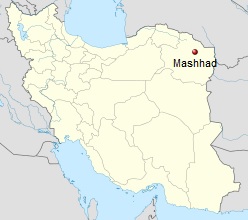
Razavi Khorasan, Iran - Mashhad - MapMashhad (Persian: مشهد‎) with 3.150.000 inhabitants is the second most populous city in Iran and capital of Razavi Khorasan Province. It is located in the northeast of the country, close to the borders of Turkmenistan and Afghanistan. It was a major oasis along the ancient Silk Road connecting with Merv in the East.

Every year, millions of pilgrims visit the Imam Reza shrine. Mashhad is also known as the city of Ferdowsi, the Iranian poet of Shahnameh, which is considered to be the national epic of Iran.

The city is located in the valley of the Kashaf River near Turkmenistan, between the two mountain ranges of Binalood and Hezar-masjed. The city benefits from the proximity of the mountains, having cool winters, pleasant springs, mild summers, and beautiful autumns. It is only about 250km (160 mi) away from Ashgabat, Turkmenistan.

Long a center of secular and religious learning, Mashhad has been a center for the arts and for the sciences. The Ferdowsi University of Mashhad, the Madrassa of Ayatollah Al-Khoei, originally built in the seventeenth century, and the Razavi University of Islamic Sciences, founded in 1984, are located here.

Mashhad is also home to one of the oldest libraries of the Middle-East with a history of over six centuries. The Astan-e Quds Razavi Museum, which is part of the Astan-e Quds Razavi Complex, is home to over 70,000 rare manuscripts from various historical eras. There are some six million historical documents in the foundation’s central library.

Apart from Imam Reza shrine, there are a number of large parks, the tombs of historical celebrities in nearby Tus and Nishapur, the tomb of Nadir Shah, Kooh Sangi park and the Koohestan Park-e-Shadi Complex.

Some points of interest lie outside the city: the tomb of Khajeh Morad, the tomb of Khajeh Rabi’ where there are some inscriptions by the renowned Safavid calligrapher Reza Abbasi and the tomb of Khajeh Abasalt. In Tus, 24km away from Mashhad, is the tomb of Ferdowsi. The summer resorts at Torghabeh, Torogh, Akhlamad, Zoshk and Shandiz are also nearby.

The Shah Public Bath, built during the Safavid era in 1648, is an outstanding example of the architecture of that period. It was recently restored, and is to be turned into a museum.

Other articles about Razavi Khorasan Province: The other Iran | Razavi Khorasan Province

Sources: IRNA | Photos, Wikipedia | Mashhad, Tasnim News Agency | Photos

US Americans introduced to Iranian food by Armenian Iranian

Interview with Thomas Erdbrink a New York Times Journalist working in Iran

Erdbrink, Thomas and van Broekhoven, Roel - Onze Man in Teheran

Thomas Erdbrink and Roel van Broekhoven in Iran

Thomas Erdbrink and Roel van Broekhoven, the director of the series on the Dutch television channel VPRO, answered some of your questions about living and reporting in Iran.

Q. What do you think Americans and Iranians would be most surprised to learn about each other if we could sit down for dinner in each other’s homes?
A. For starters, the Americans would learn that crisp rice from the bottom of the pot in which it is cooked is a delicacy here. In fact, Iranians love it so much that whole families fight over it during lunch, the main meal of the day in Iran.

Around the dinner table it’s all about family in Iran. Relatives come together often, especially these weeks, as Iranians celebrate their new year, which started on March 21. If they were to visit America, they’d expect food courts in shopping malls. These have also sprouted up in Tehran and other cities.

I guess what they’d learn is that, across the world, families are really not that different. They all like to sit down together, eat and talk. — Thomas Erdbrink

Q. Is there a Sunni population there or other minorities? How are they treated?
A. My mother-in-law, who taught me to speak Persian, is an Iranian Kurd. She is a proud and strong woman, loves Iranian Kurdistan just as much as she loves Iran. Kurds are Sunni, but not like Arab Sunnis. Her husband is Shia. They have been happily married for almost 38 years.

Now while there are issues for religious minorities, such as Christians, Zoroastrians and Jews, they are in much better positions compared with minorities in other countries in the region.

In Iran, those minorities have their own members of Parliament and are granted their places of worship. There are dozens of synagogues in Tehran, and thousands of Jews here — the most in the region after Israel. — T.E.

Q. How does an average Iranian feel about Jews and Israel?
A. Iran’s leaders often call for the end of Israel, calling the country a “tumor” that needs to be removed. They are against Zionism, the national movement for the return of the Jewish people to their homeland and the resumption of Jewish sovereignty in Israel. But Iran’s leaders almost never speak out against Jews.

Why would they, as Iran is home to the largest population of Jews in the Middle East after Israel? Where Jews have left most other countries, thousands have remained in Iran, where they are not persecuted. Ordinary Iranians have no specific ideas about Jews, though some Iranians might have the same prejudice you would hear elsewhere in the world.
Continue reading the main story

The policies of Israel are, however, widely despised here. Many Iranians might not feel drawn to Arab issues, but last summer’s war in Gaza turned many moderate Iranians against Israel. The speech by Israeli Prime Minister Benjamin Netanyahu in Congress also made many Iranians angry, as they heard him trying to undermine the nuclear deal that so many people here are hoping will happen. — T.E.

Q. You try to bring perspective in our view about Iran. How do Iranians look at our Western society? Is there any perspective, despite the government-controlled media?
A. Over the past decade, riding a wave of technological changes such as the wider availability of the Internet and satellite television, and inexpensive travel, Iranians have become more in tune with the world. Many Iranians in the cities are up-to-date on the news, the latest music and trends. Generally, Iranians know that in the West, contrary to what many here believed in the past, the streets are not paved with gold. Still, state television is the largest medium in the country and has the widest reach. Its broadcasts are often anti-Western and highly ideological. — T.E.

Q. Have these reports been vetted/censored in any way by the Iranian authorities?
A. No, there was no censorship, nor were the films vetted or seen before they were first broadcast on Dutch television.

We worked with a local production company. They organized permission for us to visit the places and people we were interested in. Sometimes they told us some locations or people they didn’t want us to come and film, or it was impossible to visit.

On the whole, we were pretty free to film whatever we wanted. There was no demand to see what we did film, or to show them the edited material in advance. Of course, Thomas has been living there long enough to judge what stories we could tell. — Roel van Broekhoven

Q. Are you free to discuss anything you want with friends and acquaintances? Do they share their views on politics, government, society, religion freely with you, or is there a culture of fear?
A. Step into a shared taxi here in Tehran and your fellow passengers will start talking about everything, from the weather to the effect of the sanctions to their opinion of the president. People talk very freely here, in small groups. There is no culture of fear. But that definitely doesn’t mean that everything can be said, all the time, not only politically, also culturally. — T.E.

Q. Is there a start-up or tech community in Tehran? What are entrepreneurs like?
A. Yes. There is the Tehran start-up weekend, which brings together tech entrepreneurs. Iran has a large number of highly educated engineers, some of whom are doing quite well in tech. Iran’s Amazon is called Digikala. There is Fidelio, a restaurant guide, and many more. — T.E.

Q. Can Iranians have Gmail accounts? Can artists do business w/Americans?
A. Google still blocks its business email accounts in Iran, as part of American-imposed sanctions. The answer to this question is written on such an account, which I can only access using software that makes it look as if I — an employee of an American news organization — am actually online in San Jose, Calif. For artists, there are no restrictions, but credit cards are blocked under U.S. sanctions, as are international bank transfers. — T.E.

Sources: New York Times, Nrc.nl, Image: VPRO | Programmas | Onze Man in Teheran

Photo gallery: Sizdah Be-dar – The Iranian national picnic day

Sizdah Be-Dar (frequently stylized as “13 Bedar”) means in Persian literally 13th in outdoors. It is a festival in the Iranian culture and part of the Nowruz new year celebration rituals, held on the 13th of Farvardin (the 1st month of the Iranian calendar), during which people spend time picnicking outdoors.

Sizdah Bedar is the day Tir (The Blessed day) of the month Farvardin from ancient Persian (Iranian) calendar, which was the first day of agricultural activity in ancient Persia. Be-dar in Persian means going out. Nowadays, Iranians go out to have fun with their families all the day long.

Sizdeh Bedar is celebrated in Iraq, Armenia, Azerbaijan, Central Asia, and elsewhere. An increasing number of participants are taking part in the holiday. In cities like Los Angeles with large populations of Iranians, a growing number of parks are set up by the city to accommodate the large number of people.

Sources:
Wikipedia | Sizdah Be-dar, Mehr News Agency | Photos 1, Mehr News Agency | Photos 2, IRNA | Photos 1, IRNA | Photos 2, IRNA | Photos 3, IRNA | Photos 4

New Year’s dreams – What do Iranians wish for this year that just started?

The start of a new year is associated with dreams and new things we would like to achieve.

Iranians wrote down what they wish of this New Year and were photographed holding their written wishes and an element of the haft sin. Enjoy the photo gallery!

Click on a photo and see the translation of all the wishes:

Learn more about the Iranian New Year (Nowruz), its traditions and food:
The other Iran | Nowruz

Sources: Mehr News Agency

Meet Our Man in Tehran : Dutch New York Times Journalist in Iran

Erdbrink, Thomas - www.lindanieuws.nl (image)Dossier: Thomas Erdbrink
Date of birth: Jan. 27, 1976
Hometown: Leiderdorp, Netherlands
Lives: Tehran
Education: B.A. in journalism, Hogeschool of Utrecht
Employment: Tehran bureau chief, The New York Times

Life Experience: I moved to Iran in 2002 and I’ve been married since 2003 to Newsha Tavakolian, a well-known Iranian photographer and artist. In 2008, I became the bureau chief for The Washington Post, where I was succeeded in 2012 by Jason Rezaian, my colleague who has been jailed without charge since July.

When I tell people that I have lived in Iran for 13 years, they’re often shocked. How, they ask, can one live in a country where angry mobs roam the streets denouncing Westerners, burning flags and shouting “Death to America”? Are you not afraid?

No. I am not.

Iran is more modern, livable and friendly than some portrayals would have you believe. The country’s modernity goes beyond symbols, such as the number of skyscrapers in Tehran, or the fact that Porsche sells more cars here than anywhere else in the Middle East.

Dutch New York Times Journalist Thomas Erdbrink - Iranian photo journalist Newsha Tavakolian

Dutch New York Times Journalist Thomas Erdbrink – Iranian photo journalist Newsha Tavakolian

In the time I’ve been living and working here, Iranian society, under the influence of the Internet, satellite television and inexpensive transportation, has undergone fundamental changes: Iran became an urban country, with 70 percent of its people living in or near cities. Illiteracy has been almost wiped out. More than 60 percent of university students are women. More than 150,000 highly educated Iranians leave the country each year. The Internet, though censored, is widely available, as is software to get around those censors.

I live here with my wife and our cat in a three-bedroom apartment in a 26-floor residential building, constructed before the 1979 revolution by an American company. Newsha has been my guide to this complex society, and she continues to be my most important critic. I have made many Iranian friends and I learned to speak Persian, which makes it easy for me to get around in this city of 12 million. And though I am married to an Iranian woman, I am a Dutch citizen and my visa is good for only six months at a time.

I am an accepted foreigner, but I am a lonely foreigner, too. Iran is a very isolated country and there are only a handful of Westerners living here.

After four years of requests to the Ministry of Islamic Guidance and Culture, the same office that allows me to work here as a correspondent, I received a special permit to film for five weeks a documentary series with the Dutch director Roel van Broekhoven for the VPRO network in the Netherlands. The reaction to the series in the Netherlands, a small, liberal European country whose citizens enjoy looking beyond its borders, was overwhelmingly positive.

Iranians are used to foreign media portraying their country as sinister — from the movie based on Betty Mahmoudi’s book “Not Without My Daughter” after the 1979 revolution, to Ben Affleck’s Academy Award-winning film “Argo.” People here — especially those in power — would rather showcase the country’s natural beauty, ancient culture, hospitality and great food.

“Why doesn’t the West understand how nice we are?” one Iranian official asked me. “If only they see our beauties they will love Iran.”

Iran has some very impressive sights, but for me the real attraction is its people. You will meet some of them in this series as we examine together complicated issues that illustrate how Iran is slowly changing.

Related article: The other Iran | Newsha Tavakolian – Iranian photojournalist

Sources: The New York Times | Meet our man in Tehran, Thomas Erdbrink’s Photo: Linda.

Sepideh Jalali: 25 year Iranian woman initiates a campaign in Tabriz, Iran helping both the environment and disabled people

Sepideh Jalali, a 25-year-old woman, initiated the charitable campaign which called on people to collect crown corks of bottled water and other plastic containers, hand them over to collecting centers and help buy the wheelchairs for those in need.

Charity begins at the environment

Sepideh Jalali, Iranian environmental activist

The plan was set in motion late last year [ended March 21, 2014] and was in full swing in the city by April. Finally it led to the accumulation of a stock of 650,000 corks weighing around one ton.

The charity organizers sold the corks to Tabriz Municipality’s Waste Management Organization and bought wheelchairs for six poor people who were physically challenged.

When the campaign for collecting corks was in high gear intense rivalry grew between people in Tabriz for gathering even more crown corks.

Sepideh Jalali says that the idea of collecting corks first occurred to her last year and that she was joined by her sister and then her classmates in Tabriz University of Art. The idea found its way into social networking sites as well and was welcomed by young people who encouraged their families to come on board. The result was a stack of about one ton of corks in the city. […]

She said people in Tabriz offered a helping hand both for environmental causes – to keep the environment clean – and for humanitarian causes – to help their fellow Iranians. The two causes were overlapping directly and indirectly. Some people answered a call for action only to help clean up nature and contribute to waste sorting efforts, and others got involved to simply help those in need. The result, however, served both purposes. […]

The campaign also drew the attention of people from all cities across the province as well as West Azerbaijan and Tehran. Interestingly, whenever non-local university students who were studying in Tabriz came back from their hometowns they brought in large amounts of corks.

The purchase of wheelchairs was not the end of the story. The campaign is still on and Sepideh hopes to promote the worthwhile idea. In addition to bottle caps, she is seeking to collect other disposable items such as waste paper in the future.

Source: Iran Front Page

“Seekers of Light” opera performed at Boston museum by joint Israeli-Iranian band

BOSTON — Surrounded by a rotating crowd of 2,200 onlookers in a museum courtyard, Israeli and Iranian musicians premiered scenes from “Seekers of Light,” an opera written by Boston-based Matti Kovler.

[…]

The local pool of Israeli and Iranian talent, combined with an invitation to stage a musical installation at the Museum of Fine Arts Boston’s first Hanukkah festival, proved irresistible to Kovler, who decided to premiere seven scenes from “Seekers.” […]

According to the composer, the full opera will premiere in 2017 at a theater under construction in Prague, designed in part with “Seekers” in mind. For this week’s teaser performance, Kovler conducted and accompanied fourteen musicians playing classical and Persian instruments, with most vocals in Hebrew and Persian.

Playing the lead role of “Sabbatai’s soul” was Iranian musician and Berklee student Parham Haghighi, who wore a full-length white robe and burgundy scarf and sash. […]

A long way from his original home, Haghighi chanted Hebrew while surrounded by Jewish families at an American Hanukkah celebration — something Kovler called “a miracle in itself.”

“Some of the musicians arrived from Iran just two months ago and speak just a few words of English,” said Kovler. “The existence of this ensemble is very much in the spirit of Hanukkah and the freedom to seek out light in one’s own way,” he said.

Chaharshanbe Suri – An Ancient Iranian Fire Festival to celebrate the last wednesday eve of the year

Chaharshanbe Suri is a fire jumping festival celebrated by Iranic people (Persians, Azerbaijani people, Armenians, Kurdish people, Assyrians, Bahá’í, Jews, Christian and Zoroastrians). The event takes place on the eve of the last Wednesday before Nowruz.

“Red Wednesday”, the words Chahar Shanbeh mean Wednesday and Suri means red, is an ancient Iranian festival dating back to at least 1700 BCE of the early Zoroastrian era. Also called the Festival of Fire, it is a prelude to Nowruz, which marks the arrival of spring. Bonfires are lit to “keep the sun alive” until early morning.

The celebration usually starts in the evening, with people making bonfires in the streets and jumping over them singing “zardi-ye man az toh, sorkhi-ye toh az man”. The literal translation is, my yellow is yours, your red is mine. This is a purification rite; you want the fire to take your pallor, sickness, and problems and in turn give you redness, warmth, and energy. There is Zoroastrian religious significance attached to Chaharshanbeh Suri and it serves as a cultural festival for Iranian and Iranic peoples.

Another tradition of this day is to make special Chaharshanbe Suri Ajil, or mixed nuts and berries. People wear disguises and go door to door knocking on doors as similar to trick-or-treat. Receiving of the Ajeel is customary, as is receiving of a bucket of water.

Sources: Wikipedia | Chaharshanbe Suri, ISNA 1, ISNA 2, ISNA 3, IRNA 1, IRNA 2