Author Archives: socialinform

Iran’s chess grandmaster Ehsan Ghaem-Maghami attained top 4 spot at DC International 2015

Iranian GM Ghaem-Maghami (2562) shared the first place with British GM Luke McShane (2685), Indian GM Magesh Panchanathan (2541) and Bulgarian IM Andrey Gorovets (2514).

In the last round of the blitz section of the competitions held in Washington DC, US in 9 round Swiss, the 32-year-old Iranian national came first with the overall score of 7 out of 9. 123 chess players from 39 countries participated at this event which took place from June 25 to 30. The Iranian grandmaster secured 16 units to his international rating.

About Ehsan Ghaem-Maghami
Ghaem Maghami, born January 11th, 1982, is the first international grandmaster in Iranian chess history (2000), and the best Iranian chess player with regards to his ranking and rating since the age of 14, having won twelve Iranian Chess Championships (the last one in 2015).

In 2009, he won a 20-game combined match (four classical, four rapid and twelve blitz games) against Anatoly Karpov, played with a special rule: play to mate or dead draw. On the 8th and 9th of February 2011, he claimed the Guinness record for simultaneous chess games. After 25 hours, the final results were 580 wins, 16 draws and 8 losses for a total score of 588 out of 604 or 97.35 percent. Ten more boards were added which he won but which were not counted for the record.

He is a bachelor of law and now doing a masters in law and sports management at the University of Tehran. On the July 2015 FIDE list, he holds an Elo rating of 2570 (best Elo rating: 2633, April 2005). Ghaem-Maghami is married to Iranian WIM Shayetesh Ghader Pour (Elo rating: 2198 in July 2015. Best Elo rating: 2252, November 2011).

Sources: Mehr News Agency, Chess Events | DC Int’l 2015 StandingsBZ Basellandschaftliche Zeitung | Sport (in German), FIDE | Ratings, chessgames.com | Ehsan Ghaem Maghami, FIDE | World record by Ghaem-Maghami

Iran’s Chaharmahal and Bakhtiari Province: Beautiful Koohrang (Photos)

Kuhrang (Koohrang) County lies in Chaharmahal and Bakhtiari Province in central Iran. The capital of the county is Chelgard. Rural areas in Koohrang have a temperate climate with beautiful landscapes.

During Spring, from early April to early May, grow fritillaria imperialis, called often “inverted tulip” in Iran. Its main habitat is Zagros Mountains and the greatest flowers are found in Kuhrang.

The Lion Tombstones (shir-e sangi or bardshir) are a type of tombstone in the form of a lion, found mostly on the graves of Lor and Qashqai (Ghashghai) nomads in the west, southwest, and parts of southern Persia. The major concentration of these statues in today’s Iran are in the province of Khuzestan.

These lions statues stare out from isolated Bakhtiari graveyards in many valleys and across the Zagros Mountains, along the migration routes of the tribes. They mark the graves of unknown chiefs and warriors who died in local battles and can be found individually and in clusters.

Sources: Tasnim News | Photos, IRNA | Photos 1, IRNA | Photos 2, Wikipedia | Kuhrang County, Enciclopædia Iranica | Lion Tombstones, Mehr News | Iran home to inverted tulips

Iran’s Golestan Province: Turkmen Sahra (Photos)

Turkmen Sahra (meaning Plain of Turkmen) is a region located mainly in Golestan Province, reaching to the Provnice of Razavi Khorasan and North Khorasan. It is situated in the northeast of Iran, near the Caspian Sea, bordering Turkmenistan. The majority of the inhabitants of the Turkmen Sahra are ethnic Turkmen. The biggest city is Gorgan which is dominated by Persian inhabitants, though in recent years there has been immigration of Turkmen and Zabuli from southern Iran. Other cities of Turkmensahra are Gonbad (called Kummet in Turkmen), Aqqala (Ak Qala), Kalaleh (Kelala), Gomishan (Kumushdepe), meaning the “silvery hill” in Turkmen, and Bandar Torkaman (Bender Turkmen), generally just called Bandar.

Sources: Tasnim News | Photos, Wikipedia |  Turkmen Sahra, Wikipedia | Iranian Turkmen

Italian festival ‘Il Cinema Ritrovato’ screening movies from Iranian New Wave cinema

Il Cinema Ritrovato, an Italian festival dedicated to screening newly restored classics running in Bologna until July 4, is showing four Iranian films from the Iranian New Wave cinema. The program is curated by Ehsan Khoshbakht in collaboration with the National Film Archive of Iran.

The black comedy “Night of the Hunchback” (1965) directed by Farrokh Ghaffari, set over the course of one night against a backdrop of uptown Tehran partying to Ray Charles, focuses on the efforts of a group of stage actors, the father of a bride, and a hairdresser and his assistant (played by Ghaffari himself) to rid themselves of an unwelcome corpse.

The satirical documentary “The Night It Rained or The Epic of the Gorgan Village Boy” (1967) directed by Kamran Shirdel, offers a crash course in 1960s Iran. A newspaper story of a heroic village boy who prevented a train disaster appears and spreads quickly. The incident, reported on and challenged by local officials and journalists, is soon doubted and leads ultimately to confusion, with nobody knowing exactly who has saved whom.

“The Cow” (1969) by Dariush Mehrjuii, which is considered as the milestone of Iranian new wave cinema, tells the story of a poor villager whose only source of joy and livelihood is his cow, which provides milk for the village. One night the cow is mysteriously killed and that’s when the madness, or rather transformation, begins.

“A Simple Event” (1973) by Sohrab Shahid Saless depicts a few days in the life of a young boy living by the Caspian Sea. At school he falls behind his classmates and is almost expelled. He helps his father to fish illegally, and at home watches as his mother’s health deteriorates.

About Iranian New Wave
Iranian New Wave cinema came about as a reaction to the popular cinema of the time which did not reflect the lives of regular Iranians. It began in 1969 and then ended with the beginning of the Iranian revolution in 1979. The films produced were original, artistic and political. The House Is Black by Forough Farrokhzad (1963) is considered to be a precursor to the New Wave cinema. Other films such as Farrokh Ghaffari’s “The Night Of The Hunchback” (1964), Abrahim Golestan’s, “Mud-Brick And Mirror” (1965), and Ferydoon Rahnema’s “Siavush in Persepolis” are all considered to be precursors as well. The first film considered to be part of this movement is Darius Mehrjui’s “The Cow” (1969). Other films considered to be part of this movement are Naser Taqvai’s “Peace in the Presence of Others” (1969/1972), which was banned and then heavily censored upon its release, and Sohrab Shahid Saless’ “A Simple Event” (1973) and “Still Life” (1974).

Sources: Tehran Times | News, Il Cinema Ritrovato, Wikipedia | Iranian New Wave

Works by Iranian artist Pariyoush Ganji on display in Tehran

The current exhibition ‘A decade of paintings” is a selection of works from Pariyoush Ganji’s Red, Night and Day Windows, Roses and Water series.

Over the past ten years Ganji has worked on several collections ‘Day, Night Windows’ (2012), ‘Day, Night Windows’ (2010), ‘Roses’ (2006), ‘Windows Red’ (2003), ‘Sumi-e, Ink Paintings’ (2000-2012) and ‘Windows, Memories of Childhood’ (1997-2007).

The exhibition will run until July 23rd at Aryana Gallery (No.9, Fayazi St.,(Fereshte St.), Tehran).

About Pariyoush Ganji
Pariyoush Ganji (1945 in Tabriz, Iran) studied painting from 1968 to 1975 in London (St. Martin School of Art, Sir John Cass Art School, Chelsea School) and Paris (École de Beaux Arts). Her research include ‘The History of Persian Textile’ (Italy, 2007), ‘The Influence of Sassanid Patterns on Kimono and Obi Patterns through the Silk Road’ (Kyoto, Japan, 1996) and ‘Saffavid tiles in Isfahan’ (London, England, 1974). She held exhibitions at Luci Makintosh Gallery (Switzerland, 2012), Bank Art Museum (Japan, 2006), Museum of Art and Science (USA, 2003) and National Museum of Tashkent (Uzbekistan, 1999).
A more detailed biography: Pariyoush Ganji | About or Caroun.com | Pariyoush Ganji.

Sources: Iran Daily | News, Art 360° | Ariana Gallery, Honaronline.ir | Featured

Rice fields in Iran (Photos)

Iran is a vast country, covering 1,648,000 km2 (164.8 million ha). Its topography is dominated by two mountain ranges – Alborz and Zagros – while two great deserts extend over much of the central region, leaving about 20 million ha for crop production. On account of the highly diverse climatic and soil conditions, only 12.5 million ha are cultivated annually with a wide range of food crops. Wheat, rice and barley are the most important cereals cultivated.

Rice is the staple food in Iran, with the quality of cooked rice outweighing all other considerations for Iranian consumers. The total area under rice is more than 600 thousand ha and rice is now grown in varying degrees in nearly all provinces of Iran. However, more than 80 percent of rice area is distributed in the two northern provinces of Mazandaran and Gilan.

Iran’s rice production in 2011 was 2.4 million tons, which increased from a total of 2.3 million tons in the previous year. Iran has 3,800 rice milling units (2009). Iran has imported about 1.4 million tons of rice from UAE, Pakistan and Uruguay worth $800 million in 2009. Iran’s rice imports drop by 40% in 2010. The average per capita consumption of rice in Iran is 45.5 kg, which makes Iranians the 13th biggest rice consumers.

The photos were taken in different Iranian provinces: Qazvin, Gilan, Kurdistan, North Khorasan, Fars and Kohgiluyeh and Boyer-Ahmad.

Sources: Food and Agriculture Organization of the United Nations (FAO) | The rice situation in Iran by N. Shobha Rani, Wikipedia | Agriculture in Iran, Encyclopaedia Iranica | Berenj “rice”, Mehr News Agency | Photos, MNA | Photos, Tasnim News Agency | Photos 1, Tasnim | Photos 2, Tasnim | Photos 3, Tasnim | Photos 4, IRNA | Photos, ISNA | Photos 1, ISNA | Photos 2

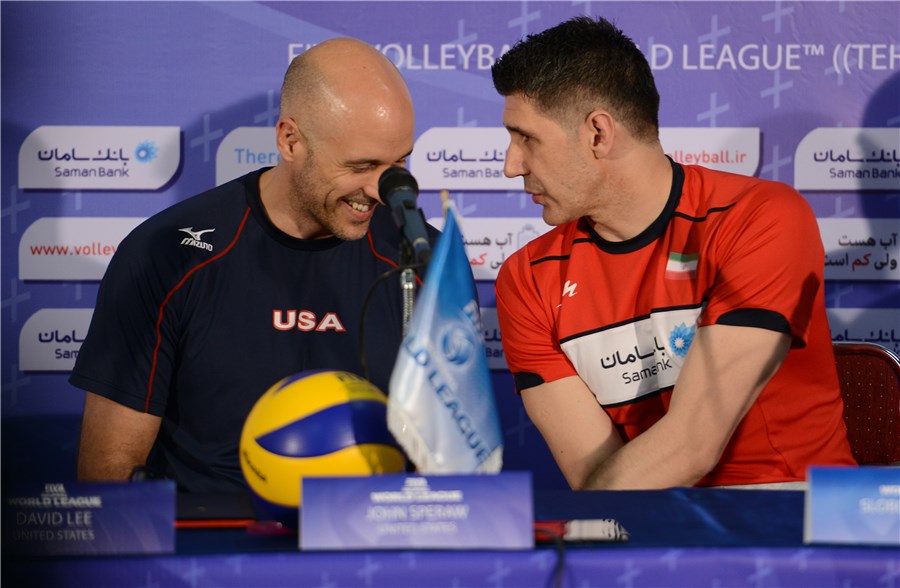
John Speraw, U.S. men’s national volleyball team head coach: “Iranians are wonderful people”

“My first impression was that everyone here has been incredibly hospitable. Everyone has been very nice. They have gone out of their way to make sure that we had really nice experience here. I think we have enjoyed it tremendously.”

“We had the opportunity to get out into the city one day. We went to the [Milad Tower] and learning a little more about Tehran, and I think that is good for us. We went to a nice lunch on the [Darakeh] hills. I think we wanted to do those things because I think we are all aware that the portrait of the relationship between Iran and the United States is inaccurate in the media. Probably on both sides, my guess.”

“What I know and have known from spending time with Iran and the United States both last year and this year is that the relationship between the people is not reflective of the relationship between our governments and that the Iranian people are wonderful people and have treated us kindly.”

“I think we have shown the same because America is a wonderful country with wonderful people too. Yes, it a great place, so the message we would bring back is this: it was a great trip and we look forward to coming here again. And I think we have much better understanding of what the environment is both inside the arena and outside.”

Iran coach Slobodan Kovac added: “I want to say something about this. We want to return this hospitality (Mr. Speraw said about); last year we stayed in the USA for more than fifteen days. Everything was perfect. They gave us the maximum things to prepare for world championship.”

Read all posts on this blog related to USA-Iran here: https://theotheriran.com/category/usa/

IRAN - USA -- USA & Iran national coaches at the press conference before the match

Speraw and Kovac in press conference before the match on June 19 (Photo credit: FIVB)

About John Speraw and Slobodan Kovač
John Speraw is an American volleyball coach. He is the head coach of the United States men’s volleyball team and UCLA. He was the former coach of UC Irvine volleyball program where he led the team to three national titles in six years. Speraw graduated from UCLA in 1995 with a B.S. degree in micro-biology and molecular genetics.

Slobodan Kovač is a Serbian former volleyball player and current coach. He is coaching Iran men’s national volleyball team until the 2016 Olympic Games in Rio de Janeiro. Previously competing for Yugoslavia, he won a bronze medal at the 1996 Olympics in Atlanta and won his first gold medal with the Yugoslav team at Sydney at the 2000 Summer Olympics.

Source: FIVB | World League 2015 | News, Wikipedia | John Speraw, Wikipedia | Slobodan Kovač, TPA | US national volleyball team visited Milad Tower, Tasnim News | Photos

Iran’s Kerman Province: Rageh Canyon (Photos)

The Rageh canyon is one of the unique and beautiful natural places, in the desert of Rafsanjan County. It was created by the floods and soil erosion of the Givdary River over twenty thousand years. This 20km long, 70m deep and 180m wide valley, with sharp conical peaks, blades and strip wise walls, has interesting and various spatial shapes, narrow and wide passages alongside the river and valley walls.

The nearest city to Rageh Canyon is Rafsanjan, the capital of Rafsanjan County. It is Iran’s center of pistachio cultivation and also a major center of carpet production even though the rugs are sold as Kermani rugs rather than Rafsanjani ones. Another large employer is the nearby Sarcheshmeh copper mines.

Sources: Wikipedia | Rafsanjan (in English), other sources in Persian: ISNA | Photos, Mehr News Agency | Photos, Mehr News Agency | News, rageh.ir.

Iran’s Khuzestan Province: Ahvaz – About bridges and a rainbow colored waterfall (Photos)

Ahvaz is a city in the south of Iran with a population of 1,400,000 (2006). Ahvaz is built on the banks of the Karun River and is situated in the middle of Khuzestan Province. The city has an average elevation of 20 meters above sea level.

The Karun is Iran’s most effluent and only navigable river. It is 720 km long. It rises in the Zard Kuh mountains of the Bakhtiari district in the Zagros Range, receiving many tributaries, such as the Dez and the Kuhrang, before passing through the capital of the Khuzestan Province of Iran, the city of Ahvaz.

The river divides the city in two; east and west and with its many bridges connecting both sides of the city over the Karun, Ahvaz is called “The city of Bridges”:
1st) Black Bridge or Railway Bridge (Pol-e Siah): Built in 1919. It is 1050m long and 6.00m wide.
2nd) White Bridge (Pol-e Sefid): Built in 1936, it was the first suspended bridge of Iran.
3rd) Third Bridge: Finished in 1970, it is 496m long and 14.50m wide.
4th) Fourth Bridge or Salman Farsi Bridge: Built in 1975. It is 576m long and 16,70m wide.
5th) Fifth Bridge: It was inaugurated in 1996. It is 480m long and 30,70m wide.
6th) Sixth Bridge or Steel Bridge (Sana-ye Foolad): The bridge was completed in 2007. Its lenght is 740m and its width 30.40.
7th) Seventh Bridge: Finished in 1998. There is an artificial waterfall on this bridge to enjoy on weekends and special days.
8th) Eighth Bridge or Cable Bridge: Inaugurated in 2012 as the biggest cable bridge in the Middle East, it is 1,014m long and 22m wide.

Alongside the seventh bridge, on weekends and special days, there is a beautiful artificial waterfall. It combines water eruption and light games on both sides of the bridge. The waterfall is from one side 150m long, from the other side 200m and has a a height of 35 meters.

Sources: ISNA | Khuzestan | Photos, ISNA | Photos, Mehr News Agency | Photos 1, Mehr News Agency | Photos 2seeiran.ir, asriran.com | News, ISNA | Khuzestan | News, Wikipedia | Ahvaz, Ahvaz Municipality | Tourismus | Bridges, Wikipedia | Karun, untoldiran.com | Karun Rainbow Waterfall, Payvand News of Iran, ISNA | Khouzestan | Ahvaz in black and white bridges

Iranian painter Abolghassem Saidi opens first solo exhibition in Iran

The newly-founded Tehran gallery “Shahrivar” is currently hosting an exhibition of 30 artworks by Abolghassem Saidi. The exhibition showcases 26 paintings which belong to his personal collection and the other four which are owned by private collectors.

On view since June 12, Abolghassem Saidi’s first solo exhibition in Iran, will run for one month at “Shahrivar” gallery: No. 9, Hormoz impasse, North Khazar Street, Elahieh, Tehran.

About Abolghassem Saidi
Abolghassem Saidi (August 15th, 1926 in Arak, Iran) graduated from the School of Fine Arts, Paris (École des Beaux-Arts de Paris) in 1956, where he still lives and works. He exhibited at the Salon de la jeune peinture (1954-66). Then, he worked in Iran for the Festival of Shiraz and after travelled to the United States. Awarded with the prize of the Salon of the Jeune Peinture (1959), the prize of the Biennale of Tehran (1960, 1986) and the prize of Monte-Carlo (1993). The largest concentration of his works can now be seen in the Contemporary Museum of London, at University of Shiraz, at the airport of Tehran and at the Saderat Bank of London.

Related pages: Facebook | Abolghassem Saidi

Sources: Tavoos Online | News, honaronline.ir | Featured, Gros & Delettrez

Iran’s Kerman Province: Mahan – Shazdeh Garden (Photos) – Part 2

Shazdeh Garden is a historical Persian garden located 6km away from the city of Mahan in Kerman province, Iran. It is a rectangular green oasis surrounded by brown desert and a good example of Persians gardens that take advantage of suitable natural climate.

Related article with more information and photos:
The other Iran | Iran’s Kerman Province: Mahan – Shazdeh Garden

Sources: Jamejam Online | Photos, Tishineh | Shazdeh Garden, NEX1 TV | Photos

Iranian actress’ Motamed-Arya portrait displayed at UN exhibit in New York (Photos)

A portrait of the acclaimed Iranian actress Fatemeh Motamed-Arya is displayed besides 15 international figures at a multimedia exhibition titled ‘The Transformative Power of Art’ at the UN Exhibits in New York. The exhibition features sculptures and large fresco portraits of artists who have stood up for human rights.

Motamed-Arya, 54, is involved in humanitarian activities and helps raise funds for different charities. Her latest gesture is putting up her Crystal Simorgh award, presented to her for the role of best actress in ‘Gilaneh’ in 2005, on sale to support people deprived of a home in Iran. She has been nominated nine times for the best actress award at the Fajr International Film Festival and won the Crystal Simorgh four times. She had a role in Rakhshan Bani-Etemad’ celebrated film ‘The Tales’ and played the lead character in ‘Nabaat’, Azerbaijan’s nominee for the Best Foreign Language Film in the 2014 Academy Awards.

The objective of the exhibition – curated by painter and sculptor Fabrizio Ruggiero – is to demonstrate that art creates bridges where politics divide. It takes place under the United Nations “2015: Time for Global Action” campaign, primarily destined to raise awareness about climate change and our fragile ecosystems.

The sculptures are made of many natural elements and the 16 accompanying portraits represent people from all continents who, during their lifetime, contributed to the common good of humanity in one way or another and have transformed the way we think. The men and women who are represented never lost sight of the most vulnerable.

They are: Pierre-Claver Akendengué (Gabon), Maya Angelou (USA), Joan Baez (USA), Audrey Hepburn (UK), Vassily Kandinsky (Russia), Umm Kulthum (Egypt), Gong Li (China), Miriam Makeba (South Africa), Edgar Morin (France), Fatemeh Motamed-Arya (Iran), Okot p’Bitek (Uganda), Satyajit Ray (India), Sebastião Salgado (Brazil), Wole Soyinka (Nigeria), Ngugi Wa Thiong’o (Kenya), and Malala Yousafzai (Pakistan).

Sources: IRNA | News, United Nations | News

Iran’s Sistan and Baluchestan Province: Martian mountains near Chabahar (Photos)

Mars or Martian Mountains, also known as Koohaye Merikhi in Persian, are a type of badlands stretched out parallel to the Gulf of Oman from Kacho Village (35km east of Chabahar) to Gwatar. They are the result of millions of years of erosion and are considered to be a symbol of the unique geo-morphological phenomena of Chabahar.

Locals named them Martian Mountains, since it seemed as if aliens – in this case people from Mars – built them; with almost no vegetation and its torn and very sharp cutted forms, they stand in strong contrast with the landscape around.

Chabahar is Iran’s southernmost city, situated on the Makran Coast of the Sistan and Baluchestan Province, it is also a free trade zone on the coast of the Gulf of Oman.

In Persian char means four and bahar means Spring. Hence, the city was named as the place where all four seasons are Spring. The majority of the city’s inhabitants are ethnic Baluch who speak the Baluchi language. At the 2006 census, its population was 71,070 inhabitants.

Sources: Wikipedia | Chabahar, Fars News | Photos (Apr. 2014), Fars News | Photos (Feb. 2014). In Persian: irandeserts.com, Mehr | News, and Deutsche Welle.

Iran’s Isfahan Province: Khansar’s nature

Khansar (also Romanized as Khvansar, Khunsar) is a 900km² mountainous county, situated in a green valley, about 2300 meters above sea level, in Isfahan Province, Iran. It includes 18 villages in 3 rural districts and one central city; Khansar. The county has a population of about 32,000 inhabitants. Hacham Uriel Davidi (1922–2006) and national football player Ali Shojaei are notable Khansaris.

Khun means spring and sar means place in Avestan language, so khansar means place of the spring. The languages spoken in the city are Khunsari (Khwanshari), a northwestern Iranian language, and Judeo-Khunsari, a Judæo-Persian language spoken in Khansar and elsewhere in the far-western Isfahan Province.

The city of Khansar is situated on both sides of a narrow valley through which the Khunsar River flows. The town and its gardens and orchards straggle some 10 km along the valley. Khansar is famous for its honey, flower-filled gardens and a great profusion of fruit.

The principal centers of Gazz Angebin production in Iran are the mountainous pasture-lands of this region. Gazz Angebin, indirectly extracted by an insect from a plant, is one of the main ingredients of Gazz (Iranian Nougat). Khansar has also famous hand-woven rugs called Weis in polygonal shapes.

Sources: Wikipedia | Khvansar, Wikipedia | Khvansar County, Mehr News Agency | Photos

Iran’s ‘Cloudy Children’ from Reza Fahimi is the Grand Prix winner at ‘SSFF and Asia’

Iranian filmmaker Reza Fahimi’s Cloudy Children emerged as the big winner at the Short Shorts Film Festival and Asia (SSFF & ASIA) 2015, receiving the Grand Prix of the event that was held in Tokyo and Yokohama from June 4 to 14.

Set in a central Iranian village, the film narrates the story of two students fighting over things that they could never have, and in the end they share everything that does not belong to them.

In 2004, the festival was officially accredited by the Academy Awards, making the festival Grand Prix winner eligible for nomination in the short film category of the academy.

About Reza Fahimi
Reza Fahimi, born 1987 in Iran, is a scriptwriter and a director. He studied filmmaking at the Soore Art University of Tehran, with Directing as a major. Cloudy Children is his second short film. It was awarded Best Film, Best Direction (Fiction Film) and Best Screenplay at Tehran International Short Film Festival, 2014, Iran.

Sources: Tehran Times | News, shortshorts.org | Program 2015 | Cloudy Children, tehranisff.ir | 31st TISFF Announces Winners in National Competition Section

Photos: Exhibit at Laleh Gallery, Tehran, in memory of Iranian-Assyrian artist Hannibal Alkhas

Hannibal Alkhas (1930 – 2010) was a Christian Iranian sculptor, painter and author that lived in the US as well as in Iran. His work is deeply inspired by the ancient bas-reliefs and stone sculptures of Ancient Assyria, Babylon and Daric-Persia.

Alkhas’ students are displaying their latest works in an exhibit being held in memory of the artist. It will run until June 21 at Laleh Gallery in Tehran.

The exhibit showcases works by artists like Reza Bangiz, Bahram Dabiri, Rozita Sharafjahan, Taraneh Sadeghian, Niloufar Ghaderinejad, Ahmad Vakili, Ali Nedaee, Nasser Mohammadi, Masoud Saadeddin, Katayoun Moghaddam, Hadi ziaeddini, Hamed Sahihi, and others.

Sources: Honaronline.ir | Featured, Tavoos Art Magazine | News

Volleyball: World League 2015 – Iran wins against previously unbeaten USA

Shahram Mahmoudi scored 17 points to lead Iran to a 3-0 (25-19, 29-27, 25-20 victory over the previously unbeaten USA. The first leg in Los Angeles ended with a 3-1 triumph for the USA. Today’s match report: FIVB | World League 2015 | News

Iran is in Pool B with Poland, Russia and the US. Previously Iran defeated twice Olympic champion Russia on home soil but lost both games to Poland early June in Czestochowa, Poland. At the 2014 World League Iran finished on 4th place behind USA, Brazil and Italy.

Other related Iran-USA articles: The other Iran | USA

Sources: FIVBPress TV | News, TPA (Tehran Press Agency) | US national volleyball team visited Milad Tower, Fars News Agency | Photos, Tasnim News Agency | Photos, IRNA | Photos

Hannibal Alkhas: Christian Iranian painter, sculptor and author (Photos)

Hannibal Alkhas (1930 – 2010) was a Christian Iranian sculptor, painter and author. His work is deeply inspired by the ancient bas-reliefs and stone sculptures of Ancient Assyria, Babylon and Daric-Persia.

Alkhas was born in 1930 in Kermanshah, Iran, and died in California on Sept. 14, 2010. His father was Assyrian writer Rabi Adai Alkhas and his uncle, John Alkhas, is one of the most famous Assyrian poets in the 20th century.

After spending his childhood and teenage years in Kermanshah, Ahwaz and Tehran, Hannibal Alkhas moved in 1951 to the United States and studied philosophy for three years at Loyola University of Chicago, Illinois. In 1958 he received his Masters of Fine Arts from the Art Institute of Chicago.

In 1959, after the death of his father he returned to Iran and began to teach painting, drawing, and art history at The Tehran School of Fine Arts”. During this time he established the successful “Gilgamesh” gallery, the first modern art gallery in Iran where aspiring young artists were introduced.

In 1963 he returned to the United States and taught at “Monticello College” in Illinois where he became the chairman of the art department. In 1969 Alkhas again returned to Iran and spent the next eleven years teaching at Tehran University.

In 1980, back in the United States where he stayed for the next twelve years he taught art at the Assyrian American Civic Club in Turlock, private colleges, and at the University of California at Berkeley and Los Angeles.

From 1992 on, he taught at diferent campuses of the Azad Isalmic University of Iran while he also taught painting privately and worked as an art critic writer in various Iranian magazines. His painting style sought to vitalize the historic processes within the passing moment, using past and present separately and simultaneously whether through content or form, he mixed expressions from six thousand years ago, today and the future.

Alkhas also illustrated book covers and translated Hafez’ lyrics into Assyrian. Before his death he was working on the completion of his Assyrian reproduction of the tragedy of Rustam and Sohrab, which was to have a happy ending. He hold a number of one-man shows, group art exhibitions, and traveling exhibitions in Southern Iran, South Korea, Europe, Canada, Australia, Cyprus and Israel. Aside from being displayed in his own gallery, his paintings are featured in the Fine Arts Museum and Gallery of Modern Art in Tehran and the Helena d’ Museum in Tel Aviv.

Sources: Iran Chamber Society | Visual Arts | Hannibal Alkhas, Payvand News of Iran | Sculptor and painter Hannibal Alkhas dies at 80, Mash Gallery | Artists | Hannibal Alkhas, Hannibal Alkhas

Photos: Masoudieh Palace in Tehran, Iran

Masoudieh Palace (Emarat-e Masoudieh) is a beautiful historical house from Qajar dynasty in old Tehran near Baharestan Square, comprised of a palace and surrounding houses.

It was built in 1879 for the prince Mass’oud Mirza (Zell-e Soltan) – the son of Nasseredin Shah and the governor of Isfahan – as his residence in the Capital. Spanning over an area of 5 hectares, the mansion was constructed in the middle of a garden.

The Masoudieh Mansion has been home to many events that changed the history of the country. It was fusilladed after an unsuccessful assassination of the Mohammadali Shah and was also one of the main gathering centers during the Persian Constitutional Revolution.

Besides its political importance, the mansion has served the country culturally. The first steps to form the National Library of Iran and also the National Museum of Iran were taken there. The first independent ministry of education of the country was also formed at the Masoudieh Mansion.

Sources: Iran Review | Enjoyable Moments in Tehran with a Cup of History, Dourbin.net (DIPA) | Masoudieh Palace, DIPA | Masoudieh Palace

Photos: Paragliding festival in Marivan, Iran

A paragliding festival was organized in the city of Marivan, Kurdistan Province, near Zarivar Lake. More than 150 people from across the country participated at the event.

Related articles:
The other Iran | Iran’s Kurdistan Province: From Sanandaj to Marivan,
The other Iran | Photo Series: Winter in Iran – Marivan, Kurdistan Province

Source: IRNA | Photos

Photos: A glance at Qazvin, Iran

Qazvin is the capital of the Province of Qazvin in Iran. Qazvin was an ancient capital in the Persian Empire and nowadays is known as the calligraphy capital of Iran. It is famous for its Baghlava, carpet patterns, poets, political newspaper and pahlavi (Middle Persian) influence on its accent. At the 2011 census, its population was 381,598.

Located in 150km (93mi) northwest of Tehran and south of the Alborz, it is at an altitude of about 1,800m (5,900ft) above sea level.

Notable personalities
The most famous Qazvini calligrapher was Mir Emad (Qazvini) Hassani. Ubayd Zakani was a famous 8th-century poet noted for his satire and obscene verses. Dehkhoda was a prominent Iranian linguist and author of the most extensive dictionary of the Persian language ever published.


History
Archeological findings in the Qazvin plain reveal the existence of urban agricultural settlements as far back as 7000BCE. The name “Qazvin” or “Kasbin” is derived from Cas, an ancient tribe that lived south of the Caspian Sea millennia ago.

Qazvin has been a hotbed of historical developments in Iranian history. In the early years of the Islamic era Qazvin served as a base for the Arab invaders. Destroyed by Genghis Khan (13th century), the Safavids monarchs made Qazvin the capital of the Safavid Empire in 1548 only to have it moved to Isfahan in 1598.

Bombed and occupied by Russian forces in both World Wars, Qazvin is also where the famous coup d’etat was launched from that led to the rise of Reza Shah of Pahlavi dynasty in 1921. Qazvin is also situated near Alamut, where the famous Hasan-e Sabbah, founder of the Ismaili order of the Assassins, operated from.

Main sights
In the middle of the city lie the ruins of Meimoon Ghal’eh, one of several Sassanid buildings in the area. The most famous of the surviving edifices of the Safavid era is the Chehelsotoon mansion. The Caravanserai of Sa’d al-Saltaneh is one of Iran’s best preserved urban caravanserais.

About 100 km (62 mi) south-west of Qazvin are the tombs of two Saljuki era princes — Abu Saeed Bijar, son of Sa’d, and Abu Mansur Iltai, son of Takin.  — located in two separate towers known as the Kharraqan twin towers. Constructed in 1067 CE, these were the first monuments in Islamic architecture to include a non-conic two-layered dome. Both towers were severely damaged by a devastating earthquake in March 2003.

Qazvin has three buildings built by Russians in the late 19th/early 20th century. Among these is the current Mayor’s office (former Ballet Hall) and a water reservoir. St. Nicholas church was built in 1904 by the Russian Company for Roads in Persia which had its headquarter here.

Sources: Iran Chamber Society | Provinces | Qazvin, Wikipedia | Qazvin, Mehr News Agency (MNA) | Photos 1, MNA | Photos 2, MNA | Photos 3

Photos: Rehearsal of Tehran’s Symphony Orchestra

“I walked on to the stage and the audience rose to its feet,” said Alexander Rahbari, the principal conductor. “I’ve performed for 40 years outside Iran and never seen a standing ovation before the performance. This was something totally different. It showed what having the orchestra back meant to them. I was close to tears.”

The photos were taken during rehearsals at Vahdat Hall, Tehran, before performing for the first time after three years.

Related article:
The Guardian | Tehran’s reborn symphony orchestra: an ovation before playing a note

Sources: Honaronline | Photos, musicboard.ir | News (in Persian)

Iran’s Isfahan Province: The Zayandeh-Rood

Beautiful photos of Isfahan’s bridges!

kimikash's avatarIran: A World Unknown

DSC01900The Zayanderud (Zayandeh River) is the largest river in the central plateau of Iran. It crosses directly through the city of Isfahan. In 2010, the river dried out completely after several years of draught. Today the river flows with water once again, however the city continues to close and open the dam throughout the year depending on water shortages throughout the districts. The water that forms the river originates from the inside of the Zagros Mountains and flows 400 kilometers. The 400 km of river is spanned by may historical bridges that were built in the Safavid era. The Zayanderud is the reason for the prosperity of the central Iranian provinces of Isfahan and Yazd. Two of the most famous bridges on the Zayanderud are the Siosepol (33 Bridge) and Pol-e Khaju (Khaju Bridge).
DSC01901 Women wearing head-to-toe hijab are having kayaking practice on the Zayanderud. They are padding upstream while…

View original post 336 more words

Photos: Lar National Park in Tehran and Mazandaran Provinces, Iran

Lar National Park (in Persian: Park-e Melli-e Lar) is a protected area in Iran on the foot of Mount Damavand, straddling the provinces of Mazandaran and Tehran. The Lar Dam is located in the park, and is a major tourist attraction because it is just 70 kilometers northeast of Tehran. The park covers around 30,000 hectares. It has been a national park since 1976 and a protected area since 1982 by the Iran Department of Environment. Since 1991 hunting has been prohibited.

Sources: Wikipedia | Lar National Park, Tasnim News Agency | Photos

Monir Shahroudy Farmanfarmaian: First Iranian artist to have a solo exhibition at the Guggenheim, New York

Farmanfarmaian, now 92, is a renowned Iranian visual artist known for her geometric style and mirror sculptures. She became the first Iranian artist to have her work featured in a solo exhibition at the Guggenheim; a retrospective, spanning four decades of work: “Infinite Possibility: Mirror Works and Drawings 1974–2014”, organized by the Serralves Museum of Contemporary Art, Porto, Portugal.

In 2011, Vogue — where she worked early on as a freelance illustrator — featured her when she was the subject of an art book. “Whatever time I have left, I want to make art,” she said in the Vogue interview. “And I hope it will be worthwhile to see it.”

Contemporary Iranian art has a decades-long history in the West — though artists are now exhibiting their work with increasing frequency in the United States and Europe.

From September 2013 to January 2014, the Asia Society in New York exhibited Iran Modern. The show featured a diverse body of work from numerous artists that spanned the three decades leading up to the revolution of 1979.

In January and February of this year, the Taymour Grahne Gallery presented Traveling Demons, a collection of colorful and haunting pieces by Malekeh Nayiny, who was born in Tehran and currently lives in Paris.

And while Farmanfarmaian’s work was at the Guggenheim, the works of famed sculptor Parviz Tanavoli was on display at the Davis Museum at Wellesley College. Like Farmanfarmaian, Tanavoli is also the first Iranian artist to have a solo show at that space.

Shiva Balaghi co-curated the Tanavoli exhibition, and is a visiting scholar in Middle Eastern studies at Brown University. As one of the few academics in the country who specializes in Middle Eastern art history, Balaghi is quick to debunk notions of an Iranian art renaissance in the U.S., despite its recent popularity in the American art world.

“A reemergence is not really true,” she told BuzzFeed News. “The fact that there’s a growing interest in the West is key, not that this art hasn’t been made before.” Balaghi’s theory is that art institutions are beginning to look beyond Iran’s current political climate and explore the country through its art.

“It’s almost like museums are taking on this cultural diplomacy role,” she said. “There’s a cultural life in that country that continues and flourishes, one that doesn’t have to do with nuclear negotiations.”

Related articles to Monir Shahroudy Farmanfarmaian:
Iranian Roots | Monir Shahroudy Farmanfarmaian – Iranian Artist (Bio)
The Huffington Post | 90-Year-Old Iranian Artist Monir Shahroudy Farmanfarmaian Gets Her First Comprehensive U.S. Exhibition
The Guardian | Infinite Possibility: Monir Shahroudy Farmanfarmaian

Source: BuzzFeed News | This Iranian Artist Is Making History At The Guggenheim

The Great Game: Iran’s pavillion at the Venice Biennale

In a 2000 square meter old storage for marine engines are works by Iranian Farhad Ahrarnia, but also Iraqis Adel Abidin and Wafaa Bilal, and the Indians Hema Upadhyay and Riyas Komu on display. These are some of the forty-nine artists invited to interpret The Great Game, the exhibition project of the Iran Pavilion, curated by Marco Meneguzzo and Mazdak Faiznia for the 56th Venice Biennale.

“The Great Game” is followed by the Iranian Highlights exhibit with works by Samira Alikhanzaradeh, Mahmoud Bakhshi Moakhar, Jamshid Bayrami and Mohammed Ehsai.


The Great Game is an expression used to indicate the strategic rivalry and conflict between the British Empire and the Russian Empire for supremacy in Central Asia. The path evoking this expression provides a look at authors from India to Iran and Azerbaijan, testifying to the existence of a cultural flow and creating a shared, universal language.

The 56th Venice Biennale “All the World’s Futures”, curated by Okwui Enwezor, runs from May 9th to November 22nd, 2015.

Artists in Iran’s pavilion
Iranian Highlights
Samira Alikhanzaradeh, Mahmoud Bakhshi Moakhar, Jamshid Bayrami, Mohammed Ehsai

The Great Game
Lida Abdul, Bani Abidi, Adel Abidin, Amin Agheai, Ghodratollah Agheli, Shahriar Ahmadi, Parastou Ahovan, Farhad Ahrarnia, Rashad Alakbarov, Furat al Jamil, Nazgol Ansarinia, Reza Aramesh, Alireza Astaneh, Sonia Balassanian, Mahmoud Bakhshi Moakhar, Wafaa Bilal, Mehdi Farhadian, Shadi Ghadirian, Shilpa Gupta, Ghasem Hajizadeh, Shamsia Hassani, Sahand Hesamiyan, Sitara Ibrahimova, Pouran Jinchi, Amar Kanwar, Babak Kazemi, Ryas Komu, Farideh Lashai, Farokh Mahdavi, Ahmad Morshedloo, Mehrdad Mohebali, Huma Mulji, Azad Nanakeli, Jamal Penjweny, Imran Qureshi, Sara Rahbar, Rashid Rana, Atefeh Samaei, T.V. Santhosh, Walid Siti, Monir Shahroudy Farmanfarmaian, Mohsen Taasha Wahidi, Mitra Tabrizian, Parviz Tanavoli, Newsha Tavakolian, Sadegh Tirafkan, Hema Upadhyay, Saira Wasim

Related information:
The Guardian | Iran goes back to the future at Venice Biennale
Sothebys | Highlights From The Venice Biennale’s Iran Pavilion

Sources: La Biennale di Venezia | National participations, Artribune | Il padiglione dell’Iran raccontato da Marco Meneguzzo (Italian), Facebook | Iranian Pavilion – La Biennale di Venezia 2015 | Photos, ISNA | News photo

Reza Ghasemi wins Iran’s 1st international 100m medal

Sprinter Reza Ghasemi won the bronze medal in the 100m-event at the 21st Asian Athletics Championships in Wuhan, China
Femi Ogunode from Qatar improved his continental mark in the men’s 100m final as he sprinted to 9.91 secs (+1.8) to win gold ahead of home favourite Zhang Peimeng (10.15) and Iranian Reza Ghasemi (10.19) on the second evening of the Asian championships.

Iranian discus thrower Mahmoud Samimi claimed a bronze medal
India’s Vikas Gowda successfully defended his title from Pune as he hurled the disc to 62.03m. Asian record-holder Ehsan Hadadi from Iran could not find his rhythm and ended up with ‘no mark’. Kuwaiti Eisa Zankawi (61.57) and Iranian Mahmoud Samimi (59.78) were the other medalists of the day.

Sources: Asian Athletics Association | News 1, Asian Athletics Association | News 2, Facebook | Asian Athletics Championship, China Foto Press | Sports | 2015-06-04, Mehr (MNA) | Sports


2015 Tehran Auction: Sohrab Sepehri’s painting sold for $965k

The fourth Tehran Auction has broken the all-time record of Iran’s art auctions thanks to the sale of a painting by Sohrab Sepehri for over $965,000 (€865,000), which brought the total revenue of the sales to over $7.25 million (€6.5 million).

The second most expensive sale of the event was another painting by the late Iranian poet and painter, which was sold for about $600,000. A total of 126 works by various artists, including Masoud Arabshahi, Mohammad Ehsaii, Jalil Rasouli, Behjat Sadr, and Parviz Kalantari went under the hammer.

The event, dubbed Modern and Contemporary Iranian Art Auction, was hosted by Iranian actor Reza Kianian at Tehran’s Grand Azadi Hotel.

Related articles:
The other Iran | 2014 Tehran Art Auction grosses over $4 million,
The Guardian | Tehran auction shifts millions of pounds worth of art in spite of sanctions

Sources: Press TV | Iran | Culture, IRNA | Photos, ISNA | Photos, Fars News Agency | Photos, Tehran Auction | 2015 Lot

Iran’s tech sector displayed its potential in Berlin

Iranian entrepreneurs and business owners gathered in Berlin for a three-day start-up conference to explore opportunities in Iran’s high-tech sector.

The iBRIDGE Berlin conference was opened by American start-up guru David McClure with a keynote speech to more than 80 business owners coming from Iran, Europe and the US.

The conference attracted over 2,000 attendees and online viewers, aimed at studying the role that a high-tech entrepreneurial ecosystem can play in Iran’s economic development and diversification.

The event featured keynote speeches, panel discussions, dozens of workshops and breakout sessions, as well as touring local start-ups in Berlin, widely regarded as the hub of newly-established businesses in Europe.

According to organizers, the conference was to focus on start-up mentorship, investment guidance and exchange of ideas like branding and marketing of products and services. Panel groups also dwelled on branding design, social innovation, social entrepreneurship in Iran, venture capitalism and big data.

iBRIDGE Berlin is a sequel to iBRIDGE Berkeley, the innovative conference held at the University of California, Berkeley on September 6, 2014.

About iBridges
The iBRIDGES initiative is an open, inclusive and collaborative community, free from any political or ideological affiliations, that works towards bringing to life a diversity of initiatives, platforms and spaces that all tangibly serve to contribute to the development of the high-tech entrepreneurial sector in Iran.  The initiative was started in 2014 as a collective effort of Iranians interested in and involved with high technology entrepreneurship in the US.

Related articles:
The other Iran | Tag | Startup,
The Guardian | From Digikala to Hamijoo: the Iranian startup revolution, phase two,
Financial Times | Iran’s tech sector to display potential in Berlin (PDF),
Reuters | Iranian entrepreneurs thirst for foreign funding, expertise

Sources: Press TV | Economy, iBridges.org

Photos compilation: A gallery as big as Tehran

In a project, called ‘A Gallery As Big As a Town’, aiming to encourage people to visit museums, the city’s billboard ads were home for artworks by renowned local and foreign artists for 10 days, turning the Iranian capital into a giant urban art gallery.

There were more than 1,500 billboards dotted across the capital’s streets, displaying a total of 700 works that also included reproductions of traditional Persian miniatures, carpets, calligraphy and various other art pieces.

Iranian artworks were selected from different periods of Islamic and pre-Islamic arts including potteries, glassware, etc. and contemporary and modern period which displayed works by Kamal-ol-Molk and his students.

Related articles:
The Guardian | Tehran swaps ‘death to America’ billboards for Picasso and Matisse
The New York Times | Suddenly, Tehran’s Mayor Becomes a Patron of the Arts
The Huffington Post | Tehran Becomes Giant Open-Air Art Gallery

Sources: Mehr News Agency | News, Tehran Picture Agency 1, Tehran Picture Agency 2, Mehr News Agency | Photos, Tasnim News Agency | Photos 1, Tasnim News Agency | Photos 2

Interview with US Jazz saxophonist Bob Belden (first American musician to perform in Iran after 35 years)

Before the New York-based multi-instrumentalist, composer and producer Bob Belden brought his band ANIMATION to Tehran, Iran, last month, it had been more than 35 years since American musicians had performed in the Middle Eastern country. Belden and his group performed to a sold-out, ecstatic audience of appreciative fans at Tehran’s Vahdat Auditorium and also got the chance to see parts of the country and meet with local residents.

Here parts of the Interview with the bands lead Bob Belden:

Did you have any resistance or other challenges from either American or Iranian officials?
BB: We never met nor saw any American officials and the Iranians officials we met and worked with were fantastic; a beautiful sense of humor, visionary, erudite and very open about our music. No challenges at any point during our stay in Iran. None! Smooth sailing from day one till we left on day nine, excepting some logistical issues beyond our control (huge traffic jams and the lingering effects of jet lag). Actually the only real challenge we had was eating all of the food that was laid out before us for breakfast, lunch and dinner. The city of Isfahan gave us credit to purchase gifts to take back home.

Where did you perform and what was the venue and the audience like?
BB: We had three gigs, only one with ANIMATION. The first “gig” was at a private school in Isfahan where young kids (ages 6-14) learn classical Iranian music. We listened to them perform and then jammed with them at the end of the informal concert. The second gig was only myself and Pete Clagett on trumpet and we performed at the Azadi Sports Complex in Tehran during the World Greco-Roman Championships. What was significant about that gig was the group we played with: eight Iranian musicians including three women in the group. We performed the traditional Iranian national anthem (“Ey Iran”) but what made this moment special was the inclusion of women at a sporting event in a Muslim country. Never happened before. Our final gig, the gig that was our purpose for being in Iran, was held at the old Tehran Opera House now named Vahdat Hall. A classical opera house by German design, the acoustics and the sound system were perfect. The stage crew was first-rate all the way. Great gear and a fantastic Iranian-American engineer Hamidreza Maleki recorded the event.

Were the Iranian people welcoming to American musicians?
BB: Incredibly welcoming. Everywhere we went the people we met we very happy to see us and then astounded that we were musicians and then euphoric that we played jazz. The word jazz means a lot to people outside the U.S. And we did come in contact with a lot of Iranians from all walks of life. We hung out at a Starbucks in Isfahan and met a lot of younger Iranians and we ended up posing for a lot of photos with those at the cafe. The Starbucks is not official but a personal note to Starbucks in the U.S.: huge market in Iran for your coffee and brand! (I don’t drink coffee but the cafe also had tea!).

There’s a photo of the audience giving the band a standing ovation. What did the people you spoke to there say about the music?
BB: The applause spoke for everyone at the concert. We got a lot of hits on Facebook from Iran and even people from the audience posting photos and sending pictures to the guys in the band. We did not go there to find exacting understanding of what we played (this does not exist in the U.S. either) but to find a common need for expression. Everyone in the audience at the hall just enjoyed the music outright and, most important, the Ministers of Culture and Guidance were in the front row applauding not only our concert but their effort to bring us there. We all made the gig!!

What was your perception of the Iranian people’s understanding of and appreciation for jazz?
BB: There has been a gap of information as to the specific development and nature of jazz in the U.S. since the Iranian Revolution in 1979. Mostly the Iranians have been exposed to Europeans as the travel restrictions were not as difficult for musicians from Europe. That is why in Europe what we did is not deemed so important. I can’t speak for an entire country’s understanding of any music so I have no real idea of their appreciation of what anyone in the U.S. calls “jazz.” But it did not matter as the music culture in Iran is very deep and is thousands of years old. So they could relate to us based on pure musicianship, beyond the contextually limited language of jazz.

Did you get a chance to interact with Iranian musicians, and if so, what did they tell you?
BB: We interacted with some kids in Isfahan and also some classical musicians in Tehran. As this was an expeditionary trip we could not meet with musicians en masse. We did play with Iranian musicians at the Azadi Sports Complex. We did meet some Iranian musicians backstage at our concerts with the promise of returning to work with and record with Iranian musicians.

What would you like Americans, many of whom have been taught that Iran is not a U.S.-friendly nation, to know about the country and its people now that you’ve seen it first-hand?
BB: Perception is easy to create. Misperception is hard to break. In the U.S., for the most part since the Iranian Revolution, Iran has been subjected to a political and cultural analysis that is always shone in a negative light. It was as if thousands of years of history were negated to a footnote and the only history we intend to maintain in the U.S. is from 1979 onwards. This myopic view is not based on logic but composed of a systemic ignorance of global culture that is enabled by a weak education system in the U.S. and intense partisan calibrations meant to maintain a dark cloak of intrigue about Iran by people or entities that have agendas not expressed in their public statements. But a country is also made up of people, actual human beings, and this is what is most important for American citizens to understand. At the human level Iranians are the same as Americans. They eat food, they drink water, they have children and send them to schools. The parents fret over their kids just as parents here. People work for a living, they go to the movies, watch TV, ride the subways or buses to get to and from work. Young women scream at rock concerts for their favorite band. The traffic is similar to Los Angeles. English is spoken openly and quite well. Street signs are in Farsi and English. Magazines are in English and there are English newspapers. They have their own Burger Kings (called King Burger!), KFCs and pizza joints mixed with traditional Iranian food. And we ate at a truck stop that was emblazoned with the words FAST FOOD. For jazz musicians the words Truck Stop and Fast Food make you homesick!!

We could not sum up an entire country’s psyche in a week’s experience inside the country. Iran is a glorious and complicated country that lives in many different worlds at the same time, from the ancient to the modern. The people we met and worked with are beautiful people by any cultural definition. Sincere charm, subtle elegance and a very cosmopolitan demeanor were common in many of the people we met. Iran possesses a graceful and pastoral understanding of Islam. What we understood from being in an Islamic country is that if you use common sense and display an open respect for others then there is no problem at all reconciling the two views.

Source: Jazz Times | Bringing cultures together in peace

Photos: Beautiful spring photos from Iran’s East Azerbaijan Province

Beautiful spring nature of East Azerbaijan Province, in northwest region of Iran.

Source: Mehr | Photos

Andranik Teymourian – first Christian to lead Iran’s football team as its permanent captain

The 32-year-old midfielder, known as Ando – or Samurai, due to his hairstyle – is not shy of showing his Christianity, often crossing himself on the field. In April 2015, Teymourian, who has played for Bolton Wanderers and Fulham, became the first Christian to lead Iran’s football team as its permanent captain. His first appearance as captain of the national team was however on 18 May 2014, when Teymourian captained Iran in the match against Belarus. In the same year he was named “Iranian footballer of the year”.

“I’m happy that as a Christian I play in a Muslim team,” he said in a recent interview. “I have Armenian roots but I hold the Iranian passport and I’m proud of that, I hold my flag high. I hope I can enhance the good reputation of Armenian people in Iran.”

Iran's midfielder Andranik Teymourian gestures during the friendly football match Iran vs Belarus in preparation for the FIFA World Cup 2014 on May 18, 2014 in Kapfenberg, Austria. AFP PHOTO / SAMUEL KUBANI (Photo credit should read SAMUEL KUBANI/AFP/Getty Images)

Ethnic Armenians make up the majority of Iran’s estimated 300,000 Christians. Armenians are fully integrated in Iranian society, from the musician Loris Tjeknavorian to Sombat Hacoupian, who founded one of the country’s most famous men’s clothing brands and is now a household name.

Although Islam is Iran’s official religion, it recognises Christians, Jews and Zoroastrians as accepted religious minorities. They are permitted their house of worship and usual religious services, and have reserved seats in the Iranian parliament. In a country where alcohol and pigmeat are forbidden, Christians are allowed to distil booze and eat pork.

There are at least 600 churches in Iran, including the sixth-century St Mary Church of Tabriz, mentioned by Marco Polo in his travel book. The adjacent province of West Azerbaijan boasts the ancient St Thaddeus Monastery, a Unesco world heritage site.

All minorities related posts on this blog: The other Iran | Minorities (with lots of interesting photos)

Read more: The Guardian , wikipedia | Andranik Teymourian

German guitarists joined tar virtuoso Keyvan Saket in Tehran concert

Seventeen guitarists led by conductor Helmut Oesterreich and supported by German’s Goethe Institute joined Iranian tar and setar virtuoso Keyvan Saket to give a fusion concert at Tehran’s Vahdat Hall.

The program was composed of three sections, the first contained compositions from the Baroque and Renaissance eras. In the second part Keyvan Saket accompanied the group as a soloist. The fusion concert “Meeting East and West in Mirror of Tar and Guitar” had Keyvan Saket, the orchestra and the guitarists performing together on the third section.

Other Germany related articles: https://theotheriran.com/tag/germany/

Sources: Tehran Times | News, Mehr News Agency | Photos, Honaronline.ir | News (in Persian)

Photography: Sheed Award – Exhibition in Tehran

Selected photos of the 5th edition of SHEED Award (Independent Award for Social Documentary Photography) were exhibited at the Iranian Artist’s Forum. Workshops, meetings and lectures by experts and professionals were also held parallel to the event.

The selected works have been chosen by a jury composed of five members including Mehran Mohajer, Peyman Hooshmandzadeh, Jalal Shams Azaran, Mehdi Vosughnia and Arash Khamushi.

About Sheed Award
Founded in 2010, Sheed Award is an independent, non-profit and non-governmental photography award presented annually to a social documentary photographer. The award aims to encourage and promote social documentary photography among Iranian photographers.

Sources: Tavoos Online | News, Facebook Sheed Award | Photos, ISNA | Photos, Honaronline 1, Honaronline 2

Photos: Eshkevarat in Gilan and Mazandaran Provinces, Iran

Eskevarat is a region on the Alborz that extends through Gilan and Mazandaran Provinces.

The rural district (dehestan) Eshkevar-e Sofla lies in Rudsar County, Gilan Province. It has 46 villages and a population of 4,842 inhabitants (2006). Eshkevar is the name of a rural district with 11 villages in Ramsar County, Mazandaran Province. At the 2006 census, its population was 1,600.

Sources: Mehr News Agency | Photos 1, Mehr News Agency | Photos 2, Tishineh | Eshkevarat (Persian), Wikipedia | Eshkevarat (Persian), Wikipedia | Eshkevar-e Sofla, Wikipedia | Eshkevar

Retrospective of Iranian artist Bahman Mohasses at Tehran galleries

Two galleries in Tehran are holding a retrospective of painter and sculptor Bahman Mohasses (1921-2010) in a joint project entitled 60 Pieces of a Lost Object from May 22 to June 12, 2015.

A selection of artworks containing pieces from different periods are put on display at the Arya and Ab-Anbar galleries. Rare abstract works by Mohasses along with his lithographs, sculptures and paintings are on display in both exhibits.

The exhibit is a follow up to the extensive project of reviewing works by contemporary Iranian artists initiated by Arya and Ab-Anbar galleries, the first of which was dedicated to painter Sirak Melkonian.

Related article: The other Iran | Fifi Howls from Happiness: Documentary on B. Mohasses

About Bahman Mohasses
Born in 1921 in Rasht, Gilan Province, Mohasses was an outstanding painter and sculptor as well as a good translator. Persian translations of works by Italian authors Italo Calvino and Curzio Malaparte, and French authors Eugène Ionesco and Jean Genet are some of his other accomplishments. He studied at the Academy of Art in Rome, and held several solo and group exhibitions in Italy and other countries.

Mohasses returned to Iran in 1963 and staged the play “The Chairs” by Ionesco. Some years later in 1967, he decided to go back to Italy and continued living in Rome until he died. He used to visit Tehran every now and then but few were in touch with him.

Some of his valuable artworks are preserved in Italy and the United States while others are kept in Iran at the Jahan-Nama Museum of the Niavaran Palace and the Tehran Museum of Contemporary Art.

Sources: Tehran Times | News, Mehr News Agency | Photos, Honaronline | News

Iran’s Chaharmahal & Bakhtiari Province: Helen Protected Area

Helen Protected Area is located in the central Zagros Mountains, in Chahar Mahal and Bakhtiari Province. With approximately 30,000 hectares of oak trees, the area is home to a wide variety of species, including brown bears, leopards, wildcats and eagles.

This region derives its name from Helen’s Mountain, a 3,136m mountain peak named in honor of Helen Jeffreys Bakhtiar of Boise, Idaho, in commemoration of her work as a public health nurse in Iran in the 1950’s. She was a lieutenant commander in the U.S. Navy and traveled to Iran to serve as a public health nurse as part of President Truman’s Point Four Program. The rural improvement project sent American experts in agriculture, health and education to work in villages in less-developed countries.

Related articles:
Payvand News of Iran | Mountain in Iran Named for American Nurse,
NPR | A Monument to an American’s Selflessness in Iran

Sources: IRNA | Photos, Tishineh | Helen Protected Area (in Persian), Iranian.com | Helen’s Mountain

Iran’s national team: Latest successes in water polo, volleyball and taekwondo

Water polo: Iran crowned FINA World Water Polo Development Trophy champion
Iran mantained its undefeated record in the 5th FINA World Water Polo Development Trophy with a 13-5 win over powerhouse Uruguay in the final match. In front of cheering crowd, team Melli won its second water polo gold medal in the nation’s history after 41 years. Iran had claimed the gold medal in the 1974 Asian Games in Tehran. On its way to the final, Iran defeated Tunisia, Indonesia, Guatemala and Austria.

Launched in 2007, the FINA Water Polo Development Trophy gathers teams from nations in Africa, the Americas and Asia where it is still not a major sport, seeking to develop water polo on a global level.

Volleyball U23 - 2015 Asian Championship - Iran (Gold medal)Volleyball: Iran won Asian Men’s U23 Volleyball Championship
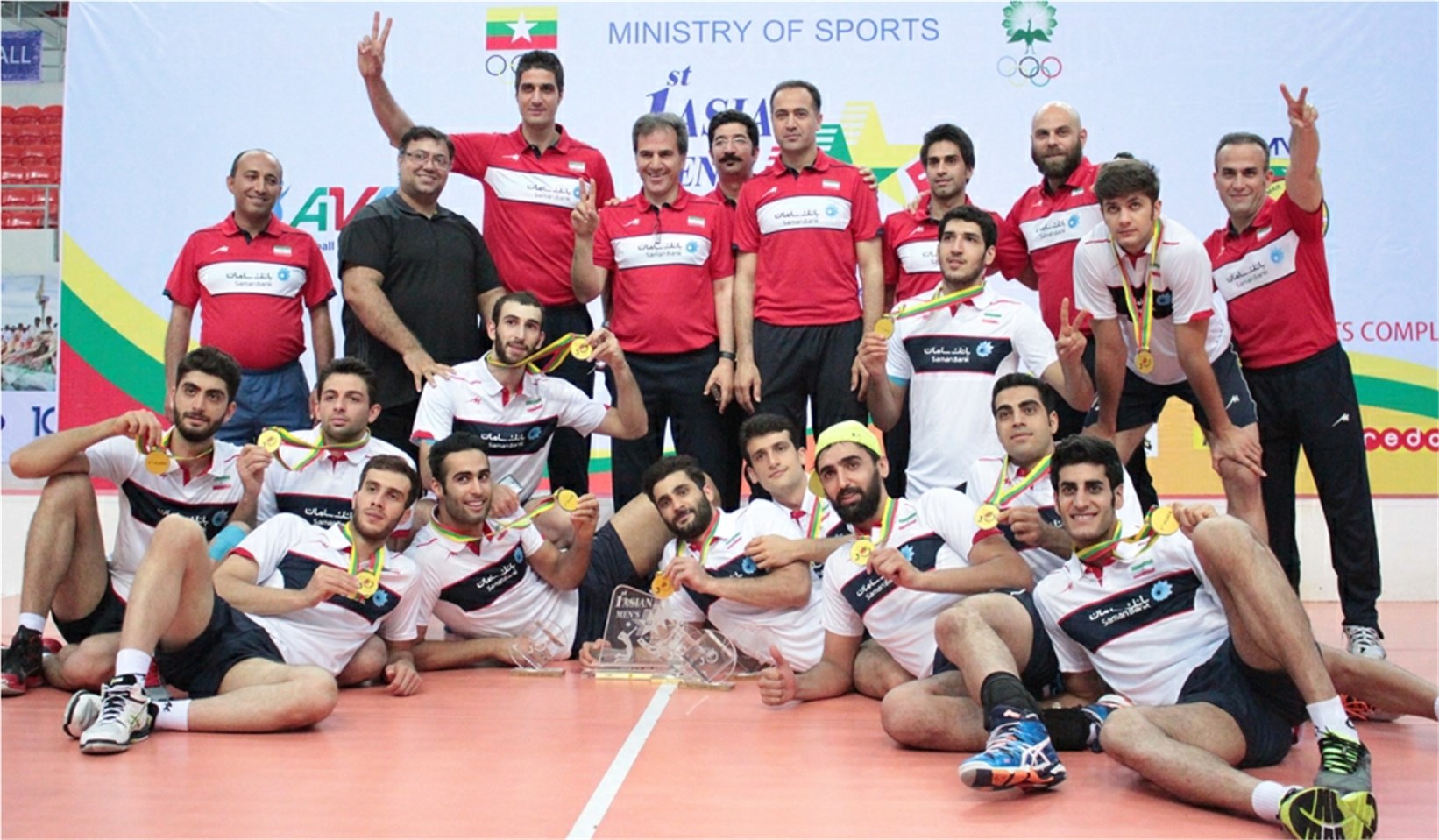
Iran confirmed their strong form at the Asian Men’s U23 Volleyball Championship by powering past formidable Korea 3-0 (25-16, 25-21, 25-21) in a thrilling final showdown to become
the first team in history to capture the championship. Iran and Korea qualify for the  FIVB Volleyball Men’s U23 World Championship in Dubai, UAE, from August 24-31, 2015.

It was another remarkable success for Iran, who have made a clean sweep of all the Asian men’s age group titles, also including the Asian Youth Boys’ U18 Championship in Colombo, Sri Lanka in 2014, the Asian Men’s Junior U20 Championship in Manama, Bahrain in 2014 and the Asian Senior Men’s Championship in Dubai, the UAE in 2013.

Taekwondo: Iran took the men’s overall title; Gold for Khodabakhshi and Ashourzadeh; Bronze for Yaghoubi and Kimia Alizadeh
Iran took the men’s overall title with three gold medals and one bronze for a total of 65 points, followed by Russia and Uzbekistan at the 2015 WTF World Taekwondo Championships in Chelyabinsk, Russia.

In the men’s -58kg category Farzan Ashourzadeh Fallah known as “The Tsunami” won gold over Belgium’s Si Mohammed Ketbi in the final showdown.In the men’s -80kg division, Iranian Mahdi Khodabakhshi took the gold. In the male -63kg category Iran’s Abolfazi Yaghoubi Jouybar won bronze. Iran’s Bijan Moghanlou was selected as the best male team coach.

Kimia Alizadeh ist the first Iranian woman to win a medal at the World Taekwondo Championships. Alizadeh defeated Olympic gold medal winner Jade Jones 10-9 in the quarterfinals round but lost to Mayu Hamada from Japan 5-3 in the semifinals and claimed the bronze medal.

Sources: FINA Trophy 2015 | News, FINA Trophy 2015 | Gallery Iran-Uruguay, FIVB | News, WTF | News, Tasnim News Agency | News, World Taekwondo United News 1, World Taekwondo United News 2, ISNA | Photos

Photo and cartoons exhibition in Tehran reviews urban space

Over 200 works are currently on display at the Iranian Artists Forum on a showcase entitled Exhibition of Urban Space and Structures.

The exhibit, which aims to lay the groundwork for further urban aesthetics and a safer environment, will end on May 30.

Sources: Tavoos Online | News, Mehr News Agency | Photos

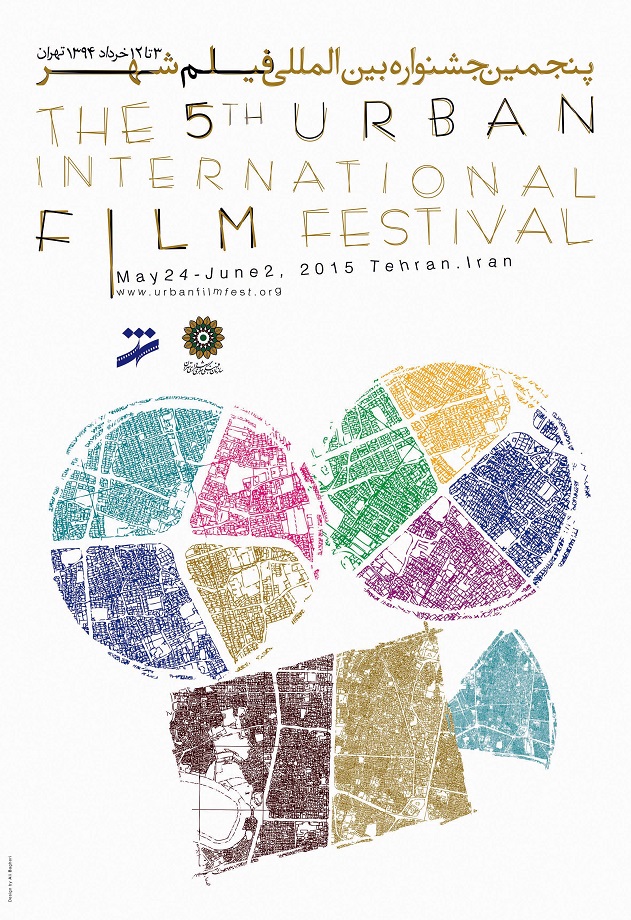
5th International Urban Film Festival underway in Tehran, Iran

Tehran, Iran - 5th International Urban Film Festival 1 - PosterIran’s 5th International Urban Film Festival is running from May 24 to June 2 in eleven movie theaters across Tehran.

More than 360 productions will take part in this year’s national and international competition sections, presenting short and feature-length films, as well as documentaries and animations from Iran, China, Egypt, the US, Britain, Palestine, Switzerland, Italy, Serbia and other countries.

The festival is also holding filmmaking, cinematography and scriptwriting workshops for cinema enthusiasts of all ages.

International cineastes Krzysztof Zanussi, Dina Iordanova, Deborah Young and Caroline Otto are scheduled to hold several master classes at the Mellat Cinema Complex during the 5th International Urban Film Festival.

Zanussi, 76, is a renowned Polish filmmaker and screenwriter. Zanussi, whose work was noticed during his activities in the amateur film movement in the 1950s and 1960s, is also a professor at the Silesian University in Katowice.

Iordanova, a professor of film studies at University of St Andrews, focuses on transnational cinema, global film industries and film festivals, as well as on Eastern European and Balkan cinema.

American film critic Young is an editor of the Hollywood Reporter, and Film Comment Magazine. Based in Rome, Italy, she has reviewed films from around the world since the 1990’s, when she was appointed Rome bureau chief for Variety.

Active as a screenwriter and director Otto is a member of the Federation of Scriptwriters in Europe (FSE). She was also the head of the script funding commission of the German film board during 2009-2013.

Sources: Press TV | News, Tehran Times | News

Iran’s North Khorasan Province: Hamid waterfall

Hamid Waterfall is located near Hamid village. A village in Baba Aman Rural District, Bojnord County, North Khorasan Province. The waterfall’s height is 25 meters and the stream has many small ponds.

Sources: Tishineh.com | Hamid Waterfall, Wikipedia | Hamid, Mehr News Agency | Photos

Photo Series: Spring in Iran – Fereydunshahr, Isfahan Province

Fereydunshahr is a county of 38,300 (2011) inhabitants in Isfahan Province, Iran. It has two cities: Fereydunshahr and Barf Anbar. The majority of the county’s population are Iranian Georgians.

Sources: Wikipedia | Fereydunshahr, Mehr News Agency | Photos

Robotics competition in Kermanshah, Iran

Photos of the 2015 RoboMedal Tournament organized in Kermanshah. The first round was on May 19 and the finals on May 21. The top ranked teams will compete in international robotics tournaments.

Related post: The other Iran | Iran’s impressive track record in RoboCup

Sources: Tasnim News Agency | Photos, robomedal.com, Kermanshah irib.ir | News

Photos: Hiking in Iran – From Lake Neor to Soobatan

Lake Neor, at an altitude of 2,700 meters above sea level, is located 48 km southeast of the city of Ardabil, Ardabil Province. The village of Soobatan, at 1,950 mamsl, is located 32km northwest of the city of Talesh, Gilan Province. The region is known for its breathtaking landscape.

Sources: Jamejam Online | Images (Photos: A. Niyati), Payvand News of Iran, Dream of Iran

Photos: Iran’s national rafting team qualifyers

According to the Iran Rowing Federation, the white water rafting competitions took place on the Zayandeh-Rood river, in Saman, Chahar Mahal & Bakhtiari Province, in order to select the members that will compete for Iran’s national team in the upcoming international competition in Turkey.

Sources: IRNA, Mehr News Agency, Tasnim News Agency, Fars News Agency, ICF (Iran Canoeing, Rowing & Sailing Federation)

Hamid Saeid: Iranian musician

Since his Internet hit, “Bad Shans” (hard luck), Hamid Saeid has become one of the best-known Iranian musicians with African roots. He’s traveled by motorbike across the province of Hormozgan, which is situated in the South of the country on the Persian Gulf, in order to realize his dream; to organize a concert with the best black musicians in the country. The documentary Dingomaro – Iran’s Black South by Kamran Heidari is a testimony of this trip.

Listen to Hamid Saeid performing Bad Shans (Hard luck):

Source: Autentic | Dingomaro – Iran’s Black South

French mathematician Cedric Villani, 2010 Fields Medal winner, visited Iran

Cédric Villani, French mathematician and 2010 Fields medalist, hold a lecture on “Synthetic theory of Ricci curvature; when Monge meets Riemann” at the 4th Meeting on Contemporary Mathematics at the School of Mathemtics, Institute for Studies in Theoretical Physics and Mathematics (IPM). He also presented “Of planets, stars and eternity (stabilization and long-time behavior in classical celestial mechanics)” at Sharif University of Technology, University of Tehran and IPM-Isfahan.

About Cédric Villani Cédric Villani is a professor of mathematics at Université de Lyon and the director of Institut Henri Poincaré in Paris. In  2010,  Villani  was  awarded  the  Fields  Medal  for  his  proofs  of nonlinear  Landau damping  and  convergence  to  equilibrium  for the Boltzmann equation. His other honors and awards include the Fermat  Prize,  the  Henri  Poincaré  Prize  of  the  International Association of  Mathematical  Physics,  the  Prize  of  the  European Mathematical  Society  and  the  Jacques Herbrand  Prize  of  the French Academy of Sciences.

Villani’s visit to Sharif University of Technology: Sharif University of Technology | News
Villani’s visit to University of Tehran: University of Tehran | News

Related article: The other Iran | Photos: Graduation ceremony of Sharif University

Sources: School of Mathematics, IPM | Visitors (PDF), Jamejam Images (Photos: Taherkenareh)

Contemporary posters by Swiss graphic designers displayed at Tehran exhibit

The exhibition took place at the Iranian Artists Forum in Tehran and displayed fresh look at the typography, posters and contemporary Swiss design.

There were works by a number of Swiss graphic designers on display, including Flavia Cocchi, Nadine Kamber, Claude Kuhn, Felix Pfäffli, Melchior Imboden, Erich Brechbühl, K. Domenic Geissbühler, Megi Zumstein, Claudio Barandun, Jean-Benoit Levy and Roger Pfund.

Iranian artists Ebrahim Haghighi, Ghobad Shiva, Amrollah Farhadi, Saeed Babavand and Ambassador of Switzerland to Iran Giulio Haas attended to the opening ceremony.

Sources: Tehran Times | News, Mehr News Agency | Photos, Iranian Artists Forum | Gallery (Photos: Leila Ebrahimi), Iranian Artists Forum | News (Photos: Leila Ebrahimi), Mehr News Agency | News

Interview with German cellist Anja Lechner about her concerts in Iran

Anja Lechner, along with François Couturier – a veteran French pianist, previously performed concerts with the Tarkovsky Quartet during the 28th Fajr International Music Festival in Tehran in February 2013 and she also joined Armenian pianist Artur Avanesov in February 2014 to perform Garden II composed by Hushyar Khayyam in Tehran.

The following is an excerpt of an interview with the German musician translated by Iran Front Page:

Ms. Lechner, have you had a good time in Iran?
I must answer your question in one word: absolutely. Its attractiveness has made me travel to Tehran for a third time. During my trips to Iran, I have found it easy to establish a bond with the local culture and traditions. If I research my genealogy, I might come across my Eastern stock.

Were you satisfied with your two performances at Niavaran Cultural Center?
First of all, I found it unusual to stage solo performances for two nights in a row; it’s uncommon even in places where there is a mass audience. All tickets were sold out for the two solo performances, something which I had never experienced throughout my musical career. It struck me as unusual. To me, it’s one of the reasons why I consider performing in Iran appealing.

How was your performance received?
What was more important than the packed house was the way the audience formed a bond with us. That how much listeners concentrate on the quality of performance or digest the music in a heartfelt manner differs from audience to audience. For instance, I have not seen it much in Germany or other countries. People there might have considerable knowledge of previous works, but they listen to music, relying more on their prior knowledge than listening to the music. Musicians do not experience what happens in Iran very often; particularly in my case, because I opted for pieces which had not been heard much.

Germany related posts: The other Iran | Germany

Sources: Iran Front Page | Interviews, musicboard.ir | Anja Lechner Apr. 2015 (Photos: Ali Tajik), Mehr News Agency | News, Honaronline.ir | Anja Lechner at Niavaran 2015 (in Persian), Honaronline interview with Anja Lechner (in Persian)