Tag Archives: Iran

Women are at the forefront of Iran’s Startup boom

Techly published this article by Mitra Bahrami about women in Iran’s startups:

Last July, the Iranian startup community opened itself up to the Economist to introduce three of its largest internet companies to the world. Less than two months later, Techcrunch highlighted Iran as the next startup ecosystem to emerge. And in the middle of it all, the Iranian-born-and-educated Maryam Mirzakhani became the first female recipient of the Fields Medal, the most prestigious award in mathematics.

Having spent a good part of this past year in Iran and some of it working at MAPS, a relatively young but highly promising and inspiring startup incubator, what surprises me is not so much that this is finally happening, but rather that it took so long for it to happen. Just consider some of these statistics. Iran has one of the youngest and most educated populations anywhere in the Middle East. More than 70% of Iranians are younger than 35, and Iran’s literacy rate stands at 85% (OECD/WorldBank), a number that increases to 97% among young adults (aged between 15 and 24), without any gender discrepancy and well ahead of the regional average of 62%. Iran’s rigorous education system and college entrance exams filter the best and brightest for its leading institutions of higher learning, where only 10% make it to the highly selective public universities. Maryam Mirzakhani was the product of this system, and her Alma Mater, Sharif University, continues to inch upwards in the rankings among the world’s very best.

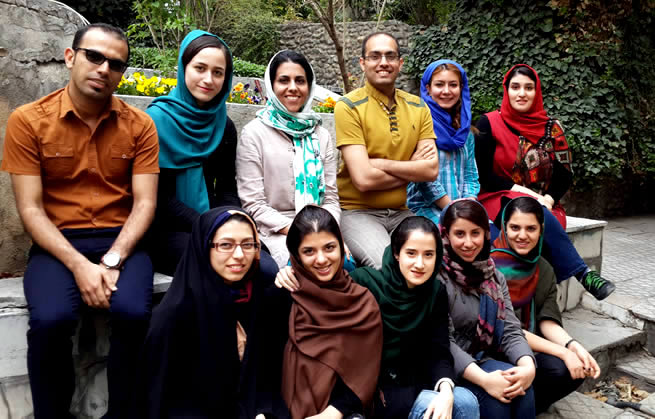
Another secret that is gradually bubbling to the surface is that women are at the forefront of this technological breakthrough.

https://i0.wp.com/techly.co/wp-content/uploads/2014/09/SWWomen.png

60% percent of college graduates in Iran are women, many of them trailblazers in their own right. Satratech, a MAPS startup, is a predominantly female-run operation having 8 of its 12 engineers as well as its co-founder all women. Shafajoo, its health and medical application, received top honors at the 6th annual Iranian web show in 2014, AND the software gained its 100,000th user within 6 months of its launch. Just this past month, Iran held its first startup weekend for women, one of a handful of countries to ever do so.

There are of course many challenges facing the high-tech community in Iran, challenges such as the US-imposed sanctions, the internal censors, and the continuing brain drain. But these have been a part of life in the country for a long time now, and the Iranians have managed to make their headways despite these problems. In many ways, these challenges have made them more resilient, more resourceful, more creative. Despite the sanctions for instance, you can find any high-tech consumer item you wish in Iran as a visit to Payetakht will attest to. The internal censors have made it inconvenient, and at times difficult to access many sites or to connect to the outside world, but by one account up to 70% or Iranians bypass government filters, a realization that may finally be encouraging the government to ease up the restrictions. And even though the brain drain must be felt on many levels in Iran, it hasn’t stopped the country from embracing internet banking, mobile bill-pay, and the spread and wide use of technology in a host of areas. In fact Iran has one of highest numbers of internet users in the world, ranking 13 when those numbers are taken as a percentage of population, well above, China, Russia, India, Brazil and Turkey.

Outside the country Iranians have cemented their reputation as pioneers in science and technology and by the looks of it, they are doing the same inside. Yes, the road inside has been more challenging with many more ups and downs, but Iranians seem to be overcoming them one by one. Iran is coming online as a high-tech powerhouse. The big question is, how far will it go, and how fast.

Mitra is an independent Communications Coach based in Silicon Valley, specializing in business writing and cultural aspects of communication. She is the founder of the Writing Academy in Palo Alto and has worked closely with Stanford University on a variety of writing and communications courses geared towards their international graduate students and visiting scholars. Prior to her teaching career Mitra was a producer at KRON TV in San Francisco where she was nominated for an Emmy (2007). Mitra started her career in Silicon Valley in 1980 as a technical writer and trainer in the high-tech industry (Cromemco, ASK Computers, Visicorp, SPC, Intuit). She has a BA in Linguistics and Sociology from University of York, UK (1980).

Source: techly – Iran Tech & Startup Scene News | Iranian Startups, Unveiled

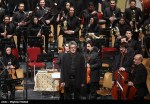
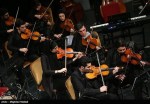
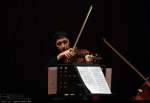
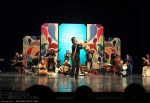
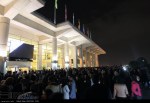
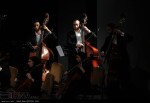
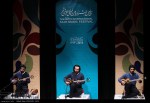
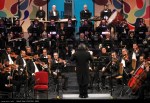
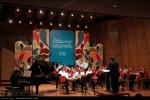
30th Fajr International Music Festival in Iran – Photo gallery (part 2)

Some of the performers shown in the photo gallery below were covered earlier in this blog. To get some back ground and more photos or videos, please click:
https://theotheriran.com/tag/music/

Click on a photo to open in original size, and navigate through the gallery.

Sources:
IRNA| Photos 1, 2, 3, 4, 5, 6, 7, 8, 9, 10,
ISNA | Photos 1, 2, 3
Tasnim News | Photos 1, 2

The directors of Iran’s most popular movies of the year are all women

“The City of Mice 2”, “Ceasefire 2”, and “Track 143”, three movies produced by Iranian women directors, were on top of the list of Iran’s most popular films of the year. The list was announced during a ceremony held by the Cinema Organization of Iran at Tehran’s Eivan-e Shams Hall on Monday to honor the directors of the movies.

Marzieh Boroumand’s “The City of Mice 2”, a puppet show movie in the children genre, stands high on the top of the chart. A sequel to her 1984 hit “The City of Mice”, the movie was warmly received by children, it also drew a large number of adult cinemagoers as well.

“Ceasefire 2” by Tahmineh Milani was the second movie on the list. “Ceasefire 2” is about the encounter of a young educated couple with their former family counselor after some years, during which the couple reviews their lives and some of the dramatic events that happened over the past years.

Narges Abyar’s acclaimed drama “Track 143” took the third place. The film, which was widely acclaimed at the 32nd Fajr International Film Festival in Tehran earlier in February 2013, is about the great maternal sacrifice during the 1980-1988 Iran-Iraq war.

About Tahmineh Milani
Please check out this article

About Marzieh Boroumand
Marzieh Boroumand is an Iranian actress, puppeteer, screenwriter and director of TV series and films. She is best known for Alo!Alo! Man joojoo-am (1994), Barbershop Ziba (1989) and City of Mice (1985). She began her career in cinema by playing in The Cycle directed by Dariush Mehrjui.

About Narges Abyar
Born in Tehran. Narges Abyar studied in Persian Literature and received her B.A. in this field. So far she has devoted most of her time to writing, which had led to the publication of 30 story and fiction books for children, young adults and also the adults. She has made several short and feature-length documentaries: -Kind Dead-End (fiction-15min-2006), – One day after the 10th day(documentary-25min-2007)

All posts related to Iranian women on this blog: The other Iran | Women

Sources: IMDb | Narges Abyar, Wikipedia | Marzieh Boroumand, Payvand News of Iran

German artist Otto Piene’s “Rainbow” exhibited in Tehran Museum of Contemporary Art in Iran

A collection from the “Rainbow” series by German artist Otto Piene is currently being showcased at Tehran Museum of Contemporary Art.

Tehran Museum of Contemporary Art is hosting a collection of artworks by the German painter, printmaker and environmental artist, as well as the founder of the influential European postwar movement Group Zero Otto Piene.

This is the fourth time this museum hosts German artists’ artworks. But this is Piene’s first ever exhibit in the Middle East which opened at Tehran Museum of Contemporary Art on Tuesday evening, revealing a variety of artworks ranging from paintings to light sculptures, smoke and fire paintings, and beautiful environmental “sky art.”

Sky art is a term he coined in 1969, which allowed him to use landscape and cities themselves as the focal point of his work.

Most of Piene’s works have been inspired by nature and based on the four elements of ‘light, fire, air and earth’ which points to the philosophical viewpoint of this avant-garde artist.

The first galleries of the museum is dedicated to his rainbow works and silkscreen prints. Then his other works are put on display which are the combination of grids with sources of fire (candles, gas-burners) producing smoke-traces and fire paintings, in which the paint was burnt.

One of his works in particular is said to have been specially made for Tehran exhibition. It is the light sculpture inspired by tile works of Imam Mosque which has been created from glass.

With much regret, Piene passed away in July 2014, and did not get the chance to attend the exhibition in Tehran.

He always sought a better world in his dreams and believed his most brilliant work was to light up the dark sky.

The exhibit of this German artist will be running until April 17 at the museum located on North Kargar St., next to Laleh Park.

Sources: Deutsche Welle | Farsi, Deutsche Welle, Mehr News Agency

German animation “Virtuoso Virtual” wins in Tehran International Animation Festival 2015

The 9th Tehran International Animation Festival was held from March 8 to 12. Over 130 works from across the globe were screened at the event.

German animation “Virtuoso Virtual” directed by Thomas Stellmach and Maja Oschmann has won the top prize in the International section of the 9th Tehran International Animation Festival, the organizers announced on Thursday.

“Virtuoso Virtual” shows some modest drawings that seem to come from nowhere. Following a secret choreography, they take on characteristics and moods of the music and narrate a story that appears to be laid out in the music.

The second prize went “All the Winters I Haven’t Seen”, Iranian animator Omid Khoshnazar’s acclaimed anti-war animation.

It tells the story of a pregnant woman in New York City who discovers that her fetus suffers severe physical defects. Totally unaware of the problem, the mother finds that she has been exposed to chemical weapons, a matter entirely absent from her medical records.

“Coda” directed by Irish animator Alan Holly received the third prize. “Coda” is about the afterlife. It shows some exotic experiences and the possibility of forgiveness.

Iranian animator and writer Mehdi Alibeygi was presented with the special jury award for his surreal short film “Changeover”.

“My Mom Is an Airplane” directed by Yulia Aronova from Russia was crowned best film in the About Children Section.

Award Title Winner Country
1 Golden Statue for the best animation Virtuoso Virtual Thomas Stellmach and Maja Oschmann Germany
2 Silver Statue for the second animation All winters that I haven’t seen Omid Khoshnazar Iran
3 Bronze Statue for the third animation Coda Alan Holly Ireland
4 Golden Statue for the best animation on the theme of children and young adults My Mum Is an Airplane Yulia Aronova Russia
5 Golden Statue for the best student animation Carn Jeff Le Bars France
6 Golden Statue for the best TV production Kung Fu Bunny (Kitchen War) Zhiyong Li China
7 Golden Statue for the best commercial animation Venice / Massi Simone Icaro Massi Italy
8 Special Statue of the jury Change over Mahdi Alibeigi Iran
9 Special Statue of the director of the festival —- Alexander Petrov Russia
10 Honorary diploma Green Fields Benjamin Vedrenne France
11 Honorary diploma Indah Citra Pierre-Antoine Naline, Sarah Feruglio, Maxime Orhnial, Anthony Oliveira France

Sources: Payvand News, Tehran International Animation Festival, TIAF | Photos

Iranian startup Ponisha: The Heaven of Iranian Freelancers‏

Iranian Startup for freelancers PonishaThere are many international online outsourcing websites such as Freelancer, Odesk, and Elance but the major issues of Iranians with these sites, is online money transactions abroad: this process is almost impossible as Visa, MasterCard, and PayPal all are closed for Iranians, due to international sanctions.

Ponisha is the largest place for freelancers in Iran to get projects done and also to make money. It was launched in Dec, 2011 to help companies and individuals outsource their projects and hire people for short durations. It is also beneficial for entrepreneurs and startups to outsource technical parts of their projects.

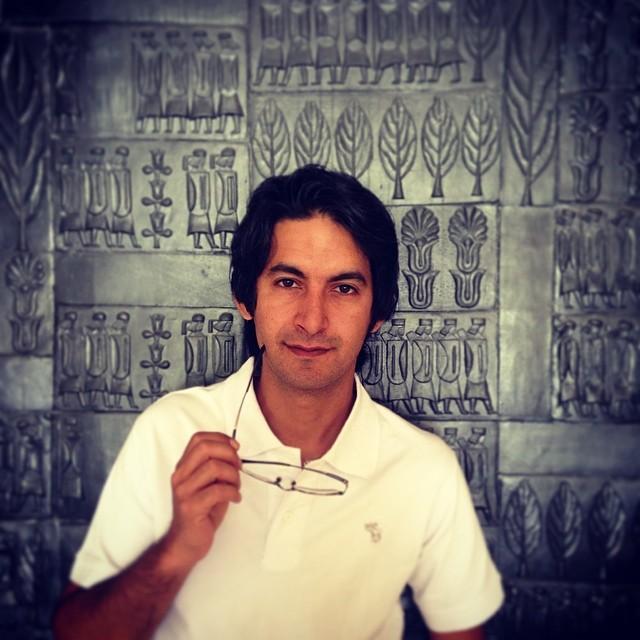
Nima Nourmohammady Founder and CEO at 'ihome.ir' and 'ponisha.ir'

Nima Nourmohammady Founder and CEO at ‘ihome.ir’ and ‘ponisha.ir’

Here is  Nima Nourmohammady, the founder of Ponisha:  “Most people usually look for full-time jobs in a company, but I believe freelancing can be a full-time job, and with some training in marketing and negotiation, anyone with any skill could become successful. The benefits are endless. Just imagine there is no boss. In this situation, you can work whenever or wherever you want and on whatever project you desire and still make more money than people with regular employment.”

Currently Ponisha has more than 50.000 freelancers, with 2400 completed projects and a revenue of 5,103,158,949 Rials ($157,000) for freelancers. Nourmohammady said that the main goal of Ponisha  is to expand. “Our main and most important target is to reach 1 million registered members. We keep adding features, updates and promotions to keep our customers satisfied. Most Ponisha’s growth comes from our organic growth and we are thankful to our users who keep introducing us to their friends and networks.”

Sources:
techly.co | Ponisha: The Heaven of Iranian Freelancers‏, about.me/nima.nourmohammady

Photo series: Winter in Iran – Tehran

To bid the winter farewell here are the last snow photos of this season. Enjoy Iran’s capital city, Tehran, covered in snow!

Sources: ISNA | Photos 1, IRNA | Photos, ISNA | Photos 2

Iran’s South Khorasan Province: Furg Citadel (Photos)

The Citadel of Furg, or Arg e Furg, is a citadel from the 12th century, located in Iran’s South Khorasan province 90 km east of the city of Birjand. The citadel was founded by Meerza Muhammad Rafiee Darmiany I (Lama). Materials used in the building include stone, brick, clay, gypsum, lime and mortar (Sarouj).

Source: Payvand News of Iran

Photo series: Winter in Iran – Snow in Bisutun, Kermanshah Province

Please also check out the amazing story and photos of the Bisutun Inscription – the Iranian Rosetta Stone, that was vandalized by Allied soldiers during the Anglo-Russian invasion of Iran.

Sources: Tasnim News | Photos, The other Iran

Italian jazz pianist Stefano Battaglia performed in Iran

The two-part rendition by the famous Italian pianist Stefano Battaglia and the renowned German clarinet player Ulrich Drechsler saw music fans fill the hall leaving no vacant seats.

The duet, performed Saturday night, in the international section of the festival at Tehran’s Rudaki Hall, had the audience mesmerized for the high quality musical by the two virtuosos, IRNA reports.

Read more what Ulrich Drechsler said about Iran and Iranians here

Sources: Italian Embassy Tehran, Financial Tribune, IRNA | Photos


Austria-based German clarinet virtuoso Ulrich Drechsler: “I like Iranians for their kindness, politeness, and hospitality.”

Austria-based German clarinet virtuoso Ulrich Drechsler attended the 30th Fajr International Music Festival in Iran.

Austria based German clarinet virtuoso Ulrich Drechsler

Austria based German clarinet virtuoso Ulrich Drechsler

“I am addicted to food. When I came to Iran and a friend took me to a restaurant in northern district of Tehran and had kebab with a taste of saffron, I was in high spirits,” Ulrich Drechsler told the Persian service of ISNA on Sunday.
“Pomegranate juice and saffron ice cream, these are incredible and awesome. You make use of a variety of spice and vegetables in your food. I think I would own a restaurant in Iran if I could come back to this world once again,’ he exclaimed.

He continued that this is his second trip to Iran and hoped to return again in spring or summer.

“I have only stayed in Tehran during these days and have got to know only a little part of your culture. My friends have shown beautiful places like the Music Museum of Iran, and I was surprised to see such numbers of Iranian musical instruments,” he stated.

“I must say that the main thing in my life is my family, then food and after that music. I have fallen in love with Iranian life and the Iranian mentality,” he stated.

Drechsler also noted that he has got familiar with Iranian traditional music through works of Kayhan Kalhor, the famous Kamancheh (knee fiddle) player, and is a big fan of his works. He believes that music in Iran comes from the heart of the players so the factor of emotion “is so prominent in it.” Coming for the second time to Iran, he said, “I like Iranians for their kindness, politeness, and hospitality.”

Ulrich Drechsler and Italian jazz pianist Stefano Battaglia have given two performances at the festival, which will come to an end on February 20.

The Iranian audience was highly entertained by a series of lullabies that Ulrich Drechsler performed at his concerts during the festival.

All posts about Music and foreign musicians in Iran on this blog:
https://theotheriran.com/tag/music/

Sources: Financial Tribune, Tehran Times

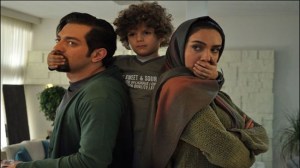
Taraneh Alidoosti: Awarded Iranian actress, blogger and writer

Taraneh Alidoosti is a Crystal-Simorgh winning Iranian actress. In a poll conducted among 130 film critics by Sanate Cinema magazine, she was voted the best Iranian actress of the decade. In 2012, a similar poll by the Film Monthly also chose her as the best actress of the decade.

Her father, Hamid Alidoosti, is a former member of the Iranian national football team and currently a football coach in Iran.

Career as actress
She began her acting career at age 17 with the leading role in Man, Taraneh, panzdah sal daram (I Am Tarane, Fifteen Years Old), (Rasul Sadr Ameli, 2002). Critics praised her performance as a defiant 15 year old girl who after a failed relationship is determined to rear a child on her own, while struggling with poverty and social stigma. She won the Bronze Leopard for Best Actress from Locarno International Film Festival in 2002, as well as the Crystal Simorgh for Best Actress from the 20th Fajr Film Festival, becoming the youngest ever to do so. Shortly after she set another record, getting nominated three consecutive times for the best actress prize at the Fajr Film Festival for her first three films. Since then she has maintained a steady but selective work flow in both theatre and cinema. She is mostly known for her choosy criteria in accepting challenging, dramatic roles, as exemplified by her long collaboration with Oscar winner Asghar Farhadi, making her one of the most acclaimed actresses of her generation.
Blogging/Writing
In addition to her acting career she is also known for her writing as featured in her personal weblog . Additionally, her short stories and commentary pieces have been widely published in magazines and daily newspapers such as Shargh. In 2010, a piece written in support of director Asghar Farhadi, defending his comments in support of dissident Iranian artists, caused her weblog to be closed by government officials. Her new weblog however is active now. A collection of stories by Canadian author Alice Munro collected and translated by Taraneh Alidoosti, was published in 2011. It received the prize for best fiction translation at annual Book of Season Awards. She is fluent in English and German.

Awards
Bronze Leopard for Best Actress from Locarno International Film Festival in 2002
Crystal Simorgh for Best Actress from the 20th Fajr Film Festival (youngest actress to win the prize with 17 years)
Best fiction translation at annual Book of Season Awards

Filmography
2002: Man Taraneh, Panzdah Sal Daram (I Am Taraneh, Fifteen Years Old)
2004: Shahre Ziba (Beautiful City)
2006: Fireworks Wednesday
2008: Canaan
2008: Shirin
2008: Tardid (Doubt)
2009: Darbareh Elly (About Elly)
2010: Whatever God Wants
2011: Life With Closed Eyes
2011: At the End of 8th Street
2012: Modest Reception
2013: The Shallow Yellow Sky
2014: The Life Wedlock Mr Mahmoudi & Banoo

Sources: wikipedia | Taraneh Alidoosti, Bing Image Search

German Jazz pianist and composer Joja Wendt performed in Iran

German Jazz pianist and composer Johan Wendt aka Joja Wendt performed in Iran at the 30th Fajr International Music Festival.

Check out the other performances in the Fajr International Music Festival here (lots of interesting photos)

Sources: Tehran Times, jojawendt.com, imdb.com, German Embassy in Tehran, IRNA | Photos


30th Fajr International Music Festival in Iran – Photo gallery (part 1)

Fajr International Music Festival is Iran’s most prestigious Music Festival founded in 1986. The festival is affiliated with UNESCO and includes national and international competition sections.

Since its establishment, many musicians from several countries like Austria, Germany, France participated in the event. The festival have enjoyed a strong presence of Asian countries as well.

In addition to Iranian groups, this year ten foreign groups performed 15 concerts.

We had already posts about:
Dutch saxophonist Yuri Honing and his band
US American saxophonist and Grammy Award winner Bob Belden

Sources: wikipedia | Fajr International Music Festival, Tehran Times, ISNA | Photos 1, ISNA | Photos 2, ISNA | Photos 3

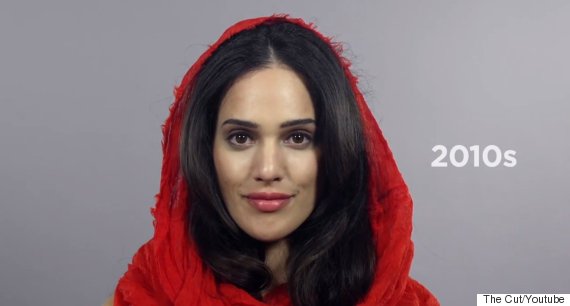
Video: The look of Iranian women from 1910 to 2010

Iranian Woman 2010

Iranian Woman 2010

In 1910, women sported monobrows and had pared-down make-up, with a close-fitting hijab.
A decade later, the hijab becomes looser and softer around the crown of the head, reflecting social changes – the Iranian social movement for women began.
In the 1930s, the Shah of Iran Mohammad Reza Shah Pahlavi implemented big changes – starting with the name of the country from Persia to Iran, and banned the hijab.
We can see hair getting more elaborate, make-up becoming heavier and looks that reflect Western trends.
Then the revolution occurs in 1979 and is evident in the sober, black hijab and face devoid of make-up.
But, while these were dark times for many Iranians, hope flourished again with the Green Movement, which sought to bring about political change after the 2009 presidential election.
While the hijab – now mandatory – remains until the 2010 look, it becomes more colourful and once again, a bit looser.

Source: The Huffington Post UK | How Iranian beauty has changed over 100 years

Dutch saxophonist Yuri Honing and Band at Fajr Music Festival in Tehran, Iran

Dutch jazz saxophonist Yuri Honing performed a quartet at Tehran’s Vahdat Hall on February 15 during the 30th edition of Fajr International Music Festival

An interesting statement Yuri did during his visit in Tehran was the following: “What one hears and reads about the Middle East in Europe does not conform to realities on the ground, including in Iran.”

About Yuri Honing
Yuri Honing is one of Holland’s most important saxophone players (according to the Penguin Guide to Jazz on CD and the Oxford Introduction to jazz). Yuri Honing started his own Trio in 1990, with bassist Tony Overwater and drummer Joost Lijbaart. The absence of a chordal instrument in the band gives the threesome great harmonic freedom.

Honing had his first major success in 1996 with his album Star Tracks, which comprised recordings of pop songs as an alternative to the American Songbook. The album became a hit in the Netherlands and Germany, and gained significant notice in the UK as well.

His album ‘Seven’ recorded with Paul Bley, Gary Peacock and Paul Motion received the Edison Jazz Award (Dutch Grammy) in 2001.
In 2012 Yuri Honing was awarded with the Boy Edgar Prize, the most prestigious jazz prize in the Netherlands.

Other career highlights:
2001 Honing toured with Bley and bassist Charlie Haden.
2003 He performed with guitarist Pat Metheny and bassist Scott Colley.
2006 He recorded Symphonic with arranger and composer Vince Mendoza.

More photos including other artists: ISNA Photos

Sources: ISNA Photos, wikipedia | Yuri Honing, Iran Front Page

Iranian director Teimour Ghaderi: short film “It Hits Upon The Roof” shines in CourToujours Festival in Geneve, Switzerland

Teimour Ghaderi’s ‘It Hits upon the Roof’ has won the special award of Switzerland’s courtoujours short film festival.

Iranian short film 'Rainfall of Roof'

The short film It Hits upon the Roof competed with representatives from Russia, France, Tajikistan, Belgium, Portugal, Egypt, Mexico, and Switzerland and managed to scoop the jury’s special award and a cash prize of 1,500 francs.

Produced by the Art Forum of Kurdistan province, Ghaderi’s narrative short movie depicts the life of a young boy who tries not to let his mother wake up by gathering the raindrops falling of their dripping ceiling into his hands.

It Hits upon the Roof has been screened in several international film festivals so far such as 2014 Lucania Film Festival in Italy, Lahore Short Film Festival 2013 Celebrating Iranian Heritage, and the third MiCe Film Festival in Valencia, Spain.

Synopsis
A house in a village, where only an old woman and a child live, the rain falls and starts dripping from the ceiling. The child tries to do something about the drips.

teimourAbout Teimour Ghaderi
Teimour Ghaderi, born 1992, graduated in screen writing and photography. He has written the short stories: The Address I’m lost and Summer Cold. Has directed three short films: Pomegranate is the Fruit of Paradise, Picking the down and It Hit Upon the Roof. Winner of 18 national and international awards (Canada, South Korea, Czech Republic and Turkey) for the films Pomegranate is the Fruit of Paradise and Picking the Down.

CourToujours Festival
The international short-film festival of Geneva, CourToujours, is a platform, giving young film directors or confirmed talents the opportunity to present their short-films to a diverse audience. The 11th edition of CourToujours took place in the Swiss city of Geneva from the 19th to 21st February 2015 at Maison des Arts du Grütli.

PS: Finding info about Teimour Ghaderi, like with many young Iranian artists, is not easy. An Iranian name can be written in many ways with latin letters. Some combinations I had to try to find this info were:
Teymour Qaderi, Teymur Qaderi, Teymour Ghaderi, …

Sources: IRAN FRONT PAGE, MEHR, Iranian Film Festival, viddsee.com

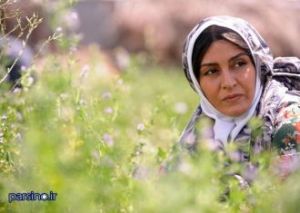
Negar Javaherian – Awarded Iranian actress

Negar Javaherian holds a Bachelor Degree in Stage Design from the School of Art and Architecture at Azad University in Tehran, Iran. She started her acting career in theatre at the age of sixteen. In 2001, at the age of seventeen, she acted in her first film I Am Taraneh, I Am Fifteen Years Old (2002). Since then, she has played in a number of films and theatrical performances.

Her recent films include Howze Naghashi (2013), for which she was nominated for the Best Actress Award by the Asia Pacific Screen Academy (Australia), Here Without Me (2011), for which she won the Best Actress in the Supporting Role at the 15th Cinema Home Ceremony (Iran), Gold and Copper (2011), for which she received the Best Actress in the Leading Role Award at the 28th Fajr Film Festival (Iran) and Before the Burial (2008), for which she was awarded the Best Actress prize at the 11th Osian’s Cinefan Festival (India).

Negar Javaherian performed in a theatrical play The Fourth Wall (2012-2013) which was awarded the Best Performance of the Year (Iran). Two theatrical plays, Ivanov (2011) and Where Were You on January 8th? (2010), went on European festival tours. For the latter, she was nominated for the Best Actress Award at the International Fajr Theatre Festival (Iran).

Awards
Best Actress in a Leading Role for Tala va Mes, from 28th Fajr Film Festival, 2010 (1388)
Best Actress in a Leading Role for Tala va Mes, from cinema home ceremony, 2010 (1388)

Sources: imdb.com, Wikipedia | Negar Javaherian

Photo gallery: Zayanderud River in Iran’s Isfahan Province

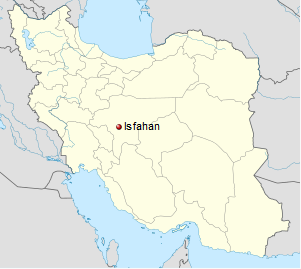
Iran Isfahan Esfahan MapThe Zayanderud River, as largest river in the central plateau of Iran, starts in the Zagros Mountains and flows 400 kilometres eastward before ending in the Gavkhouni swamp, a seasonal salt lake, southeast of Isfahan city.

Sources: Tasnim News Agency, Wikipedia | Isfahan

Iran sabre team comes 8th in Fencing World Cup, Mojtaba Abedini being Iran’s most successful fencer

Abedini+Shormasti+Mojtara+Fencing+Iran+London+Olympic

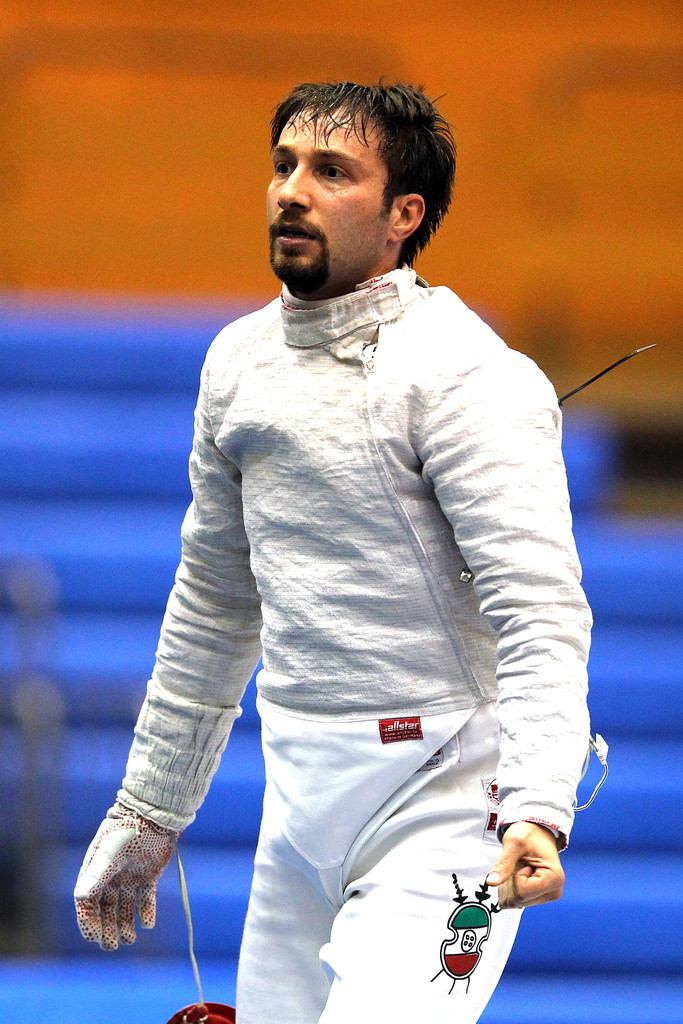
Iran’s Mojtaba Abedini Shormasti made history by taking the 8th place

Iran sabre team finished in eighth place in the Fencing World Cup held in Warsaw, Poland on Sunday.

Iran started the campaign with a 45-20 victory over Chile in the Round of 32. Iran beat the U.S. 45-39 in Round of 16 but lost to Italy 45-39 in the quarter-final.

France won the title after beating Korea 45-43. Bronze medal went to Russia fencing team.

Overall Rankings:
1- France 64 points
2- Korea 52 points
3- Russia 40 points
4- Italy 36 points
5- Romania 32 points
6- Germany 30 points
7- Belarus 28 points
8- Iran 26 points

Iran’s Mojtaba Abedini Shormasti made history by taking the 8th place. Abedini is the the first Iranian who wins a place in the last eight. Abedini defeated Russian Alexander Trushakov 15-12 in round of 64 and then beat Alexey Yakimenko also from Russia 15-14 and advanced to Round of 16. The Iranian fencer beat Woo Young Won from South Korea 15-10 and qualified for Round of 8 and in this stage he lost to Romanian Tiberiu Dolniceanu 15-14.

Mojtaba Abedini Shormasti (born 11 August 1984) is an Iranian sabre fencer. He qualified to the men’s sabre event of the 2012 Summer Olympics through the zone tournament held in Wakayama City, becoming the first Iranian fencer to compete at the Olympics. He was defeated in the first round by Romania’s Florin Zalomir.

Sources: Payvand News of Iran, Wikipedia | Mojtaba Abedini, zimbio.com,

Ten-year-old Iranian girl Fatemeh Mahallati honored at Japanese drawing competition

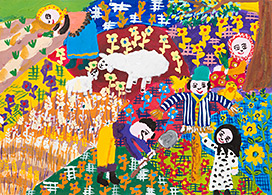
15th International Environmental Children's Drawing Contest - First Prize - International Section - by 10-year-old Fatemeh Mahallati  from Iran

by 10-year-old Fatemeh Mahallati from Iran

Ten-year-old Iranian girl Fatemeh Mahallati has won one of 45 first prizes in the international section of the 14th International Environmental Children’s Drawing Contest in Japan. Her work depicts a number of people working on a farm.

“In my painting, I drew animals, flowers and people who are working on a farm and they are happy as they are living in nature,” Fatemeh told the Persian service of ISNA on Sunday.

“What I drew in my painting were the things I have previously seen in my visits to farms and green areas,” she added. “The environment and nature are important and we should protect the things concerning nature,” she stated.

Fatemeh has been a member of the Institute for the Intellectual Development of Children and Young Adults (IIDCYA) in Raine, a town near the southern Iranian city of Kerman, since 2009.

In a message sent to Fatemeh last week, the director of Iran’s Department of Environment, Masoumeh Ebtekar, congratulated her for achievement at the competition.

Iranian successes in the previous 14 years (click on the pictures to see them in full size with age of the kid and prize that was won):

The contest was organized the Japan Quality Assurance Organization (JQA), the International Certification Network (IQNet) and the Tokyo branch of UNICEF.

The 6-year-old Japanese child, Kusaka Nana, won the Environmental Best Prize, which is the top honor of the contest.

The best prize of the international section was presented to the 12-year-old Ukrainian boy, Oleksiy Rakoma, and the UNICEF special prize went to the 7-year-old Bangladeshi boy, Raihan Fairooz Tarannum.

About the contest:
Since 1999, Japan Quality Assurance Organization (JQA) and International Certification Organization Network (IQNet) have been hosting the International Environmental Children’s Drawing Contest for children aged 7 to 15 years old from around the world, supported by UNICEF Tokyo Office.
So far, the contest has been held 15 times with over 21,000 entries that this year we’ve had entries from a record breaking 81 countries. In total, we have received more than 220,000 drawings up to now.
Full of imagination and artistic sensitivity, children drew pictures about nature and animals, their families and the surrounding area. The pictures also contain the message towards global environment, beyond borders and difference in their background cultures and languages.

Sources: Tehran Times , The International Environmental Children’s Drawing Contest

Hossein Alizadeh: Iranian Grammy Award nominee tours Sweden, Denmark, Norway and Italy starting Feb 27

Alizadeh, Hossein - Iranian tar virtuosoIranian tar virtuoso Hossein Alizadeh is scheduled to tour Europe to perform a series of concerts entitled “The Art of Improvisation”.

Kamancheh player Saba, who is Alizadeh’s son, and tombak virtuoso Behnam Samani will accompany him during the tour, which will begin at the Gothenburg Symphony Orchestra in Gothenburg, Sweden on February 27.
The group will then perform at the Hvidovre Main Library in Copenhagen, the most populated city in Denmark.

Cosmopolite Scene in Oslo, Norway, will be the next stop for the ensemble on March 1 and then the group will leave for Venice to perform at the Centro Culturale Candiani on March 6.

The tour will come to an end at San Luigi Guanella, a major theater in Rome, on March 7.

The concerts will offer an attractive combination of traditional Persian music with an amalgam of percussion and stringed indigenous Iranian instruments.

About Hossein Alizadeh:
Hossein Alizâdeh , is an Iranian composer, radif-preserver, researcher, teacher, and tar and setar instrumentalist and improviser, described by Allmusic as a leading Iranian classical composer and musician.

He has made numerous recording with prominent musicians including Shajarian, Nazeri, Madjid Khaladj, and Gasparyan, and is a member of the Musical group, Masters of Persian Music.

Alizadeh was born in 1951 in Tehran to Azeri and Persian parents. He graduated from the music conservatory in 1975 and entered the school of fine arts in the University of Tehran where he studied composition and Persian music. He continued his education at the Berlin University of the Arts in composition and musicology. He studied with various masters of Traditional Persian Music such as Houshang Zarif, Ali Akbar Shahnazi, Nur-Ali Borumand, Mahmoud Karimi, Abdollah Davami, Yusef Forutan, and Sa’id Hormozi. From these masters he learned the radif of Persian classical music.

Alizadeh has performed extensively throughout the United States, Europe, and Asia and has appeared on many radio and television programs, including Radio France, RIAS in Berlin, WDR in Cologne, the BBC, KCRW in Los Angeles, and KPFA in Berkeley. Some of Alizadeh’s most noted compositions are, The Nava Improvisations (1976), Riders of the Plains of Hope (1977), Hesar (1977), Revolt (1983) for harp, string orchestra, and percussion, NeyNava (1983), Dream (1986) for harp and flute, Torkaman (1986), Raz-O-Niaz (1986), and Song of Compassion (1991).

He has been nominated for the 2007 Grammy Award along with Armenian musician, Djivan Gasparyan, for their collaboration album, The Endless Vision. In 2008, he was voted as “Iran’s most distinguished musician of the year”.

Listen to his music on last.fm: http://www.last.fm/music/Hossein+Alizadeh

Sources: Tehran Times , Wikipedia | Hossein Alizadeh , Iran Chamber

Chinese New Year Festival in Tehran, Iran

More than 1,000 people took part in “Happy Chinese New Year in Iran” celebration in Tehran ahead of the date by enjoying Chinese food and martial arts performance.

The event, organized by the Chinese Embassy, was a chance for the participants to learn about Chinese traditions, such as Chinese medicine with a doctor from the University of Tehran showing the practice of acupuncture. The doctor said the Chinese medical clinic set up by the university receives dozens of patients every day as Chinese medicine has been gaining popularity in Iran in recent years.

Red Dragon, directed by Ahmad Rastgou, and co-produced by Iran and China was displayed at the event and a children’s workshop brought together Iranian and Chinese children through Chinese national games and entertainments. A charity shop presented Chinese traditional handicrafts including calligraphy and Chinese miniature along with fireworks entertained the guests.

Performers from a local martial arts club wowed the crowd with their stunning acts and lion dances. A treat to traditional Chinese snacks such as dumplings and noodles also attracted a long queue.

“This is my first time to join Chinese Spring Festival celebration. I think it’s very interesting. Spring Festival is the most important festival in China. I saw lion dances just now. It’s fantastic,” said a student studying Chinese language at university.

The Chinese ambassador, Mr. Pang Sen and the chairman of the Iran-China Friendship Society officially opened the New Year by painting the eyes of the dragon as a symbol of resurrection of the dragon. Mr. Sen accompanied guests in visiting pavilions designed to introduce Chinese culture and traditions.

China’s Ambassador to Tehran expressed gratitude for the guests and dignitaries in the ceremony and congratulated them on Chinese New Year; “Chinese New Year, like that of Iranians, is the spring and renewal of the life on earth, and is one of the greatest traditional festivities, which is widely celebrated across China with magnificent events,” he told the participants.

Wikipedia on the origins of Sino-Iranian relations:
The Parthians were apparently very intent on maintaining good relations with China and also sent their own embassies, starting around 110 BC: “When the Han envoy first visited the kingdom of Anxi (Parthia), the king of Anxi dispatched a party of 20,000 horsemen to meet them on the eastern border of the kingdom… When the Han envoys set out again to return to China, the king of Anxi dispatched envoys of his own to accompany them… The emperor was delighted at this.” (Shiji, 123, trans. Burton Watson).

In this link you can find a video of this year’s Chinese New Year Festival (with Chinese speaking Iranians): CCTV News Content

Here is a video report of last year’s Chinese New Year celebrations in Tehran (in English):

Sources: IRNA | Photos, wikipedia, Mehr News Agency, CCTV News Content


US American saxophonist and Grammy Award winner Bob Belden: “I will never forget Iran”

American saxophonist Bob Belden, who gave performances with his band Animation in Tehran, says he will never forget Iran.

Trumpeter Pete Clagett, keyboardist Roberto Verastegui, drummer Matt Young, and bassist Jair-Rohm Parker Wells are other members of ‘Animation’ who accompanied Belden in the Tehran performances.

In his short speech before the concert, he expressed his happiness to have been visiting Iran, adding that he and his companions found love and happiness in the presence of the Iranian audience. The musician also referred to their trips to the historical cities of Isfahan and Shiraz and added that they were delighted to see the cities and meet their good people.

In addition, Belden said that during their trips, they met several young Iranian musicians who were very talented. He asserted that he liked Iran and its people very much and especially enjoyed Persian kebab.

He called music the common language among all nations and said that he has found many friends through music in different countries. His speech was followed by performances of several pieces, some of which were from his Grammy nominee compositions.

Speaking of his interest in visiting Iran again, he said that he would download their performance in Tehran on internet sites to let other people watch and see where the concert was performed.

The 30th edition of Fajr International Music Festival ran from February 13 to 20 in different venues across the Iranian capital Tehran.

About Bob Belden:
James Robert Belden (born October 31, 1956) is an American saxophonist, arranger, composer, bandleader and producer. He is noted for his Grammy Award winning jazz orchestral recording titled The Black Dahlia. He is also a past head of A & R for Blue Note Records.

Sources: Payvand News of Iran, Wikipedia | Bob Belden

Photo series: Winter in Iran – Snowfall in Tabriz

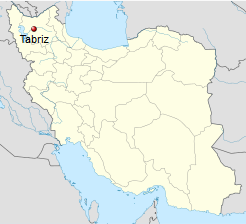
Iran, Tabriz MapTabriz is one of the historical capitals of Iran, and the present capital of East Azerbaijan Province. Tabriz is located at an elevation of 1,350 meters above sea level in the Quru River valley between the long ridge of the volcanic cone of Sahand and Eynali mountain. The valley opens up into a plain that gently slopes down to the eastern shores of Lake Urmia, 60 kilometres (37 miles) to the west. With cold winters and temperate summers, the city is considered a summer resort.

The city has a long and turbulent history with its oldest civilization sites dated back to 1,500 B.C. It contains many historical monuments representing the transition of Iranian architecture in its long historical timelines.

The predominant language spoken in Tabriz is Azerbaijani language. The language has a strong Iranian substrata since it has for many centuries been in close contact with Persian. Like every other part of Iran the lingua franca is Persian. For the first time, an academic program on Azeri opened in Tabriz University in 1999.

Tabriz was a house for numerous Iranian writers, poets, and illumination movements. In old times the city notables, supported poets and writers by organizing periodical meetings. Within its long history it was a residence for many well known Iranian writers and poets. The list can start from the old time Rumi, Qatran, Khaqani to recent years Samad Behrangi, Gholam-Hossein Sa’edi, Parvin E’tesami.

Sources: Mehr News Agency | Photos, ISNA | Photos, Wikipedia | Tabriz

Iran’s 33rd Fajr Film Festival – winners and closing ceremony

The 33rd edition of Iran’s Fajr International Film Festival has come to an end with “Crazy” by the renowned Abolhasan Davoodi winning the Best Director and the Best Film awards. Produced by Bita Mansuri, Crazy received 11 nominations, including best film, best director for Abolhassan Davudi, best actress for Tannaz Tabatabaii, best cinematographer, best screenplay and best music.

Winners for the national main competition section:

Best Supporting Role Actor – Houman Seyyedi for ‘I Am Diego Maradona’
Best Main Role Actor – Saeed Aghakhani for ‘The Long Farewell’
Best Screenplay – ‘A Time for Love’ by Roya Mohaghegh
Best Director – Abolhasan Davoodi for ‘Crazy’
Best Film – ‘Crazy’ produced by Bita Mansuri
Best Main Role ActressBaran Kousari for ‘Binam Alley’

Sources: Payvand, ISNA | Photos, ISNA | Photos 2, Tasnim News Agency | Photos

Azita Hajian: Iranian actress and director

She was born on 10 January 1958 in Narmak, Tehran. She graduated in theatre acting and directing from the Faculty of Dramatic Arts in Tehran, Azita Hajian started stage acting in 1975 and film acting in 1989 with “Thief of Dolls” (Mohammad Reza Honarmand). Due to her theatrical background in the field of children and teenagers, her first films were in the same field. She is one of the majors teacher of acting in Iran. She has also played in some TV series.

Her two daughters, Mehraveh and Melika, are both actresses.

Sources: Wikipedia | Azita HajianBing Image Search

Sahar Pakseresht: Young Iranian woman wins the ‘The Young Innovators Competition’ of the International Telecom Union

The Young Innovators Competition has many challenges includes ‘Local Digital Content’, ‘Open Source Technologies for Disaster Management’ and ‘Smart Cities and Climate Change’.

Sahar Pakseresht was one of the participants of ‘Open Source Technologies for Disaster Management’ challenge.Her idea, called ‘NAJI’ has been selected as the winner of this challenge among almost 150 applications from a group of dedicated, exciting and motived young people from all over the world.

Sahar Pakseresht Young Iranian woman wins the ‘The Young Innovators Competition’ of the International Telecom UnionSo, What is ‘NAJI’? Naji (means savior in Persian) is a two part system, consisting of a bracelet that marks the user’s location and vital signs in a disaster, making rescue easier and a mobile application which streamlines requests for assistance from emergency personnel. It functions over a range of communication systems in order to make sure that it continues to function when needed, by switching from data to phone to SMS to USSD as needed.

What does NAJI do in details?

She says: “I faced the earthquake when I was 15 years old. It was the most horrible things in my life, I saw myself too close to death. I was wonder how to overcome to this fear and save lives of human with the help of technology.” Sahar wrote, “If I can save the life of one person then my mission is done successfully. Once I heard about this competition I found out that this competition is the way that I was always looking for to reach my goals.”

Source: techly.co – An Iranian girl is a winner of ITU Telecom World 2014

Shafajoo a successful Iranian startup for digital healthcare services

shafajoo-iranian-digital-healthcare-startup-satratech-group

Shafajoo (meaning In Search of Healing in Persian) is an Iranian digital healthcare service that helps you find a nearby doctor and instantly book an appointment. They have many other services including podcasts and discussion forums. The target users are not just about the patients: it also includes physicians. Doctors, for instance, will have a user profile including their biographies and resumes. I think the most interesting part of this product is that you are able to ask doctors questions, questions that they will answer, thus preventing unnecessary visits to their offices. While there are few agile teams in Iran, this team uses the power of agile methodology in software development. They are also writing many articles related to healthcare.

Shafajoo has been launched at MAPS(An Iranian Accelerator) and It is a product of SatraTech Company. It has now almost 100,000 visits per month and 4000 active users. They are working on regional markets especially the Middle East, and plan to have English and Arabic versions of Shafajoo.

Source: techly.co – Shafajoo wants to be your healing angel

Photo gallery: Azeri singer Alim Qasimov performs in Iran with Tehran’s Wind Orchestra

Renowned Azerbaijani musician and singer, Alim Qasimov, gave a concert in the Iranian capital in a joint performance with Tehran Wind Orchestra.

Alim Hamza oglu Qasimov (born August 14, 1957) is an Azerbaijani musician and one of the foremost mugham singers in Azerbaijan. He was awarded the International Music Council-UNESCO Music Prize in 1999, one of the highest international accolades for music. His music is characterized by his vocal improvisation and represents a move away from the traditional style of mugham. Qasimov has recorded nine albums, three of which are mugham albums with his daughter, Farghana Qasimova.

Sources: Tasnim News | Photos, Wikipedia | Alim Qasimov

Photo series: Winter in Iran – Snowfall in Kerman

Kerman is the capital city of Kerman Province, Iran. At the 2011 census, its population was 821,374, making it the 10th most populous city of Iran.

Iran, Kerman mapIt is one of the largest cities of Iran in terms of area. Kerman is famous for its long history and strong cultural heritage. The city is home to many historic mosques and Zoroastrian fire temples. Kerman is also on the list of the recent world’s 1000 cleanest cities. Kerman is also a former capital of Iran, a position that it held during several periods. It is located on a large, flat plain, 1,036 km (643 mi) south of Tehran, the capital of Iran.

Sources: ISNA | PhotosWikipedia | Kerman

Photo gallery: Fajr Film Festival in Iran

The Fajr International Film Festival or Fajr Film Festival is Iran’s annual film festival, held every February in Tehran, Iran. It takes place every year on the anniversary of the Iranian revolution. There were 90 feature films submitted for the 29th edition of the festival in 2011.

Sources: Wikipedia| Fajr International Film FestivalTasnim News | Photos FIFF 1Tasnim News | Photos FIFF 2Tasnim News | Photos FIFF 3ISNA | FIFF 1ISNA | FIFF 2ISNA | FIFF 3ISNA | FIFF 4ISNA | FIFF 5

Photo gallery: Bisutun Inscription – Iranian Rosetta Stone from 522BC in a 116 hectar UNESCO World Heritage Site

Bisutun Inscription (Behistun Inscription) is a multi-lingual inscription located on Mount Bisutun in the Kermanshah Province of Iran, near the city of Kermanshah in western Iran.

Authored by Darius the Great sometime between his coronation as king of the Persian Empire in the summer of 522 BC and his death in autumn of 486 BC, the inscription includes three versions of the same text, written in three different cuneiform script languages: Old Persian, Elamite, and Babylonian (a later form of Akkadian). In effect, then, the inscription is to cuneiform what the Rosetta Stone is to Egyptian hieroglyphs: the document most crucial in the decipherment of a previously lost script.

The inscription is approximately 15 metres high by 25 metres wide and 100 metres up a limestone cliff from an ancient road connecting the capitals of Babylonia and Media (Babylon and Ecbatana, respectively). The Old Persian text contains 414 lines in five columns; the Elamite text includes 593 lines in eight columns, and the Babylonian text is in 112 lines.

The monument suffered some damage from Allied soldiers using it for target practice in World War II, during the Anglo-Soviet invasion of Iran.


In 1999, Iranian archeologists began the documentation and assessment of damages to the site incurred during the 20th century. Malieh Mehdiabadi, who was project manager for the effort, described a photogrammetric process by which two-dimensional photos were taken of the inscriptions using two cameras and later transmuted into 3-D images.

In recent years, Iranian archaeologists have been undertaking conservation works. The site became a UNESCO World Heritage Site in 2006. In 2012, the Bisotun Cultural Heritage Center organized an international effort to re-examine the inscription.

The site covers an area of 116 hectares. Archeological evidence indicates that this region became a human shelter 40,000 years ago. There are 18 historical monuments other than the inscription of Darius the Great in the Behistun complex that have been registered in the Iranian national list of historical sites.

Sources: Tasnim News | PhotosWikipedia | Behistun Inscription

Kerman holds biggest Zoroastrian Sadeh Festival

The Zoroastrians marked Sadeh, an ancient feast celebrating the creation of fire, in Kerman. Sadeh has been observed since the days when Zoroastrianism was the dominant religion in the powerful Persian empire.

Every year, on January 30th, thousands of Zoroastrians or even the Muslims from all over Iran as well as other countries gather in Kerman, the city with the greatest Zoroastrian population, to celebrate the religious feast of Jashn-e Sadeh by burning firewood in an open space to signify the coming of spring and to defeat the forces of darkness, frost and cold.

Sadeh celebrates 50 days before Nowrouz, the Persian New Year. Sadeh (meaning ‘hundred’ in Persian) is a mid-winter festival that refers to one hundred days and nights past the end of summer.

Mohammad Ali Golabzadeh, researcher and expert on Kerman, told Mehr News that the ceremony is still celebrated like the ancient times in Kerman, Yazd, and some other Iranian cities.

“Although Sadeh is attributed to Zoroastrians, the ceremony itself has its roots in Kerman’s rituals and even the Muslims participate in it,” he said, adding that for the majority of Iranians Sadeh had no religious significance and everyone gathered to have a good time and celebrate the precious things God has granted humanity.

Source: Payvand News of Iran

Iran finishes 4th in Indoor Hockey World Cup after losing to Germany (this year’s host and winner of the last 3 World Cups)

https://i0.wp.com/payvand.com/news/15/feb/Iran-Germany-Indoor-Hockey-World-Cup.jpg

Photo from Iran-Germany game

The Netherlands took the gold medal in the men’s final of the Indoor Hockey World Cup thanks to a 3-2 triumph against Austria.

The Iranian team finished fourth but surpassed all expectations.

Iran, ranked 10th in the FIH Indoor World Rankings, caused one of the biggest shocks in Indoor World Cup history by hammering Russia and booking a ticket to the semi-finals.

Sources: Payvand News of Iran, Wikipedia | Indoor Hockey World Cup, Fédération Internationale de Hockey

A walk through the old pastry shops of downtown Tehran

Tehranis do not take their pastries lightly – literally. Baked goods are sold in boxes of a minimum 500g (1.1lb) going all the way to 2kg (4.4lb). It isn’t strange to see someone walking out carrying several boxes heaped in a precarious pile.

The Iranian palette is no stranger to sweets – from the haji badomi (sugary almond balls) of Yazd to the kolompeh (crisp, date-stuffed cookies) of Kerman. But Tehran has managed to take the European pastry and make its own, a bread pastry that is the perfect complement to afternoon tea.

“Armenians introduced Tehran to the European pastry,” the owner of Lord tells me. His father opened the shop in 1964, he explains, decades after Tehran’s first Armenian pastry store was opened in the bustling, now almost mythical Lalehzar Street. “They packed up and left for the United States after the revolution, but we had thick skin.”

There is no shortage of good pastry shops in downtown. Upscale bakeries have taken over in north Tehran, but this is still the Mecca of shirini (baked sweets). Walking a few minutes south from Lord, on Taleqani Street you will find one of Tehran’s best pastry stores: Shirini Danmarki (Danish Pastry), where the pastries have undergone an Iranian metamorphosis.

The shop offers custard or apricot jam in a buttery crust, apple filled tarts, and Iranian style puff pastry. People come in especially on the half hour (from 8:30 am onward) as the famed noon danmarki – slices of flaky bread stuffed with their own special crème patisserie and sprinkled with sugar – emerges fresh from the oven. […]

For me, an ideal day is roaming downtown’s old districts, then stopping at Danish Pastry for sweets. Then, going for lunch at Soren, an Armenian sandwich store located between Danish and Lord at the intersection of Villa and Warsaw streets: it has been making sumptuous, reasonably priced steak sandwiches sprinkled with diced herbs for generations of downtown dwellers. Then, back to Lord for coffee. Or the whole ritual can be practised in reverse.

West of Lord, on Aban street, in a quaint corner with old houses, stands Hans Bakery. If you didn’t notice the sign on the green door, you’d mistake it for another home. Inside, there are flowers in the yard, and from the kitchen comes the sound of banging pots and pans. The sweet smells of caramel, vanilla and cake lead the way.

The claim to fame of Hans is the delicious sponge cake layered with vanilla cream and strawberries. To get your hands on one, you must arrive before noon, or call to have them save you one. Go earlier and you will find the owners barking rapid Armenian to people over the phone as customers call in to make sure their cake is reserved. The store also sells tarts, an assortment of cookies and cream pastries, but it is their strawberry vanilla cake that makes up for their usually grumpy manners.

To find good natured folks, Orient Cafe, in what was once Roosevelt Avenue (now Moffateh) is the place to go: a brightly lit, spacious Armenian bakery and cafe, where Mr Sevak and his mother manage day-to-day operations. Their coffee is among the best in the city and the chocolate covered orange slices are always tender and full of flavour. Orient also offers delightful perok, a light apricot cake, and nazook, a crisp Armenian pastry baked here with a walnut filling. […]

Orient was established in 1943 by immigrants from Soviet Armenia. Mr Sevak’s family bought the cafe and bakery 15 years ago, following their successful experience with the Anahita Bakery in Sohrevardi Street. His mother oversees the workers in the bakery, and some from the original store were still here until around ten years ago. Bakers serve as the memory of their establishments, learning and perfecting recipes and passing them on.

Many Armenian bakeries also operate as cafes, the most well-known of these being Naderi Cafe, in Jomhoori Street, where generations of writers and artists and students have gathered, and still do. Naderi no longer bakes sweets – but offers raisin cake and roulette (cake roll) brought in. Both always taste stale, but how can you refuse Reza Khan, the jolly waiter, as he insists you’ll enjoy a slice of cake with your coffee?

For the best accompaniment to a cup of coffee, you once walked to Nobel, an Armenian bakery in Mirzayeh Shirazi Street, not far from Lord. Opened in 1963, Nobel baked Tehran’s best cream cookie: layer upon layer of light, airy biscuit covered with crème patisserie and their own distinct cookie powder. Nobel also baked sour cherry and peach pies.

But last summer the owners sold up and moved to the United States.

At least Talaie, another Armenian bakery on Mirzayeh Shirazi Street is still here, next door to the Armenian owned toy and greeting card stores. A small hole-in-the-wall kind of bakery, it sells the best Armenian gata – sweet bread – you can find in Tehran.

Expect long lines at 4 pm when the day’s bread is brought out. Gata is finely layered and in Tehran usually has koritz, a filling of flour, butter and sugar. Nothing goes better with a cup of Turkish coffee than a slice of gata and homemade jam.

Armenians are known not only for their pastries, they opened some of Tehran’s first chocolate shops. In the historic areas of Sadi and Hedayat streets, you will find Mignon bakery and chocolatier. The staff will tell you the shop has been here for 80 years and offer to show you a bound album with pictures of their California stores in Glendale and Pasadena.

The Boghossian family has managed Mignon since 1935, after fleeing to Iran from communist Ukraine where their father was imprisoned – he joined them a few years later. The youngest son, 73-year-old Roben, still runs the Tehran store and can be occasionally found there. My favourite at Mignon is dark chocolate covered marzipan with a hint of orange peel. At Christmas, the store is splendidly decorated and boxes of cakes and chocolates, wrapped in colourful ribbons, are piled everywhere.

Source: The Guardian | Iran Blog

Reza Dormishian: Iranian film director, screenwriter and producer

https://i0.wp.com/en.qantara.de/sites/default/files/styles/editor_large/public/uploads/2014/03/10/reza_dormishian-berlinale_foto_0.jpg

Reza Dormishian is an Iranian film director, screenwriter and producer. He has worked as assistant director with remarkable directors such as Dariush Mehrjui, Fereydoun Jeyrani, and Alireza Davood Nejad.

He is one of the most prominent and distinguished directors of the new generation of the Iranian cinema, whose films have always been received well by the people, critics, and international festivals because of their social themes and modern structure.

He started writing as a film critic in 1997 for several newspapers. He later worked as an executive editor for cinema books and magazines. He was an assistant to some prestigious Iranian filmmakers, including Dariush Mehrjui and Alireza Davood Nejad. He has also worked as a screenwriter. He started making short films and documentaries in 2002. Hatred is his first feature film, produced independently in Istanbul. Hatred displays the frenzied love and hatred and two accounts from two phases in the life of an Iranian refugee couple in Istanbul, Turkey. The film was received well by critics and cinema writers and the Iranian critics gave it three awards (Best Directing, Best Cinematography, and Best Editing). Although Hatred was censored to be screened in Iran, it was screened and praised in various festivals such as Competition Section of 36th Montreal Film Festival in Canada, Competition Section of 28th Warsaw Film Festival in Poland, and Competition Section of Camerimage Film Festival in Poland.

Source: Wikipedia | Reza Dormishian

Baran Kosari: Awarded Iranian actress

Baran Kosari, born on October 17th 1985 in Tehran, is an award winning Iranian actress. She is the daughter of director Rakhshan Bani Etemad, and film producer Jahangir Kosari.

She graduated from Soureh academy. The Best Papa of the World (1991) is her first acting experiment. She had appearances in some of her mother’s films, Nargess (1991), Rusari-ye Abi (The Blue-Veiled, 1994), May Lady (1997), Kish Stories (Rain and Ladsman episode – 1998), Under the Skin of the City (2000), Our Times (documentary, 2001).

In 2007 she was nominated for the best performance by an actress in Asia Pacific Screen Award for her performance in Mainline. Baran Kosari also ascertained her abilities as a theater actress with playing in Over the Mirror (1997), with Azita Hajian directing.

Awards
Best Actress / 33rd Fajr International Film Festival / The Nameless Alley (2015)
Best Actress / 1st National Young Iranian Film Festival / Ablah (2010)
Best Actress / 11th Iran Cinema Celebration / Khunbazi (2007)
Best Actress / 25th Fajr International Film Festival / Iran Competition / Khoon Bazi and Ruz-e sevvom (2007)
Honorary Diploma / 25th International Fajr Film Festival / Khoon Bazi (2007)
Best Teenage Actress / Critic’s Choice / Baran-o-Bumi, Zir-e puste shahr (2000)

Other activities
Screenwriter (Ablah – 2007)
Secretary of Scene (Gilaneh – 2004)
Festival Arbiter, 17th Teenage Film Festival (Isfahan – 2002)

Source: Wikipedia | Baran Kosari

Nima Javidi: Awarded Iranian Filmmaker (Biography, scenes from Melbourne and it’s premiere in Iran)

Nima Javidi - Iranian Film directorNima Javidi was born in 1980. A qualified mechanical engineer, Javidi began making short films in 1999 and has made six to date: Marathon Paralyzed Champion (1999), A Call for O (2001), The Poor Earth (2004), Changeable Weather (2007), Crack (2009) and Catnap (2010).

He has also directed two documentaries, Person (2007) and An Ending to an Ancient Profession (2007) and more than 30 television commercials.

Melbourne (2014), which he wrote and directed, is his feature film debut. It recently won Best Film at the Cairo Film Festival and Best Script at the Stockholm Film Festival and opened the Venice Film Critic’s Week.

The following video might be interesting for non Iranians, just to see how Iranian celebrities in Iran visited the premier of the movie. Scenes and Interview with the crew of “Melbourne”:

Source: Asia Pacific Screen Awards | Nominees & Winners 2014

Nazanin Daneshvar: Tehran’s Trail Blazing Tech Entrepreneur

As a young businesswoman in Iran, Nazanin Daneshvar didn’t plan to become one of Tehran’s trail blazing techpreneurs.  She has overcome obstacles of both age, and gender. The 30-year old is part of a startup scene so vibrant, more than one hundred people recently competed for a place at the country’s first private accelerator, providing mentorship as well as funding.

Tehran’s techpreneurs say one of the few benefits of sanctions are the almost limit-less opportunities to localize popular Western sites, like YouTube and PayPal. […]

Women dominate the hard sciences at Iranian universities, studying subjects like engineering, math and chemistry. And, women are involved in Tehran’s tech sector, but Daneshvar says the real problem is getting the older segments of society to take web businesses seriously.

Shifting traditional mindsets and uptake is a slow process, but with a compelling sales pitch, Daneshvar and her sales team have more than 10,000 merchants on board.

“We are solving a problem. Advertising is so expensive, and there is a financial crunch, so we say to merchants, just give us a discount, and we will get customers for you and bring a lot of PR. There’s limited disposable income, so if you can double the performance you can get out of that, why wouldn’t you? We only sell as many deals as the businesses can handle.”

Takhfifan earns a variable commission on the sale of each coupon for discounted services. […]

The company has grown from two sisters in a tiny office, selling one deal a week, to a staff of 60, with deals in seven different cities. Daneshvar’s entirely boot-strapped business has seen 100% growth since launch.

“The first year we doubled in growth every two months. This is still not comparable to Groupon. This is organic growth. We don’t have a marketing budget.”

Daneshvar says most Iranian startups operate with zero to little funding. Wealthy parents invest their money in property, rather than their children’s tech aspirations. In her case, Daneshvar says her parents’ support came in the form of many middle class families: room and board.

The success of Takhfifan has led Daneshvar to develop a new venture Tarinan, a review site, driven by customer demand. […]

Tarinan, a local search and review-based platform launched last year and we’ve just launched mobile. We have more than 30,000 reviews without advertising, not a single penny spent and our company is completely boot-strapped – both of them.”

Denashvar has won all sorts of awards for her site, including recognition from Silicon Valley, but she says the real challenge goes back to mentorship. It’s a culture that doesn’t exist in Iran – yet.

“People are changing jobs every three months, every six months, because they don’t have proper mentorship to teach them how to work. In the US, people take lots of internships, here there is no such eco-system. People don’t have this tradition of looking at a career. The only option is taking over their parents’ shop.”

But that’s changing. Tehran’s tech community is banking on leaders like Denashvar, to do more than recruit others to the sector; they’re counting on her, with a requisite failure and success under her belt, to be one of Iran’s pioneering mentors.

Source: Forbes | Tehran’s trail blazing techpreneur

Two galleries in Tehran are holding a retrospective of awarded Iranian painter Sirak Melkonian

Iranian painter Sirak-Melkonian-1-HR

Iranian painter Sirak Melkonian

Two galleries in Tehran are holding a retrospective of painter Sirak Melkonian in a joint project. A collection of paintings created over the past 70 years by the 85-year-old artist are on display at the Aria and Ab Anbar galleries, the Persian service of ISNA reported on Tuesday.

The two exhibitions opened on January 30 and will run until February 19.

Aria Gallery: 10 Zarrin Alley, off Vali-e Asr Ave.
Ab Anbar Gallery: 2 Roshan Manesh Alley, Khaqani St., off Enqelab Ave.

Biography
Sirak Melkonian was born in Iran in 1931. He gained national recognition in 1957, winning a prize in the Contemporary Iranian Artist Exhibition of the Iran American Society. That achievement was followed by the Imperial Court Prize Tehran Biennale in 1958 and first prize in 1959 for the Tehran Paris Biennale. First prize in 1974 International Art Exhibition In Tehran brought him International acclaim and he was subsequently invited to exhibit his work at the International Exhibit in Basil, Switzerland.
Throughout 1976 and 1977 he exhibited internationally, most notably at the exhibition of Grand Palais and the Salon De Montrouge in Paris, as well as the Washington International Artfair in the United States. Sirak currently lives and teaches in Toronto, Canada.

Awards
1957- Winning a prize in the Contemporary Iranian Artist Exhibition of the Iran American Society.
1958- The Imperial Court Prize Tehran Biennale
1959- First prize for the Tehran Paris Biennale.
1974- First prize for International Art Exhibition In Tehran

Some works by Sirak Melkonian

More works by Sirak Melkonian: Mahart Gallery | Sirak Melkonian

Sources: Facebook | Sirak Melkonian, Payvand News of Iran

Keyhan Kalhor: Iranian music maestro and former Grammy awards nominee to perform in the US and Canada

Iranian musician and Kamancheh virtuoso Kayhan Kalhor along with Indian sitar maestro Shujaat Husain Khan is slated to perform in New York, Boston and Irvine

The duo is planning to present their program accompanied by Ghazal Ensemble in the Michael Schimmel Center for the Arts at Pace University on March 22, 2015.

Ghazal (with Shujaat Hussein Khan and Sandeep Das) March 2015 events are:
13 Mar: Kay Meek Theater, Vancouver, Canada
15 Mar: Skirball Center, Los Anegeles, CA
17 Mar: Irvine Barclay Theater, Irvine, CA
19 Mar: Freer Gallery, Washington, DC
21 Mar: Berklee Performance Center, Boston, MA
22 Mar: Schimmel Center at Pace University, NY
25-28 Mar: Agha Khan Museum, Toronto, Canada
29 Mar: Asia Society Texas Center, Houston, TX

Other Kayhan Kalhor early 2015 events (Europe, US): www.facebook.com/kalhor.kayhan

Iranian Kamancheh virtuoso Kayhan Kalhor

Ghazal Ensemble, formed in 1997 by Kalhor and Husain Khan, has been touring the world and it is acclaimed for performing Indo-Persian music.

Described by the Los Angeles Times as “utterly captivating…an irresistible expression of creative musical passion,” Ghazal’s performances and recordings have garnered critical acclaim as well as a 2004 Grammy nomination for Best Traditional World Music Album for their 2003 live album The Rain. Amazon named Ghazal’s first CD, Lost Songs of the Silk Road, to its list of the best 100 world music albums ever recorded.

Kalhor is known for his brilliant performances on the traditional instrument Kamancheh and creating a unique mixture of classical Persian music with folk tunes of the Kurdistan region.

He held many concerts along with the world-renowned musicians and ensembles such as the string quartet, Brooklyn Rider ensemble, in Minneapolis, United States, in 2012.

Kalhor also presented joint programs with the veteran Turkish Baglama player Erdal Erzincan in New York’s GlobalFest held at the Marlin Room on January 13, 2013.

He also performed introspective performances with a number of world-class Asian musicians at BT River of Music in London.

Shujaat Husain Khan is one of today’s greatest North Indian artists, who represent the seventh generation of illustrious musicians, which includes his father, the great sitarist Ustad Vilayat Khan.

BIOGRAPHY – KAYHAN KALHOR
Kayhan Kalhor is an internationally acclaimed virtuoso on the kamancheh (Persian spiked fiddle). His performances of Persian music and his many collaborations have attracted audiences around the globe.

Born in Tehran, Iran, he began his musical studies at the age of seven. At thirteen, he was invited to work with the National Orchestra of Radio and Television of Iran, where he performed for five years. When he was seventeen he began working with the Shayda Ensemble of the Chavosh Cultural Center, the most prestigious arts organization in Iran at the time.  At a musical conservatory in Tehran around age 20 Kalhor worked under the directorship of Mohammad-Reza Lotfi who is from Northern Khorasan. He has traveled extensively throughout Iran, studying the music of its many regions, in particular those of Khorason and Kordestan. He later moved to Rome and Ottawa to study European classical music.

Kayhan has toured the world as a soloist with various ensembles and orchestras including the New York Philharmonic and the Orchestre National de Lyon.  He is co-founder of the renowned ensembles Dastan, Ghazal: Persian & Indian Improvisations and Masters of Persian Music. Kayhan has composed works for Iran’s most renowned vocalists Mohammad Reza Shajarian and Shahram Nazeri and has also performed and recorded with Iran’s greatest instrumentalists.

Kayhan has composed music for television and film and was most recently featured on the soundtrack of Francis Ford Copolla’s Youth Without Youth in a score that he collaborated on with Osvaldo Golijov. In 2004, Kayhan was invited by American composer John Adams to give a solo recital at Carnegie Hall as part of his Perspectives Series and in the same year he appeared on a double bill at Lincoln Center’s Mostly Mozart Festival, sharing the program with the Festival Orchestra performing the Mozart Requiem. Kayhan is an original member of Yo-Yo Ma’s Silk Road Project and his compositions Blue as the Turquoise Night of Neyshabur, Silent City and Mountains Are Far Away, appear on all three of the Ensemble’s albums. His most recent commission for the Kölner Philharmonic in Germany will be premiered in October 2009.

Three of his recent recordings have been nominated for Grammys, Faryad, Without You and The Rain.  His new CD Silent City, with the innovative ensemble Brooklyn Rider, was released on the World Village label in September 2008 to critical acclaim.

Compositions
– Blue as the Turquoise Night of Neyshabur
– Gallop of a Thousand Horses
– I was There
– The Silent City
– Mountains Are Far Away

Sources: Press TVwww.kayhankalhor.net, Tehran TimesKODOOM.com, Philharmonic Society

Photo series: Winter in Iran – Snowball fighting in Kerman City

Kerman is the capital city of Kerman Province, Iran. At the 2011 census, its population was 821,374, making it the 10th most populous city of Iran.

Iran, Kerman mapIt is one of the largest cities of Iran in terms of area. Kerman is famous for its long history and strong cultural heritage. The city is home to many historic mosques and Zoroastrian fire temples. Kerman is also on the list of the recent world’s 1000 cleanest cities. Kerman is also a former capital of Iran, a position that it held during several periods. It is located on a large, flat plain, 1,036 km (643 mi) south of Tehran, the capital of Iran.

Climate
The city’s many districts are surrounded by mountains which bring variety to Kerman’s year round weather pattern, thus the northern part of the city is located in an arid desert area, while the highland of the southern part of the city enjoys a more moderate climate. The mean elevation of the city is about 1755 m above sea level.

Kerman city has a moderate climate and the average annual rainfall is 135 mm. Because it is located close to the Kavir-e lut (Lut desert), Kerman has hot summers and in the spring it often has violent sand storms. Otherwise, its climate is relatively cool.

Culture
Kerman has an abundance of architectural relics of antiquity. It is among several cites in Iran with a strong cultural heritage, which is expressed in the local accent, poetry, local music, handicrafts and customs that Kerman has introduced to the world of culture.

The Iran museum of Zoroastrians, which showcases the ancient history of Zoroastrians, is in Kerman’s Fire Temple. The idea of launching the museum along with the library of Kerman’s Zoroastrian Society came to light in 1983, when the head of the society, Parviz Vakhashouri, and the former head of library, Mehran Gheibi, collected cultural heritage artifacts of Kerman’s Zoroastrian community. These two officials added many other objects to this collection.The museum was officially inaugurated during Jashn-e Tirgan in 2005 by Iran’s Cultural Heritage, Handicrafts and Tourism Organization (ICHHTO).

Jashn-e Tirgan or Tiregan is an ancient Iranian rain festival observed on July 1. The festivity refers to archangel Tir (literally meaning arrow) or Tishtar (lightning) who appear in the sky to generate thunder and lightning for providing the much needed rain.

Sadeh ceremony is celebrated every year in Kerman. Also The archeological ancient area of Jiroft and Tappe Yahya Baft are located south of Kerman. Rayen Castle is also located on Rayen town,south east of Kerman.

Sources: Mehr News Agency, Wikipedia | Kerman

Iran’s Kurdistan Province: From Sanandaj to Marivan

Sanandaj is the capital of Kurdish culture and Kurdistan Province at Iran. At the 2011 census, its population was 373,987. Until the 17th century it was only a small village, when the governor of the region, Suleyman Khan Ardalan, renovated a fortress there, known as “Sena Dezh”, which gave the town its Persian name.

The economy of Sanandaj is based upon the production of carpets, processed hides and skins, milled rice, refined sugar, woodworking, cotton weaving, metalware and cutlery.

Enjoy the photo gallery with images taken from Sanandaj to Marivan:

Post related to this region with information about Marivan:
Photo Series: Winter in Iran – Marivan, Kurdistan Province

Sources: CNNWikipedia | Sanandaj

Iranian-American music conductor and composer Shahrdad Rohani directed orchestra in Tehran

Acclaimed music conductor Shahrdad Rohani performed an orchestra for a big audience Friday night at Tehran’s Grand Hall of the Interior Ministry.

Shahrdad Rohani, born May 27, 1954 in Tehran, Iran is an Iranian-American composer, violinist/pianist, and conductor. His style is contemporary and he is well known for composing and conducting classical, instrumental, adult contemporary/new age, film soundtrack as well as pop music.

Early life
His father, Reza Rohani, was an accomplished musician and Shahrdad followed in his father’s footsteps. He started down the path of becoming a musician at the age of five when he learned to play the violin under the instruction of his father.

He was a student to a well-known Persian violinist, Ebrahim Rouhifar. At age 10 he attended the Persian National Music Conservatory of Tehran. He studied with a Swiss teacher named Basil as well as an Armenian teacher named Hagh Nazarian, who taught him to play the piano; they worked together for seven years.

After studying at the Tehran Conservatory, Shahrdad Rohani left his family, many of whom still remain in Iran, and traveled in 1975 to Austria where he attended the Academy and Conservatories of Music in Vienna. Then, in the early 1980’s, he accepted a scholarship to study music at UCLA and moved to the United States.

Musical career
From 1987 until 1991 Mr. Rohani served as the music director and conductor of the COTA symphony orchestra in Los Angeles. He has appeared as a guest conductor with a number of prestigious orchestras including London’s Royal Philharmonic Orchestra, Minnesota Orchestra, Colorado Symphony Orchestra, San Diego Symphony, Indianapolis Symphony Orchestra, New Jersey Symphony, Zagreb Philharmonic Orchestra, the American Youth Philharmonic Orchestras and many others.

Shahrdad arranged the music and conducted the orchestra to supplement Yanni’s keyboard compositions during the Yanni Live at the Acropolis concert in 1993, an open-air concert with the London Royal Philharmonic Concert Orchestra in the Parthenon, Athens, Greece. Shahrdad also played the violin in all but two of the tracks during this concert. Yanni Live at the Acropolis was acclaimed by both critics and audience and became the most widely viewed program ever shown on Public Television in United States and is the second best-selling music video of all time.

Rohani was commissioned in 1998 by the government of Thailand and the committee of the 13th Asian Games to compose and conduct the music for opening ceremonies. The composition became the most popular song of the Asian Games.

In 1999 Rohani received the Thailand’s Pikanes award, the country’s most prestigious music award for an outstanding orchestral performance. The award is considered the highest artistic achievement.

Sources: Mehr News Agency, wikipedia, IIP Digital | U.S. Department of State

Newsha Tavakolian: Iranian photojournalist and documentary photographer

Newsha Tavakolian - Iranian photojournalistNewsha Tavakolian (born 1981 in Tehran) is an Iranian photojournalist and documentary photographer. She has worked for Time Magazine, The New York Times, Le Figaro, and National Geographic. She is particularly known for focusing on women’s issues in her work, and has been a member of the Rawiya women’s photography collective, she co-established in 2011. She lives and works in Tehran.

Career
Born and brought up in Tehran, Tavakolian is a self-taught photographer. She began working professionally in the Iranian press at age of 16, at women’s daily newspaper ‘Zan’, after a 6-month photography course. At the age of 18, she was the youngest photographer to cover the 1999 student uprising, using her Minolta with 50mm lens, her photographs were published in several publications.

She got her international break in 2001 at age 21, when she met J.P. Pappis, founder Polaris Images, New York at photography festival in Perpignan, France. Thereafter, she began covering Iran for Polaris Images, in the same year, and started working as a freelancer for The Times in 2004.

In 2002 she started working internationally, covering the war in Iraq for several months. She has since covered regional conflicts, natural disasters and made social documentary stories in Iraq, Lebanon, Syria, Saudi Arabia, Pakistan and Yemen. Her work is published in international magazines and newspapers such as Time Magazine, Newsweek, Stern, Le Figaro, Colors, The New York Times, Der Spiegel, Le Monde, NRC Handelsblad and The New York Times Magazine.

Countering the predominantly male western dominance on photojurnalism in her region, she brought together a group of six Middle Eastern women photographers, uniting them in the RAWIYAH collective.

A common theme in her work is photo stories of women, friends and neighbours in Iran, evolving role of women in overcoming gender-based restrictions, and contrasts the stereotypes in western media. Her photo projects include Mother of Martyrs (2006), Women in the Axis of Evil (2006), The Day I Became a Woman (2010) and Look (2013), which opened at Thomas Erben Gallery, New York City.

She was part of the 2006 Joop Swart Masterclass organized by World Press Photo. In 2007 she was a finalist for the Inge Morath Award. Her work has been exhibited and collected at institutions such as the British Museum, the Victoria and Albert Museum, Los Angeles County Museum of Art, the Museum of Fine Arts, Boston and Somerset House, London (April 2014), where she was one of eight Iranian photographers featured in the critically acclaimed “Burnt Generation” exhibition.

In 2012, her first book “The Fifth Pillar” was published by Gilgamesh publishers in London, covering her personal take on the annual Muslim pilgrimage, the Hajj. More recently, Newsha was commissioned by the Qatar Foundation to travel around the world for 3 months taking photographs for a book about education to be published in March 2014. Also in 2014 Newsha was a member of the 2014 World Press Photo competition jury. Her work will be exhibited in Paris in November 2014, where also her new book will be launched. After Paris the work will go on a tour to London, Frankfurt and Milan.

Awards
2014 Fifth laureate of the Carmignac Gestion Photojournalism Award.
2009 Magic of Persia Contemporary Art Prize Finalist, United Kingdom
2007 Inge Morath Award, Finalist, Magnum Photo Agency, New York, United States
2006 Joop Swart Masterclass, World Press Photo, Amsterdam, The Netherlands
2006 Still Photography Award from the All Roads Film Project, National Geographic, Washington, D.C, USA
2003 Runner-up in Picture of the Year International Competition, Magazine Feature Category, National Press Photographers Association and Missouri School of Journalism, USA

Books
She Who Tells a Story – Women Photographers from Iran and the Arab World, Kristen Gresh with a foreword by Michket Krifa. MFA Publications, 164 pages, 110 color illustrations
2012 Fifth Pillar, Hajj Pilgrimage, by Newsha Tavakolian, Gilgamesh Publishing House
2010 A History of Women’s Photographers, by Naomi Rosenblum, Abbeville Press.
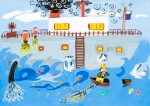
2008 Iranian Photography Now, by Rose Issa, Hatje Cantz Verlag
2009 Transit Tehran: Young Iran and Its Inspirations, by Malu Halasa and Maziar Bahari, Garnet Publishing

Sources: Newsha Tavakolian Photography, Wikipedia | Newsha Tavakolian

Photo Series: Winter in Iran – Masuleh, Gilan Province

Beautiful pictures of Masuleh covered in snow:

For more detailed information about Masuleh and its unique architecture:
The other Iran | Iran’s Gilan Province: Masuleh Village

Source: Mehr News Agency | Photos

Photo gallery: Graduation ceremony at Amirkabir University of Technology in Tehran, Iran

Amirkabir University of Technology (AUT), formerly called the Tehran Polytechnic, is a public research university located in Tehran, Iran. AUT is one of the most prestigious universities, and the first established technical university in Iran, referred to as “Mother of Industrial Universities”.

Over 500 students of the Amir Kabir University of Technology celebrated their graduation in the university’s campus on Wednesday, January 14th.

The university was first founded by Habib Nafisi in 1958 and then developed by Dr. Mohammad Ali Mojtahedi, during the reign of the Pahlavi dynasty. Originally named the Tehran Polytechnic, it began its activities with five engineering departments. In 1978 the Tehran Polytechnic was renamed after the famed Iranian Prime Minister Amir Kabir (1807–1852).

Presently the university has grown to an elite school of science and engineering education with the capacity of about 10,000 students in 35 undergraduate majors, around 90 M.Sc. majors and 36 Ph.D. and post-doc programs. Acceptance in all levels of education in AUT is very competitive and only top students can enroll.

AUT has 15 departments including electrical engineering, biomedical engineering, polymer engineering, mathematics and computer science, chemical engineering, industrial engineering, civil and environmental engineering, physics and energy engineering, computer and information technology, mechanical engineering, mining and metallurgical engineering, textile engineering, petroleum engineering, ship engineering, and aerospace engineering. AUT has a well-equipped educational site in Bandar Abbas as well as an academic unit in Mahshahr.

The library and document center at AUT, the largest technical and engineering library in Iran’s capital, is one of the richest academic libraries in the technical and engineering field in the region. This library includes a central library and 16 satellite libraries in Tehran and Bandar Abbas. This library includes more than 5 million books which are mostly about computer.

Sources: Wikipedia | Amirkabir University of Technology, IRNA | Photos, Amirkabir University of Technology

Photo gallery: Iranian football fans at the 2015 Asian Cup in Australia

The 2015 Asian Cup started on January 9th and ends on January 31st. Iran reached the quarterfinals but lost to Iraq on penalties in a nerve-wrecking match.

As a goodbye to this year’s Asian Cup a compilation of photos of Iranian fans:

Sources: mostafagraphy.tumblr.com, Iran beat Bahrain in 2015 Asian Cup opener – in pictures, Asian Cup – The fans of Iran, Bing Image Search

Iran’s Isfahan Province: Kashan – Fin Garden Series (Photo gallery)

The tradition and style in the design of Persian Gardens has influenced the design of gardens from Andalusia to India and beyond. Unesco declared the Fin Garden in Kashan a World Heritage Site on July 18, 2012.

Related post about Bagh-e Fin (Fin Garden) with background information and more photos:
Kashan – Fin Garden Series

Source: Wikipedia | Persian Gardens