Tag Archives: Art

“Seekers of Light” opera performed at Boston museum by joint Israeli-Iranian band

BOSTON — Surrounded by a rotating crowd of 2,200 onlookers in a museum courtyard, Israeli and Iranian musicians premiered scenes from “Seekers of Light,” an opera written by Boston-based Matti Kovler.

[…]

The local pool of Israeli and Iranian talent, combined with an invitation to stage a musical installation at the Museum of Fine Arts Boston’s first Hanukkah festival, proved irresistible to Kovler, who decided to premiere seven scenes from “Seekers.” […]

According to the composer, the full opera will premiere in 2017 at a theater under construction in Prague, designed in part with “Seekers” in mind. For this week’s teaser performance, Kovler conducted and accompanied fourteen musicians playing classical and Persian instruments, with most vocals in Hebrew and Persian.

Playing the lead role of “Sabbatai’s soul” was Iranian musician and Berklee student Parham Haghighi, who wore a full-length white robe and burgundy scarf and sash. […]

A long way from his original home, Haghighi chanted Hebrew while surrounded by Jewish families at an American Hanukkah celebration — something Kovler called “a miracle in itself.”

“Some of the musicians arrived from Iran just two months ago and speak just a few words of English,” said Kovler. “The existence of this ensemble is very much in the spirit of Hanukkah and the freedom to seek out light in one’s own way,” he said.

German artist Otto Piene’s “Rainbow” exhibited in Tehran Museum of Contemporary Art in Iran

A collection from the “Rainbow” series by German artist Otto Piene is currently being showcased at Tehran Museum of Contemporary Art.

Tehran Museum of Contemporary Art is hosting a collection of artworks by the German painter, printmaker and environmental artist, as well as the founder of the influential European postwar movement Group Zero Otto Piene.

This is the fourth time this museum hosts German artists’ artworks. But this is Piene’s first ever exhibit in the Middle East which opened at Tehran Museum of Contemporary Art on Tuesday evening, revealing a variety of artworks ranging from paintings to light sculptures, smoke and fire paintings, and beautiful environmental “sky art.”

Sky art is a term he coined in 1969, which allowed him to use landscape and cities themselves as the focal point of his work.

Most of Piene’s works have been inspired by nature and based on the four elements of ‘light, fire, air and earth’ which points to the philosophical viewpoint of this avant-garde artist.

The first galleries of the museum is dedicated to his rainbow works and silkscreen prints. Then his other works are put on display which are the combination of grids with sources of fire (candles, gas-burners) producing smoke-traces and fire paintings, in which the paint was burnt.

One of his works in particular is said to have been specially made for Tehran exhibition. It is the light sculpture inspired by tile works of Imam Mosque which has been created from glass.

With much regret, Piene passed away in July 2014, and did not get the chance to attend the exhibition in Tehran.

He always sought a better world in his dreams and believed his most brilliant work was to light up the dark sky.

The exhibit of this German artist will be running until April 17 at the museum located on North Kargar St., next to Laleh Park.

Sources: Deutsche Welle | Farsi, Deutsche Welle, Mehr News Agency

German animation “Virtuoso Virtual” wins in Tehran International Animation Festival 2015

The 9th Tehran International Animation Festival was held from March 8 to 12. Over 130 works from across the globe were screened at the event.

German animation “Virtuoso Virtual” directed by Thomas Stellmach and Maja Oschmann has won the top prize in the International section of the 9th Tehran International Animation Festival, the organizers announced on Thursday.

“Virtuoso Virtual” shows some modest drawings that seem to come from nowhere. Following a secret choreography, they take on characteristics and moods of the music and narrate a story that appears to be laid out in the music.

The second prize went “All the Winters I Haven’t Seen”, Iranian animator Omid Khoshnazar’s acclaimed anti-war animation.

It tells the story of a pregnant woman in New York City who discovers that her fetus suffers severe physical defects. Totally unaware of the problem, the mother finds that she has been exposed to chemical weapons, a matter entirely absent from her medical records.

“Coda” directed by Irish animator Alan Holly received the third prize. “Coda” is about the afterlife. It shows some exotic experiences and the possibility of forgiveness.

Iranian animator and writer Mehdi Alibeygi was presented with the special jury award for his surreal short film “Changeover”.

“My Mom Is an Airplane” directed by Yulia Aronova from Russia was crowned best film in the About Children Section.

Award Title Winner Country
1 Golden Statue for the best animation Virtuoso Virtual Thomas Stellmach and Maja Oschmann Germany
2 Silver Statue for the second animation All winters that I haven’t seen Omid Khoshnazar Iran
3 Bronze Statue for the third animation Coda Alan Holly Ireland
4 Golden Statue for the best animation on the theme of children and young adults My Mum Is an Airplane Yulia Aronova Russia
5 Golden Statue for the best student animation Carn Jeff Le Bars France
6 Golden Statue for the best TV production Kung Fu Bunny (Kitchen War) Zhiyong Li China
7 Golden Statue for the best commercial animation Venice / Massi Simone Icaro Massi Italy
8 Special Statue of the jury Change over Mahdi Alibeigi Iran
9 Special Statue of the director of the festival —- Alexander Petrov Russia
10 Honorary diploma Green Fields Benjamin Vedrenne France
11 Honorary diploma Indah Citra Pierre-Antoine Naline, Sarah Feruglio, Maxime Orhnial, Anthony Oliveira France

Sources: Payvand News, Tehran International Animation Festival, TIAF | Photos

Negar Javaherian – Awarded Iranian actress

Negar Javaherian holds a Bachelor Degree in Stage Design from the School of Art and Architecture at Azad University in Tehran, Iran. She started her acting career in theatre at the age of sixteen. In 2001, at the age of seventeen, she acted in her first film I Am Taraneh, I Am Fifteen Years Old (2002). Since then, she has played in a number of films and theatrical performances.

Her recent films include Howze Naghashi (2013), for which she was nominated for the Best Actress Award by the Asia Pacific Screen Academy (Australia), Here Without Me (2011), for which she won the Best Actress in the Supporting Role at the 15th Cinema Home Ceremony (Iran), Gold and Copper (2011), for which she received the Best Actress in the Leading Role Award at the 28th Fajr Film Festival (Iran) and Before the Burial (2008), for which she was awarded the Best Actress prize at the 11th Osian’s Cinefan Festival (India).

Negar Javaherian performed in a theatrical play The Fourth Wall (2012-2013) which was awarded the Best Performance of the Year (Iran). Two theatrical plays, Ivanov (2011) and Where Were You on January 8th? (2010), went on European festival tours. For the latter, she was nominated for the Best Actress Award at the International Fajr Theatre Festival (Iran).

Awards
Best Actress in a Leading Role for Tala va Mes, from 28th Fajr Film Festival, 2010 (1388)
Best Actress in a Leading Role for Tala va Mes, from cinema home ceremony, 2010 (1388)

Sources: imdb.com, Wikipedia | Negar Javaherian

US American saxophonist and Grammy Award winner Bob Belden: “I will never forget Iran”

American saxophonist Bob Belden, who gave performances with his band Animation in Tehran, says he will never forget Iran.

Trumpeter Pete Clagett, keyboardist Roberto Verastegui, drummer Matt Young, and bassist Jair-Rohm Parker Wells are other members of ‘Animation’ who accompanied Belden in the Tehran performances.

In his short speech before the concert, he expressed his happiness to have been visiting Iran, adding that he and his companions found love and happiness in the presence of the Iranian audience. The musician also referred to their trips to the historical cities of Isfahan and Shiraz and added that they were delighted to see the cities and meet their good people.

In addition, Belden said that during their trips, they met several young Iranian musicians who were very talented. He asserted that he liked Iran and its people very much and especially enjoyed Persian kebab.

He called music the common language among all nations and said that he has found many friends through music in different countries. His speech was followed by performances of several pieces, some of which were from his Grammy nominee compositions.

Speaking of his interest in visiting Iran again, he said that he would download their performance in Tehran on internet sites to let other people watch and see where the concert was performed.

The 30th edition of Fajr International Music Festival ran from February 13 to 20 in different venues across the Iranian capital Tehran.

About Bob Belden:
James Robert Belden (born October 31, 1956) is an American saxophonist, arranger, composer, bandleader and producer. He is noted for his Grammy Award winning jazz orchestral recording titled The Black Dahlia. He is also a past head of A & R for Blue Note Records.

Sources: Payvand News of Iran, Wikipedia | Bob Belden

Iran’s 33rd Fajr Film Festival – winners and closing ceremony

The 33rd edition of Iran’s Fajr International Film Festival has come to an end with “Crazy” by the renowned Abolhasan Davoodi winning the Best Director and the Best Film awards. Produced by Bita Mansuri, Crazy received 11 nominations, including best film, best director for Abolhassan Davudi, best actress for Tannaz Tabatabaii, best cinematographer, best screenplay and best music.

Winners for the national main competition section:

Best Supporting Role Actor – Houman Seyyedi for ‘I Am Diego Maradona’
Best Main Role Actor – Saeed Aghakhani for ‘The Long Farewell’
Best Screenplay – ‘A Time for Love’ by Roya Mohaghegh
Best Director – Abolhasan Davoodi for ‘Crazy’
Best Film – ‘Crazy’ produced by Bita Mansuri
Best Main Role ActressBaran Kousari for ‘Binam Alley’

Sources: Payvand, ISNA | Photos, ISNA | Photos 2, Tasnim News Agency | Photos

Nima Javidi: Awarded Iranian Filmmaker (Biography, scenes from Melbourne and it’s premiere in Iran)

Nima Javidi - Iranian Film directorNima Javidi was born in 1980. A qualified mechanical engineer, Javidi began making short films in 1999 and has made six to date: Marathon Paralyzed Champion (1999), A Call for O (2001), The Poor Earth (2004), Changeable Weather (2007), Crack (2009) and Catnap (2010).

He has also directed two documentaries, Person (2007) and An Ending to an Ancient Profession (2007) and more than 30 television commercials.

Melbourne (2014), which he wrote and directed, is his feature film debut. It recently won Best Film at the Cairo Film Festival and Best Script at the Stockholm Film Festival and opened the Venice Film Critic’s Week.

The following video might be interesting for non Iranians, just to see how Iranian celebrities in Iran visited the premier of the movie. Scenes and Interview with the crew of “Melbourne”:

http://www.youtube.com/watch?v=id-GK_C92K4

Source: Asia Pacific Screen Awards | Nominees & Winners 2014

Two galleries in Tehran are holding a retrospective of awarded Iranian painter Sirak Melkonian

Iranian painter Sirak-Melkonian-1-HR

Iranian painter Sirak Melkonian

Two galleries in Tehran are holding a retrospective of painter Sirak Melkonian in a joint project. A collection of paintings created over the past 70 years by the 85-year-old artist are on display at the Aria and Ab Anbar galleries, the Persian service of ISNA reported on Tuesday.

The two exhibitions opened on January 30 and will run until February 19.

Aria Gallery: 10 Zarrin Alley, off Vali-e Asr Ave.
Ab Anbar Gallery: 2 Roshan Manesh Alley, Khaqani St., off Enqelab Ave.

Biography
Sirak Melkonian was born in Iran in 1931. He gained national recognition in 1957, winning a prize in the Contemporary Iranian Artist Exhibition of the Iran American Society. That achievement was followed by the Imperial Court Prize Tehran Biennale in 1958 and first prize in 1959 for the Tehran Paris Biennale. First prize in 1974 International Art Exhibition In Tehran brought him International acclaim and he was subsequently invited to exhibit his work at the International Exhibit in Basil, Switzerland.
Throughout 1976 and 1977 he exhibited internationally, most notably at the exhibition of Grand Palais and the Salon De Montrouge in Paris, as well as the Washington International Artfair in the United States. Sirak currently lives and teaches in Toronto, Canada.

Awards
1957- Winning a prize in the Contemporary Iranian Artist Exhibition of the Iran American Society.
1958- The Imperial Court Prize Tehran Biennale
1959- First prize for the Tehran Paris Biennale.
1974- First prize for International Art Exhibition In Tehran

Some works by Sirak Melkonian

More works by Sirak Melkonian: Mahart Gallery | Sirak Melkonian

Sources: Facebook | Sirak Melkonian, Payvand News of Iran

Interview with Iranian photojournalist Newsha Tavakolian: “Whenever I reach the end, I start from scratch”

Newsha Tavakolian - Iranian photographer 03

Newsha Tavakolian (photo by Arash Ashouriniya)

Newsha Tavakolian, an established photojournalist and art photographer, started her experimental career at 16. After a while she pursued it professionally in Iranian and foreign media. Two decades on, her social recognition and awareness has catapulted her into the ranks of the outstanding photographers.

Zanan-e Emrooz magazine released an interview with Newsha in its 7th issue (December 2014) about her career and life. The following is an excerpt  of it, published in Iran Front Page:

Why did you pick photography? Was anybody in your family who did photography?
At first I knew nothing about photojournalism. I did it for money. My parents were in Germany for my dad’s surgery, and my siblings and I were in Iran. Apart from financial problems, I found the education system annoying. Later I learned that I was suffering from Dyslexia at school but nobody knew about it. Back then I didn’t want to rebel; it was just a normal reaction to the tough conditions of the time…. after dropping out of school, I took photography at my mom’s suggestion and used everything as a subject for photography. […]

Once you said you always wanted to narrate the story of your subjects. Are your recent collections your narration of the characters? […]
My first work was Mothers of the Martyrs Collection: photos of mothers whose sons had been martyred. The undeniable resemblance between mothers and sons was interesting. […] Two reverse trends: a son who has remained in his youth with a cheerful face and a mom who looks emaciated because of the loss of her son. I just selected the backgrounds for the pictures and there was no other intervention on my part. […]

I just show part of their lives and leave the remainder to the imagination of the audience. I like to see viewers get involved in the story of my photos, not just their beauties. None of my photos has a strange surreal atmosphere. They feature the familiar scenes we pass by each day, but we now pause to watch the photos and they make us think.

For instance, the visitors of the Look Collection (2011) told me they felt as if they were watching themselves in those photos. This shows that I have successfully represented a typical character type in the photos. Drawing on my experiences in photojournalism and social documentaries, I’ve reached this point. My photos feature the middle class; that’s why more people identify with the characters in my work. […]

“When I shot these images, it was a dark time in Iran’s history,” says Newsha Tavakolian. “It was a time of extreme pressure on the public, especially on the youth, who were all struggling under the imposed restrictions.” Curious about the isolated lives of the middle-class youth in Tehran, Tavakolian staged images based on the real stories of her friends and neighbours to depict a society that the photographer believes is often reduced to exaggerated stereotypes in western media, and to give a more accurate portrayal of “normal people” in Iran.

As a photojournalist, you not only covered the news on Iran but also news stories in the region, including the Iran-Iraq war. How was it like?
Back then I was 21. In Iraq I was accompanied by two American women. When we left Iraq after the war, they had other projects to work on and show themselves, but I came across closure of newspapers [in Iran] and a stagnant situation in which you would be consumed by inaction.

After one and a half years I realized that I’d spent too much time on something which I couldn’t change. I admitted that I was living in this country with all limitations and I needed to redouble my efforts to work here. […]

I refocused my efforts on upgrading my works. You cannot believe how terrible I was in photography and how much I worked on it. I’m the harshest critic of myself. I relentlessly review my works in order not to let others find any faults with them; I don’t let anybody undermine my self-confidence either. I constantly evaluate and challenge my works, and I think this is a forwarding method.

At the time of war, I was among the first photographers who were in Iraq. I sent my photos through my agency to Time and Newsweek magazines. They didn’t know I was a girl. Well, this heartened me because my works were put above my gender. […]

Where do you think the world is heading with too many photos available? Today mobiles and tablets don’t miss even one single moment. ….
I don’t walk down this path. I don’t produce a big volume of photos. I’m stingy in photography. I feel responsible for taking any photo. I’m stingy even in sending the feed to my eyes and mind. I wouldn’t look at just any video or photo because I wanted to train my eyes.

You are not supposed to watch anything just to spend time or relieve tiredness; otherwise your sight will get sick, just like you don’t eat anything just to fill your stomach. Perhaps these photos are helpful for future historians not to encounter any ambiguity […]

As a professional photographer, is your life affected by news? Is news still tragic for you?
Pieces of bad news send chills down my spine. I’m still involved in photojournalism. It is a labor of love. Let me give you an example. After a tough period of hard work – a four-month trip to 13 countries for filming and photography for an educational project – and facing problems with the Carmignac Foundation, I was in the Netherlands where I decided to go to the beach and have a rest. It coincided with the crash of a Malaysian airliner in Ukraine. The families of the Dutch nationals who were onboard the [doomed] plane went to the airport to ask about their loved ones.

I rushed to the airport when I heard the news. I was unaware that I had no camera, so I collected one at the airport and started to take photos. Nobody was waiting for my photos.

About one month ago I went to Iraq for a personal project. I didn’t snap the most important photo I could take and wrote it instead*.

You’ve travelled to many countries. Have you ever thought about migration given that your husband is not Iranian?
I’m still in Iran because it is the only place where I can use all my senses: anger, happiness, concerns, etc. My Iran photos are the strongest. It’s hard for me to let go of what I’ve developed an interest in. Luckily my husband is interested in Iran too.

I like Iran despite its shortcomings to which I don’t turn a blind eye. This society’s problems bother me and I cannot remain indifferent to them. If I live here and like it, I should do whatever I can for it. […]

Tell us about what you’ve changed in yourself through your own constructive criticism.
Whenever I hold a camera, I imagine it’s my first time. […] Each day I try to gain new things. It all started when I returned from Iraq. I could either suffer from postwar depression or forget whatever I had experienced in order to return to normal life. I chose the intentional forgetfulness in order not to be entrapped by sentimentalism, and not to regret the past. Never do I think about the past. I face the future. Each time I reach the end, I start from scratch.

———————–
* A Thousand Words for a Picture That I Never Took, Newsha Tavakolian, Sharq newspaper

Biography of Newsha Tavakolian: The other Iran | Newsha Tavakolian

Sources: Iran Front PageRoads & KingdomsThe Guardian

Newsha Tavakolian: Iranian photojournalist and documentary photographer

Newsha Tavakolian - Iranian photojournalistNewsha Tavakolian (born 1981 in Tehran) is an Iranian photojournalist and documentary photographer. She has worked for Time Magazine, The New York Times, Le Figaro, and National Geographic. She is particularly known for focusing on women’s issues in her work, and has been a member of the Rawiya women’s photography collective, she co-established in 2011. She lives and works in Tehran.

Career
Born and brought up in Tehran, Tavakolian is a self-taught photographer. She began working professionally in the Iranian press at age of 16, at women’s daily newspaper ‘Zan’, after a 6-month photography course. At the age of 18, she was the youngest photographer to cover the 1999 student uprising, using her Minolta with 50mm lens, her photographs were published in several publications.

She got her international break in 2001 at age 21, when she met J.P. Pappis, founder Polaris Images, New York at photography festival in Perpignan, France. Thereafter, she began covering Iran for Polaris Images, in the same year, and started working as a freelancer for The Times in 2004.

In 2002 she started working internationally, covering the war in Iraq for several months. She has since covered regional conflicts, natural disasters and made social documentary stories in Iraq, Lebanon, Syria, Saudi Arabia, Pakistan and Yemen. Her work is published in international magazines and newspapers such as Time Magazine, Newsweek, Stern, Le Figaro, Colors, The New York Times, Der Spiegel, Le Monde, NRC Handelsblad and The New York Times Magazine.

Countering the predominantly male western dominance on photojurnalism in her region, she brought together a group of six Middle Eastern women photographers, uniting them in the RAWIYAH collective.

A common theme in her work is photo stories of women, friends and neighbours in Iran, evolving role of women in overcoming gender-based restrictions, and contrasts the stereotypes in western media. Her photo projects include Mother of Martyrs (2006), Women in the Axis of Evil (2006), The Day I Became a Woman (2010) and Look (2013), which opened at Thomas Erben Gallery, New York City.

She was part of the 2006 Joop Swart Masterclass organized by World Press Photo. In 2007 she was a finalist for the Inge Morath Award. Her work has been exhibited and collected at institutions such as the British Museum, the Victoria and Albert Museum, Los Angeles County Museum of Art, the Museum of Fine Arts, Boston and Somerset House, London (April 2014), where she was one of eight Iranian photographers featured in the critically acclaimed “Burnt Generation” exhibition.

In 2012, her first book “The Fifth Pillar” was published by Gilgamesh publishers in London, covering her personal take on the annual Muslim pilgrimage, the Hajj. More recently, Newsha was commissioned by the Qatar Foundation to travel around the world for 3 months taking photographs for a book about education to be published in March 2014. Also in 2014 Newsha was a member of the 2014 World Press Photo competition jury. Her work will be exhibited in Paris in November 2014, where also her new book will be launched. After Paris the work will go on a tour to London, Frankfurt and Milan.

Awards
2014 Fifth laureate of the Carmignac Gestion Photojournalism Award.
2009 Magic of Persia Contemporary Art Prize Finalist, United Kingdom
2007 Inge Morath Award, Finalist, Magnum Photo Agency, New York, United States
2006 Joop Swart Masterclass, World Press Photo, Amsterdam, The Netherlands
2006 Still Photography Award from the All Roads Film Project, National Geographic, Washington, D.C, USA
2003 Runner-up in Picture of the Year International Competition, Magazine Feature Category, National Press Photographers Association and Missouri School of Journalism, USA

Books
She Who Tells a Story – Women Photographers from Iran and the Arab World, Kristen Gresh with a foreword by Michket Krifa. MFA Publications, 164 pages, 110 color illustrations
2012 Fifth Pillar, Hajj Pilgrimage, by Newsha Tavakolian, Gilgamesh Publishing House
2010 A History of Women’s Photographers, by Naomi Rosenblum, Abbeville Press.
2008 Iranian Photography Now, by Rose Issa, Hatje Cantz Verlag
2009 Transit Tehran: Young Iran and Its Inspirations, by Malu Halasa and Maziar Bahari, Garnet Publishing

Sources: Newsha Tavakolian Photography, Wikipedia | Newsha Tavakolian

Series Iranian Art: Handicrafts – The art of turquoise inlaying

Iran is one of the world’s most prolific countries in producing decorative gemstones, and its sky-blue turquoise has always been a magnet for beauty seekers throughout history.

The word turquoise, which dates to the 16th century, is derived from an Old French word for “Turkish”, because the mineral was first brought to Europe through Turkey from the mines in Iran. The Iranians named it “pirouzeh” (meaning victory) and the Aztecs knew it as Teoxihuitl.

It is an opaque stone, which differs in shade from blue, green and blue-green depending on its origin. It is rare and valuable in finer grades and has been prized as a gem and ornamental stone for thousands of years owing to its unique hue. It takes a fine polish and does not lose color with time.

Persian turquoise is extensively found in Iran’s northeastern city of Neyshabur (Nishapur) and dates back to 4,000 BCE. Neyshabur turquoise mines, located 53 kilometers northwest of the city and near the old caravan routes, are believed to be among the world’s oldest known turquoise mines, which supplied the stone to Europe, Western Asia and America.

In Persia, turquoise was the de facto national stone for millennia, extensively used to decorate objects (from turbans to bridles), mosques, palaces and other important buildings. The massive, robin’s egg blue Persian turquoise is used in making jewelry and creating mosaics, inlays or overlays that have adorned numerous monuments over the centuries.

The Persian style and use of turquoise was later brought to India, its influence seen in high purity gold jewellery (together with ruby and diamond) and in such buildings as the Taj Mahal. Archeological excavations have yielded Persian turquoise in ancient graves in Turkistan and throughout the Caucasus dating back to the first to third century BCE.

Iranian artists use turquoise in various forms of art including calligraphy and handicrafts. Inlaid turquoise is one of the most beautiful Iranian artworks. It is made by implanting small pieces of turquoise stone in mosaic fashion on the surface of the dishes, ornaments and decorative objects with copper, brass, silver or bronze bases.

Sources:
wikipedia
Press TV
Photos by Alieh Sa’adatpour for Mehr News Agency

Photo gallery + Video: Rastak – Iranian Band plays in Gorgan

Here you can enjoy them in action:

http://www.youtube.com/watch?v=zZAQe8jKhwg

Rastak a new ensemble for contemporary Persian folk music was formed as an experimental music group in 1997. The group seeks to collect, record and interpret traditional Persian folk music for a global audience, incorporating language, culture and history also merging traditional instruments and forms with contemporary rhythms. The musicians who comprise Rastak have graduated from the best universities in Iran and have done extensive research into Persian folk music.

History
It all began when Siamak and Behzad became friends on a winter’s day in 1994. Three years later, Siamak and Behzad were discussing the idea of forming an ensemble for folk music based on research, collection and interpretation. In 1997 Rastak Music Group was founded in Tehran. …
2002 marks Rastak’s meeting with renowned musicians in folk music from all around Iran such as: Khalifeh Aghe Ghosi from Kurdistan, Noor Mohammad Dorpoor from Khorasan, Shir Mohammad Espandar From Sistan and Balouchestan, Mohsen Heidarieh from Booshehr, Ashigh Imran & Ashigh Hasan from azerbaidjan, Faroogh Kiani from Khorasan, Abolhasan Khoshroo & Mohammadreza Es’haghi from Mazandaran, Dr. Tekkeh & Ghlich Anvar from Turkemen Sahra. Along with these meetings, Rastak began field recording and collecting folk music pieces. These endeavors prepared the material for one of Rastak’s major productions published under the name of ” minimalism in persian folk music “. These recordings demanded a studio, therefor the group made one.

In 2006, Rastak took new members: Mohammad Mazhari, Yavar Ahmadifar, Akbar Esmaeelipour, Sahar Ebrahim, Sara Naderi, Kaveh Sarvarian and Hale Seyfizade. In addition to the new album, two concerts were conducted which gained considerable popularity.After Majid left and Sara Ahmadi joined the group , Rastak continued hiring educated and versatile musicians in terms of vocal and instrumental skills and capabilities for its international appearances. Eversince this time, Rastak has held worldwide concerts and made numerous recordings.

Sources:

http://irna.ir/fa/Photo/2799616/

http://www.whatsupiran.com/Profile/Rastak/About

Another good read is this beautiful travel blog by a german mexican couple who met Rastak accidently while traveeling through Iran:

http://www.tastingtravels.com/rastak-iranian-music/


“Timeloss” by Iranian theater group Mehr to go on stage in New York and Los Angeles

The Mehr Theater Group led by Iranian director and writer Amir-Reza Kuhestani will perform “Timeloss” in the American cities of New York and Los Angeles. “Timeloss”, a fiery story about the passage of time, is another version of “Dance on Glass”, which Kuhestani staged in 2001.

Iranian play “Timeloss” on stage in the US: 16th to 18th January 2015 / Under The Radard Festival, New York 21st and 22nd January 2015 / Off Center Festival, Segerstrom Center for the Arts, Los Angeles

The play is an entry to “Under the Radar Festival”, a festival tracking new theater from around the world that is taking place at the Public Theater in New York from January 7 to 18.

The troupe will have their first performance Friday night. They will have three more performances at the Public Theater until January 18. Their next performance will be in the Segerstrom Center for the Arts in Los Angeles on January 21 and 22.

Starring Hassan Majuni and Mahin Sadri, the play will be performed in Persian with English supertitles. The play was staged at the Paris Autumn Festival in November 2014. It has also been staged in Hamburg, Brussels, Frankfurt, Geneva and Rotterdam.

Kuhestani is one of Iran’s most successful and prolific playwright-directors. His “Dance on Glass” won international acclaim and toured for four years. He is the first director to win two consecutive awards for the best theater production of the year in Iran for his play “Ivanov” (2011) and “The Fourth Wall” (2012).

Source: Payvand News of Iran

Other interesting related read:
The Guardian | Intimacy, love and separation in contemporary Iranian theatre

Sussan Deyhim Performance at UCLA: The House is Black, on January 23 in Royce Hall Los Angles, USA

Sussan Deyhim, performance artist/vocalist and composer presents her latest work, inspired by the life and poetry of Forugh Farrokhzad, one of Iran’s most influential feminist poets and filmmakers of the 20th Century.

“For me, the most inspiring aspect of this project is the opportunity to introduce the great work and sensibility of an Iranian female icon to the international community. Many Iranian intellectuals consider Forough a cultural godmother of modernist literature in Iran, but she died so young (at the age of 32) that I also think of her as our cultural daughter. A rebel with a cause, Forough spoke with awe-inspiring rawness and maturity. She was an existentialist, feminist provocateur. She was Iran’s Simone de Beauvoir, Frida Kahlo, Maya Deren and Patti Smith all rolled into one. Her work has given me the inspiration to continue my own artistic journey during my 30 years in exile from Iran.”

Biography
Singer Sussan Deyhim was born in Tehran and has had a full career as a dancer. From 1971 to 1975, she was a part of Pars National Ballet, affiliated with Persian National Television. In 1976, she received a scholarship to MUDRA (Maurice Bejart’s School of Performing Arts). She then performed with Bejart’s Ballet of the XX Century.

Since 1980, Deyhim has been based in New York and has performed internationally as a vocalist, performance artist, and composer. She has collaborated with composers Mickey Hart, Jerry Garcia, Peter Gabriel (The Last Temptation of Christ soundtrack), Jaron Lanier, Branford Marsalis, Peter Seherer, Naut Humon, and others. She has also appeared in many international productions, including Jean Claude Van Italie’s The Tibetan Book of the Dead, directed by Assur Banipal Babilla, La Scala in Milan by Micha Van Heugh, and A Midsummer Night’s Dream and Nijinksi with Lindsay Kemp’s English Theatre Group in South America and Italy.

Her primary collaborator is composer and multi-instrumentalist Richard Horowitz. They began their collaboration in 1981 with Azaxattra: Desert Equations, and they have performed together since 1984. They have also created two media theatre pieces, ballets, and many feature and short film projects. In 1997, they released Majoun on the Sony Classical label. Deyhim can also be heard as a member of the improvising ensemble on Bobby McFerrin’s Circlesongs.

Sources: Payvand News of Iran, allmusic.com

Winners of 9th National Biennial of Persian Painting announced

TEHRAN – Winners of the ninth edition of the National Biennial of Persian Painting were announced during a ceremony at the Iranian Academy of Arts in Tehran on Saturday.


Photo by Sharareh Samei, Honaronline

The participants competed in the five categories of illumination, tash’ir, a form of simple illumination decorated with tiny disordered patterns, gol-o-morgh, a unique style of Persian painting featuring bird and floral motifs in different colors, drawing and Persian painting.

Nasrin Aqamiri won the first prize for her artwork in the category of illumination, the second prize went to Maryam Labani Motlaq and the third was given to Farid Honarvar.

In the tash’ir category, the first prize was given to Sara Aqamiri, the second to Alireza Esmaeilpur and the third to Arezoo Hosseini.

A winner leaves the stage after receiving her award at the closing ceremony of the 9th Iranian National Biennial of Persian Painting in Tehran on January 3, 2015. Organizers and some members of the jury are also seen in the photo. (Source: Honaronline/Sharareh Samei)

Abbas Shahsavari, Bahman Sharifi and Amir Farid were the three winners of the drawing category respectively.

The first prize of gol-o-morgh was given to Mohammadreza Aqamiri, the second to Majid Fattahi and the third prize was shared by Ataollah Shakeri and Rana Sharilu.

Winners of the Persian painting category were Hadi Faqihi, Mostafa Sharafi and Mehdi Mazlumzadeh.

The awards were presented to the winners by Deputy Culture Minister for Artistic Affairs Ali Moradkhani and Director of the Center for Visual Arts of the Ministry of Culture and Islamic Guidance Majid Mollanoruzi.

In addition, a valuable book containing works by the participants as well as works by masters and veterans was unveiled during the ceremony.

Moreover, the young physically-challenged artist Rahim Azimi who paints with his feet was honored at the ceremony.

The exhibit ran from December 8 to 31 at Tehran’s Saba Art and Cultural Institute.

Sources:

http://www.payvand.com/news/15/jan/1024.html

ISNA


Iranian novelist Zoya Pirzad receives France’s Chevalier of Legion of Honor

Zoya Pirzad

Zoya Pirzad (born 1952 in Abadan), an Iranian author who is known for her novels “Things We Left Unsaid” and “We Will Get Used to It” which have been reprinted several times already, has received France’s Chevalier of Legion of Honor.

The Acrid Taste of Persimmon”, “One Day till Easter” and “Like Every Evening” are among Pirzad’s novels which have been bundled together under the title of “Three Books”.

The Iranian novelist has also translated “Alice’s Adventures in Wonderland” by English author Charles Lutwidge Dodgson under the pseudonym Lewis Carroll and a collection of haikus.

Her books are among Persian literary works which have been rendered into different languages, including French.

Books

  • Things We Left Unsaid (Cheragh-ha ra man khamush mikonam), tr. Franklin Lewis, London: Oneworld, 2012.
  • Yek ruz mandeh beh eid-e pak (“One Day Till Easter”)
  • Ta’am gass khormalu (“The Acrid Taste of Persimmon”)
  • Mesl-e hameh asr-ha (“Like Every Evening”)
  • Adat mikonim (“We Will Get Used to It”)

All the books mentioned above have been translated into French and published by Zulma Publishers in Paris.[3]

Zoya Pirzad’s works have also been translated into German, Italian, Turkish, Spanish and Greek, published in those countries.

Sources:

IRAN FRONTPAGE

http://en.wikipedia.org/wiki/Zoya_Pirzad

The wrinkled Mona Lisa on display in a gallery in Tehran, Iran

Wrinkles are not a reflection of death, annihilation; rather they are a sure sign of life. They represent aging which is still beautiful.

In an introductory booklet of the exhibition, Omid Rouhani, an art critic and actor said, “These portraits depict centuries-old aristocrats and the elite of the Renaissance who are still bathed in glow of pride. They have been detached from their world to appear on a background which is devoid of time and space to let their beauty and glory shine and reflect the height of their individuality, elegance and grandeur. […] By marring their apparent beauty, the artist has sought to explore new esthetics.”

Mohammad Hamzeh is 51 years old. The exclusive exhibition which displays his wrinkled portraits painted through the acrylic technique is his 12th. Earlier, Tehran Museum of Contemporary Art and art galleries in New York and Germany displayed his works along with those of other artists.

Read more on IRAN FRONTPAGE

Works by three US American painters exhibited at Tehran’s Ovissi gallery

"Winter Opera" by Fernando DeOliveira

“Winter Opera” by Fernando DeOliveira

An exhibition displaying works by three U.S. abstract painters are currently underway at Tehran’s Ovissi Gallery. Thirteen works by Sheila Rice, Fernando DeOliveira and Brian Xavier will be on display until December 17 at the exhibit.

“My work is about the flow of joy and consciousness that animates my inner world,” DeOliveira wrote in a catalogue for his exhibition, which was held at the Alternative Art Space in Boston from December 2 to 7.

“I am an emotional person who believes that we can meet through art, and my art attempts to share my emotions and perceptions with each viewer in a very personal, intimate way,” he added.

Ovissi Gallery is located at 7 Azar Alley, Nateq-Nuri St., Gol-Nabi St., Pasdaran Ave.

The works are scheduled to another exhibition, which will open at Tehran’s Sheis Gallery on December 18.

The exhibition will run for five days at the gallery, which can be found at 10 Shirzad Alley, near Daneshju Park, Vali-e Asr Ave.

Source: Payvand News of Iran

Vocalist Hengameh Akhavan gives a concert in Tehran on December 26


Iranian vocalist Hengameh Akhavan will give a concert at Tehran’s Vahdat Hall on December 26.
Tar player Azadeh Amiri, kamancheh players Shima Bolukifar and Nasim Arbabi, tonbak player Nazanin Pedarsani, and oud player Marjan Ravandi will accompany her during the Performance.

Hengameh Akhavan was born in Fuman, Gilan, Iran in 1955. She started singing at the age of ten. Her father taught her “Avaz-e Dashti” (One of the modes in Iranian modal system of music). She and her brother were part of their school singing group.

[…]

After finishing the elementary School she went to Tehran to visit her sister and her sister’s family. During her stay she was encouraged by her sister and her brother-in-law to stay in Tehran to continue her musical training and studies. […] For about ten years (1972-1982) she was the student of Ostad Adib-Khansari.

[…]

She started singing for Radio in 1975 collaborating with the Shayda, Aref and Samai Ensembles, recreating the works of Ghamar. In 1984 she was invited to collaborate with the Archive of Iranian national Radio and TV. She has performed many concerts in Iran and Europe.

Now she teaches vocal music. Nasrollah Nasehpoor has declared: “Hengameh Akhavan is one of the best female singers of Iran. She is the Second Ghamar.”

Sources
http://www.payvand.com/news/14/dec/1053.html
http://www.iranchamber.com/music/hakhavan/hengameh_akhavan.php

Iranian director Bahram Beyzaie to present “Ardaviraf’s Report” at Stanford University

Bahram Beyzaie - Film Director, Screenwriter, Playwright and ResearcherProminent Iranian playwright and director Bahram Beyzaie will stage reading performances of his latest play “Ardaviraf’s Report” at Stanford University on Jan 24 and 25, 2015 at 04:30pm.
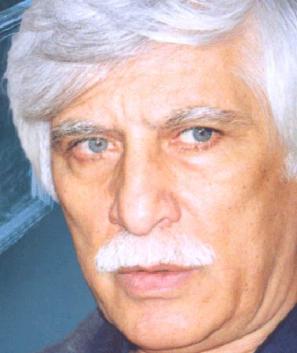
The play is Beyzaie’s theatrical rendition of an ancient Zoroastrian text that chronicles the journey of pious Ardaviraf to the other world where he travels through paradise, purgatory and the inferno. Ardaviraf meets many of the mythic and historic figures of Iran on his journey

The play is based on “The Book of Arda Viraf”, a Zoroastrian religious text from the Sassanid era in the Middle Persian language. It is considered an early precursor to Dante’s “Divine Comedy”.

“Ardaviraf’s Report” will be performed at the Cubberley Auditorium of the University in Persian language.

Beyzaie previously performed a shadow play performance of “Jana and Baladoor” at Stanford University in June 2012.

“When We Are All Sleeping” was the last film Beyzaie directed in Iran in 2009. A few years after, he left the country to pursue an educational career at Stanford University as a visiting professor of Persian studies in the United States of America.

Considered as one of the most intellectual auteurs in Iranian cinema, Beyzaie has written and directed several films including “Killing Mad Dogs”, “Travelers”, “Bashu, the Little Stranger”, “The Journey” and “The Downpour”.

Here you can read a more detailed biography of Bahram Beyzaie:
http://theotheriran.com/2014/11/28/bahram-beyzaie-iranian-film-director-playwright-and-researcher

Source:
Tehran Times through Payvand Iran News

Bahram Beyzaie: Iranian film director, playwright and researcher

Bahram BeyzaieBahram Beyzaie was born in Tehran, Iran on Dec 26 1938. He is an Iranian film director, theatre director, screenwriter, playwright, film editor, producer, and researcher.
Beyzaie is part of a generation of filmmakers in the Iranian New Wave, a Persian cinema movement that started in the late 1960s and includes other pioneering directors such as Abbas Kiarostami, Forough Farrokhzad, Sohrab Shahid Sales, and Parviz Kimiavi. The filmmakers share many common techniques including the use of poetic dialog, references to traditional Persian art and culture and allegorical story-telling often dealing with political and philosophical issues.

After beginning Persian literature at Tehran University, Bahram Beyzaie turned to Visual Arts. Here he studied the Book of Kings (Shahname), the Shiite passion plays (Ta’zieh) , the traditional Persian Theatre including the puppet theatre, the pre-Islamic culture and Persian miniature painting. All of this combined with his interest in the far Eastern theatre helped him to develop of a new direction for the Iranian theatre.

Beyzaie’s “Drama in Iran” (Namayesh dar Iran), published in late 1960s is still considered the most important text on the history of Iranian theater. Beyzaie is also the first scholar in Iran to publish books on theater in China and Japan. Some of his plays such as his masterpiece “Marg-e Yazdgerd” (“Death of Yazdgerd”) have been made into films.

In 1964 he published the first of three pieces “Seh Namāyesch-e Arusak” (Three Puppet Plays), where the influence of Pirandello and the Theatre of the Absurd is reflected.

In 1969 he began his film career by directing the short film Amu Sibilou (Uncle Moustache) followed by Safar (The Journey) in 1970. Immediately after, in 1971, he made his first feature film “Ragbar” (“Downpour”) which is regarded by critics to this day as one of the most successful Iranian films ever made. The successful film addresses the late Parviz Fannizadeh as its central character and protagonist. Since then he produced and directed a number of films, including “Bashu, the little Stranger”.

He is known as the most intellectual and conspicuous “author” in Iranian cinema. The main theme of his works is the history and “crisis of identity” which is related to Iranian cultural and mythical symbols and paradigms.

Beyzaie lives and works in Iran, but is spending an academic year at Stanford University as the Bita Daryabari Visiting Professor of Persian Studies.

Selection of works and publications:
– numerous articles on literary and art magazines,
– Theatre in Japan
– Gorob dar Diari Garib (Sunset in a strange Land)
– Chahar Sandoogh (Four Chests)
– Hashtomin Safar-e Sandbad (Sinbad’s Eighth Voyage)
– Ziafat va Miras (1967 – aka Heritage and The Feast)
– Soltan-Mar (1969 – aka The King Snake)
– Dolls
– Story of the hidden Moon
– Seh Namayesh-e Arusak (Three Puppet Plays)
– Marg-e Yazdgerd (1979 – aka Death of Yazdgerd)
– Karname-ye Bandar Bidakhsh (1997 and 1998)
– Banu Aoi (1997 and 1998) (based on The Lady Aoi by Yukio Mishima)
– Shab-e Hezar-o-yekom (2003)
– Afra ya Rooz migozarad (2007 – aka Afra, or the day passes)

Filmography (as a director):
– 1969: Amu Sibilu (short – aka Uncle Moustache)
– 1970: Safar (short – aka The Journey)
– 1971: Ragbār (aka Downpour)
– 1974: Qaribé va Meh (aka The Stranger and the Fog)
– 1976: Kalāq (aka The Crow or The Raven )
– 1979: Charike-ye Tārā (aka Ballad of Tara)
– 1982: Marg-e Yazdgerd (aka Death of Yazdgerd)
– 1986: Bashu, Gharibe-ye Koochak (aka Bashu, the Little Stranger – released 1989)
– 1988: Shayad Vaghti digar (aka Maybe Some Other Time)
– 1992: Mosaferan (aka Travellers)
– 1998: Goft-o-gu ba Bad (short – aka Talking with the Wind)
– 2001: Sagkoshi (aka Killing Mad Dogs)
– 2006: Qāli-ye Sokhangū (The narrative rug)
– 2009: Vaqti hame khābim (When we are all sleeping)

Awards
– 1973: Chicago International Film Festival, Moscow International Film Festival: “The Journey”: Silver Hugo, Silver Award
– 1990: Aubervilliers Film Festival: “Bashu, the little stranger” – Best film
– 2001: 19th International Fajr Film Festival: “Killing Mad Dogs” – Screenplay
– 2004: International Istanbul Film Festival: Award for lifetime achievement

Sources:
Wikipedia (English and German)
Stanford University – Division of Literatures, Cultures and Languages

Iran-USA Simultaneous Art Installation: A Portal Between Tehran and New York City

Shared Studios is launching the first public installation of Amar Bakshi’s Shared Studio project “A Portal BetweenTehran & NYC: Open for Conversation” by conversing through a live audio-visual connection with an individual in Tehran.

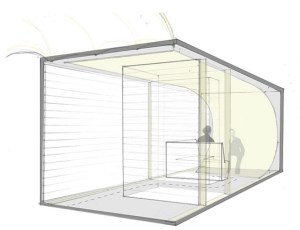
Portals are shipping containers equipped with specialized communications technology. Individuals enter one at a time and converse with a person in the other location as if they were in the same room. Simultaneous text translation is available. This first pairing unites the Lu Magnus Gallery in NYC and the M-40 Studio in Tehran.

OPEN FOR CONVERSATION
DECEMBER 5 – 19, 2014
Special Open Hours: 7:30A – 1:30P, Mon – Sun
LU MAGNUS GALLERY and M-40 STUDIO TEHRAN

Each individual is invited to enter a Portal and converse with whoever happens to be in the Tehran location, or with someone in particular upon advance request. To schedule your visit, please visit SHAREDSTUDIOS.SCHEDULISTA.COM

Powerful new technologies allow us to connect across boundaries as never before; yet we too often use them to cocoon ourselves in our own cultural, political, or ideological communities. Portals puncture hardened stereotypes of the other by facilitating one-on-one encounters. They serve as a catalyst for conversation between communities that would not typically engage with one another due to language barriers, technological limitations and hardened stereotypes of the other meeting people whom they only hear about unidirectionally in the news.

Visit the gallery for special Q&A sessions with the artist and the following New York guests:

Amy Chua and Jed Rubenfeld (Fri Dec 5, 1:00pm-2:00pm)
Yale Law professors and bestselling authors Amy Chua and Jed Rubenfeld. Chua’s books include Battle Hymn of the Tiger Mother and World on Fire. Rubenfeld’s books include The Death Instinct and Freedom and Time.

Jonah Bokaer & James Koroni (Sat Dec 6, 1:30pm-2:30pm)
Jonah & James perform a curated dance live in the New York space, streamed live to Tehran.

Fareed Zakaria (Mon Dec 8, 10:30am-11:30am)
CNN host, Atlantic Monthly writer and bestselling author of The Post-American World and The Future of Freedom

Morgan Spurlock (Wed Dec 10, 10:00am-11:00am)
Documentary filmmaker whose titles include Supersize Me and The Greatest Movie Ever Sold.

Tania Bruguera (Thu Dec 11, 1:30pm-2:30pm)
Tania Bruguera is a Cuban installation and performance artist.

Rob Storr (Fri Dec 12, 9:00am-10:30am)
Robert Storr is the Dean of the Yale School of Art. Formerly, he was Senior Curator at the Museum of Modern Art.

Mohsen Namjoo (Sat Dec 13, 1:30pm-2:30pm)
Mohsen Namjoo is an Iranian artist, songwriter, singer, music scholar and setar (traditional Persian lute) player based in California.

Nicky Nodjoumi (Sun Dec 14 – Dec 15, 11:30pm)
Nicky Nodjoumi’s works are conceived of as theatrical stages, where compositions of figures both serious and ridiculous, in the words of Phong Bui, “house meanings without irony, narratives without stories, humor without morality, above all creating a space that heightens the awareness of old and new history.”

Keller Easterling (Wed Dec 17, 9:00am-10:15am)
Architect, professor and author of books including Extrastatecraft: the Power of Infrastructure Space and Enduring Innocence: Global Architecture and Its Political Masquerades.

Sources: Shared Studios, Lu Magnus Gallery, Spacesmith


Theater Performance: “London, Tehran, Rome, Amsterdam” opened in Tehran, Iran

“London, Tehran, Rome, Amsterdam, Reconsider Your Image Of Me” will play from November 16 to December 12 of 2014, every night (apart from Saturdays), at 21:00 o’clock in the Hafez Hall, Tehran.

This performance, a co-production between the Virgule Performing Arts Company (Iran) and STET The English Theatre (Netherlands) is supported by the Embassy of the Kingdom of the Netherlands. The opening ceremony was held on Sunday, Nov. 16 with the Dutch ambassador to Tehran attending the ceremony.

The performance examines a current topic between Iran and the West, namely what are the images that we have of ‘the Other’ and to what extent fears, fantasies and imaginations are based on truth. By initiating a direct meeting with the Other and listening to each other’s stories, this group aims to create new images, based on the stories of the people who wouldn’t usually make the headlines.

The piece is a multi-media, highly physical, speech performance. It includes the actors’ own stories, dialogue between the actors, video installations with short documentaries about daily life in the countries of origin of the actors and video collages of cultural milestones from these cultures. The physical form of the piece produces a third language.

The project has brought together an international cast to create this piece during a 2 month rehearsal period in Tehran. The company includes Dutch actress Marene van Holk, Italian actress Marta Paganelli, British actress Amy Strange, Iranian actresses Melodie Aramnia and Neda Jebreilli and Iranian actor Meysam Mirzaei, and the piece has been conceived and directed by Arvand Dashtaray.

The production will be performed in the Netherlands in the autumn of 2015.

Sources
Embassy of the Kingdom of the Netherlands in the Islamic Republic of Iran
Mehr News Agency

Iranian author Mahmud Dowlatabadi receives France’s Chevalier of Legion of Honor

Iranian author Mahmud Dowlatabadi, mostly famous for his novel “Kalidar”, received the Chevalier of the Legion of Honor during a ceremony held in Tehran on Sunday evening. The medal, which is the highest decoration awarded by the French government, was presented to the author by French Ambassador Bruno Foucher during a ceremony at his residence in Tehran.

The ambassador gave a brief speech about the life and works of Dowlatabadi. He also praised his artistic career in theater and storytelling.

Wearing the medal, Dowlatabadi talked about French literature and civilization in his short speech, and pointed to the issues of writing and the pains of writing.

Iranian author Mahmud Dowlatabadi (R) stands beside French Ambassador Bruno Foucher before receiving the Chevalier of the Legion of Honor at the ambassador’s residence in Tehran on November 16, 2014.

A number of scholars and literati including Dariush Shayegan, Kambiz Dermabakhsh, Omid Rohani, Lili Golestan, Javad Mojabi and Hassan Kianian attended the ceremony.

Born in 1940, short-story writer and novelist Dowlatabadi was the most prominent Iranian novelist of the 1980s. Self-educated and forced to work from childhood, he spent part of his younger adult years as a stage actor in Tehran.

“The Colonel”, “Kalidar”, “Desert Strata”, “The Trip”, “The Legend of Baba Sobhan”, “The Cowherd”, “Aqil”, “Man” and “Missing Soluch” are among Dowlatabadi’s credits.

http://www.payvand.com/news/14/nov/1110.html

An exhibition of contemporary Iranian paintings at Tara Gallery in Santa Monica, October 25 – November 22

October 25 – November 22

An exhibition of contemporary Iranian paintings celebrating the splendor of nature.

Opening reception: Saturday, October 25, 6 – 9 PM

About this Exhibition

The multifaceted assemblage includes a medley of celebrated artists currently living in Iran. Tara Gallery is honored for the rare privilege to showcase the prodigious works of Hoonaz Afaghi, Elika Ebrahimi, Pooneh Jafarinejad, Mahvash Joorabchi, Hossein Khoshraftar, Einoddin Sadeghzadeh, and Ahmad Vakili.

Each artist practices a unique and personal interpretation of nature by escaping the polluted urban life in search of the enchanting and unadulterated landscape of Iran.

Contact

1202 Montana Avenue, Suite B
Santa Monica, CA 90403
t: 310.451.2417 | m: 310.489.2417
e: info@taragallery.org

http://taragallery.org/blog/

Austria honored Iranian film director Abbas Kiarostami with Decoration for Science and Art

Austria awarded Iranian director Abbas Kiarostami the Austrian Decoration for Science and Art. The medal was established in 1960 to honor international figures for their outstanding achievements in the fields of science and arts.

During a ceremony held in Vienna Iranian director Kiarostami, molecular biologist Barbara Hohn and mathematician Bruno Buchberger received the Cross of Honor for Science and Art from Austria’s President, Heinz Fischer. Austrian poet Friederike Mayröcker received a Decoration of Honor for Services to the Republic of Austria.

Abbas Kiarostami was born in 1940 in Tehran and is one of the most important and famous Iranian film directors. The filmmaker was awarded in 1984 with the Golden Leopard in Locarno for “Where is the house of my friend?”. In 1997 he received the Palme d’Or in Cannes for “Taste of Cherry”, and the 1999 Grand Jury Prize in Venice for “The Wind Will Carry Us”. He is also a photographer, poet, painter and has staged operas. He has been decorated with several state medals, including France’s Chevalier of the Legion of Honor.

Sources: Tehran Times, bundespraesident.at (in German)

Mozart Medal holder Shajarian and Shahnaz ensemble to perform in London’s Appolo Hammersmith on October 26.

Mohammad Reza Shajarian

The world-renowned musician ensemble, Shahnaz, started its music tour at the Malmo Arena in Sweden on September 27.

Composer and tar virtuoso Majid Derakhshani, kamancheh virtuoso Saeed Farajpouri and several other musicians are accompanying Shajarian on this tour.

Shajarian is known as Iran’s contemporary traditional music legendary who has invented new string instruments dubbed Bam Sorahi, Saghar and Kereshmeh, designed for traditional Persian music.

The maestro, Shajarian, was honored with UNESCO’s Mozart Medal in 2006 and the 1999 prestigious Golden Picasso Medal.

http://iranfrontpage.com/news/cultures/music/2014/10/shahnaz-music-ensemble-go-stage-germany/

Art for Humanity WFP Exhibition in Iran

Art for Humanity

The UN World Food Programme (WFP) exhibition features 130 works by 100 prominent Iranian artists in painting and other fields of visual arts.

“This move can serve as a model for the artists in the other countries,” said UN representative, Garry Lewis, during the opening ceremony of the exhibition.

http://iranfrontpage.com/news/cultures/arts/2014/10/art-humanity-wfp-exhibition-opens-tehran/

Speaking at the ceremony, director of the center Abbas Sajjadi hoped to celebrate the end of hunger one day. “In our culture, helping others is a precious value that we have inherited.”

“The project began with 33 artists last year, but we are proud to have 100 artists this year,” she said, adding that the artworks have been priced by the artists themselves.

Gary Lewis also said that many steps need to be taken to eradicate hunger in the world. Sufficient food is being produced in the world, however there is still hunger not only in the poor countries but in the rich and developed ones, he said.

He added all the money raised in this exhibit will provide food for different individuals including Afghan nationals who are being supported by the country of Iran.

He thanked all the Iranian artists who have displayed their heart and compassion in their works.

Hossein Mahjubi, Jalal Shabahangi, Reza Bangiz, Mostafa Asadollahi, Mohammad Farnud and Sorush Sehhat attended the opening ceremony.

Nahid Aryan, Shima Esfandiari, Simin Ekrami, Minu Emami, Bahram Dabiri, Hamed Rashtian, Mohamamd Salahshur, Asal Fallah and Ario Farzi are among the participating artists in the exhibit.

Source: http://www.payvand.com/news/14/oct/1106.html

Iranian children to draw paintings for the disabled

Iranian Children paint for disabled

Iran Paralympics Committee has invited Iranian children to take part in a national drawing contest dubbed “Disability is not Limitation”.

Iran Sports Federation for the Disabled holds the drawing contest “Disability is not Limitation” for children of age 4-12.

The contest is designed to mark Paralympics Week and select works will be awarded on Islamic holiday Eid Ghadeer on October 13.

The paintings should be about the disability and overcoming limitations.

Source: http://iranfrontpage.com/news/cultures/arts/2014/09/iranian-children-draw-paintings-disabled/

Iranian artists contribute to the efforts of the United Nations food agency to take on global hunger.

WFP-LOGO

Up to 100 Iranian artists are to sell their works at a charity event at Niavaran Cultural Center on Friday (October 17, 2014) to help the World Food Programme (WFP) with its efforts to ease global hunger, Khabaronline quoted Negar Gerami of the WFP as telling a news conference in Tehran.

“There is plenty of food to go around in the world,” she said, adding, “Our efforts are meant to reduce the number of people who go hungry to zero.”

She went on to say that Iran is not among countries that grapple with hunger, but that does not mean we can be indifferent to this global problem.

“October 16th has been designated as World Food Day, and we at WFP make efforts to draw public attention to global measures to eliminate hunger,” she said, adding, “This year, works of art by Iranian artists are being used as a tool to raise public awareness. Around 100 artists have donated their works of art to be sold at the event. The proceeds will go to the WFP drive to take on world hunger.”

Parviz Kalantari, an Iranian painter, told the same news conference, “We need to stay clear of politics…. The Iranian people have always joined forces for charitable causes; still, efforts should be made to press home the fact that one should not be indifferent to global problems.”

Shokufeh Malek-Kiani, an Iranian photographer and an artistic consultant of the UN, said the number of artists who donated their works for the charity event, which features visual arts, has risen from 32 last year to around 100 this year.”

Source:
http://iranfrontpage.com/news/cultures/arts/2014/10/iranian-artists-organize-charity-event-help-hungry/

Series: Iranian Handicraft and Art – Khatamkari

Khatam means incrustation in Persian and Khatamkari refers to incrustation work. It consists in the production of incrustation patterns (generally star shaped) with thin sticks of wood (ebony, teak, zizyphus, orange, rose), brass (golden parts) and camel bones (white parts). Ivory, gold or silver can also be used for collection objects.

Many objects can be decorated in this fashion, such as jewelry/decorative boxes, chessboards, pipes, desks, frames or some musical instruments. Khatam can also be used in Persian miniatures, making it a more attractive work of art. This craft was so popular in the court during the Safavid period that princes learned it at the same level of music or painting.

Based on techniques imported from China and improved by Persian know-how, khatam has existed for more than 700 years and is still practiced in Shiraz and Isfahan.

Source. IranReview

Series: Iranian Handicraft and Art – Painting

Oriental historian Basil Gray believes Iran “has offered a particularly unique [sic] art to the world which is excellent in its kind”.

Painting in Iran is thought to have reached a climax during the Tamerlane era when outstanding masters such as Kamaleddin Behzad gave birth to a new style of painting.

Qajarid paintings, for instance, are a combination of European influences and Safavid miniature schools of painting such as those introduced by Reza Abbasi. Masters such as Kamal-ol-molk, further pushed forward the European influence in Iran. It was during the Qajar era when “Teahouse painting” emerged.

Source: Iran Review

Iranian movie ‘The Pearl’ wins at Bucharest film festival after also winning the UNICEF award at the 2012 International Film Festival for Children and Young Adults

Iranian screen production The Pearl directed by Sirous Hassanpour has garnered award at the 2014 edition of Bucharest International Film Festival, Romania.

The award went to the film’s cinematography director Saed Nikzat for his particular way and gorgeous imagery used in the film.

Nikzat as a director of photography contributed to more than 20 short and feature films.

Produced by Iran’s Farabi Cinematic Foundation, The Pearl also competed in Damah Film Festival that took place in the Japanese city of Hiroshima on August 2 and 3, 2013.

The film chronicles the life of a pearl hunter, Karim, who is living in a little town of southern Iran. Karim who suffers from heart trouble, finds out that he needs an urgent surgery for the disease but he cannot afford it. His two children think that they have to grow up sooner than expected time to help their dad.

The movie won the UNICEF award at the 2012 International Film Festival for Children and Young Adults in Isfahan.

The report also says that the film portrays the finer aspects of human relationships and moral values with beautiful cinematic skills.

http://www.iranreview.org/content/Documents/Iranian-Film-Wins-Venice-Int-l-Film-Festival-Top-Award.htm

Series: Iranian Handicraft and Art – Ghalamkar and Termeh

Ghalamkar (Qalamkaar, also qalamkar, kalamkar) fabric is a type of Textile printing, patterned Iranian Fabric. The fabric is printed using patterned wooden stamps. It is also known as Kalamkari in India which basicaly is a type of hand-painted or block-printed cotton textile.

Termeh

Termeh is a handwoven cloth of Iran, primarily produced in the Yazd province.

Weaving Termeh requires a good wool with tall fibers. Termeh is woven by an expert with the assistance of a worker called “Goushvareh-kesh”. Weaving Termeh is a sensitive, careful, and time-consuming process.Greek historians commented on the beauty of Persian weavings in the Achaemenian (532 B.C.), Ashkani (222 B.C.) and Sasanidae (226-641 A.D.) periods and the famous Chinese traveller Hoang Tesang admired Termeh.

Due to the difficulty of producing Termeh and the advent of mechanized weaving, few factories remain in Iran that produce traditionally woven Termeh. Rezaei Termeh is the most famous of the remaining factories.

http://www.iranreview.org/content/Documents/Iran%E2%80%99s_Art_Heritages_and_Handicrafts.htm

Series: Iranian Handicraft and Art – Carpet weaving

The art of carpet weaving in Iran dates backs to 2,500 years and is rooted in the culture and customs of its people and their instinctive feelings. Weavers mix elegant patterns with a myriad of colors.

The Iranian carpet is similar to the Persian garden: full of florae, birds and beasts. The colors are usually extracted from wild flowers, and are rich in colors such as burgundy, navy blue and accents of ivory.

The proto-fabric is often washed in tea to soften the texture, giving it a unique quality. Depending on where the rug is made, patterns and designs vary.

http://www.iranreview.org/content/Documents/Iran%E2%80%99s_Art_Heritages_and_Handicrafts.htm

Series: Iranian Handicraft and Art – Minakari

Enamel working and decorating metals with colorful and baked coats are one of the distinguished artwork in Isfahan. Mina, is defined as some sort of glass-like colored coat which can be stabilized by heat on different metals particularly copper.

Although this course is of abundant use industrially for producing metal and hygienic dishes, it has been paid high attention by painters, goldsmiths and metal engravers since a long time. It is categorized as enamel painting, charkhaneh (or chess-like enamel) and cavity enamel.

Enamel painting is practiced in Isfahan and specimens are kept in the museums of Iran and abroad, indicting that Iranian artists have been interested in this art and used it in their metalwork ever since the rule of Achaemenian and Sassanid dynasties. Since enamels are delicate, we do not have many of them left from ancient times. Most of the enameled dishes related to the past belong to the Qajar dynasty during 1810–90.

Source: IranReview

Series: Iranian Handicraft and Art – Intro & Part 1: Pottery

Intro

Iran held the 24th International Handicrafts Exhibition to mark World Handicrafts Day on Tuesday June 10, 2014 … at Tehran’s International Fairground.

The World Handicrafts Council was established by the United Nations Educational, Scientific and Cultural Organization (UNESCO) and 90 countries have already joined it.
Iran is home to one of the richest art heritages and handicrafts in world history and distinguished in many disciplines, including architecture, painting, weaving, pottery, calligraphy, metalworking and stone masonry.

Persians were among the first to use mathematics, geometry, and astronomy in architecture and also have extraordinary skills in making massive domes which can be seen frequently in the structure of bazaars and mosques.

Pottery

Prominent archeologist Roman Ghirshman said, “The taste and talent of these people [Iranians] can be seen through the designs of their earthenware.”

Of the thousands of archeological sites and historical ruins of Iran, almost every one of them can be found to have been filled, at some point, with earthenware of exceptional quality.

http://www.iranreview.org/content/Documents/Iran%E2%80%99s_Art_Heritages_and_Handicrafts.htm

Exhibition: Persian Caligraphy at Smithsonian’s Freer and Sackler Galleries, Washington, DC (Opening: Sept.13 – End: March 2015)

OPENING SEPT. 13, “NASTA‘LIQ: THE GENIUS OF PERSIAN CALLIGRAPHY” IS FIRST EXHIBITION ON PERSIA’S MOST POPULAR AND VISUALLY STUNNING SCRIPT

During a prolific 200-year period in the 14th-16th centuries, four master calligraphers invented one of the most aesthetically refined forms of Persian culture: nasta‘liq, a type of calligraphy so beautiful that for the first time the expressive form of the words eclipsed their meaning. “Nastaliq: The Genius of Persian Calligraphy,” opening Sept. 13 at the Smithsonian’s Arthur M. Sackler Gallery, displays 20 rarely seen masterworks created by the script’s greatest practitioners, tracing its evolution from a simple style of writing to a potent form of artistic expression.

This is the first exhibition ever to focus specifically on nasta‘liq, which was used primarily to write poetry, Persia’s quintessential form of literature. With sinuous lines, short vertical strokes and an astonishing sense of rhythm, the script was an immediate success and was rapidly adopted throughout the Persian-speaking world from Turkey to India. The exhibition shows how generations of itinerant calligraphers, bound by the master-pupil relationship, developed, enhanced and spreadnasta‘liq between major artistic centers.

Nasta‘liq represents one of the most accomplished forms of Persian art, developed at a time of cultural and artistic effervescence in Iran,” said Simon Rettig, exhibition curator and curatorial fellow at the Freer and Sackler galleries. “In a sense, it became the visual embodiment of the Persian language enthusiastically embraced from Istanbul to Delhi and from Bukhara to Baghdad.”


More info and pictures:

http://www.payvand.com/news/14/aug/1073.html


Tar virtuoso Jalil Shahnaz

Jalili Shahnaz was born in 1921 in Isfahan, Persia (Iran). Shahnaz studied under the supervision of Abdolhossein Shahnazi and Hossein Shahnaz and befriended ney player Hassan Kassai.[2]

Persian classical vocalist Shajarian named his most recent musical group “Shahnaz” in honor of Masetro Shahnaz.[4]

Jalil Shahnaz died in Tehran on 17 June 2013.

Works

  • “Atr Afshan” (tar solo, accompanied by Mohammad Esmaeili, tombak).
  • “Zaban-e tar” (tar solo, accompanied by Jahangir Malek, tombak).
  • “15 Pieces for Tar & Setar” (transcribed by Houshang Zarif). Soroud Publications, Tehran, 2000.

http://en.wikipedia.org/wiki/Jalil_Shahnaz

Here is what Shajarian said about him on his commemoration ceremony

“I am glad to come together here again and to talk with the language of heart,” Shajarian said.

“I have been living with the voice of Shahnaz’s tar for years. When he performs it is as if he tells a story. All the motifs and words of his music are of the same nature and narrate a single subject,” he added.

“Few musicians I have seen are able to perform as illustratively as Shahnaz did. Shahnaz was the god of this job. With his instrument, he pictured everything,” he stated.

Shahnaz died at the age of 92 on June 17, 2013. Shajaran said during his funeral, “The master created love and passion inside me. I owe all my achievements to the voice of his tar. He is the only person who deserves the title of master [of tar playing]. Like Hafez, he is unrepeatable. With all respect to tar players, the book of Iranian tar playing should be closed after the death of Shahnaz.”

http://www.payvand.com/news/14/jun/1130.html

Related article:

Iranian vocalist Mohammadreza Shajarian to receive France’s highest honor

2014 Tehran Art Auction grosses over $4 million

Sohrab Sepehri’s untitled painting from his Tree Trunk series sold for 18 billion rials (about $550,000), setting a new auction record for an Iranian painting.

Another work by Sepehri, a 90×130 centimeter abstract painting, sold for 16 billion rials (over $485,000), fetching the second highest price at the auction.

Reza Derakhshani’s artwork “Hunting the Blue Sky” sold for 6 billion rials (over $180,000), three times the estimated price, making it the third highest selling lot at this year’s auction.

Other highlights of the sale included a calligraphy painting by Mohammad Ehsaii and a two-piece painting by Aidin Aghdashlu. A calligraphy painting by Nasrollah Afjeii and paintings by Kurosh Shishegaran, Parviz Kalantari, Farideh Lashaii, and Masud Arabshahi were also sold.

Tehran Auction Director Alireza Sami-Azar, who established the auction house in June 2012 to promote the economy of art in the country, said that the sale was beyond his expectations, which shows Iranians’ interest in art, and the creativity of the country’s artists.

Complete catalogue of the auction: Tehran Auction 2014

Source: Payvand News of Iran | 2014 Tehran Auction grosses over $4 million

Iranian vocalist Mohammadreza Shajarian to receive France’s highest honor

The living legend of Iranian traditional music Mohammadreza Shajarian will receive the medal of Chevalier of the Legion of Honor in Paris next week.

Shahram Nazeri, another Iranian vocalist, received the honor on September 29, 2008 for the scholarly interest he has taken in the musical interpretation and vocalization of the transcendent lyrics of Rumi.

More about Shajarian

Mohammad-Reza Shajarian (Persian: محمدرضا شجريان‎) (born 23 September 1940) is an internationally and critically acclaimed Persian classical singer, composer and Ostad (master) of Persian music.[1][2][3] He has been called “Iran’s greatest living master of traditional Persian music.”[4] Shajarian is also known for his skills in Persian calligraphy, and humanitarian activities.

Shajarian was born in Mashhad, Iran, and started singing at the age of five, under the supervision of his father. At the age of twelve, he began studying the traditional classical repertoire known as the Radif.

Invention of New Musical Instruments

Shajarian has led the invention of many new Iranian classical music instruments, many of which were showcased in his 2012 concert tour with the Shahnaz Ensemble. Among these instruments are the Kereshmeh, the Saboo, the Saghar, the Sorahi, and the Tondar.

Awards and distinctions

  • One of NPR‘s 50 great voices.[6] (2010)
  • Nushin medal (2008)
  • The UNESCO award – the UNESCO Mozart Medal[7] (2006)
  • Nominated for Grammy award in Best World Music (2006)
  • Nominated for Grammy award in Best World Music (2004)
  • Iran’s best classical vocalist (2000)
  • Golden Picasso Medal (1999), one of UNESCO‘s highest honors
  • National radio and television golden cup (1977)
  • Prize presented by Turkish parliament speaker (1976)

http://www.payvand.com/news/14/jun/1130.html

http://en.wikipedia.org/wiki/Shajarian

Photos: young women and men decorating walls in Tehran

https://i0.wp.com/shahrefarang.s3.amazonaws.com/wp-content/uploads/2013/08/Shahrak-Gharb-01.jpg

https://i0.wp.com/shahrefarang.s3.amazonaws.com/wp-content/uploads/2013/08/Shahrak-Gharb-03.jpg

https://i0.wp.com/shahrefarang.s3.amazonaws.com/wp-content/uploads/2013/08/Shahrak-Gharb-05.jpg

https://i0.wp.com/shahrefarang.s3.amazonaws.com/wp-content/uploads/2013/08/Shahrak-Gharb-09.jpg

تزئین دیوارهای میدان صنعت

Ceiling and wall art

Image

Spanish cartoonist wins Golden Tooba at Fajr International Festival of Visual Arts in Iran

Spanish cartoonist David Vela Cervera won the Golden Tooba (Tree of Heaven) in the cartoon section at the 6th Fajr International Festival of Visual Arts.

Six Iranian artists received the Lifetime Achievement Award: Illustrator Gholamali Maktabi, graphic designer Ebrahim Haqiqi, miniaturist Mohammad-Baqer Aqamiri, cartoonist Javad Alizadeh, sculptor Taher Sheikholhokamaii and painter Iraj Eskandari.

David Vela Cervera was born in 1967 in Zaragoza, Spain. He graduated at the University of Zaragoza, with the degree of Doctor in Spanish Philology specializing in the graphic illustration of the first third of the 20th century. He is working as a freelance artist concentrated mainly to illustrations and creations of cartoons. David Vela participated at many international cartoon competitions winning won various prizes and mentions.

Source: Payvand Iran News, Cartoon Gallery | David Vela, jamaran.ir

Iran from Viewpoint of a Japanese Pianist

“Now, when I go over my memories of that exceptional trip after having stayed in Iran for a few days, I see that the most prominent part of those memories is warm and honest treatment as well as the hospitality of the Iranian people. Everybody there hails you with a polite smile. I, having been born in a country where respectful treatment of others is of high importance, was in a good position to appreciate the respectful treatment of the Iranian people.

What I saw from the Iranian people during my short trip [to that country] was that they are always serene, well-mannered, and ready to offer all kinds of assistance and cooperation. I wondered why I didn’t know anything about the good and well-mannered people of Iran, who are very cultured and take pride in their culture and arts, before this trip?” –Noriko Ogawa

Noriko Ogawa is a Japanese pianist that traveled to Iran on an invitation extended to her by the Japanese Embassy in Tehran. She had musical performances in the cities of Tehran and Shiraz.

Read more at Payvand | Concert in Tehran: Iran from Viewpoint of a Japanese Pianist

“Iran-UK Sonics” at Queen Elizabeth Hall, Southbank Centre, Friday 13 December 2013

International arts consultancy Six Pillars announces the UK’s first sound art residency for Iranian artists and musicians.

Five emerging practitioners visit London for the first time from Iran on 9 December: Nasim Khorassani, Sepehr Haghighi, Nemo Ghasemi, Niloufar Em and Heckmat(t).

The two weeks intense preparation and technical workshops peak with the performance of “Iran-UK Sonics” at Queen Elizabeth Hall, Southbank Centre, Friday 13 December.

Fari Bradley of Six Pillars who is running this visionary project with Southbank Centre, LCC and Resonance104.4FM “After a public call out and in-depth selection process, we’ve a hugely varied group coming to exchange ideas with the UK. Our aim is to dialogue with Iran about experimental music, and make a difference in terms of frequently problematic cultural perceptions.

Sources:
http://sixpillars.org/IranUK/
http://www.payvand.com/news/13/dec/1000.html