To bid the winter farewell here are the last snow photos of this season. Enjoy Iran’s capital city, Tehran, covered in snow!


Sources: ISNA | Photos 1, IRNA | Photos, ISNA | Photos 2
To bid the winter farewell here are the last snow photos of this season. Enjoy Iran’s capital city, Tehran, covered in snow!
Sources: ISNA | Photos 1, IRNA | Photos, ISNA | Photos 2
Fajr International Music Festival is Iran’s most prestigious Music Festival founded in 1986. The festival is affiliated with UNESCO and includes national and international competition sections.
Since its establishment, many musicians from several countries like Austria, Germany, France participated in the event. The festival have enjoyed a strong presence of Asian countries as well.
In addition to Iranian groups, this year ten foreign groups performed 15 concerts.
We had already posts about:
Dutch saxophonist Yuri Honing and his band
US American saxophonist and Grammy Award winner Bob Belden


Sources: wikipedia | Fajr International Music Festival, Tehran Times, ISNA | Photos 1, ISNA | Photos 2, ISNA | Photos 3
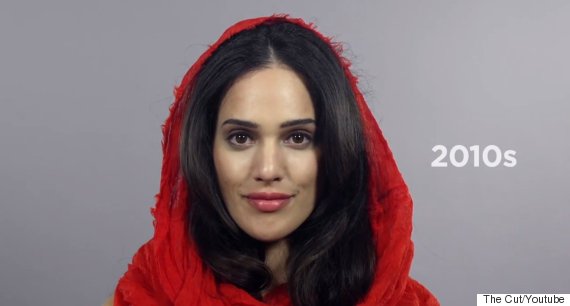
Iranian Woman 2010
In 1910, women sported monobrows and had pared-down make-up, with a close-fitting hijab.
A decade later, the hijab becomes looser and softer around the crown of the head, reflecting social changes – the Iranian social movement for women began.
In the 1930s, the Shah of Iran Mohammad Reza Shah Pahlavi implemented big changes – starting with the name of the country from Persia to Iran, and banned the hijab.
We can see hair getting more elaborate, make-up becoming heavier and looks that reflect Western trends.
Then the revolution occurs in 1979 and is evident in the sober, black hijab and face devoid of make-up.
But, while these were dark times for many Iranians, hope flourished again with the Green Movement, which sought to bring about political change after the 2009 presidential election.
While the hijab – now mandatory – remains until the 2010 look, it becomes more colourful and once again, a bit looser.
Source: The Huffington Post UK | How Iranian beauty has changed over 100 years
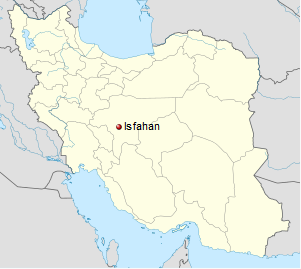 The Zayanderud River, as largest river in the central plateau of Iran, starts in the Zagros Mountains and flows 400 kilometres eastward before ending in the Gavkhouni swamp, a seasonal salt lake, southeast of Isfahan city.


Sources: Tasnim News Agency, Wikipedia | Isfahan
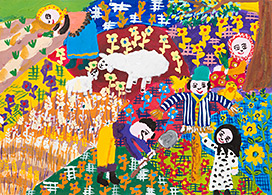
by 10-year-old Fatemeh Mahallati from Iran
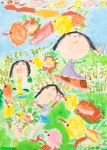
Ten-year-old Iranian girl Fatemeh Mahallati has won one of 45 first prizes in the international section of the 14th International Environmental Children’s Drawing Contest in Japan. Her work depicts a number of people working on a farm.
“In my painting, I drew animals, flowers and people who are working on a farm and they are happy as they are living in nature,” Fatemeh told the Persian service of ISNA on Sunday.
“What I drew in my painting were the things I have previously seen in my visits to farms and green areas,” she added. “The environment and nature are important and we should protect the things concerning nature,” she stated.
Fatemeh has been a member of the Institute for the Intellectual Development of Children and Young Adults (IIDCYA) in Raine, a town near the southern Iranian city of Kerman, since 2009.
In a message sent to Fatemeh last week, the director of Iran’s Department of Environment, Masoumeh Ebtekar, congratulated her for achievement at the competition.
Iranian successes in the previous 14 years (click on the pictures to see them in full size with age of the kid and prize that was won):




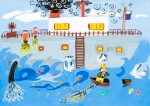
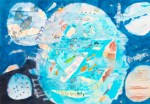


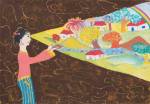

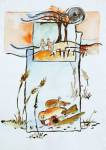
The contest was organized the Japan Quality Assurance Organization (JQA), the International Certification Network (IQNet) and the Tokyo branch of UNICEF.
The 6-year-old Japanese child, Kusaka Nana, won the Environmental Best Prize, which is the top honor of the contest.
The best prize of the international section was presented to the 12-year-old Ukrainian boy, Oleksiy Rakoma, and the UNICEF special prize went to the 7-year-old Bangladeshi boy, Raihan Fairooz Tarannum.
About the contest:
Since 1999, Japan Quality Assurance Organization (JQA) and International Certification Organization Network (IQNet) have been hosting the International Environmental Children’s Drawing Contest for children aged 7 to 15 years old from around the world, supported by UNICEF Tokyo Office.
So far, the contest has been held 15 times with over 21,000 entries that this year we’ve had entries from a record breaking 81 countries. In total, we have received more than 220,000 drawings up to now.
Full of imagination and artistic sensitivity, children drew pictures about nature and animals, their families and the surrounding area. The pictures also contain the message towards global environment, beyond borders and difference in their background cultures and languages.
Sources: Tehran Times , The International Environmental Children’s Drawing Contest
More than 1,000 people took part in “Happy Chinese New Year in Iran” celebration in Tehran ahead of the date by enjoying Chinese food and martial arts performance.
The event, organized by the Chinese Embassy, was a chance for the participants to learn about Chinese traditions, such as Chinese medicine with a doctor from the University of Tehran showing the practice of acupuncture. The doctor said the Chinese medical clinic set up by the university receives dozens of patients every day as Chinese medicine has been gaining popularity in Iran in recent years.
Red Dragon, directed by Ahmad Rastgou, and co-produced by Iran and China was displayed at the event and a children’s workshop brought together Iranian and Chinese children through Chinese national games and entertainments. A charity shop presented Chinese traditional handicrafts including calligraphy and Chinese miniature along with fireworks entertained the guests.
Performers from a local martial arts club wowed the crowd with their stunning acts and lion dances. A treat to traditional Chinese snacks such as dumplings and noodles also attracted a long queue.


“This is my first time to join Chinese Spring Festival celebration. I think it’s very interesting. Spring Festival is the most important festival in China. I saw lion dances just now. It’s fantastic,” said a student studying Chinese language at university.
The Chinese ambassador, Mr. Pang Sen and the chairman of the Iran-China Friendship Society officially opened the New Year by painting the eyes of the dragon as a symbol of resurrection of the dragon. Mr. Sen accompanied guests in visiting pavilions designed to introduce Chinese culture and traditions.
China’s Ambassador to Tehran expressed gratitude for the guests and dignitaries in the ceremony and congratulated them on Chinese New Year; “Chinese New Year, like that of Iranians, is the spring and renewal of the life on earth, and is one of the greatest traditional festivities, which is widely celebrated across China with magnificent events,” he told the participants.
Wikipedia on the origins of Sino-Iranian relations:
The Parthians were apparently very intent on maintaining good relations with China and also sent their own embassies, starting around 110 BC: “When the Han envoy first visited the kingdom of Anxi (Parthia), the king of Anxi dispatched a party of 20,000 horsemen to meet them on the eastern border of the kingdom… When the Han envoys set out again to return to China, the king of Anxi dispatched envoys of his own to accompany them… The emperor was delighted at this.” (Shiji, 123, trans. Burton Watson).
In this link you can find a video of this year’s Chinese New Year Festival (with Chinese speaking Iranians): CCTV News Content
Here is a video report of last year’s Chinese New Year celebrations in Tehran (in English):
Sources: IRNA | Photos, wikipedia, Mehr News Agency, CCTV News Content
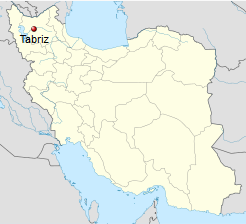 Tabriz is one of the historical capitals of Iran, and the present capital of East Azerbaijan Province. Tabriz is located at an elevation of 1,350 meters above sea level in the Quru River valley between the long ridge of the volcanic cone of Sahand and Eynali mountain. The valley opens up into a plain that gently slopes down to the eastern shores of Lake Urmia, 60 kilometres (37 miles) to the west. With cold winters and temperate summers, the city is considered a summer resort.
The city has a long and turbulent history with its oldest civilization sites dated back to 1,500 B.C. It contains many historical monuments representing the transition of Iranian architecture in its long historical timelines.


The predominant language spoken in Tabriz is Azerbaijani language. The language has a strong Iranian substrata since it has for many centuries been in close contact with Persian. Like every other part of Iran the lingua franca is Persian. For the first time, an academic program on Azeri opened in Tabriz University in 1999.
Tabriz was a house for numerous Iranian writers, poets, and illumination movements. In old times the city notables, supported poets and writers by organizing periodical meetings. Within its long history it was a residence for many well known Iranian writers and poets. The list can start from the old time Rumi, Qatran, Khaqani to recent years Samad Behrangi, Gholam-Hossein Sa’edi, Parvin E’tesami.
Sources: Mehr News Agency | Photos, ISNA | Photos, Wikipedia | Tabriz
Kerman is the capital city of Kerman Province, Iran. At the 2011 census, its population was 821,374, making it the 10th most populous city of Iran.
 It is one of the largest cities of Iran in terms of area. Kerman is famous for its long history and strong cultural heritage. The city is home to many historic mosques and Zoroastrian fire temples. Kerman is also on the list of the recent world’s 1000 cleanest cities. Kerman is also a former capital of Iran, a position that it held during several periods. It is located on a large, flat plain, 1,036 km (643 mi) south of Tehran, the capital of Iran.


Sources: ISNA | Photos, Wikipedia | Kerman
The Fajr International Film Festival or Fajr Film Festival is Iran’s annual film festival, held every February in Tehran, Iran. It takes place every year on the anniversary of the Iranian revolution. There were 90 feature films submitted for the 29th edition of the festival in 2011.


Sources: Wikipedia| Fajr International Film Festival, Tasnim News | Photos FIFF 1, Tasnim News | Photos FIFF 2, Tasnim News | Photos FIFF 3, ISNA | FIFF 1, ISNA | FIFF 2, ISNA | FIFF 3, ISNA | FIFF 4, ISNA | FIFF 5
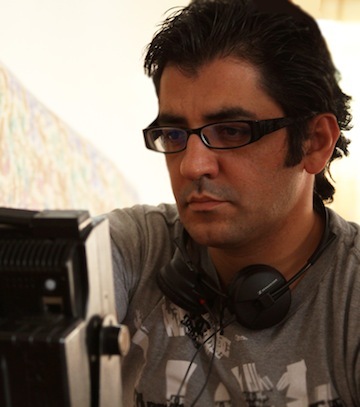 Nima Javidi was born in 1980. A qualified mechanical engineer, Javidi began making short films in 1999 and has made six to date: Marathon Paralyzed Champion (1999), A Call for O (2001), The Poor Earth (2004), Changeable Weather (2007), Crack (2009) and Catnap (2010).
He has also directed two documentaries, Person (2007) and An Ending to an Ancient Profession (2007) and more than 30 television commercials.
Melbourne (2014), which he wrote and directed, is his feature film debut. It recently won Best Film at the Cairo Film Festival and Best Script at the Stockholm Film Festival and opened the Venice Film Critic’s Week.
The following video might be interesting for non Iranians, just to see how Iranian celebrities in Iran visited the premier of the movie. Scenes and Interview with the crew of “Melbourne”:
Source: Asia Pacific Screen Awards | Nominees & Winners 2014
 Mehnan (also Mahnan and in Persian: مهنان) is a village in Aladagh Rural District, in the Central District of Bojnord County, North Khorasan Province, Iran. Its populations (2006) was 1.341 inhabitants.
Bojnord is the capital city of North Khorasan province, Iran. It is about 701km (436mi) from Tehran.
The city is quite famous for its multicultural background. Many people speak at least 2 different languages including Persian, Tati, Khorasani Turkic, Kurmanci Kurdish, and Turkmen. Intermarriage between said ethnic groups is common.


Sources: Mehr News Agency | Photos, Wikipedia | Bojnord, Wikipedia | Mehnan

Newsha Tavakolian (photo by Arash Ashouriniya)
Newsha Tavakolian, an established photojournalist and art photographer, started her experimental career at 16. After a while she pursued it professionally in Iranian and foreign media. Two decades on, her social recognition and awareness has catapulted her into the ranks of the outstanding photographers.
Zanan-e Emrooz magazine released an interview with Newsha in its 7th issue (December 2014) about her career and life. The following is an excerpt of it, published in Iran Front Page:
Why did you pick photography? Was anybody in your family who did photography?
At first I knew nothing about photojournalism. I did it for money. My parents were in Germany for my dad’s surgery, and my siblings and I were in Iran. Apart from financial problems, I found the education system annoying. Later I learned that I was suffering from Dyslexia at school but nobody knew about it. Back then I didn’t want to rebel; it was just a normal reaction to the tough conditions of the time…. after dropping out of school, I took photography at my mom’s suggestion and used everything as a subject for photography. […]
Once you said you always wanted to narrate the story of your subjects. Are your recent collections your narration of the characters? […]
My first work was Mothers of the Martyrs Collection: photos of mothers whose sons had been martyred. The undeniable resemblance between mothers and sons was interesting. […] Two reverse trends: a son who has remained in his youth with a cheerful face and a mom who looks emaciated because of the loss of her son. I just selected the backgrounds for the pictures and there was no other intervention on my part. […]
I just show part of their lives and leave the remainder to the imagination of the audience. I like to see viewers get involved in the story of my photos, not just their beauties. None of my photos has a strange surreal atmosphere. They feature the familiar scenes we pass by each day, but we now pause to watch the photos and they make us think.
For instance, the visitors of the Look Collection (2011) told me they felt as if they were watching themselves in those photos. This shows that I have successfully represented a typical character type in the photos. Drawing on my experiences in photojournalism and social documentaries, I’ve reached this point. My photos feature the middle class; that’s why more people identify with the characters in my work. […]
“When I shot these images, it was a dark time in Iran’s history,” says Newsha Tavakolian. “It was a time of extreme pressure on the public, especially on the youth, who were all struggling under the imposed restrictions.” Curious about the isolated lives of the middle-class youth in Tehran, Tavakolian staged images based on the real stories of her friends and neighbours to depict a society that the photographer believes is often reduced to exaggerated stereotypes in western media, and to give a more accurate portrayal of “normal people” in Iran.


As a photojournalist, you not only covered the news on Iran but also news stories in the region, including the Iran-Iraq war. How was it like?
Back then I was 21. In Iraq I was accompanied by two American women. When we left Iraq after the war, they had other projects to work on and show themselves, but I came across closure of newspapers [in Iran] and a stagnant situation in which you would be consumed by inaction.
After one and a half years I realized that I’d spent too much time on something which I couldn’t change. I admitted that I was living in this country with all limitations and I needed to redouble my efforts to work here. […]
I refocused my efforts on upgrading my works. You cannot believe how terrible I was in photography and how much I worked on it. I’m the harshest critic of myself. I relentlessly review my works in order not to let others find any faults with them; I don’t let anybody undermine my self-confidence either. I constantly evaluate and challenge my works, and I think this is a forwarding method.
At the time of war, I was among the first photographers who were in Iraq. I sent my photos through my agency to Time and Newsweek magazines. They didn’t know I was a girl. Well, this heartened me because my works were put above my gender. […]
Where do you think the world is heading with too many photos available? Today mobiles and tablets don’t miss even one single moment. ….
I don’t walk down this path. I don’t produce a big volume of photos. I’m stingy in photography. I feel responsible for taking any photo. I’m stingy even in sending the feed to my eyes and mind. I wouldn’t look at just any video or photo because I wanted to train my eyes.
You are not supposed to watch anything just to spend time or relieve tiredness; otherwise your sight will get sick, just like you don’t eat anything just to fill your stomach. Perhaps these photos are helpful for future historians not to encounter any ambiguity […]
As a professional photographer, is your life affected by news? Is news still tragic for you?
Pieces of bad news send chills down my spine. I’m still involved in photojournalism. It is a labor of love. Let me give you an example. After a tough period of hard work – a four-month trip to 13 countries for filming and photography for an educational project – and facing problems with the Carmignac Foundation, I was in the Netherlands where I decided to go to the beach and have a rest. It coincided with the crash of a Malaysian airliner in Ukraine. The families of the Dutch nationals who were onboard the [doomed] plane went to the airport to ask about their loved ones.
I rushed to the airport when I heard the news. I was unaware that I had no camera, so I collected one at the airport and started to take photos. Nobody was waiting for my photos.
About one month ago I went to Iraq for a personal project. I didn’t snap the most important photo I could take and wrote it instead*.
You’ve travelled to many countries. Have you ever thought about migration given that your husband is not Iranian?
I’m still in Iran because it is the only place where I can use all my senses: anger, happiness, concerns, etc. My Iran photos are the strongest. It’s hard for me to let go of what I’ve developed an interest in. Luckily my husband is interested in Iran too.
I like Iran despite its shortcomings to which I don’t turn a blind eye. This society’s problems bother me and I cannot remain indifferent to them. If I live here and like it, I should do whatever I can for it. […]
Tell us about what you’ve changed in yourself through your own constructive criticism.
Whenever I hold a camera, I imagine it’s my first time. […] Each day I try to gain new things. It all started when I returned from Iraq. I could either suffer from postwar depression or forget whatever I had experienced in order to return to normal life. I chose the intentional forgetfulness in order not to be entrapped by sentimentalism, and not to regret the past. Never do I think about the past. I face the future. Each time I reach the end, I start from scratch.
———————–
* A Thousand Words for a Picture That I Never Took, Newsha Tavakolian, Sharq newspaper
Biography of Newsha Tavakolian: The other Iran | Newsha Tavakolian
Sources: Iran Front Page, Roads & Kingdoms, The Guardian
Kerman is the capital city of Kerman Province, Iran. At the 2011 census, its population was 821,374, making it the 10th most populous city of Iran.
It is one of the largest cities of Iran in terms of area. Kerman is famous for its long history and strong cultural heritage. The city is home to many historic mosques and Zoroastrian fire temples. Kerman is also on the list of the recent world’s 1000 cleanest cities. Kerman is also a former capital of Iran, a position that it held during several periods. It is located on a large, flat plain, 1,036 km (643 mi) south of Tehran, the capital of Iran.


Climate
The city’s many districts are surrounded by mountains which bring variety to Kerman’s year round weather pattern, thus the northern part of the city is located in an arid desert area, while the highland of the southern part of the city enjoys a more moderate climate. The mean elevation of the city is about 1755 m above sea level.
Kerman city has a moderate climate and the average annual rainfall is 135 mm. Because it is located close to the Kavir-e lut (Lut desert), Kerman has hot summers and in the spring it often has violent sand storms. Otherwise, its climate is relatively cool.
Culture
Kerman has an abundance of architectural relics of antiquity. It is among several cites in Iran with a strong cultural heritage, which is expressed in the local accent, poetry, local music, handicrafts and customs that Kerman has introduced to the world of culture.
The Iran museum of Zoroastrians, which showcases the ancient history of Zoroastrians, is in Kerman’s Fire Temple. The idea of launching the museum along with the library of Kerman’s Zoroastrian Society came to light in 1983, when the head of the society, Parviz Vakhashouri, and the former head of library, Mehran Gheibi, collected cultural heritage artifacts of Kerman’s Zoroastrian community. These two officials added many other objects to this collection.The museum was officially inaugurated during Jashn-e Tirgan in 2005 by Iran’s Cultural Heritage, Handicrafts and Tourism Organization (ICHHTO).
Jashn-e Tirgan or Tiregan is an ancient Iranian rain festival observed on July 1. The festivity refers to archangel Tir (literally meaning arrow) or Tishtar (lightning) who appear in the sky to generate thunder and lightning for providing the much needed rain.
Sadeh ceremony is celebrated every year in Kerman. Also The archeological ancient area of Jiroft and Tappe Yahya Baft are located south of Kerman. Rayen Castle is also located on Rayen town,south east of Kerman.
Sources: Mehr News Agency, Wikipedia | Kerman
Amirkabir University of Technology (AUT), formerly called the Tehran Polytechnic, is a public research university located in Tehran, Iran. AUT is one of the most prestigious universities, and the first established technical university in Iran, referred to as “Mother of Industrial Universities”.
Over 500 students of the Amir Kabir University of Technology celebrated their graduation in the university’s campus on Wednesday, January 14th.


The university was first founded by Habib Nafisi in 1958 and then developed by Dr. Mohammad Ali Mojtahedi, during the reign of the Pahlavi dynasty. Originally named the Tehran Polytechnic, it began its activities with five engineering departments. In 1978 the Tehran Polytechnic was renamed after the famed Iranian Prime Minister Amir Kabir (1807–1852).
Presently the university has grown to an elite school of science and engineering education with the capacity of about 10,000 students in 35 undergraduate majors, around 90 M.Sc. majors and 36 Ph.D. and post-doc programs. Acceptance in all levels of education in AUT is very competitive and only top students can enroll.
AUT has 15 departments including electrical engineering, biomedical engineering, polymer engineering, mathematics and computer science, chemical engineering, industrial engineering, civil and environmental engineering, physics and energy engineering, computer and information technology, mechanical engineering, mining and metallurgical engineering, textile engineering, petroleum engineering, ship engineering, and aerospace engineering. AUT has a well-equipped educational site in Bandar Abbas as well as an academic unit in Mahshahr.
The library and document center at AUT, the largest technical and engineering library in Iran’s capital, is one of the richest academic libraries in the technical and engineering field in the region. This library includes a central library and 16 satellite libraries in Tehran and Bandar Abbas. This library includes more than 5 million books which are mostly about computer.
Sources: Wikipedia | Amirkabir University of Technology, IRNA | Photos, Amirkabir University of Technology
The 2015 Asian Cup started on January 9th and ends on January 31st. Iran reached the quarterfinals but lost to Iraq on penalties in a nerve-wrecking match.
As a goodbye to this year’s Asian Cup a compilation of photos of Iranian fans:


Sources: mostafagraphy.tumblr.com, Iran beat Bahrain in 2015 Asian Cup opener – in pictures, Asian Cup – The fans of Iran, Bing Image Search
Iran’s President Hassan Rouhani has opened an exhibition at the National Museum of Iran showcasing hundreds of ancient Iranian artifacts returned to the country from Belgium after decades of legal battles.
The antique collection was returned to Iran on Thursday Dec. 24. This came after an appeals court in Belgium’s eastern city of Liège ruled in September 2014 that the country’s authorities restitute 349 smuggled artifacts to Iran. The legal process has lasted 33 years.
Praising the efforts made by the Iranian legal team in returning the valuble antiques, Rouhani said the move showed the resolve of the government in “safeguarding the rights of the Iranian nation.” He noted that such cultural exhibitions can help “defuse Iranophobia” in the world.
The stolen artifacts comprising of 221 clay and 128 bronze antiques had been discovered in Khorvin, Savojbolagh County, Alborz Province, 80 kilometers (49 miles) northeast of the Iranian capital and date back to the end of the second millennium and the first millennium BC and are some 3000 years old.


In 1965, a French woman who had acquired an Iranian nationality due to her marriage to an Iranian professor and had been living in Iran for some 18 years, with the help of a Belgian diplomat began to gradually transfer to Belgium the collection.
After the Iranian government was informed of the existence of this antique collection in a Museum in Ghent, Belgium, it filed a lawsuit in the Belgian courts in 1981 and made the claims that these artifacts had been illegally transferred out of the country, belonged to Iran, and as such must be returned home.
Following Iran’s demand in 1981, a Brussels court ordered the seizure of the pieces and their preservation at the Museum of Brussels University, pending a final verdict. The court of first instance ruled out Iran’s claims as the rightful owner in 1998 and again in 2012 the claims were rejected due to pass of time. Iran made an appeal to the Belgian court and finally in September 2014, the court of Appeals established Iran’s ownership of Khorvin’s collection of antique artifacts and ruled that they be returned to Iran.
Iranian officials have filed several other lawsuits in courts in Britain, France, Turkey, and Pakistan for the return of smuggled artifacts over the past years.
Sources:
Press TV
Mehr News Agency
realiran.org
Photos by E. Naredipour for IRNA
Snowman Festival in Marivan – With the first snowfall of this year’s winter in Marivan, people gathered to celebrate a snowman festival.


Marivan is a city in Kurdistan Province, Iran. At the 2006 census, its population was 91,664 inhabitants. The native language of the city is the central dialect of Kurdish (Sorani) with a minority of Hawrami dialect. The religion of the people is Shafi’i Sunni.
The city lies close to the Iraqi border and due to the official border market of Bashmaq which is between the Kurdish region of Iraq and Iran, it serves a destination for shoppers in neighbor provinces. Lake Zarivar lies west of Marivan. With a length of 5km and a maximum width of 1.6km it is a major touristic attraction in the region. The lake’s water is fresh and has a maximum depth of 6m.
Sources: Wikipedia | Marivan, Mehr News Agency | Photos


Here you can enjoy them in action:
Rastak a new ensemble for contemporary Persian folk music was formed as an experimental music group in 1997. The group seeks to collect, record and interpret traditional Persian folk music for a global audience, incorporating language, culture and history also merging traditional instruments and forms with contemporary rhythms. The musicians who comprise Rastak have graduated from the best universities in Iran and have done extensive research into Persian folk music.
History
It all began when Siamak and Behzad became friends on a winter’s day in 1994. Three years later, Siamak and Behzad were discussing the idea of forming an ensemble for folk music based on research, collection and interpretation. In 1997 Rastak Music Group was founded in Tehran. …
2002 marks Rastak’s meeting with renowned musicians in folk music from all around Iran such as: Khalifeh Aghe Ghosi from Kurdistan, Noor Mohammad Dorpoor from Khorasan, Shir Mohammad Espandar From Sistan and Balouchestan, Mohsen Heidarieh from Booshehr, Ashigh Imran & Ashigh Hasan from azerbaidjan, Faroogh Kiani from Khorasan, Abolhasan Khoshroo & Mohammadreza Es’haghi from Mazandaran, Dr. Tekkeh & Ghlich Anvar from Turkemen Sahra. Along with these meetings, Rastak began field recording and collecting folk music pieces. These endeavors prepared the material for one of Rastak’s major productions published under the name of ” minimalism in persian folk music “. These recordings demanded a studio, therefor the group made one.
…
In 2006, Rastak took new members: Mohammad Mazhari, Yavar Ahmadifar, Akbar Esmaeelipour, Sahar Ebrahim, Sara Naderi, Kaveh Sarvarian and Hale Seyfizade. In addition to the new album, two concerts were conducted which gained considerable popularity.After Majid left and Sara Ahmadi joined the group , Rastak continued hiring educated and versatile musicians in terms of vocal and instrumental skills and capabilities for its international appearances. Eversince this time, Rastak has held worldwide concerts and made numerous recordings.
Sources:
http://irna.ir/fa/Photo/2799616/
http://www.whatsupiran.com/Profile/Rastak/About
Another good read is this beautiful travel blog by a german mexican couple who met Rastak accidently while traveeling through Iran:
http://www.tastingtravels.com/rastak-iranian-music/


cartoon by Firoozeh Mozaffari published by Iranian daily Etemaad
One Hundred eighty-five Iranian journalists condemned the January 7, 2015 terrorist attack on the Charlie Hebdo magazine offices in Paris, which led to the deaths of 12 individuals. “We, Iranian journalists, condemn the January 7 terrorist attack that took the lives of several journalists and citizens in Paris,” said the statement.
“In our opinion, committing violence against freedom of speech and the free activities of the media, and assassination of journalists in any context, in any form, and on any excuse, and in the hands of any individuals or groups, with any faith or belief, is condemned. Today we stand side by side with the Charlie Hebdo victims and all freedom-seeking people of the world and consider defending freedom of expression and thought against any suppression and violence our most obvious duty,” added the statement.
Source: Payvand
See also how Iranians reacted on the attacks of 11th of September 2001 ( 9/11) carried out by mostly Saudi attackers:
The other Iran | Iran’s exceptional reaction to 911 attacks: candlelit vigils for the victims and 60k soccer fans respected a minute’s silence


Some Iranian Christians celebrate Christmas on Dec. 25 and New Years’ on Jan. 1, while Armenians celebrate Christmas at the same time as the Epiphany on Jan. 6.
More content on Iranian Christians on this blog: The other Iran | Christians
Sources: Mehr News Agency | Photos, Al-Monitor: the pulse of the Middle East | Iran’s Christians celebrate Christmas
Some Iranian Christians celebrate Christmas on Dec. 25 and New Years’ on Jan. 1, while Armenians celebrate Christmas at the same time as the Epiphany on Jan. 6.


More content on Iranian Christians on this blog: https://theotheriran.com/tag/christians/
Tehran Milad Tower will host an Iranian food festival as a charity for supporting children with cancer.

With the collaboration of University of Applied Science, the festival is scheduled to be held in January 8, where Iranian traditional cuisine will be sold to the donors and visitors and the collected sum will be used to support children with cancer and their treatment.


As Christians around the world celebrate Christmas, the holiday season is also observed in Iran, a predominantly Muslim nation where Christians make up less than 1% of the country’s approximate population of 77.5 million.
Christmas trees decorated with red, green and gold gift boxes placed behind shop windows or at the entrances of different shopping malls and hotels can be seen, especially in the Christian neighborhoods of Tehran.
Decorated trees, along with Nativity scenes of the Virgin Mary, Joseph and baby Jesus, can also be seen in shops along Mirza Shirazi Avenue and Ostaad Nejatollahi (Villa Avenue) and its surrounding neighborhoods in central Tehran, where many Iranian Christians reside.
Shermin, an Iranian Christian, told Al-Monitor, “Like other Christians in the world, we celebrate Christmas at home along with our family and friends, exchange gifts and party.” She added, “There are a lot of good things to eat at this joyful time of the year.”
Some Iranian Christians celebrate Christmas on Dec. 25 and New Years’ on Jan. 1, while Armenians celebrate Christmas at the same time as the Epiphany on Jan. 6.
Despite being a minority, Iran’s Christians, Jews and Zoroastrians are recognized as established religious minorities and are represented in parliament, and also enjoy freedom to practice their religions and perform their religious rituals.
“You can’t celebrate Christmas in any Islamic country the way we do in Iran,” Rafi Moradians, an Iranian Armenian in Tehran, told Al-Monitor. Referring to the community’s exclusive sport and cultural club, Rafi said, “Authorities don’t impose any restrictions on us. We attend church services and there are also special celebrations at the Ararat Club.”
The festive mood, however, is not just limited to the Christian neighborhoods of Tehran, as some shops, especially those in the northern parts of the city, dedicate at least some section of their shop windows to decorations such as candy canes, snow globes and Santa Claus figures.
In recent years, municipal authorities have also put up banners celebrating the birth of Jesus on many main streets and at the St. Sarkis Armenian Church on Villa Avenue, where a service is held every year.
Unlike other countries in the region where public celebration of Christmas is limited to hotels frequented by foreigners, there is no such restriction in Tehran. The sale of Christmas ornaments, which during the first years of the Islamic Revolution was limited to Christian districts, can now be seen around town.
In fact, festive Christmas decoration and celebration take place throughout the country, specifically in major cities such as Esfahan, Shiraz, Tabriz and even religious cities such as Mashhad.
Over the past decade, celebrating Christmas has become increasingly popular among young Iranians, regardless of their religion. Of course, the trend has a partly religious basis, as Muslims acknowledge the birth of Jesus Christ and recognize him as one of God’s holy messengers. But another reason for taking part in Christmas celebrations seems to be rooted in the Iranian youth’s desire to “keep up with the rest of the world.”
“I get so excited when I see shops decorated with Christmas trees. It gives me the same good feeling and joy that I get during the Persian New Year, Nowruz,” Venus, a Muslim student who studies Iranian art at one of Tehran’s universities, told Al-Monitor.
Ordinary Iranians are not alone in the holiday celebrations and in exchanging greetings at Christmas time. This year, President Hassan Rouhani sent season’s greetings to Pope Francis and world leaders. Through his Twitter account, Rouhani reached out to ordinary Christians around the globe, as well as those in Iran.
“May Jesus Christ, the prophet of peace and love, bless us all on this day. Wishing Merry #Christmas to those celebrating, esp #Iranian Christians,” he tweeted.
Also, Iran’s Foreign Minister Mohammad Javad Zarif used his 100th tweet to express hope for a more peaceful 2015.
The Twitter account belonging to the office of Supreme Leader Ayatollah Ali Khamenei also featured a series of messages on the occasion of Christmas. One of the messages read: “It’s time for all caring Muslims, Christians & Jews to obey the prophets & truly honor #Jesus’ birthday by standing up against Israeli crimes.”
Covering Christmas and New Year’s events has also become routine for Iranian media in the past decade. For instance, the state news agency IRNA published a photo report of celebrations across the world this year. A similar photo report was published by the conservative Tasnim news agency and videos of Christmas celebrations around the globe were broadcast on state TV channels.
“As an Armenian, I’ve never felt any discrimination and I’ve been treated just as other Iranians,” said Rafi, who is a Western-educated Armenian and has worked in various government organizations, including as a senior adviser in one of Iran’s ministries.
“If I had any problems living as an Armenian in Iran, I would have left the country a long time ago,” he told Al-Monitor.
This year’s Christmas coincided with a mourning period for Muslims, Shiites in particular. But Iranian Christians say they have not encountered any restrictions on their celebration of Christmas or their preparations for the New Year.
Source: AL-Monitor, MEHR, IRNA
Every holiday has its own traditional food, in Iran or anywhere else in the world. Iranian Christians, including Armenians, celebrate Christmas and the Christian new year with special dishes, pastries and drinks.
Many Iranians are under the impression that Iranian Armenians, like many other Christians in the world — and especially Americans — celebrate the new year, Christmas and Easter by feasting on turkey. In fact, turkey is as popular among Armenians as it is among other Iranians in general.
So what is an Armenian Christmas dinner like? The Iranian calendar year starts with the spring equinox, on March 20 or 21, and Iranians celebrate with a dish of herb rice and fish. As it happens, this dish is also a staple of the Armenian Christmas dinner in Iran.


But the Armenian Christmas table has other dishes as well. A key part of the meal is vegetable kuku, an Iranian dish consisting of eggs, vegetables, herbs and sometimes nuts and dried berries. If you ask an Armenian where this tradition comes from the answer is more often than not “I don’t know”.
“On their Christmas eve, Iranian Armenians often dine on rice, fish and vegetable kuku,” writes the Iranian Armenian writer and documentary filmmaker Robert Safarian. “Since childhood we thought that this was a Christmas tradition until the borders to Armenia opened and we learned that there is no dish in Armenia called vegetable kuku. It is an Iranian dish that has become an Armenian tradition.”
Armenian Christmas pastries follow a tradition too. The two most well known and popular ones are perok (or pirok) marmalade cake and gata pastry. In the past, these two dishes were only popular among Armenians but now they are among the highest-selling pastries in Tehran confectionaries.
Coins of Fortune
Gata varies in its ingredients, size and in how it is decorated, depending on the region or the cook’s preferences. It consists of layers of dough with alternating layers of butter or margarine. Ingredients include flour, sugar, butter, eggs, yeast, milk and salt. Sometimes rosewater or spices such as cardamom are added, though they are not part of the standard recipe. After about an hour in the oven, the layers rise and the final gata takes shape.
One of the most popular variations of gata is made with nuts, especially walnuts. Sometimes a coin is hidden at the center of the gata and the belief is that fortune will smile on whoever finds the coin in her or his gata.
Gata is generally known as a sweet pastry but a salty version is popular too; many Armenian households prepare them for Christmas or the new year.
Perok, the other favorite holiday pastry, is made from a dough very similar to that used to make pie. Its center consists of marmalade; variations in perok are defined by the type of marmalade used.
The ingredients for perok are: pastry flour, sugar, eggs, baking powder, vanilla, grated orange peel, grated walnut, and marmalade. First you mix the butter and sugar, then add eggs one by one as you continue to mix. Then mix flour, baking powder, vanilla, grated orange peel and walnuts together in a separate bowl. For the third step, pour the contents of the bowl into a mixer. After a short while, turn the mixer off and continue to combine the ingredients by hand. Put about one-fourth of the dough aside and place the rest in a Pyrex dish and cover it with marmalade.
Cut the dough you have put aside into narrow ribbons and place them on the marmalade surface, making an “X” pattern. Put into an oven pre-heated to about 175 degrees centigrade and bake for about 40 minutes, or when the perok is golden.
Do-It-Yourself Wine
Like many Christians in the world, cookies and chocolates shaped like Christmas trees, Santa Claus or other symbols of the holiday are popular with Armenians. Families put them under Christmas trees and give them to children as treats and gifts.
You must add coffee and wine to this feast — they have a religious significance for all Christians. Under the Islamic Republic of Iran, trade in alcoholic beverages is forbidden, so the Armenian community makes its own wine and other alcoholic drinks. The law allows religious minorities to make wine for religious purposes.
One last point. The Armenians celebrate Christmas on January 6, so after the new year. As to why, well, that is another story, as they say.
This article was originally published in IranWire
Mirza Shirazi Avenue, formerly known as Nader Shah, is located in one of the main Armenian neighborhoods in Tehran. At the moment, the avenue is decorated for Christmas and the approaching new year. Shop windows display Santa Claus dolls and the sidewalks are filled with pine trees, which will decorate the homes of Iranian Christians.
But Christmas is not only visible in this central Tehran street. It is also being celebrated in the east Tehran neighborhood of Majidieh, where many residents are preparing for Christmas and the new year period, now just a few days away.
Every year, starting in late November, shops in the two streets are decorated with gifts, pine trees, Santa Claus dolls and other seasonal items — and shoppers are ready.
Pictures of Christmas Season in different Iranian cities. Click the photos to open them in enlarged gallery mode:


“From the first day of Azar (November 22), we get ready and make sure we have the merchandise,” says K., a shopkeeper on Mirza Shirazi Avenue. […] “The shoppers are not only Armenians and Christians. Many Muslims buy pine trees, Santa Clauses and other Christmas items and celebrate the holidays,” he explains. “They say it is a joyous and beautiful celebration. I don’t find it unusual, because Armenians celebrate the Iranian new year and participate in some Muslim religious ceremonies as well.” […]
“If you have an Armenian friend, remember not to call him on December 25, when all the radios and TVs and newspapers talk about Christmas and congratulate Christians on the birth of Jesus,” wrote the Armenian writer and documentary filmmaker Robert Safarian on his blog a few years ago. “The Armenian Christmas is on January 6, when probably nobody calls anyone to celebrate the holiday.”
“On their Christmas Eve, Iranian Armenians often dine on rice, fish and vegetable kuku (an Iranian dish made with whipped eggs, vegetables and herbs),” wrote Safarian. “Since childhood, we thought that this was a Christmas tradition until the borders to Armenia were opened and we learned that there is no dish in Armenia called vegetable kuku. It is an Iranian dish that has become an Armenian tradition.”
Because religious occasions in Iran are observed according to the Islamic lunar calendar, this year’s Christmas coincides with a mourning period for Muslims, and Shias in particular. But Iranian Christians have not encountered any restrictions in their preparations for Christmas and the new year. It continues to be a celebration that manifests itself in color and light in a few streets in the center of the Iranian capital.
This text is part of an article published on IranWire
Sources
DeutscheWelle
IranWire


Minab is a city in Hormozgan Province, Iran. At the 2006 census, its population was 76,776. In ancient times Minab had the name of Harmosia (or Harmozeia).
Minab is not far from Bandar Abbas. It is famous for fishing (especially shrimps) and for agriculture (especially date palms and mangoes). It lies on the main official road connecting Bandar Abbas, the Makran and the Baluchistan Province. The population are mainly Shi’a Muslims but there is also a Sunni minority, and the language they speak is Minabi (locally Minow), a dialect which is something between Bandari and Balochi and Persian. Once a week, a well known bazaar called “Panjshambe bazar” or in Minabi language “Peyshambe Bazar” (English: Thursday’s Bazaar) attracts people from all over Hormozgan, and beyond.
Sources: wikipedia | Minab, Mehr News Agency | Photos
Shab-e Chella(-e bozorg) (“night of (the great) forty”) or Shab-e Yalda (“Yalda night”) is an Iranian festival celebrated on the “longest and darkest night of the year,” that is, in the night of the Northern Hemisphere’s winter solstice. Calendarically, it is celebrated in the night between the last day of the ninth month (Azar) and the first day of the tenth month (Dae) of the Iranian civil calendar, which corresponds to the night of December 20 or 21 each year.
The longest and darkest night of the year is a time when friends and family gather together to eat, drink and read poetry (especially Hafez) until well after midnight. Fruits and nuts are eaten and pomegranates and watermelons are particularly significant. The red color in these fruits symbolizes the crimson hues of dawn and glow of life. The poems of Divan-e-Hafez, which can be found in the bookcases of most Iranians families, are intermingled with peoples’ life and are read or recited during various occasions like this festival and at Nowruz.


In the 1st-3rd centuries, significant numbers of Eastern Christians settled in Arsacid and Sassanid territories, where they had received protection from religious persecution. Through them, Western Iranians came in contact with Christian religious observances, including, it seems, Nestorian Christian Yalda, which in Syriac (a Middle Aramaic dialect) literally means “birth” but was also one of the Syriac words for Christmas, which — because it fell nine months after Annunciation — was celebrated on eve of the winter solstice. Although it is not clear when and where the Syriac word was adopted into Persian, gradually ‘Shab-e Yalda’ and ‘Shab-e Cheleh’ became synonymous and the two are used interchangeably.
An association with the 40-day “chella” period is preserved amongst Iranian Azerbaijanis, who call it Chilla Gejasi, which means the beginning of the first 40 days of winter. The Iranian concept also survives in Urdu-speaking Kashmir, India, where Chillai Kalan designates the 40-day harshest winter period.
In pre-Islamic Zoroastrian tradition the longest and darkest night of the year was a particularly inauspicious day, and the practices of what is now known as “Shab-e Chelleh/Yalda” were originally customs intended to protect people from evil (see dews) during that long night. People were advised to stay awake most of the night, lest misfortune should befall them, and people would then gather in the safety of groups of friends and relatives, share the last remaining fruits from the summer, and find ways to pass the long night together in good company. The next day (i.e. the first day of Dae month) was then a day of celebration. Although the religious significance of the long dark night have been lost, the old traditions of staying up late in the company of friends and family have been retained in Iranian culture to the present day.
Food plays a central role in the present-day form of the celebrations. In most parts of Iran the extended family comes together and enjoys a fine dinner. A wide variety of fruits and sweetmeats specifically prepared or kept for this night are served. Foods common to the celebration include watermelon, pomegranate, nuts, and dried fruit. These items and more are commonly placed on a korsi, which people sit around.
After dinner the older individuals entertain the others by telling them tales and anecdotes. Another favourite and prevalent pastime of the night of Chelleh is divination by the Divan of Hafez (fal-e Hafez). It is believed that one should not divine by the Divan of Hafez more than three times, however, or the poet may get angry.
Since the first night of winter ( 21th of December) is the longest night and from that night on the days get longer and the warmth and light of the sun increases, that night was supposed to be the time for the re-birth of sun. The Aryan tribes, in India, Iran and Europe celebrated sun’s birth at the beginning of winter. Yalda is a Syriani word meaning birth. The Roman used the word natalis for birth.
Sources
wikipedia
Tasnim News
ISNA
IRNA
Anbu (also known as Anbuh-e Mashayekh) is a village in Talesh County, Gilan Province, Iran. At the 2006 census it had a population of 385 inhabitants.
Citizens of Anbu, a village in the south of Gilan, harvest pomegranates as fall arrives.


Prof. Stephen Greenblatt: “I never thought that Shakespeare would become my magic carpet to the land of Persia”
The First International Conference on Shakespeare Studies was held on November 26 to 27, 2014 in Iran.
The conference, organized by the Faculty of Foreign Languages and Literatures from the University of Tehran, explored themes such as ‘Shakespeare and Political Discourse’, ‘Shakespeare under the Iranian Eye’, ‘Shakespeare and Adaptation’, ‘Radical Shakespeare’, ‘Shakespeare and Mysticism’ and ‘Shakespeare and Popular Culture’.
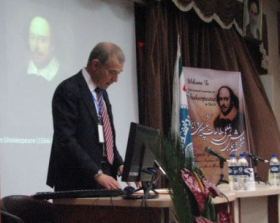 Professor Stephen Greenblatt took part in the conference and delivered a keynote speak focused on Shakespeare and the human condition on November 26. He is one of the world’s most celebrated Shakespearean scholars and best known for Shakespeare biography titled Will in the World: How Shakespeare became Shakespeare, which was on the New York Times Best Seller List for nine weeks. In 2012 he won the Pulitzer Prize for his book, The Swerve: How the World Became Modern.
“I never thought that Shakespeare would become my magic carpet to the land of Persia” said Harvard scholar Prof. Greenblatt when he expressed his enthusiasm for Iran and Persian cultural and historical heritage during the conference.
Prof. Mark Burnett from Queen’s University in Belfast, was another keynote speaker whose discussion focused on cinematic representations of Shakespeare in Iran. He talked about an Iranian adaptation of Shakespeare’s Hamlet entitled Doubt (Tardid), a 2009 Iranian Crystal Simorgh-winning film directed by Varuzh Karim Masihi.
Iranian scholar Hossein Elahi Ghomshei, author and lecturer on literature, art and mysticism, also spoke at the conference.
The event was organized by Dr. Ismail Salami and Dr. Maryam Soltan Beyad, professors at the University of Tehran.
Source: Iran Front Page
 Masoumeh Ebtekar has been awarded Italy’s Anna Maria Mammoliti Minerva Prize on its XXV Edition
Iranian Vice President and Head of the Environmental Protection Organization Masoumeh Ebtekar’s endeavors on political and environmental fronts have been recognized in Italy.
The Minerva Prize, renamed in 2009 after its founder Anna Maria Mammoliti, an Italian journalist and social activist, is the first Italian award dedicated predominantly to women who operate in “knowledge” fields, which they represent symbolically, and who because of their professional capability and the positive values which they uphold are female role models. Each year a man also receives this recognition for his professional and human contribution given to society.
The award is divided into different categories such as art, information, innovation or political management and consists of a precious brooch depicting the goddess Minerva designed by Maestro Renato Guttuso in 1983 on its first edition.
On its XXV Edition eight women and one man have been awarded in Rome at the Sala della Protomoteca in Campidoglio – under the patronage of the President of the Republic and with the support of the Senate, the House and the Presidency of the Council.
Masoumeh Ebtekar Vice President of the Islamic Republic of Iran and Khadija Cherif, vice secretary for women in the International Federation for Human Rights (FIDH), were awarded in the section “Women in the World”.
Following categories have been recognized in 2014:
Political Commitment and Reformer Award: Masoumeh Ebtekar (Iran)
Human Rights Award: Khadija Cherif (Tunisia)
Management Award: Laura Donnini
Entrepreneurship Award: Daniela Ducato
Economics Award: Donatella Ceccarelli
Leadership Award: Emanuela Ortolani
Information Award: Barbara Parodi Delfino
Arts Award: Loretta Goggi
Franco Vaccari, founder and President of the Associaton “Rondine Cittadella della Pace”.
Related article about Masoumeh Ebtekar in this blog:
https://theotheriran.com/2014/01/31/irans-environment-chief-the-first-woman-to-receive-the-energy-globe-foundation-award/
Sources
IRNA through Iran Front Page
Minerva Online (English and Italian)
Shared Studios is launching the first public installation of Amar Bakshi’s Shared Studio project “A Portal BetweenTehran & NYC: Open for Conversation” by conversing through a live audio-visual connection with an individual in Tehran.
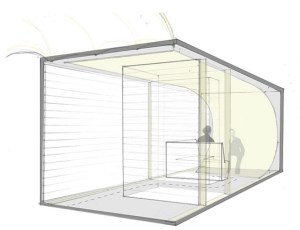
Portals are shipping containers equipped with specialized communications technology. Individuals enter one at a time and converse with a person in the other location as if they were in the same room. Simultaneous text translation is available. This first pairing unites the Lu Magnus Gallery in NYC and the M-40 Studio in Tehran.
OPEN FOR CONVERSATION
DECEMBER 5 – 19, 2014
Special Open Hours: 7:30A – 1:30P, Mon – Sun
LU MAGNUS GALLERY and M-40 STUDIO TEHRAN
Each individual is invited to enter a Portal and converse with whoever happens to be in the Tehran location, or with someone in particular upon advance request. To schedule your visit, please visit SHAREDSTUDIOS.SCHEDULISTA.COM

Powerful new technologies allow us to connect across boundaries as never before; yet we too often use them to cocoon ourselves in our own cultural, political, or ideological communities. Portals puncture hardened stereotypes of the other by facilitating one-on-one encounters. They serve as a catalyst for conversation between communities that would not typically engage with one another due to language barriers, technological limitations and hardened stereotypes of the other meeting people whom they only hear about unidirectionally in the news.
Visit the gallery for special Q&A sessions with the artist and the following New York guests:
Amy Chua and Jed Rubenfeld (Fri Dec 5, 1:00pm-2:00pm)
Yale Law professors and bestselling authors Amy Chua and Jed Rubenfeld. Chua’s books include Battle Hymn of the Tiger Mother and World on Fire. Rubenfeld’s books include The Death Instinct and Freedom and Time.
Jonah Bokaer & James Koroni (Sat Dec 6, 1:30pm-2:30pm)
Jonah & James perform a curated dance live in the New York space, streamed live to Tehran.
Fareed Zakaria (Mon Dec 8, 10:30am-11:30am)
CNN host, Atlantic Monthly writer and bestselling author of The Post-American World and The Future of Freedom
Morgan Spurlock (Wed Dec 10, 10:00am-11:00am)
Documentary filmmaker whose titles include Supersize Me and The Greatest Movie Ever Sold.
Tania Bruguera (Thu Dec 11, 1:30pm-2:30pm)
Tania Bruguera is a Cuban installation and performance artist.
Rob Storr (Fri Dec 12, 9:00am-10:30am)
Robert Storr is the Dean of the Yale School of Art. Formerly, he was Senior Curator at the Museum of Modern Art.
Mohsen Namjoo (Sat Dec 13, 1:30pm-2:30pm)
Mohsen Namjoo is an Iranian artist, songwriter, singer, music scholar and setar (traditional Persian lute) player based in California.
Nicky Nodjoumi (Sun Dec 14 – Dec 15, 11:30pm)
Nicky Nodjoumi’s works are conceived of as theatrical stages, where compositions of figures both serious and ridiculous, in the words of Phong Bui, “house meanings without irony, narratives without stories, humor without morality, above all creating a space that heightens the awareness of old and new history.”
Keller Easterling (Wed Dec 17, 9:00am-10:15am)
Architect, professor and author of books including Extrastatecraft: the Power of Infrastructure Space and Enduring Innocence: Global Architecture and Its Political Masquerades.
Sources: Shared Studios, Lu Magnus Gallery, Spacesmith
“London, Tehran, Rome, Amsterdam, Reconsider Your Image Of Me” will play from November 16 to December 12 of 2014, every night (apart from Saturdays), at 21:00 o’clock in the Hafez Hall, Tehran.
This performance, a co-production between the Virgule Performing Arts Company (Iran) and STET The English Theatre (Netherlands) is supported by the Embassy of the Kingdom of the Netherlands. The opening ceremony was held on Sunday, Nov. 16 with the Dutch ambassador to Tehran attending the ceremony.
The performance examines a current topic between Iran and the West, namely what are the images that we have of ‘the Other’ and to what extent fears, fantasies and imaginations are based on truth. By initiating a direct meeting with the Other and listening to each other’s stories, this group aims to create new images, based on the stories of the people who wouldn’t usually make the headlines.


The piece is a multi-media, highly physical, speech performance. It includes the actors’ own stories, dialogue between the actors, video installations with short documentaries about daily life in the countries of origin of the actors and video collages of cultural milestones from these cultures. The physical form of the piece produces a third language.
The project has brought together an international cast to create this piece during a 2 month rehearsal period in Tehran. The company includes Dutch actress Marene van Holk, Italian actress Marta Paganelli, British actress Amy Strange, Iranian actresses Melodie Aramnia and Neda Jebreilli and Iranian actor Meysam Mirzaei, and the piece has been conceived and directed by Arvand Dashtaray.
The production will be performed in the Netherlands in the autumn of 2015.
Sources
Embassy of the Kingdom of the Netherlands in the Islamic Republic of Iran
Mehr News Agency
The Niavaran Culture Center in Tehran is hosting the 7th annual edition of Iran’s Seven Views (Haft Negah), an art expo coordinated since 2006 by seven major art galleries.
This year, fourteen galleries take part in the expo. The Aria, Elaheh, Dey, Golestan, Haft Samar, Valli, Mah-e Mehr, The Aran, Etemad, Hanna, Dastaan Basement, Seen, Seyhun, and Tarrahan-e Azad galleries will all participate in this years celebrations taking place from November 14 to 28.
The exhibition will showcase paintings, sculptures, and calligraphy from 350 artists featuring 400 works that respond to this year’s exhibition motto, “Every Iranian Home, One Artwork”.


Some of the well-known artists showcasing their artworks this year include Sohrab Sepehri, Mohammad Ehsaii, Aidin Aghdashlu, Parviz Tanavoli, Iran Darrudi, Farideh Lashaii and Parvaneh Etemadi.
Make sure not to miss this one of a kind artistic event!
Sources: Tara Gallery, Mehr News Agency
TEHRAN (Tasnim) – Iranian cyclists gathered to pedal in the streets of the capital, Tehran, to mark the World Diabetes Day (WDD).


World Diabetes Day is the primary global awareness campaign of the diabetes world and is held on November 14 of each year. It was introduced in 1991 by the International Diabetes Federation and the World Health Organization in response to the alarming rise of diabetes around the world. World Diabetes Day is a campaign that features a new theme chosen by the International Diabetes Federation each year to address issues facing the global diabetes community. While the campaigns last the whole year, the day itself marks the birthday of Frederick Banting who, along with Charles Best, first conceived the idea which led to the discovery of insulin in 1922.
Sources:
http://multimedia.tasnimnews.com/Media/Gallery/557647
http://en.wikipedia.org/wiki/World_Diabetes_Day

Museums in Tehran host events for children to encourage book reading
The Cultural Heritage and Tourism Research Center is to implement a “Seven Museums, Seven Tales” plan as of Saturday [November 15] to mark the national Book and Book Reading Week.
The plan which is to be carried out in seven museums in the capital aims to promote book reading and introduce [Iran’s] legends and myths as a symbol of oral and intangible heritage.
It also intends to create more attractiveness in museums and revive the art of storytelling.
Creative instructors of storytelling and members of Children’s Book Council will come together in seven museums, namely Iran’s Post Museum, National Museum of Iran, Golestan Palace Museum, Carpet Museum of Iran, Tehran Peace Museum, Moghadam Museum and Bagh-e-Negarestan [Complex] to host Iranian children and their parents as well as other guests between November 15 and 21.
The museums will open their doors to visitors at 11:00 a.m. local time.
Source: Iran Front Page
Don’t believe all the stereotypes: the mood inside Iran is hopeful for change and increased positive engagement with the West…
When I told my friends I was travelling to Iran they didn’t believe me.
“That’s the sort of place people go missing and don’t come back,” they said.
“Don’t worry,” I reassured them, “I’m white and Jewish, nobody will be able to miss me, and they won’t be wanting me to stay.”
I was right on the first count, wrong on the second.
Despite a sophisticated English-language tourist infrastructure, there are almost no Western visitors, so Iranians are especially excited to meet Europeans or North Americans. Seemingly insecure, many would ask us whether we were enjoying Iran, responding with scepticism when we said yes.
In a dusty desert town in the centre of the country, a father encouraged his young daughter to ask my Dutch colleague for a photo with him.
“You look just like Louis Tomlinson from One Direction,” she told him excitedly.
People on the street were constantly stopping us, they would ask where we were from, give us drinks, and generously welcome us to their country.
The image of Iran as being full of wild-eyed Arabs chanting ‘death to America’ is wrong on many levels, not least of all because Iranians aren’t actually Arab (and they’re sick of pointing that out).
In the cafes of Tehran the headscarves are skimpy and men and women laugh together over cans of coke, you’re more likely to see iPhones in the streets than AK-47s, and while it’s true that you’d better keep homosexuality behind well-padlocked doors, the prosecution and persecution of gay people isn’t a popular public sport the way it is in a number of other countries.
…
Don’t get me wrong, Iran is no liberal Mecca, but it’s no worse than many other countries where the West has chosen to use engagement, rather than isolation, to encourage progress.
Tehran itself has a lively and well-educated youth population which bucks at the regime at every turn.
Iranians have access to illegal alcohol, openly mount banned satellite dishes, hold lively house parties, and hack their way around internet restrictions on social media.
Indeed, when we spoke with a group of young Iranians, the only topics off limits were spoilers to the season finale of Game of Thrones.
Even on Israel, the views we encountered were surprisingly moderate. Broaching the subject with one group made them bashful. They thought that as Westerners we would be offended by their ‘extreme’ views.
They supported a two-state solution based on the 1967 border agreement. Imagine their surprise when I told them this was roughly official US policy.
Misunderstanding, it seems, goes both ways.
Western leaders talk tough on Iran to make themselves look strong and Israeli politicians exploit Iran’s nuclear intentions to gain traction internationally.
We have short memories in international affairs, only 35 years ago Iran was ruled by a relatively liberal dictatorship and was a key Western ally, but our distorted perceptions are not entirely our fault. Stereotypes have been encouraged not only by films like Argo, but by authority figures with their own agendas.
Western leaders talk tough on Iran to make themselves look strong and Israeli politicians exploit Iran’s nuclear intentions and poor engagement to gain traction internationally.
Even Iran’s own leaders are prone to spout hatred of the West to pander to their own support bases of hardliners and clerics.
Such statements will gladly be emphasised and taken out of context by those on the other side, and so the cycle continues.
One Iranian told me when he was a kid they were offered the day off school if they would take a bus to Tehran to shout anti-western slogans for international cameras. The kids were enthusiastic because they got the day off school, but when the cameras were off even adults went up to journalists to ask about US culture and tell them how much they wanted to visit New York.
The gap between the rhetoric on Iran and the reality amongst Iranians is perhaps best demonstrated by this month’s inauguration of the country’s new president.
Hassan Rohani was the most liberal of the six candidates permitted to run, and he won just over 50 per cent of the vote.
Rohani is a former nuclear negotiator, has appointed numerous women to high-level government positions, and spoke of the US-Iranian relationship as a ‘wound which must be healed’.
The mood inside Iran is hopeful for change and increased positive engagement with the West, but it would be wrong to say most are optimistic.
Iranians have had their hopes crushed before. Every young person we met in Tehran had a friend who was killed in the green movement protests against the legitimacy of Mahmoud Ahmadinejad’s 2009 re-election.
The demonstrations were brutally crushed by the regime, and many of the protestors who weren’t killed have simply vanished, their friends have no idea where they’ve gone.
…
Iran is a proud country with many sophisticated and well-educated people who remember their liberal past, but it is also a country with a clandestine religious government, not impervious to its own internal power struggles.
…
With Rohani assuming the presidency, and still holding the goodwill of the people and the religious leadership, now is an opportune moment for the West and for Iran.
The path to a peaceful resolution of tensions is narrow but walkable, and will and restraint is required from both sides.
Remaining cool and rising above provocation isn’t naïve and it doesn’t excuse the often brutal Iranian government, but it does offer the best chance of progress for both the West, and the millions of Iranians who suffer from their regime’s intransigence.
Information about the author:
Ben Winsor is a Law and International Studies graduate currently undertaking a placement with the Presidency of the International Criminal Court in The Hague. He is studying a Masters in Law at the Australian National University. All views expressed are his own and do not reflect those of his employer. View his full profile here.
http://www.abc.net.au/news/2013-09-06/winsor-an-australian-in-iran/4937548
by Soraya Sarhaddi Nelson for npr

What do you get when three Israelis, two Iranians and a German walk into a room? A Berlin-based world music ensemble known as Sistanagila, named after an Iranian province — Sistan and Baluchestan — and the popular Jewish folk song “Hava Nagila.” (courtesy of Sistanagila)
Like many Iranians, Babak Shafian cringed over Mahmoud Ahmadinejad, his country’s former president, rhetoric about Israel. The 33-year-old computer scientist says the diatribes ignored thousands of years of shared history between Jews and Persians.
“The main thing which annoyed me really is that Ahmadinejad was presented in the Western media as the main voice of Iranian society,” says Shafian, who moved to Germany 14 years ago.
He decided the best antidote would be a musical collaboration with the alleged enemy. The problem, however, is that he didn’t know how to play a musical instrument. So three years ago, Shafian talked to friends and scoured the Internet to find Israelis and Iranians living in Berlin who did.
Yuval Halpern, a 34-year-old lsraeli composer there, recalls getting Shafian’s invitation through couchsurfing.org, a website that connects travelers with locals offering a place to crash.
“At first I thought he’s a terrorist wanting to kidnap me, as most Israelis think when they think of Iran,” Halpern says. “But then I thought I would just meet him and see how it is because I thought the idea was a nice one, and that is how it started.”
Shafian, his German wife, two other Israelis and two Iranians now form the band Sistanagila, which plays what members describe as world music with improvisations and a folksy flair. The name, like the group, is a mix of Israel and Iran, combining the names of an Iranian province and a popular Jewish folk song played at bar mitzvahs, bat mitzvahs and weddings.
Source: NPR
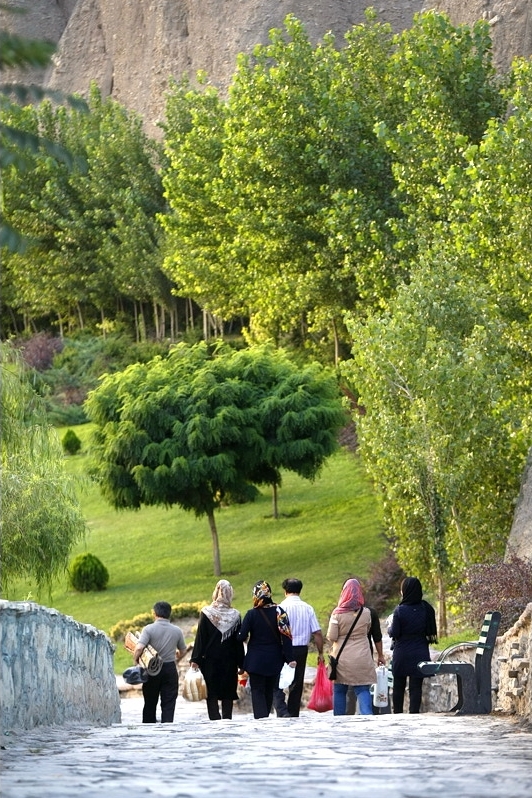
Javanmardan Garden – Tehran, Iran
Javanmardan Garden
Javanmardan-e-Iran garden with a total area of 150 hectares is one of the largest gardens located at the northwest area of the capital.
A total area of over 20 hectares is devoted to green space and the complex is powered by solar energy.
There are different special spaces: from a musical fountain with mechanical technologies and laser shows to the house of health and sports or the pond of birds.
The complex has also a 24km walking route, an 8km recreational carriage route and a 8.7km cycling route.
There is a children’s playground, soft games and a Highland Park for children under 14 years old. For youths over 14 years old: a 4600m2 training and professional skate park, a rappel complex , a playground with mechanical games, multifunctional playgrounds, a chess playing site, table tennis and table football playgrounds.
In the botanical garden and all over the garden, the plants and trees have been introduced with special plaques in order to increase the botanical knowledge of the visitors.
The Artists Garden has a traditional tea house and reception pavilion, cultural pavilion and available forestation green spaces.


Sources:
http://www.untoldiran.com/tehran/attractions/park/javanmardan%20park.shtml
http://en.irna.ir/PhotoDetail.aspx?NID=02733085
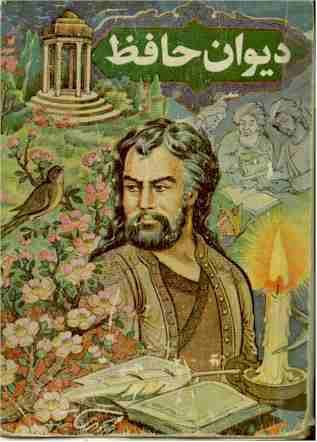
Iranian poet Hafez (1320-1389). He influenced centuries later Thoreau, Goethe, and Ralph Waldo Emerson among others. Emerson referred to him as “a poet’s poet”.
The works of the 14th Century poet Hafez can be found in almost every Iranian home – more than 600 years after his death, the writer still offers an insight into his country’s identity.
In Iran they say there are two books in every household – the Koran and Hafez. One is read, the other is not.
To understand this joke you need do no more than join the millions who regularly throng the tomb of Hafez, the 14th Century poet of Shiraz and Iran’s national hero, as I did one recent afternoon. The atmosphere was buzzing, happy and relaxed – Iran at its best.
Day and night the tomb, raised up on a beautifully decorated dais surrounded by its own fragrant rose gardens, water channels and orange trees, is crowded with devotees stroking Hafez’s alabaster sarcophagus, declaiming his verses, relishing his clever plays on words.
Hafez represents all the rich complexities of the Iranian identity. His brilliant use of metaphors in their native Farsi language unites them. […]
Thanks to Hafez, Shiraz is Iran’s most liberal city. […] the lively groups both young and old, men and women mix freely, laughing and chatting together. […]
As the sun disappears from the sky and the illuminations come on round the tomb, the atmosphere becomes ever more festive. People start singing and reciting their favourite poems. Children dangle their feet in the pools, giggling and soaking up their parents’ infectious high spirits.
The scene conceals the paradoxes of Iran but, thanks to the Mullah’s policy of education for all, there are some surprising changes afoot in Iranian society.
More women than men now graduate from university. The birth rate has dropped so dramatically, to one child per family, that the clerics have introduced financial incentives for couples to breed more. Most refuse, saying that it is still too expensive to have more than one child.
While the west remains obsessed with Iran’s nuclear enrichment it is an open secret that the well-connected clerics and businessmen enrich themselves through sanction busting. […]
Rubaiyee 21, by Hafez
Don’t make me fall in love with that face.
Don’t let the drunk the wine seller embrace.
Sufi, you know the pace of this path.
The lovers and drunks don’t disgrace.
Unfortunately for the mullahs the mystic poetry of Hafez, besides lauding the joys of love and wine, also targeted religious hypocrisy.
“Preachers who display their piety in prayer and pulpit,” he wrote 600 years ago, “behave differently when they’re alone. Why do those who demand repentance do so little of it?”
[…]
Read the complete article: BBC | News | The book in every Iranian home by Diana Darke
Here some beautiful pictures of this year’s rice harvest in the Iranian Province of Gilan. (Click on an image to start the photo gallery):


Source: IRNA | Photos

Photo Highlights of Iran: from Persian Architecture to Outstanding Hospitality
By Nellie Huang
I’ve just completed my Silk Road journey through Central Asia with Oasis Overland. Our trip started in Kyrgyzstan and we traveled through Kazakhstan, Uzbekistan, Turkmenistan, Iran and ended in Turkey. During this overland trip, we spent just under three weeks traversing through Iran, from the eastern corner to the western edge. It was the highlight of our trip and I hope these photos will show you what an amazing country it is.
Mention Iran and many think of burkha-clad women, burning flags and war. But these stereotypes can’t be further from the truth.
For those who are curious and open to new discoveries, Iran is packed full of surprises. It is a relatively safe country to visit and there’s so much to see and do in terms of historical and cultural sights: wander through the thousand-year-old ancient city of Persepolis, get lost in the mud-brick alleys of Yazd, contemplate in the beautiful turquoise-domed mosques that dot Esfahan, meet locals in the gardens surrounding Shiraz and pray with thousands of pilgrims at the country’s holiest city Mashad. The Islamic Republic has an extremely rich cultural heritage and its attractions can definitely rival those of world-famous tourist destinations. Best of all, you won’t find hordes of tourists here. It won’t take you long to question how such a charming country can be portrayed in such a negative light by the media.
Beyond the stereotypes is a country desperate to been seen for what it is, rather than what it is depicted to be. The Iranians are undoubtedly the friendliest people I’ve ever met in the world. Travelers will often find themselves getting invited to stranger’s homes, being treated to endless flow of tea from a shop vendor and getting a free ride from helpful drivers along the way. Locals tend to come up to you, ask where you’re from and genuinely want to get to know you. I’ve always agreed with the saying “it’s the people that makes a place”. It can’t be more true here in Iran where experiences with locals truly live the longest in your memory.
While traveling in Iran, the two topics that most find impossible to escape are religion and politics. These are complex issues that aren’t black or white, but as I discovered, if you’re respectful of their opinions, the Iranians will be more than happy to discuss them with you. It’s also important to note that the government’s views may not be in line with what average Iranians think. Regardless, if you do choose to travel here, a journey to Iran will certainly change your perspective of the country, and perhaps, the world.
Natural Landscapes and Ancient Cities
The abandoned mud brick city of Kharanaq: In the abandoned mud-brick city of Kharanaq, we got lost amidst the alleys and crumbling paths that overlooked this beautiful valley.

The rock cut temples of Naqsh-e-Rostam: Right at the outskirts of Shiraz, we stumbled upon the spectacular rock tomb of Naqsh-e-Rostam. The ragged cliffs that the tombs are carved into remind me of those in Wadi Rum, Jordan.

Persian Architecture
Amir Chakhmagh: Amir Chakhmagh in is an iconic landmark in Yazd and while it’s now nothing more than a gate (the rest of the building is gone), the unique architecture still makes it quite an impressive sight.

Royal Palace in Shiraz: The interior of Persian buildings is often just as impressive. This photo shows the interior of the Royal Palace in Shiraz, characterized by arches, spiraled columns and carvings.

Iranian Way of Life
Colorful spices in the bazaar of Shiraz: Bazaars are an important part of Iranian life. They trace their roots back to the Silk Road days and even until today, Iranians are still known to be excellent traders and businessmen. Spices are of course a common sight in the bazaars.

Friendly students in Tehran: The Iranians are exceptionally warm and friendly, with many people stopping to strike up a conversation with us seeing that we’re foreigners. I met this bunch of students at the Golestan Palace in Tehran and they were all excited to practice their English with me.

More pictures of Nelly’s Journey:
http://www.wildjunket.com/2014/10/22/photo-highlights-iran/
About Nellie Huang: Nellie is a professional travel writer and editor with an eye for adventure and a love for the unknown. Originally from Singapore, she pursued an Engineering degree and spent her days dreaming of travel – the day after graduation, she packed her bags and headed off to experience the world.
She then spent the next few years working as a teacher, translator and project analyst. With sheer will and hard work, she eventually found her way into travel writing and fulfilled her lifetime dream.
Her work has since been published in numerous publications including National Geographic Intelligent Travel, CNN, BBC Travel, Travel+Leisure Asia, Wend, Women Adventure Magazine, Food&Travel, International Lifestyle, TNT Magazine, and Explorer, amongst others. Click to see her portfolio.
She is also a contributing guidebook author of VIVA Travel Guide Guatemala (1st Edition) and writer for World Travel Guides.
Researchers in Sharif University of Technology have accelerated the treatment of cancer in children using humanoid social robots.
The research paper submitted to 6th International Conference on Social Robotics University of Technology, Sydney, titled ‘Impact of a Social Humanoid Robot as a Therapy Assistant in Children Cancer Treatment,’ by Sharif University of Technology researchers Minoo Alemi, Ali Meghdari, Ashkan Ghanbarzadeh, Leila Jafari Moghadam, Anooshe Ghanbarzadeh, was awarded the best paper title.
Children suffering from cancer are subjected to higher levels of anorexia, anger, depression, and anxiety during chemotherapeutic treatments. The problem is a real challenge to psychologists in dealing with these children.
[…]
Humanoid robots are the most prevalent social robots which helped researchers including applied linguists, psychologists, and robot experts to plan a six-month research project in two specialized hospitals of Pediatric Center and Mahak.
They found that using humanoid robots contributed significantly in decreased levels of stress, anger and increased appetite in cancerous children.
[…]
Read the complete article:
http://en.mehrnews.com/detail/News/104518 or in
http://www.payvand.com/news/14/nov/1015.html
The 6th Seasonal Flower and Plant Exhibition and Autumn Flower Festival took place in the Iranian capital, Tehran.
Domestic exhibitors from across the country have showcased cut flowers, houseplants, outdoor plants and horticultural equipment and related industries. Flower lovers have flocked to the exhibition to revive their spirits after a long day work. Vast arrays of flowers in different colors have turned the expo into a flamboyant painting, catching the eye of every visitor.
According to the organizer of the event, over 200 national flower and plant growers are taking part in the exhibition. Sunflowers, lilies, and lilacs were among the numerous flower species presented in the show. According to the head of municipality parks and green spaces, the exhibition is aimed to make people more familiar with different flowers, and to encourage them to take better care of Mother Nature. Diverse climatic conditions in Iran have turned the country into one the largest producers of flowers in the world. Iran ranks 17th in terms of the area under cultivation of ornamental flowers.

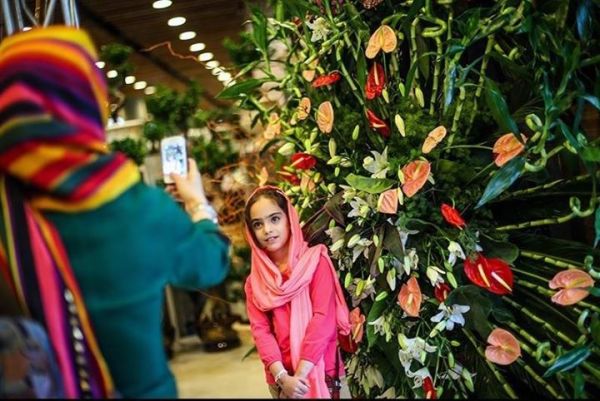
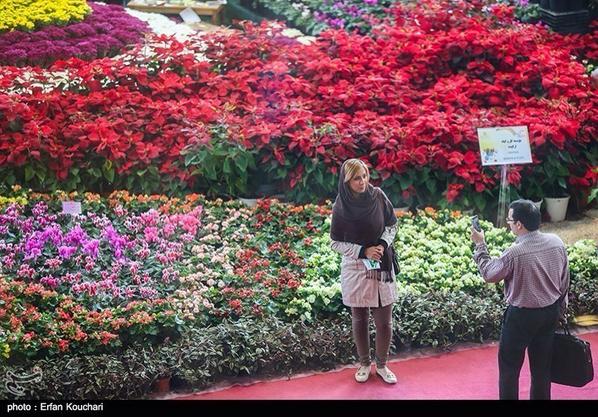
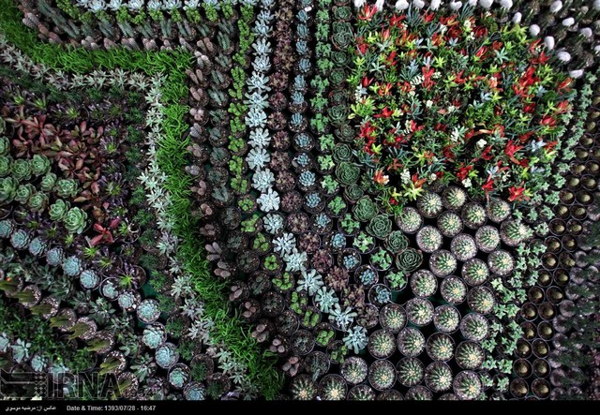
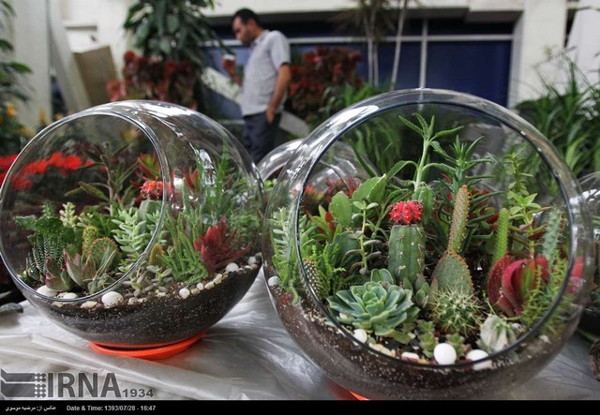
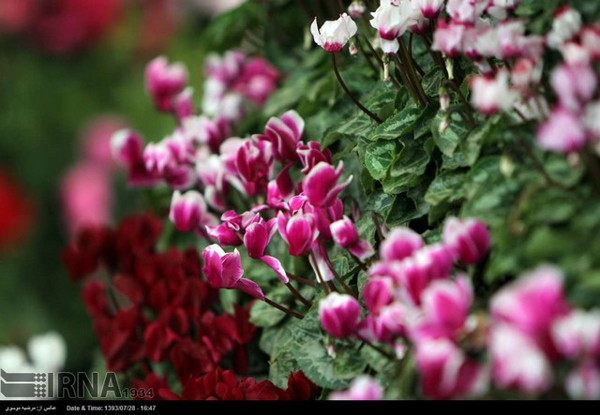

Sources:
PressTV – http://www.presstv.ir/detail/2014/10/24/383464/flower-show-plant/
Iran Front Page – http://iranfrontpage.com/news/society/environment/2014/10/tehran-plays-host-seasonal-flower-show/

Iran, Gonbad-e Sultanieh, a spectacular 14th century domed mausoleum
Probably if I were to sum up my experience in Iran in couple of words it would be exactly like this day has been, great people but a lot of traffic.
…
After a quick search and a phone call I’m able to finally find Hashem’s house and what follows is an evening filled with the incredible hospitality the Iranian people are known for. Dinner with the family and with the neighboring relatives, with traditional dishes and with the crusty rice which I haven’t encountered before or after Iran, and most of all with genuine curiosity about how life is in other countries and in other parts of the world.
Before travelling through Iran I read stories about the Iranian hospitality and after almost a month of travelling through Iran I can only confirm it. The Iranians are also over polite between themselves, and it’s customary to refuse something 3 times just to be sure that an offer is genuine, but somehow when foreigners are involved this is combined with a genuine curiosity and with trying to somehow mend the bad image Iran has at a personal level. I have been asked countless times by locals what I think about Iran and about Iranians after travelling through the country and just as many times I’ve answered that I think that the Iranians are more or less incredible. There have been countless situations when complete strangers spent time and/or money to help with whatever problems I was facing. This of course doesn’t mean that everything is rose and perfect but the percentage of people doing seems to be way higher than in other countries.
Temperature wise in April it really changed a lot and there was a cold spell which brought temperatures way bellow freezing in the area around Tabriz only to encounter summer like temperatures in the the desert after Teheran. On the other hand I wouldn’t chose another time to cross it as I’m not a big fan of the 40 degree temperatures which define the summer in Iran.
And now for some more practical informations
1. Visas (Iran and onward travel)
Probably the easiest place to obtain the Iranian Visa is Trabzon in Turkey, but for more information the caravanistan section is also very helpful. From Iran I picked up visas for Uzbekistan and for Turkmenistan (in that order). The Uzbek visa took 1 day with a letter of invitation and for the Turkem visa I applied for it in Teheran and I picked it up one week later in Mashad.
2. Money (what the hell is a tumen?)
Iran can be a confusing country and the subject of money is no exception. The first thing you become when you enter Iran is a millionaire as in 2014 the exchange rate was around one dollar to 30000 Rial. The best place to exchange money I think is at exchange booths at bazars, banks will exchange at the official rate which is considerably lower. But then when you start spending it you discover that almost everthing is handled in tumens, 1 tumen beeing equal to 10 Rial. It takes a bit to get used to it especially when you add in consideration the fact that all the prices are written using Arabic characters.
3. Prices.
When comming from Turkey Iran is a pretty cheap country and when you get over the fact that paper notes just keep flying away (keep in mind that they still have a 500 Rial note which is worth around 0.016 dollars) and when you consider that you do get invited a lot Iran has been quite cheap to travel through. Food seemed to be almost half of what it was in Turkey, with restaurant meals starting at 2-3 dollars and alternatively buying food for one day from a shop for a bit more than that. On the other hand there isn’t much diversity regarding things you buy in small shops. A night in a cheap guesthouse / hotel was a bit less than 10 dollars.
4. People.
As I’ve said before the people are incredibly warm, curios and welcoming and they would be the main reason why I would visit this country once again. Just as an example, after being stopped by the police for a checkup after leaving Hashem’s house he came to the police station with me and tried to help as a translator, spending quite a bit of time in the process. Somehow the Iranians didn’t seem to be as conservative as the Turkish people (at least in the eastern part of Turkey), and even though religion is important there is quite a bit of difference between the laws and what the people think about them.
5. Mobile and Internet.
Yes there is internet, yes all social media is officially banned but everyone still has access to them using vpn’s. While in Iran I bought a cheapish sim card for my phone from Hamrah-e-Avvall, after trying an Irancell sim card which didn’t work and which seemed to be restricted for phones manufactured for Iran. I haven’t tried internet cafes but when I had access to an internet connection is was generally pretty slow.
5. Places.
Iran’s culture and history is amazing and my only regret is that I didn’t have enough time to take a detour in the southern and central part of the country. But from the places which I did see one there were a couple of places and moments which became stuck in my mind. Riding my bicycle through the narrow alleyways of the Tabriz bazar after all the shops were closed was one of them, and the entire place seemed to be taken from the tales of the “One thousand and one nights”. The huge dome of Soltanyeh on a crisp spring day was another one, together with the old caravan-sarais from the barren desert east of Teheran.
And now in short, 2200 kilometers in photos.

Heading towards the stormy border of Iran.

The first morning in Iran.

Winter on the Iranian plateau

Endless wheat fields in the middle of the desert.

After 230 kilometers through the desert with almost no villages in between.

One of the restored caravan-serais.

Semna ale primaveri.

The pilgrimage complex from Mashad, one of Iran’s religious centers.
About the Author: http://www.diaconescuradu.com/en/about-me
Source: http://www.diaconescuradu.com/en/cycling-2000-kilometers-iran-practical-considerations


 Mohammad Amin Moradi, 19, who studies Mechanical Engineering, Seyyed Hamed Valizadeh, who is also 19 and studies Software Engineering at Sharif University of Technology, and Amir Ala Masoumi, who is 20 and is studying Architecture at Tehran University, have jointly developed the app.
They seem to enjoy plunging gamers into deep thought for hours. The game they have developed is simple and complicated at the same time. In this app an image appears on screen and the gamer must guess what word that image refers to in order to advance to the next round.
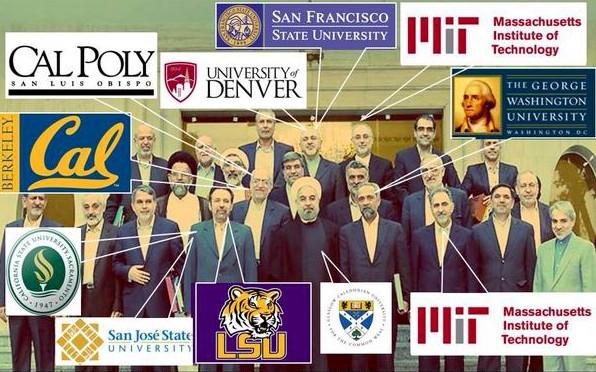
Iran-cabinet members with Ph.D. degrees from U.S. universities
“Take, for example, Rouhani’s chief of staff, Mohammad Nahavandian. He spent many years in the United States and has a Ph.D. in economics from George Washington University. Or Javad Zarif, the foreign affairs minister and chief negotiator in the recent nuclear deal between Iran and six global powers. He studied at the University of San Francisco and completed his doctorate at the University of Denver. For five years, he lived in New York and was Iran’s ambassador to the United Nations. Ali Akbar Salehi, head of Iran’s Atomic Energy Organization, has a Ph.D. in nuclear engineering from MIT. Mahmoud Vaezi, the communication minister, studied electrical engineering at Sacramento and San Jose State Universities and was enrolled in the Ph.D. program at Louisiana State University (he ultimately earned a doctorate in international relations at Warsaw University). Other cabinet members have advanced degrees from universities in Europe and Iran. Abbas Ahmad Akhoundi, the transportation minister, has a Ph.D. from the University of London, while President Rouhani got his from Glasgow Caledonian University in Scotland. The new government in Tehran, in other words, might well be one of the most technocratic in the world.”
Source: The Atlantic | The Case for Giving Iran’s Scholar-Diplomats a Chance
Other surprising articles regarding Iran and the US: The other Iran | Tag | USA


 The other Iran