Category Archives: Culture

Iranian director Bahram Beyzaie to present “Ardaviraf’s Report” at Stanford University

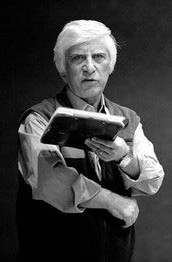
Bahram Beyzaie - Film Director, Screenwriter, Playwright and ResearcherProminent Iranian playwright and director Bahram Beyzaie will stage reading performances of his latest play “Ardaviraf’s Report” at Stanford University on Jan 24 and 25, 2015 at 04:30pm.

The play is Beyzaie’s theatrical rendition of an ancient Zoroastrian text that chronicles the journey of pious Ardaviraf to the other world where he travels through paradise, purgatory and the inferno. Ardaviraf meets many of the mythic and historic figures of Iran on his journey

The play is based on “The Book of Arda Viraf”, a Zoroastrian religious text from the Sassanid era in the Middle Persian language. It is considered an early precursor to Dante’s “Divine Comedy”.

“Ardaviraf’s Report” will be performed at the Cubberley Auditorium of the University in Persian language.

Beyzaie previously performed a shadow play performance of “Jana and Baladoor” at Stanford University in June 2012.

“When We Are All Sleeping” was the last film Beyzaie directed in Iran in 2009. A few years after, he left the country to pursue an educational career at Stanford University as a visiting professor of Persian studies in the United States of America.

Considered as one of the most intellectual auteurs in Iranian cinema, Beyzaie has written and directed several films including “Killing Mad Dogs”, “Travelers”, “Bashu, the Little Stranger”, “The Journey” and “The Downpour”.

Here you can read a more detailed biography of Bahram Beyzaie:
http://theotheriran.com/2014/11/28/bahram-beyzaie-iranian-film-director-playwright-and-researcher

Source:
Tehran Times through Payvand Iran News

Photo Gallery: Saffron Farms in Iran

Four corners of Iran, home to saffron

Northeastern provinces of Iran are known for being saffron producers in Iran while the most expensive spice of the world is planted in four corners of the country, wherever the climate agrees with its requirements. Saffron requires little water and saffron plant blossoms several times a year.

The product is used for both treatment and nutrition. Derived from the dried stigmas of the purple saffron crocus, it takes anything from 70.000 to 250.000 flowers to make one pound of saffron. Moreover, the flowers have to be individually hand-picked in the autumn when fully open. Fortunately, only a little needs to be added to a dish to lend it color and aroma.

Iran now accounts for approximately 90% of the world production of saffron followed by Spain, Egypt, Kashmir, Morocco and Turkey.

Sources:
ISNA
Mehr News Agency
Mehr News Agency Photos

International Conference on Shakespeare Studies held in Tehran, Iran

Prof. Stephen Greenblatt: “I never thought that Shakespeare would become my magic carpet to the land of Persia”

The First International Conference on Shakespeare Studies was held on November 26 to 27, 2014 in Iran.

The conference, organized by the Faculty of Foreign Languages and Literatures from the University of Tehran, explored themes such as ‘Shakespeare and Political Discourse’, ‘Shakespeare under the Iranian Eye’, ‘Shakespeare and Adaptation’, ‘Radical Shakespeare’, ‘Shakespeare and Mysticism’ and ‘Shakespeare and Popular Culture’.

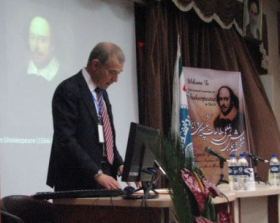
Tehran, Iran - University of Tehran, Conference on Shakespeare Studies 2014 - 00Professor Stephen Greenblatt took part in the conference and delivered a keynote speak focused on Shakespeare and the human condition on November 26. He is one of the world’s most celebrated Shakespearean scholars and best known for Shakespeare biography titled Will in the World: How Shakespeare became Shakespeare, which was on the New York Times Best Seller List for nine weeks. In 2012 he won the Pulitzer Prize for his book, The Swerve: How the World Became Modern.

“I never thought that Shakespeare would become my magic carpet to the land of Persia” said Harvard scholar Prof. Greenblatt when he expressed his enthusiasm for Iran and Persian cultural and historical heritage during the conference.

Prof. Mark Burnett from Queen’s University in Belfast, was another keynote speaker whose discussion focused on cinematic representations of Shakespeare in Iran. He talked about an Iranian adaptation of Shakespeare’s Hamlet entitled Doubt (Tardid), a 2009 Iranian Crystal Simorgh-winning film directed by Varuzh Karim Masihi.

Iranian scholar Hossein Elahi Ghomshei, author and lecturer on literature, art and mysticism, also spoke at the conference.

The event was organized by Dr. Ismail Salami and Dr. Maryam Soltan Beyad, professors at the University of Tehran.

Source: Iran Front Page

Iran-USA Simultaneous Art Installation: A Portal Between Tehran and New York City

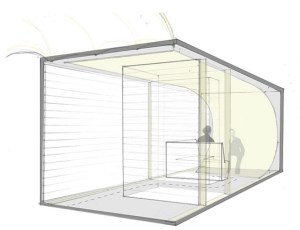
Shared Studios is launching the first public installation of Amar Bakshi’s Shared Studio project “A Portal BetweenTehran & NYC: Open for Conversation” by conversing through a live audio-visual connection with an individual in Tehran.

Portals are shipping containers equipped with specialized communications technology. Individuals enter one at a time and converse with a person in the other location as if they were in the same room. Simultaneous text translation is available. This first pairing unites the Lu Magnus Gallery in NYC and the M-40 Studio in Tehran.

OPEN FOR CONVERSATION
DECEMBER 5 – 19, 2014
Special Open Hours: 7:30A – 1:30P, Mon – Sun
LU MAGNUS GALLERY and M-40 STUDIO TEHRAN

Each individual is invited to enter a Portal and converse with whoever happens to be in the Tehran location, or with someone in particular upon advance request. To schedule your visit, please visit SHAREDSTUDIOS.SCHEDULISTA.COM

Powerful new technologies allow us to connect across boundaries as never before; yet we too often use them to cocoon ourselves in our own cultural, political, or ideological communities. Portals puncture hardened stereotypes of the other by facilitating one-on-one encounters. They serve as a catalyst for conversation between communities that would not typically engage with one another due to language barriers, technological limitations and hardened stereotypes of the other meeting people whom they only hear about unidirectionally in the news.

Visit the gallery for special Q&A sessions with the artist and the following New York guests:

Amy Chua and Jed Rubenfeld (Fri Dec 5, 1:00pm-2:00pm)
Yale Law professors and bestselling authors Amy Chua and Jed Rubenfeld. Chua’s books include Battle Hymn of the Tiger Mother and World on Fire. Rubenfeld’s books include The Death Instinct and Freedom and Time.

Jonah Bokaer & James Koroni (Sat Dec 6, 1:30pm-2:30pm)
Jonah & James perform a curated dance live in the New York space, streamed live to Tehran.

Fareed Zakaria (Mon Dec 8, 10:30am-11:30am)
CNN host, Atlantic Monthly writer and bestselling author of The Post-American World and The Future of Freedom

Morgan Spurlock (Wed Dec 10, 10:00am-11:00am)
Documentary filmmaker whose titles include Supersize Me and The Greatest Movie Ever Sold.

Tania Bruguera (Thu Dec 11, 1:30pm-2:30pm)
Tania Bruguera is a Cuban installation and performance artist.

Rob Storr (Fri Dec 12, 9:00am-10:30am)
Robert Storr is the Dean of the Yale School of Art. Formerly, he was Senior Curator at the Museum of Modern Art.

Mohsen Namjoo (Sat Dec 13, 1:30pm-2:30pm)
Mohsen Namjoo is an Iranian artist, songwriter, singer, music scholar and setar (traditional Persian lute) player based in California.

Nicky Nodjoumi (Sun Dec 14 – Dec 15, 11:30pm)
Nicky Nodjoumi’s works are conceived of as theatrical stages, where compositions of figures both serious and ridiculous, in the words of Phong Bui, “house meanings without irony, narratives without stories, humor without morality, above all creating a space that heightens the awareness of old and new history.”

Keller Easterling (Wed Dec 17, 9:00am-10:15am)
Architect, professor and author of books including Extrastatecraft: the Power of Infrastructure Space and Enduring Innocence: Global Architecture and Its Political Masquerades.

Sources: Shared Studios, Lu Magnus Gallery, Spacesmith
 

Theater Performance: “London, Tehran, Rome, Amsterdam” opened in Tehran, Iran

“London, Tehran, Rome, Amsterdam, Reconsider Your Image Of Me” will play from November 16 to December 12 of 2014, every night (apart from Saturdays), at 21:00 o’clock in the Hafez Hall, Tehran.

This performance, a co-production between the Virgule Performing Arts Company (Iran) and STET The English Theatre (Netherlands) is supported by the Embassy of the Kingdom of the Netherlands. The opening ceremony was held on Sunday, Nov. 16 with the Dutch ambassador to Tehran attending the ceremony.
The performance examines a current topic between Iran and the West, namely what are the images that we have of ‘the Other’ and to what extent fears, fantasies and imaginations are based on truth. By initiating a direct meeting with the Other and listening to each other’s stories, this group aims to create new images, based on the stories of the people who wouldn’t usually make the headlines.

The piece is a multi-media, highly physical, speech performance. It includes the actors’ own stories, dialogue between the actors, video installations with short documentaries about daily life in the countries of origin of the actors and video collages of cultural milestones from these cultures. The physical form of the piece produces a third language.

The project has brought together an international cast to create this piece during a 2 month rehearsal period in Tehran. The company includes Dutch actress Marene van Holk, Italian actress Marta Paganelli, British actress Amy Strange, Iranian actresses Melodie Aramnia and Neda Jebreilli and Iranian actor Meysam Mirzaei, and the piece has been conceived and directed by Arvand Dashtaray.

The production will be performed in the Netherlands in the autumn of 2015.

Sources
Embassy of the Kingdom of the Netherlands in the Islamic Republic of Iran
Mehr News Agency

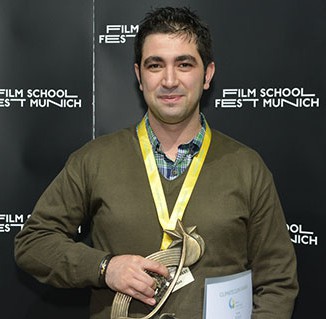
Iranian Director Amin Rahbar receives the “Climate Clips Award” at the 2014 International Film School Fest Munich

Rahbar, Amin - Iranian Film Director, Azad University of Central Tehran - Scale (Tarazoo)Amin Rahbar’s animation Scale scooped the prestigious Climate Clips Award at the 2014 International Festival of Munich Film Schools, running from November 16-22 in Germany. […]

“Some 42 films from 22 countries took part in this festival, and my production with an environmental theme was selected among the top three and ultimately managed to win the best film award” said Amin Rahbar to Mehr News.

“Scale is 2-minute long and produced with cutout animation technique. In this technique, flat characters and backgrounds are cut from materials such as paper, or if on a computer, with scanned images” explained Rahbar.

Climate-Clips-Jury (Brigitte Bruns, Veronika Nagelschneider and Beatrice Scola): Amin Rahbar’s enchanting animated film SCALE (in Farsi TARAZOO), shows us the dramatic changes industrialization has wrought upon our planet. Our transformation from an agricultural society to today’s skyscraper-studded megacities is brought to life by the sophisticated and original use of an old and relatively simple technique: paper cutouts. In just one and a half minutes, the clip illustrates how drastically our environment has changed, the severe damage that has been done to it and the current consequences such as climate change. The jury congratulates Amin Rahbar on the successful artistic and technical realization of his film.

Winner: Scale | Tarazoo
The story of human life from the beginning to the beginning…
by Amin Rahbar from Azad University of Central Tehran, Iran

Scale has been previously featured and awarded in other international festivals including Hamburg Festival in Germany, con i minuti contati Festival in Italy, and SHNIT Festival in Switzerland. It has also won the Best Film Award at Iran’s Short Film Festival for Children.

The International Festival of Film Schools established in 1981 is now one of the most important festivals for young filmmakers in the world. About 60 films are presented at the festival annually, and each year approximately 100 foreign students and professors have the opportunity to meet, enter into discussions and share their experiences with each other.

Sources: Film School Fest Munich, Mehr News Agency

Haft Negah art exhibition, held in Tehran, closes tomorrow (Nov 28)

The Niavaran Culture Center in Tehran is hosting the 7th annual edition of Iran’s Seven Views (Haft Negah), an art expo coordinated since 2006 by seven major art galleries.

This year, fourteen galleries  take part in the expo. The Aria, Elaheh, Dey, Golestan, Haft Samar, Valli, Mah-e Mehr, The Aran, Etemad, Hanna, Dastaan Basement, Seen, Seyhun, and Tarrahan-e Azad galleries will all participate in this years celebrations taking place from November 14 to 28.

The exhibition will showcase paintings, sculptures, and calligraphy from 350 artists featuring 400 works that respond to this year’s exhibition motto, “Every Iranian Home, One Artwork”.

Some of the well-known artists showcasing their artworks this year include Sohrab Sepehri, Mohammad Ehsaii, Aidin Aghdashlu, Parviz Tanavoli, Iran Darrudi, Farideh Lashaii and Parvaneh Etemadi.

Make sure not to miss this one of a kind artistic event!

Sources: Tara Gallery, Mehr News Agency

Iranian author Mahmud Dowlatabadi receives France’s Chevalier of Legion of Honor

Iranian author Mahmud Dowlatabadi, mostly famous for his novel “Kalidar”, received the Chevalier of the Legion of Honor during a ceremony held in Tehran on Sunday evening. The medal, which is the highest decoration awarded by the French government, was presented to the author by French Ambassador Bruno Foucher during a ceremony at his residence in Tehran.

The ambassador gave a brief speech about the life and works of Dowlatabadi. He also praised his artistic career in theater and storytelling.

Wearing the medal, Dowlatabadi talked about French literature and civilization in his short speech, and pointed to the issues of writing and the pains of writing.

Iranian author Mahmud Dowlatabadi (R) stands beside French Ambassador Bruno Foucher before receiving the Chevalier of the Legion of Honor at the ambassador’s residence in Tehran on November 16, 2014.

A number of scholars and literati including Dariush Shayegan, Kambiz Dermabakhsh, Omid Rohani, Lili Golestan, Javad Mojabi and Hassan Kianian attended the ceremony.

Born in 1940, short-story writer and novelist Dowlatabadi was the most prominent Iranian novelist of the 1980s. Self-educated and forced to work from childhood, he spent part of his younger adult years as a stage actor in Tehran.

“The Colonel”, “Kalidar”, “Desert Strata”, “The Trip”, “The Legend of Baba Sobhan”, “The Cowherd”, “Aqil”, “Man” and “Missing Soluch” are among Dowlatabadi’s credits.

http://www.payvand.com/news/14/nov/1110.html

Iran’s Book and Book Reading Week: Museums in Tehran host events for children to encourage book reading

kids-children-in-tehran-museum

Museums in Tehran host events for children to encourage book reading

The Cultural Heritage and Tourism Research Center is to implement a “Seven Museums, Seven Tales” plan as of Saturday [November 15] to mark the national Book and Book Reading Week.

The plan which is to be carried out in seven museums in the capital aims to promote book reading and introduce [Iran’s] legends and myths as a symbol of oral and intangible heritage.

It also intends to create more attractiveness in museums and revive the art of storytelling.

Creative instructors of storytelling and members of Children’s Book Council will come together in seven museums, namely Iran’s Post Museum, National Museum of Iran, Golestan Palace Museum, Carpet Museum of Iran, Tehran Peace Museum, Moghadam Museum and Bagh-e-Negarestan [Complex] to host Iranian children and their parents as well as other guests between November 15 and 21.

The museums will open their doors to visitors at 11:00 a.m. local time.

Source: Iran Front Page

Sistanagila – The Rare Place Where Israelis And Iranians Play Together

by Soraya Sarhaddi Nelson for npr

What do you get when three Israelis, two Iranians and a German walk into a room? A Berlin-based world music ensemble known as Sistanagila, named after an Iranian province — Sistan and Baluchestan — and the popular Jewish folk song "Hava Nagila."

What do you get when three Israelis, two Iranians and a German walk into a room? A Berlin-based world music ensemble known as Sistanagila, named after an Iranian province — Sistan and Baluchestan — and the popular Jewish folk song “Hava Nagila.” (courtesy of Sistanagila)

Like many Iranians, Babak Shafian cringed over Mahmoud Ahmadinejad, his country’s former president, rhetoric about Israel. The 33-year-old computer scientist says the diatribes ignored thousands of years of shared history between Jews and Persians.

“The main thing which annoyed me really is that Ahmadinejad was presented in the Western media as the main voice of Iranian society,” says Shafian, who moved to Germany 14 years ago.

He decided the best antidote would be a musical collaboration with the alleged enemy. The problem, however, is that he didn’t know how to play a musical instrument. So three years ago, Shafian talked to friends and scoured the Internet to find Israelis and Iranians living in Berlin who did.

Yuval Halpern, a 34-year-old lsraeli composer there, recalls getting Shafian’s invitation through couchsurfing.org, a website that connects travelers with locals offering a place to crash.

“At first I thought he’s a terrorist wanting to kidnap me, as most Israelis think when they think of Iran,” Halpern says. “But then I thought I would just meet him and see how it is because I thought the idea was a nice one, and that is how it started.”

Shafian, his German wife, two other Israelis and two Iranians now form the band Sistanagila, which plays what members describe as world music with improvisations and a folksy flair. The name, like the group, is a mix of Israel and Iran, combining the names of an Iranian province and a popular Jewish folk song played at bar mitzvahs, bat mitzvahs and weddings.

Source: NPR

Series: Tehran’s parks and gardens – Javanmardan Garden

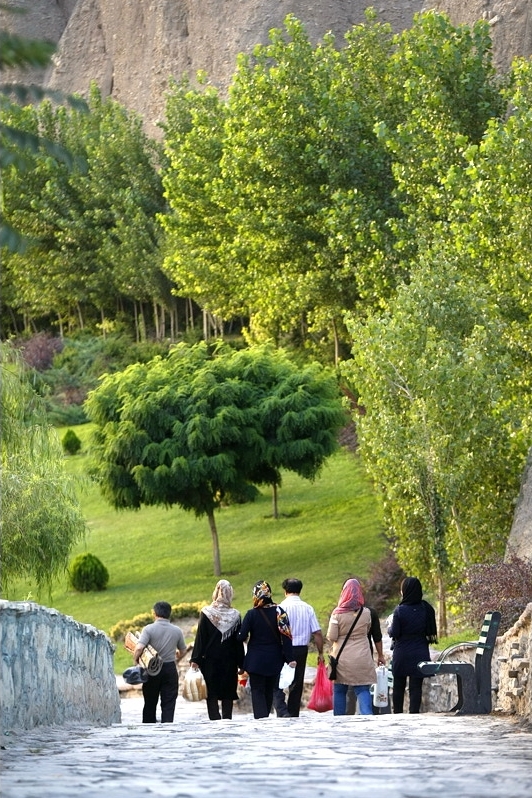
Tehran, Iran - Tehran City - Javanmardan Garden 02

Javanmardan Garden – Tehran, Iran

Javanmardan Garden

Javanmardan-e-Iran garden with a total area of 150 hectares is one of the largest gardens located at the northwest area of the capital.

A total area of over 20 hectares is devoted to green space and the complex is powered by solar energy.

There are different special spaces: from a musical fountain with mechanical technologies and laser shows to the house of health and sports or the pond of birds.

The complex has also a 24km walking route, an 8km recreational carriage route and a 8.7km cycling route.

There is a children’s playground, soft games and a Highland Park for children under 14 years old. For youths over 14 years old: a 4600m2 training and professional skate park, a rappel complex , a playground with mechanical games, multifunctional playgrounds, a chess playing site, table tennis and table football playgrounds.

In the botanical garden and all over the garden, the plants and trees have been introduced with special plaques in order to increase the botanical knowledge of the visitors.

The Artists Garden has a traditional tea house and reception pavilion, cultural pavilion and available forestation green spaces.

Sources:
http://www.untoldiran.com/tehran/attractions/park/javanmardan%20park.shtml
http://en.irna.ir/PhotoDetail.aspx?NID=02733085

BBC: The book in every Iranian home

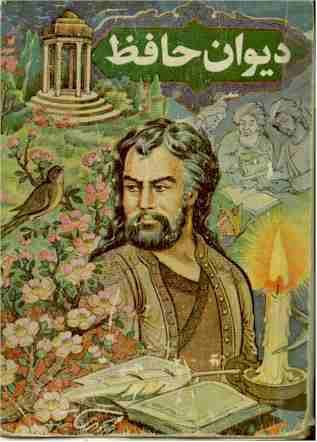
Iranian poet Hafez (1320-1389). He influenced centuries later Thoreau, Goethe, and Ralph Waldo Emerson among others. Emerson referred to him as

Iranian poet Hafez (1320-1389). He influenced centuries later Thoreau, Goethe, and Ralph Waldo Emerson among others. Emerson referred to him as “a poet’s poet”.

The works of the 14th Century poet Hafez can be found in almost every Iranian home – more than 600 years after his death, the writer still offers an insight into his country’s identity.

In Iran they say there are two books in every household – the Koran and Hafez. One is read, the other is not.

To understand this joke you need do no more than join the millions who regularly throng the tomb of Hafez, the 14th Century poet of Shiraz and Iran’s national hero, as I did one recent afternoon. The atmosphere was buzzing, happy and relaxed – Iran at its best.

Day and night the tomb, raised up on a beautifully decorated dais surrounded by its own fragrant rose gardens, water channels and orange trees, is crowded with devotees stroking Hafez’s alabaster sarcophagus, declaiming his verses, relishing his clever plays on words.

Hafez represents all the rich complexities of the Iranian identity. His brilliant use of metaphors in their native Farsi language unites them. […]

Thanks to Hafez, Shiraz is Iran’s most liberal city. […] the lively groups both young and old, men and women mix freely, laughing and chatting together. […]

As the sun disappears from the sky and the illuminations come on round the tomb, the atmosphere becomes ever more festive. People start singing and reciting their favourite poems. Children dangle their feet in the pools, giggling and soaking up their parents’ infectious high spirits.

The scene conceals the paradoxes of Iran but, thanks to the Mullah’s policy of education for all, there are some surprising changes afoot in Iranian society.

More women than men now graduate from university. The birth rate has dropped so dramatically, to one child per family, that the clerics have introduced financial incentives for couples to breed more. Most refuse, saying that it is still too expensive to have more than one child.

While the west remains obsessed with Iran’s nuclear enrichment it is an open secret that the well-connected clerics and businessmen enrich themselves through sanction busting. […]

Rubaiyee 21, by Hafez
Don’t make me fall in love with that face.
Don’t let the drunk the wine seller embrace.
Sufi, you know the pace of this path.
The lovers and drunks don’t disgrace.

Unfortunately for the mullahs the mystic poetry of Hafez, besides lauding the joys of love and wine, also targeted religious hypocrisy.

“Preachers who display their piety in prayer and pulpit,” he wrote 600 years ago, “behave differently when they’re alone. Why do those who demand repentance do so little of it?”

[…]

Read the complete article: BBC | News | The book in every Iranian home by Diana Darke

Iran’s Sa’adi and Spain’s Cervantes were honored in Madrid

Sa’adi-Cervantes

Spain hosted a joint literary conference on the life and works of Persian poet Sa’adi and Spanish classic author Miguel de Cervantes.

After a commemorative ceremony in Iran in April to pay tribute to Iranian and Spanish literary giants, they were remembered in Madrid in late October.

The Complutense University of Madrid (UCM) hosted Sa’adi and Cervantes Conference on October 28-29 with Iranian and Spanish academicians attending.

Ali Asghar Mohammadkhani, the manager of Shahre Ketab (City of Book) International and Cultural Affairs, interviewed before the conference started, said, “Shahre Ketab hosted the ceremony to honor Sa’adi and Cervantes on April 21-22 on the occasion of Sa’adi National Day, and we planned a Madrid conference as well to be held in late October in Complutense University of Madrid (UCM). The conference is a concerted effort by Shahre Ketab International and Cultural center, the Center for Sa’adi Studies, Iran’s cultural attaché in Madrid, and UCM, where 11 literary historians and critics will deliver lectures on Sa’adi and Cervantes.”

“Iranian delegation will be in Cervantes’ birthplace in Alcala at the invitation of the University of Alcala, and will have meetings with Spain’s contemporary poets and literary figures. The delegation will also meet Persian literature professors in Madrid and Barcelona Universities,” he concluded.

Source
Iran Front Page: http://iranfrontpage.com/news/cultures/literatures/2014/10/saadi-cervantes-honored-madrid/

Austria honored Iranian film director Abbas Kiarostami with Decoration for Science and Art

Austria awarded Iranian director Abbas Kiarostami the Austrian Decoration for Science and Art. The medal was established in 1960 to honor international figures for their outstanding achievements in the fields of science and arts.

During a ceremony held in Vienna Iranian director Kiarostami, molecular biologist Barbara Hohn and mathematician Bruno Buchberger received the Cross of Honor for Science and Art from Austria’s President, Heinz Fischer. Austrian poet Friederike Mayröcker received a Decoration of Honor for Services to the Republic of Austria.

Abbas Kiarostami was born in 1940 in Tehran and is one of the most important and famous Iranian film directors. The filmmaker was awarded in 1984 with the Golden Leopard in Locarno for “Where is the house of my friend?”. In 1997 he received the Palme d’Or in Cannes for “Taste of Cherry”, and the 1999 Grand Jury Prize in Venice for “The Wind Will Carry Us”. He is also a photographer, poet, painter and has staged operas. He has been decorated with several state medals, including France’s Chevalier of the Legion of Honor.

Sources: Tehran Times, bundespraesident.at (in German)

1001 Libraries to see before you die!

The International Federation of Library Associations (IFLA) Public Libraries Section together with the IFLA Library Buildings and Equipment Section launched in Lyon at the IFLA World Library and Information Congress a project called 1001 libraries to see before you die.

This online initiative aims to bring together best practice examples of public library buildings and spaces from around the world. The libraries can be nominated for different criteria – the library building, the location, the innovative programs or the community engagement.

Currently the list is holding two Iranian libraries: the Astan Quds Razavi Library in Mashhad and the Bazar Library in Tehran.

Mashhad’s Astan Quds Razavi Library has been selected by the Open Education Database (OEDB) among the 20 Libraries that have changed the world in 2012 and three of the collections preserved in the central library are registered in the list of the UNESCO World Cultural Heritage List.

Tehran’s Bazar Library was chosen for its historical building which belonged to a relative of Naseruddin Shah dating back to 150 years.

More information: https://1001libraries.wordpress.com/category/iran/

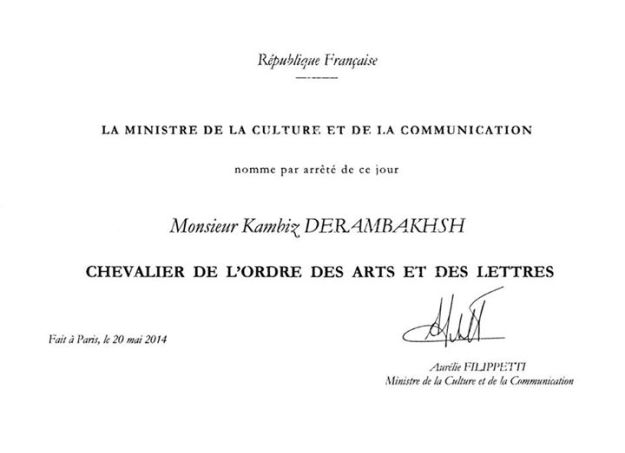
Kambiz Derambakhsh is Knight of the Order of Arts and Letters

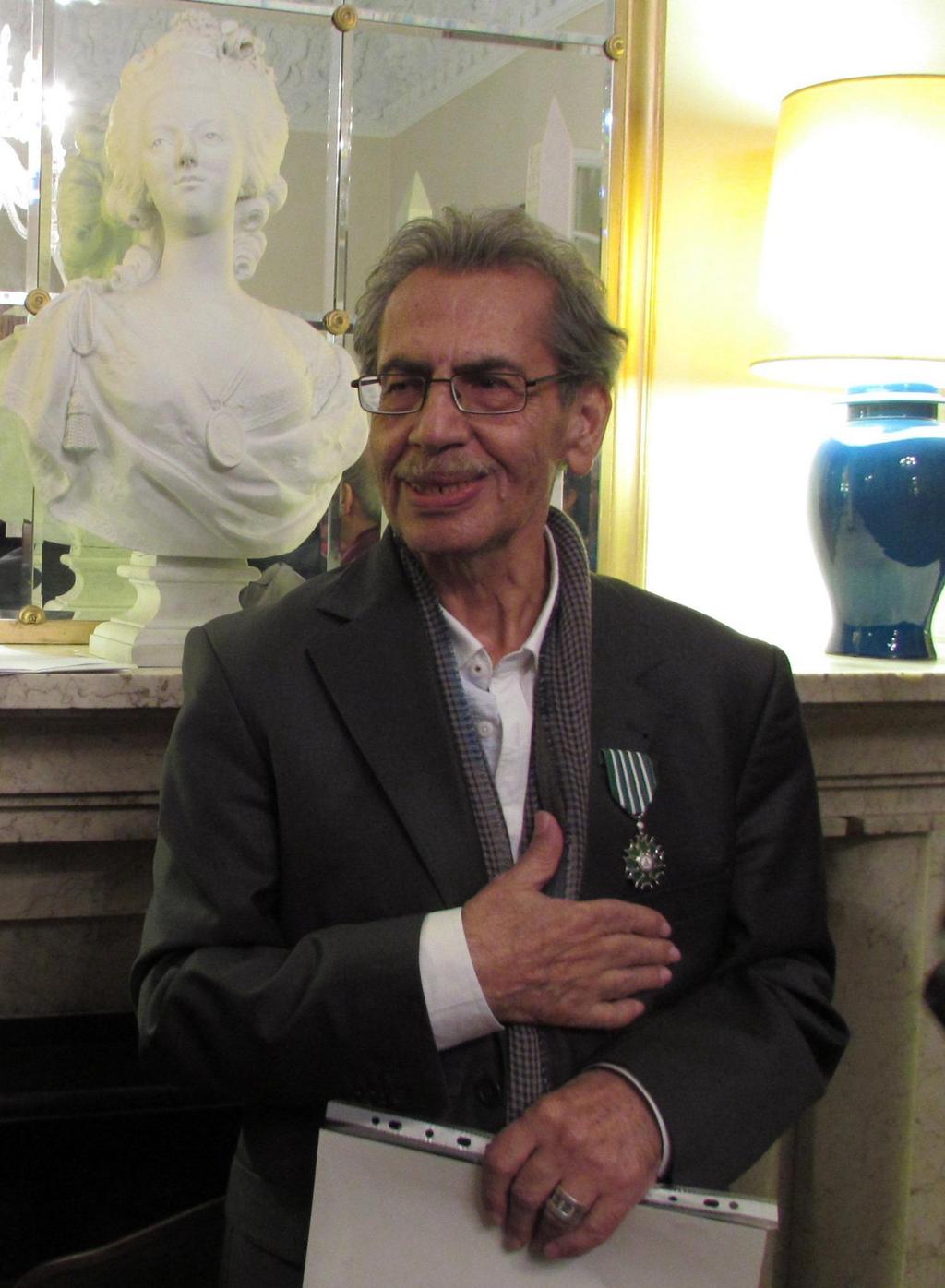
Kambiz Derambakhsh at the French Embassy in Tehran on Sunday, 26th of October 2014

Kambiz Derambakhsh at the French Embassy in Tehran on Sunday, 26th of October 2014

Iranian cartoonist Kambiz Derambakhsh received the Chevalier of the Legion of Honor Medal during a ceremony held at the Embassy of France in Tehran on Sunday evening.

The medal, which is the highest decoration awarded by the French government, was presented to Derambakhsh by French Ambassador Bruno Foucher during a ceremony at his residence in Tehran.

Derambakhsh is the first Iranian visual artist to have received the award, the Persian service of Honaronline, a Persian news website, announced on Monday.

Iranian scientist Mahmoud Hessaby, filmmaker Abbas Kiarostami, stage director Pari Saberi, mythologist Jalal Sattari, poet Mohammad Sepanlu, vocalists Shahram Nazeri and Mohammareza Shajarian, and actress Leila Hatami previously received the honor.

Derambakhsh, 72, has previously held many exhibits across the world and his works are on display in many museums, including the Tehran Museum of Contemporary Art, Istanbul’s Museum of Cartoon and Comic, and the Cartoonmuseum Basel in Switzerland.

More about Kambiz Derambakhsh: Iranian Roots | Kambiz Derambakhsh

Kambiz Derambakhsh - Cartoonist 03

Sources: Tehran Times, twitter.com | @FranceenIran, Facebook | Kambiz Derambakhsh

Mozart Medal holder Shajarian and Shahnaz ensemble to perform in London’s Appolo Hammersmith on October 26.

Mohammad Reza Shajarian

The world-renowned musician ensemble, Shahnaz, started its music tour at the Malmo Arena in Sweden on September 27.

Composer and tar virtuoso Majid Derakhshani, kamancheh virtuoso Saeed Farajpouri and several other musicians are accompanying Shajarian on this tour.

Shajarian is known as Iran’s contemporary traditional music legendary who has invented new string instruments dubbed Bam Sorahi, Saghar and Kereshmeh, designed for traditional Persian music.

The maestro, Shajarian, was honored with UNESCO’s Mozart Medal in 2006 and the 1999 prestigious Golden Picasso Medal.

http://iranfrontpage.com/news/cultures/music/2014/10/shahnaz-music-ensemble-go-stage-germany/

Art for Humanity WFP Exhibition in Iran

Art for Humanity

The UN World Food Programme (WFP) exhibition features 130 works by 100 prominent Iranian artists in painting and other fields of visual arts.

“This move can serve as a model for the artists in the other countries,” said UN representative, Garry Lewis, during the opening ceremony of the exhibition.

http://iranfrontpage.com/news/cultures/arts/2014/10/art-humanity-wfp-exhibition-opens-tehran/

Speaking at the ceremony, director of the center Abbas Sajjadi hoped to celebrate the end of hunger one day. “In our culture, helping others is a precious value that we have inherited.”

“The project began with 33 artists last year, but we are proud to have 100 artists this year,” she said, adding that the artworks have been priced by the artists themselves.

Gary Lewis also said that many steps need to be taken to eradicate hunger in the world. Sufficient food is being produced in the world, however there is still hunger not only in the poor countries but in the rich and developed ones, he said.

He added all the money raised in this exhibit will provide food for different individuals including Afghan nationals who are being supported by the country of Iran.

He thanked all the Iranian artists who have displayed their heart and compassion in their works.

Hossein Mahjubi, Jalal Shabahangi, Reza Bangiz, Mostafa Asadollahi, Mohammad Farnud and Sorush Sehhat attended the opening ceremony.

Nahid Aryan, Shima Esfandiari, Simin Ekrami, Minu Emami, Bahram Dabiri, Hamed Rashtian, Mohamamd Salahshur, Asal Fallah and Ario Farzi are among the participating artists in the exhibit.

Source: http://www.payvand.com/news/14/oct/1106.html

Iranian children to draw paintings for the disabled

Iranian Children paint for disabled

Iran Paralympics Committee has invited Iranian children to take part in a national drawing contest dubbed “Disability is not Limitation”.

Iran Sports Federation for the Disabled holds the drawing contest “Disability is not Limitation” for children of age 4-12.

The contest is designed to mark Paralympics Week and select works will be awarded on Islamic holiday Eid Ghadeer on October 13.

The paintings should be about the disability and overcoming limitations.

Source: http://iranfrontpage.com/news/cultures/arts/2014/09/iranian-children-draw-paintings-disabled/

Iran hosts retrospective on Christian Iranian composer Loris Tjeknavorian’s music arts

A number of Iran’s leading music artists and cineastes attended the opening gala held on Oct. 9. […] Tjeknavorian was also honored with the lifetime achievement award during the gala.

Tjeknavorian has made nearly 100 recordings and written more than 75 compositions, including symphonies, operas, requiems, chamber music, ballet music, concertos, choral works and an oratorio.

He has conducted international orchestras throughout the world in numerous countries including Austria, the UK, the US, Canada, Hungary, Finland, the former USSR, Armenia, Thailand, Hong Kong, South Africa, and Denmark. […] The literary opera, Rostam and Sohrab and the requiem Departed and the Survived are among his best-known works.

Tjeknavorian has received numerous international awards such as Austria’s Cross of Honor for Science and Art First Class.

More info: http://iranianroots.com/2014/06/07/christian-composer-and-coductor-loris-tjeknavorian-one-of-the-most-celebrated-cultural-figures-in-iran/

Video: Face to Face – Iran music maestro Loris Tjeknavorian talks to PressTV (1 and 2)

https://www.youtube.com/watch?v=rSfCha9DR7k

https://www.youtube.com/watch?v=RCt2x6mYeO8

Source: http://www.payvand.com/news/14/oct/1069.html

Iranian artists contribute to the efforts of the United Nations food agency to take on global hunger.

WFP-LOGO

Up to 100 Iranian artists are to sell their works at a charity event at Niavaran Cultural Center on Friday (October 17, 2014) to help the World Food Programme (WFP) with its efforts to ease global hunger, Khabaronline quoted Negar Gerami of the WFP as telling a news conference in Tehran.

“There is plenty of food to go around in the world,” she said, adding, “Our efforts are meant to reduce the number of people who go hungry to zero.”

She went on to say that Iran is not among countries that grapple with hunger, but that does not mean we can be indifferent to this global problem.

“October 16th has been designated as World Food Day, and we at WFP make efforts to draw public attention to global measures to eliminate hunger,” she said, adding, “This year, works of art by Iranian artists are being used as a tool to raise public awareness. Around 100 artists have donated their works of art to be sold at the event. The proceeds will go to the WFP drive to take on world hunger.”

Parviz Kalantari, an Iranian painter, told the same news conference, “We need to stay clear of politics…. The Iranian people have always joined forces for charitable causes; still, efforts should be made to press home the fact that one should not be indifferent to global problems.”

Shokufeh Malek-Kiani, an Iranian photographer and an artistic consultant of the UN, said the number of artists who donated their works for the charity event, which features visual arts, has risen from 32 last year to around 100 this year.”

Source:
http://iranfrontpage.com/news/cultures/arts/2014/10/iranian-artists-organize-charity-event-help-hungry/

World-known Japanese composer Kitaro in Tehran, Iran

iran-kitaro-concert

Distinguished Japanese composer and instrumentalist Kitaro is in Tehran to stage concerts October 15-17.

“My heart is beating hard and I am so excited to see the audience in concerts,” Kitaro said on his arrival.

He also wished to have the opportunity to get acquainted with rich Persian music.

Former instrumentalists of Tehran Symphony Orchestra are to accompany the musician in the concerts.

A winner of a Grammy Award and a Golden Globe Award, Kitaro is regarded as a pioneer of New Age music. Kitaro has received fifteen Grammy Award nominations, winning once in 2000.

Source: http://iranfrontpage.com/news/cultures/music/2014/10/world-known-japanese-composer-kitaro-tehran/

Rayen Castle – more than 1000 year old adobe castle in Kerman, Iran

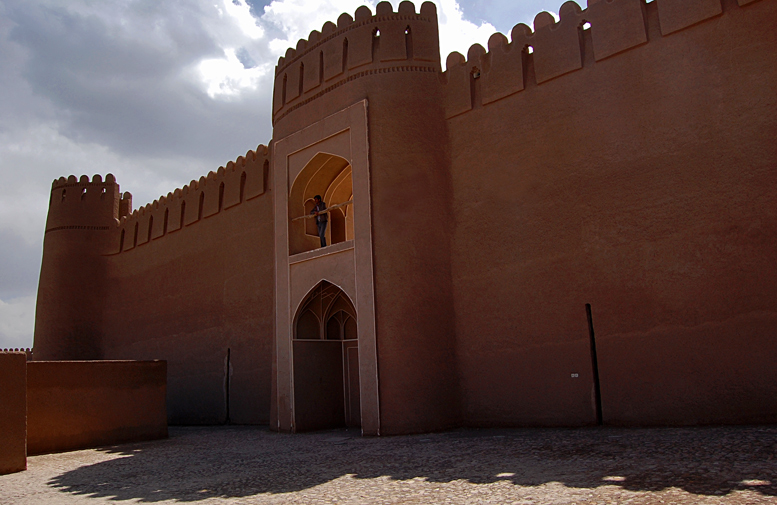
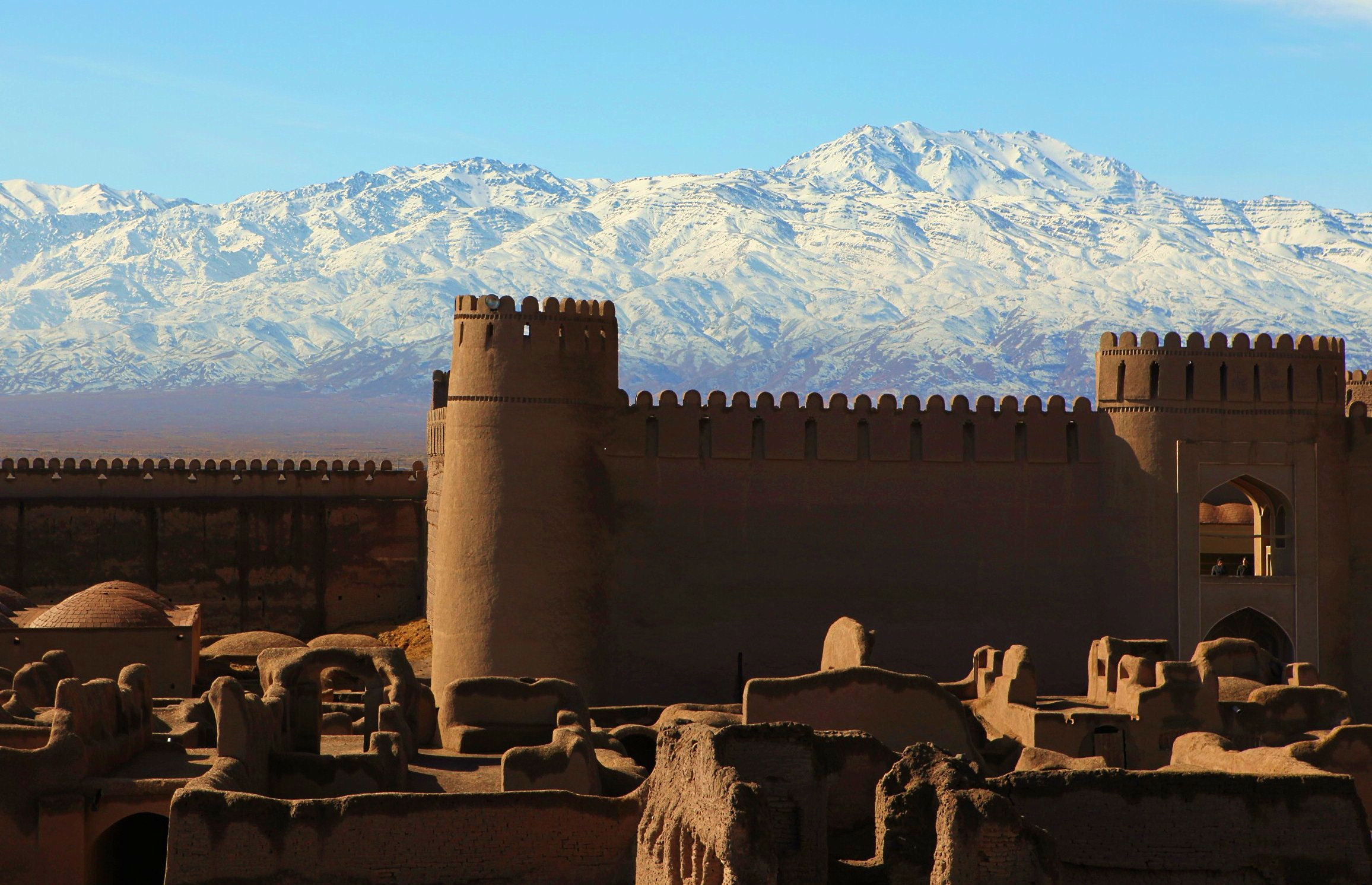
Rayen Castle (in Persian Arg-e Rayen) is an adobe castle in Kerman Province, Iran. The medieval mudbrick city of Rayen is similar to the Arg-e Bam city which was destroyed in an earthquake in December 2003. Rayen displays all the architectural elements of a deserted citadel. It is extremely well preserved, despite numerous natural disasters that have destroyed similar structures nearby, and it is one of the most interesting sites in Iran.

Rayen Castle was inhabited until 150 years ago and, although believed to be at least 1,000 years old, may in fact have foundations from the pre-Islamic Sassanid era.

Adobe castle of Rayen Rayen Kerman Iran - arg-e-rayensh

Adobe castle of Rayen Rayen Kerman Iran – Arg-e-Rayensh

Adobe castle of Rayen Rayen Kerman Iran

Adobe castle of Rayen, Kerman, Iran

Source: Wikipedia | Rayen Castle

Also check this related post: The other Iran | Arg-é Bam

Smiles from the ‘Axis of People’ – Reflecting on Iran

Get this headline writers – Iran may just be the friendliest place in the world!

It’s certainly the friendliest country I work in. I smile and laugh as much in Iran as I do at home in South East Asia’s Lands of Smiles…

Whenever we stop for a wander in a small Iranian town there’s an echoing chorus of “Salam” as shopkeepers and customers greet us one by one. Cars slow, their drivers wind down their window and shout “Welcome to Iran!” Excited children gather to shout “Which country?” or “Where from?” – the few words of English they can remember from school. It’s worth noting that these small towns are where Islamic faith is at its strongest…

Iran - Axis of People - Land of smiles - 1

Iran – Axis of People – Land of smiles – 1

From relatively modern Tehran to stylish Shiraz and stunning Isfahan to the tiny tea stop villages, the welcome is universal – whether a handshake and a “salam”, a gentle tap on the heart or a “hello mister”. It’s also surprising how much English is spoken – we shared our picnic with a homeless man in a park recently who thanked and blessed us warmly in English.

British, Australian, Irish and, yes, Americans, are greeted just the same. “No problem for me, only the government”, a hotel manager said to me when I handed him a trio of US Passports. Whose government he was referring to didn’t matter; both are equally guilty of historic paranoia and mistrust. Majid, a chemist we met in the desert town of Yazd said “if governments talked to each other like you and I are talking there would be no problem”; wise and hospitable are not adjectives Western media use liberally when talking about Iran.

The best way to enjoy Persian hospitality is to indulge in the national pastime of picnicking. The weekend (Friday) is a great day to join families around the kettle and stoves in parks and public places across Iran to share friendship and laughter. In the small village of Bazm in the lush Bavanat Valley, we stopped beside a village Emamzadeh (shrine) armed with a couple of flasks of tea and some famed Yazd home made confectionary. We soon found ourselves nestled under trees in the adjacent park, enjoying the holiday atmosphere, lounging on mats with a dozen or so extended families. Sauces bubbled away in pots and saffron rice steamed perfectly atop burners – the Persian picnic is a full-on culinary experience!

Iran - Axis of People - Land of smiles - 2

Iran – Axis of People – Land of smiles – 2

In the park we met Nilafar, who studied engineering on the Persian Gulf (60% of engineering graduates in Iran are women – another statistic for the headline writers).

“Have you seen an American before?”

“Only in the movies”, she replied calmly.

There was no alarmed reaction – just a scramble for photos.

The Friday call to prayer from the mosque briefly interrupted the chatter and laughter around the park. A hapless looking priest wandered outside looking for business, but here, as elsewhere in Iran, people are voting with their flasks…

My final memory of an amazing month spent in Iran is the holiday atmosphere in the mighty Naghsh-e Jahan Square in Esfahan. Its size may no longer be ‘half the world’ but it’s beauty and grassy verges draw Esfahanis and visiting Iranians every Friday evening. Long gone are the days when the Safavid Rulers sat on the terrace of the Ali Qapu Palace overlooking the square to watch polo; the square belongs to the people now.

After 10pm the square is still full of families, sitting on mats beside spurting fountains and coloured lights surrounded by beautifully tiled Islamic domes. Young children – up way after western bedtimes – run around with oversized saffron ice creams. Beside the tea flasks, kebab burners and pots and pans are everything from toy cars to table football games. Everyone wants to offer us food, drink and friendship. It’s hard to imagine such a sober, cultured and friendly atmosphere in a western park late on a Friday night.

In addition to the natural beauty and historical sites, we visited mosques and madrassas on our travels. Often called ‘hotbeds of religious fervor’, we found them to be tranquil oases of study and peace, where the warmth of the welcome humbled us. Learned people from the religious schools came to greet us, interested in our nationalities and religions, before posing for photographs.


More details and photos:

http://www.wildfrontierstravel.com/en_GB/community/blog/post/smiles-from-the-axis-of-people-reflecting-on-iran

Series: Iranian Handicraft and Art – Khatamkari

Khatam means incrustation in Persian and Khatamkari refers to incrustation work. It consists in the production of incrustation patterns (generally star shaped) with thin sticks of wood (ebony, teak, zizyphus, orange, rose), brass (golden parts) and camel bones (white parts). Ivory, gold or silver can also be used for collection objects.

Many objects can be decorated in this fashion, such as jewelry/decorative boxes, chessboards, pipes, desks, frames or some musical instruments. Khatam can also be used in Persian miniatures, making it a more attractive work of art. This craft was so popular in the court during the Safavid period that princes learned it at the same level of music or painting.

Based on techniques imported from China and improved by Persian know-how, khatam has existed for more than 700 years and is still practiced in Shiraz and Isfahan.

Source. IranReview

Series: Iranian Handicraft and Art – Painting

Oriental historian Basil Gray believes Iran “has offered a particularly unique [sic] art to the world which is excellent in its kind”.

Painting in Iran is thought to have reached a climax during the Tamerlane era when outstanding masters such as Kamaleddin Behzad gave birth to a new style of painting.

Qajarid paintings, for instance, are a combination of European influences and Safavid miniature schools of painting such as those introduced by Reza Abbasi. Masters such as Kamal-ol-molk, further pushed forward the European influence in Iran. It was during the Qajar era when “Teahouse painting” emerged.

Source: Iran Review

Sar Yazd Castle in Yazd, Iran wins the grand prize for the 2014 UNESCO Asia-Pacific Cultural Heritage

The grand prize for the 2014 UNESCO Asia-Pacific Cultural Heritage went to Sar Yazd Castle in Yazd, Iran.

In June 2014, a panel of judges composed of international experts in conservation and restoration evaluated 46 projects from countries in the Asia-Pacific Region.

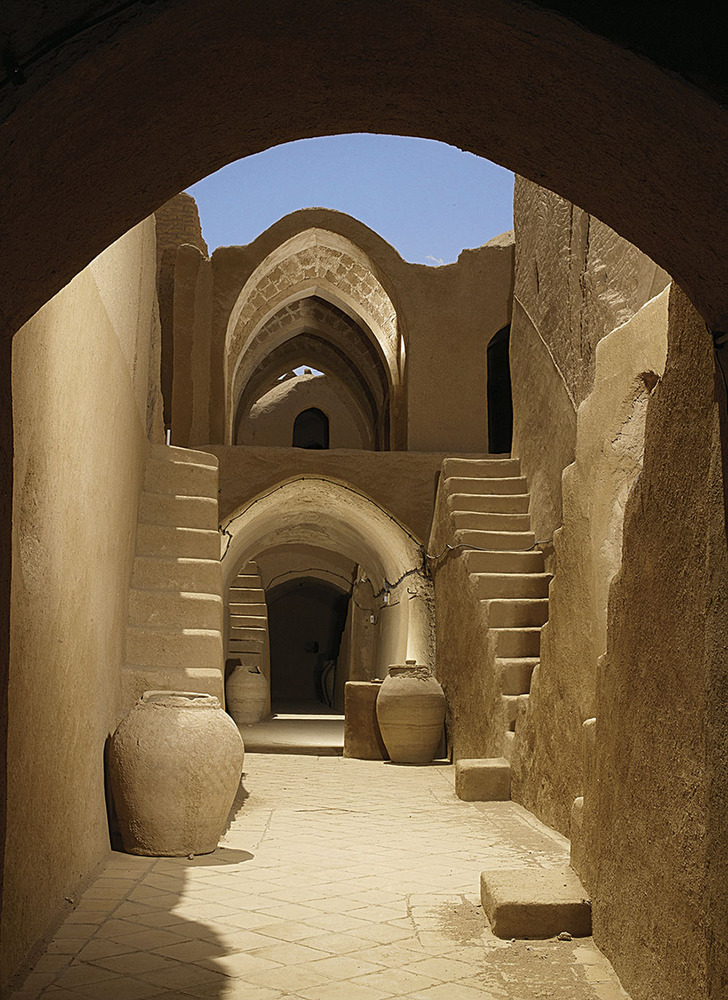
Among the projects, Sar Yazd Citadel restoration project from Iran managed to receive the grand prize. The grand prize was awarded to Iran due to the role of private institutions in preserving this historical location which has consequently influenced the socio-economic status of the locals in regard to creating job opportunities.

Sar Yazd is situated 30km south of Yazd province. Some speculate that the castle belongs to the Sassanid era.

Conserved and restored sites with more than 50 years of age which have been finished within last 10 years and have been open to visitors for at least a year have been considered eligible for this contest.

Yazd, Iran - Saryazd citadel - inside

Yazd, Iran – Saryazd citadel – inside

The 2014 and 2015 contests are held with the financial support from Beijing Sino-Ocean Charity Foundation.

Call for participation in the 2015 UNESCO Asia-Pacific Heritage Conservation contest will be announced in October 2014 via the contest’s website.

Source: Iran Review | Iranians’ Achievements (scroll down)

Statue of Omar Khayyam to be set up in Manhattan

A statue of Persian classic poet Omar Khayyam (1048-1131) is scheduled to be installed in Manhattan, New York City. Created by the Iranian sculptor Hossein Fakhimi, the two-meter tall statue was sent from Tehran to New York on Monday evening.

“I have conducted two years of studies before starting the carving of the statues, since it was important for me to know different aspects of Khayyam’s character,” Fakhimi told the Persian service of MNA.

Khayyam is not an only a poet, but he is a great astrologer, philosopher and mathematician, he added.

He said that in addition to his studies, he had conversations with scholars Hossein Elahi-Qomsheii and Gholamhossein Ebrahimi-Dinani on Khayyam.

One of the statues was transferred to Neishabur on the National Day of Khayyam on September 2, 2014 and it will be erected in an appropriate place designed for the statue.

Another copy of the statue will be installed in Florence, following an order by Iran’s cultural attache in Rome during the Khayyam commemoration ceremony in Italy in 2010.

Omar Khayyam, a Persian mathematician, astronomer, and poet was renowned in his own country and in his own time for his scientific achievements, but is chiefly known to English-speaking readers through the translation by the English writer Edward Fitzgerald of a collection of his Rubaiyat (“quatrains”) in “The Rubaiyat of Omar Khayyam” (1859).

http://www.payvand.com/news/14/sep/1016.html


Series: Iranian Handicraft and Art – Ghalamkar and Termeh

Ghalamkar (Qalamkaar, also qalamkar, kalamkar) fabric is a type of Textile printing, patterned Iranian Fabric. The fabric is printed using patterned wooden stamps. It is also known as Kalamkari in India which basicaly is a type of hand-painted or block-printed cotton textile.

Termeh

Termeh is a handwoven cloth of Iran, primarily produced in the Yazd province.

Weaving Termeh requires a good wool with tall fibers. Termeh is woven by an expert with the assistance of a worker called “Goushvareh-kesh”. Weaving Termeh is a sensitive, careful, and time-consuming process.Greek historians commented on the beauty of Persian weavings in the Achaemenian (532 B.C.), Ashkani (222 B.C.) and Sasanidae (226-641 A.D.) periods and the famous Chinese traveller Hoang Tesang admired Termeh.

Due to the difficulty of producing Termeh and the advent of mechanized weaving, few factories remain in Iran that produce traditionally woven Termeh. Rezaei Termeh is the most famous of the remaining factories.

http://www.iranreview.org/content/Documents/Iran%E2%80%99s_Art_Heritages_and_Handicrafts.htm

Series: Iranian Handicraft and Art – Carpet weaving

The art of carpet weaving in Iran dates backs to 2,500 years and is rooted in the culture and customs of its people and their instinctive feelings. Weavers mix elegant patterns with a myriad of colors.

The Iranian carpet is similar to the Persian garden: full of florae, birds and beasts. The colors are usually extracted from wild flowers, and are rich in colors such as burgundy, navy blue and accents of ivory.

The proto-fabric is often washed in tea to soften the texture, giving it a unique quality. Depending on where the rug is made, patterns and designs vary.

http://www.iranreview.org/content/Documents/Iran%E2%80%99s_Art_Heritages_and_Handicrafts.htm

Series: Iranian Handicraft and Art – Minakari

Enamel working and decorating metals with colorful and baked coats are one of the distinguished artwork in Isfahan. Mina, is defined as some sort of glass-like colored coat which can be stabilized by heat on different metals particularly copper.

Although this course is of abundant use industrially for producing metal and hygienic dishes, it has been paid high attention by painters, goldsmiths and metal engravers since a long time. It is categorized as enamel painting, charkhaneh (or chess-like enamel) and cavity enamel.

Enamel painting is practiced in Isfahan and specimens are kept in the museums of Iran and abroad, indicting that Iranian artists have been interested in this art and used it in their metalwork ever since the rule of Achaemenian and Sassanid dynasties. Since enamels are delicate, we do not have many of them left from ancient times. Most of the enameled dishes related to the past belong to the Qajar dynasty during 1810–90.

Source: IranReview

Series: Iranian Handicraft and Art – Intro & Part 1: Pottery

Intro

Iran held the 24th International Handicrafts Exhibition to mark World Handicrafts Day on Tuesday June 10, 2014 … at Tehran’s International Fairground.

The World Handicrafts Council was established by the United Nations Educational, Scientific and Cultural Organization (UNESCO) and 90 countries have already joined it.
Iran is home to one of the richest art heritages and handicrafts in world history and distinguished in many disciplines, including architecture, painting, weaving, pottery, calligraphy, metalworking and stone masonry.

Persians were among the first to use mathematics, geometry, and astronomy in architecture and also have extraordinary skills in making massive domes which can be seen frequently in the structure of bazaars and mosques.

Pottery

Prominent archeologist Roman Ghirshman said, “The taste and talent of these people [Iranians] can be seen through the designs of their earthenware.”

Of the thousands of archeological sites and historical ruins of Iran, almost every one of them can be found to have been filled, at some point, with earthenware of exceptional quality.

http://www.iranreview.org/content/Documents/Iran%E2%80%99s_Art_Heritages_and_Handicrafts.htm

Exhibition: Persian Caligraphy at Smithsonian’s Freer and Sackler Galleries, Washington, DC (Opening: Sept.13 – End: March 2015)

OPENING SEPT. 13, “NASTA‘LIQ: THE GENIUS OF PERSIAN CALLIGRAPHY” IS FIRST EXHIBITION ON PERSIA’S MOST POPULAR AND VISUALLY STUNNING SCRIPT

During a prolific 200-year period in the 14th-16th centuries, four master calligraphers invented one of the most aesthetically refined forms of Persian culture: nasta‘liq, a type of calligraphy so beautiful that for the first time the expressive form of the words eclipsed their meaning. “Nastaliq: The Genius of Persian Calligraphy,” opening Sept. 13 at the Smithsonian’s Arthur M. Sackler Gallery, displays 20 rarely seen masterworks created by the script’s greatest practitioners, tracing its evolution from a simple style of writing to a potent form of artistic expression.

This is the first exhibition ever to focus specifically on nasta‘liq, which was used primarily to write poetry, Persia’s quintessential form of literature. With sinuous lines, short vertical strokes and an astonishing sense of rhythm, the script was an immediate success and was rapidly adopted throughout the Persian-speaking world from Turkey to India. The exhibition shows how generations of itinerant calligraphers, bound by the master-pupil relationship, developed, enhanced and spreadnasta‘liq between major artistic centers.

Nasta‘liq represents one of the most accomplished forms of Persian art, developed at a time of cultural and artistic effervescence in Iran,” said Simon Rettig, exhibition curator and curatorial fellow at the Freer and Sackler galleries. “In a sense, it became the visual embodiment of the Persian language enthusiastically embraced from Istanbul to Delhi and from Bukhara to Baghdad.”


More info and pictures:

http://www.payvand.com/news/14/aug/1073.html


Tar virtuoso Jalil Shahnaz

Jalili Shahnaz was born in 1921 in Isfahan, Persia (Iran). Shahnaz studied under the supervision of Abdolhossein Shahnazi and Hossein Shahnaz and befriended ney player Hassan Kassai.[2]

Persian classical vocalist Shajarian named his most recent musical group “Shahnaz” in honor of Masetro Shahnaz.[4]

Jalil Shahnaz died in Tehran on 17 June 2013.

Works

  • “Atr Afshan” (tar solo, accompanied by Mohammad Esmaeili, tombak).
  • “Zaban-e tar” (tar solo, accompanied by Jahangir Malek, tombak).
  • “15 Pieces for Tar & Setar” (transcribed by Houshang Zarif). Soroud Publications, Tehran, 2000.

http://en.wikipedia.org/wiki/Jalil_Shahnaz

Here is what Shajarian said about him on his commemoration ceremony

“I am glad to come together here again and to talk with the language of heart,” Shajarian said.

“I have been living with the voice of Shahnaz’s tar for years. When he performs it is as if he tells a story. All the motifs and words of his music are of the same nature and narrate a single subject,” he added.

“Few musicians I have seen are able to perform as illustratively as Shahnaz did. Shahnaz was the god of this job. With his instrument, he pictured everything,” he stated.

Shahnaz died at the age of 92 on June 17, 2013. Shajaran said during his funeral, “The master created love and passion inside me. I owe all my achievements to the voice of his tar. He is the only person who deserves the title of master [of tar playing]. Like Hafez, he is unrepeatable. With all respect to tar players, the book of Iranian tar playing should be closed after the death of Shahnaz.”

http://www.payvand.com/news/14/jun/1130.html

Related article:

Iranian vocalist Mohammadreza Shajarian to receive France’s highest honor

UNHCR Praises Iran for Supporting Foreign Refugees

Head of the United Nations High Commissioner for Refugees (UNHCR)‘s Office in Tehran Sivanka Dhanapala praised Iran’s performance in hosting and aiding foreign refugees, specially the Afghans. Dhanapala announced on Thursday that Iran has been successful in hosting the highest number of refugees in the world, and praised the country’s contribution to the promotion of refugees’ welfare and upgrading their educational level.

Afghan refugee boys in Iran (source: UNHCR)

Afghan refugee boys in Iran (source: UNHCR)

The literacy rate of the Afghan refugees that stood at six percent upon arrival in Iran, dramatically rose to 60 percent in 2013, he said, adding that this is an indication of Iran’s success in that regard.

“No host country can gain such an achievement,” Dhanapala said.

Praising Iran’s hospitality, he said, along with Lebanon and Pakistan, Iran has been the major refugee hosting country around the world.

Iran has been a generous host for more than 2 million Afghan refugees for two decades, with little help from the international community.

http://www.payvand.com/news/14/jun/1197.html

Series: Iranian Food – Kashke Bademjan

Kashke Bademjan

At an Iranian meal, you don’t look for the bread and butter. You look for the bread and eggplant. With fried onions, eggplant, and herbs, this creamy spread beats butter any day.

http://www.buzzfeed.com/tyanat/20-persian-foods-to-blow-your-taste-buds-away-nzgf

TripAdvisor grants Certificate of Excellence to tomb of Persian Poet Hafez in Shiraz, Iran

TripAdvisor, a U.S. travel website that provides directory information and reviews of travel-related content, has granted a Certificate of Excellence to the tomb of Hafez in the southern Iranian city of Shiraz, Fars Province.


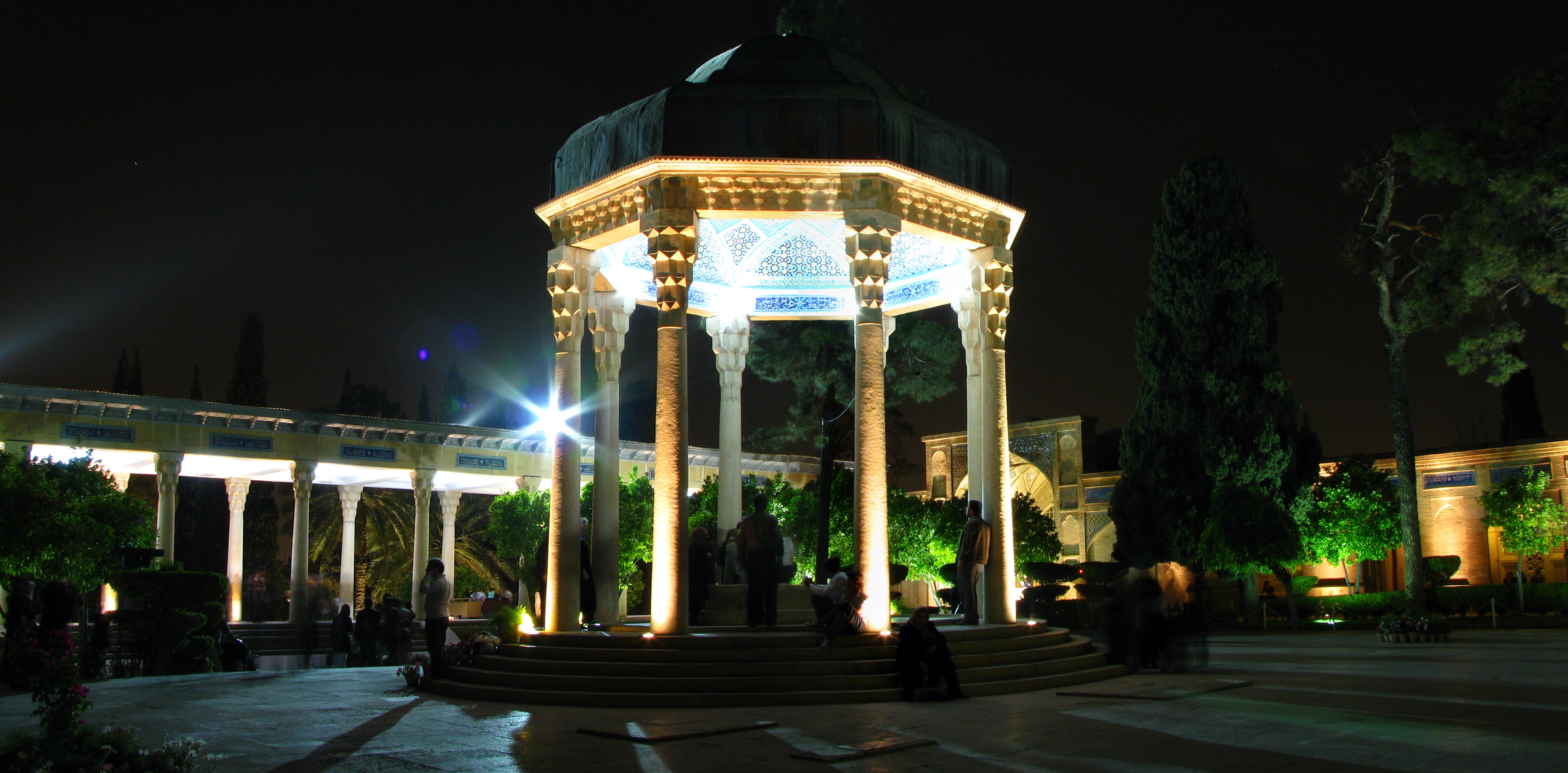
Tomb of Persian poet Hafez in Shiraz, Iran
(photo by Amir Hussain Zolfaghary)

Hafez was a Persian mystic and poet. He was born sometime between the years 1310 and 1337 in Shiraz, Medieval Persia. John Payne, who has translated the Diwan Hafez, regards Hafez as the greatest poet of the world. His lyrical poems, known as ghazals, are noted for their beauty and bring to fruition the love, mysticism, and early Sufi themes that had long pervaded Persian poetry. Moreover, his poetry possessed elements of modern surrealism.

The official document is awarded to the historical site for its beautiful architecture, its impressive atmosphere and the good behavior of the staff, the director of the Fars Cultural Heritage, Handicrafts, and Tourism Department said in a press release on Friday.

Mosayyeb Amiri added that a poll conducted by the website introduces Hafezieh (tomb of Hafez) as one of the top historical sites in the world.

http://www.payvand.com/news/14/jul/1072.html

Series: Iranian Food – Shole Zard

Shole Zard

Almonds, pistachios, saffron, rosewater, and cinnamon — not what you normally expect in rice pudding. But you can’t have Persian rice pudding without a few extra ingredients!

http://www.buzzfeed.com/tyanat/20-persian-foods-to-blow-your-taste-buds-away-nzgf

Series: Iranian Food – Zereshk Polo

Zereshk Polo

If you’re a “dessert before dinner” kind of person, you’ll love this dish. A sweet mix of rose water, barberries, and rice, with savory chicken to balance everything out.

http://www.buzzfeed.com/tyanat/20-persian-foods-to-blow-your-taste-buds-away-nzgf

Ahmad Shamloo – awarded Iranian poet, writer and journalist

https://i0.wp.com/i1.ytimg.com/vi/_c9Fa-8F_wA/hqdefault.jpg
Ahmad Shamloo (Persian: احمد شاملو‎, also known under his pen name A. Bamdad (December 12, 1925 – July 24, 2000) was a Persian poet, writer, and journalist. Shamlou was arguably the most influential poet of modern Iran. His initial poetry was influenced by and in the tradition of Nima Youshij.
Shamlou has translated extensively from French to Persian and his own works are also translated into a number of languages.
His thirteen-volume Ketab-e Koucheh (The Book of Alley) is a major contribution in understanding the Iranian folklore beliefs and language. He also wrote fiction and Screenplays, contributing to children’s literature, and journalism.
Some of his books
  • The Forgotten Songs (1947)
  • Poems of Iron and Feelings (1953)
  • Blossoming in the Mist (1970)

Awards

  • Forooghe Farrokhzad Prize, 1973
  • Freedom of Expression Award given by Human Rights Watch, 1990
  • Stig Dagerman Prize, 1999
  • Free Word Award given by Poets of All Nations in Netherlands, 2000

Series: Iranian Food – Ash Reshte

Ash Reshte

You don’t know soup ‘til you’ve tried it Persian style. Fried onions, noodles, beans, and a milky topping of kashk.

http://www.buzzfeed.com/tyanat/20-persian-foods-to-blow-your-taste-buds-away-nzgf

Series: Iranian Food – Tadig

Tadig

Rice fried to a golden perfection, this is often served not only as part of an entree, but as an appetizer itself.

http://www.buzzfeed.com/tyanat/20-persian-foods-to-blow-your-taste-buds-away-nzgf

Environment week sees 40 Iranian hunters swear off hunting

Forty hunters in Mazandaran Province took part in Environment Week by taking an oath to give up hunting and guns. IRNA reports that the hunters expressed remorse for hurting nature and they signed a promise and recited an oath never to take up a gun or go hunting.

Nasser Mehrdadi, the head of Mazandaran Environmental Protection, lauded the hunters and said: “Farewell oaths by hunters and asking forgiveness from nature are aimed at promoting the culture of environment and wildlife protection.”

The Sabz Chia Association, an environmental group, received the National Environment Award for its campaign against hunting in Kurdistan.


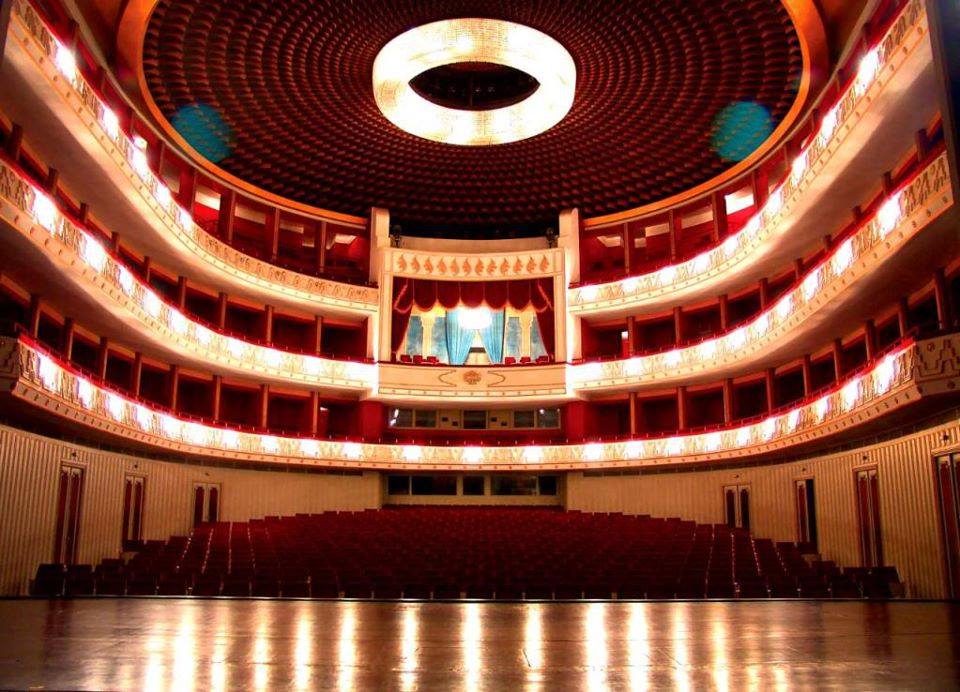
Tehran, Iran Roudaki Opera House aka Vahdat Hall

Tehran, Iran Roudaki Opera House aka as Vahdat Hall

Tehran, Iran Roudaki Opera House aka as Vahdat Hall

Vahdat Hall or Talar-e Vahdat (built 1967) is an opera house in Tehran, Iran. Architect Aftandilian designed the building, partly modelled after the Vienna State Opera. Prior to 1979 it was known as Talar-e Rudaki. Among the performances: Dundee Repertory Theatre, Mohammad Esmaili, Parvaz Homay, Leningrad Ballet, Marcel Marceau, Bagher Moazen, Gorgin Mousissian’s choir, Nour Ensemble, Pari Samar in Carmen, Tehran Symphony, Loris Tjeknavorian, Peyman Yazdanian. Other events in the space have included the Tehran Art Expo.[2]

http://en.wikipedia.org/wiki/Vahdat_Hall

Tomb of famous poet Hafez I


Shiraz, Iran -Tomb of Hafez

Shiraz, Iran -Tomb of Hafez

Hafez was born in Shiraz, Iran. His parents were from Kazeroon (Fars Province).
Modern scholars generally agree that Hafez was born either in 1315 or 1317.

Today, he is the most popular poet in Iran. Libraries in many other nations other than Iran such as Azerbaijan, Armenia, and Georgia contain his Diwan.[6]

Much later, the work of Hāfez would leave a mark on such Western writers as Thoreau, Goethe, and Ralph Waldo Emerson—the latter referring to him as “a poet’s poet.”[citation needed] His work was first translated into English in 1771 by William Jones.

There is no definitive version of his collected works (or Dīvān); editions vary from 573 to 994 poems. In Iran, and Afghanistan,[10] his collected works have come to be used as an aid to popular divination.

Twenty years after his death, a tomb (the Hafezieh) was erected to honor Hafez in the Musalla Gardens in Shiraz. The current Mausoleum was designed by André Godard, French archeologist and architect, in the late 1930s. Inside, Hafez’s alabaster tombstone bears two of his poems inscribed upon it.

Goethe fans will also know this:
http://en.wikipedia.org/wiki/West-%C3%B6stlicher_Diwan

Source:
http://en.wikipedia.org/wiki/Hafez

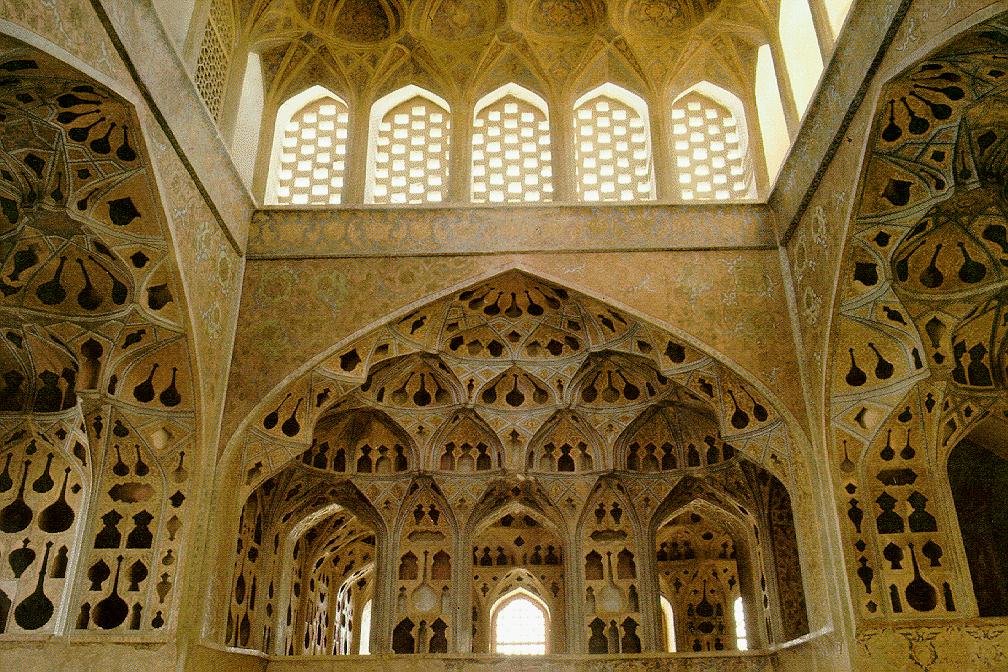
Esfahan – Ali Qapu Palace Music Room

Image

Ali Qapu (Âli Qapı from Ottoman Turkish High Porte) is a grand palace in Isfahan, Iran.

It is forty-eight meters high and there are seven floors, each accessible by a difficult spiral staircase. In the sixth floor music room, deep circular niches are found in the walls, having not only aesthetic value, but also acoustic.

The building, another wonderful Safavid edifice, was built by decree of Shah Abbas the Great in the early seventeenth century. It was here that the great monarch used to entertain noble visitors, and foreign ambassadors.

The chancellery was stationed on the first floor. On the sixth, the royal reception and banquets were held. The largest rooms are found on this floor. The stucco decoration of the banquet hall abounds in motif of various vessels and cups. The sixth floor was popularly called (the music room).

Here various ensembles performed music and sang songs. From the upper galleries, the Safavid ruler watched polo, maneuvers and the horse-racing opposite the square of Naqsh-i-Jahan.

Source: Wikipedia | Ali Qapu

Tehran – Azadi (Freedom) Tower Series

Image

Facts

One of the most familiar landmarks of Tehran.
Included in the building is a cultural centre with a library, a museum and several art galleries.

The entrance of the tower is directly underneath the main vault and leads into the Azadi Museum on the basement floor.

The main display is occupied by a copy of the Cyrus Cylinder (the original is in the British Museum).

The monument acts as a grandiose gateway to the Iranian capital, and is surrounded by a large plaza (approx. 50,000 m²).

Built in 1971 in commemoration of the 2,500th anniversary of the Persian Empire, this “Gateway into Iran” was named the Shahyad Tower, meaning “Kings’ Memorial”, but was dubbed Azadi (Freedom) after 1979. It is 50 meters (164 ft) tall and completely clad in cut marble.

More info:
http://en.wikipedia.org/wiki/Azadi_Tower

Iranian artist Mohammadreza Javadinasab – master of caligraphy

The Iranian artist Mohammadreza Javadinasab has recently created a number of calligraphic paintings on some Iranian percussion instruments called daf. The collection, which comprises 30 works, is scheduled to be showcased in an exhibition, which will open at the Panjareh Gallery in Tehran on May 2.

A calligraphic painting by Mohammadreza Javadinasab depicting a poem by Rumi

A calligraphic painting by Mohammadreza Javadinasab depicting a poem by Rumi

Javadinasab has been practicing the nastaliq style of calligraphy over the past 20 years and has held several exhibits.

http://www.payvand.com/news/14/apr/1166.html

Underground musicans in Iran

https://i0.wp.com/originalworldtravel.com/wp-content/uploads/2014/04/iran_0330.jpg

In fact, music is becoming one of the most potent avenues for a new generation of newly empowered women, who sense a tide shifting in their opportunities in the country. They are expressing themselves in ways that previous generations could not have imagined since the Islamic Revolution. But the moderate stance of current president Hassan Rouhani has encouraged more artists and musicians to ply their wares, and tourists and travelers are taking notice.

ABC News met a young “underground” singer in Iran this week. She’s one of many young men and women who perform everything from metal and rock to jazz and R&B, including covers of famous American artists. ABC News spoke with Rana Farhan, a well-known Iranian singer based in New York.

What musical genres are most popular among young Iranians?

Iranian young people are like most young people. Their taste ranges from rock to hip-hop and R&B to traditional Iranian music. Although they can’t legally buy it, they find ways to grab songs from the Internet and share them. For instance, my website is blocked in Iran, but if any of my fans send me an email, I will send them my latest mp3s and encourage them to share.

Rest of the interviewcan be read here:

http://originalworldtravel.com/travel-news/?WPACRandom=1398533411393#comment-97

Prof. Richard Foltz: Canadian Iranologist says that Iranian people have historically attached high importance to love and beauty, and gives his view on Iranian contributions to science

Prof. Richard Foltz: The Importance of Love Is at the Center of Iranian Spirituality

Prof. Richard Foltz is a specialist in the history of Iran and the history of religions. He has extensively studied Islam and Zoroastrianism and teaches at the Department of Religion at Concordia University, Montréal, Canada. He holds a Ph.D. in Middle Eastern history from Harvard University and also has a degree in Persian language from the University of Utah.

Q: Which of the great Iranian poets fascinate you the most?

A: I admire Ferdowsi for the purity of his language, Mowlana (Rumi) for his emotional intensity, Sa’di for his wit, and Hafiz for the richness of his expression.

Q: How did the emergence of Islam contribute to the progress of science, arts and culture in Iran? We already know that people such as Al-Farabi, Avicenna, Al-Khawrizmi and Rhazes rose to prominence in the post-Islamic era. What’s your viewpoint regarding the impact of Islam on the scientific and artistic achievements of the Iranians?

A: I would put it the other way around, and say that Iranians had a major impact on the development of Islamic civilization. The academy at Gundeshapour, which was the most important academic institution in the world during Sassanid times, is a prime example of this; it simply became Islamicized after the Arab conquests. Iranians were an advanced nation before the coming of Islam and they were central to the emergence of the civilization we refer to as Islamic. The great cultural achievements of the Abbasid period were largely due to Iranians, but these ideas did not emerge suddenly out of a vacuum; they were built on ideas that already existed in the past.

Q: And finally, what’s your viewpoint regarding the contribution of Iranian artists, scientists and scholars to the international community?

A: I can say that here in Canada Iranians are statistically the second most highly educated immigrant group, after the Germans. I guess in the US the situation is similar. In most fields there exist prominent Iranians, as one would expect from such a rich and long-established culture.

Read the whole interview here:

http://english.farsnews.com/newstext.aspx?nn=13930124000344

Related Article:
http://iranianroots.com/2014/01/24/mit-iranian-americans-among-most-highly-educated-in-u-s-and-contribute-substantially-to-the-u-s-economy/