Tag Archives: Tehran

Iranian Armenians rally in Tehran to commemorate the 100th Anniversary of the Armenian Genocide

Thousands of Iranian Armenians rallied in Tehran on Friday, protesting in front of the Turkish Embassy to commemorate the 100th anniversary of the Armenian genocide.

Many in the crowd, who marched from the Armenian Church in Tehran to the Turkish Embassy, held signs in Farsi and English asking the international community to recognize the genocide, while others chanted slogans calling for justice and the downfall of the Turkish government. “What Armenians demand now is that the Turkish government recognize [the massacre] as genocide and accept its legal consequences,” Karen Khanlari told Iran’s Press TV during the protests.

There were different events organized to commemorate the 100th Anniversary of the Armenian Genocide on April 23 and April 24. In Tehran were the religious ceremonies held at the St. Sarkis Cathedral.

Following sovereign countries have officially recognized the Armenian Genocide: Argentina (2003) , Austria (2015), Belgium (1998), Bolivia (2014), Canada (1996), Chile (2007), Cyprus (1975) was the first country to raise the issue to the UN General Assembly, Czech Republic (2015), France (1998), Germany (2015), Greece (1999), Holy See (2000), Italy (2000), Lithuania (2005), Lebanon (1997), Netherlands (2004), Poland (2005), Russia (1995), Slovakia (2004), Sweden (2010), Switzerland (2003), Uruguay (1965) was the first country to recognize the events as genocide, Venezuela (2005). On Apr 24, 2015 the Bulgarian parliament approved a resolution using the phrase “mass extermination of the Armenian People in the Ottoman Empire”. The United States of America, Israel, the United Kingdom, Australia or Spain do not use the term genocide to refer to these facts.

Robert Beglaryan and Karen Khanlaryan, MPs of Armenian origin, have also had speeches in Iran Majlis concerning the Armenian Genocide Centennial. “We call on the government and the President Rouhani in particular to call the real facts by their name. That will make it possible to support the security in the region,” Robert Beglaryan said in his speech.

Iran has been conducting a moderate and cautious policy regarding the Armenian Genocide over the last years. Remarkably, though, the MPs of the 6th Majlis of Iran condemned the Armenian Genocide. Seyyed Mohammad Khatami, then President of Iran, visited Tsitsernakaberd during his official visit to Yerevan on September 9, 2004. Vice president of Iran, Hamid Baghaei, pronounced the word ‘genocide’ during the conference ‘Iran: The Bridge of Victory’ in August 2010. “The government of Ottoman Turkey committed genocide in 1915; and a certain number of Armenians fell victim to it,” he said although the statement was refuted not to aggravate the relations with Turkey.

However, both the political and religious elite of Iran, as well as ordinary citizens admit the fact of the Armenian Genocide, as according to the Iranian sources, the Ottoman Turks have not only perpetrated genocide against the Armenians, Assyrians and Greeks, but also have slaughtered many Iranians in Urmia Region in 1918.

In Iran there are Armenian Genocide Memorials in Abadan, Ahraz, Arak, Isfahan, Tehran and Urumieh, all of them on Armenian Churches ground. In Abadan the Genocide Memorial was renovated since it was next to the church damaged during the Iran Iraq war.

Other Commemoration events worldwide:
1. Los Angeles Times | Armenian Genocide Anniversary Apr 24, 2015
2. The Huffington Post | Poignant photos from around the world show Armenian Genocide has not been forgotten

Sources: www.hyeli.com, Wikipedia | Armenian Genocide recognitionarmenian-genocide.org | Recognition countries, Mehr News Agency (MNA) 1, MNA 2, IRNA 1, IRNA 2, ISNA 1, Tasnim News Agency, panorama>>am | Asory Genocide, panorama>>am | Rouhani letter, armenian-genocide.org | Genocide Memorials in Iran, uacla.com | Armenian Genocide Memorials, team-aow.discuforum.info | Monuments Commemoratifs du Genocide Armenien

Iran’s Tehran Province: Persian Garden Park in Tehran – Part 1
The tradition and style in the design of Persian Gardens (Persian: باغ ایرانی transliterated as Bagh-e Irani) has influenced the design of gardens from Andalusia to India and beyond.

The Persian Garden Park in Tehran, located on north Sheikh Bahai Street – District 3, is a 3.4ha (8.4 acres) areal that was designed based on the pattern of a Persian Garden. The two main entrances are located on the eastern and the western side of the park but it has also two other gates on the northern and southern side.

The reconstruction project planned passages for the disabled and dedicated 2.5ha (6 acres) to green spaces, preserving the old trees and planting new species such as bay leaf, berberis, firethorn (pyracantha), eglantine (sweet briar), milkweeds (asclepias), shrubs and other seasonal and perennial plants.

The park has six fountains, a restaurant and tea house, a public library, a children’s playground, a sports ground, bathroom and dressing room facilities as well as a prayer room.

Sources: IRNA | Photos, Tehran Municipality, Tishineh | Bagh-e Irani Park, Wikipedia | Persian Gardens

Tabiat (Nature) pedestrian bridge in Tehran, Iran by Leila Araghian from Diba Tensile Architecture

Tabiat Pedestrian Bridge is located in the northern part of Tehran in a zone called Abbas Abad Lands; this is a 559Ha area which is mainly dedicated to cultural spaces such as libraries and museums, as well as public parks. ‘Tabiat’ means ‘Nature’ in Persian language.

The bridge crosses Modarres Highway and connects Abo Atash Park on the west to Taleghani Park on the east. The intention was to design a pedestrian route that was completely separate from the highway. The 270 meters long bridge is the largest pedestrian bridge built so far in Iran.Design of this bridge was the result of a two-phase competition which started in May 2008. The winning design was selected in August of the following year. It was inaugurated in October 2014.

The architect’s idea was to create multiple paths on each park that would lead people on to the bridge. On the east side there are multiple paths branching from both levels of the bridge and connecting to other paths within Taleghani Park. On the west where it connects to Abo Atash Park, the bridge becomes 55 meters wide forming a plaza; here it is not clear and not easy to recognize where the park ends and where the bridge starts.

This bridge is a space intended to be a place to linger rather than just one to pass through, and to act as an extension of the parks, so seating areas and green spaces are on all parts of the bridge. There are a coffee shop and a restaurant on both sides of the lower level. The second level is mainly designed for those who are crossing from a park to the other and the third level areas act as viewing platforms, providing a wide open space which can also be used for public performances.

All the levels are connected to each other by stairs and ramps, providing multiple paths throughout the bridge to get from each level to another.

Leila Araghian - Architect - Diba Tensile Architecture, Iran

Leila Araghian – Architect and Design Manager from Diba Tensile Architecture

Architects: Leila Araghian from Diba Tensile Architecture
Project: Tabiat Pedestrian Bridge
Location: Tehran, Iran
Architectural Team: Alireza Behzadi, Sahar Yasaei
Collaborators: Homa Soleimani, Mina Nikoukalam, Masoud Momeni, Adel Mohammadi, Nader Naghipour, Payam Golfeshan, Farhad Elahi
Structural Engineer: Maffeis Engineering spa
Design: September 2009-December 2010
Construction: September 2010-October 2014
Length: 270 meters
Area: 7680 m2
Weight: 2000 tons

Sources: DIBA | Projects | Tabiat Pedestrian Bridge, Mehr News Agency | Photos, www.archdaily.com, www10.aeccafe.com

German animation “Virtuoso Virtual” wins in Tehran International Animation Festival 2015

The 9th Tehran International Animation Festival was held from March 8 to 12. Over 130 works from across the globe were screened at the event.

German animation “Virtuoso Virtual” directed by Thomas Stellmach and Maja Oschmann has won the top prize in the International section of the 9th Tehran International Animation Festival, the organizers announced on Thursday.

“Virtuoso Virtual” shows some modest drawings that seem to come from nowhere. Following a secret choreography, they take on characteristics and moods of the music and narrate a story that appears to be laid out in the music.

The second prize went “All the Winters I Haven’t Seen”, Iranian animator Omid Khoshnazar’s acclaimed anti-war animation.

It tells the story of a pregnant woman in New York City who discovers that her fetus suffers severe physical defects. Totally unaware of the problem, the mother finds that she has been exposed to chemical weapons, a matter entirely absent from her medical records.

“Coda” directed by Irish animator Alan Holly received the third prize. “Coda” is about the afterlife. It shows some exotic experiences and the possibility of forgiveness.

Iranian animator and writer Mehdi Alibeygi was presented with the special jury award for his surreal short film “Changeover”.

“My Mom Is an Airplane” directed by Yulia Aronova from Russia was crowned best film in the About Children Section.

Award Title Winner Country
1 Golden Statue for the best animation Virtuoso Virtual Thomas Stellmach and Maja Oschmann Germany
2 Silver Statue for the second animation All winters that I haven’t seen Omid Khoshnazar Iran
3 Bronze Statue for the third animation Coda Alan Holly Ireland
4 Golden Statue for the best animation on the theme of children and young adults My Mum Is an Airplane Yulia Aronova Russia
5 Golden Statue for the best student animation Carn Jeff Le Bars France
6 Golden Statue for the best TV production Kung Fu Bunny (Kitchen War) Zhiyong Li China
7 Golden Statue for the best commercial animation Venice / Massi Simone Icaro Massi Italy
8 Special Statue of the jury Change over Mahdi Alibeigi Iran
9 Special Statue of the director of the festival —- Alexander Petrov Russia
10 Honorary diploma Green Fields Benjamin Vedrenne France
11 Honorary diploma Indah Citra Pierre-Antoine Naline, Sarah Feruglio, Maxime Orhnial, Anthony Oliveira France

Sources: Payvand News, Tehran International Animation Festival, TIAF | Photos

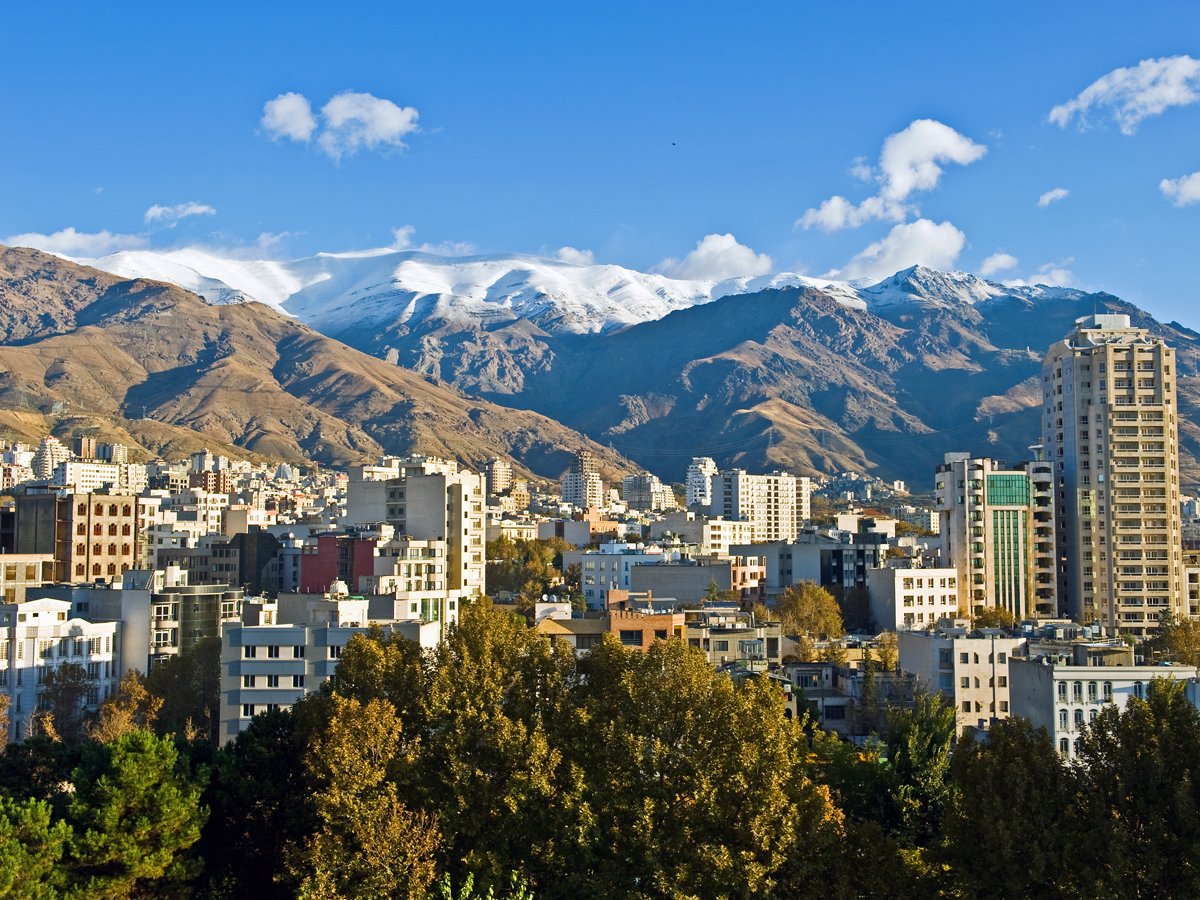
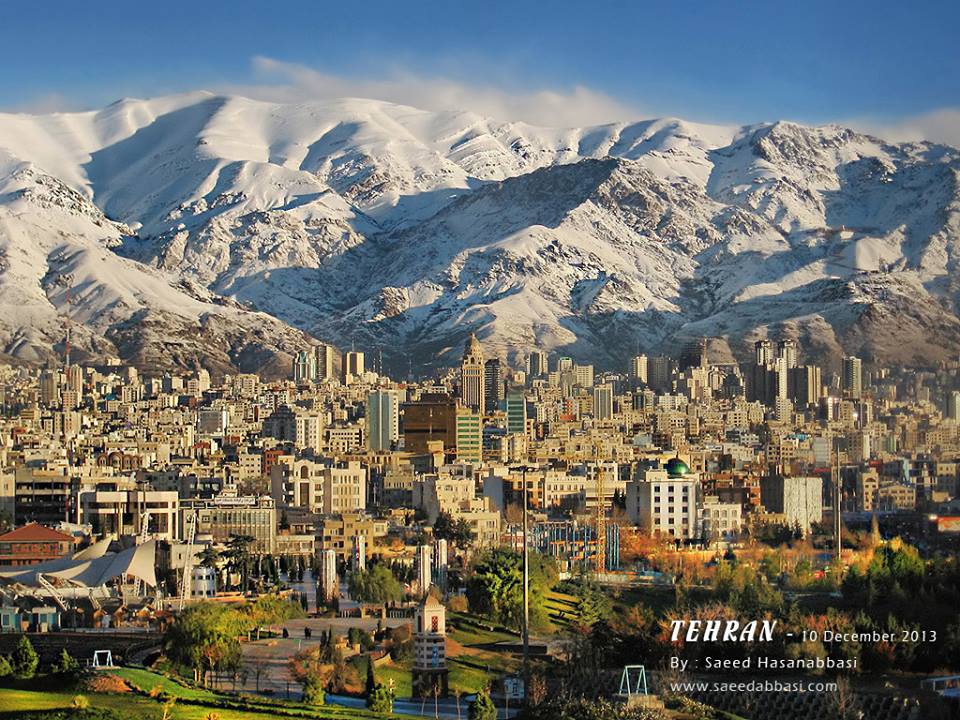
Photo series: Winter in Iran – Tehran

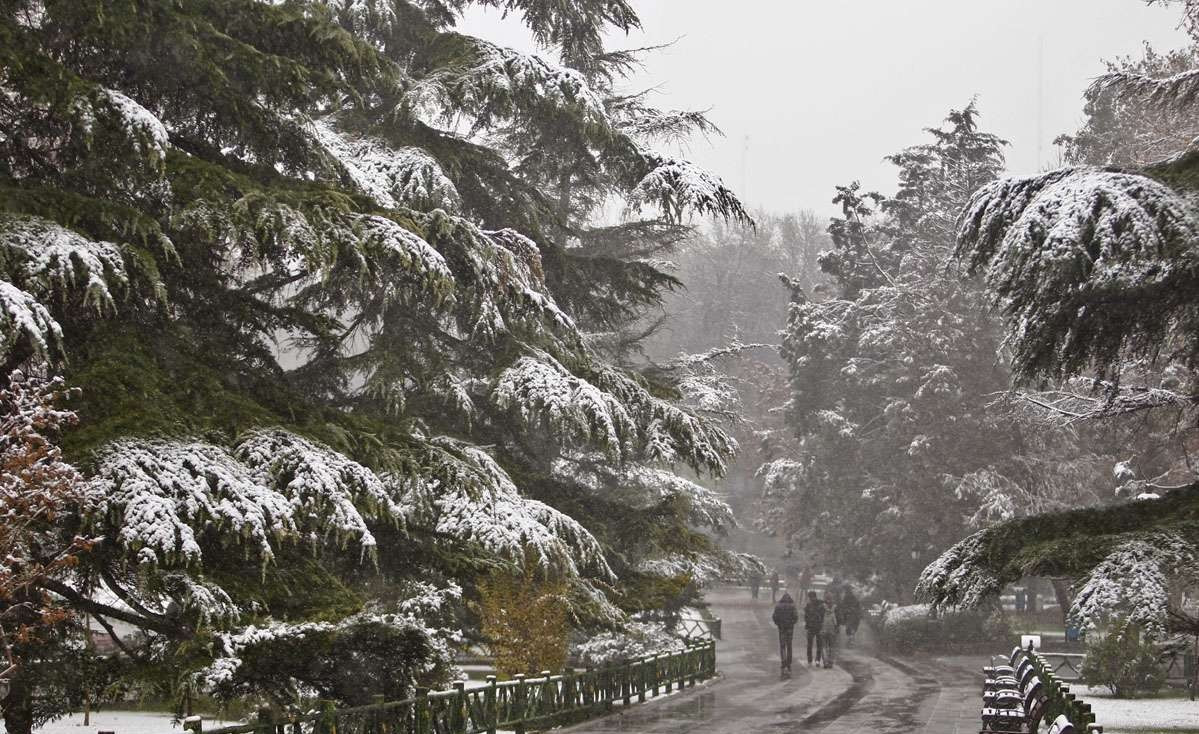
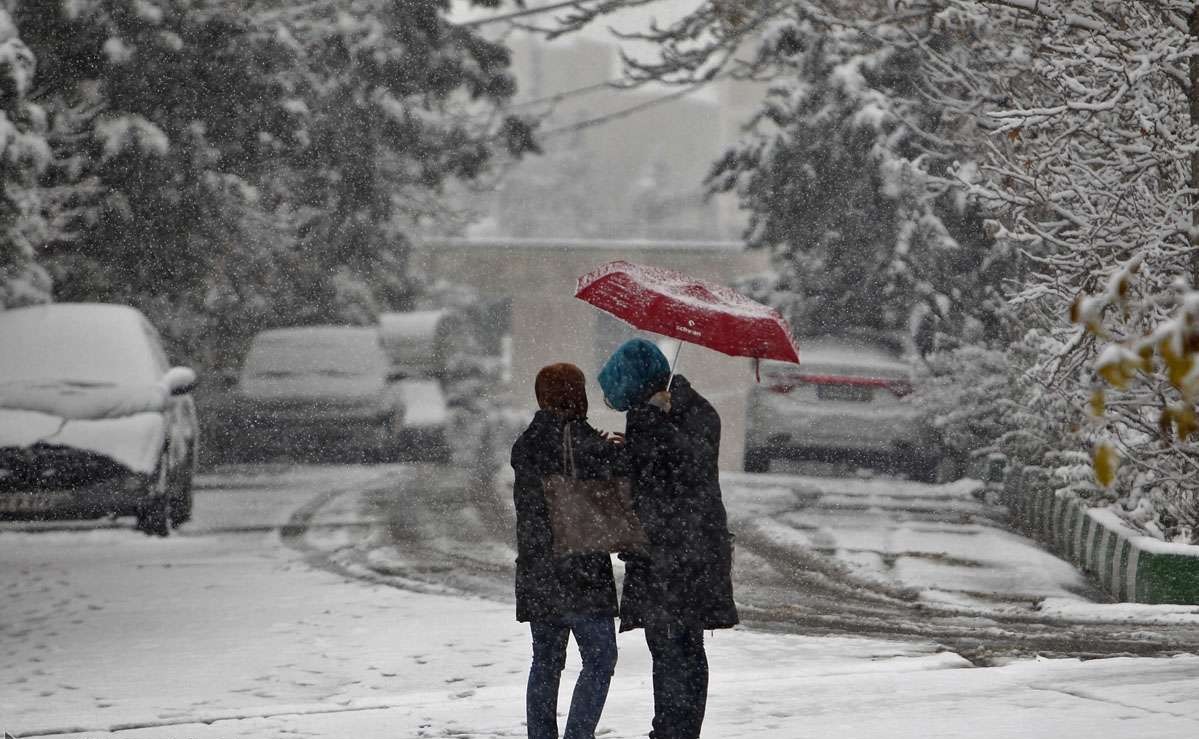
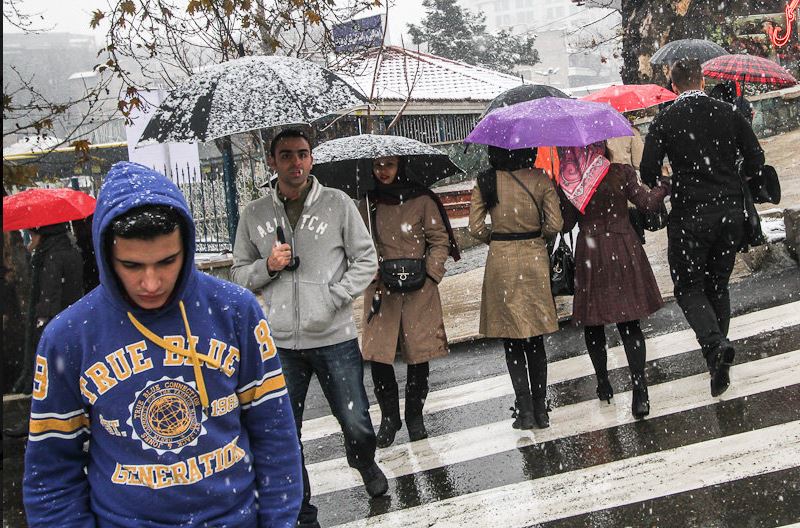
To bid the winter farewell here are the last snow photos of this season. Enjoy Iran’s capital city, Tehran, covered in snow!

Sources: ISNA | Photos 1, IRNA | Photos, ISNA | Photos 2

US American saxophonist and Grammy Award winner Bob Belden: “I will never forget Iran”

American saxophonist Bob Belden, who gave performances with his band Animation in Tehran, says he will never forget Iran.

Trumpeter Pete Clagett, keyboardist Roberto Verastegui, drummer Matt Young, and bassist Jair-Rohm Parker Wells are other members of ‘Animation’ who accompanied Belden in the Tehran performances.

In his short speech before the concert, he expressed his happiness to have been visiting Iran, adding that he and his companions found love and happiness in the presence of the Iranian audience. The musician also referred to their trips to the historical cities of Isfahan and Shiraz and added that they were delighted to see the cities and meet their good people.

In addition, Belden said that during their trips, they met several young Iranian musicians who were very talented. He asserted that he liked Iran and its people very much and especially enjoyed Persian kebab.

He called music the common language among all nations and said that he has found many friends through music in different countries. His speech was followed by performances of several pieces, some of which were from his Grammy nominee compositions.

Speaking of his interest in visiting Iran again, he said that he would download their performance in Tehran on internet sites to let other people watch and see where the concert was performed.

The 30th edition of Fajr International Music Festival ran from February 13 to 20 in different venues across the Iranian capital Tehran.

About Bob Belden:
James Robert Belden (born October 31, 1956) is an American saxophonist, arranger, composer, bandleader and producer. He is noted for his Grammy Award winning jazz orchestral recording titled The Black Dahlia. He is also a past head of A & R for Blue Note Records.

Sources: Payvand News of Iran, Wikipedia | Bob Belden

Iran’s 33rd Fajr Film Festival – winners and closing ceremony

The 33rd edition of Iran’s Fajr International Film Festival has come to an end with “Crazy” by the renowned Abolhasan Davoodi winning the Best Director and the Best Film awards. Produced by Bita Mansuri, Crazy received 11 nominations, including best film, best director for Abolhassan Davudi, best actress for Tannaz Tabatabaii, best cinematographer, best screenplay and best music.

Winners for the national main competition section:

Best Supporting Role Actor – Houman Seyyedi for ‘I Am Diego Maradona’
Best Main Role Actor – Saeed Aghakhani for ‘The Long Farewell’
Best Screenplay – ‘A Time for Love’ by Roya Mohaghegh
Best Director – Abolhasan Davoodi for ‘Crazy’
Best Film – ‘Crazy’ produced by Bita Mansuri
Best Main Role ActressBaran Kousari for ‘Binam Alley’

Sources: Payvand, ISNA | Photos, ISNA | Photos 2, Tasnim News Agency | Photos

Photo gallery: Fajr Film Festival in Iran

The Fajr International Film Festival or Fajr Film Festival is Iran’s annual film festival, held every February in Tehran, Iran. It takes place every year on the anniversary of the Iranian revolution. There were 90 feature films submitted for the 29th edition of the festival in 2011.

Sources: Wikipedia| Fajr International Film FestivalTasnim News | Photos FIFF 1Tasnim News | Photos FIFF 2Tasnim News | Photos FIFF 3ISNA | FIFF 1ISNA | FIFF 2ISNA | FIFF 3ISNA | FIFF 4ISNA | FIFF 5

Interview with Iranian photojournalist Newsha Tavakolian: “Whenever I reach the end, I start from scratch”

Newsha Tavakolian - Iranian photographer 03

Newsha Tavakolian (photo by Arash Ashouriniya)

Newsha Tavakolian, an established photojournalist and art photographer, started her experimental career at 16. After a while she pursued it professionally in Iranian and foreign media. Two decades on, her social recognition and awareness has catapulted her into the ranks of the outstanding photographers.

Zanan-e Emrooz magazine released an interview with Newsha in its 7th issue (December 2014) about her career and life. The following is an excerpt  of it, published in Iran Front Page:

Why did you pick photography? Was anybody in your family who did photography?
At first I knew nothing about photojournalism. I did it for money. My parents were in Germany for my dad’s surgery, and my siblings and I were in Iran. Apart from financial problems, I found the education system annoying. Later I learned that I was suffering from Dyslexia at school but nobody knew about it. Back then I didn’t want to rebel; it was just a normal reaction to the tough conditions of the time…. after dropping out of school, I took photography at my mom’s suggestion and used everything as a subject for photography. […]

Once you said you always wanted to narrate the story of your subjects. Are your recent collections your narration of the characters? […]
My first work was Mothers of the Martyrs Collection: photos of mothers whose sons had been martyred. The undeniable resemblance between mothers and sons was interesting. […] Two reverse trends: a son who has remained in his youth with a cheerful face and a mom who looks emaciated because of the loss of her son. I just selected the backgrounds for the pictures and there was no other intervention on my part. […]

I just show part of their lives and leave the remainder to the imagination of the audience. I like to see viewers get involved in the story of my photos, not just their beauties. None of my photos has a strange surreal atmosphere. They feature the familiar scenes we pass by each day, but we now pause to watch the photos and they make us think.

For instance, the visitors of the Look Collection (2011) told me they felt as if they were watching themselves in those photos. This shows that I have successfully represented a typical character type in the photos. Drawing on my experiences in photojournalism and social documentaries, I’ve reached this point. My photos feature the middle class; that’s why more people identify with the characters in my work. […]

“When I shot these images, it was a dark time in Iran’s history,” says Newsha Tavakolian. “It was a time of extreme pressure on the public, especially on the youth, who were all struggling under the imposed restrictions.” Curious about the isolated lives of the middle-class youth in Tehran, Tavakolian staged images based on the real stories of her friends and neighbours to depict a society that the photographer believes is often reduced to exaggerated stereotypes in western media, and to give a more accurate portrayal of “normal people” in Iran.

As a photojournalist, you not only covered the news on Iran but also news stories in the region, including the Iran-Iraq war. How was it like?
Back then I was 21. In Iraq I was accompanied by two American women. When we left Iraq after the war, they had other projects to work on and show themselves, but I came across closure of newspapers [in Iran] and a stagnant situation in which you would be consumed by inaction.

After one and a half years I realized that I’d spent too much time on something which I couldn’t change. I admitted that I was living in this country with all limitations and I needed to redouble my efforts to work here. […]

I refocused my efforts on upgrading my works. You cannot believe how terrible I was in photography and how much I worked on it. I’m the harshest critic of myself. I relentlessly review my works in order not to let others find any faults with them; I don’t let anybody undermine my self-confidence either. I constantly evaluate and challenge my works, and I think this is a forwarding method.

At the time of war, I was among the first photographers who were in Iraq. I sent my photos through my agency to Time and Newsweek magazines. They didn’t know I was a girl. Well, this heartened me because my works were put above my gender. […]

Where do you think the world is heading with too many photos available? Today mobiles and tablets don’t miss even one single moment. ….
I don’t walk down this path. I don’t produce a big volume of photos. I’m stingy in photography. I feel responsible for taking any photo. I’m stingy even in sending the feed to my eyes and mind. I wouldn’t look at just any video or photo because I wanted to train my eyes.

You are not supposed to watch anything just to spend time or relieve tiredness; otherwise your sight will get sick, just like you don’t eat anything just to fill your stomach. Perhaps these photos are helpful for future historians not to encounter any ambiguity […]

As a professional photographer, is your life affected by news? Is news still tragic for you?
Pieces of bad news send chills down my spine. I’m still involved in photojournalism. It is a labor of love. Let me give you an example. After a tough period of hard work – a four-month trip to 13 countries for filming and photography for an educational project – and facing problems with the Carmignac Foundation, I was in the Netherlands where I decided to go to the beach and have a rest. It coincided with the crash of a Malaysian airliner in Ukraine. The families of the Dutch nationals who were onboard the [doomed] plane went to the airport to ask about their loved ones.

I rushed to the airport when I heard the news. I was unaware that I had no camera, so I collected one at the airport and started to take photos. Nobody was waiting for my photos.

About one month ago I went to Iraq for a personal project. I didn’t snap the most important photo I could take and wrote it instead*.

You’ve travelled to many countries. Have you ever thought about migration given that your husband is not Iranian?
I’m still in Iran because it is the only place where I can use all my senses: anger, happiness, concerns, etc. My Iran photos are the strongest. It’s hard for me to let go of what I’ve developed an interest in. Luckily my husband is interested in Iran too.

I like Iran despite its shortcomings to which I don’t turn a blind eye. This society’s problems bother me and I cannot remain indifferent to them. If I live here and like it, I should do whatever I can for it. […]

Tell us about what you’ve changed in yourself through your own constructive criticism.
Whenever I hold a camera, I imagine it’s my first time. […] Each day I try to gain new things. It all started when I returned from Iraq. I could either suffer from postwar depression or forget whatever I had experienced in order to return to normal life. I chose the intentional forgetfulness in order not to be entrapped by sentimentalism, and not to regret the past. Never do I think about the past. I face the future. Each time I reach the end, I start from scratch.

———————–
* A Thousand Words for a Picture That I Never Took, Newsha Tavakolian, Sharq newspaper

Biography of Newsha Tavakolian: The other Iran | Newsha Tavakolian

Sources: Iran Front PageRoads & KingdomsThe Guardian

Iranian-American music conductor and composer Shahrdad Rohani directed orchestra in Tehran

Acclaimed music conductor Shahrdad Rohani performed an orchestra for a big audience Friday night at Tehran’s Grand Hall of the Interior Ministry.

Shahrdad Rohani, born May 27, 1954 in Tehran, Iran is an Iranian-American composer, violinist/pianist, and conductor. His style is contemporary and he is well known for composing and conducting classical, instrumental, adult contemporary/new age, film soundtrack as well as pop music.

Early life
His father, Reza Rohani, was an accomplished musician and Shahrdad followed in his father’s footsteps. He started down the path of becoming a musician at the age of five when he learned to play the violin under the instruction of his father.

He was a student to a well-known Persian violinist, Ebrahim Rouhifar. At age 10 he attended the Persian National Music Conservatory of Tehran. He studied with a Swiss teacher named Basil as well as an Armenian teacher named Hagh Nazarian, who taught him to play the piano; they worked together for seven years.

After studying at the Tehran Conservatory, Shahrdad Rohani left his family, many of whom still remain in Iran, and traveled in 1975 to Austria where he attended the Academy and Conservatories of Music in Vienna. Then, in the early 1980’s, he accepted a scholarship to study music at UCLA and moved to the United States.

Musical career
From 1987 until 1991 Mr. Rohani served as the music director and conductor of the COTA symphony orchestra in Los Angeles. He has appeared as a guest conductor with a number of prestigious orchestras including London’s Royal Philharmonic Orchestra, Minnesota Orchestra, Colorado Symphony Orchestra, San Diego Symphony, Indianapolis Symphony Orchestra, New Jersey Symphony, Zagreb Philharmonic Orchestra, the American Youth Philharmonic Orchestras and many others.

Shahrdad arranged the music and conducted the orchestra to supplement Yanni’s keyboard compositions during the Yanni Live at the Acropolis concert in 1993, an open-air concert with the London Royal Philharmonic Concert Orchestra in the Parthenon, Athens, Greece. Shahrdad also played the violin in all but two of the tracks during this concert. Yanni Live at the Acropolis was acclaimed by both critics and audience and became the most widely viewed program ever shown on Public Television in United States and is the second best-selling music video of all time.

Rohani was commissioned in 1998 by the government of Thailand and the committee of the 13th Asian Games to compose and conduct the music for opening ceremonies. The composition became the most popular song of the Asian Games.

In 1999 Rohani received the Thailand’s Pikanes award, the country’s most prestigious music award for an outstanding orchestral performance. The award is considered the highest artistic achievement.

Sources: Mehr News Agency, wikipedia, IIP Digital | U.S. Department of State

Photo gallery: Graduation ceremony at Amirkabir University of Technology in Tehran, Iran

Amirkabir University of Technology (AUT), formerly called the Tehran Polytechnic, is a public research university located in Tehran, Iran. AUT is one of the most prestigious universities, and the first established technical university in Iran, referred to as “Mother of Industrial Universities”.

Over 500 students of the Amir Kabir University of Technology celebrated their graduation in the university’s campus on Wednesday, January 14th.

The university was first founded by Habib Nafisi in 1958 and then developed by Dr. Mohammad Ali Mojtahedi, during the reign of the Pahlavi dynasty. Originally named the Tehran Polytechnic, it began its activities with five engineering departments. In 1978 the Tehran Polytechnic was renamed after the famed Iranian Prime Minister Amir Kabir (1807–1852).

Presently the university has grown to an elite school of science and engineering education with the capacity of about 10,000 students in 35 undergraduate majors, around 90 M.Sc. majors and 36 Ph.D. and post-doc programs. Acceptance in all levels of education in AUT is very competitive and only top students can enroll.

AUT has 15 departments including electrical engineering, biomedical engineering, polymer engineering, mathematics and computer science, chemical engineering, industrial engineering, civil and environmental engineering, physics and energy engineering, computer and information technology, mechanical engineering, mining and metallurgical engineering, textile engineering, petroleum engineering, ship engineering, and aerospace engineering. AUT has a well-equipped educational site in Bandar Abbas as well as an academic unit in Mahshahr.

The library and document center at AUT, the largest technical and engineering library in Iran’s capital, is one of the richest academic libraries in the technical and engineering field in the region. This library includes a central library and 16 satellite libraries in Tehran and Bandar Abbas. This library includes more than 5 million books which are mostly about computer.

Sources: Wikipedia | Amirkabir University of Technology, IRNA | Photos, Amirkabir University of Technology

Photo gallery: Exhibition showcasing ancient Iranian artifacts returned from Belgium

Iran’s President Hassan Rouhani has opened an exhibition at the National Museum of Iran showcasing hundreds of ancient Iranian artifacts returned to the country from Belgium after decades of legal battles.

The antique collection was returned to Iran on Thursday Dec. 24. This came after an appeals court in Belgium’s eastern city of Liège ruled in September 2014 that the country’s authorities restitute 349 smuggled artifacts to Iran. The legal process has lasted 33 years.

Praising the efforts made by the Iranian legal team in returning the valuble antiques, Rouhani said the move showed the resolve of the government in “safeguarding the rights of the Iranian nation.” He noted that such cultural exhibitions can help “defuse Iranophobia” in the world.

The stolen artifacts comprising of 221 clay and 128 bronze antiques had been discovered in Khorvin, Savojbolagh County, Alborz Province, 80 kilometers (49 miles) northeast of the Iranian capital and date back to the end of the second millennium and the first millennium BC and are some 3000 years old.

In 1965, a French woman who had acquired an Iranian nationality due to her marriage to an Iranian professor and had been living in Iran for some 18 years, with the help of a Belgian diplomat began to gradually transfer to Belgium the collection.

After the Iranian government was informed of the existence of this antique collection in a Museum in Ghent, Belgium, it filed a lawsuit in the Belgian courts in 1981 and made the claims that these artifacts had been illegally transferred out of the country, belonged to Iran, and as such must be returned home.

Following Iran’s demand in 1981, a Brussels court ordered the seizure of the pieces and their preservation at the Museum of Brussels University, pending a final verdict. The court of first instance ruled out Iran’s claims as the rightful owner in 1998 and again in 2012 the claims were rejected due to pass of time. Iran made an appeal to the Belgian court and finally in September 2014, the court of Appeals established Iran’s ownership of Khorvin’s collection of antique artifacts and ruled that they be returned to Iran.

Iranian officials have filed several other lawsuits in courts in Britain, France, Turkey, and Pakistan for the return of smuggled artifacts over the past years.

Sources:
Press TV
Mehr News Agency
realiran.org
Photos by E. Naredipour for IRNA

Winners of 9th National Biennial of Persian Painting announced

TEHRAN – Winners of the ninth edition of the National Biennial of Persian Painting were announced during a ceremony at the Iranian Academy of Arts in Tehran on Saturday.


Photo by Sharareh Samei, Honaronline

The participants competed in the five categories of illumination, tash’ir, a form of simple illumination decorated with tiny disordered patterns, gol-o-morgh, a unique style of Persian painting featuring bird and floral motifs in different colors, drawing and Persian painting.

Nasrin Aqamiri won the first prize for her artwork in the category of illumination, the second prize went to Maryam Labani Motlaq and the third was given to Farid Honarvar.

In the tash’ir category, the first prize was given to Sara Aqamiri, the second to Alireza Esmaeilpur and the third to Arezoo Hosseini.

A winner leaves the stage after receiving her award at the closing ceremony of the 9th Iranian National Biennial of Persian Painting in Tehran on January 3, 2015. Organizers and some members of the jury are also seen in the photo. (Source: Honaronline/Sharareh Samei)

Abbas Shahsavari, Bahman Sharifi and Amir Farid were the three winners of the drawing category respectively.

The first prize of gol-o-morgh was given to Mohammadreza Aqamiri, the second to Majid Fattahi and the third prize was shared by Ataollah Shakeri and Rana Sharilu.

Winners of the Persian painting category were Hadi Faqihi, Mostafa Sharafi and Mehdi Mazlumzadeh.

The awards were presented to the winners by Deputy Culture Minister for Artistic Affairs Ali Moradkhani and Director of the Center for Visual Arts of the Ministry of Culture and Islamic Guidance Majid Mollanoruzi.

In addition, a valuable book containing works by the participants as well as works by masters and veterans was unveiled during the ceremony.

Moreover, the young physically-challenged artist Rahim Azimi who paints with his feet was honored at the ceremony.

The exhibit ran from December 8 to 31 at Tehran’s Saba Art and Cultural Institute.

Sources:

http://www.payvand.com/news/15/jan/1024.html

ISNA


The wrinkled Mona Lisa on display in a gallery in Tehran, Iran

Wrinkles are not a reflection of death, annihilation; rather they are a sure sign of life. They represent aging which is still beautiful.

In an introductory booklet of the exhibition, Omid Rouhani, an art critic and actor said, “These portraits depict centuries-old aristocrats and the elite of the Renaissance who are still bathed in glow of pride. They have been detached from their world to appear on a background which is devoid of time and space to let their beauty and glory shine and reflect the height of their individuality, elegance and grandeur. […] By marring their apparent beauty, the artist has sought to explore new esthetics.”

Mohammad Hamzeh is 51 years old. The exclusive exhibition which displays his wrinkled portraits painted through the acrylic technique is his 12th. Earlier, Tehran Museum of Contemporary Art and art galleries in New York and Germany displayed his works along with those of other artists.

Read more on IRAN FRONTPAGE

Iran’s Tehran Province: Tochal Complex (Photos)

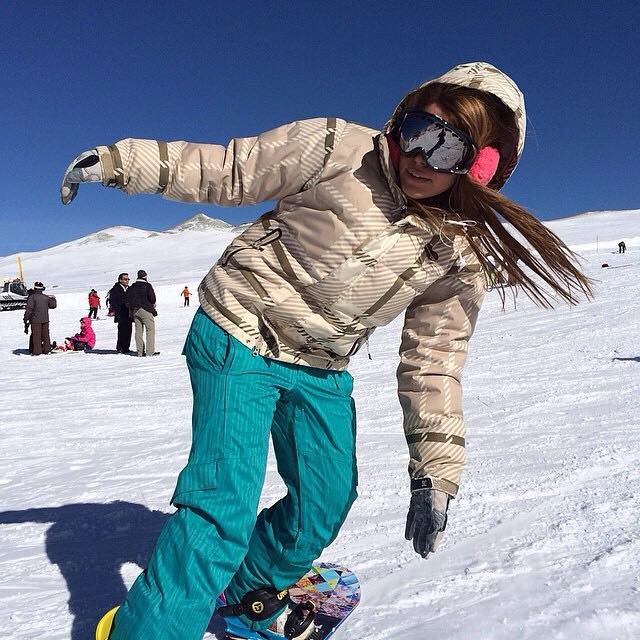
Young woman snowboarding in Tochal, Iran

Young woman snowboarding in Tochal, Iran

Tochal Complex is located in Velenjak, North of Tehran, Iran and consists of many recreational and sports facilities.

The Tochal Telecabin Project started in 1974 and has been open to the public since 1978. It starts at the Velenjak valley in north of Tehran at an altitude of 1900m. and ends at the last station at an altitude of 3740m, near the main ridge of Mount Tochal. This 7500m long gondola lift is used for accessing ski resorts and other recreational centres on the mountain to enjoy this area’s beautiful landscape, mountain fresh air and a multitude of fresh water springs.

The gondola lift has four stations:
Station 1 is at an elevation of 1900m and located at the beginning of Velenjak valley (end of Velenjak Street). Parking, inns and some other facilities are available.
Station 2 is at 2400m and has very limited facilities.
Station 5 is at 2935 m. There is a restaurant and a rescue centre. This station is also accessible through several climbing paths like Shirpala shelter, Osoon valley and Palang-chal shelter. In order to get to Station 7 you have to change here.
Station 7 is at 3740 m. and very close to the Tochal main ridge. It is the last station of the gondola lift. This station is in the middle of the Tochal ski slope. The Tochal main peak is a 30-minute walk from this point. This station is also reachable from Hezar-cham climbing path from Station 5.

Tochal Skiing Resort is one of the popular recreational places in Tehran. The main ski slopes are located in Station 7:
Peak: This 1200m slope starts from the foot of Tochal (at 3850m) and ends at the hotel (3550m). There is one Doppelmayr chairlift and one teleski for transferring skiers and a half pipe. Because of the height of the ski slope in station 7 (more than 3500m above sea level), similar to the Alvares Ski Resort in Sabalan, Ardabil Province, Iran, these slopes are covered with snow for more than 8 months during the year.
Western Foothill: This slope is located on the western foothill of the Tochal Mountain. The length of the ski slope is 900m, having its peak at 3750m above sea level and its lowest spot at Tochal Hotel (3550m above sea level). A Poma chairlift is built in this slope for skiers.

Sources: Wikipedia | Tochal Complex, Mehr News Agency | Photos, ISNA | Photos, Tasnim News Agency | Photos

Photo gallery: Christmas 2014 in Iran – Armenian Christmas Food

Every holiday has its own traditional food, in Iran or anywhere else in the world. Iranian Christians, including Armenians, celebrate Christmas and the Christian new year with special dishes, pastries and drinks.

Many Iranians are under the impression that Iranian Armenians, like many other Christians in the world — and especially Americans — celebrate the new year, Christmas and Easter by feasting on turkey. In fact, turkey is as  popular among Armenians as it is among other Iranians in general.

So what is an Armenian Christmas dinner like? The Iranian calendar year starts with the spring equinox, on March 20 or 21, and Iranians celebrate with a dish of herb rice and fish. As it happens, this dish is also a staple of the Armenian Christmas dinner in Iran.

But the Armenian Christmas table has other dishes as well. A key part of the meal is vegetable kuku, an Iranian dish consisting of eggs, vegetables, herbs and sometimes nuts and dried berries. If you ask an Armenian where this tradition comes from the answer is more often than not “I don’t know”.

“On their Christmas eve, Iranian Armenians often dine on rice, fish and vegetable kuku,” writes the Iranian Armenian writer and documentary filmmaker Robert Safarian. “Since childhood we thought that this was a Christmas tradition until the borders to Armenia opened and we learned that there is no dish in Armenia called vegetable kuku. It is an Iranian dish that  has become an Armenian tradition.”

Armenian Christmas pastries follow a tradition too. The two most well known and popular ones are perok (or pirok) marmalade cake and gata pastry. In the past, these two dishes were only popular among Armenians but now they are among the highest-selling pastries in Tehran confectionaries.

Coins of Fortune

Gata varies in its ingredients, size and in how it is decorated, depending on the region or the cook’s preferences. It consists of layers of dough with alternating layers of butter or margarine. Ingredients include flour, sugar, butter, eggs, yeast, milk and salt. Sometimes rosewater or spices such as cardamom are added, though they are not part of the standard recipe. After about an hour in the oven, the layers rise and the final gata takes shape.

One of the most popular variations of gata is made with nuts, especially walnuts. Sometimes a coin is hidden at the center of the gata and the belief is that fortune will smile on whoever finds the coin in her or his gata.

Gata is generally known as a sweet pastry but a salty version is popular too; many Armenian households prepare them for Christmas or the new year.

Perok, the other favorite holiday pastry, is made from a dough very similar to that used to make pie. Its center consists of marmalade; variations in perok are defined by the type of marmalade used.

The ingredients for perok are: pastry flour, sugar, eggs, baking powder, vanilla, grated orange peel, grated walnut, and marmalade. First you mix the butter and sugar, then add eggs one by one as you continue to mix. Then mix flour, baking powder, vanilla, grated orange peel and walnuts together in a separate bowl. For the third step, pour the contents of the bowl into a mixer. After a short while, turn the mixer off and continue to combine the ingredients by hand. Put about one-fourth of the dough aside and place the rest in a Pyrex dish and cover it with marmalade.

Cut the dough you have put aside into narrow ribbons and place them on the marmalade surface, making an “X” pattern. Put into an oven pre-heated to about 175 degrees centigrade and bake for about 40 minutes, or when the perok is golden.

Do-It-Yourself Wine

Like many Christians in the world, cookies and chocolates shaped like Christmas trees, Santa Claus or other symbols of the holiday are popular with Armenians. Families put them under Christmas trees and give them to children as treats and gifts.

You must add coffee and wine to this feast — they have a religious significance for all Christians. Under the Islamic Republic of Iran, trade in alcoholic beverages is forbidden, so the Armenian community makes its own wine and other alcoholic drinks. The law allows religious minorities to make wine for religious purposes.

One last point. The Armenians celebrate Christmas on January 6, so after the new year. As to why, well, that is another story, as they say.

This article was originally published in IranWire

Photo gallery: Christmas 2014 in Iran – Christmas Shopping

Mirza Shirazi Avenue, formerly known as Nader Shah, is located in one of the main Armenian neighborhoods in Tehran. At the moment, the avenue is decorated for Christmas and the approaching new year. Shop windows display Santa Claus dolls and the sidewalks are filled with pine trees, which will decorate the homes of Iranian Christians.

But Christmas is not only visible in this central Tehran street. It is also being celebrated in the east Tehran neighborhood of Majidieh, where many residents are preparing for Christmas and the new year period, now just a few days away.

Every year, starting in late November, shops in the two streets are decorated with gifts, pine trees, Santa Claus dolls and other seasonal items —  and shoppers are ready.

Pictures of Christmas Season in different Iranian cities. Click the photos to open them in enlarged gallery mode:

“From the first day of Azar (November 22), we get ready and make sure we have the merchandise,” says K., a shopkeeper on Mirza Shirazi Avenue. […] “The shoppers are not only Armenians and Christians. Many Muslims buy pine trees, Santa Clauses and other Christmas items and celebrate the holidays,” he explains. “They say it is a joyous and beautiful celebration. I don’t find it unusual, because Armenians celebrate the Iranian new year and participate in some Muslim religious ceremonies as well.” […]

“If you have an Armenian friend, remember not to call him on December 25, when all the radios and TVs and newspapers talk about Christmas and congratulate Christians on the birth of Jesus,” wrote the Armenian writer and documentary filmmaker Robert Safarian on his blog a few years ago. “The Armenian Christmas is on January 6, when probably nobody calls anyone to celebrate the holiday.”

“On their Christmas Eve, Iranian Armenians often dine on rice, fish and vegetable kuku (an Iranian dish made with whipped eggs, vegetables and herbs),” wrote Safarian. “Since childhood, we thought that this was a Christmas tradition until the borders to Armenia were opened and we learned that there is no dish in Armenia called vegetable kuku. It is an Iranian dish that has become an Armenian tradition.”

Because religious occasions in Iran are observed according to the Islamic lunar calendar, this year’s Christmas coincides with a mourning period for Muslims, and Shias in particular. But Iranian Christians have not encountered any restrictions in their preparations for Christmas and the new year. It continues to be a celebration that manifests itself in color and light in a few streets in the center of the Iranian capital.
This text is part of an article published on IranWire

Sources
DeutscheWelle
IranWire

Memorial honoring Jewish heroes of Iraq-Iran war unveiled in Tehran, Iran

Earlier this week, authorities in Tehran unveiled a monument to slain Iranian Jewish soldiers who died during the country’s long and bitter war with Iraq between 1980 and 1988. Death tolls for the hideous conflict differ, but casualty counts usually reach more than 1 million for both countries.

A public ceremony marked the memorial’s opening on Monday, with speeches that took place at a dais flanked by the Iranian flag and a menorah. Banners showed the images of fallen soldiers, hailed as “martyrs” in Farsi and Hebrew inscriptions.

[…]

After Israel, Iran has the Middle East’s second-largest community of Jews — with its current population estimated between 20,000 and 30,000.

“We are not tenants in this country. We are Iranians, and we have been for 30 centuries,” Ciamak Morsadegh, the Iranian Jewish parliamentarian, told Washington Post reporter Rezaian last year.

“There is a distinction between us as Jews and Israel,” added a shopkeeper in the historic city of Isfahan. “We consider ourselves Iranian Jews, and it has nothing to do with Israel whatsoever. This is the country we love.”

Sources:
Washington Post
IRNA

Works by three US American painters exhibited at Tehran’s Ovissi gallery

"Winter Opera" by Fernando DeOliveira

“Winter Opera” by Fernando DeOliveira

An exhibition displaying works by three U.S. abstract painters are currently underway at Tehran’s Ovissi Gallery. Thirteen works by Sheila Rice, Fernando DeOliveira and Brian Xavier will be on display until December 17 at the exhibit.

“My work is about the flow of joy and consciousness that animates my inner world,” DeOliveira wrote in a catalogue for his exhibition, which was held at the Alternative Art Space in Boston from December 2 to 7.

“I am an emotional person who believes that we can meet through art, and my art attempts to share my emotions and perceptions with each viewer in a very personal, intimate way,” he added.

Ovissi Gallery is located at 7 Azar Alley, Nateq-Nuri St., Gol-Nabi St., Pasdaran Ave.

The works are scheduled to another exhibition, which will open at Tehran’s Sheis Gallery on December 18.

The exhibition will run for five days at the gallery, which can be found at 10 Shirzad Alley, near Daneshju Park, Vali-e Asr Ave.

Source: Payvand News of Iran

Photo Gallery: Veterinary Hospital in Tehran, Iran

The Tehran Pet Hospital was opened in 2004 as the first private pet hospital in Iran.

Sources: IRNA

International Conference on Shakespeare Studies held in Tehran, Iran

Prof. Stephen Greenblatt: “I never thought that Shakespeare would become my magic carpet to the land of Persia”

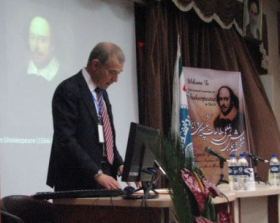
The First International Conference on Shakespeare Studies was held on November 26 to 27, 2014 in Iran.

The conference, organized by the Faculty of Foreign Languages and Literatures from the University of Tehran, explored themes such as ‘Shakespeare and Political Discourse’, ‘Shakespeare under the Iranian Eye’, ‘Shakespeare and Adaptation’, ‘Radical Shakespeare’, ‘Shakespeare and Mysticism’ and ‘Shakespeare and Popular Culture’.

Tehran, Iran - University of Tehran, Conference on Shakespeare Studies 2014 - 00Professor Stephen Greenblatt took part in the conference and delivered a keynote speak focused on Shakespeare and the human condition on November 26. He is one of the world’s most celebrated Shakespearean scholars and best known for Shakespeare biography titled Will in the World: How Shakespeare became Shakespeare, which was on the New York Times Best Seller List for nine weeks. In 2012 he won the Pulitzer Prize for his book, The Swerve: How the World Became Modern.
“I never thought that Shakespeare would become my magic carpet to the land of Persia” said Harvard scholar Prof. Greenblatt when he expressed his enthusiasm for Iran and Persian cultural and historical heritage during the conference.

Prof. Mark Burnett from Queen’s University in Belfast, was another keynote speaker whose discussion focused on cinematic representations of Shakespeare in Iran. He talked about an Iranian adaptation of Shakespeare’s Hamlet entitled Doubt (Tardid), a 2009 Iranian Crystal Simorgh-winning film directed by Varuzh Karim Masihi.

Iranian scholar Hossein Elahi Ghomshei, author and lecturer on literature, art and mysticism, also spoke at the conference.

The event was organized by Dr. Ismail Salami and Dr. Maryam Soltan Beyad, professors at the University of Tehran.

Source: Iran Front Page

Iran-USA Simultaneous Art Installation: A Portal Between Tehran and New York City

Shared Studios is launching the first public installation of Amar Bakshi’s Shared Studio project “A Portal BetweenTehran & NYC: Open for Conversation” by conversing through a live audio-visual connection with an individual in Tehran.

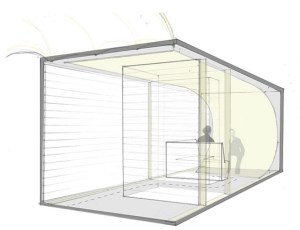
Portals are shipping containers equipped with specialized communications technology. Individuals enter one at a time and converse with a person in the other location as if they were in the same room. Simultaneous text translation is available. This first pairing unites the Lu Magnus Gallery in NYC and the M-40 Studio in Tehran.

OPEN FOR CONVERSATION
DECEMBER 5 – 19, 2014
Special Open Hours: 7:30A – 1:30P, Mon – Sun
LU MAGNUS GALLERY and M-40 STUDIO TEHRAN

Each individual is invited to enter a Portal and converse with whoever happens to be in the Tehran location, or with someone in particular upon advance request. To schedule your visit, please visit SHAREDSTUDIOS.SCHEDULISTA.COM

Powerful new technologies allow us to connect across boundaries as never before; yet we too often use them to cocoon ourselves in our own cultural, political, or ideological communities. Portals puncture hardened stereotypes of the other by facilitating one-on-one encounters. They serve as a catalyst for conversation between communities that would not typically engage with one another due to language barriers, technological limitations and hardened stereotypes of the other meeting people whom they only hear about unidirectionally in the news.

Visit the gallery for special Q&A sessions with the artist and the following New York guests:

Amy Chua and Jed Rubenfeld (Fri Dec 5, 1:00pm-2:00pm)
Yale Law professors and bestselling authors Amy Chua and Jed Rubenfeld. Chua’s books include Battle Hymn of the Tiger Mother and World on Fire. Rubenfeld’s books include The Death Instinct and Freedom and Time.

Jonah Bokaer & James Koroni (Sat Dec 6, 1:30pm-2:30pm)
Jonah & James perform a curated dance live in the New York space, streamed live to Tehran.

Fareed Zakaria (Mon Dec 8, 10:30am-11:30am)
CNN host, Atlantic Monthly writer and bestselling author of The Post-American World and The Future of Freedom

Morgan Spurlock (Wed Dec 10, 10:00am-11:00am)
Documentary filmmaker whose titles include Supersize Me and The Greatest Movie Ever Sold.

Tania Bruguera (Thu Dec 11, 1:30pm-2:30pm)
Tania Bruguera is a Cuban installation and performance artist.

Rob Storr (Fri Dec 12, 9:00am-10:30am)
Robert Storr is the Dean of the Yale School of Art. Formerly, he was Senior Curator at the Museum of Modern Art.

Mohsen Namjoo (Sat Dec 13, 1:30pm-2:30pm)
Mohsen Namjoo is an Iranian artist, songwriter, singer, music scholar and setar (traditional Persian lute) player based in California.

Nicky Nodjoumi (Sun Dec 14 – Dec 15, 11:30pm)
Nicky Nodjoumi’s works are conceived of as theatrical stages, where compositions of figures both serious and ridiculous, in the words of Phong Bui, “house meanings without irony, narratives without stories, humor without morality, above all creating a space that heightens the awareness of old and new history.”

Keller Easterling (Wed Dec 17, 9:00am-10:15am)
Architect, professor and author of books including Extrastatecraft: the Power of Infrastructure Space and Enduring Innocence: Global Architecture and Its Political Masquerades.

Sources: Shared Studios, Lu Magnus Gallery, Spacesmith


Theater Performance: “London, Tehran, Rome, Amsterdam” opened in Tehran, Iran

“London, Tehran, Rome, Amsterdam, Reconsider Your Image Of Me” will play from November 16 to December 12 of 2014, every night (apart from Saturdays), at 21:00 o’clock in the Hafez Hall, Tehran.

This performance, a co-production between the Virgule Performing Arts Company (Iran) and STET The English Theatre (Netherlands) is supported by the Embassy of the Kingdom of the Netherlands. The opening ceremony was held on Sunday, Nov. 16 with the Dutch ambassador to Tehran attending the ceremony.

The performance examines a current topic between Iran and the West, namely what are the images that we have of ‘the Other’ and to what extent fears, fantasies and imaginations are based on truth. By initiating a direct meeting with the Other and listening to each other’s stories, this group aims to create new images, based on the stories of the people who wouldn’t usually make the headlines.

The piece is a multi-media, highly physical, speech performance. It includes the actors’ own stories, dialogue between the actors, video installations with short documentaries about daily life in the countries of origin of the actors and video collages of cultural milestones from these cultures. The physical form of the piece produces a third language.

The project has brought together an international cast to create this piece during a 2 month rehearsal period in Tehran. The company includes Dutch actress Marene van Holk, Italian actress Marta Paganelli, British actress Amy Strange, Iranian actresses Melodie Aramnia and Neda Jebreilli and Iranian actor Meysam Mirzaei, and the piece has been conceived and directed by Arvand Dashtaray.

The production will be performed in the Netherlands in the autumn of 2015.

Sources
Embassy of the Kingdom of the Netherlands in the Islamic Republic of Iran
Mehr News Agency

Haft Negah art exhibition, held in Tehran, closes tomorrow (Nov 28)

The Niavaran Culture Center in Tehran is hosting the 7th annual edition of Iran’s Seven Views (Haft Negah), an art expo coordinated since 2006 by seven major art galleries.

This year, fourteen galleries  take part in the expo. The Aria, Elaheh, Dey, Golestan, Haft Samar, Valli, Mah-e Mehr, The Aran, Etemad, Hanna, Dastaan Basement, Seen, Seyhun, and Tarrahan-e Azad galleries will all participate in this years celebrations taking place from November 14 to 28.

The exhibition will showcase paintings, sculptures, and calligraphy from 350 artists featuring 400 works that respond to this year’s exhibition motto, “Every Iranian Home, One Artwork”.

Some of the well-known artists showcasing their artworks this year include Sohrab Sepehri, Mohammad Ehsaii, Aidin Aghdashlu, Parviz Tanavoli, Iran Darrudi, Farideh Lashaii and Parvaneh Etemadi.

Make sure not to miss this one of a kind artistic event!

Sources: Tara Gallery, Mehr News Agency

Series: Tehran’s parks and gardens – Javanmardan Garden

Tehran, Iran - Tehran City - Javanmardan Garden 02

Javanmardan Garden – Tehran, Iran

Javanmardan Garden

Javanmardan-e-Iran garden with a total area of 150 hectares is one of the largest gardens located at the northwest area of the capital.

A total area of over 20 hectares is devoted to green space and the complex is powered by solar energy.

There are different special spaces: from a musical fountain with mechanical technologies and laser shows to the house of health and sports or the pond of birds.

The complex has also a 24km walking route, an 8km recreational carriage route and a 8.7km cycling route.

There is a children’s playground, soft games and a Highland Park for children under 14 years old. For youths over 14 years old: a 4600m2 training and professional skate park, a rappel complex , a playground with mechanical games, multifunctional playgrounds, a chess playing site, table tennis and table football playgrounds.

In the botanical garden and all over the garden, the plants and trees have been introduced with special plaques in order to increase the botanical knowledge of the visitors.

The Artists Garden has a traditional tea house and reception pavilion, cultural pavilion and available forestation green spaces.

Sources:
http://www.untoldiran.com/tehran/attractions/park/javanmardan%20park.shtml
http://en.irna.ir/PhotoDetail.aspx?NID=02733085

Tehran hosted 6th Seasonal Flowers and Plants Exhibition

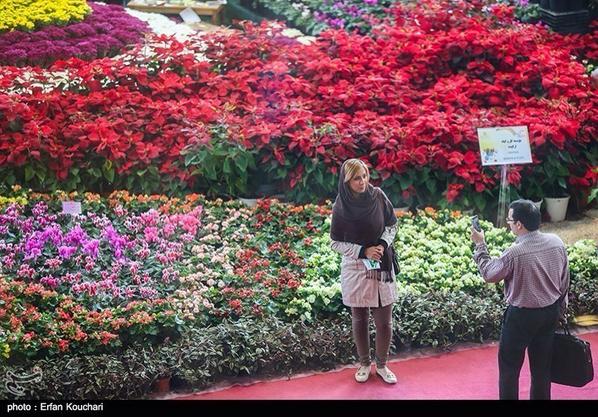
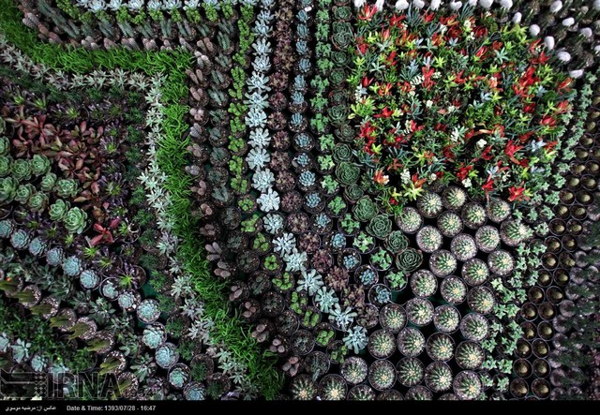
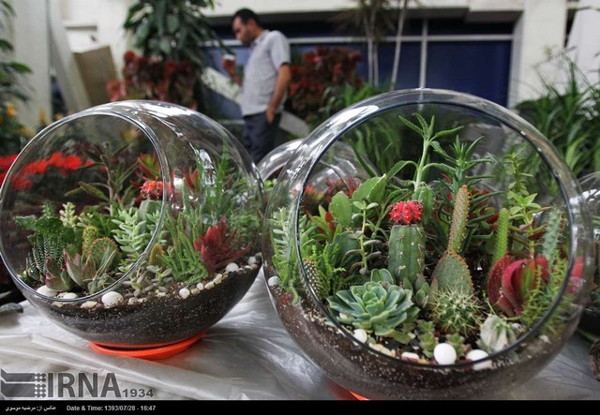
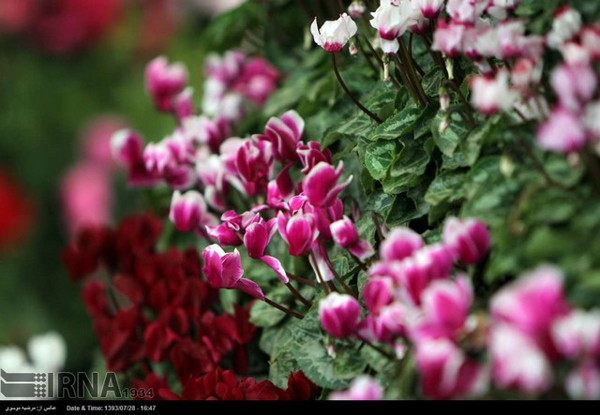
The 6th Seasonal Flower and Plant Exhibition and Autumn Flower Festival took place in the Iranian capital, Tehran.

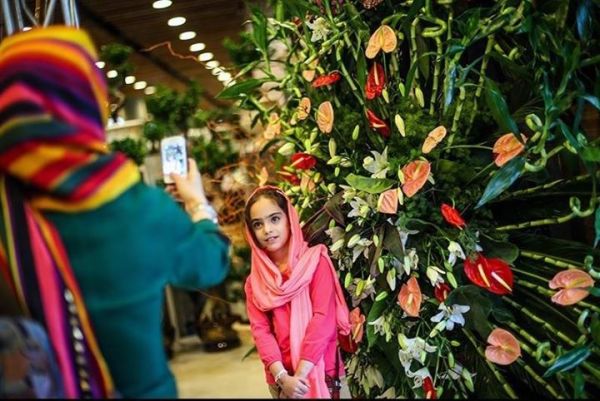
Domestic exhibitors from across the country have showcased cut flowers, houseplants, outdoor plants and horticultural equipment and related industries. Flower lovers have flocked to the exhibition to revive their spirits after a long day work. Vast arrays of flowers in different colors have turned the expo into a flamboyant painting, catching the eye of every visitor.

According to the organizer of the event, over 200 national flower and plant growers are taking part in the exhibition. Sunflowers, lilies, and lilacs were among the numerous flower species presented in the show. According to the head of municipality parks and green spaces, the exhibition is aimed to make people more familiar with different flowers, and to encourage them to take better care of Mother Nature. Diverse climatic conditions in Iran have turned the country into one the largest producers of flowers in the world. Iran ranks 17th in terms of the area under cultivation of ornamental flowers.

Tehran - 6th Flowers and Plants Exhibition 05 Tehran - 6th Flowers and Plants Exhibition 04 Tehran - 6th Flowers and Plants Exhibition 00 Tehran - 6th Flowers and Plants Exhibition 06 Tehran - 6th Flowers and Plants Exhibition 07 Tehran - 6th Flowers and Plants Exhibition 02

Sources:
PressTV – http://www.presstv.ir/detail/2014/10/24/383464/flower-show-plant/
Iran Front Page – http://iranfrontpage.com/news/society/environment/2014/10/tehran-plays-host-seasonal-flower-show/

1001 Libraries to see before you die!

The International Federation of Library Associations (IFLA) Public Libraries Section together with the IFLA Library Buildings and Equipment Section launched in Lyon at the IFLA World Library and Information Congress a project called 1001 libraries to see before you die.

This online initiative aims to bring together best practice examples of public library buildings and spaces from around the world. The libraries can be nominated for different criteria – the library building, the location, the innovative programs or the community engagement.

Currently the list is holding two Iranian libraries: the Astan Quds Razavi Library in Mashhad and the Bazar Library in Tehran.

Mashhad’s Astan Quds Razavi Library has been selected by the Open Education Database (OEDB) among the 20 Libraries that have changed the world in 2012 and three of the collections preserved in the central library are registered in the list of the UNESCO World Cultural Heritage List.

Tehran’s Bazar Library was chosen for its historical building which belonged to a relative of Naseruddin Shah dating back to 150 years.

More information: https://1001libraries.wordpress.com/category/iran/

Iran traveller Mike Milotte: Don’t skip Tehran’s unmissable sights

Tehran is the city travellers love to hate, with many avoiding a stay here altogether en route to Iran’s more popular tourist destinations. But as Mike Milotte discovers, the capital’s gorgeous galleries, sociable locals and exhilarating pace give it a beautiful side too.

Iranian friends and our guide/interpreter alike think we’re mad, but we persist with our plan to spend 10 days of our month-long visit to Iran in the polluted and architecturally unattractive capital, Tehran.


For my part, eleven museums, six art galleries and three bazaars later – not to mention two mountain trips, one cinema visit and a memorable night at home with a Tehrani family – I’m glad we persevered.

The plaza outside the main bazaar is a great spot for people-watching. The streets are teeming, not with mullahs or gun-toting police as I had anticipated, but with seemingly carefree shoppers, armed with mobile phones. There are lots of head-to-toe black chadors, but just as many women wear cheerful loose-fitting headscarves, tight jeans and dramatic makeup.


Meeting Tehranis is remarkably easy and richly rewarding. As we try to buy saffron, piled high at the very un-touristy Tajrish bazaar, a young woman asks in broken English if we need help. We get talking. ‘N’ is an artist, and one of her friends has an exhibition at the renowned Seyhoun art gallery. We’re invited along, and are soon chatting to half a dozen of the city’s brightest young painters, N’s friends, who excitedly show us their work on smart phones and tablets. We adjourn to a working studio, home to illicit life drawing classes, where we drink tea and leave with a fabulous landscape painting that will grace our living room.

Next day, in the unpeopled galleries of the Museum of Contemporary Art, a staff member tells us 3,000 works by western painters like Picasso, Van Gogh, Bacon, etc –  all deemed degenerate – languish in the basement while ‘safe’ Iranian art bedecks the walls. ‘That’s why no-one bothers coming,’ our informant asserts. Later, in the Carpet Museum next door, an attendant eagerly points out some 18th century Persian rugs depicting erotic imagery where more than female heads are laid bare. ‘How come they’re still on show?’ I ask. He just smiles back.

As the only foreigners in most of the places we visit, we are an endless source of interest to shyly curious Tehranis. One such encounter, during a lung-reviving mountain walk at Darband, ends with an invitation to dinner in the family home. The women all wear party dresses and have their heads and arms uncovered, illegal, even at home, when a male stranger is present. French wine and Russian vodka, smuggled from Iraq, are offered, and after an unforgettable meal of lamb with walnuts and pomegranate, we settle down to watch television.

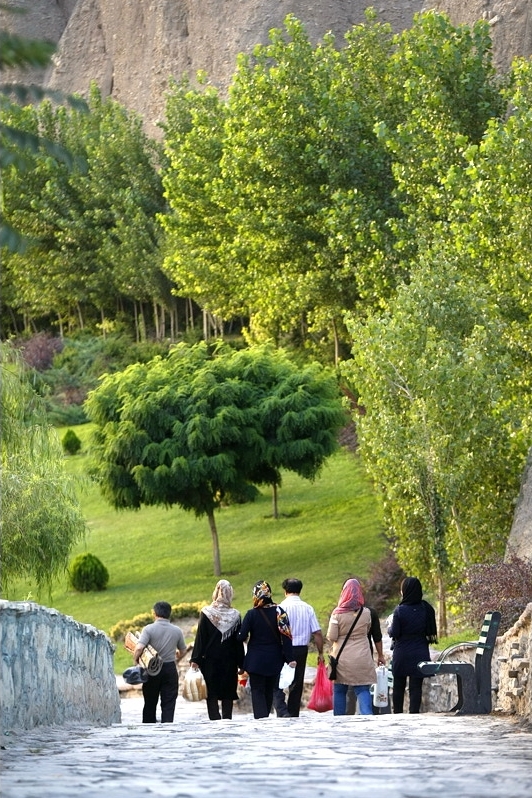
An Iranian family go for a stroll in Tehran. Image by Amos Chapple / Lonely Planet Images / Getty

Zigzagging back to our hotel in a bone-shaking taxi without seatbelts, our driver, a talkatively wise man with reasonable English, points out ranks of enormous SUVs – gleaming Porsches, Mercs, BMWs and Audis – waiting for their owners to spill out of fashionable and expensive eateries in Tehran’s northside. ‘Sanctions’, he says, ‘have made a small number of businessmen with political friends fantastically rich.’

Am I imagining it, or is it beginning to feel more and more like home here?

A young couple admire the view of Tehran at dusk. Image by Amos Chapple / Lonely Planet Images / Getty

A young couple admire the view of Tehran at dusk. Image by Amos Chapple / Lonely Planet Images / Getty

Glass and Ceramics Museum 
Stunning artefacts from the 2nd millennium BC onwards, beautifully displayed and annotated. We were the only visitors which meant we could ooh and aah without embarrassment.

A display at the Glass and Ceramics Museum. Image by Mike Milotte / Lonely Planet

A display at Tehran’s Glass and Ceramics Museum. Image by Mike Milotte / Lonely Planet

Reza Abbasi Museum
The exhibits, starting from around 2000BC, are without exception quite exquisite – especially the gold work – and as few people seem to visit, you might have it entirely to yourself.

Jameh Bazaar
A massive Asian flea market staged on Fridays only, when the main bazaar is closed. Come prepared to buy stuff you neither need nor want but will treasure for ever. Increase the pleasure by haggling hard.

Carpet Museum of Iran
Look out for two enormous carpets depicting (among others) Napoleon, and see if you can spot the difference in how he’s depicted. The carpets are beautiful but unlike its Turkish equivalent in Istanbul, this museum’s signage isn’t great.

Colourful detail in the Carpet Museum of Iran. Image by Mike Milotte / Lonely Planet

Colourful detail in the Carpet Museum of Iran. Image by Mike Milotte / Lonely Planet

Taxi ride across town
You’ll probably survive it, and you’ll certainly never forget it. Tehran traffic seems chaotic yet it flows smoothly. The secret is in the weaving and dodging performed by drivers who appear mad but who never lose their tempers, let alone their bumpers.
Read more: http://www.lonelyplanet.com/iran/travel-tips-and-articles/tehrans-top-attractions#ixzz3CBhjP749


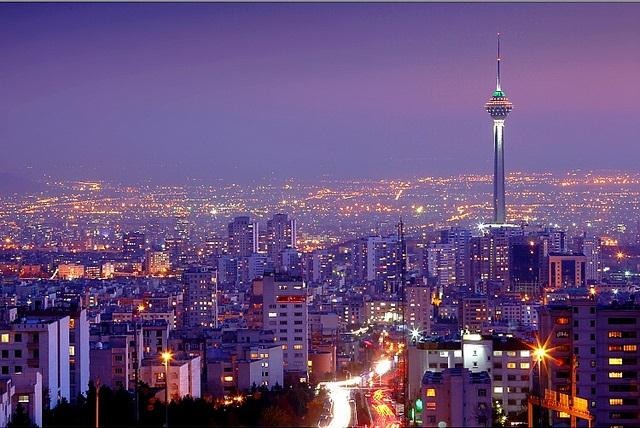
Tehran Night Series

Other photos from Tehran: https://theotheriran.com/tag/tehran/

Tehran, Iran-Night

Tehran, Iran-Night

2014 Tehran Art Auction grosses over $4 million

Sohrab Sepehri’s untitled painting from his Tree Trunk series sold for 18 billion rials (about $550,000), setting a new auction record for an Iranian painting.

Another work by Sepehri, a 90×130 centimeter abstract painting, sold for 16 billion rials (over $485,000), fetching the second highest price at the auction.

Reza Derakhshani’s artwork “Hunting the Blue Sky” sold for 6 billion rials (over $180,000), three times the estimated price, making it the third highest selling lot at this year’s auction.

Other highlights of the sale included a calligraphy painting by Mohammad Ehsaii and a two-piece painting by Aidin Aghdashlu. A calligraphy painting by Nasrollah Afjeii and paintings by Kurosh Shishegaran, Parviz Kalantari, Farideh Lashaii, and Masud Arabshahi were also sold.

Tehran Auction Director Alireza Sami-Azar, who established the auction house in June 2012 to promote the economy of art in the country, said that the sale was beyond his expectations, which shows Iranians’ interest in art, and the creativity of the country’s artists.

Complete catalogue of the auction: Tehran Auction 2014

Source: Payvand News of Iran | 2014 Tehran Auction grosses over $4 million

Tehran, break of dawn

Photos: young women and men decorating walls in Tehran

https://i0.wp.com/shahrefarang.s3.amazonaws.com/wp-content/uploads/2013/08/Shahrak-Gharb-01.jpg

https://i0.wp.com/shahrefarang.s3.amazonaws.com/wp-content/uploads/2013/08/Shahrak-Gharb-03.jpg

https://i0.wp.com/shahrefarang.s3.amazonaws.com/wp-content/uploads/2013/08/Shahrak-Gharb-05.jpg

https://i0.wp.com/shahrefarang.s3.amazonaws.com/wp-content/uploads/2013/08/Shahrak-Gharb-09.jpg

تزئین دیوارهای میدان صنعت

Pharell Williams – Happy IV – In the streets of Tehran, Iran

Check also the other Happy Videos here on this blog:
https://theotheriran.com/tag/tehran/

Tehran – Azadi (Freedom) Tower Series

Image

Tehran – Azadi Tower

Tehran – Day Series

Image

Tehran, Iran

Tehran – Azadi (Freedom) Tower Series

Image

Facts

One of the most familiar landmarks of Tehran.
Included in the building is a cultural centre with a library, a museum and several art galleries.

The entrance of the tower is directly underneath the main vault and leads into the Azadi Museum on the basement floor.

The main display is occupied by a copy of the Cyrus Cylinder (the original is in the British Museum).

The monument acts as a grandiose gateway to the Iranian capital, and is surrounded by a large plaza (approx. 50,000 m²).

Built in 1971 in commemoration of the 2,500th anniversary of the Persian Empire, this “Gateway into Iran” was named the Shahyad Tower, meaning “Kings’ Memorial”, but was dubbed Azadi (Freedom) after 1979. It is 50 meters (164 ft) tall and completely clad in cut marble.

More info:
http://en.wikipedia.org/wiki/Azadi_Tower

Tehran Night Series

Image

Tehran, Iran

Series: Cool Buildings of Tehran III

http://www.mymodernmet.com/profiles/blogs/mehdi-ghadyanloo-murals?fb_action_ids=10201903913985563&fb_action_types=og.likes

Tehran – Night Series I

TEHRAN_Night Skyline

Tehran – Night Skyline

Series: Cool Buildings of Tehran II


http://www.mymodernmet.com/profiles/blogs/mehdi-ghadyanloo-murals?fb_action_ids=10201903913985563&fb_action_types=og.likes

Tehran – Day Series I

Image

Series: Cool Buildings of Tehran I


http://www.mymodernmet.com/profiles/blogs/mehdi-ghadyanloo-murals?fb_action_ids=10201903913985563&fb_action_types=og.likes
Other interesting photos:
https://theotheriran.com/tag/photos/

Pharrell Williams – Happy in Tehran II – Iranians going crazy

Check out other videos on Iran at: https://theotheriran.com/tag/video/

Pharrell Williams – Happy (We are from Tehran).

Other interesting videos on Iran:
https://theotheriran.com/tag/video/

Iranians participating in Earth Hour 2014 throughout Iran

Earth Hour is a worldwide movement for the planet organized by the World Wide Fund for Nature (WWF). The event is held worldwide annually encouraging individuals, communities, households and businesses to turn off their non-essential lights for one hour, from 8:30 to 9:30 p.m. on the last Saturday in March, as a symbol for their commitment to the planet.

Source: Wikipedia

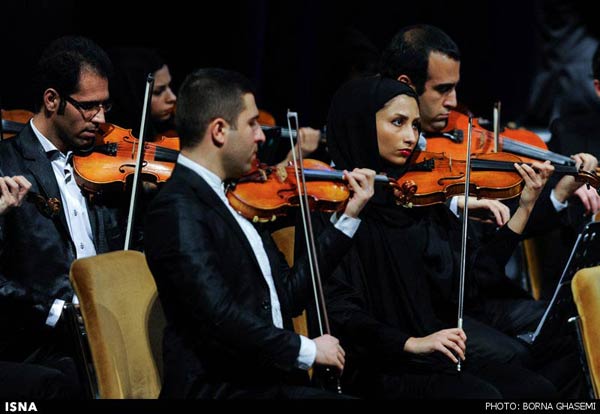
A possible revival of Tehran’s and Iran’s National Symphony Orchestras

Image

WASHINGTON — Alexander Rahbari fondly recalls his last stint conducting the Tehran Symphony Orchestra. It was the fall of 2005, Beethoven’s Ninth Symphony was on the card, and the Iranian capital’s Vahdat Hall was packed.

“I conducted Beethoven’s Ninth in Tehran for seven nights. If I said I conducted the Ninth for seven nights in New York or Austria, I would be asked if there was anyone in the audience — after two nights the hall would be empty,” Rahbari said.

“But [in Tehran] it was full — so many people came. Later some newspapers complained that, after returning to Iran after so many years, I conducted the symphony for only seven nights.” […]

In 2012, the funding problems that Rahbari and his successors complained about silenced the Tehran Symphony Orchestra, whose roots dating back to the 1930s made it one of the oldest in the Middle East.

Meanwhile, Iran’s National Orchestra, founded by Iranian-born composer and conductor Farhad Fakhreddini in 1998, suffered similar difficulties. Fakhreddini himself resigned in 1999, and the orchestra that performed only classical Iranian music dissolved in October 2012. […]

The election of President Hassan Rohani in 2013 has provided a glimmer of hope for the country’s orchestra scene, however.

“I’m very sorry that the [Tehran] Symphony Orchestra and the National Orchestra have been shut down,” Rohani said in a January 8 speech to artists and cultural figures. “This government will revive them in the coming months.” […]

Iran’s culture minister, Ali Jannati, added to the optimism when he said at the Fajr International Music Festival last week that the government aims to strengthen Music.

Tehran (Iran) received its first snow of the season

http://imgur.com/a/hbQsE

RexsqHb BXq2ZbC JfZ7PBR MWgnBpW