Tag Archives: Iran

Photo Series: Winter in Iran – Marivan, Kurdistan Province

Snowman Festival in Marivan – With the first snowfall of this year’s winter in Marivan, people gathered to celebrate a snowman festival.

Marivan is a city in Kurdistan Province, Iran. At the 2006 census, its population was 91,664 inhabitants. The native language of the city is the central dialect of Kurdish (Sorani) with a minority of Hawrami dialect. The religion of the people is Shafi’i Sunni.

The city lies close to the Iraqi border and due to the official border market of Bashmaq which is between the Kurdish region of Iraq and Iran, it serves a destination for shoppers in neighbor provinces. Lake Zarivar lies west of Marivan. With a length of 5km and a maximum width of 1.6km it is a major touristic attraction in the region. The lake’s water is fresh and has a maximum depth of 6m.

Sources: Wikipedia | Marivan, Mehr News Agency | Photos

Iran’s Ancient City Nishapur in Razavi Khorasan Province

Nishapur or Nishabur from Middle Persian “New-Shabuhr” (meaning New City of Shapur, Fair Shapur, or Perfect built of Shapur) is a city in the Razavi Khorasan Province, in northeastern Iran, situated in a fertile plain at the foot of the Mount Binalud. It has an estimated population of 239.000 (as of 2011). Nearby are the turquoise mines that have supplied the world with turquoise for at least two millennia.

The city was founded in the 3rd century by Shapur I. Nishapur later became the capital of Tahirid dynasty and was reformed by Abdullah Tahir in 830. In 1037 it was selected as the capital of Seljuq dynasty by Tughril.

It reached the height of its prosperity under the Samanids in the 10th century, but was destroyed by Mongols in 1221, and further ruined by other invasions and earthquakes in the 13th century.

After that time, a much smaller settlement was established just north of the ancient town, and the once bustling metropolis lay underground—until a team of excavators from the Metropolitan Museum arrived in the mid-twentieth century. They worked at Nishapur between 1935 and 1940, returning for a final season in the winter of 1947–48.

The excavators had been drawn to the city because of its fame in the medieval period, when it flourished as a regional capital and was home to many religious scholars. It was also known as an economic center—Nishapur was located on the Silk Road.

The city was an important center for the manufacture of glass, metal, and stone vessels. The distinctive ceramics produced in Nishapur were traded around the region, and have been found at Herat, Merv, and Samarqand.

In addition, Nishapur was a source of turquoise and a center for growing cotton, producing cotton textiles as well as several types of fabric incorporating silk. One of the most unusual products of Nishapur, however, was its edible earth, which was believed to have curative properties.

Images of some artefacts found in Nishapur during the Metropolitan Museum’s excavations there

Sources: Wikipedia | Nishapur, Mehr News Agency, The Metropolitan Museum of Art

Iran’s West Azerbaijan Province: Saholan Cave

Ghar Saholan is located in West Azerbaijan Province, Iran, near to the village of Saholan that lies some 43 Kilometres east of the city of Mahabad. Situated in a small hill of limestone the cave has two entrances at an altitude of 1,780m. The cave has a total surveyed (mapped) passage length of 771.1m and a vertical range of 45.8m.

Geomorphological evidence within the cave would strongly suggest that it has been formed under phreatic conditions by still water and not by flowing water. Originally the cave would have been completely flooded. In the latter stages in its development the water levels have dropped to create airspace within the chambers and passages and further passage enlargement would have been stimulated by the gentle rising and falling of the water table and subsequent water level. Throughout the cave there are horizontal ledges of calcite deposits along the walls that are indicative of former (higher) water levels.

Sources: Tasnim News | Photos, www.caving-in-iran.org

“Timeloss” by Iranian theater group Mehr to go on stage in New York and Los Angeles

The Mehr Theater Group led by Iranian director and writer Amir-Reza Kuhestani will perform “Timeloss” in the American cities of New York and Los Angeles. “Timeloss”, a fiery story about the passage of time, is another version of “Dance on Glass”, which Kuhestani staged in 2001.

Iranian play “Timeloss” on stage in the US: 16th to 18th January 2015 / Under The Radard Festival, New York 21st and 22nd January 2015 / Off Center Festival, Segerstrom Center for the Arts, Los Angeles

The play is an entry to “Under the Radar Festival”, a festival tracking new theater from around the world that is taking place at the Public Theater in New York from January 7 to 18.

The troupe will have their first performance Friday night. They will have three more performances at the Public Theater until January 18. Their next performance will be in the Segerstrom Center for the Arts in Los Angeles on January 21 and 22.

Starring Hassan Majuni and Mahin Sadri, the play will be performed in Persian with English supertitles. The play was staged at the Paris Autumn Festival in November 2014. It has also been staged in Hamburg, Brussels, Frankfurt, Geneva and Rotterdam.

Kuhestani is one of Iran’s most successful and prolific playwright-directors. His “Dance on Glass” won international acclaim and toured for four years. He is the first director to win two consecutive awards for the best theater production of the year in Iran for his play “Ivanov” (2011) and “The Fourth Wall” (2012).

Source: Payvand News of Iran

Other interesting related read:
The Guardian | Intimacy, love and separation in contemporary Iranian theatre

Photo gallery: Winter in Iran – Chahar Bagh, Golestan

Chahar Bagh is a village in the Central District of Gorgan County, Golestan Province, Iran. Gelestan, located in the north-east of the country south of the Caspian Sea, enjoys a temperate climate most of the year. Geographically, it is divided into two sections: The plains, and the mountains of the Alborz range.

Source: Mehr News Agency | Photos, Wikipedia | Golestan Province

Photo gallery: Armenian Iranian Christians celebrate Christmas on 6th of January in Isfahan, Iran

Some Iranian Christians celebrate Christmas on Dec. 25 and New Years’ on Jan. 1, while Armenians celebrate Christmas at the same time as the Epiphany on Jan. 6.

More content on Iranian Christians on this blog: The other Iran | Christians

Sources: Mehr News Agency | Photos, Al-Monitor: the pulse of the Middle East | Iran’s Christians celebrate Christmas

Iran’s Kerman Province: Mahan – Shazdeh Garden (Photos)

The tradition and style in the design of Persian Gardens has influenced the design of gardens from Andalusia to India and beyond.

Shazdeh Garden meaning Prince’s Garden (in Persian: Bagh-e Shazdeh) is a historical Persian garden located 6km away from the city of Mahan in Kerman province, Iran. It is a rectangular green oasis surrounded by brown desert and a good example of Persians gardens that take advantage of suitable natural climate.

It was built originally for Mohammad Hasan Khan Qajar Sardari Iravani ca. 1850 and was extended ca. 1870 by the governor of Kerman, Abdolhamid Mirza Naserodoleh, during the eleven years of his governorship in the Qajar dynasty. Its location was selected strategically as it was placed on the way between the Bam Citadel and Kerman.

The construction was left unfinished, due to the death of Abdolhamid Mirza in the early 1890s. It is rumored that upon hearing the news of the Governor’s death, the masons immediately abandoned their work and as a result the main entrance still shows some unfinished areas.

Shazdeh Garden is a rectangular shaped, 5.5 hectares areal surrounded by a wall. It consists of an entrance structure and gate at the lower end and a residential structure (once the summer palace of a now unknown prince) at the upper end. The distance between these two buildings has a collection of pools ornamented with water fountains. There are pavilions and a central canal. The residence is now mostly derelict but partly converted to a nice restaurant. The design looks best in an aerial photograph.

The garden itself consists of a variety of pine, cedar, elm, buttonwood and fruit trees which benefit from the appropriate soil, light breezes and qanat[1] water which enables such an environment in contrast to the dry surroundings.

The water enters the Garden at the upper end and while irrigating the trees and plants along its way, flows down through a series of steps and falls. On the two ends of the water path – meaning at the main entrance and the residential structure – there’s a pool that collects and subsequently redistributes the water. All together from top to bottom there are eight levels/falls along the water path.

In 1991, the premises were completely renovated due to the commemoration ceremony of Khaju Kermani. A traditional guesthouse has been constructed in the city center for tourists and visitors.

Some damage to the Garden was caused as a result of Kerman’s 2004 earthquake. In 2005 experts of the Research Center for Historical Sites and Structures were preparing documents to register Shazdeh Garden, amongst other gardens under the denomination “The Persian Garden”, on the UNESCO World Heritage List. It was finally inscribed in June of 2011.

Remark
[1] Qanat (also known as kariz or karez): The development of qanats probably began about 2.500 or 3.000 years ago in Iran and the technology spread eastward to Afghanistan and westward to Egypt. It is an ancient type of water-supply system, developed and still used in arid regions of the world. A qanat taps underground mountain water sources trapped in and beneath the upper reaches of alluvial fans and channels the water downhill through a series of gently sloping tunnels, often several kilometres long, to the places where it is needed for irrigation and domestic use. Although new qanats are seldom built today, many old qanats are still used in Iran and Afghanistan, chiefly for irrigation. (Source: Encyclopaedia Britannica)

Sources: Wikipedia | Shazdeh Garden, Iran Tour Online, Historical Iranian sites and people | Shazdeh Garden, Wikimedia | Shazdeh Garden, IRNA | Photos, Wikipedia | Persian Gardens

Photo gallery: Winter in Iran – Khalkhal-Asalem region

Khalkhal, with a population of 38,521 (2006), is the capital of Khalkhal County, in Ardabil Province, Iran. Asalem is a city in Talesh County, Gilan Province, Iran. Its population is 3,347 (2006). The road from Asalem to Khalkhal is known for its beautiful landscapes. This region, not far from the Caspian Sea, attracts many visitors every year.

Tasnim News Agency on December 26 dedicated its Iran’s Beauties in Photos section to pictures from winter in the northern part of Iran. Take a look:

Sources: Wikipedia | Asalem, Wikipedia | Khalkhal, Iran Front Page

Iran’s Tehran Province: Tochal Complex (Photos)

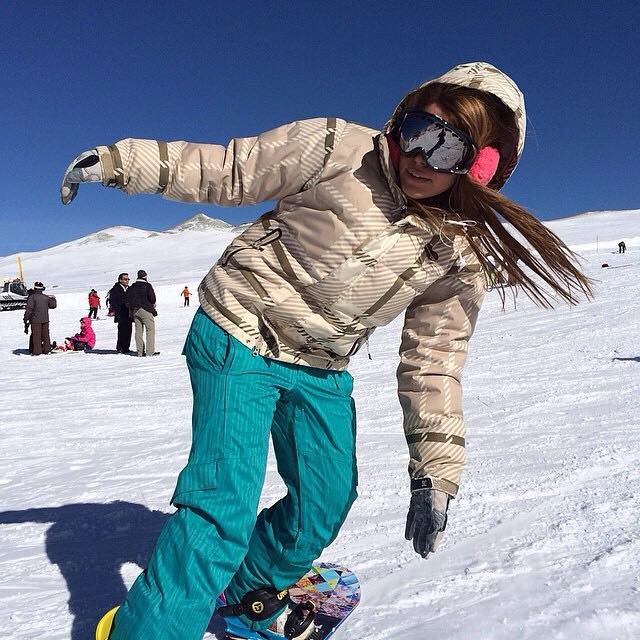
Young woman snowboarding in Tochal, Iran

Young woman snowboarding in Tochal, Iran

Tochal Complex is located in Velenjak, North of Tehran, Iran and consists of many recreational and sports facilities.

The Tochal Telecabin Project started in 1974 and has been open to the public since 1978. It starts at the Velenjak valley in north of Tehran at an altitude of 1900m. and ends at the last station at an altitude of 3740m, near the main ridge of Mount Tochal. This 7500m long gondola lift is used for accessing ski resorts and other recreational centres on the mountain to enjoy this area’s beautiful landscape, mountain fresh air and a multitude of fresh water springs.

The gondola lift has four stations:
Station 1 is at an elevation of 1900m and located at the beginning of Velenjak valley (end of Velenjak Street). Parking, inns and some other facilities are available.
Station 2 is at 2400m and has very limited facilities.
Station 5 is at 2935 m. There is a restaurant and a rescue centre. This station is also accessible through several climbing paths like Shirpala shelter, Osoon valley and Palang-chal shelter. In order to get to Station 7 you have to change here.
Station 7 is at 3740 m. and very close to the Tochal main ridge. It is the last station of the gondola lift. This station is in the middle of the Tochal ski slope. The Tochal main peak is a 30-minute walk from this point. This station is also reachable from Hezar-cham climbing path from Station 5.

Tochal Skiing Resort is one of the popular recreational places in Tehran. The main ski slopes are located in Station 7:
Peak: This 1200m slope starts from the foot of Tochal (at 3850m) and ends at the hotel (3550m). There is one Doppelmayr chairlift and one teleski for transferring skiers and a half pipe. Because of the height of the ski slope in station 7 (more than 3500m above sea level), similar to the Alvares Ski Resort in Sabalan, Ardabil Province, Iran, these slopes are covered with snow for more than 8 months during the year.
Western Foothill: This slope is located on the western foothill of the Tochal Mountain. The length of the ski slope is 900m, having its peak at 3750m above sea level and its lowest spot at Tochal Hotel (3550m above sea level). A Poma chairlift is built in this slope for skiers.

Sources: Wikipedia | Tochal Complex, Mehr News Agency | Photos, ISNA | Photos, Tasnim News Agency | Photos

Iran’s Hormozgan Province: Minab – Harvesting Watermelons for Yalda

Minab is a city in Hormozgan Province, Iran. At the 2006 census, its population was 76,776. In ancient times Minab had the name of Harmosia (or Harmozeia).

Minab is not far from Bandar Abbas. It is famous for fishing (especially shrimps) and for agriculture (especially date palms and mangoes). It lies on the main official road connecting Bandar Abbas, the Makran and the Baluchistan Province. The population are mainly Shi’a Muslims but there is also a Sunni minority, and the language they speak is Minabi (locally Minow), a dialect which is something between Bandari and Balochi and Persian. Once a week, a well known bazaar called “Panjshambe bazar” or in Minabi language “Peyshambe Bazar” (English: Thursday’s Bazaar) attracts people from all over Hormozgan, and beyond.

Sources: wikipedia | Minab, Mehr News Agency | Photos

Preparations in Iran for Yalda – The Longest Night of the Year (Photos)

Shab-e Chella(-e bozorg) (“night of (the great) forty”‎) or Shab-e Yalda (“Yalda night”‎) is an Iranian festival celebrated on the “longest and darkest night of the year,” that is, in the night of the Northern Hemisphere’s winter solstice. Calendarically, it is celebrated in the night between the last day of the ninth month (Azar) and the first day of the tenth month (Dae) of the Iranian civil calendar, which corresponds to the night of December 20 or 21 each year.

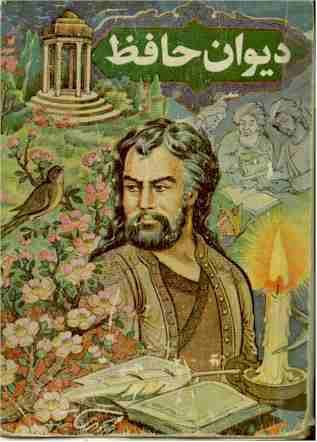
The longest and darkest night of the year is a time when friends and family gather together to eat, drink and read poetry (especially Hafez) until well after midnight. Fruits and nuts are eaten and pomegranates and watermelons are particularly significant. The red color in these fruits symbolizes the crimson hues of dawn and glow of life. The poems of Divan-e-Hafez, which can be found in the bookcases of most Iranians families, are intermingled with peoples’ life and are read or recited during various occasions like this festival and at Nowruz.

In the 1st-3rd centuries, significant numbers of Eastern Christians settled in Arsacid and Sassanid territories, where they had received protection from religious persecution. Through them, Western Iranians came in contact with Christian religious observances, including, it seems, Nestorian Christian Yalda, which in Syriac (a Middle Aramaic dialect) literally means “birth” but was also one of the Syriac words for Christmas, which — because it fell nine months after Annunciation — was celebrated on eve of the winter solstice. Although it is not clear when and where the Syriac word was adopted into Persian, gradually ‘Shab-e Yalda’ and ‘Shab-e Cheleh’ became synonymous and the two are used interchangeably.

An association with the 40-day “chella” period is preserved amongst Iranian Azerbaijanis, who call it Chilla Gejasi, which means the beginning of the first 40 days of winter. The Iranian concept also survives in Urdu-speaking Kashmir, India, where Chillai Kalan designates the 40-day harshest winter period.

In pre-Islamic Zoroastrian tradition the longest and darkest night of the year was a particularly inauspicious day, and the practices of what is now known as “Shab-e Chelleh/Yalda” were originally customs intended to protect people from evil (see dews) during that long night. People were advised to stay awake most of the night, lest misfortune should befall them, and people would then gather in the safety of groups of friends and relatives, share the last remaining fruits from the summer, and find ways to pass the long night together in good company. The next day (i.e. the first day of Dae month) was then a day of celebration. Although the religious significance of the long dark night have been lost, the old traditions of staying up late in the company of friends and family have been retained in Iranian culture to the present day.

Food plays a central role in the present-day form of the celebrations. In most parts of Iran the extended family comes together and enjoys a fine dinner. A wide variety of fruits and sweetmeats specifically prepared or kept for this night are served. Foods common to the celebration include watermelon, pomegranate, nuts, and dried fruit. These items and more are commonly placed on a korsi, which people sit around.

After dinner the older individuals entertain the others by telling them tales and anecdotes. Another favourite and prevalent pastime of the night of Chelleh is divination by the Divan of Hafez (fal-e Hafez). It is believed that one should not divine by the Divan of Hafez more than three times, however, or the poet may get angry.

Since the first night of winter ( 21th of December) is the longest night and from that night on the days get longer and the warmth and light of the sun increases, that night was supposed to be the time for the re-birth of sun. The Aryan tribes, in India, Iran and Europe celebrated sun’s birth at the beginning of winter. Yalda is a Syriani word meaning birth. The Roman used the word natalis for birth.

Sources
wikipedia
Tasnim News
ISNA
IRNA

Photo Series: Autumn in Iran – Hamedan Province (Part 2)

Some beautiful pictures of Hamedan in autumn:

You can find another photo gallery of this beatiful region and some information about Hamedan in: The other Iran | Photo Series: Autumn in Iran – Hamedan Province (Part 1)

Source: IRNA

Iran’s Gilan Province: Anbu – Pomegranate Harvest

Anbu (also known as Anbuh-e Mashayekh) is a village in Talesh County, Gilan Province, Iran. At the 2006 census it had a population of 385 inhabitants.

Citizens of Anbu, a village in the south of Gilan, harvest pomegranates as fall arrives.

Sources: Wikipedia | Anbu, Iran, Mehr News Agency | Photos

Iran’s Sistan and Baluchestan Province: Lipar’s pink wetland (Photos)

The pink wetland of Lipar in southeastern Iran is a great place for those fond of marine environment.

The pink wetland of Lipar is located just 200 meters from the northern edge of the Sea of Oman and south of a namesake village in Chabahar, in Sistan and Baluchistan province.

The wetland is one of the alluring natural attractions of the area where those who are fond of the marine environment can catch a glimpse of beautiful scenery. What stands out about the wetland, which sits on the edge of Lipar’s seasonal lagoon 20 kilometers to the east of Chabahar, is its water which looks pink.

This body of water which is 10 hectares in area accounts for 90 percent of herbal planktons in the region and is home to a large number of species, flora and fauna.

The following is a collection of the pictures of the wetland Irandesert.com posted online:

Source: Iran Front Page

Iranian actress Merila Zarei wins award at the 2014 Asia Pacific Screen Awards in Australia

Merila Zarei has won the Best Actress Award at the 8th Asia Pacific Screen Awards for her role in the Iranian war drama ‘Track 143’ directed by female filmmaker Narges Abyar.

Iranian actress Merila Zarei has been honored at the 8th Asia Pacific Screen Awards (APSA) festival held in Australia. She won the APSA for Best Actress for her role in the acclaimed Iranian war drama ‘Track 143’ directed by female filmmaker Narges Abyar.

The movie premiered at Iran’s 2014 Fajr International Film Festival and garnered rave reviews from critics and audiences. Track 143 is a screen adaptation of Abyar’s novel, The Third Eye, which tells the story of a woman during Iran’s sacred defense. The film has been presented at a number of international festivals and has won several awards.

Iranian film ‘I’m Not Angry’ directed by Reza Dormishian was also awarded the APSA Academy NETPAC Development Prize.

Iranian cinematic productions were nominated for awards in five categories at this year’s APSA. ‘Melbourne’, directed by Nima Javidi, was nominated for the best screenplay award. Rakhshan Bani-Etemad was also one of the nominees for the best director at this year’s festival for her celebrated drama ‘The Tales’.

Award-winning Iranian filmmaker Asghar Farhadi presided over the six-member jury panel of this year’s APSA. He is a three-time APSA winner including Best Screenplay and the Jury Grand Prize for ‘About Elly’ in 2009, as well as Best Film for ‘A Separation’ in 2011.

Some 36 screen productions from 21 regional countries competed in this year’s festival. The 2014 APSA was held in Brisbane’s historic City Hall on December 11.

Sources: Iran Front Page, Bing Image Search

Works by three US American painters exhibited at Tehran’s Ovissi gallery

"Winter Opera" by Fernando DeOliveira

“Winter Opera” by Fernando DeOliveira

An exhibition displaying works by three U.S. abstract painters are currently underway at Tehran’s Ovissi Gallery. Thirteen works by Sheila Rice, Fernando DeOliveira and Brian Xavier will be on display until December 17 at the exhibit.

“My work is about the flow of joy and consciousness that animates my inner world,” DeOliveira wrote in a catalogue for his exhibition, which was held at the Alternative Art Space in Boston from December 2 to 7.

“I am an emotional person who believes that we can meet through art, and my art attempts to share my emotions and perceptions with each viewer in a very personal, intimate way,” he added.

Ovissi Gallery is located at 7 Azar Alley, Nateq-Nuri St., Gol-Nabi St., Pasdaran Ave.

The works are scheduled to another exhibition, which will open at Tehran’s Sheis Gallery on December 18.

The exhibition will run for five days at the gallery, which can be found at 10 Shirzad Alley, near Daneshju Park, Vali-e Asr Ave.

Source: Payvand News of Iran

Iran’s Gilan Province: Masuleh Village

Masuleh is a village in Gilan Province, Iran, founded in the 10th century AD. Historical names for the city include Masalar and Khortab. It has 554 inhabitants (as of 2006). The native people of Masuleh speak Talysh.

Masuleh is near the southern coast of the Caspian Sea, approximately 60km southwest of Rasht and 32km west of Fuman. It is 1.050m above sea level in the Alborz (or Elburz), surrounded by forest from valley to mount. The village itself has a difference in elevation of 100 meters. Fog is the predominant weather feature.

Masouheh-Rood-Khan is the river passing through the city, with a waterfall located just 200 meters away from the village. Many other springs are found nearby.

The  architecture in Masuleh is unique. The buildings have been built into the mountain and are interconnected. Courtyards and roofs both serve as pedestrian areas similar to streets. Masuleh does not allow any motor vehicles to enter, due to its unique layout popularly known as “the yard of the building above is the roof of the building below”.

Yellow clay coats the exterior of most buildings in Masuleh. This allows for better visibility in the fog. Buildings are mostly two stories (1st floor and ‘ground’ floor) made of adobe, rods and bole. A small living room, big guest room, winter room, hall, WC and balcony are usually found in 1st floor. A cold closet, barn and stable are located on the floor below, which are connected to the upper floor by several narrow steps inside the building.

Although it has been written that the community was established around 10 AD, the first village of Masuleh was established around 1006 AD, 6 km northwest of the current city, and it is called Old-Masuleh (Kohneh Masuleh in Persian). People moved from Old-Masuleh to the current city because of pestilence and attacks from neighbouring communities.

There are four main local communities at the city named: “Maza-var” (meaning beside the Mosque) at the south, “Khana-var” (beside homes) at the East, “Kasha-sar” (stretched on top) at the North, and, “Assa-mahala” (Assad community) at the West. Apparently, down town is the Market (Bazaar) area and also the main mosque of the city built in 969 AD.

Sources: Wikipedia | Masuleh, Wikicommons | Masouleh, Mehr News | Photos, IRNA | Photos

Iran’s Golestan Province: Gorgan County – Sunflower Farm (Photos)

Beautiful pictures from a sunflower farm in Gorgan County

Source: IRNA

Iran’s Kurdistan Province: Zhivar – Pomegranate Harvest

Zhivar is a village in Iran, Kurdistan Province, approximately 750km west of Tehran Province. At the 2006 census it had 1.764 inhabitants. Pomegranate is one of the quality products of Zhivar and the majority of people of this village earn a living from this product.

Sources:
wikipedia
IRNA

International Conference on Shakespeare Studies held in Tehran, Iran

Prof. Stephen Greenblatt: “I never thought that Shakespeare would become my magic carpet to the land of Persia”

The First International Conference on Shakespeare Studies was held on November 26 to 27, 2014 in Iran.

The conference, organized by the Faculty of Foreign Languages and Literatures from the University of Tehran, explored themes such as ‘Shakespeare and Political Discourse’, ‘Shakespeare under the Iranian Eye’, ‘Shakespeare and Adaptation’, ‘Radical Shakespeare’, ‘Shakespeare and Mysticism’ and ‘Shakespeare and Popular Culture’.

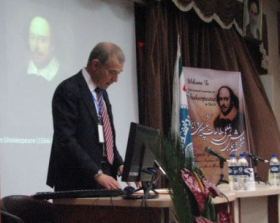
Tehran, Iran - University of Tehran, Conference on Shakespeare Studies 2014 - 00Professor Stephen Greenblatt took part in the conference and delivered a keynote speak focused on Shakespeare and the human condition on November 26. He is one of the world’s most celebrated Shakespearean scholars and best known for Shakespeare biography titled Will in the World: How Shakespeare became Shakespeare, which was on the New York Times Best Seller List for nine weeks. In 2012 he won the Pulitzer Prize for his book, The Swerve: How the World Became Modern.

“I never thought that Shakespeare would become my magic carpet to the land of Persia” said Harvard scholar Prof. Greenblatt when he expressed his enthusiasm for Iran and Persian cultural and historical heritage during the conference.

Prof. Mark Burnett from Queen’s University in Belfast, was another keynote speaker whose discussion focused on cinematic representations of Shakespeare in Iran. He talked about an Iranian adaptation of Shakespeare’s Hamlet entitled Doubt (Tardid), a 2009 Iranian Crystal Simorgh-winning film directed by Varuzh Karim Masihi.

Iranian scholar Hossein Elahi Ghomshei, author and lecturer on literature, art and mysticism, also spoke at the conference.

The event was organized by Dr. Ismail Salami and Dr. Maryam Soltan Beyad, professors at the University of Tehran.

Source: Iran Front Page

Bahram Beyzaie: Iranian film director, playwright and researcher

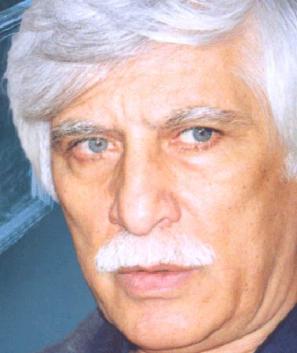
Bahram BeyzaieBahram Beyzaie was born in Tehran, Iran on Dec 26 1938. He is an Iranian film director, theatre director, screenwriter, playwright, film editor, producer, and researcher.

Beyzaie is part of a generation of filmmakers in the Iranian New Wave, a Persian cinema movement that started in the late 1960s and includes other pioneering directors such as Abbas Kiarostami, Forough Farrokhzad, Sohrab Shahid Sales, and Parviz Kimiavi. The filmmakers share many common techniques including the use of poetic dialog, references to traditional Persian art and culture and allegorical story-telling often dealing with political and philosophical issues.

After beginning Persian literature at Tehran University, Bahram Beyzaie turned to Visual Arts. Here he studied the Book of Kings (Shahname), the Shiite passion plays (Ta’zieh) , the traditional Persian Theatre including the puppet theatre, the pre-Islamic culture and Persian miniature painting. All of this combined with his interest in the far Eastern theatre helped him to develop of a new direction for the Iranian theatre.

Beyzaie’s “Drama in Iran” (Namayesh dar Iran), published in late 1960s is still considered the most important text on the history of Iranian theater. Beyzaie is also the first scholar in Iran to publish books on theater in China and Japan. Some of his plays such as his masterpiece “Marg-e Yazdgerd” (“Death of Yazdgerd”) have been made into films.

In 1964 he published the first of three pieces “Seh Namāyesch-e Arusak” (Three Puppet Plays), where the influence of Pirandello and the Theatre of the Absurd is reflected.

In 1969 he began his film career by directing the short film Amu Sibilou (Uncle Moustache) followed by Safar (The Journey) in 1970. Immediately after, in 1971, he made his first feature film “Ragbar” (“Downpour”) which is regarded by critics to this day as one of the most successful Iranian films ever made. The successful film addresses the late Parviz Fannizadeh as its central character and protagonist. Since then he produced and directed a number of films, including “Bashu, the little Stranger”.

He is known as the most intellectual and conspicuous “author” in Iranian cinema. The main theme of his works is the history and “crisis of identity” which is related to Iranian cultural and mythical symbols and paradigms.

Beyzaie lives and works in Iran, but is spending an academic year at Stanford University as the Bita Daryabari Visiting Professor of Persian Studies.

Selection of works and publications:
– numerous articles on literary and art magazines,
– Theatre in Japan
– Gorob dar Diari Garib (Sunset in a strange Land)
– Chahar Sandoogh (Four Chests)
– Hashtomin Safar-e Sandbad (Sinbad’s Eighth Voyage)
– Ziafat va Miras (1967 – aka Heritage and The Feast)
– Soltan-Mar (1969 – aka The King Snake)
– Dolls
– Story of the hidden Moon
– Seh Namayesh-e Arusak (Three Puppet Plays)
– Marg-e Yazdgerd (1979 – aka Death of Yazdgerd)
– Karname-ye Bandar Bidakhsh (1997 and 1998)
– Banu Aoi (1997 and 1998) (based on The Lady Aoi by Yukio Mishima)
– Shab-e Hezar-o-yekom (2003)
– Afra ya Rooz migozarad (2007 – aka Afra, or the day passes)

Filmography (as a director):
– 1969: Amu Sibilu (short – aka Uncle Moustache)
– 1970: Safar (short – aka The Journey)
– 1971: Ragbār (aka Downpour)
– 1974: Qaribé va Meh (aka The Stranger and the Fog)
– 1976: Kalāq (aka The Crow or The Raven )
– 1979: Charike-ye Tārā (aka Ballad of Tara)
– 1982: Marg-e Yazdgerd (aka Death of Yazdgerd)
– 1986: Bashu, Gharibe-ye Koochak (aka Bashu, the Little Stranger – released 1989)
– 1988: Shayad Vaghti digar (aka Maybe Some Other Time)
– 1992: Mosaferan (aka Travellers)
– 1998: Goft-o-gu ba Bad (short – aka Talking with the Wind)
– 2001: Sagkoshi (aka Killing Mad Dogs)
– 2006: Qāli-ye Sokhangū (The narrative rug)
– 2009: Vaqti hame khābim (When we are all sleeping)

Awards
– 1973: Chicago International Film Festival, Moscow International Film Festival: “The Journey”: Silver Hugo, Silver Award
– 1990: Aubervilliers Film Festival: “Bashu, the little stranger” – Best film
– 2001: 19th International Fajr Film Festival: “Killing Mad Dogs” – Screenplay
– 2004: International Istanbul Film Festival: Award for lifetime achievement

Sources:
Wikipedia (English and German)
Stanford University – Division of Literatures, Cultures and Languages

Photo Series: Autumn in Iran – Gorgan’s Alang Darreh Park, Golestan Province

Gorgan is the capital of Golestan Province, Iran. It lies approximately 400km to the north east of Tehran and some 30km away from the Caspian Sea. It has a population of ca. 270.000 inhabitants. Some 150 km (93 mi) east of Gorgan is the Golestan National Park.

The city was named Hyrcania in ancient Greek records, the equivalent of the local name Varkâna “Land of the Wolves” in Old Persian. Although modern Gorgan is only a city and county sharing the same name, ancient Hyrcania was the name of a greater region on the southern shores of the Caspian Sea (encompassing all of the present day Golestan province, as well as some eastern parts of the Mazandaran province, and some southern parts of the present day Republic of Turkmenistan). Until 1937 the city used to be known as Astarabad.

Only 5km southwest from Gorgan, covering an area of approximately 185 hectares is Alangdareh Park. These beautiful autumn pictures were taken there.

In general, Golestan has a moderate and humid climate known as “the moderate Caspian climate.” There exist three different climates in the region: plain moderate, mountainous, and semi-arid. Gorgan valley has a semi-arid climate.

Gorgan (as well as the whole Golestan province) has a world-famous carpet and rug industry, made by Turkmen. The patterns of these carpets are derived from the ancient Persian city of Bukhara, which is now in Uzbekistan. Jajim carpets are also crafted in this province.

Sources: Wikipedia | Gorgan, Mehr News Agency | Photos

Iran-USA Simultaneous Art Installation: A Portal Between Tehran and New York City

Shared Studios is launching the first public installation of Amar Bakshi’s Shared Studio project “A Portal BetweenTehran & NYC: Open for Conversation” by conversing through a live audio-visual connection with an individual in Tehran.

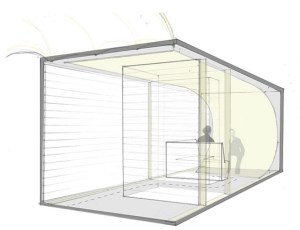
Portals are shipping containers equipped with specialized communications technology. Individuals enter one at a time and converse with a person in the other location as if they were in the same room. Simultaneous text translation is available. This first pairing unites the Lu Magnus Gallery in NYC and the M-40 Studio in Tehran.

OPEN FOR CONVERSATION
DECEMBER 5 – 19, 2014
Special Open Hours: 7:30A – 1:30P, Mon – Sun
LU MAGNUS GALLERY and M-40 STUDIO TEHRAN

Each individual is invited to enter a Portal and converse with whoever happens to be in the Tehran location, or with someone in particular upon advance request. To schedule your visit, please visit SHAREDSTUDIOS.SCHEDULISTA.COM

Powerful new technologies allow us to connect across boundaries as never before; yet we too often use them to cocoon ourselves in our own cultural, political, or ideological communities. Portals puncture hardened stereotypes of the other by facilitating one-on-one encounters. They serve as a catalyst for conversation between communities that would not typically engage with one another due to language barriers, technological limitations and hardened stereotypes of the other meeting people whom they only hear about unidirectionally in the news.

Visit the gallery for special Q&A sessions with the artist and the following New York guests:

Amy Chua and Jed Rubenfeld (Fri Dec 5, 1:00pm-2:00pm)
Yale Law professors and bestselling authors Amy Chua and Jed Rubenfeld. Chua’s books include Battle Hymn of the Tiger Mother and World on Fire. Rubenfeld’s books include The Death Instinct and Freedom and Time.

Jonah Bokaer & James Koroni (Sat Dec 6, 1:30pm-2:30pm)
Jonah & James perform a curated dance live in the New York space, streamed live to Tehran.

Fareed Zakaria (Mon Dec 8, 10:30am-11:30am)
CNN host, Atlantic Monthly writer and bestselling author of The Post-American World and The Future of Freedom

Morgan Spurlock (Wed Dec 10, 10:00am-11:00am)
Documentary filmmaker whose titles include Supersize Me and The Greatest Movie Ever Sold.

Tania Bruguera (Thu Dec 11, 1:30pm-2:30pm)
Tania Bruguera is a Cuban installation and performance artist.

Rob Storr (Fri Dec 12, 9:00am-10:30am)
Robert Storr is the Dean of the Yale School of Art. Formerly, he was Senior Curator at the Museum of Modern Art.

Mohsen Namjoo (Sat Dec 13, 1:30pm-2:30pm)
Mohsen Namjoo is an Iranian artist, songwriter, singer, music scholar and setar (traditional Persian lute) player based in California.

Nicky Nodjoumi (Sun Dec 14 – Dec 15, 11:30pm)
Nicky Nodjoumi’s works are conceived of as theatrical stages, where compositions of figures both serious and ridiculous, in the words of Phong Bui, “house meanings without irony, narratives without stories, humor without morality, above all creating a space that heightens the awareness of old and new history.”

Keller Easterling (Wed Dec 17, 9:00am-10:15am)
Architect, professor and author of books including Extrastatecraft: the Power of Infrastructure Space and Enduring Innocence: Global Architecture and Its Political Masquerades.

Sources: Shared Studios, Lu Magnus Gallery, Spacesmith


Theater Performance: “London, Tehran, Rome, Amsterdam” opened in Tehran, Iran

“London, Tehran, Rome, Amsterdam, Reconsider Your Image Of Me” will play from November 16 to December 12 of 2014, every night (apart from Saturdays), at 21:00 o’clock in the Hafez Hall, Tehran.

This performance, a co-production between the Virgule Performing Arts Company (Iran) and STET The English Theatre (Netherlands) is supported by the Embassy of the Kingdom of the Netherlands. The opening ceremony was held on Sunday, Nov. 16 with the Dutch ambassador to Tehran attending the ceremony.

The performance examines a current topic between Iran and the West, namely what are the images that we have of ‘the Other’ and to what extent fears, fantasies and imaginations are based on truth. By initiating a direct meeting with the Other and listening to each other’s stories, this group aims to create new images, based on the stories of the people who wouldn’t usually make the headlines.

The piece is a multi-media, highly physical, speech performance. It includes the actors’ own stories, dialogue between the actors, video installations with short documentaries about daily life in the countries of origin of the actors and video collages of cultural milestones from these cultures. The physical form of the piece produces a third language.

The project has brought together an international cast to create this piece during a 2 month rehearsal period in Tehran. The company includes Dutch actress Marene van Holk, Italian actress Marta Paganelli, British actress Amy Strange, Iranian actresses Melodie Aramnia and Neda Jebreilli and Iranian actor Meysam Mirzaei, and the piece has been conceived and directed by Arvand Dashtaray.

The production will be performed in the Netherlands in the autumn of 2015.

Sources
Embassy of the Kingdom of the Netherlands in the Islamic Republic of Iran
Mehr News Agency

Photo Series: Autumn in Iran – Hamedan Province (Part 1)

Hamedan Province is one of the 31 provinces of Iran. It covers an area of 19,546 km² and has a population of over 1,82 million (2008). Its capital is Hamedan city. Hamedan province is one of the most ancient parts of Iran and its civilization. The city of Hamedan laid on the Silk Road.

The province lies in an elevated region with the ‘Alvand’ mountains running from the north west to the south west. These are part of the Zagros mountain range. Hamedan enjoys temperate warm summers and relatively cold winters.

According to local Jewish traditions, the City of Hamedan is mentioned in the Book of Esther as the capital of Ancient Persia in the days of King Ahasuerus. It was then known as Shushan. The Tombs of Mordecai and Esther are located in modern-day Hamedan.

Today’s Hamedan is what is left of Ecbatana, The Medes’ capital before they formed a union with the Persians. The poet Ferdowsi says that Ecbatana was built by King Jamshid. During the Parthian era Hamedan became the summer capital and residence of the Parthian rulers. After the Parthians, the Sassanids constructed their summer palaces in Hamedan as well.

Sources: ISNA, Mehr News Agency, Wikipedia | Hamedan Province

Photo Series: Autumn in Iran – Golestan Province

Golestan Province is one of the 31 provinces of Iran, located in the north-east of the country south of the Caspian Sea. It has a population of 1.6 million (2006) and an area of 20,380 km². Its capital is Gorgan. Present-day Gorgan was called Esterabad or Astarabad until 1937.

Golestan enjoys mild weather and a temperate climate most of the year. Geographically, it is divided into two sections: The plains, and the mountains of the Alborz range. In the eastern Alborz section, the direction of mountains faces northeast and gradually decreases in height. The highest point of the province is Shavar, with a height of 3,945 meters.

Sources: Wikipedia | Golestan, Tasnim News Agency | Photos

Iran beach soccer team claims gold in Asian Beach Games in Thailand

Iran’s beach soccer team defeated Japan 4-3 and won the gold medal in the 4th edition of the Asian Beach Games on Friday.

Shahriar Mozhdeh Roudsari, Ali Naderi, Amir Hossein Akbari and Hassan Abdollahi scored for the Iranian outfit at the Saphan Hin. Moreira Ozu (twice) and Takasuke Goto scored for the Japanese team. […]

Iran has already won five gold medals in the games which is underway in Phuket, Thailand. The Iranian athletes are competing in 17 out of 26 sports in the event.

Kamran Hosseini Jam at the Men’s Freestyle -80kg, Mohammad Naderi at the Men’s Freestyle -70kg, Jaber Sadeghzadeh at the Men’s Freestyle +80kg, Ghanbar Ali Ghanbari at the Men’s -66kg and Sobhan Taherkhani at the Men’s Long Jump Final have previously won a gold medal in the games.

The 4th Asian Beach Games opened in Thailand on November 14, attracting 3,272 athletes from 43 Asian countries and territories. There are a total of 196 categories in 26 sports. The first Asian Beach Games was held in Indonesia in 2008. Vietnam will host the fifth edition in Khanh Hoa Province and Da Nang City in 2016.

Source: Payvand News

Awarded Iranian movie Melbourne by Nima Javidi, is to be screened at Mar del Plata International Film Festival in Argentina

Melbourne-Mar-del-Plata-festival

Melbourne chronicles the story of a young couple on their way to the eponymous Australian city to continue their education, but just a few hours before their departure, they become involved in a tragic event.

The movie recently garnered two awards at the 2014 Stockholm International Film Festival in Sweden.

Melbourne also received critical acclaim at the 71st Venice International Film Festival in Italy. The film had its international premiere at the festival.

“Some international critics participated in the festival believe that Melbourne conjures up the mood and tone of the British film director Alfred Hitchcock’s works,” said Javidi.

Mar del Plata International Film Festival is scheduled to take place from Nov 22 to 30, in various categories including documentary, experimental and narrative fiction.

Source: Iran Front Page

BBC: The book in every Iranian home

Iranian poet Hafez (1320-1389). He influenced centuries later Thoreau, Goethe, and Ralph Waldo Emerson among others. Emerson referred to him as

Iranian poet Hafez (1320-1389). He influenced centuries later Thoreau, Goethe, and Ralph Waldo Emerson among others. Emerson referred to him as “a poet’s poet”.

The works of the 14th Century poet Hafez can be found in almost every Iranian home – more than 600 years after his death, the writer still offers an insight into his country’s identity.

In Iran they say there are two books in every household – the Koran and Hafez. One is read, the other is not.

To understand this joke you need do no more than join the millions who regularly throng the tomb of Hafez, the 14th Century poet of Shiraz and Iran’s national hero, as I did one recent afternoon. The atmosphere was buzzing, happy and relaxed – Iran at its best.

Day and night the tomb, raised up on a beautifully decorated dais surrounded by its own fragrant rose gardens, water channels and orange trees, is crowded with devotees stroking Hafez’s alabaster sarcophagus, declaiming his verses, relishing his clever plays on words.

Hafez represents all the rich complexities of the Iranian identity. His brilliant use of metaphors in their native Farsi language unites them. […]

Thanks to Hafez, Shiraz is Iran’s most liberal city. […] the lively groups both young and old, men and women mix freely, laughing and chatting together. […]

As the sun disappears from the sky and the illuminations come on round the tomb, the atmosphere becomes ever more festive. People start singing and reciting their favourite poems. Children dangle their feet in the pools, giggling and soaking up their parents’ infectious high spirits.

The scene conceals the paradoxes of Iran but, thanks to the Mullah’s policy of education for all, there are some surprising changes afoot in Iranian society.

More women than men now graduate from university. The birth rate has dropped so dramatically, to one child per family, that the clerics have introduced financial incentives for couples to breed more. Most refuse, saying that it is still too expensive to have more than one child.

While the west remains obsessed with Iran’s nuclear enrichment it is an open secret that the well-connected clerics and businessmen enrich themselves through sanction busting. […]

Rubaiyee 21, by Hafez
Don’t make me fall in love with that face.
Don’t let the drunk the wine seller embrace.
Sufi, you know the pace of this path.
The lovers and drunks don’t disgrace.

Unfortunately for the mullahs the mystic poetry of Hafez, besides lauding the joys of love and wine, also targeted religious hypocrisy.

“Preachers who display their piety in prayer and pulpit,” he wrote 600 years ago, “behave differently when they’re alone. Why do those who demand repentance do so little of it?”

[…]

Read the complete article: BBC | News | The book in every Iranian home by Diana Darke

Iran’s Gilan Province: Rice harvest 2014

Here some beautiful pictures of this year’s rice harvest in the Iranian Province of Gilan. (Click on an image to start the photo gallery):

Source: IRNA | Photos

Iran’s Gilan Province: Roudkhan Castle

The medieval Rudkhan Castle (Ghale Roodkhan) is located 25km southwest of the city of Fooman in Iran’s Gilan Province in the heart of the forest. Made from brick and stone, the castle covers 50,000 square meters and is 900 meters above sea level. Its architects have benefited from natural mountainous features in the construction of the fort. It is built on two tips of a mount with a total of 65 towers surrounding it, while the walls run 1,500 meters in length. 42 towers still stand intact. It is a military complex which had been constructed during the Seljuk Dynasty by followers of the Ismaili sect. The castle sits at the two peaks of a mountain at elevations of 715meters and 670meters, with an area of 2.6 hectares (6.4 acres). The Rudkhan Castle River originates in the surrounding heights and flows from south to north. It takes around two hours to cross a mountainous winding route with dense forests. To reach this castle people walk a three kilometer distance on foot, then climb around 2,000 steps. The first thing that one notices about the castle is its big entrance gate.

Sources: Wikipedia | Rudkhan Castle, Wikimedia Commons’ media related to Rudkhan Castle, wiseitinerary.blogspot.de, Mehr News Agency | Photos, Press TV

Iran’s Isfahan Province: Kashan – Boroujerdi House Series

Boroujerdi's House in Kashan, Iran

Boroujerdi’s House in Kashan, Iran

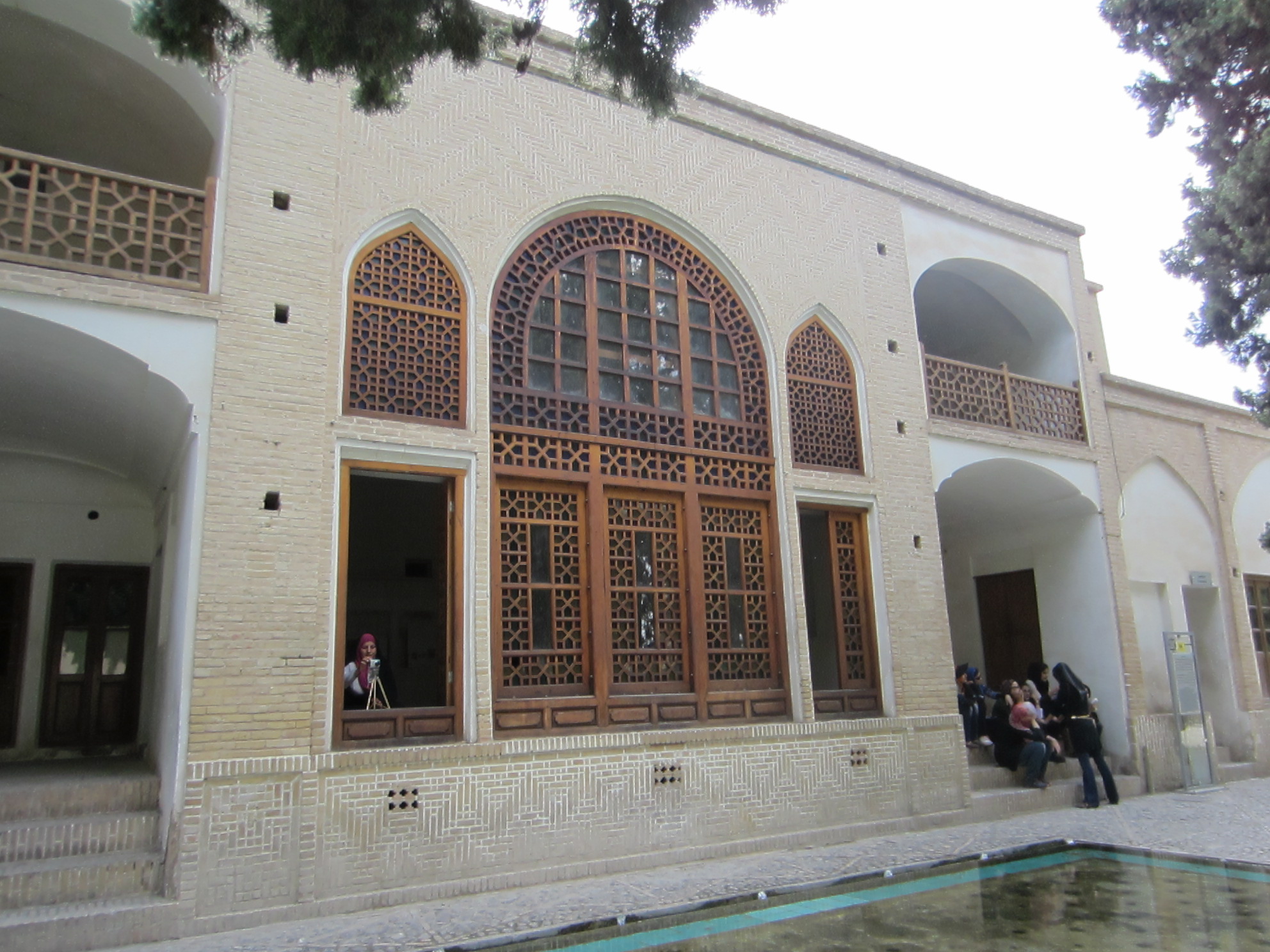
The Boroujerdi House (in Persian: Khaneh-ye Boroujerdi-ha) is a historic house in Kashan, Esfahan Province, Iran that is nowadays open to the public as a museum.

It was built in 1857 for the bride of Haji Mehdi Boroujerdi, a welthy merchant, by architect Ustad Ali Maryam. The bride came from the affluent Tabatabaei family, for whom Ali Maryam had built the Tabatabaei House some years earlier and the condition set for the marriage was the construction of a house as beautiful as the Tabatabaei House.

Considered a true masterpiece of Persian traditional residential architecture, it took eighteen years to build using 25 workers, painters and architects.

Kashan

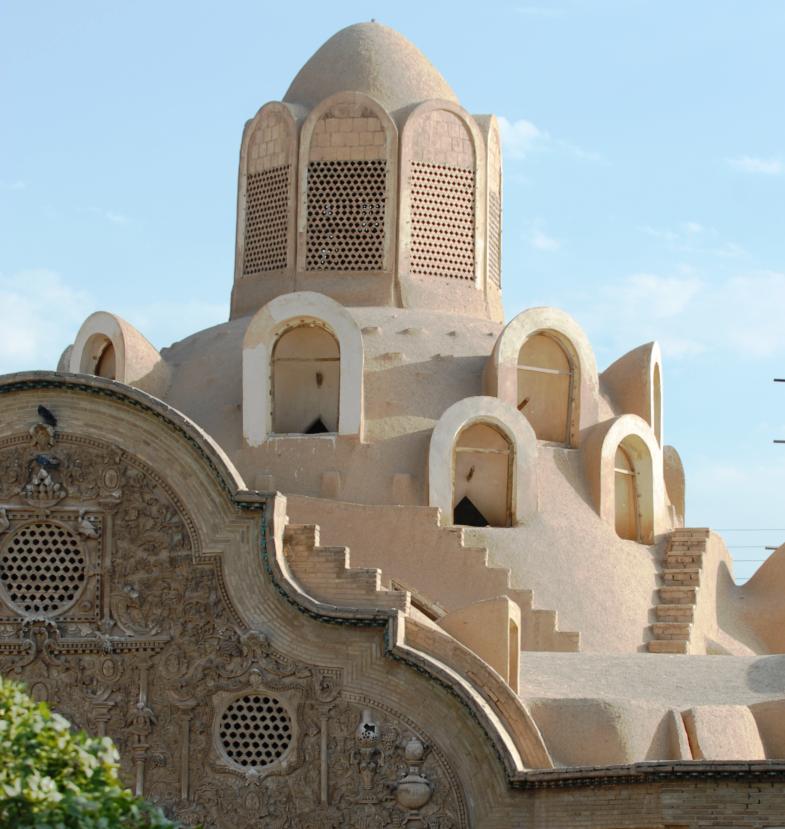
Wind towers of the Boroujerdi’s House in Kashan, Iran

The House, famous for its atypical shaped wind towers made of stone, brick, sun baked bricks and a composition of clay, straw and mortar, has three entrances and consists of a rectangular beautiful courtyard, delightful plaster and stucco works of fruits and flowers and wall paintings by the royal painter Kamal-ol-Molk and three 40 meter tall wind towers which help to cool the house to unusually cool temperatures.

The entrance to the building is in the form of an octagonal vestibule with multilateral skylights in the ceiling. Near the entrance is a five-door chamber with intricate plasterwork. Following a narrow corridor, a vast rectangular courtyard opens up. The courtyard has a pool and is flanked by trees and flowerbeds. Also in the vicinity of the corridor is a reception area sandwiched in between two rooms. Due to the high amount of sunlight these two rooms receive, they were mostly utilized during the winter months.

In the east and northeast area of the property lie the kitchen, rooms and stairways to the basement. The wind towers allowed for the basements to consistently benefit from a flow of cool air. On the southern side is a large covered hall adorned with many reliefs, artistic carvings and meshed windows which was the main area for various celebrations. It consists of a raised platform on its far side and would normally be reserved for the more important guests.

Source: Historical Iranian sites and people | Boroujerdi House

Iran’s Razavi Khorasan Province: Shamkhal Canyon

Somewhere not far from the border between Iran and Turkmenistan there is a huge and unbelievably beautiful valley called Shamkhal. The name comes from a village near that. It is located in west northern of Quchan. It is about 18 km long; going through many springs and falls within rocky walls which in some parts are 200 meters high.

Source: Irpedia | Photos of Iran | Shamkhal Valley

Iran’s Isfahan Province: Kashan – Fin Garden Series

Fin Garden in Kashan, Esfahan Province, Iran

Fin Garden in Kashan, Esfahan Province

The tradition and style in the design of Persian Gardens has influenced the design of gardens from Andalusia to India and beyond.

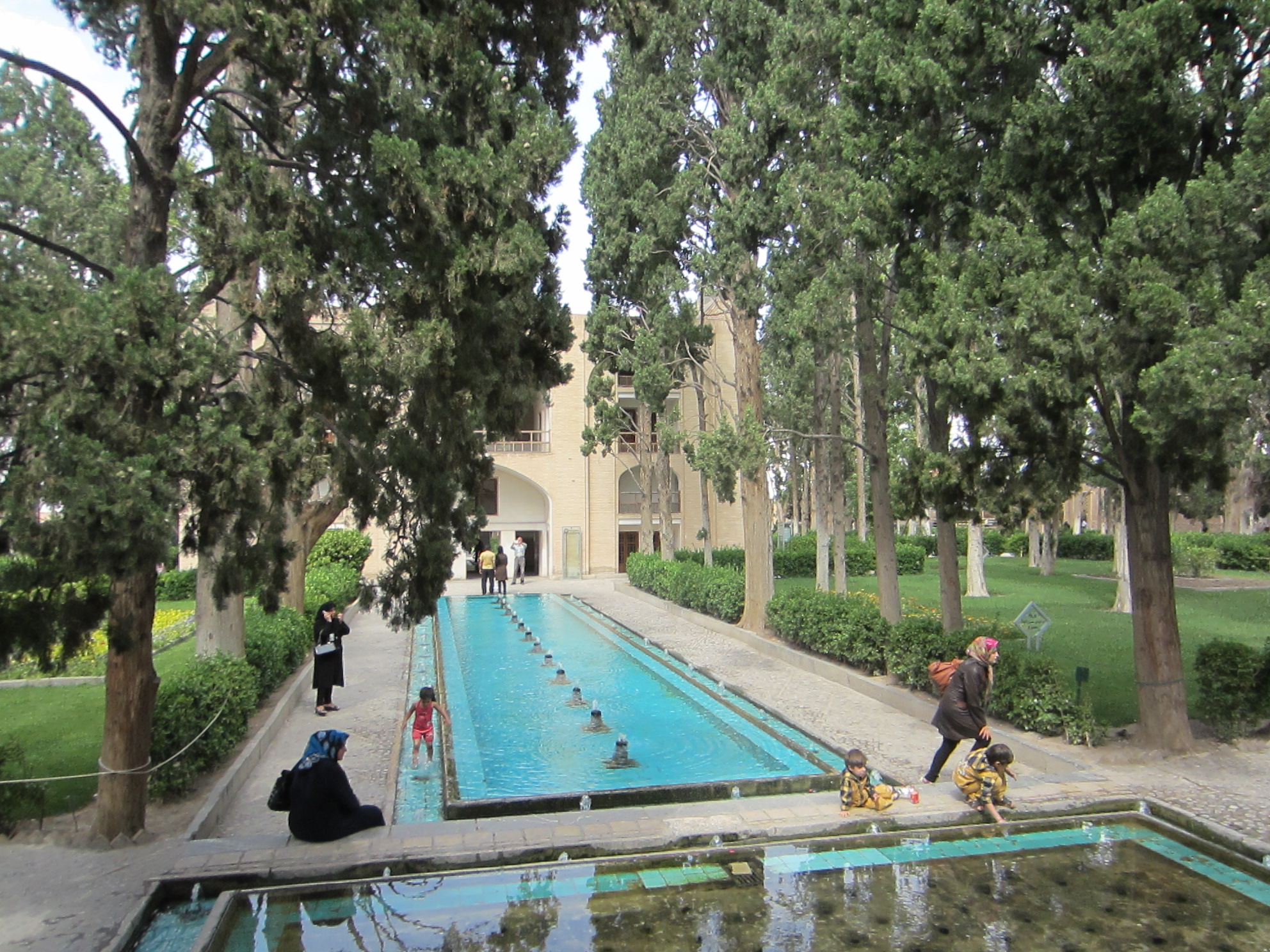
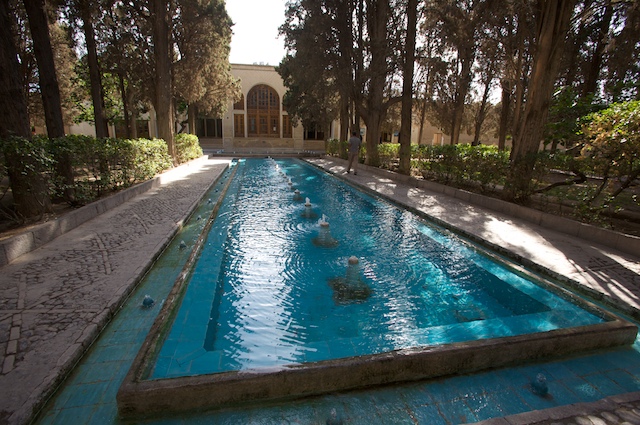
Fin Garden, or Bagh-e Fin, located in Kashan, Iran, is a historical Persian garden. It contains Kashan’s Fin Bath, where the reformist Qajarid chancellor, Amir Kabir, was murdered by an assassin sent by King Nasereddin Shah in 1852. Completed in 1590, the Fin Garden is the oldest extant garden in Iran. Unesco declared the garden a World Heritage Site.

The origins of the garden may be anterior to the Safavid period but the settlements of the garden in its present form were built under the reign of Abbas I of Persia (1571-1629), as a traditional bagh near the village of Fin, located a few miles southwest of Kashan.

The garden covers 2.3 hectares with a main yard surrounded by ramparts with four circular towers. In keeping with many of the Persian gardens of this era, the Fin Garden employs many water features.

These were fed from a spring on a hillside behind the garden, and the water pressure was such that a large number of circulating pools and fountains could be constructed without the need for mechanical pumps.

The garden contains numerous cypress trees and combines architectural features of the Safavid, Zandiyeh and Qajar periods.

Source: Wikipedia | Fin Garden, Wikipedia | Persian Gardens

Fin Garden (or Bagh-e Fin) in Kashan, Esfahan Province, Iran

Fin Garden (or Bagh-e Fin) in Kashan, Esfahan Province

Fin Garden in Kashan, Esfahan Province

Fin Garden in Kashan, Esfahan Province

Iran finishes 4th in 2014 Asian Para Games

2014 Asian Para Games - Athletes
2014 Asian Para Games - Final Medal Count

2014 Asian Para Games – Final Medal Count

INCHEON, South Korea
(by Masoud Hossein for TehranTimes)

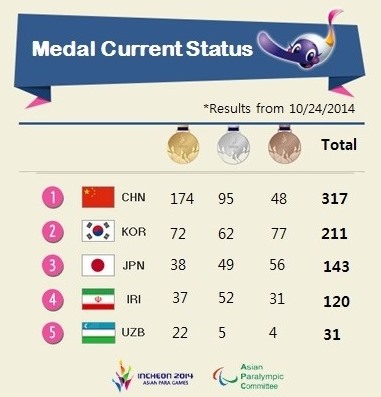
Iran came fourth in the 2nd edition of the Asian Para Games held in Incheon, South Korea.

A total of 4,500 athletes competed in 23 sports. The 2nd Asian Para Games opened on October 18 and closed on October 24 following 6 days of competition.

Iran finished in fourth place winning 120 medals, including 37 gold, 52 silver and 31 bronze medals. Iran was just one gold medal short of third place Japan whose silver and bronze medals were less than Persians. […]

Source: Tehran Times

Photos: Christians in Isfahan celebrate the 350th anniversary of the famous Vank cathedral

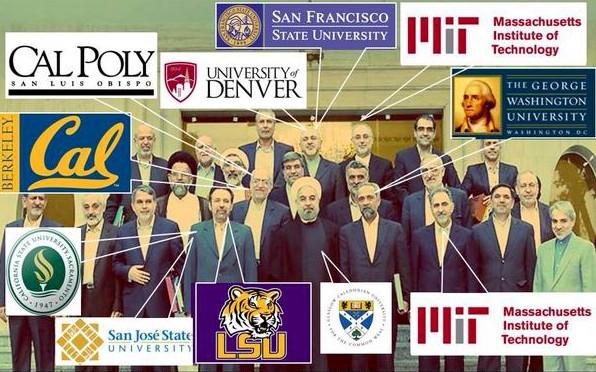
Iran’s president has more cabinet members with Ph.D. degrees from U.S. universities than Barack Obama does

Iran-cabinet members with Ph.D. degrees from U.S. universities

Iran-cabinet members with Ph.D. degrees from U.S. universities

“Take, for example, Rouhani’s chief of staff, Mohammad Nahavandian. He spent many years in the United States and has a Ph.D. in economics from George Washington University. Or Javad Zarif, the foreign affairs minister and chief negotiator in the recent nuclear deal between Iran and six global powers. He studied at the University of San Francisco and completed his doctorate at the University of Denver. For five years, he lived in New York and was Iran’s ambassador to the United Nations. Ali Akbar Salehi, head of Iran’s Atomic Energy Organization, has a Ph.D. in nuclear engineering from MIT. Mahmoud Vaezi, the communication minister, studied electrical engineering at Sacramento and San Jose State Universities and was enrolled in the Ph.D. program at Louisiana State University (he ultimately earned a doctorate in international relations at Warsaw University).  Other cabinet members have advanced degrees from universities in Europe and Iran. Abbas Ahmad Akhoundi, the transportation minister, has a Ph.D. from the University of London, while President Rouhani got his from Glasgow Caledonian University in Scotland. The new government in Tehran, in other words, might well be one of the most technocratic in the world.”

Source: The Atlantic | The Case for Giving Iran’s Scholar-Diplomats a Chance

Other surprising articles regarding Iran and the US: The other Iran | Tag | USA

Series: Iranian Handicraft and Art – Khatamkari

Khatam means incrustation in Persian and Khatamkari refers to incrustation work. It consists in the production of incrustation patterns (generally star shaped) with thin sticks of wood (ebony, teak, zizyphus, orange, rose), brass (golden parts) and camel bones (white parts). Ivory, gold or silver can also be used for collection objects.

Many objects can be decorated in this fashion, such as jewelry/decorative boxes, chessboards, pipes, desks, frames or some musical instruments. Khatam can also be used in Persian miniatures, making it a more attractive work of art. This craft was so popular in the court during the Safavid period that princes learned it at the same level of music or painting.

Based on techniques imported from China and improved by Persian know-how, khatam has existed for more than 700 years and is still practiced in Shiraz and Isfahan.

Source. IranReview

Academy Award winning Iranian filmmaker Asghar Farhadi named Busan Film Festival jury president

Asghar Farhadi named Busan Film Festival jury president

Academy Award winning Iranian filmmaker has been selected to preside over the jury for the New Currents section at the 19th Busan International Film Festival in South Korea.

Farhadi will head the festival’s jury panel that is comprised of French philosopher Jacques Ranciere, Professor of film studies at the Scotland’s University of St. Andrews Dina Iordanova, Indian actress Suhasini Maniratnam, and Korean filmmaker Bong Joon-ho.

The Iranian director Mohammad Mehdi Asgarpour’s drama We Have a Guest is also scheduled to compete at the festival which will take place from October 2 to 11.

https://i0.wp.com/i.telegraph.co.uk/multimedia/archive/02151/a-separation_2151511i.jpg

Academy Award winning Iranian filmmaker Asghar Farhadi

Born in 1972, Farhadi received his Bachelors in Theater from University of Tehran’s School of Dramatic Arts in 1998 and his Masters in Stage Direction from Tarbiat Modarres University a few years later.

His 2011 family drama A Separation became a sensation and received rave reviews from numerous international film events and festivals.

The film won the award for the Best Foreign Language film at the Golden Globe Award and Academy Award in 2012.

“Farhadi is a filmmaker who makes one becomes familiar with the rich culture of Iran. His works remind us of Victor Hugo,” The mayor of Paris, Bertrand Delanoe had earlier said during an award ceremony during which the Grand Medal of Vermeil from the City went to Farhadi for his latest drama The Past (Le Passé).

The Past has scooped numerous awards so far such as two prizes at the 66th Cannes film festival including the Best Actress award and the Prize of the Ecumenical Jury (prix du Jury œcuménique).

Dancing in the Dust (2003), The Beautiful 2004), Fireworks Wednesday (2006) and About Elly (2009) are his other directorial works.

Iran’s Gilan Province: Photos (Part 1)

More photos of Iran: http://comeseeiran.tumblr.com/

Series: Iranian Handicraft and Art – Painting

Oriental historian Basil Gray believes Iran “has offered a particularly unique [sic] art to the world which is excellent in its kind”.

Painting in Iran is thought to have reached a climax during the Tamerlane era when outstanding masters such as Kamaleddin Behzad gave birth to a new style of painting.

Qajarid paintings, for instance, are a combination of European influences and Safavid miniature schools of painting such as those introduced by Reza Abbasi. Masters such as Kamal-ol-molk, further pushed forward the European influence in Iran. It was during the Qajar era when “Teahouse painting” emerged.

Source: Iran Review

Iranian actor Peyman Moaadi – lead male role in Oscar-winning “A Separation” now male lead in US production Camp X-Ray

The lead male role in Oscar-winning A Separation, Peyman Moaadi, has made male lead again, this time in a US-produced movie, titled Camp X-Ray.

The movie has been credited for moving performances by both of the stars.

Peter Sattler’s directorial debut, Camp X-Ray premiered at the Sundance Film Festival and is due for US screening on October 17.

Moaadi started his acting career in director Asghar Farhadi’s About Elly (2009). Two years later, he received the Silver Bear award for Best Actor from the Berlin International Film Festival for his leading role in Farhadi’s A Separation. The latter flick saw him doing justice to the character of a father in a family faced with a difficult decision – to move to another country or to stay in Iran and look after a deteriorating parent.

Source: Iran Review

Iranian director Rakhshan Bani-Etemad wins Best Screenplay Award at Venice Film Festival

Bani-Etemad received the Best Screenplay award for her film Tales during the awards ceremony on the closing day of the festival on September 6, 2014 at Venice Lido.

Iranian filmmaker Rakhshan Bani-Etemad receiving her award at the Venice Film Festival

Iranian filmmaker Rakhshan Bani-Etemad receiving her award at the Venice Film Festival

Tales is composed of seven short episodes, in which Bani-Etemad reveals the fate of some of the main characters in her previous films like The Blue-Veiled, Under the Skin of the City and Mainline. […]

Best-known for addressing social problems in her films, Bani-Etemad has directed numerous feature-length and short films as well as documentaries, which have garnered many international and national awards.

“The characters in my films are real, [from among] the people whom I might meet every day,” she had earlier stated. […]

Another Iranian film maker Nima Javidi’s debut feature-length film Melbourne received critical acclaim at the festival. The film opened Critics’ Week section of the event.

French film composer Alexandre Desplat was the head of the international jury at this year’s Venice Film Festival. The 71st annual Venice Film Festival took place in Venice, Italy from August 27 to September 6, 2014.

Source: Payvand News of Iran

Series: Iranian Handicraft and Art – Minakari

Enamel working and decorating metals with colorful and baked coats are one of the distinguished artwork in Isfahan. Mina, is defined as some sort of glass-like colored coat which can be stabilized by heat on different metals particularly copper.

Although this course is of abundant use industrially for producing metal and hygienic dishes, it has been paid high attention by painters, goldsmiths and metal engravers since a long time. It is categorized as enamel painting, charkhaneh (or chess-like enamel) and cavity enamel.

Enamel painting is practiced in Isfahan and specimens are kept in the museums of Iran and abroad, indicting that Iranian artists have been interested in this art and used it in their metalwork ever since the rule of Achaemenian and Sassanid dynasties. Since enamels are delicate, we do not have many of them left from ancient times. Most of the enameled dishes related to the past belong to the Qajar dynasty during 1810–90.

Source: IranReview

Italy’s former ambassador to Iran: No, Iranians Don’t Hate You

Roberto Toscano - Italy’s ambassador to Iran, 2003-2008

Roberto Toscano – Italy’s ambassador to Iran, 2003-2008

In 2004, when I was Italy’s ambassador to Iran, I had the occasion to tour the country together with a couple of American friends, at the beginning rather hesitant to come and visit, but then overwhelmed by the hospitality and politeness that are so typically Iranian and even more by the “extra” of both hospitality and politeness that came out when people realized that they were American.

One episode has remained marked in their memory (and in mine too): at the end of a visit to the tomb of the poet Saadi in Shiraz a mullah, who had been listening to the English translation of our guide, and had asked him where those tourists were from, went up to my friend, shook his hand, said (in English) “God bless you” and left.

[…] Most people who have seen the recent movie Argo […] are convinced that what they see is contemporary Iran: still hostile, still radical, still violently and massively anti-American. The truth is rather different. Certainly the regime finds in anti-Americanism a sort of marker of identity […] What is interesting, however, is that anti-American rhetoric is not focused on what America is, but on what America does. […] the 1953 Anglo-American coup against Mossadeq or the support given to Saddam in its 1980 aggression against Iran.

The fact is, however, that this regime narrative, and the hostility toward the U.S., is not really shared by the majority of Iranians. […]

Iran — and this will surprise the average American — is not a closed country, and its citizens can travel abroad, if they get the necessary entry visas, of course. In the second place, educated Iranians (not a narrow minority, differently from other countries in the area) have access to reliable information about the world and also about the U.S., in spite of the attempts of the regime to filter “subversive” material in both TV programs and internet traffic. […]

Actually, I found that in Iran there is a lot of admiration for America: not necessarily for its policy, but for its economy and for its culture, wildly popular especially among Iranian youth. […] A strong proof of the fact that America is not hated by Iranians came with September 11, when thousands of Iranians went spontaneously to the streets for a candlelight vigil in homage and solidarity to the victims of the attack on the Twin Towers.

The lack in Iran of the generalized and often virulent anti-Americanism that characterizes Middle Eastern populations is something that Americans traveling in Iran, even in the present tense political situation, can testify. Not only is there no hostility toward American citizens, but instead we see curiosity and friendship at the same time, though often combined with criticism for specific U.S. policies and behavior.

Definitely crowds chanting ‘marg bar Amrika’ (death to America) are today both very rare and not very much convinced: they tend to be formed by activists bused to the demonstrations. […]

Many, if not most Iranians, may be fed up with the regime, especially in its present incarnation in President Ahmadinejad, but they are a proud, patriotic people. They have problems with their leaders, but not with their country, especially in the event of an external attack.

The full article: The Huffington Post | Roberto Toscano | No, Iranians don’t hate you

Series American couple in Iran: Traveling to Iran as Americans

Audrey hanging with a group of Iranian women in Masouleh.

Audrey hanging with a group of Iranian women in Masouleh.

Traveling to Iran as an American citizen may sound complicated and dangerous. It’s not. We’re here to dispel the myths and answer the questions piling up in our inbox based on our visit to Iran just a few weeks ago.

Our aim in the following Q&A is to answer actual reader queries and to help demystify the process of traveling to Iran.

Are American citizens legally allowed to visit Iran?
Although the United States has imposed sanctions against Iran, there are currently no restrictions on American citizens visiting Iran as tourists. Currently, about 1,000-1,500 Americans visit Iran each year. […]

As an American, how will Iranians treat me?
Iranian people were often shocked to discover that we were American and that we were able to get a visa to their country. Once this fact set in, they often went over the top in welcoming us — everything from cordial greetings, to smiles, hugs, gifts and invitations to homes — especially when our guide was out of sight. We joke that it’s the closest we’ve felt to being rock stars.

Iranian University Students - Esfahan, Iran

Read the whole article if interested in details about getting a visa and organizing the trip:
Uncornered Market – Travel and Life Adventure | Traveling to Iran as Americans

Anyhow the blog is just great:
Uncornered Market – Travel and Life Adventure | Travel | Iran

Mitra Farahani: Awarded Iranian filmmaker

Mitra Farahani

Mitra Farahani’s biography:
She was born in Tehran in 1975 and studied painting and drawing with various Iranian masters of pictorial art, notably with Gholam Hossein Nami. After receiving a degree in graphic art at the Azad University in Tehran, she moved to Paris and took up residence in the Cite Internationale des Arts.

In 2001, she began a course of video studies at the Ecole Natioanale Superieure des Arts Decoratifs, where she made her first documentary entitled “Just a Woman”. The film was chosen for Berlin Film Festival and was awarded the Teddy Awards Special Jury Prize.

Her documentary “Zohre and Manouchehr” (Taboos) was presented at the Berlin Film Festival of 2004 and was later shown in cinemas in France and Canada.

In 2005 she made the documentary “Behjat Sadr: Suspended Time”, a portrait of one of the pioneers of abstract expressionist painting in Iran. In 2009, as part of the Three Continents Festival, Le Lieu Unique in Nantes presented her one-person multi-disciplinary exhibition. Her latest documentary film, Fifi Howls from Happiness, on painter Bahman Mohassess, premiered at the 2013 Berlin and Telluride film Festival.

More about her documentary “Fifi Howls from Happiness”:
http://www.payvand.com/news/14/aug/1104.html

Series American couple in Iran: Audry’s cites on Persepolis: Ancient Persia, Modern Lessons

Although Persepolis is one of Iran’s top archeological and tourist sites, I was careful to keep my expectations in check before visiting. After all, what would remain of the 2,500 year-old capital of the Achaemenid Empire? Amidst crumbled columns, I found great detail that blew me away and a surprising connection to the present.

Gate of All Nations - Persepolis, Iran

Gate of All Nations – Persepolis, Iran

When I first entered Persepolis through the Gate of All Nations, I was struck by the scale of it all – the statues, the columns, the great stone. I tried to imagine the process of transporting the raw materials to this place, constructing the city and palace, and fashioning it all without the mechanical means we have today. […]

Persepolis eastern staircase leading to Apadana Palace, all 23 subject nations represented.

Persepolis eastern staircase leading to Apadana Palace, all 23 subject nations represented.

Like a camera lens, my eyes began to focus on stone-carved details — hair, faces, beards, hats, and clothes, gifts carried in hands. That you could still make out every curl in a beard, eyelash on a camel and softened skin of soldiers holding hands — 2,500 years later – struck me as truly spectacular. […]

And it went on like this, through the citizens of each member nation — Egyptians, Assyrians, Indians, Tajiks, and so on. Each was easily identifiable, their physical appearance and cultural trappings preserved in stone from 500 B.C. […]

It was the whole of these details that to me seemed to define the character of the Achaemenid Empire: a multi-ethnic ancient empire built on respecting – if not maintaining — the diversity of many cultures amidst a unifying loyalty to one king. […]

Persian and Median soldiers holding hands, leading the way to the king.

Persian and Median soldiers holding hands, leading the way to the king.

Cyrus the Great’s Human Rights Charter
While it was Darius the Great who built this palace at Persepolis, it was his father-in-law – Cyrus the Great – who attempted to set the foundation of mutual respect within the Achaemenid Empire. In his Babylon Cylinder (539 B.C.), Cyrus put forth some of the first recorded mentions of human rights, an expression of tolerance, and of religious, linguistic and racial equality across the empire.

History tells us that great civilizations have come and gone, risen and fallen, ascended and crumbled. The pity of the great Persian empire — 23 nations under one roof and the nascent echoes of human rights — was that a great man came and went well before his time. […]

Head over to: Uncornered Market – Travel and Life Adventure | Persepolis to see all photos, and read the whole text.

Iranian Mathematician Maryam Mirzakhani: The first woman to win the “Nobel Prize of Mathematics”

Maryam Mirzakhani

Maryam Mirzakhani is the first woman to ever win the Fields Medal – known as the “Nobel Prize of mathematics” – in recognition of her contributions to the understanding of the symmetry of curved surfaces. […]

Mirzakhani was born and raised in Tehran, Iran. As a young girl she dreamed of becoming a writer. By high school, however, her affinity for solving mathematical problems and working on proofs had shifted her sights. […]

She became known to the international math scene as a teenager, winning gold medals at both the 1994 and 1995 International Math Olympiads – she finished with a perfect score in the latter competition. Mathematicians who would later be her mentors and colleagues followed the mathematical proofs she developed as an undergraduate.

After earning her bachelor’s degree from Sharif University of Technology in 1999, she began work on her doctorate at Harvard University under the guidance of Fields Medal recipient Curtis McMullen. […] —By Bjorn Carey for Stanford University

Interesting Interview with Mirzakhani by The Guardian:

G: What are some of your earliest memories of mathematics?

I grew up in a family with three siblings. My parents were always very supportive and encouraging. It was important for them that we have meaningful and satisfying professions …

In many ways, it was a great environment for me, though these were hard times during the Iran-Iraq war. My older brother was the person who got me interested in science in general. He used to tell me what he learned in school. My first memory of mathematics is probably the time that he told me about the problem of adding numbers from 1 to 100. I think he had read in a popular science journal how Gauss solved this problem. The solution was quite fascinating for me.

G: What experiences and people were especially influential on your mathematical education?

I was very lucky in many ways. The war ended when I finished elementary school; I couldn’t have had the great opportunities that I had if I had been born 10 years earlier. I went to a great high school in Tehran – Farzanegan – and had very good teachers. I met my friend Roya Beheshti during the first week of middle school. It is invaluable to have a friend who shares your interests, and it helps you stay motivated.

Our school was close to a street full of bookstores in Tehran. I remember how walking along this crowded street, and going to the bookstores, was so exciting for us. We couldn’t skim through the books like people usually do here in a bookstore, so we would end up buying a lot of random books. Also, our school principal was a strong-willed woman who was willing to go a long way to provide us with the same opportunities as the boys’ school.

Later, I got involved in Math Olympiads that made me think about harder problems. As a teenager, I enjoyed the challenge. But most importantly, I met many inspiring mathematicians and friends at Sharif University. The more I spent time on mathematics, the more excited I became.

G: Could you comment on the differences between mathematical education in Iran and in the US?

It is hard for me to comment on this question since my experience here in the US is limited to a few universities, and I know very little about the high school education here. However, I should say that the education system in Iran is not the way people might imagine here. As a graduate student at Harvard, I had to explain quite a few times that I was allowed to attend a university as a woman in Iran. While it is true that boys and girls go to separate schools up to high school, this does not prevent them from participating say in the Olympiads or the summer camps. […]

G: What advice would you give those who would like to know more about mathematics – what it is, what its role in society has been, and so son?

This is a difficult question. I don’t think that everyone should become a mathematician, but I do believe that many students don’t give mathematics a real chance. I did poorly in math for a couple of years in middle school; I was just not interested in thinking about it. I can see that without being excited mathematics can look pointless and cold. The beauty of mathematics only shows itself to more patient followers.
Source: The Guardian

Excerpts of an article by Erica Klarreich published in Quanta Magazine that shows some other interesting aspects about her personality:

With her low voice and steady, gray-blue eyes, Mirzakhani projects an unwavering self-confidence. She has an equal tendency, however, toward humility. Asked to describe her contribution to a particular research problem, she laughed, hesitated and finally said: “To be honest, I don’t think I’ve had a very huge contribution.” And when an email arrived in February saying that she would receive what is widely regarded as the highest honor in mathematics — the Fields Medal, which will be awarded today at the International Congress of Mathematicians in Seoul, South Korea — she assumed that the account from which the email was sent had been hacked.

Other mathematicians, however, describe Mirzakhani’s work in glowing terms. […]

As a child growing up in Tehran, Mirzakhani had no intention of becoming a mathematician. Her chief goal was simply to read every book she could find. She also watched television biographies of famous women such as Marie Curie and Helen Keller, and later read “Lust for Life,” a novel about Vincent van Gogh. These stories instilled in her an undefined ambition to do something great with her life — become a writer, perhaps. […]

In her first week at the new school, she made a lifelong friend, Roya Beheshti, who is now a mathematics professor at Washington University in St. Louis. As children, the two explored the bookstores that lined the crowded commercial street near their school. Browsing was discouraged, so they randomly chose books to buy. “Now, it sounds very strange,” Mirzakhani said. “But books were very cheap, so we would just buy them.”

To her dismay, Mirzakhani did poorly in her mathematics class that year. Her math teacher didn’t think she was particularly talented, which undermined her confidence. At that age, “it’s so important what others see in you,” Mirzakhani said. “I lost my interest in math.”

The following year, Mirzakhani had a more encouraging teacher, however, and her performance improved enormously. “Starting from the second year, she was a star,” Beheshti said. […]

In 1994, when Mirzakhani was 17, she and Beheshti made the Iranian math Olympiad team. Mirzakhani’s score on the Olympiad test earned her a gold medal. The following year, she returned and achieved a perfect score. […]

After completing an undergraduate degree in mathematics at Sharif University in Tehran in 1999, Mirzakhani went to graduate school at Harvard University, where she started attending McMullen’s seminar. […]

She started going to McMullen’s office and peppering him with questions, scribbling down notes in Farsi.

“She had a sort of daring imagination,” recalled McMullen, a 1998 Fields medalist. “She would formulate in her mind an imaginary picture of what must be going on, then come to my office and describe it. At the end, she would turn to me and say, ‘Is it right?’ I was always very flattered that she thought I would know.”
Read on here: Quanta Magazine

Other interesting articles on Mirzakhani in iranianroots.com:
http://iranianroots.com/?s=Mirzakhani

Series American couple in Iran: A Poem to the People

Iranian Hospitality on Train from Iran

Iranian hospitality on train from Iran to Turkey

My heart sank as I watched the news from Iran this morning, scenes of the British Embassy being charged by an angry mob in Tehran. It saddens me – angers me, really – that narrow groups like this who define the world’s perception of Iran and the Iranian people are in reality such a small percentage of the country’s population.

My experience tells me they are the outliers, yet circumstances conspire to convince us on the outside to see them as the norm.

I thought back to all the people we met across Iran, from families in small mountain villages to shopkeepers on the busy streets of Tehran, virtually all of them welcoming us Americans – the supposed enemy — almost always with open arms and quite often bearing gifts. I remembered our conversations with Iranian people of all ages who longed for engagement — not only with us, but with the rest of the world.

I felt like yet another door closed on them today.

Continue to read the whole story here:
Uncornered Market – Travel and Life Adventure | Iran: A Poem to the People