Tag Archives: women

Ten-year-old Iranian girl Fatemeh Mahallati honored at Japanese drawing competition

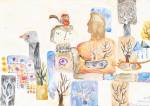
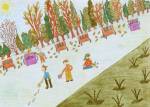
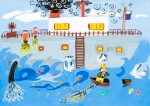
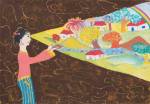
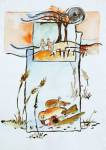
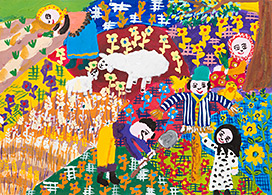
15th International Environmental Children's Drawing Contest - First Prize - International Section - by 10-year-old Fatemeh Mahallati  from Iran

by 10-year-old Fatemeh Mahallati from Iran

Ten-year-old Iranian girl Fatemeh Mahallati has won one of 45 first prizes in the international section of the 14th International Environmental Children’s Drawing Contest in Japan. Her work depicts a number of people working on a farm.

“In my painting, I drew animals, flowers and people who are working on a farm and they are happy as they are living in nature,” Fatemeh told the Persian service of ISNA on Sunday.

“What I drew in my painting were the things I have previously seen in my visits to farms and green areas,” she added. “The environment and nature are important and we should protect the things concerning nature,” she stated.

Fatemeh has been a member of the Institute for the Intellectual Development of Children and Young Adults (IIDCYA) in Raine, a town near the southern Iranian city of Kerman, since 2009.

In a message sent to Fatemeh last week, the director of Iran’s Department of Environment, Masoumeh Ebtekar, congratulated her for achievement at the competition.

Iranian successes in the previous 14 years (click on the pictures to see them in full size with age of the kid and prize that was won):

The contest was organized the Japan Quality Assurance Organization (JQA), the International Certification Network (IQNet) and the Tokyo branch of UNICEF.

The 6-year-old Japanese child, Kusaka Nana, won the Environmental Best Prize, which is the top honor of the contest.

The best prize of the international section was presented to the 12-year-old Ukrainian boy, Oleksiy Rakoma, and the UNICEF special prize went to the 7-year-old Bangladeshi boy, Raihan Fairooz Tarannum.

About the contest:
Since 1999, Japan Quality Assurance Organization (JQA) and International Certification Organization Network (IQNet) have been hosting the International Environmental Children’s Drawing Contest for children aged 7 to 15 years old from around the world, supported by UNICEF Tokyo Office.
So far, the contest has been held 15 times with over 21,000 entries that this year we’ve had entries from a record breaking 81 countries. In total, we have received more than 220,000 drawings up to now.
Full of imagination and artistic sensitivity, children drew pictures about nature and animals, their families and the surrounding area. The pictures also contain the message towards global environment, beyond borders and difference in their background cultures and languages.

Sources: Tehran Times , The International Environmental Children’s Drawing Contest

Iran’s 33rd Fajr Film Festival – winners and closing ceremony

The 33rd edition of Iran’s Fajr International Film Festival has come to an end with “Crazy” by the renowned Abolhasan Davoodi winning the Best Director and the Best Film awards. Produced by Bita Mansuri, Crazy received 11 nominations, including best film, best director for Abolhassan Davudi, best actress for Tannaz Tabatabaii, best cinematographer, best screenplay and best music.

Winners for the national main competition section:

Best Supporting Role Actor – Houman Seyyedi for ‘I Am Diego Maradona’
Best Main Role Actor – Saeed Aghakhani for ‘The Long Farewell’
Best Screenplay – ‘A Time for Love’ by Roya Mohaghegh
Best Director – Abolhasan Davoodi for ‘Crazy’
Best Film – ‘Crazy’ produced by Bita Mansuri
Best Main Role ActressBaran Kousari for ‘Binam Alley’

Sources: Payvand, ISNA | Photos, ISNA | Photos 2, Tasnim News Agency | Photos

Azita Hajian: Iranian actress and director

She was born on 10 January 1958 in Narmak, Tehran. She graduated in theatre acting and directing from the Faculty of Dramatic Arts in Tehran, Azita Hajian started stage acting in 1975 and film acting in 1989 with “Thief of Dolls” (Mohammad Reza Honarmand). Due to her theatrical background in the field of children and teenagers, her first films were in the same field. She is one of the majors teacher of acting in Iran. She has also played in some TV series.

Her two daughters, Mehraveh and Melika, are both actresses.

Sources: Wikipedia | Azita HajianBing Image Search

Sahar Pakseresht: Young Iranian woman wins the ‘The Young Innovators Competition’ of the International Telecom Union

The Young Innovators Competition has many challenges includes ‘Local Digital Content’, ‘Open Source Technologies for Disaster Management’ and ‘Smart Cities and Climate Change’.

Sahar Pakseresht was one of the participants of ‘Open Source Technologies for Disaster Management’ challenge.Her idea, called ‘NAJI’ has been selected as the winner of this challenge among almost 150 applications from a group of dedicated, exciting and motived young people from all over the world.

Sahar Pakseresht Young Iranian woman wins the ‘The Young Innovators Competition’ of the International Telecom UnionSo, What is ‘NAJI’? Naji (means savior in Persian) is a two part system, consisting of a bracelet that marks the user’s location and vital signs in a disaster, making rescue easier and a mobile application which streamlines requests for assistance from emergency personnel. It functions over a range of communication systems in order to make sure that it continues to function when needed, by switching from data to phone to SMS to USSD as needed.

What does NAJI do in details?

She says: “I faced the earthquake when I was 15 years old. It was the most horrible things in my life, I saw myself too close to death. I was wonder how to overcome to this fear and save lives of human with the help of technology.” Sahar wrote, “If I can save the life of one person then my mission is done successfully. Once I heard about this competition I found out that this competition is the way that I was always looking for to reach my goals.”

Source: techly.co – An Iranian girl is a winner of ITU Telecom World 2014

Shafajoo a successful Iranian startup for digital healthcare services

shafajoo-iranian-digital-healthcare-startup-satratech-group

Shafajoo (meaning In Search of Healing in Persian) is an Iranian digital healthcare service that helps you find a nearby doctor and instantly book an appointment. They have many other services including podcasts and discussion forums. The target users are not just about the patients: it also includes physicians. Doctors, for instance, will have a user profile including their biographies and resumes. I think the most interesting part of this product is that you are able to ask doctors questions, questions that they will answer, thus preventing unnecessary visits to their offices. While there are few agile teams in Iran, this team uses the power of agile methodology in software development. They are also writing many articles related to healthcare.

Shafajoo has been launched at MAPS(An Iranian Accelerator) and It is a product of SatraTech Company. It has now almost 100,000 visits per month and 4000 active users. They are working on regional markets especially the Middle East, and plan to have English and Arabic versions of Shafajoo.

Source: techly.co – Shafajoo wants to be your healing angel

Photo gallery: Fajr Film Festival in Iran

The Fajr International Film Festival or Fajr Film Festival is Iran’s annual film festival, held every February in Tehran, Iran. It takes place every year on the anniversary of the Iranian revolution. There were 90 feature films submitted for the 29th edition of the festival in 2011.

Sources: Wikipedia| Fajr International Film FestivalTasnim News | Photos FIFF 1Tasnim News | Photos FIFF 2Tasnim News | Photos FIFF 3ISNA | FIFF 1ISNA | FIFF 2ISNA | FIFF 3ISNA | FIFF 4ISNA | FIFF 5

Baran Kosari: Awarded Iranian actress

Baran Kosari, born on October 17th 1985 in Tehran, is an award winning Iranian actress. She is the daughter of director Rakhshan Bani Etemad, and film producer Jahangir Kosari.

She graduated from Soureh academy. The Best Papa of the World (1991) is her first acting experiment. She had appearances in some of her mother’s films, Nargess (1991), Rusari-ye Abi (The Blue-Veiled, 1994), May Lady (1997), Kish Stories (Rain and Ladsman episode – 1998), Under the Skin of the City (2000), Our Times (documentary, 2001).

In 2007 she was nominated for the best performance by an actress in Asia Pacific Screen Award for her performance in Mainline. Baran Kosari also ascertained her abilities as a theater actress with playing in Over the Mirror (1997), with Azita Hajian directing.

Awards
Best Actress / 33rd Fajr International Film Festival / The Nameless Alley (2015)
Best Actress / 1st National Young Iranian Film Festival / Ablah (2010)
Best Actress / 11th Iran Cinema Celebration / Khunbazi (2007)
Best Actress / 25th Fajr International Film Festival / Iran Competition / Khoon Bazi and Ruz-e sevvom (2007)
Honorary Diploma / 25th International Fajr Film Festival / Khoon Bazi (2007)
Best Teenage Actress / Critic’s Choice / Baran-o-Bumi, Zir-e puste shahr (2000)

Other activities
Screenwriter (Ablah – 2007)
Secretary of Scene (Gilaneh – 2004)
Festival Arbiter, 17th Teenage Film Festival (Isfahan – 2002)

Source: Wikipedia | Baran Kosari

Nazanin Daneshvar: Tehran’s Trail Blazing Tech Entrepreneur

As a young businesswoman in Iran, Nazanin Daneshvar didn’t plan to become one of Tehran’s trail blazing techpreneurs.  She has overcome obstacles of both age, and gender. The 30-year old is part of a startup scene so vibrant, more than one hundred people recently competed for a place at the country’s first private accelerator, providing mentorship as well as funding.

Tehran’s techpreneurs say one of the few benefits of sanctions are the almost limit-less opportunities to localize popular Western sites, like YouTube and PayPal. […]

Women dominate the hard sciences at Iranian universities, studying subjects like engineering, math and chemistry. And, women are involved in Tehran’s tech sector, but Daneshvar says the real problem is getting the older segments of society to take web businesses seriously.

Shifting traditional mindsets and uptake is a slow process, but with a compelling sales pitch, Daneshvar and her sales team have more than 10,000 merchants on board.

“We are solving a problem. Advertising is so expensive, and there is a financial crunch, so we say to merchants, just give us a discount, and we will get customers for you and bring a lot of PR. There’s limited disposable income, so if you can double the performance you can get out of that, why wouldn’t you? We only sell as many deals as the businesses can handle.”

Takhfifan earns a variable commission on the sale of each coupon for discounted services. […]

The company has grown from two sisters in a tiny office, selling one deal a week, to a staff of 60, with deals in seven different cities. Daneshvar’s entirely boot-strapped business has seen 100% growth since launch.

“The first year we doubled in growth every two months. This is still not comparable to Groupon. This is organic growth. We don’t have a marketing budget.”

Daneshvar says most Iranian startups operate with zero to little funding. Wealthy parents invest their money in property, rather than their children’s tech aspirations. In her case, Daneshvar says her parents’ support came in the form of many middle class families: room and board.

The success of Takhfifan has led Daneshvar to develop a new venture Tarinan, a review site, driven by customer demand. […]

Tarinan, a local search and review-based platform launched last year and we’ve just launched mobile. We have more than 30,000 reviews without advertising, not a single penny spent and our company is completely boot-strapped – both of them.”

Denashvar has won all sorts of awards for her site, including recognition from Silicon Valley, but she says the real challenge goes back to mentorship. It’s a culture that doesn’t exist in Iran – yet.

“People are changing jobs every three months, every six months, because they don’t have proper mentorship to teach them how to work. In the US, people take lots of internships, here there is no such eco-system. People don’t have this tradition of looking at a career. The only option is taking over their parents’ shop.”

But that’s changing. Tehran’s tech community is banking on leaders like Denashvar, to do more than recruit others to the sector; they’re counting on her, with a requisite failure and success under her belt, to be one of Iran’s pioneering mentors.

Source: Forbes | Tehran’s trail blazing techpreneur

Interview with Iranian photojournalist Newsha Tavakolian: “Whenever I reach the end, I start from scratch”

Newsha Tavakolian - Iranian photographer 03

Newsha Tavakolian (photo by Arash Ashouriniya)

Newsha Tavakolian, an established photojournalist and art photographer, started her experimental career at 16. After a while she pursued it professionally in Iranian and foreign media. Two decades on, her social recognition and awareness has catapulted her into the ranks of the outstanding photographers.

Zanan-e Emrooz magazine released an interview with Newsha in its 7th issue (December 2014) about her career and life. The following is an excerpt  of it, published in Iran Front Page:

Why did you pick photography? Was anybody in your family who did photography?
At first I knew nothing about photojournalism. I did it for money. My parents were in Germany for my dad’s surgery, and my siblings and I were in Iran. Apart from financial problems, I found the education system annoying. Later I learned that I was suffering from Dyslexia at school but nobody knew about it. Back then I didn’t want to rebel; it was just a normal reaction to the tough conditions of the time…. after dropping out of school, I took photography at my mom’s suggestion and used everything as a subject for photography. […]

Once you said you always wanted to narrate the story of your subjects. Are your recent collections your narration of the characters? […]
My first work was Mothers of the Martyrs Collection: photos of mothers whose sons had been martyred. The undeniable resemblance between mothers and sons was interesting. […] Two reverse trends: a son who has remained in his youth with a cheerful face and a mom who looks emaciated because of the loss of her son. I just selected the backgrounds for the pictures and there was no other intervention on my part. […]

I just show part of their lives and leave the remainder to the imagination of the audience. I like to see viewers get involved in the story of my photos, not just their beauties. None of my photos has a strange surreal atmosphere. They feature the familiar scenes we pass by each day, but we now pause to watch the photos and they make us think.

For instance, the visitors of the Look Collection (2011) told me they felt as if they were watching themselves in those photos. This shows that I have successfully represented a typical character type in the photos. Drawing on my experiences in photojournalism and social documentaries, I’ve reached this point. My photos feature the middle class; that’s why more people identify with the characters in my work. […]

“When I shot these images, it was a dark time in Iran’s history,” says Newsha Tavakolian. “It was a time of extreme pressure on the public, especially on the youth, who were all struggling under the imposed restrictions.” Curious about the isolated lives of the middle-class youth in Tehran, Tavakolian staged images based on the real stories of her friends and neighbours to depict a society that the photographer believes is often reduced to exaggerated stereotypes in western media, and to give a more accurate portrayal of “normal people” in Iran.

As a photojournalist, you not only covered the news on Iran but also news stories in the region, including the Iran-Iraq war. How was it like?
Back then I was 21. In Iraq I was accompanied by two American women. When we left Iraq after the war, they had other projects to work on and show themselves, but I came across closure of newspapers [in Iran] and a stagnant situation in which you would be consumed by inaction.

After one and a half years I realized that I’d spent too much time on something which I couldn’t change. I admitted that I was living in this country with all limitations and I needed to redouble my efforts to work here. […]

I refocused my efforts on upgrading my works. You cannot believe how terrible I was in photography and how much I worked on it. I’m the harshest critic of myself. I relentlessly review my works in order not to let others find any faults with them; I don’t let anybody undermine my self-confidence either. I constantly evaluate and challenge my works, and I think this is a forwarding method.

At the time of war, I was among the first photographers who were in Iraq. I sent my photos through my agency to Time and Newsweek magazines. They didn’t know I was a girl. Well, this heartened me because my works were put above my gender. […]

Where do you think the world is heading with too many photos available? Today mobiles and tablets don’t miss even one single moment. ….
I don’t walk down this path. I don’t produce a big volume of photos. I’m stingy in photography. I feel responsible for taking any photo. I’m stingy even in sending the feed to my eyes and mind. I wouldn’t look at just any video or photo because I wanted to train my eyes.

You are not supposed to watch anything just to spend time or relieve tiredness; otherwise your sight will get sick, just like you don’t eat anything just to fill your stomach. Perhaps these photos are helpful for future historians not to encounter any ambiguity […]

As a professional photographer, is your life affected by news? Is news still tragic for you?
Pieces of bad news send chills down my spine. I’m still involved in photojournalism. It is a labor of love. Let me give you an example. After a tough period of hard work – a four-month trip to 13 countries for filming and photography for an educational project – and facing problems with the Carmignac Foundation, I was in the Netherlands where I decided to go to the beach and have a rest. It coincided with the crash of a Malaysian airliner in Ukraine. The families of the Dutch nationals who were onboard the [doomed] plane went to the airport to ask about their loved ones.

I rushed to the airport when I heard the news. I was unaware that I had no camera, so I collected one at the airport and started to take photos. Nobody was waiting for my photos.

About one month ago I went to Iraq for a personal project. I didn’t snap the most important photo I could take and wrote it instead*.

You’ve travelled to many countries. Have you ever thought about migration given that your husband is not Iranian?
I’m still in Iran because it is the only place where I can use all my senses: anger, happiness, concerns, etc. My Iran photos are the strongest. It’s hard for me to let go of what I’ve developed an interest in. Luckily my husband is interested in Iran too.

I like Iran despite its shortcomings to which I don’t turn a blind eye. This society’s problems bother me and I cannot remain indifferent to them. If I live here and like it, I should do whatever I can for it. […]

Tell us about what you’ve changed in yourself through your own constructive criticism.
Whenever I hold a camera, I imagine it’s my first time. […] Each day I try to gain new things. It all started when I returned from Iraq. I could either suffer from postwar depression or forget whatever I had experienced in order to return to normal life. I chose the intentional forgetfulness in order not to be entrapped by sentimentalism, and not to regret the past. Never do I think about the past. I face the future. Each time I reach the end, I start from scratch.

———————–
* A Thousand Words for a Picture That I Never Took, Newsha Tavakolian, Sharq newspaper

Biography of Newsha Tavakolian: The other Iran | Newsha Tavakolian

Sources: Iran Front PageRoads & KingdomsThe Guardian

Newsha Tavakolian: Iranian photojournalist and documentary photographer

Newsha Tavakolian - Iranian photojournalistNewsha Tavakolian (born 1981 in Tehran) is an Iranian photojournalist and documentary photographer. She has worked for Time Magazine, The New York Times, Le Figaro, and National Geographic. She is particularly known for focusing on women’s issues in her work, and has been a member of the Rawiya women’s photography collective, she co-established in 2011. She lives and works in Tehran.

Career
Born and brought up in Tehran, Tavakolian is a self-taught photographer. She began working professionally in the Iranian press at age of 16, at women’s daily newspaper ‘Zan’, after a 6-month photography course. At the age of 18, she was the youngest photographer to cover the 1999 student uprising, using her Minolta with 50mm lens, her photographs were published in several publications.

She got her international break in 2001 at age 21, when she met J.P. Pappis, founder Polaris Images, New York at photography festival in Perpignan, France. Thereafter, she began covering Iran for Polaris Images, in the same year, and started working as a freelancer for The Times in 2004.

In 2002 she started working internationally, covering the war in Iraq for several months. She has since covered regional conflicts, natural disasters and made social documentary stories in Iraq, Lebanon, Syria, Saudi Arabia, Pakistan and Yemen. Her work is published in international magazines and newspapers such as Time Magazine, Newsweek, Stern, Le Figaro, Colors, The New York Times, Der Spiegel, Le Monde, NRC Handelsblad and The New York Times Magazine.

Countering the predominantly male western dominance on photojurnalism in her region, she brought together a group of six Middle Eastern women photographers, uniting them in the RAWIYAH collective.

A common theme in her work is photo stories of women, friends and neighbours in Iran, evolving role of women in overcoming gender-based restrictions, and contrasts the stereotypes in western media. Her photo projects include Mother of Martyrs (2006), Women in the Axis of Evil (2006), The Day I Became a Woman (2010) and Look (2013), which opened at Thomas Erben Gallery, New York City.

She was part of the 2006 Joop Swart Masterclass organized by World Press Photo. In 2007 she was a finalist for the Inge Morath Award. Her work has been exhibited and collected at institutions such as the British Museum, the Victoria and Albert Museum, Los Angeles County Museum of Art, the Museum of Fine Arts, Boston and Somerset House, London (April 2014), where she was one of eight Iranian photographers featured in the critically acclaimed “Burnt Generation” exhibition.

In 2012, her first book “The Fifth Pillar” was published by Gilgamesh publishers in London, covering her personal take on the annual Muslim pilgrimage, the Hajj. More recently, Newsha was commissioned by the Qatar Foundation to travel around the world for 3 months taking photographs for a book about education to be published in March 2014. Also in 2014 Newsha was a member of the 2014 World Press Photo competition jury. Her work will be exhibited in Paris in November 2014, where also her new book will be launched. After Paris the work will go on a tour to London, Frankfurt and Milan.

Awards
2014 Fifth laureate of the Carmignac Gestion Photojournalism Award.
2009 Magic of Persia Contemporary Art Prize Finalist, United Kingdom
2007 Inge Morath Award, Finalist, Magnum Photo Agency, New York, United States
2006 Joop Swart Masterclass, World Press Photo, Amsterdam, The Netherlands
2006 Still Photography Award from the All Roads Film Project, National Geographic, Washington, D.C, USA
2003 Runner-up in Picture of the Year International Competition, Magazine Feature Category, National Press Photographers Association and Missouri School of Journalism, USA

Books
She Who Tells a Story – Women Photographers from Iran and the Arab World, Kristen Gresh with a foreword by Michket Krifa. MFA Publications, 164 pages, 110 color illustrations
2012 Fifth Pillar, Hajj Pilgrimage, by Newsha Tavakolian, Gilgamesh Publishing House
2010 A History of Women’s Photographers, by Naomi Rosenblum, Abbeville Press.
2008 Iranian Photography Now, by Rose Issa, Hatje Cantz Verlag
2009 Transit Tehran: Young Iran and Its Inspirations, by Malu Halasa and Maziar Bahari, Garnet Publishing

Sources: Newsha Tavakolian Photography, Wikipedia | Newsha Tavakolian

Photo gallery: Graduation ceremony at Amirkabir University of Technology in Tehran, Iran

Amirkabir University of Technology (AUT), formerly called the Tehran Polytechnic, is a public research university located in Tehran, Iran. AUT is one of the most prestigious universities, and the first established technical university in Iran, referred to as “Mother of Industrial Universities”.

Over 500 students of the Amir Kabir University of Technology celebrated their graduation in the university’s campus on Wednesday, January 14th.

The university was first founded by Habib Nafisi in 1958 and then developed by Dr. Mohammad Ali Mojtahedi, during the reign of the Pahlavi dynasty. Originally named the Tehran Polytechnic, it began its activities with five engineering departments. In 1978 the Tehran Polytechnic was renamed after the famed Iranian Prime Minister Amir Kabir (1807–1852).

Presently the university has grown to an elite school of science and engineering education with the capacity of about 10,000 students in 35 undergraduate majors, around 90 M.Sc. majors and 36 Ph.D. and post-doc programs. Acceptance in all levels of education in AUT is very competitive and only top students can enroll.

AUT has 15 departments including electrical engineering, biomedical engineering, polymer engineering, mathematics and computer science, chemical engineering, industrial engineering, civil and environmental engineering, physics and energy engineering, computer and information technology, mechanical engineering, mining and metallurgical engineering, textile engineering, petroleum engineering, ship engineering, and aerospace engineering. AUT has a well-equipped educational site in Bandar Abbas as well as an academic unit in Mahshahr.

The library and document center at AUT, the largest technical and engineering library in Iran’s capital, is one of the richest academic libraries in the technical and engineering field in the region. This library includes a central library and 16 satellite libraries in Tehran and Bandar Abbas. This library includes more than 5 million books which are mostly about computer.

Sources: Wikipedia | Amirkabir University of Technology, IRNA | Photos, Amirkabir University of Technology

Photo gallery + Video: Rastak – Iranian Band plays in Gorgan

Here you can enjoy them in action:

http://www.youtube.com/watch?v=zZAQe8jKhwg

Rastak a new ensemble for contemporary Persian folk music was formed as an experimental music group in 1997. The group seeks to collect, record and interpret traditional Persian folk music for a global audience, incorporating language, culture and history also merging traditional instruments and forms with contemporary rhythms. The musicians who comprise Rastak have graduated from the best universities in Iran and have done extensive research into Persian folk music.

History
It all began when Siamak and Behzad became friends on a winter’s day in 1994. Three years later, Siamak and Behzad were discussing the idea of forming an ensemble for folk music based on research, collection and interpretation. In 1997 Rastak Music Group was founded in Tehran. …
2002 marks Rastak’s meeting with renowned musicians in folk music from all around Iran such as: Khalifeh Aghe Ghosi from Kurdistan, Noor Mohammad Dorpoor from Khorasan, Shir Mohammad Espandar From Sistan and Balouchestan, Mohsen Heidarieh from Booshehr, Ashigh Imran & Ashigh Hasan from azerbaidjan, Faroogh Kiani from Khorasan, Abolhasan Khoshroo & Mohammadreza Es’haghi from Mazandaran, Dr. Tekkeh & Ghlich Anvar from Turkemen Sahra. Along with these meetings, Rastak began field recording and collecting folk music pieces. These endeavors prepared the material for one of Rastak’s major productions published under the name of ” minimalism in persian folk music “. These recordings demanded a studio, therefor the group made one.

In 2006, Rastak took new members: Mohammad Mazhari, Yavar Ahmadifar, Akbar Esmaeelipour, Sahar Ebrahim, Sara Naderi, Kaveh Sarvarian and Hale Seyfizade. In addition to the new album, two concerts were conducted which gained considerable popularity.After Majid left and Sara Ahmadi joined the group , Rastak continued hiring educated and versatile musicians in terms of vocal and instrumental skills and capabilities for its international appearances. Eversince this time, Rastak has held worldwide concerts and made numerous recordings.

Sources:

http://irna.ir/fa/Photo/2799616/

http://www.whatsupiran.com/Profile/Rastak/About

Another good read is this beautiful travel blog by a german mexican couple who met Rastak accidently while traveeling through Iran:

http://www.tastingtravels.com/rastak-iranian-music/


Sussan Deyhim Performance at UCLA: The House is Black, on January 23 in Royce Hall Los Angles, USA

Sussan Deyhim, performance artist/vocalist and composer presents her latest work, inspired by the life and poetry of Forugh Farrokhzad, one of Iran’s most influential feminist poets and filmmakers of the 20th Century.

“For me, the most inspiring aspect of this project is the opportunity to introduce the great work and sensibility of an Iranian female icon to the international community. Many Iranian intellectuals consider Forough a cultural godmother of modernist literature in Iran, but she died so young (at the age of 32) that I also think of her as our cultural daughter. A rebel with a cause, Forough spoke with awe-inspiring rawness and maturity. She was an existentialist, feminist provocateur. She was Iran’s Simone de Beauvoir, Frida Kahlo, Maya Deren and Patti Smith all rolled into one. Her work has given me the inspiration to continue my own artistic journey during my 30 years in exile from Iran.”

Biography
Singer Sussan Deyhim was born in Tehran and has had a full career as a dancer. From 1971 to 1975, she was a part of Pars National Ballet, affiliated with Persian National Television. In 1976, she received a scholarship to MUDRA (Maurice Bejart’s School of Performing Arts). She then performed with Bejart’s Ballet of the XX Century.

Since 1980, Deyhim has been based in New York and has performed internationally as a vocalist, performance artist, and composer. She has collaborated with composers Mickey Hart, Jerry Garcia, Peter Gabriel (The Last Temptation of Christ soundtrack), Jaron Lanier, Branford Marsalis, Peter Seherer, Naut Humon, and others. She has also appeared in many international productions, including Jean Claude Van Italie’s The Tibetan Book of the Dead, directed by Assur Banipal Babilla, La Scala in Milan by Micha Van Heugh, and A Midsummer Night’s Dream and Nijinksi with Lindsay Kemp’s English Theatre Group in South America and Italy.

Her primary collaborator is composer and multi-instrumentalist Richard Horowitz. They began their collaboration in 1981 with Azaxattra: Desert Equations, and they have performed together since 1984. They have also created two media theatre pieces, ballets, and many feature and short film projects. In 1997, they released Majoun on the Sony Classical label. Deyhim can also be heard as a member of the improvising ensemble on Bobby McFerrin’s Circlesongs.

Sources: Payvand News of Iran, allmusic.com

Iranian novelist Zoya Pirzad receives France’s Chevalier of Legion of Honor

Zoya Pirzad

Zoya Pirzad (born 1952 in Abadan), an Iranian author who is known for her novels “Things We Left Unsaid” and “We Will Get Used to It” which have been reprinted several times already, has received France’s Chevalier of Legion of Honor.

The Acrid Taste of Persimmon”, “One Day till Easter” and “Like Every Evening” are among Pirzad’s novels which have been bundled together under the title of “Three Books”.

The Iranian novelist has also translated “Alice’s Adventures in Wonderland” by English author Charles Lutwidge Dodgson under the pseudonym Lewis Carroll and a collection of haikus.

Her books are among Persian literary works which have been rendered into different languages, including French.

Books

  • Things We Left Unsaid (Cheragh-ha ra man khamush mikonam), tr. Franklin Lewis, London: Oneworld, 2012.
  • Yek ruz mandeh beh eid-e pak (“One Day Till Easter”)
  • Ta’am gass khormalu (“The Acrid Taste of Persimmon”)
  • Mesl-e hameh asr-ha (“Like Every Evening”)
  • Adat mikonim (“We Will Get Used to It”)

All the books mentioned above have been translated into French and published by Zulma Publishers in Paris.[3]

Zoya Pirzad’s works have also been translated into German, Italian, Turkish, Spanish and Greek, published in those countries.

Sources:

IRAN FRONTPAGE

http://en.wikipedia.org/wiki/Zoya_Pirzad

Iranian actress Merila Zarei wins award at the 2014 Asia Pacific Screen Awards in Australia

Merila Zarei has won the Best Actress Award at the 8th Asia Pacific Screen Awards for her role in the Iranian war drama ‘Track 143’ directed by female filmmaker Narges Abyar.

Iranian actress Merila Zarei has been honored at the 8th Asia Pacific Screen Awards (APSA) festival held in Australia. She won the APSA for Best Actress for her role in the acclaimed Iranian war drama ‘Track 143’ directed by female filmmaker Narges Abyar.

The movie premiered at Iran’s 2014 Fajr International Film Festival and garnered rave reviews from critics and audiences. Track 143 is a screen adaptation of Abyar’s novel, The Third Eye, which tells the story of a woman during Iran’s sacred defense. The film has been presented at a number of international festivals and has won several awards.

Iranian film ‘I’m Not Angry’ directed by Reza Dormishian was also awarded the APSA Academy NETPAC Development Prize.

Iranian cinematic productions were nominated for awards in five categories at this year’s APSA. ‘Melbourne’, directed by Nima Javidi, was nominated for the best screenplay award. Rakhshan Bani-Etemad was also one of the nominees for the best director at this year’s festival for her celebrated drama ‘The Tales’.

Award-winning Iranian filmmaker Asghar Farhadi presided over the six-member jury panel of this year’s APSA. He is a three-time APSA winner including Best Screenplay and the Jury Grand Prize for ‘About Elly’ in 2009, as well as Best Film for ‘A Separation’ in 2011.

Some 36 screen productions from 21 regional countries competed in this year’s festival. The 2014 APSA was held in Brisbane’s historic City Hall on December 11.

Sources: Iran Front Page, Bing Image Search

Vocalist Hengameh Akhavan gives a concert in Tehran on December 26


Iranian vocalist Hengameh Akhavan will give a concert at Tehran’s Vahdat Hall on December 26.
Tar player Azadeh Amiri, kamancheh players Shima Bolukifar and Nasim Arbabi, tonbak player Nazanin Pedarsani, and oud player Marjan Ravandi will accompany her during the Performance.

Hengameh Akhavan was born in Fuman, Gilan, Iran in 1955. She started singing at the age of ten. Her father taught her “Avaz-e Dashti” (One of the modes in Iranian modal system of music). She and her brother were part of their school singing group.

[…]

After finishing the elementary School she went to Tehran to visit her sister and her sister’s family. During her stay she was encouraged by her sister and her brother-in-law to stay in Tehran to continue her musical training and studies. […] For about ten years (1972-1982) she was the student of Ostad Adib-Khansari.

[…]

She started singing for Radio in 1975 collaborating with the Shayda, Aref and Samai Ensembles, recreating the works of Ghamar. In 1984 she was invited to collaborate with the Archive of Iranian national Radio and TV. She has performed many concerts in Iran and Europe.

Now she teaches vocal music. Nasrollah Nasehpoor has declared: “Hengameh Akhavan is one of the best female singers of Iran. She is the Second Ghamar.”

Sources
http://www.payvand.com/news/14/dec/1053.html
http://www.iranchamber.com/music/hakhavan/hengameh_akhavan.php

Iran’s Vice-President has been awarded Italy’s Minerva Award in the section “Women in the World”

Anna Maria Mammoliti Minerva PrizeMasoumeh Ebtekar has been awarded Italy’s Anna Maria Mammoliti Minerva Prize on its XXV Edition

Iranian Vice President and Head of the Environmental Protection Organization Masoumeh Ebtekar’s endeavors on political and environmental fronts have been recognized in Italy.

The Minerva Prize, renamed in 2009 after its founder Anna Maria Mammoliti, an Italian journalist and social activist, is the first Italian award dedicated predominantly to women who operate in “knowledge” fields, which they represent symbolically, and who because of their professional capability and the positive values which they uphold are female role models. Each year a man also receives this recognition for his professional and human contribution given to society.

The award is divided into different categories such as art, information, innovation or political management and consists of a precious brooch depicting the goddess Minerva designed by Maestro Renato Guttuso in 1983 on its first edition.

On its XXV Edition eight women and one man have been awarded in Rome at the Sala della Protomoteca in Campidoglio – under the patronage of the President of the Republic and with the support of the Senate, the House and the Presidency of the Council.

Masoumeh Ebtekar Vice President of the Islamic Republic of Iran and Khadija Cherif, vice secretary for women in the International Federation for Human Rights (FIDH), were awarded in the section “Women in the World”.

Following categories have been recognized in 2014:
Political Commitment and Reformer Award: Masoumeh Ebtekar (Iran)
Human Rights Award: Khadija Cherif (Tunisia)
Management Award: Laura Donnini
Entrepreneurship Award: Daniela Ducato
Economics Award: Donatella Ceccarelli
Leadership Award: Emanuela Ortolani
Information Award: Barbara Parodi Delfino
Arts Award: Loretta Goggi
Franco Vaccari, founder and President of the Associaton “Rondine Cittadella della Pace”.

Related article about Masoumeh Ebtekar in this blog:
https://theotheriran.com/2014/01/31/irans-environment-chief-the-first-woman-to-receive-the-energy-globe-foundation-award/

Sources
IRNA through Iran Front Page
Minerva Online (English and Italian)

Iran’s Sareh Javanmardi named Asia’s top female athlete of 2014

Sareh Javanmardi

Iran’s Paralympic shooter, Sareh Javanmardi, has been named Asia’s best female athlete of the year thanks to two gold medals she won at the 2014 Asian Para Games which were held in Incheon, South Korea in October.

The Iranian Student News Agency (ISNA) reported on November 22 that Sareh’s brilliant performance in the Asian Games earned her the much-coveted title.

She claimed a gold medal in the Mixed 50 meter pistol SH1 and finished first in the Women’s P2-10m Air Pistol-SH1.

Also, Iran’s Paralympic Committee won the Asian Paralympic Committee (APC) award in 2014. It was credited for the remarkable showing of the Iranian Men’s Team in Incheon Asian Para Games.

The awarding ceremony will take place in Asian Paralympic Committee (APC) on December 2 in Abu Dhabi, UAE.

Source: Iran Front Page

Iranian Lili Golestan received France’s Order of Academic Palms

French Order of Academic Palms awarded to Lili Golestan
Source: Tehran Times

Iranian translator Lili Golestan, who is also the curator of Tehran’s Golestan Gallery, received France’s Order of Academic Palms during a ceremony at the Embassy of France in the Iranian capital on Monday November 17, 2014.

French Ambassador Bruno Foucher delivered a short speech before honoring Golestan with the order, which is awarded by the French Minister of Education to those who have rendered eminent service to French education and have contributed actively to the prestige of French culture, Honaronline reported on Tuesday.

Iranian translator and artist Lili Golestan (R) with the French Ambassador Bruno Foucher (photo by Shargh daily)

“In the animated and rich cultural atmosphere of Tehran, in which you can find no day without an event, Golestan Gallery has a special place,” Foucher stated.

He also praised Golestan for the efforts she made to introduce French writers, including Albert Camus, Jean Giraud and Romain Gary, to Persian readers.

“Your achievements show that you are among the very eminent women and France praises such persons. Indeed, such brilliant activities in the promotion of Iranian art and such a will for the introduction of French literature luminaries deserve appreciation,” he added.

Foucher then presented the order to Golestan and she also made a short speech.

“French literature is part of my soul,” she said and added that she has tried to introduce it to Persian readers.

“I have had a small gallery in this mega city for over a quarter of a century. This night’s meeting caused me to take a glance at the past and for the first time to ask myself exactly how many times I have organized exhibitions at this gallery. The result surprised me and I also felt more exhausted: 1040 exhibits. But, due the decoration I received tonight, I feel that it’s time to forget the 1040 exhibitions and also to shelve the forty books that I translated and the 340 articles that I wrote for newspapers and magazines, in order to ease my exhaustion for a while, only for a short while,” she stated.

She translated many books from world literature into Persian. Among the works are Eugene Ionesco’s “Story Number 3″, Maurice Druon’s “Tistou of the Green Thumbs”, Miguel Angel Asturias’ “The Man that Had it All, All, All”, Gabriel Garcia Marquez’ “The Smell of the Guava Tree” and “Chronicle of a Death Foretold”.

Iranian author Mahmud Dowlatabadi was also awarded the Chevalier of the Legion of Honor in Tehran on Sunday evening.

France has decorated three Iranian personalities with the Chevalier of the Legion of Honors over the past six months: Vocalist Mohammadreza Shajarian received the order in June, cartoonist Kambiz Derambakhsh and filmmaker Dariush Mehrjuii are the other honorees.


Iranians Rahman and Javanmardi top IPC’s “Athlete of the Month” vote

2014 IPC Athlete of the Month (October 2014) - Javanmardi-Rahman

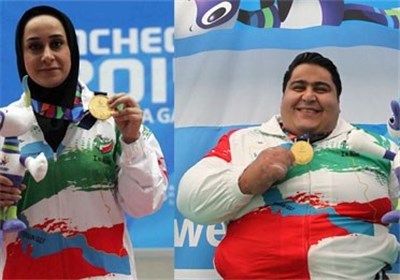
October 2014 IPC Athlete of the Month (from right to left): Siamand Rahman (1st place) and Sareh Javanmardi (2nd place)

Iranian powerlifter Siamand Rahman has been named the Athlete of the Month for October 2014 after his incredible performance at the Incheon 2014 Asian Para Games in South Korea.

The world’s strongest Paralympian made history at the competition, breaking his own world record three times on his way to gold in the men’s over 107kg category.

Rahman received 63.9 per cent of the public vote to finish ahead of his compatriot, shooter Sareh Javanmardidodmani, who received 34.3 per cent of the vote after breaking two world records on her way to double gold in the P2 (women’s 10m pistol SH1) and P4 (mixed 50m pistol SH1) in Incheon.

Gambian athletics star Demba Jarju came third, after he became the first wheelchair racer to win the Gambian Marathon.

[…]

Sources:
http://www.paralympic.org/siamand-rahman-named-allianz-athlete-month-october-2014
http://theiranproject.com/blog/tag/iranian-female-shooter-sareh-javanmardi/

Iranian women shine in 2014 Karate World Championship

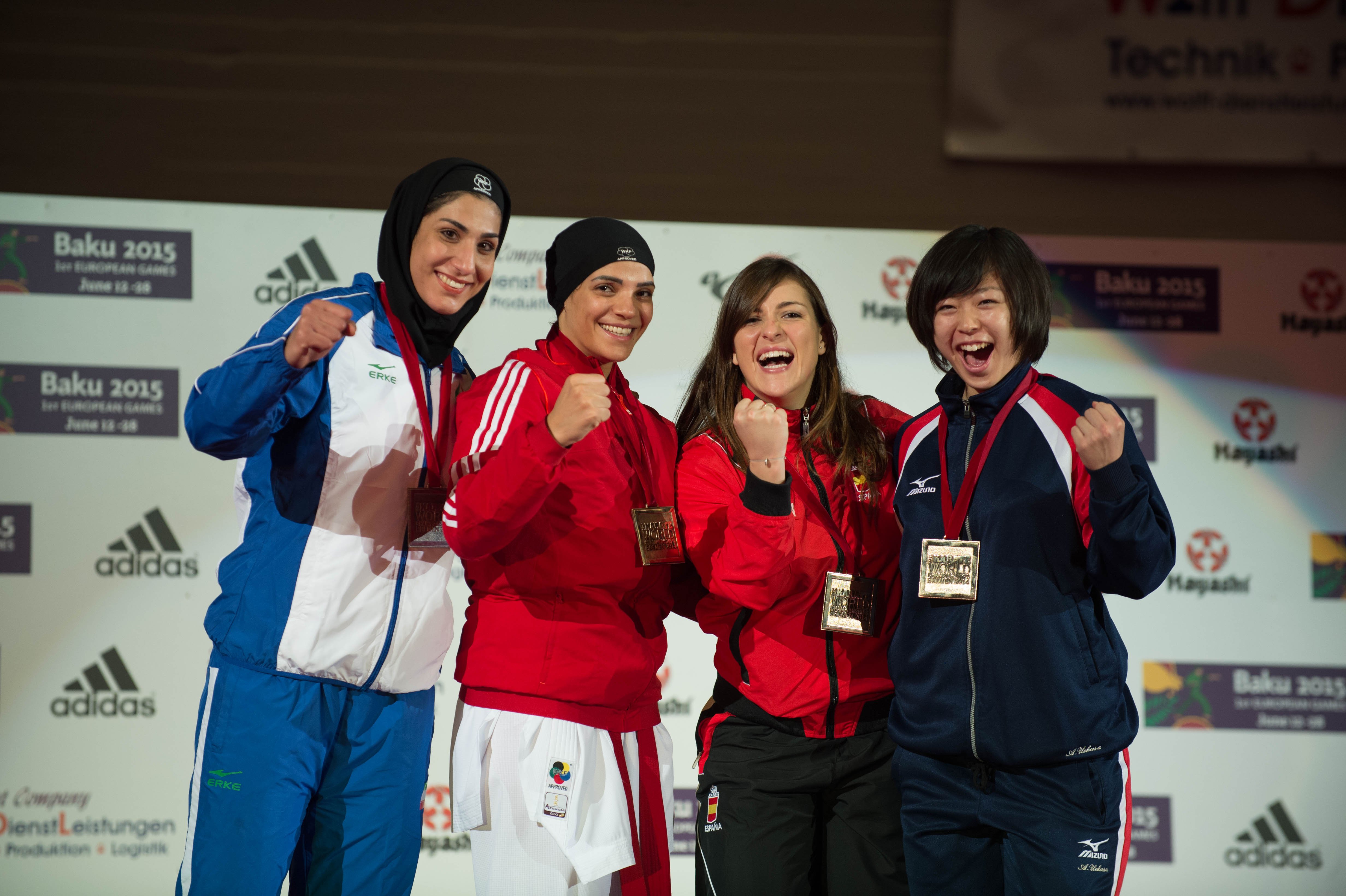
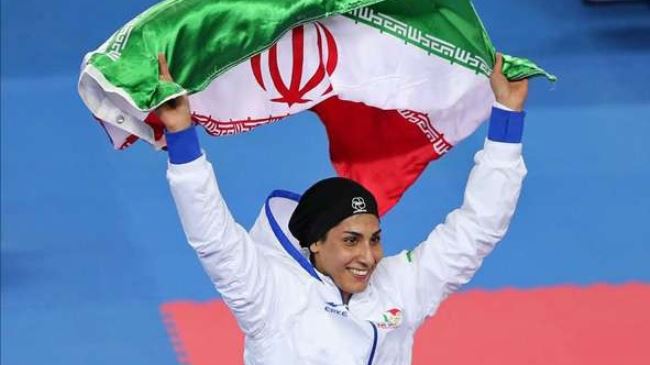
Hamideh Abbasali is the first Iranian women to receive a medal at a Karate World Championship, collecting a silver medal after conceding (2-1) defeat to her Egyptian opponent Shymaa Abouel Yazed in the final competition of the women’s over 68-kilogram weight division.

Abbasali had overpowered Belgian, Spanish, Dutch and Hungarian contestants in her march to the final.

Separately, Mahsa Afsaneh, Elnaz Taghipour and Najmeh Qazizadeh won the third-place women’s kata contest on Saturday and brought home the bronze.

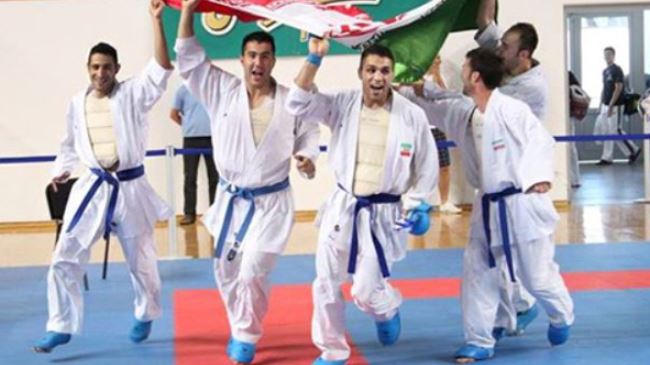
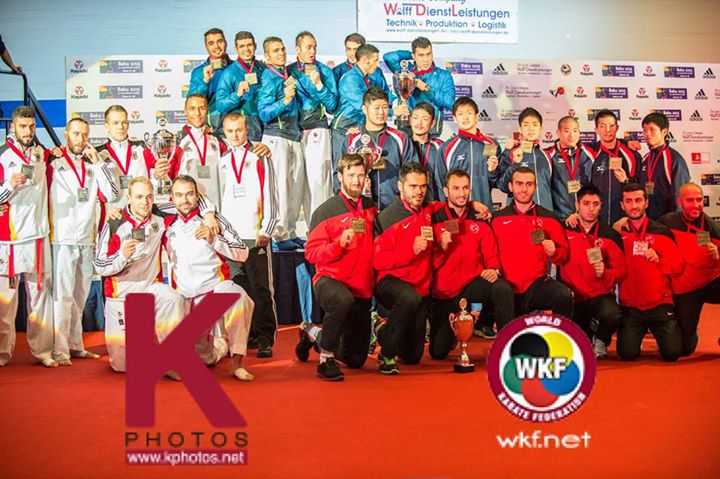
The Iranian men athletes were also very successful. The Iranian men’s kumite team comprised of Saeed Ahmadi, Iman Sanchouli, Saman Heydari, Zabihollah Poursheib, Ebrahim Hasanbeigi, Sajjad Ganjzadeh and Bahman Asgari overcame the host nation 3-2 in the final round of men’s kumite contests at OVB-Arena in the northern German city of Bremen to clinch the gold medal.

They had earlier defeated Dominica (2-1), Japan (3-1), Serbia (3-0) and Belarus (3-0) in its march to the final.

Iran’s Amir Mehdizadeh overcame Vitali Sementsov from Ukraine, and won the bronze medal in the men’s minus 60-kilogram weight category Kumite competition at OVB-Arena in the northern German city of Bremen.

Brazilian athlete Douglas Brose defeated Geoffrey Berens from the Netherlands and won the gold medal in the weight class.

Iranian karate fighter Sajjad Ganjzadeh also lost to Enes Erkan from Turkey (5-4) on Saturday, and snatched a silver medal in the men’s over 84-kilogram weight class.

Ganjzadeh overwhelmed a representative from Bosnia and Herzegovina in the semi-final contest.

The 22nd edition of the World Karate Championships took place in Bremen, Germany from Nov 5 to Nov 9, 2014.

The tournament brought together 887 male and female athletes from 116 nations, including Argentina, Australia, Belgium, Brazil, China, Egypt, Germany, Iran, Italy, Mexico, Russia, Spain, Turkey and the United States.

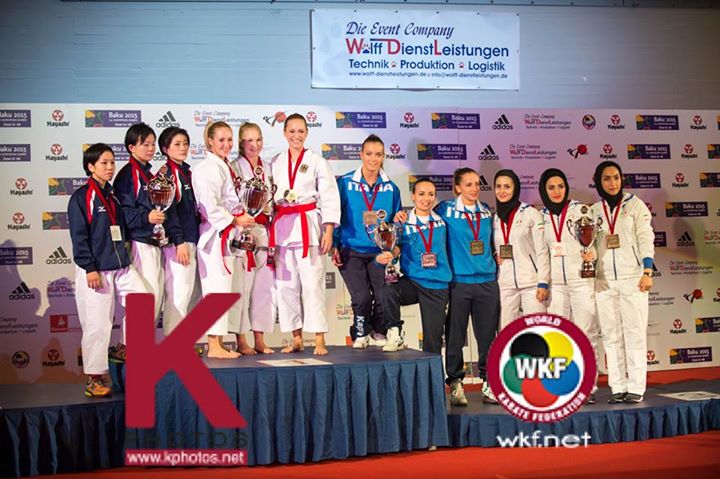
2014 Karate World Championship - Female Kumite 68kg - Podium - Egypt, Iran (Silver), Spain, Japan

Female Kumite +68kg Podium: (from left to right) Iran (silver), Egypt (gold), Spain and Japan (bronze)

2014 Karate World Championship - Team Female Kata - Podium - Germany, Japan, Italy, Iran (Bronze)

Female Kata Team Podium: (from left to right) Japan (silver), Germany (gold), Italy and Iran (bronze)

2014 Karate World Championship - Female Kumite 68kg - Silver Medal - Hamideh Abbasali, Iran

Hamideh Abbasali celebrating her silver medal

2014 Karate World Championship - Men Kumite Team - Gold Medal - Iran 01

Iran’s men kumite team celebrating their gold medal

2014 Karate World Championship - Team Men Kumite - Podium - Iran (Gold), Germany, Turkey, Japan

Men Kumite Team Podium: (from left to right) Germany (silver), Iran (gold), Japan and Turkey (bronze)

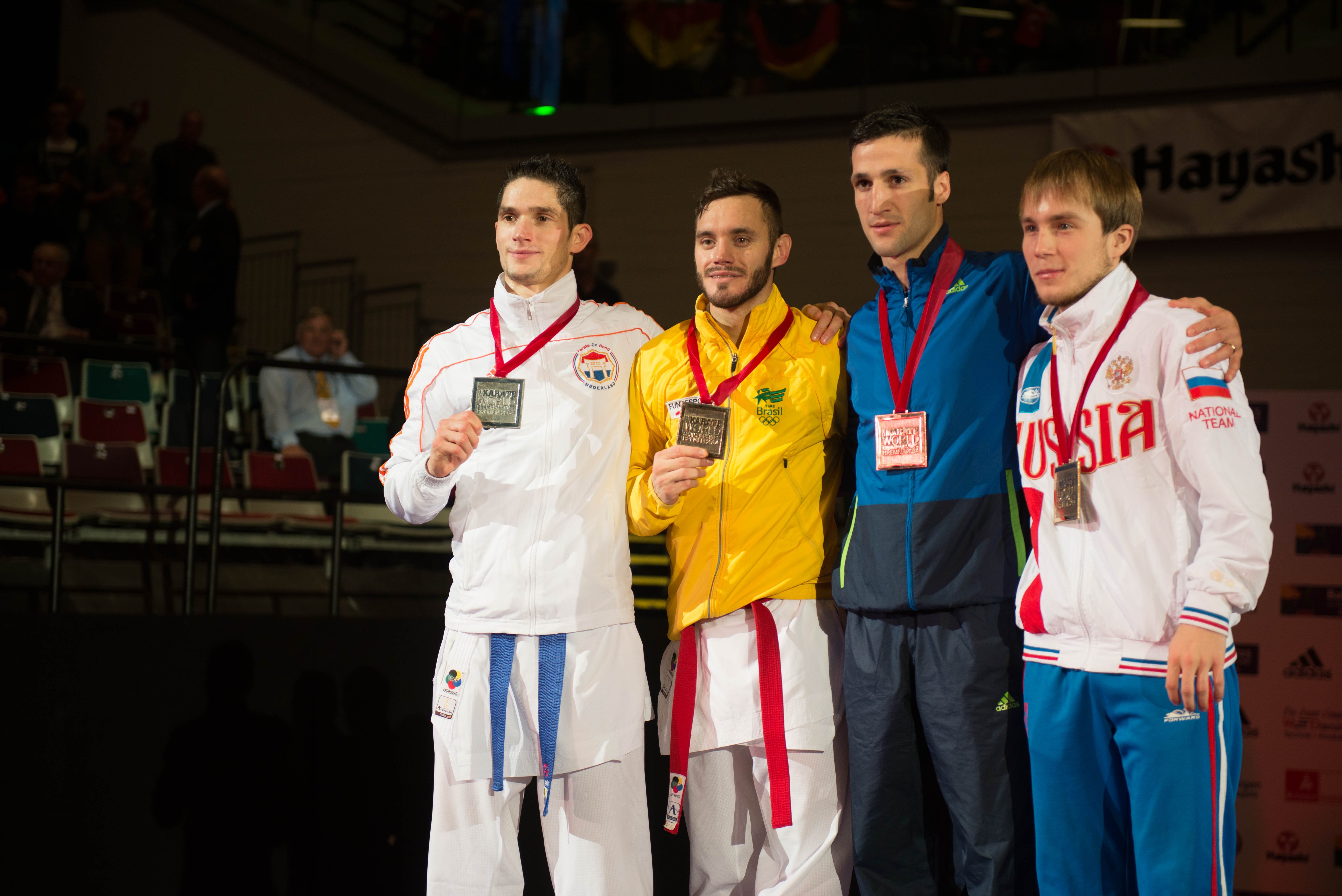
2014 Karate World Championship - Men Kumite -60 Kg 3bronze MAHDI_ZADEH AMIR

Men Kumite -60kg Podium: (from left to right) Netherlands (silver), Brazil (gold), Iran and Russia (bronze)

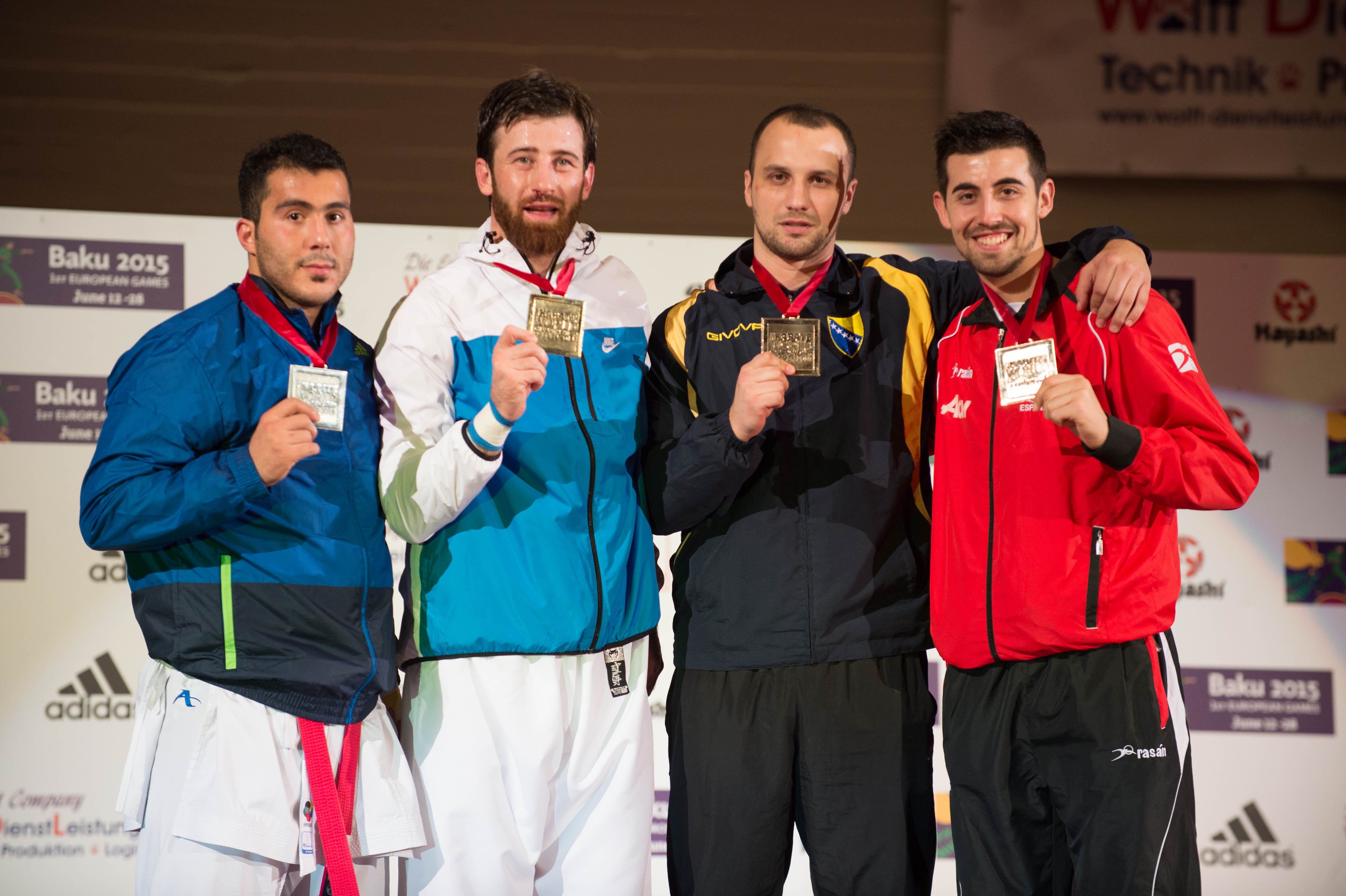
2014 Karate World Championship - Male Kumite +84 Kg 2sivler GANJZADEH SAJAD

Men Kumite +84kg Podium: (from left to right) Iran (silver), Turkey (gold), Bosnia Herzegovina and Spain (bronze)

Sources:
http://www.presstv.ir/detail/2014/11/09/385365/iran-wins-medals-in-world-karate-games/
http://www.presstv.ir/detail/2014/11/10/385476/iran-mens-kumite-team-crowned-in-world/
http://www.worldkaratefederation.net/news-center-new/karate-bremen-2014-10-new-karate-world-champions/122/

Iranian women shine in Asian Games 2014 (Asiad) in Incheon Korea

Iranian women were by far the most successful women from the middle east in the Asian Games 2014, like in previous edition of the games too.

They were awarded medals in Athletics, Kabaddi, Martial Arts, Shooting and Canoeing.

 Gold Hamideh Abbasali Karate Women’s +68 kg
 Gold Najmeh Khedmati Shooting Women’s 10 m air rifle
 Silver Leyla Rajabi Athletics Women’s Shot put
 Silver Salime Abdollahbakhsh
Hengameh Bourghani Farahani
Marzieh Eshghi
Sahar Ilat
Sadighe Jafari Kalokan
Saeideh Jafarkoochi
Ghazal Khalaj
Zahra Masoumabadi
Malihe Miri
Tahereh Tirgar
Mozhgan Zare
Farideh Zarif Doost
Kabaddi Women’s Team
 Silver Narjes Emamgholinejad Shooting Women’s 10 m air rifle
 Silver Najmeh Khedmati
Narjes Emamgholinejad
Elaheh Ahmadi
Shooting Women’s 10 m air rifle team
 Silver Fatehem Rouhani Taekwondo Women’s 73 kg
 Silver Akram Khodabandeh Taekwondo Women’s +73 kg
 Silver Elaheh Mansourian Wushu Women’s sanda 52 kg
 Bronze Arezou Hakimi Canoeing Women’s K-1 200 m
 Bronze Sonia Gomari Canoeing Women’s slalom C-1
 Bronze Fatemeh Chalaki Karate Women’s 61 kg
 Bronze Nasrin Doosti Karate Women’s 50 kg
 Bronze Soulmaz Abbasi Rowing Women’s Lightweight single sculls
 Bronze Nazanin Malae
Soulmaz Abbasi
Homeira Barzegar
Mahsa Javar
Rowing Women’s lightweight quadruple sculls
 Bronze Sousan Hajipour Taekwondo Women’s 53 kg

Source: http://en.wikipedia.org/wiki/Iran_at_the_2014_Asian_Games

Must reads on Iranian women: https://theotheriran.com/tag/women/

Series: Iran in Asia Games (Asiad) 2014 – Iranian Woman Kayaker Arezo Hakimi Shines At Asian Games 2014

An Iranian female athlete bagged silver medal of women’s kayak single 200m on Monday at the Asian Games 2014 in Incheon, South Korea.

Intro Asia Games (Asiad):

Some 9,500 athletes from 45 countries are competing at the Games, the world’s second-biggest multi-sport event after the Olympics, with 439 gold medals in 36 sports up for grabs.

Iran has participated in the games with 276 athletes in 22 sports.

http://iranfrontpage.com/news/society/sports/2014/09/irans-shot-putter-rajabi-wins-silver-asiad/

More photos:

http://www.payvand.com/news/14/sep/1169.html

Series: Iran in Asia Games (Asiad) 2014 – Female Shot-Putter Leila Rajabi wins Silver Medal

The Iranian athlete won the silver medal with a throw of 17.80 meters at the Incheon Asiad Main Stadium.

“I am so happy because of winning the silver medal. My rival (Gong Lijiao) who won the gold medal is a world champion,” Rajabi said.

Intro Asia Games (Asiad):

Some 9,500 athletes from 45 countries are competing at the Games, the world’s second-biggest multi-sport event after the Olympics, with 439 gold medals in 36 sports up for grabs.

Iran has participated in the games with 276 athletes in 22 sports.

http://iranfrontpage.com/news/society/sports/2014/09/irans-shot-putter-rajabi-wins-silver-asiad/

Farzaneh Sharafbafi – female professor of Aeronautical Engineering

Farzaneh Sharafbafi

When it comes to air transportation few people know that the first woman who got a Ph.D. in aerospace is the very person whose invention in college years made her Iran’s top student of mechanical engineering.

Today she is the director of Training and Human Resources Development at the Iranian Civil Aviation Organization, head of Iran Air Aviation Training Center, deputy managing director of Iran Air, and a legal expert who arbitrates disputes among airlines. She is also a professor at Amir Kabir University of Technology and Shahid Sattari University of Aeronautical Engineering.

Zan-e Rooz (Today’s Woman) weekly featured an interview with Farzaneh Sharafbafi about the path she has taken and her goals. What comes below is an excerpt of the interview:

How come you developed an interest in this field?

Basically, a child’s character forms at an early age, between 10 and 12, when s/he faces questions about their future job. When I was a child I would repair home appliances on the fritz. My family provided me with the opportunity to learn through trial and error. I could fix all devices […] and I was very much interested in technical issues. That I could repair the vacuum cleaner prompted my parents to call me “The Engineer” at home. I started with simple things.

My dad was a physics professor at Sharif University and this helped me see many lab tests objectively. I had some inventions like airbag shoes under which I had placed a pair of spring to help the wearer jump higher […]

I was always an active student in school and took extracurricular courses. When I was admitted to university, I wanted to change the world. […] I was admitted to Sharif University to study shipbuilding.

Right then mechanical engineering had two subdivisions: aerospace and shipbuilding. The latter was not all that popular among women because its job prospects were dim.

What was the focus of your undergraduate thesis?

I chose a scientific topic and went so far as building a plane wing. It turned out to be a good one. […] I built the parts needed for the plane wing all by myself; I tried to learn machining because I wanted to build it all by myself. It was not easy to make a part. Thanks to my thesis, I finished first in mechanical engineering in Iran. […]

It was when I was hired by Iran Air. […] There we were trying to make something to cushion the blow of landing when the plane touched down.

We found a plane, disassembled its wheels and collected the needed items from different places. […] Humans can develop a better sense of appreciation through touching something than just talking about it. I wanted to go ahead and build the item. We did it but we worked our fingers to the bone, so to speak. […].

Later I became a Ph.D. student in Sharif University. I never skipped class. I attended my first class two days after I gave birth to my second kid.

What did you work on for your Ph.D. thesis?

I studied aircraft structures for MS. I pursued my studies in fracture mechanicsat the PhD level. It deals with a part when it breaks as a result of aging. I picked that since I was working at Iran Air and I could see firsthand that the planes were aging. I wanted to solve this problem.

I wondered if I could find the cause of such breakage and prove it mathematically. It took me about three and a half years to complete it. […]

As for the air industry, I’m seeking to find self-healing parts for planes, something which can repair itself in case of malfunctioning. This may sound hard to believe, but it could be done if we think outside the box. We can copy the models God has placed in nature, for instance, human skin which has a self-healing ability. I floated the idea in a conference. I’m still following that. […]

When I proved the math equation, I was told that I couldn’t release it in Iran and I had to have an essay released through the Institute for Scientific Information (ISI) before getting my Ph.D. I was also told I had to find a foreign professor to register the equation under his/her name. Earlier I had sent an essay to England where a gentleman released it in his own name! I didn’t want to repeat that experience.

I had bad feelings because nobody supported me and I was about to miss a deadline to complete my Ph.D. program. I couldn’t register the work under another person’s name either. Finally I found a place in England which accepted to assess the essay for £600. My husband paid for it and my essay was accepted.

I was asked to go there and personally prove the case. It was a tough situation. I had no visa and it wasn’t an easy job to get to England in a few days. Furthermore, the conference was to be held in Southampton, which was quite a distance from London. At last, I secured my visa after going through many hardships and my husband and I went there. […]

When I arrived at the conference hall having the Islamic covering on, all participants surprisingly asked me, “Have you come from Iran?” and I said yes. They didn’t expect to see me there. An Israeli man who was a full professor was in the front row. He would ask anyone presenting their article two very difficult questions.

I solved the math problem to the best of my knowledge and ended my speech on time. It earned me an almost one-minute standing ovation. When I was asked what my final words were, I turned to the Israeli man and told him that I was ready to answer his questions, if any. “No need for that since everything was perfect,” he said. I felt a sense of pride for the honor I had earned for my homeland.

Source – Iran Front Page:
http://iranfrontpage.com/news/society/lifestyles/2014/09/invitation-serious-life/

Iranian director Rakhshan Bani-Etemad wins Best Screenplay Award at Venice Film Festival

Bani-Etemad received the Best Screenplay award for her film Tales during the awards ceremony on the closing day of the festival on September 6, 2014 at Venice Lido.

Iranian filmmaker Rakhshan Bani-Etemad receiving her award at the Venice Film Festival

Iranian filmmaker Rakhshan Bani-Etemad receiving her award at the Venice Film Festival

Tales is composed of seven short episodes, in which Bani-Etemad reveals the fate of some of the main characters in her previous films like The Blue-Veiled, Under the Skin of the City and Mainline. […]

Best-known for addressing social problems in her films, Bani-Etemad has directed numerous feature-length and short films as well as documentaries, which have garnered many international and national awards.

“The characters in my films are real, [from among] the people whom I might meet every day,” she had earlier stated. […]

Another Iranian film maker Nima Javidi’s debut feature-length film Melbourne received critical acclaim at the festival. The film opened Critics’ Week section of the event.

French film composer Alexandre Desplat was the head of the international jury at this year’s Venice Film Festival. The 71st annual Venice Film Festival took place in Venice, Italy from August 27 to September 6, 2014.

Source: Payvand News of Iran

Roya Beheshti Zavareh – Associate Professor of Mathematics, winner of multiple important grants and honors

Roya Beheshti Zavareh

Roya Beheshti Zavareh

General Information
Born: 1977, Esfahan, Iran
Citizenship: Iranian

Education
Massachusetts Institute of Technology, Cambridge, Massachusetts.
Ph.D. in Mathematics, 1999-2003
Thesis Advisor: Prof. Johan de Jong

Sharif University of Technology, Tehran, Iran
B.S. in Mathematics, 1995-1999


Research Interests
Algebraic geometry

Positions
Associate Professor, Washington University in St. Louis, 2013 – present.
Assistant Professor, Washington University in St. Louis, 2007 – 2013.
Postdoctoral Fellow (Complementary Program), MSRI, Berkeley, 2006 – 2007
Postdoctoral Fellow, Queen’s University, Kingston, Canada, 2004 – 2006
Postdoctoral Fellow, Max-Planck-Institut fur Mathematik, Bonn, Germany, 2003 – 2004

Grants
National Science Foundation, DMS1204567, 07/2012-06/2015
Simons Collaboration Grants for Mathematicians, 2011-2016
AWM travel grant, June 2010
Fund for Scholarly and Professional Development (2006), Queen’s University

Honors
Rosenblith Fellowship, Department of Mathematics, MIT, 2000
Liberty Mutual Fellowship, Department of Mathematics, MIT, 1999
International Olympiad in Informatics (Netherlands 1995), bronze medal
International Mathematical Olympiad (Hong Kong 1994), silver medal

Source: http://www.math.wustl.edu/~beheshti/web-cv.pdf

Roya Beheshti was class mate and friend of Maryam Mirzakhani, the first woman winner of the Fields Prize (“Nobel Prize in Mathemathics”): https://theotheriran.com/2014/08/14/iranian-mathematician-maryam-mirzakhani-the-first-women-to-win-the-nobel-prize-of-mathematics/

All-female pop band to perform at Tehran’s Vahdat Hall on September 4 and 5

An all-female Iranian pop band, will appear again to perform concerts at Tehran’s Vahdat Hall on September 4 and 5.

The band, which is composed of five singers and 12 musicians, will perform a repertoire of Persian, English, French, Arabic, and Hindi songs during the performances.

Band leader Bahar Ilchi said that her band is the first all-female Iranian pop group to perform live in concert in Iran since the victory of the Islamic Revolution in 1979.

More infos and more photos:

http://www.payvand.com/news/14/sep/1017.html

UNHCR: Afghan girl who came as refugee to Iran enjoyed the Iranian education system and is now obsterics surgeon

Afghan refugee Nasibah is now an obstetrics surgeon in Iran, an achievement she and her family never felt possible.


Afghan refugee Nasibah Heydari sits in her office. With hard work and determination, she has achieved a dream by qualifying to become an obstetrics surgeon in Iran.

Following the Soviet invasion of Afghanistan in 1979, Nasibah’s farmer father, her mother and older sister fled to Iran from a small village in Kandahar province. After several days walking across mountains, rivers and deserts, they sought refuge in north-east Iran. Empty-handed, they settled in the city of Mashhad, where Nasibah was later born.

“The chance to access education from primary school to university is the greatest service that Iran has extended me and many other refugees in this country,” said Nasibah. Her story is just one example of how Iran, with the support of UNHCR, tries to provide support to refugees through education, health, vocational skills and opportunities so they can eventually help rebuild their own country.

There are more than 840,000 Afghan refugees living in Iran. The Iranian government assists refugees with medical services, education, literacy classes and also employment.

Nasibah hopes peace and stability will prevail in Afghanistan so she can return. “When I go back I will take many good memories from Iran and I will be grateful to have had the opportunity to have lived and studied in peace and security for such a long time. I hope in the future, I will be able to help women back home with the knowledge I have acquired in Iran,” she said.

http://www.payvand.com/news/14/jun/1190.html


Mitra Farahani: Awarded Iranian filmmaker

Mitra Farahani

Mitra Farahani’s biography:
She was born in Tehran in 1975 and studied painting and drawing with various Iranian masters of pictorial art, notably with Gholam Hossein Nami. After receiving a degree in graphic art at the Azad University in Tehran, she moved to Paris and took up residence in the Cite Internationale des Arts.

In 2001, she began a course of video studies at the Ecole Natioanale Superieure des Arts Decoratifs, where she made her first documentary entitled “Just a Woman”. The film was chosen for Berlin Film Festival and was awarded the Teddy Awards Special Jury Prize.

Her documentary “Zohre and Manouchehr” (Taboos) was presented at the Berlin Film Festival of 2004 and was later shown in cinemas in France and Canada.

In 2005 she made the documentary “Behjat Sadr: Suspended Time”, a portrait of one of the pioneers of abstract expressionist painting in Iran. In 2009, as part of the Three Continents Festival, Le Lieu Unique in Nantes presented her one-person multi-disciplinary exhibition. Her latest documentary film, Fifi Howls from Happiness, on painter Bahman Mohassess, premiered at the 2013 Berlin and Telluride film Festival.

More about her documentary “Fifi Howls from Happiness”:
http://www.payvand.com/news/14/aug/1104.html

Azam Iraji Zad – first Iranian (woman) selected as member of COMEST

Azam Iraji Zad, faculty member of Sharif University of Technology Physics Department was selected as member of the World Commission on the Ethics of Scientific Knowledge and Technology (COMEST). According to Public Relations Department of National Elites Foundation, she is the first Iranian scientist admitted to the commission.

COMEST is an advisory body and forum of reflection that was set up by UNESCO in 1998.

It is composed of eighteen leading scholars from scientific, legal, philosophical, cultural and political disciplines from various regions of the world.

The Commission is mandated to formulate ethical principles that could provide decision-makers with criteria that extend beyond purely economic considerations.

http://www.payvand.com/news/14/aug/1114.html


Iranian Mathematician Maryam Mirzakhani: The first woman to win the “Nobel Prize of Mathematics”

Maryam Mirzakhani

Maryam Mirzakhani is the first woman to ever win the Fields Medal – known as the “Nobel Prize of mathematics” – in recognition of her contributions to the understanding of the symmetry of curved surfaces. […]

Mirzakhani was born and raised in Tehran, Iran. As a young girl she dreamed of becoming a writer. By high school, however, her affinity for solving mathematical problems and working on proofs had shifted her sights. […]

She became known to the international math scene as a teenager, winning gold medals at both the 1994 and 1995 International Math Olympiads – she finished with a perfect score in the latter competition. Mathematicians who would later be her mentors and colleagues followed the mathematical proofs she developed as an undergraduate.

After earning her bachelor’s degree from Sharif University of Technology in 1999, she began work on her doctorate at Harvard University under the guidance of Fields Medal recipient Curtis McMullen. […] —By Bjorn Carey for Stanford University

Interesting Interview with Mirzakhani by The Guardian:

G: What are some of your earliest memories of mathematics?

I grew up in a family with three siblings. My parents were always very supportive and encouraging. It was important for them that we have meaningful and satisfying professions …

In many ways, it was a great environment for me, though these were hard times during the Iran-Iraq war. My older brother was the person who got me interested in science in general. He used to tell me what he learned in school. My first memory of mathematics is probably the time that he told me about the problem of adding numbers from 1 to 100. I think he had read in a popular science journal how Gauss solved this problem. The solution was quite fascinating for me.

G: What experiences and people were especially influential on your mathematical education?

I was very lucky in many ways. The war ended when I finished elementary school; I couldn’t have had the great opportunities that I had if I had been born 10 years earlier. I went to a great high school in Tehran – Farzanegan – and had very good teachers. I met my friend Roya Beheshti during the first week of middle school. It is invaluable to have a friend who shares your interests, and it helps you stay motivated.

Our school was close to a street full of bookstores in Tehran. I remember how walking along this crowded street, and going to the bookstores, was so exciting for us. We couldn’t skim through the books like people usually do here in a bookstore, so we would end up buying a lot of random books. Also, our school principal was a strong-willed woman who was willing to go a long way to provide us with the same opportunities as the boys’ school.

Later, I got involved in Math Olympiads that made me think about harder problems. As a teenager, I enjoyed the challenge. But most importantly, I met many inspiring mathematicians and friends at Sharif University. The more I spent time on mathematics, the more excited I became.

G: Could you comment on the differences between mathematical education in Iran and in the US?

It is hard for me to comment on this question since my experience here in the US is limited to a few universities, and I know very little about the high school education here. However, I should say that the education system in Iran is not the way people might imagine here. As a graduate student at Harvard, I had to explain quite a few times that I was allowed to attend a university as a woman in Iran. While it is true that boys and girls go to separate schools up to high school, this does not prevent them from participating say in the Olympiads or the summer camps. […]

G: What advice would you give those who would like to know more about mathematics – what it is, what its role in society has been, and so son?

This is a difficult question. I don’t think that everyone should become a mathematician, but I do believe that many students don’t give mathematics a real chance. I did poorly in math for a couple of years in middle school; I was just not interested in thinking about it. I can see that without being excited mathematics can look pointless and cold. The beauty of mathematics only shows itself to more patient followers.
Source: The Guardian

Excerpts of an article by Erica Klarreich published in Quanta Magazine that shows some other interesting aspects about her personality:

With her low voice and steady, gray-blue eyes, Mirzakhani projects an unwavering self-confidence. She has an equal tendency, however, toward humility. Asked to describe her contribution to a particular research problem, she laughed, hesitated and finally said: “To be honest, I don’t think I’ve had a very huge contribution.” And when an email arrived in February saying that she would receive what is widely regarded as the highest honor in mathematics — the Fields Medal, which will be awarded today at the International Congress of Mathematicians in Seoul, South Korea — she assumed that the account from which the email was sent had been hacked.

Other mathematicians, however, describe Mirzakhani’s work in glowing terms. […]

As a child growing up in Tehran, Mirzakhani had no intention of becoming a mathematician. Her chief goal was simply to read every book she could find. She also watched television biographies of famous women such as Marie Curie and Helen Keller, and later read “Lust for Life,” a novel about Vincent van Gogh. These stories instilled in her an undefined ambition to do something great with her life — become a writer, perhaps. […]

In her first week at the new school, she made a lifelong friend, Roya Beheshti, who is now a mathematics professor at Washington University in St. Louis. As children, the two explored the bookstores that lined the crowded commercial street near their school. Browsing was discouraged, so they randomly chose books to buy. “Now, it sounds very strange,” Mirzakhani said. “But books were very cheap, so we would just buy them.”

To her dismay, Mirzakhani did poorly in her mathematics class that year. Her math teacher didn’t think she was particularly talented, which undermined her confidence. At that age, “it’s so important what others see in you,” Mirzakhani said. “I lost my interest in math.”

The following year, Mirzakhani had a more encouraging teacher, however, and her performance improved enormously. “Starting from the second year, she was a star,” Beheshti said. […]

In 1994, when Mirzakhani was 17, she and Beheshti made the Iranian math Olympiad team. Mirzakhani’s score on the Olympiad test earned her a gold medal. The following year, she returned and achieved a perfect score. […]

After completing an undergraduate degree in mathematics at Sharif University in Tehran in 1999, Mirzakhani went to graduate school at Harvard University, where she started attending McMullen’s seminar. […]

She started going to McMullen’s office and peppering him with questions, scribbling down notes in Farsi.

“She had a sort of daring imagination,” recalled McMullen, a 1998 Fields medalist. “She would formulate in her mind an imaginary picture of what must be going on, then come to my office and describe it. At the end, she would turn to me and say, ‘Is it right?’ I was always very flattered that she thought I would know.”
Read on here: Quanta Magazine

Other interesting articles on Mirzakhani in iranianroots.com:
http://iranianroots.com/?s=Mirzakhani
Iranian female and men students win several medals at International Mathematics Competition 2014

Tehran’s Sharif University of Technology students won two gold and four bronze medals at the 21st International Mathematics Competition for University Students.

73 teams from around the world participated in the competition held in Blagoevgrad, Bulgaria, from July 29 to August 4.

Mina Dalir-Rouyfard and Pedram Safayei gwere awarded gold medals and Mojtaba Tefaq, Mahed Abroshan, Morteza Soltanipour and Mohammad Hassan Gol-Mohammadian earned bronze medals.

The competition consisted of two sessions of five hours each. Problems were posed from the fields of algebra, analysis (real and complex), geometry and combinatorics. The working language was English.

http://www.payvand.com/news/14/aug/1036.html

Related articles about Iran’s performance in science competitions: https://theotheriran.com/tag/science-competitions/

Iranian women are the sensation at the 2014 Chess Olympiad – score perfect score in the first 3 rounds

Khademalsharieh Sarasadat has 3/3 and has helped Iran to maintain a perfect match score

Khademalsharieh Sarasadat has 3/3 and has helped Iran to maintain a perfect match score | photo: Georgios Souleidis, chess24

If the perfect score of the Iranian women’s team after three rounds was newsworthy, then perhaps the best way to angle the headline for round four is – Iranian women drop first half point! The Olympiad sensations, seeded 21st, defended their right to the top table with a resounding 3.5-0.5 win over slightly higher rated Slovakia. Only Slovakian top board IM Eva Repkova survived, and the magical Iranians continue to outpace the clear pre-tournament favorites, China.

https://chess24.com/en/olympiad2014/news/round-4-azerbaijan-iran

First female governor in Gilan Province of Iran appointed

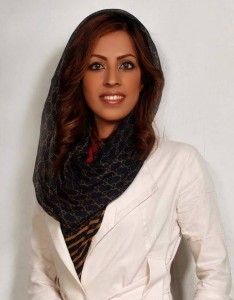
Mona Abrufarakh has become the first woman to be chosen as a governor in Gilan Province. IRNA reports that Abrufarakh will serve as governor of central Rasht.

[…]

The Rohani administration has already appointed four women to the position of governor in Hamoon, Qasr-e qand, Bandar Torkaman and Qeshm, as well as a female prefect in Bushehr.

Ezzat Kamalzadeh, Massoumeh Prandar, Homeira Rigi and Marjan Nazghelichi are respectively serving in Qeshm, Hamoon, Qasr-e Qand and Bandar Torkaman, and Maryam Qorbani is prefect of Bushehr.
Source: Payvand News of Iran

Series: Interesting photos from the FIFA worldcup 2014 – from inside Iran

Image

Posts on Iranian women: https://theotheriran.com/tag/women/

All posts with photos: https://theotheriran.com/tag/photos/

Series: Interesting photos from the FIFA worldcup 2014

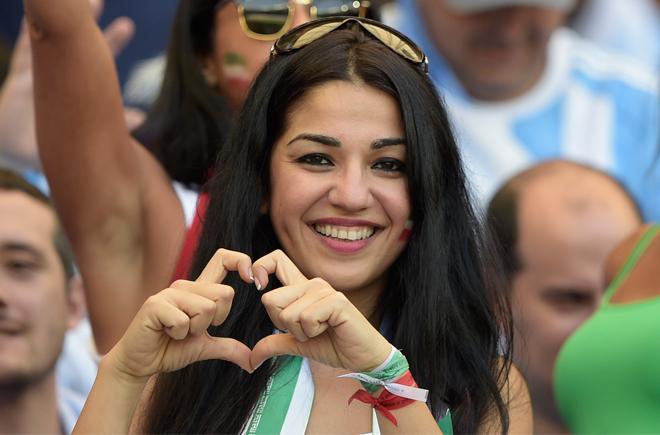
Iranian female fan

Other interesting photos from Iran: https://theotheriran.com/tag/photos/

Photos: young women and men decorating walls in Tehran

https://i0.wp.com/shahrefarang.s3.amazonaws.com/wp-content/uploads/2013/08/Shahrak-Gharb-01.jpg

https://i0.wp.com/shahrefarang.s3.amazonaws.com/wp-content/uploads/2013/08/Shahrak-Gharb-03.jpg

https://i0.wp.com/shahrefarang.s3.amazonaws.com/wp-content/uploads/2013/08/Shahrak-Gharb-05.jpg

https://i0.wp.com/shahrefarang.s3.amazonaws.com/wp-content/uploads/2013/08/Shahrak-Gharb-09.jpg

تزئین دیوارهای میدان صنعت

Underground musicans in Iran

https://i0.wp.com/originalworldtravel.com/wp-content/uploads/2014/04/iran_0330.jpg

In fact, music is becoming one of the most potent avenues for a new generation of newly empowered women, who sense a tide shifting in their opportunities in the country. They are expressing themselves in ways that previous generations could not have imagined since the Islamic Revolution. But the moderate stance of current president Hassan Rouhani has encouraged more artists and musicians to ply their wares, and tourists and travelers are taking notice.

ABC News met a young “underground” singer in Iran this week. She’s one of many young men and women who perform everything from metal and rock to jazz and R&B, including covers of famous American artists. ABC News spoke with Rana Farhan, a well-known Iranian singer based in New York.

What musical genres are most popular among young Iranians?

Iranian young people are like most young people. Their taste ranges from rock to hip-hop and R&B to traditional Iranian music. Although they can’t legally buy it, they find ways to grab songs from the Internet and share them. For instance, my website is blocked in Iran, but if any of my fans send me an email, I will send them my latest mp3s and encourage them to share.

Rest of the interviewcan be read here:

http://originalworldtravel.com/travel-news/?WPACRandom=1398533411393#comment-97

Pharrell Williams – Happy in Tehran II – Iranians going crazy

Check out other videos on Iran at: https://theotheriran.com/tag/video/

Shirin Gerami first female triathlete who competed for Iran
Shirin Gerami

Shirin Gerami, a 24-year-old woman from Iran, has made history by becoming the country’s first female triathlete to have taken part in the sport’s world championship.

By racing in the London event, she paved the way and set a precedent for thousands of Iranian women who have previously been denied permission to race in triathlons abroad or swim in international events.

Iran’s president, Hassan Rouhani, greeted her achievement by tweeting: “Shirin Gerami,1st female triathlete to have participated in world championship wearing Iran’s colours #GenderEquality.”

Other fascinating Iranian women:
https://theotheriran.com/tag/women/

Source:
http://www.theguardian.com/world/iran-blog/2013/sep/15/meet-shirin-gerami-iran-s-first-female-triathlete

Two Iranian women to compete in Paris-Dubai rally


The competition which began on April 15 and will continue into May 5, is an extraordinary automobile rally to link French capital, Paris to Dubai, the United Arab Emirates. The route drives 6,925km from France, Switzerland, Principaute of Monaco, Italy, Slovenia, Croatia, Serbia, Bulgaria, Turkey and Iran to the UAE.

Based on the schedule, the participants will enter Iranian northwestern city of Tabriz from Bazargan border checkpoint, cruising Tehran, Isfahan and Shiraz. Then they will go to Dubai by boat from Iranian port city of Bandar Abbas.

Posts, Photos & Videos on Iranian women in motor sports:
https://theotheriran.com/tag/motor-sports/

Source of this news:
http://www.payvand.com/news/14/may/1006.html


High-flyer: Iranian stunt woman Mahsa Ahmadi – with others awarded for stunts in the James Bond movie “Skyfall”

socialinform's avatarRemarkable people with Iranian roots

She fights, she drives cars at breakneck speed, she jumps out of planes and helicopters … these are just a few of the talents of Mahsa Ahmadi, the best stunt woman in Iran.

Woman in a male-dominated world: the stunt scene in Iran is a male-dominated world: "most of the time, women's roles in Iranian films are pretty safe; nothing happens to them, explains "Stunt 13" boss Arsha Aghdasi. "Slowly, however, things are changing. With her courageous and professional manner, Ahmadi has gradually won the trust of the directors."

She had already done a number of dangerous scenes in 21 Iranian films when she shot to world fame in 2012 in the most recent James Bond film, “Skyfall”.

Gymnastics champion: Mahsa Ahmadi is now 24 years of age, but her career began when she was a young child. As a gymnast, she spent eleven years on the Iranian national team, winning numerous competitions in the process. When she had to leave the national team at the age of 18, she found a new challenge in the group “Stunt 13”. She is also a qualified sports teacher.

Woman in a male-dominated world: the stunt scene in Iran is a male-dominated world: “most of the time…

View original post 84 more words

Photo: Youth in Iran, not unlike young people in other parts of the world

Image

Skater girls in Tehran

Other surprising photos from Iran: https://theotheriran.com/tag/photos/

Skating girl in Shiraz, Iran

Image

https://theotheriran.com/tag/photos/

Bowling in Isfahan

Image
Other interesting photos from Iran: https://theotheriran.com/tag/photos/

Iranian women enjoying parkour and gymnastics

http://www.rferl.org/media/photogallery/iran-women-parkour-tehran/25311769.html


Blog recommendation: American woman backpacking in Iran

Read the blog and enjoy Silvia’s descriptions and pictures. Here are the links to the posts on Iran:

http://www.heartmybackpack.com/blog/backpacking-solo-through-iran/

http://www.heartmybackpack.com/blog/kafka-cigarettes-tehran/

http://www.heartmybackpack.com/blog/isfahan-iran/

If you are lazy just read some quotes here and go to the links to enjoy the pictures:

“I mean, Iran is home to one of the world’s oldest civilizations, hosts thirteen UNESCO World Heritage Sites, and boasts beautiful landscapes stretching from dense rain forests to snowcapped mountains to desert basins. Plus, so many travelers whom I met in Central Asia absolutely raved about Iran. The hospitable people, delicious food and historic sites – how could I not add Iran to my travel itinerary?”

“My first Couchsurfing hosts in Tehran, a young Ph.D. student and her roommate, said they were so excited to be hosting an American girl, and that they hope more tourists will start to come to Iran. They were incredibly warm and welcoming hosts, cooking delicious Persian food and asking me countless questions about Norway and the U.S. and foreigners’ impressions of Iran.”

“The thing is, I haven’t felt alone once since I landed in Iran. The receptionist at my first hotel took me in as her daughter, accompanying me to breakfast and lunch and suggesting sites for me to visit, my Couchsurfing hosts were like cool older sisters, chatting with me about religion and politics as well as the plot twists of Lost and J-Lo’s divorce (I’m so out of touch), and Rana truly has adopted me as her sister, with an invitation to lunch turning into a trip to visit Esfahan and then several days with her family in Tehran.”

“So far my experience in Iran has only been one of warmth and hospitality, and really, really amazing food! Though, in a few hours Rana and I are heading to Marivan, a small Kurdish city on the border to Iraq. So you know, maybe I’ll have some more eventful things to share from there! (Kidding, family, Kurdistan is of course totally safe.)”

“My stay in Tehran was far too short and left much of the city unexplored, but I did leave with an overwhelming crush on a city so full of life and passion. Shopkeepers greeted me with warmth (if also a degree of surprise), and the discussions I had with people there were always filled with genuine interest and reflection. ”

“While now a bustling modern city, Isfahan was once one of the largest cities in the world as it sat on a major intersection of the main north-south and east-west  routes crossing Iran. We seemed to stumble on reminders of Isfahan’s past glory around every corner, from impressive squares and tree-lined boulevards to covered bridges, palaces and mosques.”

“Moreover, while Isfahan might be dominated by Islamic architecture, the city is also home to important Christian, Jewish and Zoroastrian sites. Rana and I visited the Church of Saint Joseph of Arimathea, built by an Armenian community that settled in Isfahan in the early 1600s.”

Ok if you read so far, just make sure to visit the links above


Mary Apick – awarded Iranian actress, writer, and producer

https://i0.wp.com/festivalofarts.com/achievers/upload/2013/08/03/20130803144143-1010640f.jpg
Mary Apick (in Persian: مری آپیک; born in 1954) is an Iranian actress, writer, and producer. She won the award for Best Actress at the 10th Moscow International Film Festival for her role in the 1977 film Dead EndHer other notable works as actress:

Ref: wikipedia.org/wiki/Mary_Apick

Female Pianist Dena Taherianfar awarded with the Bita Prize

Stanford, California – In a ceremony held at Stanford University last Wednesday evening, March 12, 2014, global philanthropist and humanitarian Bita Daryabari awarded the First Annual Bita Prize for Young Persian Artists to acclaimed seventeen-year-old concert pianist Dena Taherianfar.

About Dena Taherianfar
Dena was born in Tehran, in November of 1996. She began taking lessons in piano when she was six years old. Her first teacher was Mrs. Shohreh J. Ghajar. Dena gave her debut concert in the renowned Roudaki Concert Hall of Tehran in 2008. At her teacher’s suggestion, Dena eventually moved to Vienna with her Mother (her father still in Iran) where she began to study piano with Prof. Stanislaw Tichonow at the Joseph Haydn Conservatory. She has won numerous national and international prizes. She performed at the Gala Concert in the House of “Music House” in Vienna and won two first prizes in the Austrian Youth Competitions “Prima La Musica.” She has also won first prizes in the International Competition “Concours Flame 2011” in Paris, “Valsesia Musica 2012” in Italy, and the “21st Century Art 2013” in Vienna.

http://www.payvand.com/news/14/mar/1144.html