Tag Archives: Travel

Iran’s Fars Province: Margoon Waterfall

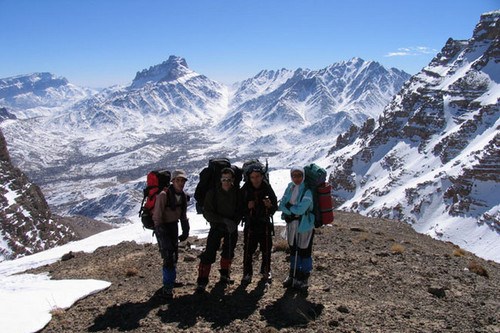
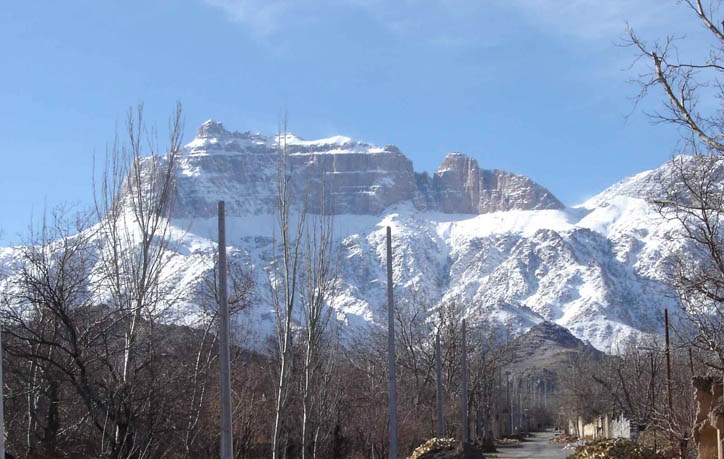
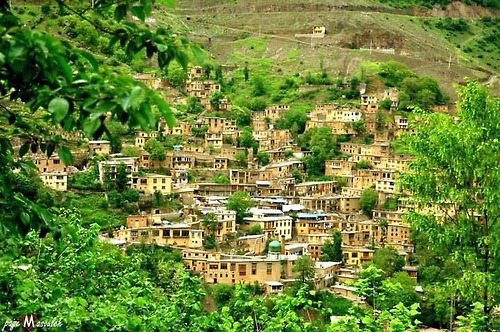
Margoon (Margun) Waterfall (in Farsi: Abshare Margoon) is located in the Fars Province of Iran near the city of Sepidan, in the village Margoon, 48 kilometers far from the city Ardakan.

Its name means in Persian “snake like”. This waterfall is the main attractive of the Abshare Margoon protected area. It falls from the heart of a rocky mountain and has about 70m height and 100m width. It is one of the largest and most beautiful waterfalls in Iran. The area is mountainous and has an elevation of over 2.200m above sea level.

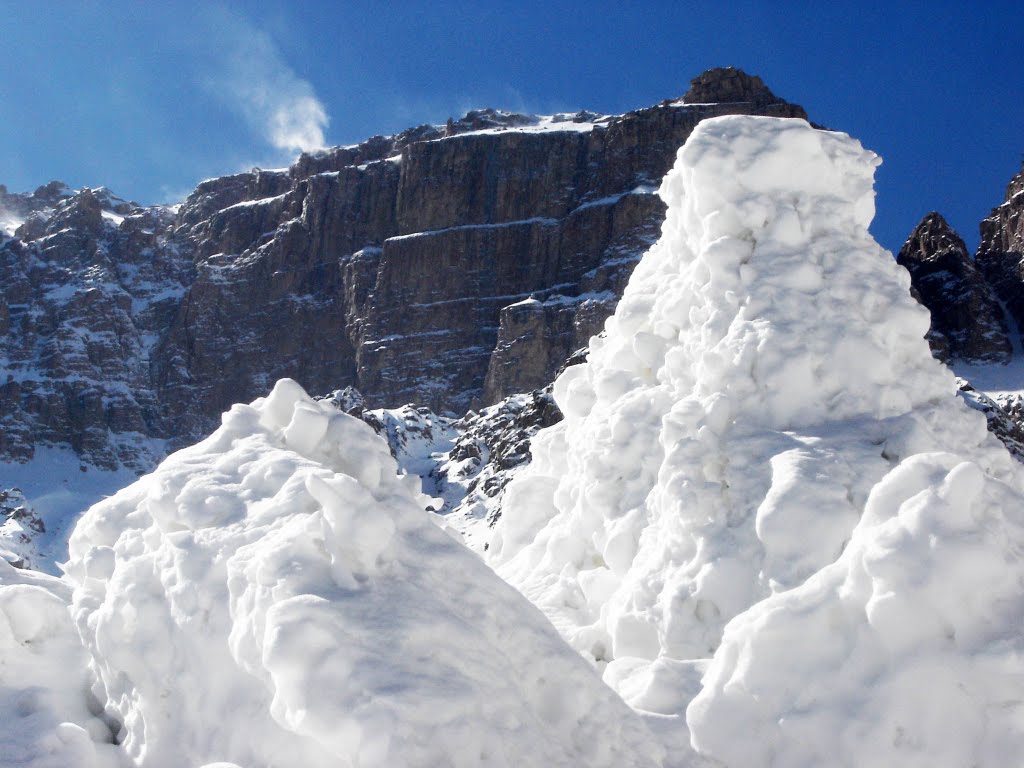
The weather is cold between November and April and in winter parts of the waterfall often freezes. Most tourists visit this area in the hot months of the year, when the temperature is 40°C in most of the country but hardly reaches 25°C at Abshare Margoon. Besides visiting the waterfall there are several activities to enjoy in this area: mountain climbing, rock climbing, camping, landscape photography etc.

As Abshare Margoon lies within the Zagros Mountain range, it has diverse flora and fauna. Oak is the main plant of the forests of the area and brown bear, Persian leopard, wolf, fox, wild boar, wild goat and porcupine are some of its fauna.

Sources:
wikivoyage
sh.wikipedia.org
en.wikipedia.org
Tasnim News

Business Insider – Jewish Australian writer Ben Winsor about visiting Iran

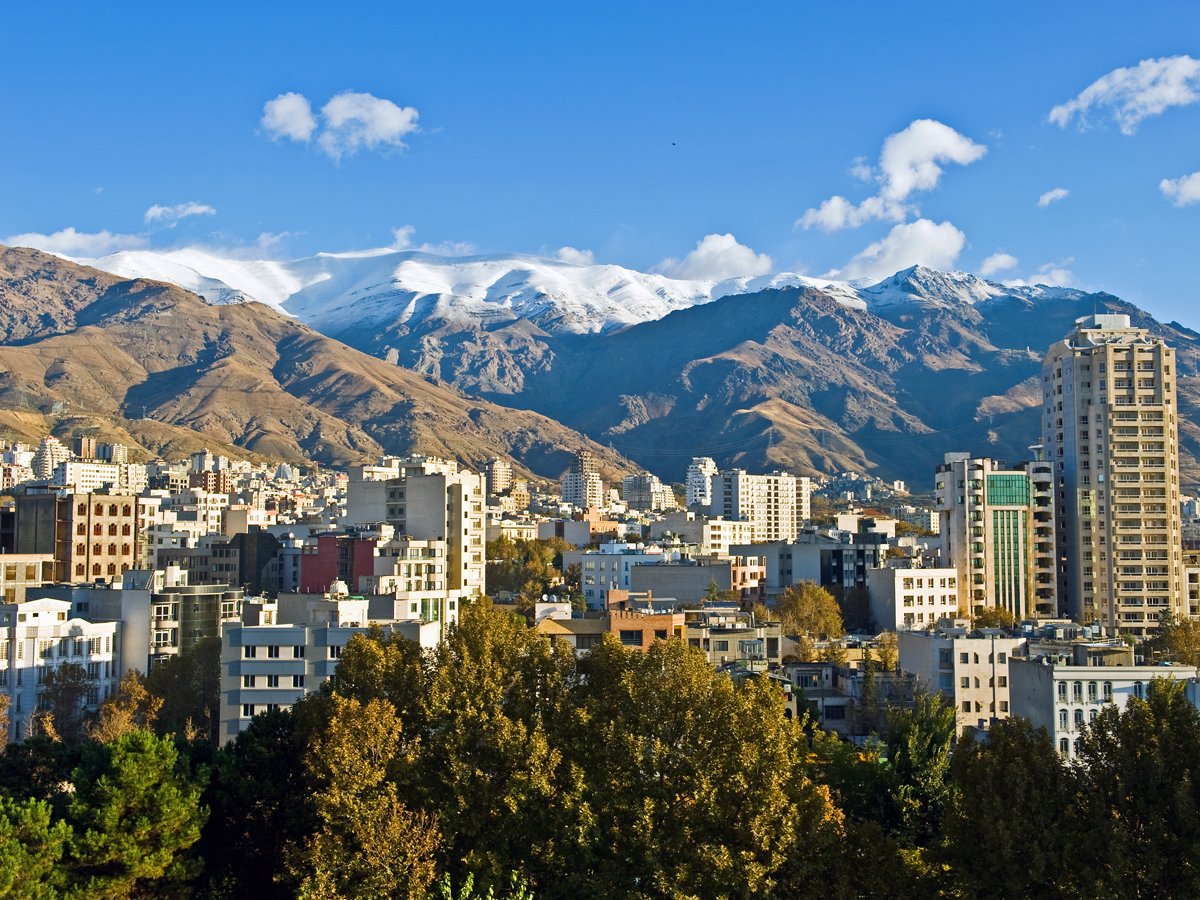
There's a lot to see in Tehran, but make sure you get out to see the Darband waterfalls and the nearby ski resorts, all popular with the locals.

There’s a lot to see in Tehran, but make sure you get out to see the Darband waterfalls and the nearby ski resorts, all popular with the locals.

While Iran is seen by some in the West as a country full of crazy fundamentalists hell-bent on America’s nuclear destruction, the reality you’ll see inside the country couldn’t be further from the truth.

The fact is, the majority of the Iranian public love Westerners — Americans in particular — making Iran one of the safest countries on our list even for female travelers. Opinion polls show the majority of Iranians hold a favorable opinion of Americans, making Iran second only to Israel as the most supportive population in the Middle East.

The Azadi tower (freedom tower) is an impressive gateway to the city, built to symbolize 2,500 years of Persian culture.

The Azadi tower (freedom tower) is an impressive gateway to the city, built to symbolize 2,500 years of Persian culture.To travel as a Westerner is to be routinely stopped on the street and welcomed by curious and generous Iranians. When I was there last summer I was constantly offered with cold drinks, invited to parties, and given free tours by locals.


There is a ton to see there: cheap ski resorts in the Alborz mountains north of Tehran, ancient clay-baked mosques in Kashan, the stunning central square of Isfahan, the Tatooine-like ruins of Na’in, and the ancient ruins of Persepolis near Shiraz.

While Western sanctions mean you can’t use your Visa or MasterCard in the country, you won’t have to take much cash. All expenses — including transport, food, and accommodation — amounted to less than $200 for my 11-day trip last year. 

Inexpensive, air conditioned buses run frequently between most cities, and a full falafel sandwich will often only set you back 25 cents. There’s amazing rosewater ice cream almost everywhere in summer for about 10 cents a cone.

persepolisJohn Moore/GettyPersepolis, literally “city of the Persians,” was the capital of the first Persian empire 2,500 years ago.

Iran is safe for female travelers. Iranian women dress fashionably, and the level of respect on the streets could be considered high even by Western standards. However, it is mandatory to wear a headscarf in public at all times. Headscarves are skimpy, colorful, and barely attached in Tehran, but in regional areas more conservative coverings are the norm.

Nain Na'in IranThe old city of the tiny town of Na’in.

Source:

ABC Australia – Misunderstanding shields us from Iran’s reality

Don’t believe all the stereotypes: the mood inside Iran is hopeful for change and increased positive engagement with the West…

When I told my friends I was travelling to Iran they didn’t believe me.

“That’s the sort of place people go missing and don’t come back,” they said.

“Don’t worry,” I reassured them, “I’m white and Jewish, nobody will be able to miss me, and they won’t be wanting me to stay.”

I was right on the first count, wrong on the second.

Despite a sophisticated English-language tourist infrastructure, there are almost no Western visitors, so Iranians are especially excited to meet Europeans or North Americans. Seemingly insecure, many would ask us whether we were enjoying Iran, responding with scepticism when we said yes.

In a dusty desert town in the centre of the country, a father encouraged his young daughter to ask my Dutch colleague for a photo with him.

“You look just like Louis Tomlinson from One Direction,” she told him excitedly.

People on the street were constantly stopping us, they would ask where we were from, give us drinks, and generously welcome us to their country.

The image of Iran as being full of wild-eyed Arabs chanting ‘death to America’ is wrong on many levels, not least of all because Iranians aren’t actually Arab (and they’re sick of pointing that out).

In the cafes of Tehran the headscarves are skimpy and men and women laugh together over cans of coke, you’re more likely to see iPhones in the streets than AK-47s, and while it’s true that you’d better keep homosexuality behind well-padlocked doors, the prosecution and persecution of gay people isn’t a popular public sport the way it is in a number of other countries.

Don’t get me wrong, Iran is no liberal Mecca, but it’s no worse than many other countries where the West has chosen to use engagement, rather than isolation, to encourage progress.

Don’t Believe the Hype

Tehran itself has a lively and well-educated youth population which bucks at the regime at every turn.

Iranians have access to illegal alcohol, openly mount banned satellite dishes, hold lively house parties, and hack their way around internet restrictions on social media.

Indeed, when we spoke with a group of young Iranians, the only topics off limits were spoilers to the season finale of Game of Thrones.

Even on Israel, the views we encountered were surprisingly moderate. Broaching the subject with one group made them bashful. They thought that as Westerners we would be offended by their ‘extreme’ views.

They supported a two-state solution based on the 1967 border agreement. Imagine their surprise when I told them this was roughly official US policy.

Misunderstanding, it seems, goes both ways.

Western leaders talk tough on Iran to make themselves look strong and Israeli politicians exploit Iran’s nuclear intentions to gain traction internationally.

We have short memories in international affairs, only 35 years ago Iran was ruled by a relatively liberal dictatorship and was a key Western ally, but our distorted perceptions are not entirely our fault. Stereotypes have been encouraged not only by films like Argo, but by authority figures with their own agendas.

Western leaders talk tough on Iran to make themselves look strong and Israeli politicians exploit Iran’s nuclear intentions and poor engagement to gain traction internationally.

Even Iran’s own leaders are prone to spout hatred of the West to pander to their own support bases of hardliners and clerics.

Such statements will gladly be emphasised and taken out of context by those on the other side, and so the cycle continues.

One Iranian told me when he was a kid they were offered the day off school if they would take a bus to Tehran to shout anti-western slogans for international cameras. The kids were enthusiastic because they got the day off school, but when the cameras were off even adults went up to journalists to ask about US culture and tell them how much they wanted to visit New York.

The gap between the rhetoric on Iran and the reality amongst Iranians is perhaps best demonstrated by this month’s inauguration of the country’s new president.

Hassan Rohani was the most liberal of the six candidates permitted to run, and he won just over 50 per cent of the vote.

Rohani is a former nuclear negotiator, has appointed numerous women to high-level government positions, and spoke of the US-Iranian relationship as a ‘wound which must be healed’.

The mood inside Iran is hopeful for change and increased positive engagement with the West, but it would be wrong to say most are optimistic.

A Narrow Path

Iranians have had their hopes crushed before. Every young person we met in Tehran had a friend who was killed in the green movement protests against the legitimacy of Mahmoud Ahmadinejad’s 2009 re-election.

The demonstrations were brutally crushed by the regime, and many of the protestors who weren’t killed have simply vanished, their friends have no idea where they’ve gone.

Iran is a proud country with many sophisticated and well-educated people who remember their liberal past, but it is also a country with a clandestine religious government, not impervious to its own internal power struggles.

With Rohani assuming the presidency, and still holding the goodwill of the people and the religious leadership, now is an opportune moment for the West and for Iran.

The path to a peaceful resolution of tensions is narrow but walkable, and will and restraint is required from both sides.

Remaining cool and rising above provocation isn’t naïve and it doesn’t excuse the often brutal Iranian government, but it does offer the best chance of progress for both the West, and the millions of Iranians who suffer from their regime’s intransigence.

Information about the author:

Ben Winsor is a Law and International Studies graduate currently undertaking a placement with the Presidency of the International Criminal Court in The Hague. He is studying a Masters in Law at the Australian National University. All views expressed are his own and do not reflect those of his employer. View his full profile here.

http://www.abc.net.au/news/2013-09-06/winsor-an-australian-in-iran/4937548

Nellie’s Journey to Iran: from Persian architecture to outstanding hospitality

Posing with friendly Iranians

Photo Highlights of Iran: from Persian Architecture to Outstanding Hospitality
By Nellie Huang

I’ve just completed my Silk Road journey through Central Asia with Oasis Overland. Our trip started in Kyrgyzstan and we traveled through Kazakhstan, Uzbekistan, Turkmenistan, Iran and ended in Turkey. During this overland trip, we spent just under three weeks traversing through Iran, from the eastern corner to the western edge. It was the highlight of our trip and I hope these photos will show you what an amazing country it is.

Mention Iran and many think of burkha-clad women, burning flags and war. But these stereotypes can’t be further from the truth.

For those who are curious and open to new discoveries, Iran is packed full of surprises. It is a relatively safe country to visit and there’s so much to see and do in terms of historical and cultural sights: wander through the thousand-year-old ancient city of Persepolis, get lost in the mud-brick alleys of Yazd, contemplate in the beautiful turquoise-domed mosques that dot Esfahan, meet locals in the gardens surrounding Shiraz and pray with thousands of pilgrims at the country’s holiest city Mashad. The Islamic Republic has an extremely rich cultural heritage and its attractions can definitely rival those of world-famous tourist destinations. Best of all, you won’t find hordes of tourists here. It won’t take you long to question how such a charming country can be portrayed in such a negative light by the media.

Beyond the stereotypes is a country desperate to been seen for what it is, rather than what it is depicted to be. The Iranians are undoubtedly the friendliest people I’ve ever met in the world. Travelers will often find themselves getting invited to stranger’s homes, being treated to endless flow of tea from a shop vendor and getting a free ride from helpful drivers along the way. Locals tend to come up to you, ask where you’re from and genuinely want to get to know you. I’ve always agreed with the saying “it’s the people that makes a place”. It can’t be more true here in Iran where experiences with locals truly live the longest in your memory.

While traveling in Iran, the two topics that most find impossible to escape are religion and politics. These are complex issues that aren’t black or white, but as I discovered, if you’re respectful of their opinions, the Iranians will be more than happy to discuss them with you. It’s also important to note that the government’s views may not be in line with what average Iranians think. Regardless, if you do choose to travel here, a journey to Iran will certainly change your perspective of the country, and perhaps, the world.

Natural Landscapes and Ancient Cities

The abandoned mud brick city of Kharanaq: In the abandoned mud-brick city of Kharanaq, we got lost amidst the alleys and crumbling paths that overlooked this beautiful valley.

The abandoned mud brick city of Kharanaq


The rock cut temples of Naqsh-e-Rostam
: Right at the outskirts of Shiraz, we stumbled upon the spectacular rock tomb of Naqsh-e-Rostam. The ragged cliffs that the tombs are carved into remind me of those in Wadi Rum, Jordan.

The rock cut temples of Naqsh-e-Rostam


Persian Architecture

Amir Chakhmagh: Amir Chakhmagh in is an iconic landmark in Yazd and while it’s now nothing more than a gate (the rest of the building is gone), the unique architecture still makes it quite an impressive sight.

A gate in Yazd


Royal Palace in Shiraz
: The interior of Persian buildings is often just as impressive. This photo shows the interior of the Royal Palace in Shiraz, characterized by arches, spiraled columns and carvings.

Inside a palace in Shiraz


Iranian Way of Life

Colorful spices in the bazaar of Shiraz: Bazaars are an important part of Iranian life. They trace their roots back to the Silk Road days and even until today, Iranians are still known to be excellent traders and businessmen. Spices are of course a common sight in the bazaars.

Colorful spices in the bazaar of Shiraz
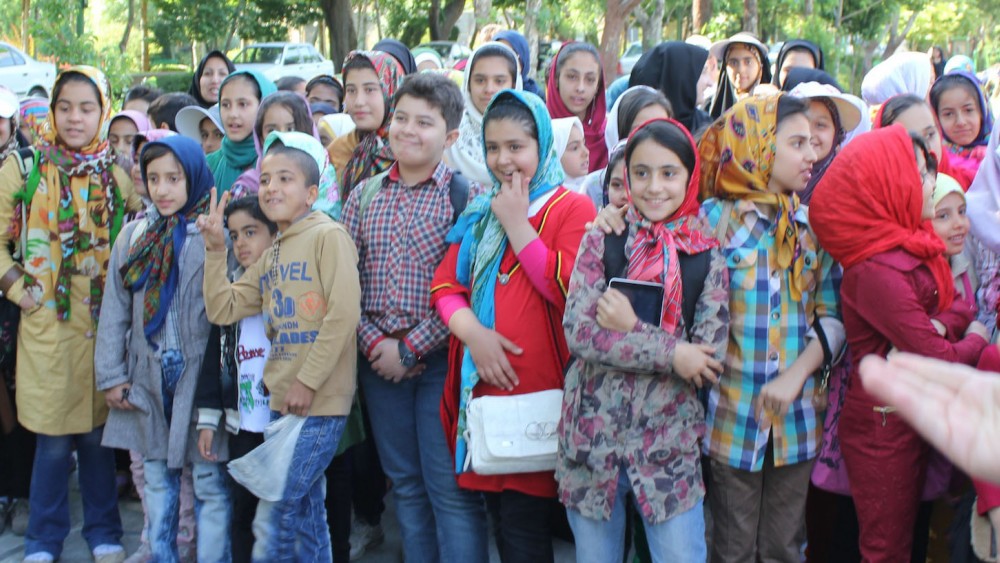
Friendly students in Tehran: The Iranians are exceptionally warm and friendly, with many people stopping to strike up a conversation with us seeing that we’re foreigners. I met this bunch of students at the Golestan Palace in Tehran and they were all excited to practice their English with me.

Friendly students in Tehran

More pictures of Nelly’s Journey:
http://www.wildjunket.com/2014/10/22/photo-highlights-iran/

About Nellie Huang: Nellie is a professional travel writer and editor with an eye for adventure and a love for the unknown. Originally from Singapore, she pursued an Engineering degree and spent her days dreaming of travel – the day after graduation, she packed her bags and headed off to experience the world.

She then spent the next few years working as a teacher, translator and project analyst. With sheer will and hard work, she eventually found her way into travel writing and fulfilled her lifetime dream.

Her work has since been published in numerous publications including National Geographic Intelligent Travel, CNN, BBC Travel, Travel+Leisure Asia, Wend, Women Adventure Magazine, Food&Travel, International Lifestyle, TNT Magazine, and Explorer, amongst others. Click to see her portfolio.

She is also a contributing guidebook author of VIVA Travel Guide Guatemala (1st Edition) and writer for World Travel Guides.

Iran’s Gilan Province: Roudkhan Castle

The medieval Rudkhan Castle (Ghale Roodkhan) is located 25km southwest of the city of Fooman in Iran’s Gilan Province in the heart of the forest. Made from brick and stone, the castle covers 50,000 square meters and is 900 meters above sea level. Its architects have benefited from natural mountainous features in the construction of the fort. It is built on two tips of a mount with a total of 65 towers surrounding it, while the walls run 1,500 meters in length. 42 towers still stand intact. It is a military complex which had been constructed during the Seljuk Dynasty by followers of the Ismaili sect. The castle sits at the two peaks of a mountain at elevations of 715meters and 670meters, with an area of 2.6 hectares (6.4 acres). The Rudkhan Castle River originates in the surrounding heights and flows from south to north. It takes around two hours to cross a mountainous winding route with dense forests. To reach this castle people walk a three kilometer distance on foot, then climb around 2,000 steps. The first thing that one notices about the castle is its big entrance gate.

Sources: Wikipedia | Rudkhan Castle, Wikimedia Commons’ media related to Rudkhan Castle, wiseitinerary.blogspot.de, Mehr News Agency | Photos, Press TV

1001 Libraries to see before you die!

The International Federation of Library Associations (IFLA) Public Libraries Section together with the IFLA Library Buildings and Equipment Section launched in Lyon at the IFLA World Library and Information Congress a project called 1001 libraries to see before you die.

This online initiative aims to bring together best practice examples of public library buildings and spaces from around the world. The libraries can be nominated for different criteria – the library building, the location, the innovative programs or the community engagement.

Currently the list is holding two Iranian libraries: the Astan Quds Razavi Library in Mashhad and the Bazar Library in Tehran.

Mashhad’s Astan Quds Razavi Library has been selected by the Open Education Database (OEDB) among the 20 Libraries that have changed the world in 2012 and three of the collections preserved in the central library are registered in the list of the UNESCO World Cultural Heritage List.

Tehran’s Bazar Library was chosen for its historical building which belonged to a relative of Naseruddin Shah dating back to 150 years.

More information: https://1001libraries.wordpress.com/category/iran/

Iran’s Isfahan Province: Kashan – Boroujerdi House Series

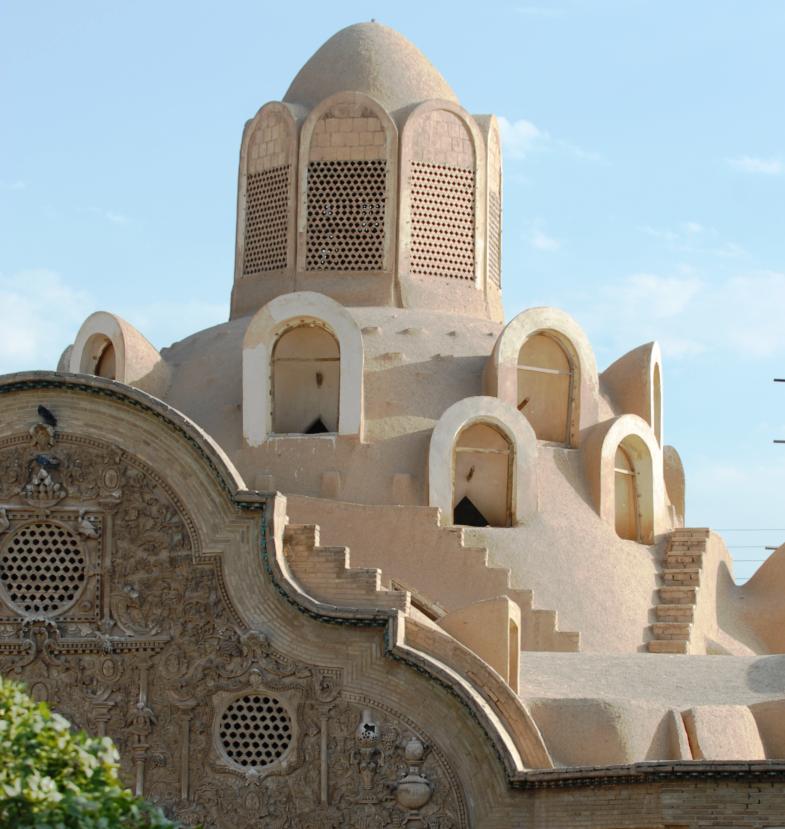
Boroujerdi's House in Kashan, Iran

Boroujerdi’s House in Kashan, Iran

The Boroujerdi House (in Persian: Khaneh-ye Boroujerdi-ha) is a historic house in Kashan, Esfahan Province, Iran that is nowadays open to the public as a museum.

It was built in 1857 for the bride of Haji Mehdi Boroujerdi, a welthy merchant, by architect Ustad Ali Maryam. The bride came from the affluent Tabatabaei family, for whom Ali Maryam had built the Tabatabaei House some years earlier and the condition set for the marriage was the construction of a house as beautiful as the Tabatabaei House.

Considered a true masterpiece of Persian traditional residential architecture, it took eighteen years to build using 25 workers, painters and architects.

Kashan

Wind towers of the Boroujerdi’s House in Kashan, Iran

The House, famous for its atypical shaped wind towers made of stone, brick, sun baked bricks and a composition of clay, straw and mortar, has three entrances and consists of a rectangular beautiful courtyard, delightful plaster and stucco works of fruits and flowers and wall paintings by the royal painter Kamal-ol-Molk and three 40 meter tall wind towers which help to cool the house to unusually cool temperatures.

The entrance to the building is in the form of an octagonal vestibule with multilateral skylights in the ceiling. Near the entrance is a five-door chamber with intricate plasterwork. Following a narrow corridor, a vast rectangular courtyard opens up. The courtyard has a pool and is flanked by trees and flowerbeds. Also in the vicinity of the corridor is a reception area sandwiched in between two rooms. Due to the high amount of sunlight these two rooms receive, they were mostly utilized during the winter months.

In the east and northeast area of the property lie the kitchen, rooms and stairways to the basement. The wind towers allowed for the basements to consistently benefit from a flow of cool air. On the southern side is a large covered hall adorned with many reliefs, artistic carvings and meshed windows which was the main area for various celebrations. It consists of a raised platform on its far side and would normally be reserved for the more important guests.

Source: Historical Iranian sites and people | Boroujerdi House

Iran’s Razavi Khorasan Province: Shamkhal Canyon

Somewhere not far from the border between Iran and Turkmenistan there is a huge and unbelievably beautiful valley called Shamkhal. The name comes from a village near that. It is located in west northern of Quchan. It is about 18 km long; going through many springs and falls within rocky walls which in some parts are 200 meters high.

Source: Irpedia | Photos of Iran | Shamkhal Valley

Iran’s Isfahan Province: Kashan – Fin Garden Series

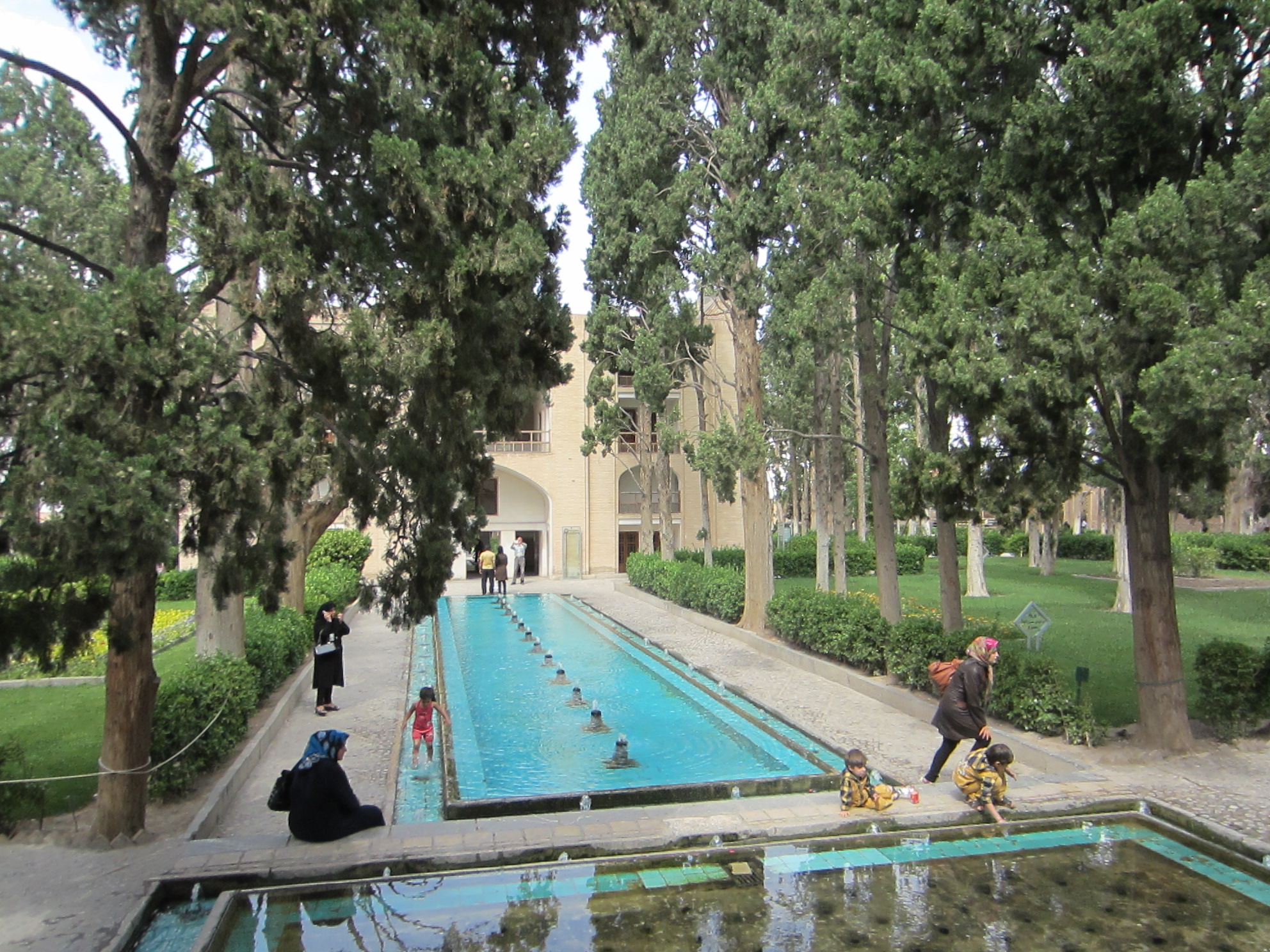
Fin Garden in Kashan, Esfahan Province, Iran

Fin Garden in Kashan, Esfahan Province

The tradition and style in the design of Persian Gardens has influenced the design of gardens from Andalusia to India and beyond.

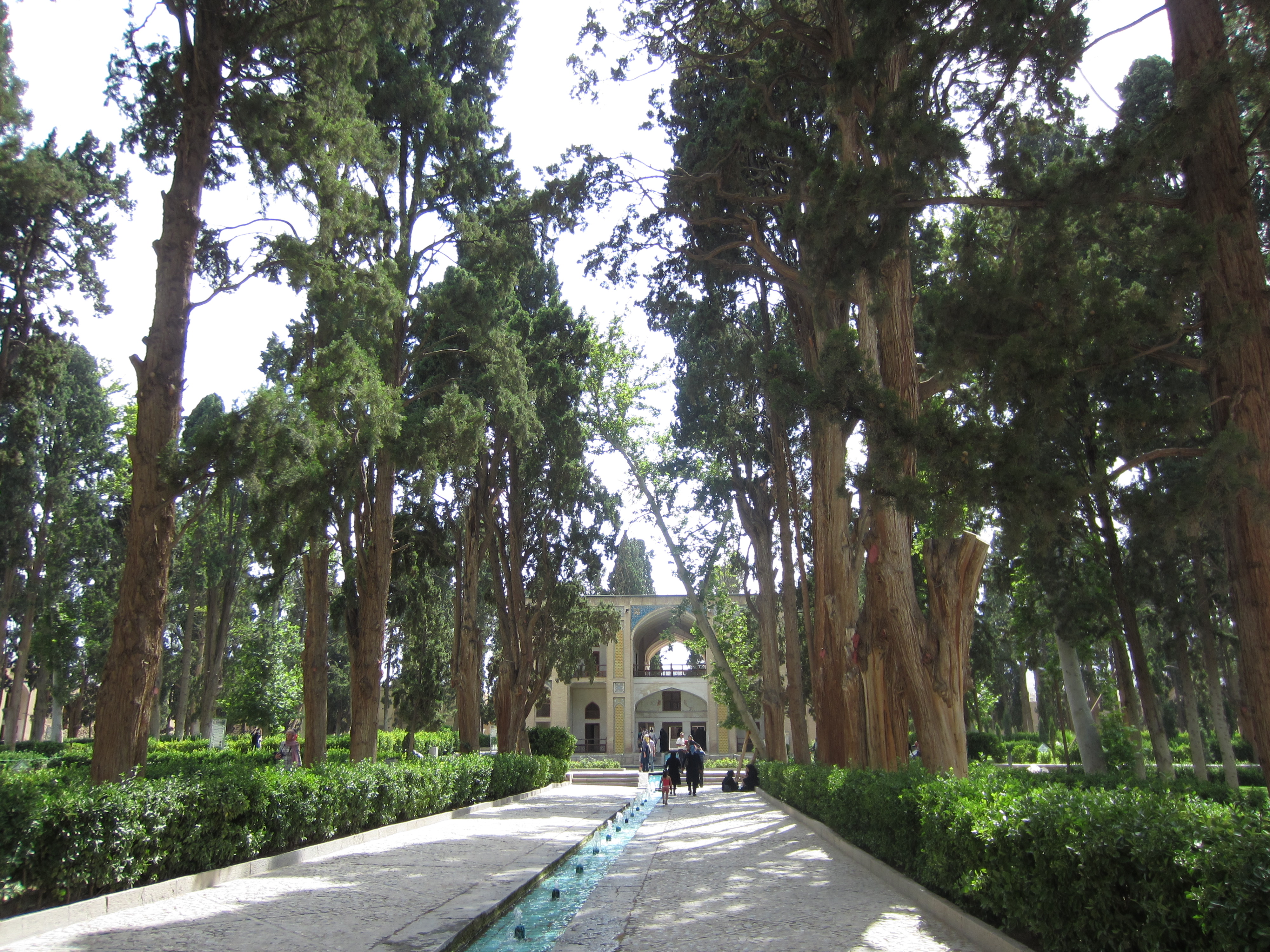
Fin Garden, or Bagh-e Fin, located in Kashan, Iran, is a historical Persian garden. It contains Kashan’s Fin Bath, where the reformist Qajarid chancellor, Amir Kabir, was murdered by an assassin sent by King Nasereddin Shah in 1852. Completed in 1590, the Fin Garden is the oldest extant garden in Iran. Unesco declared the garden a World Heritage Site.

The origins of the garden may be anterior to the Safavid period but the settlements of the garden in its present form were built under the reign of Abbas I of Persia (1571-1629), as a traditional bagh near the village of Fin, located a few miles southwest of Kashan.

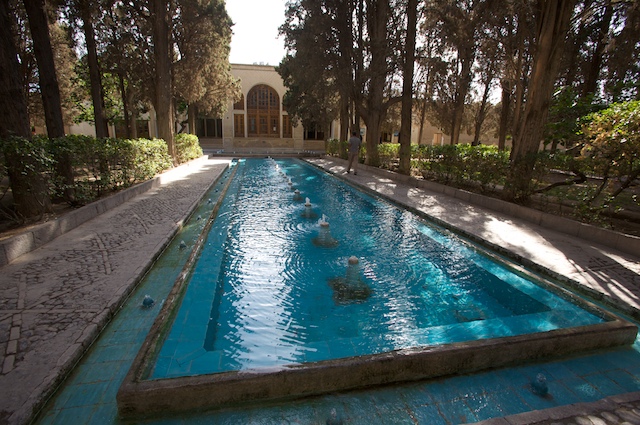
The garden covers 2.3 hectares with a main yard surrounded by ramparts with four circular towers. In keeping with many of the Persian gardens of this era, the Fin Garden employs many water features.

These were fed from a spring on a hillside behind the garden, and the water pressure was such that a large number of circulating pools and fountains could be constructed without the need for mechanical pumps.

The garden contains numerous cypress trees and combines architectural features of the Safavid, Zandiyeh and Qajar periods.

Source: Wikipedia | Fin Garden, Wikipedia | Persian Gardens

Fin Garden (or Bagh-e Fin) in Kashan, Esfahan Province, Iran

Fin Garden (or Bagh-e Fin) in Kashan, Esfahan Province

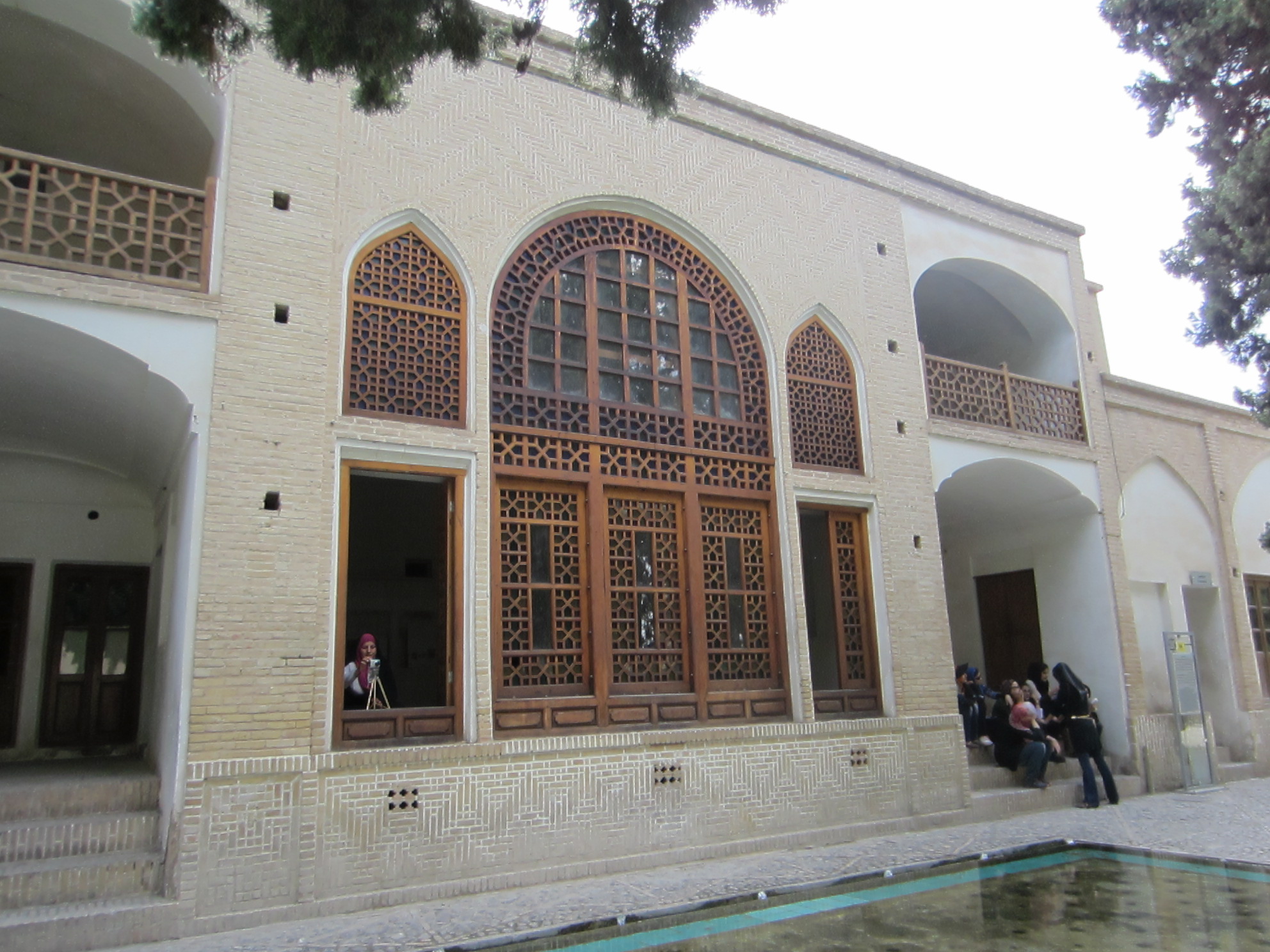
Fin Garden in Kashan, Esfahan Province

Fin Garden in Kashan, Esfahan Province

Jewish Australian Ben Winsor: Truth about Iran – Facts that may surprise westerners

mosque in iran

Isfahan Iran, Naghsh-e Jahan Square

Since the Iranian revolution and hostage crisis of 1979, Iran has had antagonistic relations with the U.S. and other Western nations, with little official communication between heads of state, fierce rhetoric on opposing sides, and increasing sanctions.

Given this history, it’s not surprising that many Westerners fail to appreciate ways in which Iran is a relatively advanced and even liberal state.

It certainly took me by surprise when I traveled there last year.

A Positive Opinion Of Westerners

Opinion polls show the majority of Iranians hold a favorable opinion of Americans, making Iran second only to Israel as the most supportive country in the Middle East.

To travel as a Westerner in Iran is to be routinely stopped on the street and welcomed by curious and generous strangers. You will be given cool drinks, invited to parties, and offered free tours of anything nearby.

Young Iranians get their hands on iPhones despite the sanctions, use VPN software to hack past their regime’s ban on Facebook, and watch American TV shows and movies online.

As reported in The Atlantic, a clear majority of Iranians want the current Iranian–U.S. nuclear talks to succeed. If talks fail, however, many expect that moderates like the current president would lose power to religious hardliners.
[…]
Related articles: https://theotheriran.com/tag/foreigners-in-iran/

Better Gender Equality Than Some Countries

Unlike in Saudi Arabia, a close U.S. ally, women in Iran have the right to vote, drive, and travel alone. Women have served in parliament and in cabinet, though they are banned from running in presidential elections, and they attend universities, though some have restricted them from taking certain courses.

The issue of women’s rights highlights the conflict between Iranian President Hassan Rouhani — who is on the more moderate end of the country’s religious-conservative ruling clique — and the country’s Supreme Leader, Ayatollah Ali Khamenei.

On International Women’s Day in April, Rouhani spoke live on television and criticized those who consider women a threat, saying Iran had “a long way to go” and that he “will not accept the culture of sexual discrimination.”

Iranian mother, daughter and some christmas trees

Iranian mother, daughter and some christmas trees

Articles on Iranian women: https://theotheriran.com/tag/women/

Birth Control

After the Iran–Iraq war, when focus shifted from conflict to the economy in 1988, the same Ayatollah who legalized sex-changes issued a ruling making birth control free and widely available. He was convinced a high birth-rate would be bad for the economy.

With family planning sessions provided to all newlyweds, the birth-rate fell more than half, allowing parents to invest more in their children’s education and giving women the chance to gain ground in the workforce. More than 60% of Iranian university students are now women, with numbers even higher in some science and engineering courses, the BBC reported.

An American Ally?

Iran has found itself partially aligned with the West in fighting groups like the Taliban in Afghanistan, and jihadists in Iraq and Syria.

After 9/11, Iran supported overthrowing the Taliban in Afghanistan and assisted NATO with strategy and the formation of a new government.

Iran also had no great love for Iraq’s regime, having fought a brutal war against Saddam Hussein in the 1980s. Backed by the Reagan Administration at the time, Hussein used sarin gas and other chemical weapons  on thousands of Iranian soldiers.

The dynamic changed in 2013, however, when Iranians elected President Rouhani, a reformist who has staked his presidency on mending ties with America.

Iranian policy in Iraq has now also refocused with the rise of Sunni ISIS jihadists. Iran worries that ISIS is destabilizing the region and jeopardizing the current pro-Iranian governments in Iraq and Syria.

Kurds battling ISIS in northern Iraq report that Iran was the first country to respond when they requested support.

Related articles: https://theotheriran.com/tag/usa/

Source: http://www.businessinsider.com/the-truth-about-iran-2014-9#ixzz3GW9CEQAj

Rayen Castle – more than 1000 year old adobe castle in Kerman, Iran

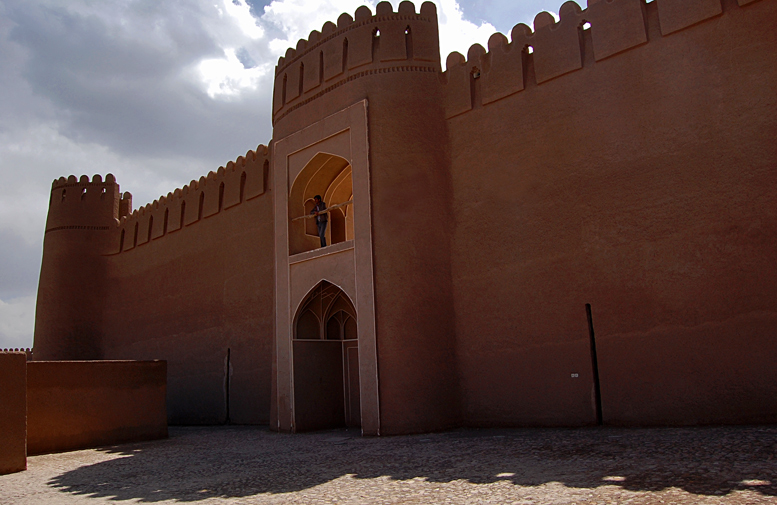
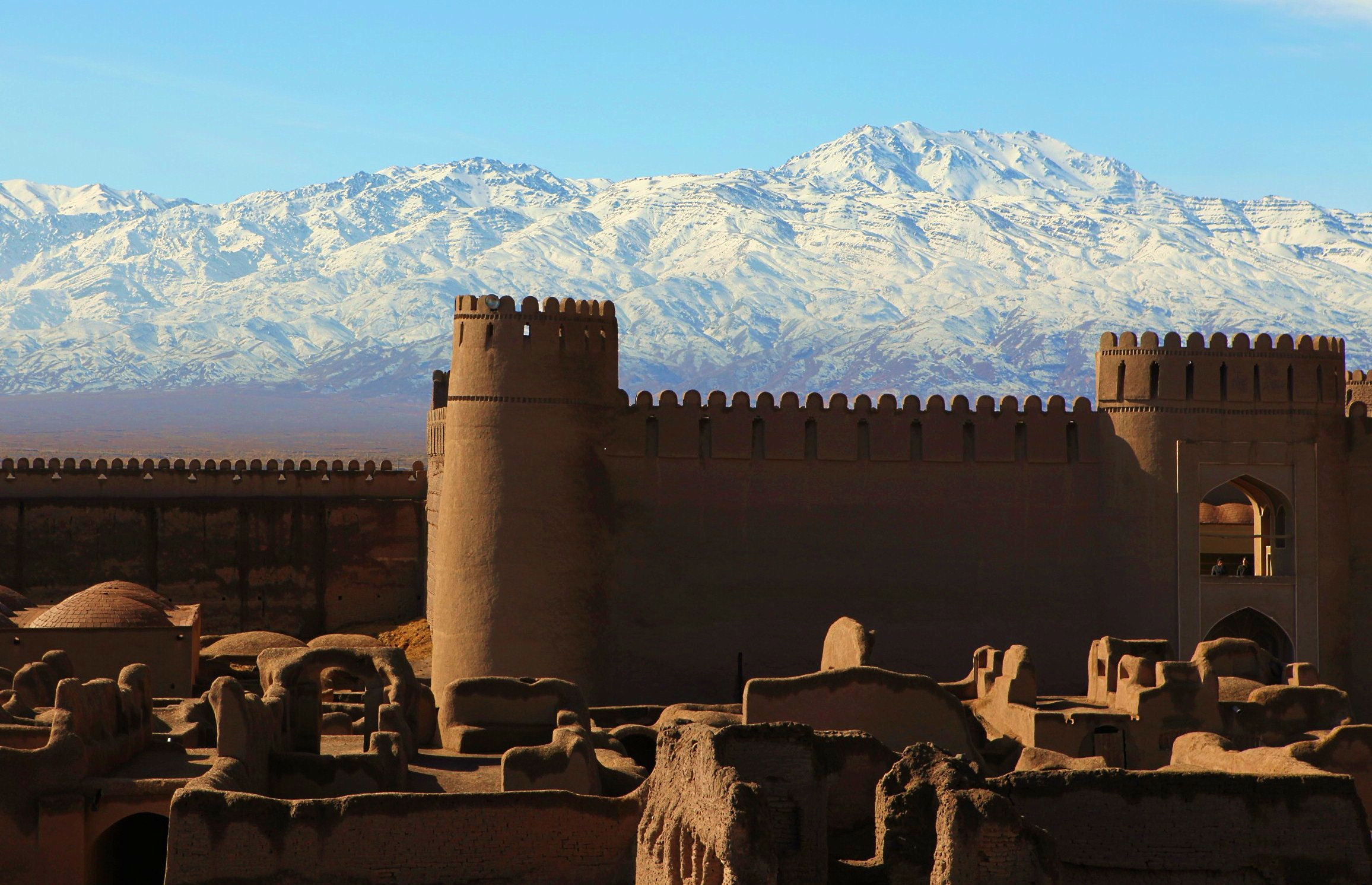
Rayen Castle (in Persian Arg-e Rayen) is an adobe castle in Kerman Province, Iran. The medieval mudbrick city of Rayen is similar to the Arg-e Bam city which was destroyed in an earthquake in December 2003. Rayen displays all the architectural elements of a deserted citadel. It is extremely well preserved, despite numerous natural disasters that have destroyed similar structures nearby, and it is one of the most interesting sites in Iran.

Rayen Castle was inhabited until 150 years ago and, although believed to be at least 1,000 years old, may in fact have foundations from the pre-Islamic Sassanid era.

Adobe castle of Rayen Rayen Kerman Iran - arg-e-rayensh

Adobe castle of Rayen Rayen Kerman Iran – Arg-e-Rayensh

Adobe castle of Rayen Rayen Kerman Iran

Adobe castle of Rayen, Kerman, Iran

Source: Wikipedia | Rayen Castle

Also check this related post: The other Iran | Arg-é Bam

Photos: European tourists arrive in Isfahan by train for first time

The group was composed of 65 tourists from Australia, France, Germany, Britain and Austria.
[…]
The tourists arrived in Iran on Oct 5 and after visiting Tehran, Yazd, Isfahan, Shiraz and Zanjan will leave for Turkey via Razi border.
[…]

Read more about the new “Orient Express” between Hungary and Iran:
https://theotheriran.com/2014/09/02/five-star-orient-express-to-link-hungary-and-iran/

Photos from their trip to the ruins of Persepolis (Persia’s capital 550-330 before Christ):

Persepolis was the ceremonial capital of the Achaemenid Empire (ca. 550–330 BC)

Persepolis was the ceremonial capital of the Achaemenid Empire (ca. 550–330 BC)

Tomb of Cyrus the Great (559–530 BC)

Tomb of Cyrus the Great (559–530 BC)

https://i0.wp.com/www.payvand.com/news/14/oct/European-tourists-in-Iran-6-HR.jpg

Read more about travelers in Iran: https://theotheriran.com/tag/foreigners-in-iran/

Nature photos from Iran: https://theotheriran.com/tag/nature/

Source: http://www.payvand.com/news/14/oct/1048.html

Smiles from the ‘Axis of People’ – Reflecting on Iran

Get this headline writers – Iran may just be the friendliest place in the world!

It’s certainly the friendliest country I work in. I smile and laugh as much in Iran as I do at home in South East Asia’s Lands of Smiles…

Whenever we stop for a wander in a small Iranian town there’s an echoing chorus of “Salam” as shopkeepers and customers greet us one by one. Cars slow, their drivers wind down their window and shout “Welcome to Iran!” Excited children gather to shout “Which country?” or “Where from?” – the few words of English they can remember from school. It’s worth noting that these small towns are where Islamic faith is at its strongest…

Iran - Axis of People - Land of smiles - 1

Iran – Axis of People – Land of smiles – 1

From relatively modern Tehran to stylish Shiraz and stunning Isfahan to the tiny tea stop villages, the welcome is universal – whether a handshake and a “salam”, a gentle tap on the heart or a “hello mister”. It’s also surprising how much English is spoken – we shared our picnic with a homeless man in a park recently who thanked and blessed us warmly in English.

British, Australian, Irish and, yes, Americans, are greeted just the same. “No problem for me, only the government”, a hotel manager said to me when I handed him a trio of US Passports. Whose government he was referring to didn’t matter; both are equally guilty of historic paranoia and mistrust. Majid, a chemist we met in the desert town of Yazd said “if governments talked to each other like you and I are talking there would be no problem”; wise and hospitable are not adjectives Western media use liberally when talking about Iran.

The best way to enjoy Persian hospitality is to indulge in the national pastime of picnicking. The weekend (Friday) is a great day to join families around the kettle and stoves in parks and public places across Iran to share friendship and laughter. In the small village of Bazm in the lush Bavanat Valley, we stopped beside a village Emamzadeh (shrine) armed with a couple of flasks of tea and some famed Yazd home made confectionary. We soon found ourselves nestled under trees in the adjacent park, enjoying the holiday atmosphere, lounging on mats with a dozen or so extended families. Sauces bubbled away in pots and saffron rice steamed perfectly atop burners – the Persian picnic is a full-on culinary experience!

Iran - Axis of People - Land of smiles - 2

Iran – Axis of People – Land of smiles – 2

In the park we met Nilafar, who studied engineering on the Persian Gulf (60% of engineering graduates in Iran are women – another statistic for the headline writers).

“Have you seen an American before?”

“Only in the movies”, she replied calmly.

There was no alarmed reaction – just a scramble for photos.

The Friday call to prayer from the mosque briefly interrupted the chatter and laughter around the park. A hapless looking priest wandered outside looking for business, but here, as elsewhere in Iran, people are voting with their flasks…

My final memory of an amazing month spent in Iran is the holiday atmosphere in the mighty Naghsh-e Jahan Square in Esfahan. Its size may no longer be ‘half the world’ but it’s beauty and grassy verges draw Esfahanis and visiting Iranians every Friday evening. Long gone are the days when the Safavid Rulers sat on the terrace of the Ali Qapu Palace overlooking the square to watch polo; the square belongs to the people now.

After 10pm the square is still full of families, sitting on mats beside spurting fountains and coloured lights surrounded by beautifully tiled Islamic domes. Young children – up way after western bedtimes – run around with oversized saffron ice creams. Beside the tea flasks, kebab burners and pots and pans are everything from toy cars to table football games. Everyone wants to offer us food, drink and friendship. It’s hard to imagine such a sober, cultured and friendly atmosphere in a western park late on a Friday night.

In addition to the natural beauty and historical sites, we visited mosques and madrassas on our travels. Often called ‘hotbeds of religious fervor’, we found them to be tranquil oases of study and peace, where the warmth of the welcome humbled us. Learned people from the religious schools came to greet us, interested in our nationalities and religions, before posing for photographs.


More details and photos:

http://www.wildfrontierstravel.com/en_GB/community/blog/post/smiles-from-the-axis-of-people-reflecting-on-iran

Iran traveller Mike Milotte: Don’t skip Tehran’s unmissable sights

Tehran is the city travellers love to hate, with many avoiding a stay here altogether en route to Iran’s more popular tourist destinations. But as Mike Milotte discovers, the capital’s gorgeous galleries, sociable locals and exhilarating pace give it a beautiful side too.

Iranian friends and our guide/interpreter alike think we’re mad, but we persist with our plan to spend 10 days of our month-long visit to Iran in the polluted and architecturally unattractive capital, Tehran.


For my part, eleven museums, six art galleries and three bazaars later – not to mention two mountain trips, one cinema visit and a memorable night at home with a Tehrani family – I’m glad we persevered.

The plaza outside the main bazaar is a great spot for people-watching. The streets are teeming, not with mullahs or gun-toting police as I had anticipated, but with seemingly carefree shoppers, armed with mobile phones. There are lots of head-to-toe black chadors, but just as many women wear cheerful loose-fitting headscarves, tight jeans and dramatic makeup.


Meeting Tehranis is remarkably easy and richly rewarding. As we try to buy saffron, piled high at the very un-touristy Tajrish bazaar, a young woman asks in broken English if we need help. We get talking. ‘N’ is an artist, and one of her friends has an exhibition at the renowned Seyhoun art gallery. We’re invited along, and are soon chatting to half a dozen of the city’s brightest young painters, N’s friends, who excitedly show us their work on smart phones and tablets. We adjourn to a working studio, home to illicit life drawing classes, where we drink tea and leave with a fabulous landscape painting that will grace our living room.

Next day, in the unpeopled galleries of the Museum of Contemporary Art, a staff member tells us 3,000 works by western painters like Picasso, Van Gogh, Bacon, etc –  all deemed degenerate – languish in the basement while ‘safe’ Iranian art bedecks the walls. ‘That’s why no-one bothers coming,’ our informant asserts. Later, in the Carpet Museum next door, an attendant eagerly points out some 18th century Persian rugs depicting erotic imagery where more than female heads are laid bare. ‘How come they’re still on show?’ I ask. He just smiles back.

As the only foreigners in most of the places we visit, we are an endless source of interest to shyly curious Tehranis. One such encounter, during a lung-reviving mountain walk at Darband, ends with an invitation to dinner in the family home. The women all wear party dresses and have their heads and arms uncovered, illegal, even at home, when a male stranger is present. French wine and Russian vodka, smuggled from Iraq, are offered, and after an unforgettable meal of lamb with walnuts and pomegranate, we settle down to watch television.

An Iranian family go for a stroll in Tehran. Image by Amos Chapple / Lonely Planet Images / Getty

Zigzagging back to our hotel in a bone-shaking taxi without seatbelts, our driver, a talkatively wise man with reasonable English, points out ranks of enormous SUVs – gleaming Porsches, Mercs, BMWs and Audis – waiting for their owners to spill out of fashionable and expensive eateries in Tehran’s northside. ‘Sanctions’, he says, ‘have made a small number of businessmen with political friends fantastically rich.’

Am I imagining it, or is it beginning to feel more and more like home here?

A young couple admire the view of Tehran at dusk. Image by Amos Chapple / Lonely Planet Images / Getty

A young couple admire the view of Tehran at dusk. Image by Amos Chapple / Lonely Planet Images / Getty

Glass and Ceramics Museum 
Stunning artefacts from the 2nd millennium BC onwards, beautifully displayed and annotated. We were the only visitors which meant we could ooh and aah without embarrassment.

A display at the Glass and Ceramics Museum. Image by Mike Milotte / Lonely Planet

A display at Tehran’s Glass and Ceramics Museum. Image by Mike Milotte / Lonely Planet

Reza Abbasi Museum
The exhibits, starting from around 2000BC, are without exception quite exquisite – especially the gold work – and as few people seem to visit, you might have it entirely to yourself.

Jameh Bazaar
A massive Asian flea market staged on Fridays only, when the main bazaar is closed. Come prepared to buy stuff you neither need nor want but will treasure for ever. Increase the pleasure by haggling hard.

Carpet Museum of Iran
Look out for two enormous carpets depicting (among others) Napoleon, and see if you can spot the difference in how he’s depicted. The carpets are beautiful but unlike its Turkish equivalent in Istanbul, this museum’s signage isn’t great.

Colourful detail in the Carpet Museum of Iran. Image by Mike Milotte / Lonely Planet

Colourful detail in the Carpet Museum of Iran. Image by Mike Milotte / Lonely Planet

Taxi ride across town
You’ll probably survive it, and you’ll certainly never forget it. Tehran traffic seems chaotic yet it flows smoothly. The secret is in the weaving and dodging performed by drivers who appear mad but who never lose their tempers, let alone their bumpers.
Read more: http://www.lonelyplanet.com/iran/travel-tips-and-articles/tehrans-top-attractions#ixzz3CBhjP749


Iran’s Gilan Province: Photos (Part 1)

More photos of Iran: http://comeseeiran.tumblr.com/

John Simpson: Iran is the most charming country on Earth

For John Simpson, Iran’s incredible monuments, dazzling landscapes and hospitable people make it a holiday destination beyond compare.

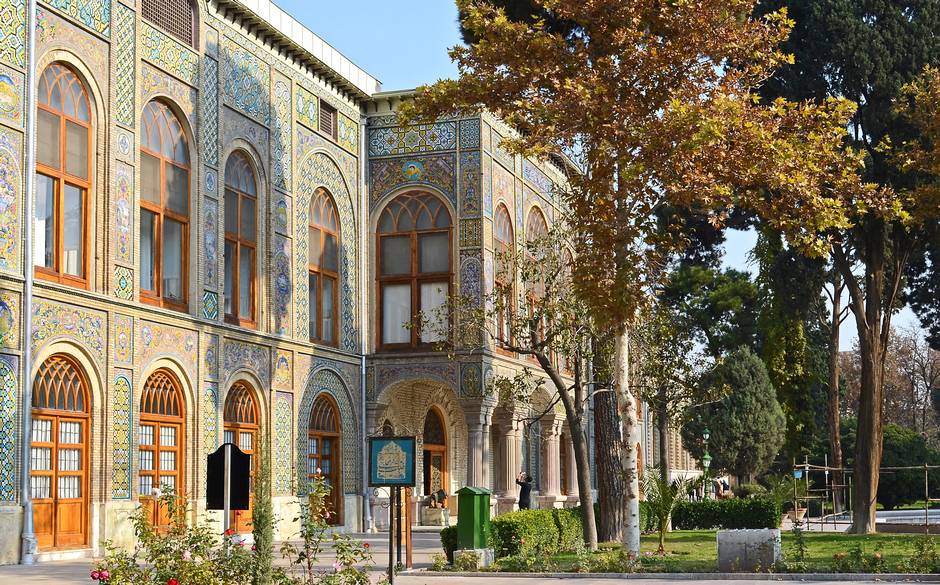
Iran, Tehran, Golestan Palace

Iran, Tehran, Golestan Palace


Think of a country, largely cut off from the outside world, with a lovely dry climate, sophisticated and charming people, superb archaeological monuments, mountains, deserts, the Caspian Sea. If recent history had been different, it would be the India of the travel business, only without the beggars and the chaos. Iran is, quite simply, the most charming country I know.

What always strikes me in Iran is the normality of it. If you wandered down the street in Tehran – say Dr Fatemi Avenue, where the old and much-loved hotel, the Laleh, stands – you would find it suspended between West and East, between the modern and something altogether older and more attractive: the Persian past.

This is not Saudi Arabia: women drive cars, run businesses and often forget to cover their hair as they’re supposed to do.

I first became aware of this affection in the Eighties, when I ventured out to cover an anti-British demonstration in the city. I was a lot younger then, and accompanied by a charming, fatherly cameraman. The crowd pushed and shoved, and shouted “Marg bar Tacher” – “death to Thatcher”. I asked the cameraman to stand on a low wall and film me as I walked through the angry demonstrators. “I really don’t think you should do this, John,” he said, with a troubled look at the mob. But I’d seen it done before, by an American correspondent. I weaved my way through the crowd, smiling and explaining that I was a Brit, and they opened up a pathway for me, shaking hands and bowing.

I finally reached the ringmaster, a professional demonstrator who was beating his chest, the spittle shooting from his mouth in his anti-British fervour. “Welcome, welcome to Iran, sir,” he said, and actually kissed my hand. It went down well on the news that night, I promise you.
All right, you’re saying, that was decades ago. But, you see, Iran has been cut off from the West for so long since then that the longing for contact with westerners has actually grown. If you spend an evening wandering round Isfahan, the incomparable city of Shah Abbas on the Zayandeh River, with the distant foothills of the Zagros purple in the fading light, your main problem will be saying no to the kindly people picnicking in the parks and gardens who beg you to join them.

Iran is recommended by the Telegraph Travel team as one of the 20 top destinations to visit in 2014. For more on what’s on offer, read our guide to holidaying in Iran.

http://www.telegraph.co.uk/luxury/travel/44626/john-simpson-iran-is-the-most-charming-country-on-earth.html

Other travel articles on Iran: https://theotheriran.com/tag/travel/

Series -Yazd, Iran: Tezerjan Glacier

Yazd, Iran, Terzejan Glacier

Yazd, Iran, Terzejan Glacier

Yazd, Iran, Terzejan Glacier

Yazd, Iran, Terzejan Glacier

Yazd, Iran, Terzejan Glacier

Yazd, Iran, Terzejan Glacier

Tezerjan Glacier is a natural glacier on Shirkouh mountain and Tezerjan village is located on its foothill. ( Top of Tezerjan mountain is 4005m from the sea level). Not long ago, a great of ice and snow were carried 60km to Yazd on hot days during the year, using pack animals, in order to chill beverages, especially Yazdian Paloude (sweet beverage containing thin fibers of starch jelly), so Yazdian Paloude is related to this natural glacier.

http://yazdphoto.com/panoramic%20photography.htm

Sar Yazd Castle in Yazd, Iran wins the grand prize for the 2014 UNESCO Asia-Pacific Cultural Heritage

The grand prize for the 2014 UNESCO Asia-Pacific Cultural Heritage went to Sar Yazd Castle in Yazd, Iran.

In June 2014, a panel of judges composed of international experts in conservation and restoration evaluated 46 projects from countries in the Asia-Pacific Region.

Among the projects, Sar Yazd Citadel restoration project from Iran managed to receive the grand prize. The grand prize was awarded to Iran due to the role of private institutions in preserving this historical location which has consequently influenced the socio-economic status of the locals in regard to creating job opportunities.

Sar Yazd is situated 30km south of Yazd province. Some speculate that the castle belongs to the Sassanid era.

Conserved and restored sites with more than 50 years of age which have been finished within last 10 years and have been open to visitors for at least a year have been considered eligible for this contest.

Yazd, Iran - Saryazd citadel - inside

Yazd, Iran – Saryazd citadel – inside

The 2014 and 2015 contests are held with the financial support from Beijing Sino-Ocean Charity Foundation.

Call for participation in the 2015 UNESCO Asia-Pacific Heritage Conservation contest will be announced in October 2014 via the contest’s website.

Source: Iran Review | Iranians’ Achievements (scroll down)

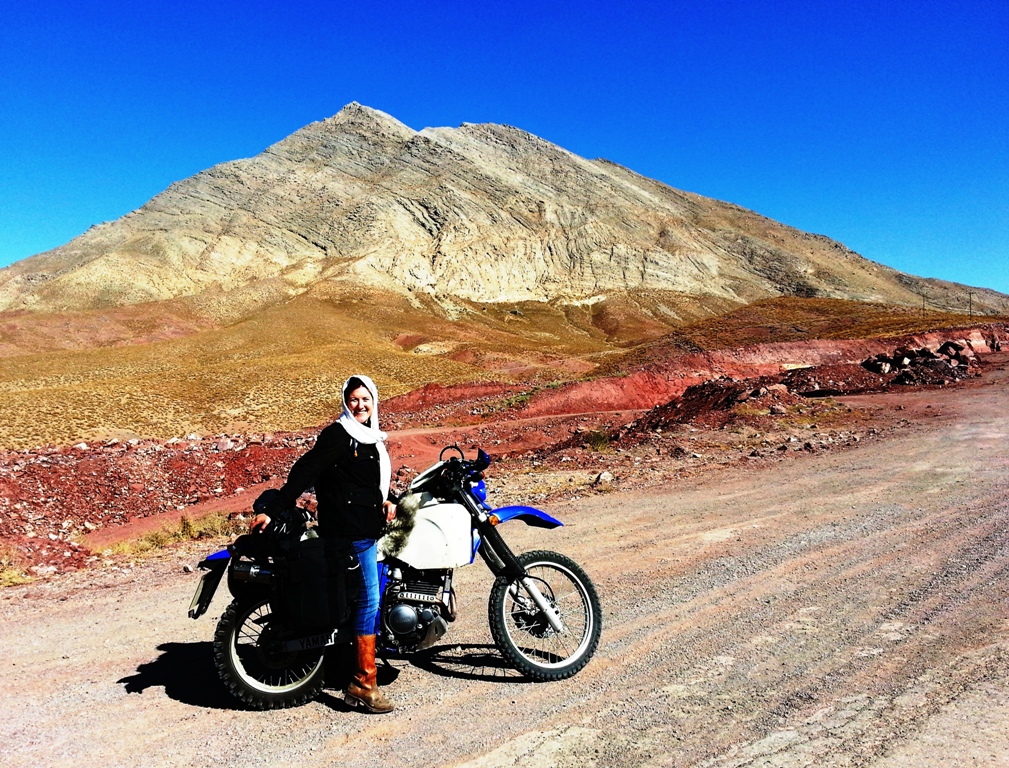
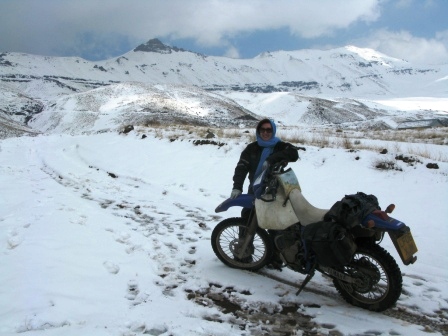
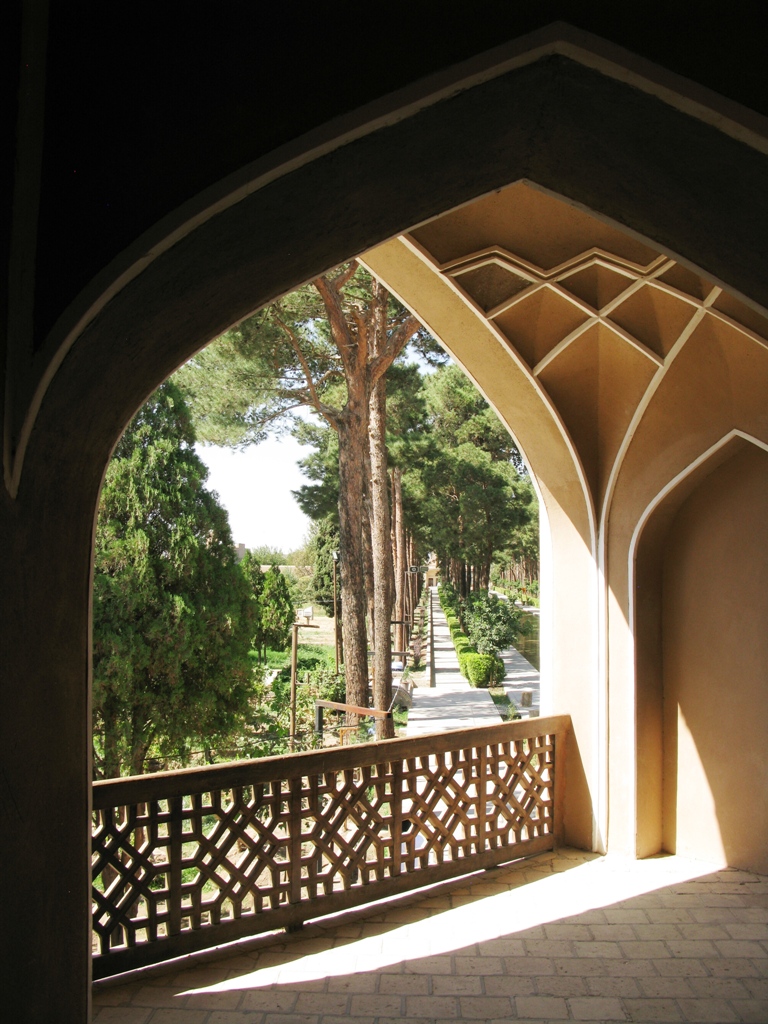
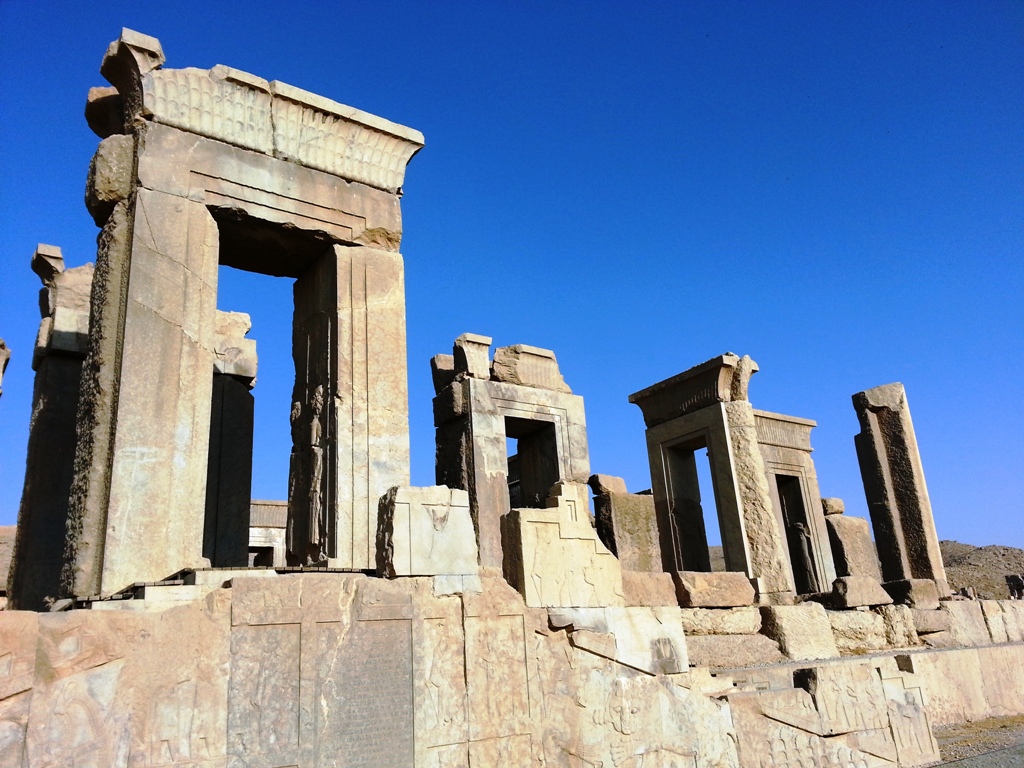
Series: Female British biker on Iranian roads – Photos

road-to-yadz-me-on-bike

 bike-snow-alamut-valley

yadz-garden-window tehran-azadi-tower

persepolis-gates

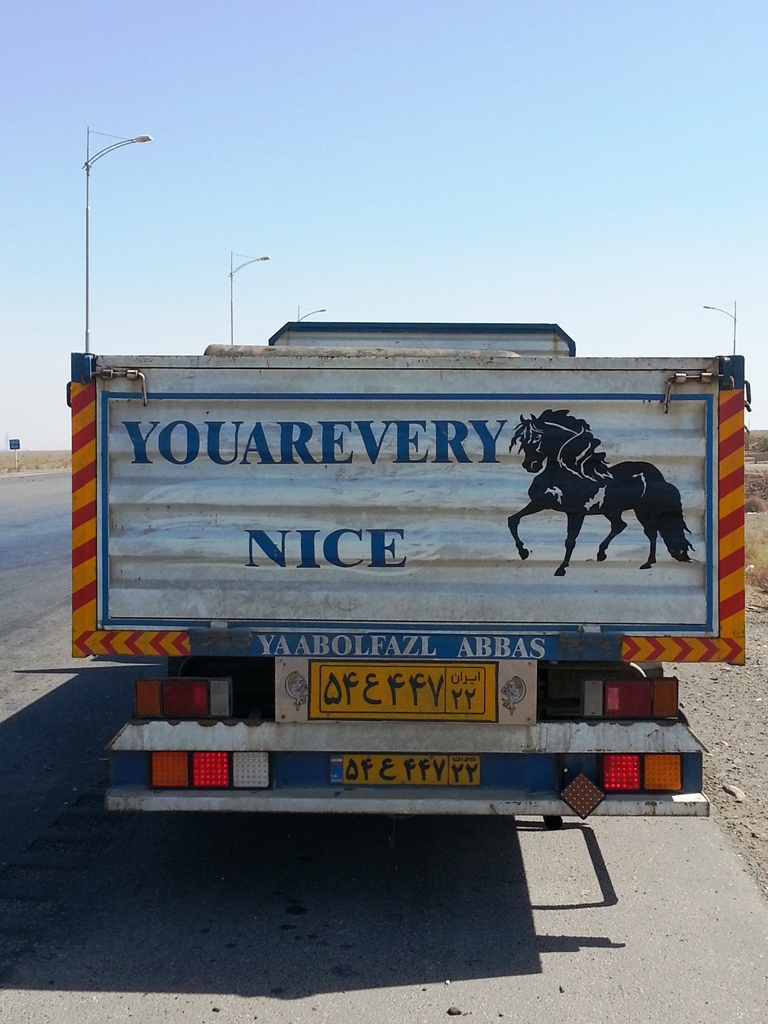
yadz-mosque-tiling truck-youarevery-nice

Find the other parts of this Series (Story and Video) here: https://theotheriran.com/tag/travel/

Series: Female British biker on Iranian roads -Video

Find other parts of this series and other travel posts here: https://theotheriran.com/tag/travel/

Series: Female British biker on Iranian roads

This is what she writes on her blog:

In autumn 2013 and spring 2014 I spent two months riding 3000 miles around Iran. Of all my journeys, this is the one that has affected me most profoundly.

The popular image of Iran here in the West is of course, hardly welcoming, and I admit I set off with some trepidation – was it really wise for me to ride a motorcycle alone in this pariah nation of Islamic extremists, with all its gruesome facts and figures surrounding women’s rights, free speech and treatment of political prisoners?

But if I’ve learned anything from my travels it’s that a nation’s government and its people are entirely unconnected (I mean, really, would I want a foreigner to judge me on David Cameron’s actions?!). And as soon as I crossed the border it became apparent that the Iranian people were going to make me fall head over heels in love with their country.  I have never experienced such a warm welcome and effortless kindness and hospitality from a nation.

http://www.loisontheloose.com/my-adventures/iran/

The Telegraph writes:

“I was run off the road a lot of the time; at first I thought people were trying to mow me down, or Islamists; and it turned out they just wanted to give me bags of pomegranates.”

“You find that you just can’t eat any more food. It’s mad. I had heard Iranian hospitality was legendary, and it really is. There was none of the dour religiosity you usually hear about.”

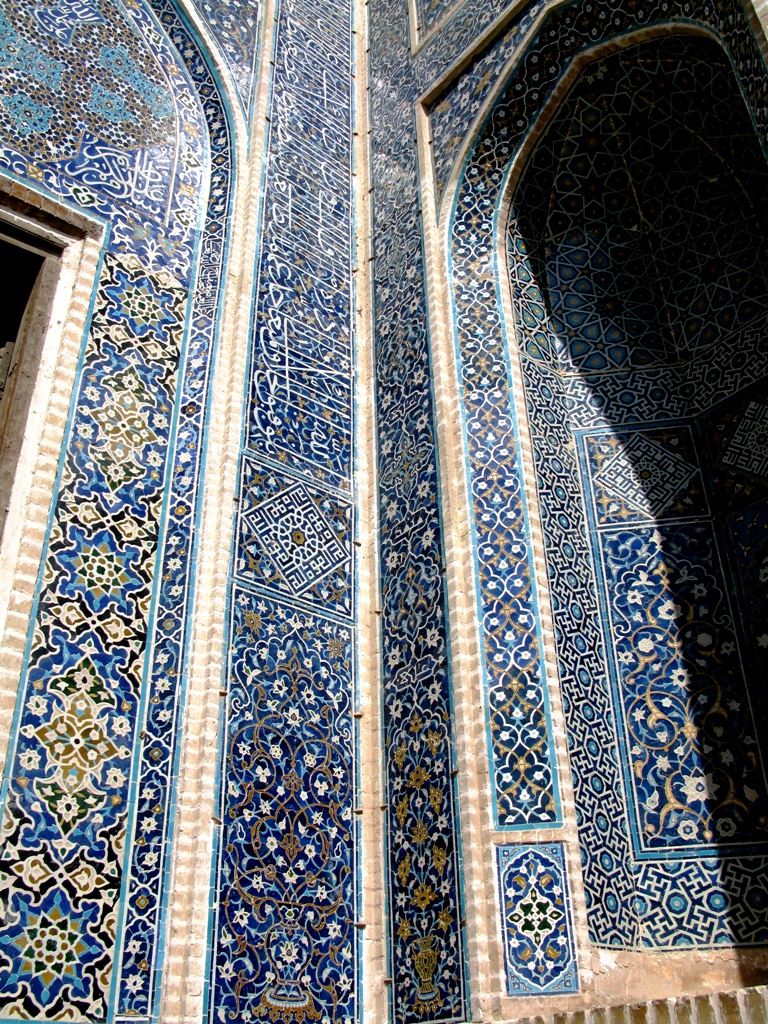
Other aspects of the country have also given her a taste for more, including the “incredibly beautiful” architecture and mosaics of the mosques, striking modernist buildings such as the Azadi tower in Tehran, and the “unique” desert city of Yadz.

“My bike is still out there with some wonderful people I stayed with in Tehran,” she says. “I’m hoping to go back next year and visit the areas I missed.”

http://www.telegraph.co.uk/travel/activityandadventure/10462760/Iran-one-womans-solo-motorbike-tour.html#disqus_thread

‘Five-star’ Orient Express to link Hungary and Iran

An Orient Express carriage, on which the new Hungary-Iran train styles itself (AFP)

An Orient Express carriage, on which the new Hungary-Iran train styles itself (AFP)

Railway enthusiasts with a taste for nostalgia will soon be able to indulge their Orient Express fantasies after Hungarian Railways said it was launching a luxury Budapest-Tehran train service.

With ticket prices of between 10,000 and 23,000 euros ($13,000-31,000) per person, guests will receive “five-star” treatment…

The first “Golden Eagle-Danube Express” train, which comprises 13 lavishly-decorated wood-panelled 1950s carriages and berths for about 70 guests, will set off from Budapest on October 15.

The two-week trip will cross Hungary, Romania, Bulgaria and Turkey, and take passengers through the ancient Iranian cities of Shiraz and Persepolis before reaching the capital Tehran.

“Nostalgia fans needn’t panic, another five trips are scheduled for 2015,” she said.

The last Orient Express – which traditionally linked Paris and Istanbul – ran in 2009, with the luxury Venice Simplon-Orient Express continuing to run services between London and Venice.

http://www.middleeasteye.net/news/five-star-orient-express-link-hungary-and-iran-759845650


The train is a joint venture between the Danube Express, the only private train in Central Europe to have en suite facilities, and the “rail-cruise” tour operator Golden Eagle Luxury Trains. It will travel through Hungary, Romania, Bulgaria and Turkey before entering Iran, where five days will be spent exploring historic cities, World Heritage Sites and towns off the beaten track.

There will be two “Jewels of Persia” trips in 2014: eastbound departing on October 14, costing from £8,695 per person, and westbound on October 27, costing from £9,395, not including flights. Two more trips are being arranged for 2015. For details see danube-express.com; goldeneagleluxurytrains.com.

http://www.telegraph.co.uk/travel/journeysbyrail/10291133/All-aboard-the-first-private-train-to-Iran.html

Italy’s former ambassador to Iran: No, Iranians Don’t Hate You

Roberto Toscano - Italy’s ambassador to Iran, 2003-2008

Roberto Toscano – Italy’s ambassador to Iran, 2003-2008

In 2004, when I was Italy’s ambassador to Iran, I had the occasion to tour the country together with a couple of American friends, at the beginning rather hesitant to come and visit, but then overwhelmed by the hospitality and politeness that are so typically Iranian and even more by the “extra” of both hospitality and politeness that came out when people realized that they were American.

One episode has remained marked in their memory (and in mine too): at the end of a visit to the tomb of the poet Saadi in Shiraz a mullah, who had been listening to the English translation of our guide, and had asked him where those tourists were from, went up to my friend, shook his hand, said (in English) “God bless you” and left.

[…] Most people who have seen the recent movie Argo […] are convinced that what they see is contemporary Iran: still hostile, still radical, still violently and massively anti-American. The truth is rather different. Certainly the regime finds in anti-Americanism a sort of marker of identity […] What is interesting, however, is that anti-American rhetoric is not focused on what America is, but on what America does. […] the 1953 Anglo-American coup against Mossadeq or the support given to Saddam in its 1980 aggression against Iran.

The fact is, however, that this regime narrative, and the hostility toward the U.S., is not really shared by the majority of Iranians. […]

Iran — and this will surprise the average American — is not a closed country, and its citizens can travel abroad, if they get the necessary entry visas, of course. In the second place, educated Iranians (not a narrow minority, differently from other countries in the area) have access to reliable information about the world and also about the U.S., in spite of the attempts of the regime to filter “subversive” material in both TV programs and internet traffic. […]

Actually, I found that in Iran there is a lot of admiration for America: not necessarily for its policy, but for its economy and for its culture, wildly popular especially among Iranian youth. […] A strong proof of the fact that America is not hated by Iranians came with September 11, when thousands of Iranians went spontaneously to the streets for a candlelight vigil in homage and solidarity to the victims of the attack on the Twin Towers.

The lack in Iran of the generalized and often virulent anti-Americanism that characterizes Middle Eastern populations is something that Americans traveling in Iran, even in the present tense political situation, can testify. Not only is there no hostility toward American citizens, but instead we see curiosity and friendship at the same time, though often combined with criticism for specific U.S. policies and behavior.

Definitely crowds chanting ‘marg bar Amrika’ (death to America) are today both very rare and not very much convinced: they tend to be formed by activists bused to the demonstrations. […]

Many, if not most Iranians, may be fed up with the regime, especially in its present incarnation in President Ahmadinejad, but they are a proud, patriotic people. They have problems with their leaders, but not with their country, especially in the event of an external attack.

The full article: The Huffington Post | Roberto Toscano | No, Iranians don’t hate you

Series American couple in Iran: Traveling to Iran as Americans

Audrey hanging with a group of Iranian women in Masouleh.

Audrey hanging with a group of Iranian women in Masouleh.

Traveling to Iran as an American citizen may sound complicated and dangerous. It’s not. We’re here to dispel the myths and answer the questions piling up in our inbox based on our visit to Iran just a few weeks ago.

Our aim in the following Q&A is to answer actual reader queries and to help demystify the process of traveling to Iran.

Are American citizens legally allowed to visit Iran?
Although the United States has imposed sanctions against Iran, there are currently no restrictions on American citizens visiting Iran as tourists. Currently, about 1,000-1,500 Americans visit Iran each year. […]

As an American, how will Iranians treat me?
Iranian people were often shocked to discover that we were American and that we were able to get a visa to their country. Once this fact set in, they often went over the top in welcoming us — everything from cordial greetings, to smiles, hugs, gifts and invitations to homes — especially when our guide was out of sight. We joke that it’s the closest we’ve felt to being rock stars.

Iranian University Students - Esfahan, Iran

Read the whole article if interested in details about getting a visa and organizing the trip:
Uncornered Market – Travel and Life Adventure | Traveling to Iran as Americans

Anyhow the blog is just great:
Uncornered Market – Travel and Life Adventure | Travel | Iran

Series American couple in Iran: Audry’s cites on Persepolis: Ancient Persia, Modern Lessons

Although Persepolis is one of Iran’s top archeological and tourist sites, I was careful to keep my expectations in check before visiting. After all, what would remain of the 2,500 year-old capital of the Achaemenid Empire? Amidst crumbled columns, I found great detail that blew me away and a surprising connection to the present.

Gate of All Nations - Persepolis, Iran

Gate of All Nations – Persepolis, Iran

When I first entered Persepolis through the Gate of All Nations, I was struck by the scale of it all – the statues, the columns, the great stone. I tried to imagine the process of transporting the raw materials to this place, constructing the city and palace, and fashioning it all without the mechanical means we have today. […]

Persepolis eastern staircase leading to Apadana Palace, all 23 subject nations represented.

Persepolis eastern staircase leading to Apadana Palace, all 23 subject nations represented.

Like a camera lens, my eyes began to focus on stone-carved details — hair, faces, beards, hats, and clothes, gifts carried in hands. That you could still make out every curl in a beard, eyelash on a camel and softened skin of soldiers holding hands — 2,500 years later – struck me as truly spectacular. […]

And it went on like this, through the citizens of each member nation — Egyptians, Assyrians, Indians, Tajiks, and so on. Each was easily identifiable, their physical appearance and cultural trappings preserved in stone from 500 B.C. […]

It was the whole of these details that to me seemed to define the character of the Achaemenid Empire: a multi-ethnic ancient empire built on respecting – if not maintaining — the diversity of many cultures amidst a unifying loyalty to one king. […]

Persian and Median soldiers holding hands, leading the way to the king.

Persian and Median soldiers holding hands, leading the way to the king.

Cyrus the Great’s Human Rights Charter
While it was Darius the Great who built this palace at Persepolis, it was his father-in-law – Cyrus the Great – who attempted to set the foundation of mutual respect within the Achaemenid Empire. In his Babylon Cylinder (539 B.C.), Cyrus put forth some of the first recorded mentions of human rights, an expression of tolerance, and of religious, linguistic and racial equality across the empire.

History tells us that great civilizations have come and gone, risen and fallen, ascended and crumbled. The pity of the great Persian empire — 23 nations under one roof and the nascent echoes of human rights — was that a great man came and went well before his time. […]

Head over to: Uncornered Market – Travel and Life Adventure | Persepolis to see all photos, and read the whole text.

Series American couple in Iran: A Poem to the People

Iranian Hospitality on Train from Iran

Iranian hospitality on train from Iran to Turkey

My heart sank as I watched the news from Iran this morning, scenes of the British Embassy being charged by an angry mob in Tehran. It saddens me – angers me, really – that narrow groups like this who define the world’s perception of Iran and the Iranian people are in reality such a small percentage of the country’s population.

My experience tells me they are the outliers, yet circumstances conspire to convince us on the outside to see them as the norm.

I thought back to all the people we met across Iran, from families in small mountain villages to shopkeepers on the busy streets of Tehran, virtually all of them welcoming us Americans – the supposed enemy — almost always with open arms and quite often bearing gifts. I remembered our conversations with Iranian people of all ages who longed for engagement — not only with us, but with the rest of the world.

I felt like yet another door closed on them today.

Continue to read the whole story here:
Uncornered Market – Travel and Life Adventure | Iran: A Poem to the People

Photos: Lahijan, in Gilan Province of Iran near the Caspian Sea

Info about Lahijan: Wikipedia | Lahijan

Series: An American Couple in Iran

Audrey and Dan at Persepolis

Audrey spoke to IranWire about how the country defied all her expectations:

What was your overriding impression of the country and its people?
We felt very welcome in Iran and were impressed by the level of hospitality shown by ordinary Iranians that we met on the streets, in markets, anywhere. Additionally, the ancient sites, the architecture and the deep history. […]

Where did you visit during your trip to Iran?
We spent the first two weeks on a small group tour with G Adventures where we visited Tehran, Hamedan, Kermanshah, Ahvaz and Susa, Shiraz (and Persepolis), Yazd, Esfahan, Abyaneh and back to Tehran. Then we had a private guide for a week where we visited Rasht, Massouleh, Ardabil, Tabriz, Kandovan and the St. Stephanos Church near Jolfa. […]

When you continued your travels, and eventually went back to the U.S., what was the most commonly asked question about your time in Iran?
“Was it safe for you?” Many Americans only see Iranians when they appear on the news, and this is usually during demonstrations or political speeches. They don’t realize that there is a whole other Iranian world outside of this. So we would surprise American friends and family when we joked that Iran was the place that we felt most like rock stars because of the kindness and attention we felt. We told stories of being invited to tea by strangers or people buying us gifts. […]

What was your favorite place in Iran? Do you have one memory that stands out for you?
Our top three places: Shiraz: Beautiful mosques and sights, and we found the people to be incredibly friendly and warm; Persepolis: Impressed not only by the engravings and ruins, but also the history and multiculturalism of the Persian Empire that we learned about while there; Northwestern Iran, especially Tabriz and the Armenian Monastery.

Continue to read the full article: IranWire | An American Couple in Iran

TripAdvisor grants Certificate of Excellence to tomb of Persian Poet Hafez in Shiraz, Iran

TripAdvisor, a U.S. travel website that provides directory information and reviews of travel-related content, has granted a Certificate of Excellence to the tomb of Hafez in the southern Iranian city of Shiraz, Fars Province.


Tomb of Persian poet Hafez in Shiraz, Iran
(photo by Amir Hussain Zolfaghary)

Hafez was a Persian mystic and poet. He was born sometime between the years 1310 and 1337 in Shiraz, Medieval Persia. John Payne, who has translated the Diwan Hafez, regards Hafez as the greatest poet of the world. His lyrical poems, known as ghazals, are noted for their beauty and bring to fruition the love, mysticism, and early Sufi themes that had long pervaded Persian poetry. Moreover, his poetry possessed elements of modern surrealism.

The official document is awarded to the historical site for its beautiful architecture, its impressive atmosphere and the good behavior of the staff, the director of the Fars Cultural Heritage, Handicrafts, and Tourism Department said in a press release on Friday.

Mosayyeb Amiri added that a poll conducted by the website introduces Hafezieh (tomb of Hafez) as one of the top historical sites in the world.

http://www.payvand.com/news/14/jul/1072.html

Book from Female German Iran traveller Helena Henneken – THEY WOULD ROCK

Have you ever stood on the “axis of evil?”
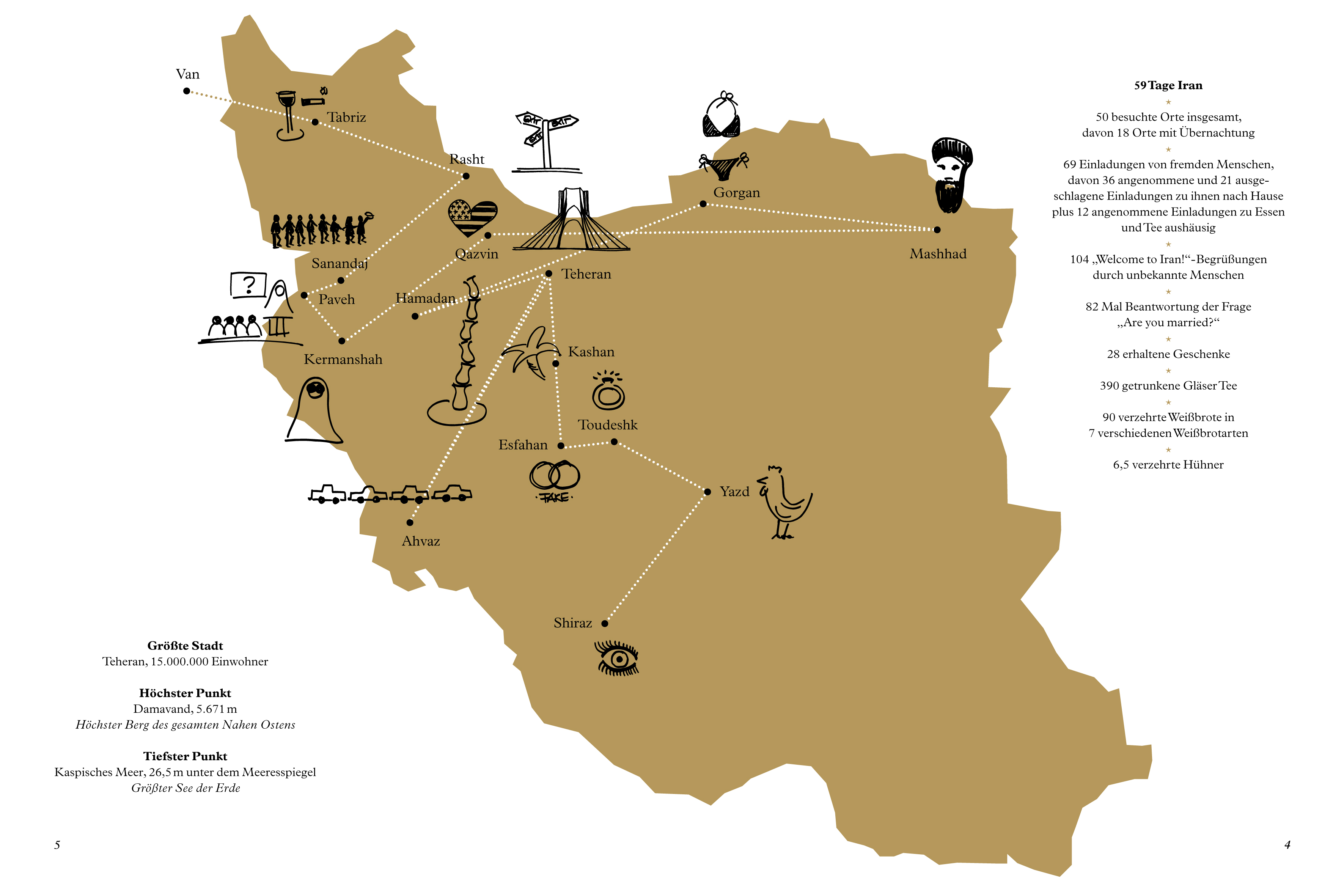
Taken a look around? And met people who live there? This book invites you to do so! A journey, 59 days in Iran. A woman with her backpack, cross-country.
Unexpected experiences, impressions, discoveries

People, who tell “we are terrorists”-jokes – and spontaneously invite foreigners to stay with their families. People who seek an exchange with the world – even though they often disappear behind their country’s image.

“If my people lived in another country, they would rock!” – that’s how a 16-year-old Iranian pictures the situation. Just one of several encounters: Helena Henneken has written a love-rock-song about the people she met in Iran.

A colourful insight into the world behind the scarf. And a book that starts “from the back” – the Persian way around.


they would rock - 59 Tage Iran

More about the book: www.theywouldrock.com
Design: Frizzi Kurkhaus
Publishing house: GUDBERG
ISBN: 978-3-943061-36-9

http://www.helenahenneken.com/?page_id=806

Iran’s Isfahan Province: Kashan – Fin Garden Series

Iran, Kashan Fin Garden

Fin Garden in Kashan, Iran

Iran’s 5200-year-old Shahr-e Sukhteh (Burnt City) joins UNESCO World Heritage List

The 5200-year-old Shahr-e Sukhteh (Burnt City) located in southeastern Iran was registered on UNESCO’s World Heritage List on Sunday. The site was registered with no opposing vote during the 38th session of the World Heritage Committee …

https://i0.wp.com/www.payvand.com/news/14/jun/Shahr-e-Sukhteh--Burnt-City-ruins-Iran-1-HR.jpg
Located 57 kilometers from the Iranian town of Zabol in Sistan-Baluchestan Province, the Burnt City was excavated for the first time by the Istituto Italiano per l’Africa e l’Oriente (IsIAO) team led by Maurizio Tosi in 1967. […]

After a 19-year hiatus, a team led by Professor Seyyed Mansur Sajjadi began studies on the Burnt City and conducted 22 seasons of excavations at the site.

A 10-centimeter ruler with an accuracy of half a millimeter, an artificial eyeball, an earthenware bowl bearing the world’s oldest example of animation and many other artifacts have been discovered among the ruins of the city in the course of the 22 seasons of archaeological excavations conducted by Iranian teams. […]

An archaeological team, which will be led by Sajjadi, is scheduled to reconstruct the ancient society of the Burnt City during the new excavation season this year in October.

Sixteen Iranian ancient and historical sites have previously been registered on UNESCO’s World Heritage List.

https://i0.wp.com/www.payvand.com/news/14/jun/Shahr-e-Sukhteh--Burnt-City-ruins-Iran-14-HR.jpg

More photos: Payvand News of Iran

Talesh in province Gilan

Talesh Gilan Iran

Talesh Gilan Iran

Chabahar – Iran

Image

Image

German traveler Josh about Iran after Hitchhiking, Couchsurfing through the country

This is what Josh writes about Iran and Iranians on his site:

 What is Iran like?

 Iran is full of terrorists and you will be shot right at the border because George W. Bush said so. BULLSHIT…

 Iran is the most inviting country in the world and its people the nicest I have ever met in my entire life. A Persian person is the perfect human being and makes us Europeans, Americans especially and perhaps Australians look like terrorists. I can vouch for that.

Every day I was invited by strangers to eat with them. They helped wherever they could and hosted me when I was lost in the middle of the night in the streets of Tabriz. Not a single time was I asked for money or anything. Even when I tried to force them to take my money or whatever they wouldn’t, I didn’t stand a chance.

I’m pointing this out because I’m tired of hearing how bad Iran and its people are. They aren’t terrorists, only bad politicans who don’t represent the majority of the Iranian folk. Not in my opinion anyway.

no.8 – What to see in Iran?

 You could spend months or maybe even years in Iran and you wouldn’t get bored. It is full of history and culture. For some people Iran may appear like a big desert but even the countryside has a lot to offer. Tabriz for example in the north, was Iran’s former capital. Not far from there you can find Lake Urmia, the biggest lake in the Middle East and the third largest saltlake in the world. Other attractions of course include Tehran, Iran’s massive capital and one of the largest cities on earth, the Caspian Sea and the former city of Persepolis.
tehran damavand mountains

Travel your way from north to south. Don’t miss out on Isfahan, Yazd and Shiraz. Isfahan especially caught my attention and I was stunned by its architecure. In the center of the city you will find the Naqsh-e Jahan square. It was so amazing that I sat there all day long and went for a little time travel back in the days when kings still ruled this amazing country. This square had such an impact on me and I won’t ever forget this special occasion.

generally speaking, you will be surprised how easy it is to hitchhike in Turkey, Iran or Romania.

http://www.gotravelyourway.com/2013/07/25/the-how-to-hitchhike-to-iran-guide/#.U25nKaJmMek

Harvard Business Review: What It’s Like Being a Business Traveler in Iran

With a sense that a new dialogue may be happening between this remarkable culture and the West, about a dozen CEOs from the U.S., U.K., and Canada with extensive experience in emerging markets persevered to take a closer look. […]

Throughout our ten days this month in Tehran, the religious center of Qom and historic Kashan, Isfahan, and Shiraz, little of what we experienced was expected. […]

We almost immediately learned that Iran is an astoundingly lovely place, with very little of the deep poverty one sees intertwined into the societies of most emerging markets. We visited some of the greatest historic and cultural centers we have ever seen. There is an excellent education system – their engineering, in particular, is globally competitive. We didn’t see a fraction of the religious tension we expected. Everywhere we went, people (especially young people) came up to us even on the streets, tourist spots and restaurants to say hello, to thank us for being there, to express affection. […]

Coke and Pepsi were everywhere. […]

Today, in a country of roughly 70 million, there is well over 100% mobile penetration – meaning many people have more than one “dumb” phone – but 3G is coming and their over 60% Internet penetration is rising (albeit service speed is slow by western standards.) […]

And despite the sanctions and difficulty in buying apps, we were told that there are some 6.5 million iPhones in the country. Despite government restrictions for access to social networks, every young person we saw has found works-arounds to access Facebook, Twitter, YouTube and more. […]

The new generations were born after the taking of our Embassy, so it’s not part of their world-view. They have little interest in their parents’ politics or religion, and in being told what to do.

Read the complete post here:
Harvard Business Review | What it’s like being a business traveler in Iran

Tomb of famous poet Hafez I


Shiraz, Iran -Tomb of Hafez

Shiraz, Iran -Tomb of Hafez

Hafez was born in Shiraz, Iran. His parents were from Kazeroon (Fars Province).
Modern scholars generally agree that Hafez was born either in 1315 or 1317.

Today, he is the most popular poet in Iran. Libraries in many other nations other than Iran such as Azerbaijan, Armenia, and Georgia contain his Diwan.[6]

Much later, the work of Hāfez would leave a mark on such Western writers as Thoreau, Goethe, and Ralph Waldo Emerson—the latter referring to him as “a poet’s poet.”[citation needed] His work was first translated into English in 1771 by William Jones.

There is no definitive version of his collected works (or Dīvān); editions vary from 573 to 994 poems. In Iran, and Afghanistan,[10] his collected works have come to be used as an aid to popular divination.

Twenty years after his death, a tomb (the Hafezieh) was erected to honor Hafez in the Musalla Gardens in Shiraz. The current Mausoleum was designed by André Godard, French archeologist and architect, in the late 1930s. Inside, Hafez’s alabaster tombstone bears two of his poems inscribed upon it.

Goethe fans will also know this:
http://en.wikipedia.org/wiki/West-%C3%B6stlicher_Diwan

Source:
http://en.wikipedia.org/wiki/Hafez

European tourist visits to Iran up 240% compared to last year

European tourists in Esfahan / Isfahan, Iran

European tourists in Esfahan / Isfahan, Iran

The entry of European tourists to Iran has risen 240 percent between April 9 and May 10 compared to the same period last year, Iranian Cultural Heritage, Handicrafts, and Tourism Organization Director Masoud Soltanifar said on Saturday.

Most of the 4- and 5-star hotels in the cities of Isfahan, Shiraz, Yazd, and Kashan have been fully reserved by European tourists for the next six months, the IRNA news agency quoted Soltanifar as saying.

Iran may be set to return to the top of “must-visit” lists for 2014, the Financial Times said in a report in January.

The Financial Times article:

http://www.ft.com/cms/s/2/e4f47a04-6972-11e3-89ce-00144feabdc0.html#axzz2plOF8yt7

Its attractions have never been in doubt — from ski resorts to beaches, stunning Islamic architecture, ancient archaeological sites, and superb food.

Now, tour operators are hoping the thawing of political relations with the west following the election of Hassan Rouhani as president will give travelers the reassurance they need to return.


Source: Tehran Times

Tehran – Day Series I

Image

World traveller Nate Robert’s impressions on Tehran in his first 24 hours

Tehran Azadi TowerThe first twenty four hours in Tehran have been amazing. This country *is* different from anywhere I have visited. I’ve already had small but poignant insights to a people I have instantly fallen for. My kind of people. A people facing such stressful times at a national and international level, that they don’t have the time nor inclination to sweat the small stuff. Incredibly welcoming and generous people, very interested in talking to independent tourists – of which there are very, very few. There is a level of calm, happiness, and personal contentedness that just can’t be described, only experienced.

[…]

At this point, I will say there is clearly a gap between the government and the people. But, that gap exists in many, if not all, nations. Who ever heard of a nation where people have nothing but nice things to say about the people in power? It may be more complex than that – the point being, Iran is not so different from the country you live in.

Source: YOMADIC | Iran : Arrived in Tehran, One Way Ticket, No Visa – The First 24 Hours

Australian travelers Kane and Narelle clear up some misconceptions about Iran

Lastly as a fittingly end this blog we would like to clear up a few western ideologies about Iranians and our travels in Iran:

  • Is Iran safe to travel in? It certainly is and we did not have any issues what so ever. Narelle and I have travelled near and far and it’s rather uncanny that the two most sanctioned places in the world (Iran and North Korea) are the two countries where we have felt the safest and most welcomed. We have consistently felt safer here in Iran than what we have at times in our own city of Canberra.
  • Are Iranians all violent or terrorists? Totally US, Israel and UK (CNN and BBC) driven propaganda. From south to north and east to west we have met nothing but normal peace loving people who want a good life for their family and friends. Just like us!
  • Are all Muslims bad? Are all Christians or Catholics bad…! Yes there are bad apples everywhere but the vast majority of people are just normal people who want to freely practise their religion while detesting violence and war.
  • Do all women wear black chadors with a tiny hole to see through? Hell no…these are govt imposed restrictions on tight clothing and head scarfs but other than that Iranians are extremely fashionable people. Dare I say it but they are actually more fashionable than the majority of Australians.
  • Do the police bother westerners? Absolutely not, unless you are doing the wrong thing. Our bags were searched once and the very kind policeman then apologised and proceeded to say have a wonderful trip in Iran.
  • Do Iranians treat westerners with suspicion? Absolutely not! They are very open, friendly and highly educated people who are naturally intrigued by the world outside of Iran. They loved seeing photos of our family, friends, country and home town. They are very hospitable people and if you are holding a map expect someone to immediately help you.
  • Travelling in Iran as an devout atheist? No issues at all and the people, although intrigued as to my religious beliefs or lack there of, don’t try to convert you. I have had more mormons at my front door try convert me in the last six months.
  • Would I come back to Iran? Absolutely, the first opportunity we get we will be back in this land of endless smiles, handshakes and hellos!

Series: Golestan Palace in Tehran

Image

Tabriz, one of the historical capitals of Iran and the capital of East Azerbaijan Province

Tabriz is the fourth largest city and one of the historical capitals of Iran and the capital of East Azerbaijan Province. The estimated population of the city is around 3,000,000; the fifth most populous city in Iran.

With a rich history, Tabriz contains many historical monuments, but repeated devastating earthquakes and several invasions during frequent wars have substantially damaged many of them. Many monuments in the city date back to the Ilkhanid, Safavid, and Qajar periods,among them is the large Tabriz Historic Bazaar Complex which is inscribed as a World Heritage Site in 2010. The oldest signs of the civilization in the city is an excavation site and museum in the city center with a history that dates back 2500 years.

Source: Wikipedia | Tabriz

How I visited every country in the world – without a single flight – cites on Iran

http://www.telegraph.co.uk/travel/activityandadventure/9710860/How-I-visited-every-country-in-the-world-without-a-single-flight.html

On the morning of January 1 2009 I took a ferry from Buenos Aires to Colonia in Uruguay. This would be the first of many border crossings as I embarked on what I knew would be the biggest adventure of my life: the Odyssey Expedition, the first surface journey to every country in the world. It would take me to more than 200 countries, 60 islands and six continents. I thought I could do it in a year. It took the best part of four.

One place that will always stick in my mind is Iran. Instead of the stern, joyless place I expected, it turned out to be the warmest and most hospitable nation in the world. I was treated like an honoured guest by everybody I met. On an overnight bus, an old Persian grandmother smiled at me and passed me her mobile phone. I took it from her, a little nonplussed, and put it to my ear. The guy on the other end told me in perfect English that I was sitting behind his grandmother and she was concerned about me. When I asked why, he told me that the bus got in very early the next day and she was worried that I wouldn’t have anything to eat. She wanted to know if she could take me home with her and cook me breakfast.

What I have learnt from this adventure is that there are good people all over the world; people who will go out of their way to help out a stranger in need. I have learnt that people wherever they live are not that different: we all just want a fair deal. My faith in humanity has been restored, although my faith in politicians is even lower than it was when I started.

Hastroud desert Tabriz, Iran

Image

Other interesting photos on Iran: https://theotheriran.com/tag/photos/

Iran’s Fars Province: World Heritage Site – Eram garden in Shiraz

ImageImage

Image

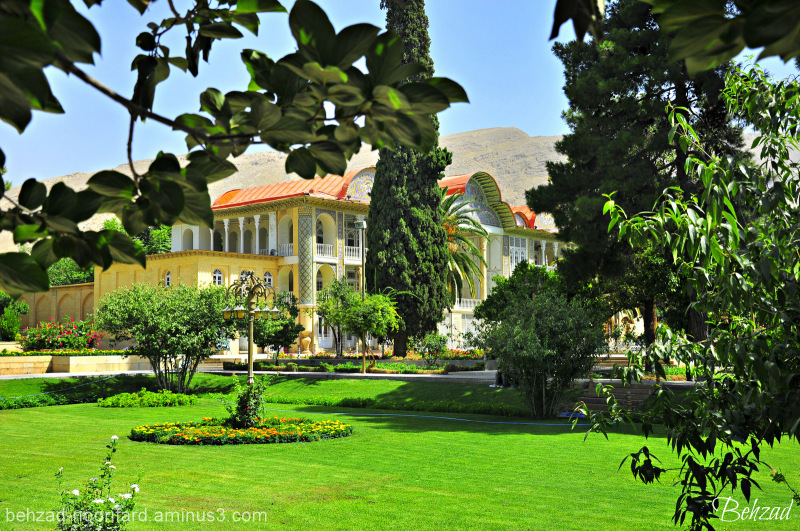
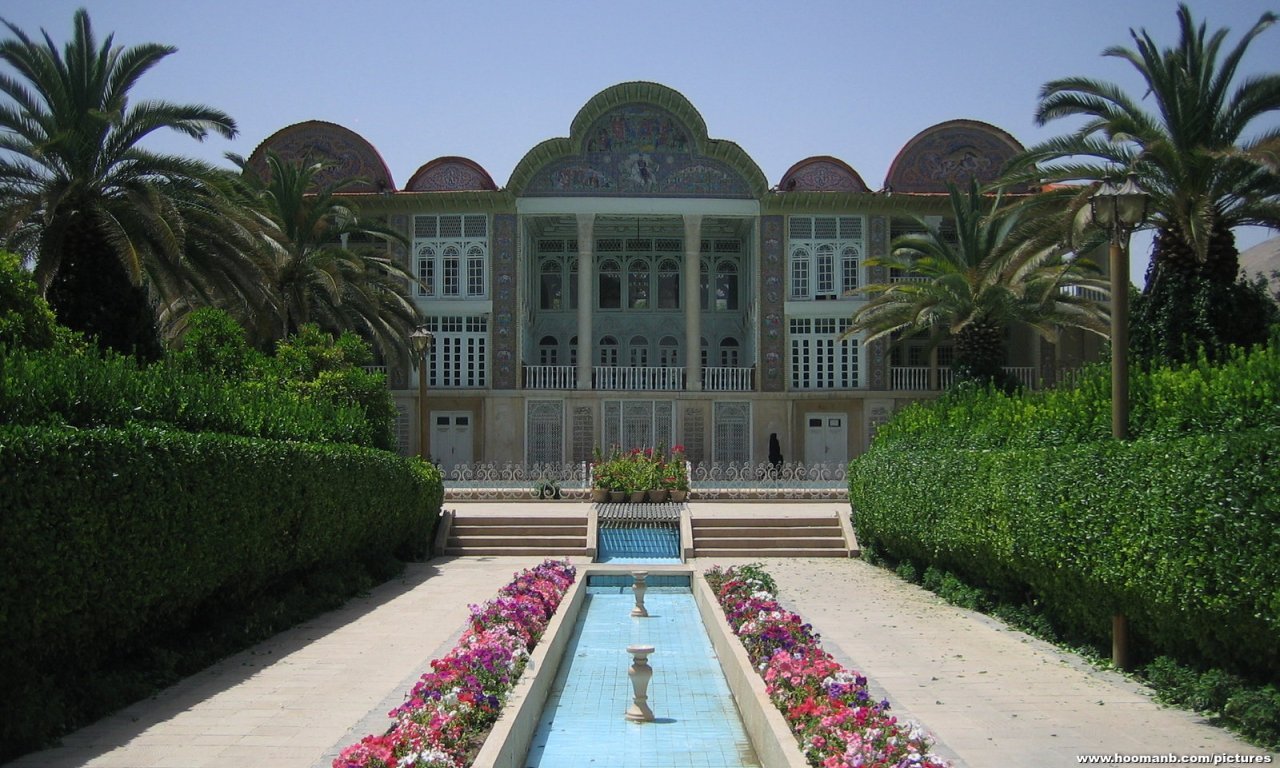
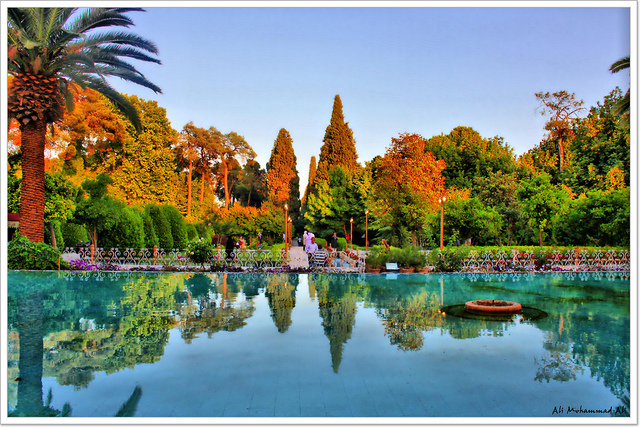
Today Eram Garden and Qavam House are within Shiraz Botanical Garden (established 1983) of Shiraz University. They are open to the public as a historic landscape garden and house museum. They are World Heritage Site, and protected by Iran’s Cultural Heritage Organization.

Source: Wikipedia | Eram Garden

Arg-é Bam (Bam Citadel), Bam, Kerman Province, southeastern Iran – the largest adobe building in the world

City Walls, Arg-é Bam (Bam Citadel), Bam, Kerman Province, southeastern Iran - www.castlesandmanorhouses.com

Interior, Arg-é Bam (Bam Citadel), Bam, Kerman Province, southeastern Iran

The Arg-e Bam was the largest adobe building in the world. It was a lrge fortress/city in whose heart the citadel was located, but because of the impressive look of the citadel, which forms the highest point, the entire fortress is referred to as the Bam Citadel.

It is listed by UNESCO as part of the World Heritage Site

The origin of this massive citadel on the Silk Road can be traced beyondthe Achaemenid period (6th to 4th centuries BC). The heyday of the citadel was from the 7th to 11th centuries, when it lay at the crossroads of important trade routes and known for the production of silk and cotton garments.

On December 26, 2003, the Citadel was almost completely destroyed by an earthquake, along with much of the rest of Bam. It is currently being rebuilt.

Source: Photographs of Castles and Manor Houses around the world

Photos: Nakhcheer cave, approximately 70 million years old limestone cave in Iran

Nakhcheer or Chal-Nakhjir is a cave situated in Markazi Province of Iran. It is a limestone cave approximately 70 million years old.  It was discovered in 1989 and registered as a national monument in 2001. Its interior is made of crystals, dolomite sediments, stalactites and stalagmites.

More fascinating pictures: Payvand News of Iran | Photos: Nakhcheer cave

World class US and European skateboarders skating in Iran

While skateboarding has a firm footing across major cities of the world, Iran certainly isn’t a name you’d associate with skating. Bridging an in-depth skateboarding video with documentary film, Thrasher Magazine and producer Patrik Wallner venture into Iran for an episode of “Visualtraveling.”

Here, they meet MJ, skateboard enthusiast and skate deck craftsman who takes the crew through the country. Running into their fair share of challenges, the crew of skaters find out first hand what it’s like to skate in the Persian region. Clocking in at just under 30 minutes, the film is a mind-expanding piece that’s definitely worth your while.

Other USA – Iran related articles: The other Iran | Tag | USA

Source:
HYPEBEAST | Thrasher Magazine travels to Iran for “Visualtraveling: The Persian Version”

Masuleh – Village in northern Iran

Masuleh - Village in northern Iran

Masuleh – Village in northern Iran.
Masuleh’s architecture is unique. The buildings have been built into the mountain and are interconnected. Courtyards and roofs both serve as pedestrian areas similar to streets. Masuleh does not allow any motor vehicles to enter, due to its unique layout. It is the only city in Iran with such a prohibition.

http://en.wikipedia.org/wiki/Masuleh