Author Archives: socialinform

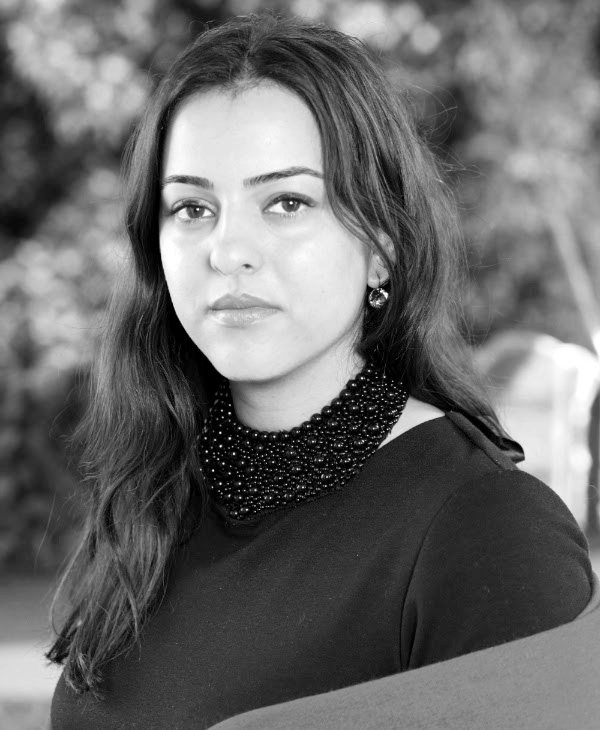
Nazanin Daneshvar: Tehran’s Trail Blazing Tech Entrepreneur

As a young businesswoman in Iran, Nazanin Daneshvar didn’t plan to become one of Tehran’s trail blazing techpreneurs.  She has overcome obstacles of both age, and gender. The 30-year old is part of a startup scene so vibrant, more than one hundred people recently competed for a place at the country’s first private accelerator, providing mentorship as well as funding.

Tehran’s techpreneurs say one of the few benefits of sanctions are the almost limit-less opportunities to localize popular Western sites, like YouTube and PayPal. […]

Women dominate the hard sciences at Iranian universities, studying subjects like engineering, math and chemistry. And, women are involved in Tehran’s tech sector, but Daneshvar says the real problem is getting the older segments of society to take web businesses seriously.

Shifting traditional mindsets and uptake is a slow process, but with a compelling sales pitch, Daneshvar and her sales team have more than 10,000 merchants on board.

“We are solving a problem. Advertising is so expensive, and there is a financial crunch, so we say to merchants, just give us a discount, and we will get customers for you and bring a lot of PR. There’s limited disposable income, so if you can double the performance you can get out of that, why wouldn’t you? We only sell as many deals as the businesses can handle.”

Takhfifan earns a variable commission on the sale of each coupon for discounted services. […]

The company has grown from two sisters in a tiny office, selling one deal a week, to a staff of 60, with deals in seven different cities. Daneshvar’s entirely boot-strapped business has seen 100% growth since launch.

“The first year we doubled in growth every two months. This is still not comparable to Groupon. This is organic growth. We don’t have a marketing budget.”

Daneshvar says most Iranian startups operate with zero to little funding. Wealthy parents invest their money in property, rather than their children’s tech aspirations. In her case, Daneshvar says her parents’ support came in the form of many middle class families: room and board.

The success of Takhfifan has led Daneshvar to develop a new venture Tarinan, a review site, driven by customer demand. […]

Tarinan, a local search and review-based platform launched last year and we’ve just launched mobile. We have more than 30,000 reviews without advertising, not a single penny spent and our company is completely boot-strapped – both of them.”

Denashvar has won all sorts of awards for her site, including recognition from Silicon Valley, but she says the real challenge goes back to mentorship. It’s a culture that doesn’t exist in Iran – yet.

“People are changing jobs every three months, every six months, because they don’t have proper mentorship to teach them how to work. In the US, people take lots of internships, here there is no such eco-system. People don’t have this tradition of looking at a career. The only option is taking over their parents’ shop.”

But that’s changing. Tehran’s tech community is banking on leaders like Denashvar, to do more than recruit others to the sector; they’re counting on her, with a requisite failure and success under her belt, to be one of Iran’s pioneering mentors.
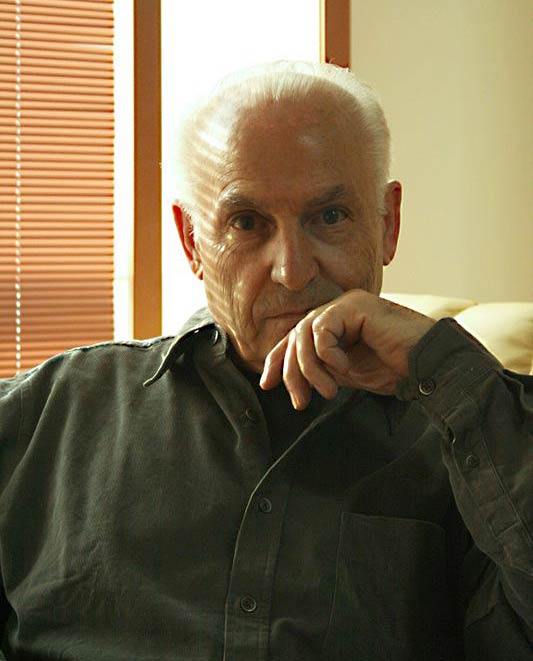
Source: Forbes | Tehran’s trail blazing techpreneur

Two galleries in Tehran are holding a retrospective of awarded Iranian painter Sirak Melkonian

Iranian painter Sirak-Melkonian-1-HR

Iranian painter Sirak Melkonian

Two galleries in Tehran are holding a retrospective of painter Sirak Melkonian in a joint project. A collection of paintings created over the past 70 years by the 85-year-old artist are on display at the Aria and Ab Anbar galleries, the Persian service of ISNA reported on Tuesday.

The two exhibitions opened on January 30 and will run until February 19.

Aria Gallery: 10 Zarrin Alley, off Vali-e Asr Ave.
Ab Anbar Gallery: 2 Roshan Manesh Alley, Khaqani St., off Enqelab Ave.

Biography
Sirak Melkonian was born in Iran in 1931. He gained national recognition in 1957, winning a prize in the Contemporary Iranian Artist Exhibition of the Iran American Society. That achievement was followed by the Imperial Court Prize Tehran Biennale in 1958 and first prize in 1959 for the Tehran Paris Biennale. First prize in 1974 International Art Exhibition In Tehran brought him International acclaim and he was subsequently invited to exhibit his work at the International Exhibit in Basil, Switzerland.
Throughout 1976 and 1977 he exhibited internationally, most notably at the exhibition of Grand Palais and the Salon De Montrouge in Paris, as well as the Washington International Artfair in the United States. Sirak currently lives and teaches in Toronto, Canada.

Awards
1957- Winning a prize in the Contemporary Iranian Artist Exhibition of the Iran American Society.
1958- The Imperial Court Prize Tehran Biennale
1959- First prize for the Tehran Paris Biennale.
1974- First prize for International Art Exhibition In Tehran

Some works by Sirak Melkonian

More works by Sirak Melkonian: Mahart Gallery | Sirak Melkonian

Sources: Facebook | Sirak Melkonian, Payvand News of Iran

Photo series: Winter in Iran – Snow sliding in Mahnan near Bojnord

North Khorasan, Iran – Mahnan (Mehnan) MapMehnan (also Mahnan and in Persian: مهنان‎) is a village in Aladagh Rural District, in the Central District of Bojnord County, North Khorasan Province, Iran. Its populations (2006) was 1.341 inhabitants.

Bojnord is the capital city of North Khorasan province, Iran. It is about 701km (436mi) from Tehran.

The city is quite famous for its multicultural background. Many people speak at least 2 different languages including Persian, Tati, Khorasani Turkic, Kurmanci Kurdish, and Turkmen. Intermarriage between said ethnic groups is common.

Sources: Mehr News Agency | Photos, Wikipedia | Bojnord, Wikipedia | Mehnan

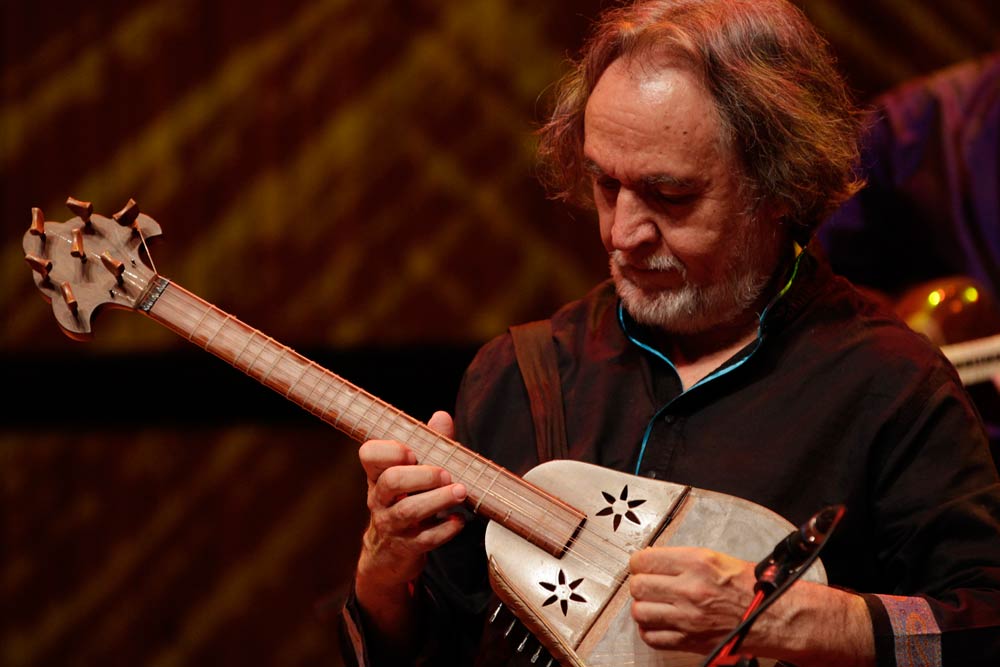
Keyhan Kalhor: Iranian music maestro and former Grammy awards nominee to perform in the US and Canada

Iranian musician and Kamancheh virtuoso Kayhan Kalhor along with Indian sitar maestro Shujaat Husain Khan is slated to perform in New York, Boston and Irvine

The duo is planning to present their program accompanied by Ghazal Ensemble in the Michael Schimmel Center for the Arts at Pace University on March 22, 2015.

Ghazal (with Shujaat Hussein Khan and Sandeep Das) March 2015 events are:
13 Mar: Kay Meek Theater, Vancouver, Canada
15 Mar: Skirball Center, Los Anegeles, CA
17 Mar: Irvine Barclay Theater, Irvine, CA
19 Mar: Freer Gallery, Washington, DC
21 Mar: Berklee Performance Center, Boston, MA
22 Mar: Schimmel Center at Pace University, NY
25-28 Mar: Agha Khan Museum, Toronto, Canada
29 Mar: Asia Society Texas Center, Houston, TX

Other Kayhan Kalhor early 2015 events (Europe, US): www.facebook.com/kalhor.kayhan

Iranian Kamancheh virtuoso Kayhan Kalhor

Ghazal Ensemble, formed in 1997 by Kalhor and Husain Khan, has been touring the world and it is acclaimed for performing Indo-Persian music.

Described by the Los Angeles Times as “utterly captivating…an irresistible expression of creative musical passion,” Ghazal’s performances and recordings have garnered critical acclaim as well as a 2004 Grammy nomination for Best Traditional World Music Album for their 2003 live album The Rain. Amazon named Ghazal’s first CD, Lost Songs of the Silk Road, to its list of the best 100 world music albums ever recorded.

Kalhor is known for his brilliant performances on the traditional instrument Kamancheh and creating a unique mixture of classical Persian music with folk tunes of the Kurdistan region.

He held many concerts along with the world-renowned musicians and ensembles such as the string quartet, Brooklyn Rider ensemble, in Minneapolis, United States, in 2012.

Kalhor also presented joint programs with the veteran Turkish Baglama player Erdal Erzincan in New York’s GlobalFest held at the Marlin Room on January 13, 2013.

He also performed introspective performances with a number of world-class Asian musicians at BT River of Music in London.

Shujaat Husain Khan is one of today’s greatest North Indian artists, who represent the seventh generation of illustrious musicians, which includes his father, the great sitarist Ustad Vilayat Khan.

BIOGRAPHY – KAYHAN KALHOR
Kayhan Kalhor is an internationally acclaimed virtuoso on the kamancheh (Persian spiked fiddle). His performances of Persian music and his many collaborations have attracted audiences around the globe.

Born in Tehran, Iran, he began his musical studies at the age of seven. At thirteen, he was invited to work with the National Orchestra of Radio and Television of Iran, where he performed for five years. When he was seventeen he began working with the Shayda Ensemble of the Chavosh Cultural Center, the most prestigious arts organization in Iran at the time.  At a musical conservatory in Tehran around age 20 Kalhor worked under the directorship of Mohammad-Reza Lotfi who is from Northern Khorasan. He has traveled extensively throughout Iran, studying the music of its many regions, in particular those of Khorason and Kordestan. He later moved to Rome and Ottawa to study European classical music.

Kayhan has toured the world as a soloist with various ensembles and orchestras including the New York Philharmonic and the Orchestre National de Lyon.  He is co-founder of the renowned ensembles Dastan, Ghazal: Persian & Indian Improvisations and Masters of Persian Music. Kayhan has composed works for Iran’s most renowned vocalists Mohammad Reza Shajarian and Shahram Nazeri and has also performed and recorded with Iran’s greatest instrumentalists.

Kayhan has composed music for television and film and was most recently featured on the soundtrack of Francis Ford Copolla’s Youth Without Youth in a score that he collaborated on with Osvaldo Golijov. In 2004, Kayhan was invited by American composer John Adams to give a solo recital at Carnegie Hall as part of his Perspectives Series and in the same year he appeared on a double bill at Lincoln Center’s Mostly Mozart Festival, sharing the program with the Festival Orchestra performing the Mozart Requiem. Kayhan is an original member of Yo-Yo Ma’s Silk Road Project and his compositions Blue as the Turquoise Night of Neyshabur, Silent City and Mountains Are Far Away, appear on all three of the Ensemble’s albums. His most recent commission for the Kölner Philharmonic in Germany will be premiered in October 2009.

Three of his recent recordings have been nominated for Grammys, Faryad, Without You and The Rain.  His new CD Silent City, with the innovative ensemble Brooklyn Rider, was released on the World Village label in September 2008 to critical acclaim.

Compositions
– Blue as the Turquoise Night of Neyshabur
– Gallop of a Thousand Horses
– I was There
– The Silent City
– Mountains Are Far Away

Sources: Press TVwww.kayhankalhor.net, Tehran TimesKODOOM.com, Philharmonic Society

Interview with Iranian photojournalist Newsha Tavakolian: “Whenever I reach the end, I start from scratch”

Newsha Tavakolian - Iranian photographer 03

Newsha Tavakolian (photo by Arash Ashouriniya)

Newsha Tavakolian, an established photojournalist and art photographer, started her experimental career at 16. After a while she pursued it professionally in Iranian and foreign media. Two decades on, her social recognition and awareness has catapulted her into the ranks of the outstanding photographers.

Zanan-e Emrooz magazine released an interview with Newsha in its 7th issue (December 2014) about her career and life. The following is an excerpt  of it, published in Iran Front Page:

Why did you pick photography? Was anybody in your family who did photography?
At first I knew nothing about photojournalism. I did it for money. My parents were in Germany for my dad’s surgery, and my siblings and I were in Iran. Apart from financial problems, I found the education system annoying. Later I learned that I was suffering from Dyslexia at school but nobody knew about it. Back then I didn’t want to rebel; it was just a normal reaction to the tough conditions of the time…. after dropping out of school, I took photography at my mom’s suggestion and used everything as a subject for photography. […]

Once you said you always wanted to narrate the story of your subjects. Are your recent collections your narration of the characters? […]
My first work was Mothers of the Martyrs Collection: photos of mothers whose sons had been martyred. The undeniable resemblance between mothers and sons was interesting. […] Two reverse trends: a son who has remained in his youth with a cheerful face and a mom who looks emaciated because of the loss of her son. I just selected the backgrounds for the pictures and there was no other intervention on my part. […]

I just show part of their lives and leave the remainder to the imagination of the audience. I like to see viewers get involved in the story of my photos, not just their beauties. None of my photos has a strange surreal atmosphere. They feature the familiar scenes we pass by each day, but we now pause to watch the photos and they make us think.

For instance, the visitors of the Look Collection (2011) told me they felt as if they were watching themselves in those photos. This shows that I have successfully represented a typical character type in the photos. Drawing on my experiences in photojournalism and social documentaries, I’ve reached this point. My photos feature the middle class; that’s why more people identify with the characters in my work. […]

“When I shot these images, it was a dark time in Iran’s history,” says Newsha Tavakolian. “It was a time of extreme pressure on the public, especially on the youth, who were all struggling under the imposed restrictions.” Curious about the isolated lives of the middle-class youth in Tehran, Tavakolian staged images based on the real stories of her friends and neighbours to depict a society that the photographer believes is often reduced to exaggerated stereotypes in western media, and to give a more accurate portrayal of “normal people” in Iran.

As a photojournalist, you not only covered the news on Iran but also news stories in the region, including the Iran-Iraq war. How was it like?
Back then I was 21. In Iraq I was accompanied by two American women. When we left Iraq after the war, they had other projects to work on and show themselves, but I came across closure of newspapers [in Iran] and a stagnant situation in which you would be consumed by inaction.

After one and a half years I realized that I’d spent too much time on something which I couldn’t change. I admitted that I was living in this country with all limitations and I needed to redouble my efforts to work here. […]

I refocused my efforts on upgrading my works. You cannot believe how terrible I was in photography and how much I worked on it. I’m the harshest critic of myself. I relentlessly review my works in order not to let others find any faults with them; I don’t let anybody undermine my self-confidence either. I constantly evaluate and challenge my works, and I think this is a forwarding method.

At the time of war, I was among the first photographers who were in Iraq. I sent my photos through my agency to Time and Newsweek magazines. They didn’t know I was a girl. Well, this heartened me because my works were put above my gender. […]

Where do you think the world is heading with too many photos available? Today mobiles and tablets don’t miss even one single moment. ….
I don’t walk down this path. I don’t produce a big volume of photos. I’m stingy in photography. I feel responsible for taking any photo. I’m stingy even in sending the feed to my eyes and mind. I wouldn’t look at just any video or photo because I wanted to train my eyes.

You are not supposed to watch anything just to spend time or relieve tiredness; otherwise your sight will get sick, just like you don’t eat anything just to fill your stomach. Perhaps these photos are helpful for future historians not to encounter any ambiguity […]

As a professional photographer, is your life affected by news? Is news still tragic for you?
Pieces of bad news send chills down my spine. I’m still involved in photojournalism. It is a labor of love. Let me give you an example. After a tough period of hard work – a four-month trip to 13 countries for filming and photography for an educational project – and facing problems with the Carmignac Foundation, I was in the Netherlands where I decided to go to the beach and have a rest. It coincided with the crash of a Malaysian airliner in Ukraine. The families of the Dutch nationals who were onboard the [doomed] plane went to the airport to ask about their loved ones.

I rushed to the airport when I heard the news. I was unaware that I had no camera, so I collected one at the airport and started to take photos. Nobody was waiting for my photos.

About one month ago I went to Iraq for a personal project. I didn’t snap the most important photo I could take and wrote it instead*.

You’ve travelled to many countries. Have you ever thought about migration given that your husband is not Iranian?
I’m still in Iran because it is the only place where I can use all my senses: anger, happiness, concerns, etc. My Iran photos are the strongest. It’s hard for me to let go of what I’ve developed an interest in. Luckily my husband is interested in Iran too.

I like Iran despite its shortcomings to which I don’t turn a blind eye. This society’s problems bother me and I cannot remain indifferent to them. If I live here and like it, I should do whatever I can for it. […]

Tell us about what you’ve changed in yourself through your own constructive criticism.
Whenever I hold a camera, I imagine it’s my first time. […] Each day I try to gain new things. It all started when I returned from Iraq. I could either suffer from postwar depression or forget whatever I had experienced in order to return to normal life. I chose the intentional forgetfulness in order not to be entrapped by sentimentalism, and not to regret the past. Never do I think about the past. I face the future. Each time I reach the end, I start from scratch.

———————–
* A Thousand Words for a Picture That I Never Took, Newsha Tavakolian, Sharq newspaper

Biography of Newsha Tavakolian: The other Iran | Newsha Tavakolian

Sources: Iran Front PageRoads & KingdomsThe Guardian

Photo series: Winter in Iran – Snowball fighting in Kerman City

Kerman is the capital city of Kerman Province, Iran. At the 2011 census, its population was 821,374, making it the 10th most populous city of Iran.

Iran, Kerman mapIt is one of the largest cities of Iran in terms of area. Kerman is famous for its long history and strong cultural heritage. The city is home to many historic mosques and Zoroastrian fire temples. Kerman is also on the list of the recent world’s 1000 cleanest cities. Kerman is also a former capital of Iran, a position that it held during several periods. It is located on a large, flat plain, 1,036 km (643 mi) south of Tehran, the capital of Iran.

Climate
The city’s many districts are surrounded by mountains which bring variety to Kerman’s year round weather pattern, thus the northern part of the city is located in an arid desert area, while the highland of the southern part of the city enjoys a more moderate climate. The mean elevation of the city is about 1755 m above sea level.

Kerman city has a moderate climate and the average annual rainfall is 135 mm. Because it is located close to the Kavir-e lut (Lut desert), Kerman has hot summers and in the spring it often has violent sand storms. Otherwise, its climate is relatively cool.

Culture
Kerman has an abundance of architectural relics of antiquity. It is among several cites in Iran with a strong cultural heritage, which is expressed in the local accent, poetry, local music, handicrafts and customs that Kerman has introduced to the world of culture.

The Iran museum of Zoroastrians, which showcases the ancient history of Zoroastrians, is in Kerman’s Fire Temple. The idea of launching the museum along with the library of Kerman’s Zoroastrian Society came to light in 1983, when the head of the society, Parviz Vakhashouri, and the former head of library, Mehran Gheibi, collected cultural heritage artifacts of Kerman’s Zoroastrian community. These two officials added many other objects to this collection.The museum was officially inaugurated during Jashn-e Tirgan in 2005 by Iran’s Cultural Heritage, Handicrafts and Tourism Organization (ICHHTO).

Jashn-e Tirgan or Tiregan is an ancient Iranian rain festival observed on July 1. The festivity refers to archangel Tir (literally meaning arrow) or Tishtar (lightning) who appear in the sky to generate thunder and lightning for providing the much needed rain.

Sadeh ceremony is celebrated every year in Kerman. Also The archeological ancient area of Jiroft and Tappe Yahya Baft are located south of Kerman. Rayen Castle is also located on Rayen town,south east of Kerman.

Sources: Mehr News Agency, Wikipedia | Kerman

Majid Derakhshani: Iranian composer and tar expert

Iranian-tar-musician-Majid-Derakhshani-HRMajid Derakhshani (born 13/09/1957 in Sangesar, Iran) is an acclaimed Iranian musician and composer.

He was born into a family of artists from the Iranian province Semnan. During his studies of string instruments and composition at the University of Tehran, the legendary Mohammad Reza Lotfi became his teacher.

Subsequent to his emigration to Germany he founded the Nawa Musikzentrum in Cologne; the primary and most active center for Persian classical music outside of Iran. In Iran Majid Derakhshani is deemed to be amongst the best on his instrument – the tar. Hence he carries the venerable title Ostad, denoting him as a master of his instrument. His virtuosity has been celebrated worldwide in festivals, concerts, radio and television productions. He is now considered as the best tar player in the world. He has composed for myriads of international musicians, such as the greatly renowned Iranian singer Mohammad Reza Shajarian (Album Dar Khial).

Here a video of his performance with the wonderful Mah Banoo ensemble:

More information and a list of his CDs: wikipedia | Majid Derakshani

More music-related posts: The other Iran | Music


Iran’s Kurdistan Province: From Sanandaj to Marivan

Sanandaj is the capital of Kurdish culture and Kurdistan Province at Iran. At the 2011 census, its population was 373,987. Until the 17th century it was only a small village, when the governor of the region, Suleyman Khan Ardalan, renovated a fortress there, known as “Sena Dezh”, which gave the town its Persian name.

The economy of Sanandaj is based upon the production of carpets, processed hides and skins, milled rice, refined sugar, woodworking, cotton weaving, metalware and cutlery.

Enjoy the photo gallery with images taken from Sanandaj to Marivan:

Post related to this region with information about Marivan:
Photo Series: Winter in Iran – Marivan, Kurdistan Province

Sources: CNNWikipedia | Sanandaj

Iranian-American music conductor and composer Shahrdad Rohani directed orchestra in Tehran

Acclaimed music conductor Shahrdad Rohani performed an orchestra for a big audience Friday night at Tehran’s Grand Hall of the Interior Ministry.

Shahrdad Rohani, born May 27, 1954 in Tehran, Iran is an Iranian-American composer, violinist/pianist, and conductor. His style is contemporary and he is well known for composing and conducting classical, instrumental, adult contemporary/new age, film soundtrack as well as pop music.

Early life
His father, Reza Rohani, was an accomplished musician and Shahrdad followed in his father’s footsteps. He started down the path of becoming a musician at the age of five when he learned to play the violin under the instruction of his father.

He was a student to a well-known Persian violinist, Ebrahim Rouhifar. At age 10 he attended the Persian National Music Conservatory of Tehran. He studied with a Swiss teacher named Basil as well as an Armenian teacher named Hagh Nazarian, who taught him to play the piano; they worked together for seven years.

After studying at the Tehran Conservatory, Shahrdad Rohani left his family, many of whom still remain in Iran, and traveled in 1975 to Austria where he attended the Academy and Conservatories of Music in Vienna. Then, in the early 1980’s, he accepted a scholarship to study music at UCLA and moved to the United States.

Musical career
From 1987 until 1991 Mr. Rohani served as the music director and conductor of the COTA symphony orchestra in Los Angeles. He has appeared as a guest conductor with a number of prestigious orchestras including London’s Royal Philharmonic Orchestra, Minnesota Orchestra, Colorado Symphony Orchestra, San Diego Symphony, Indianapolis Symphony Orchestra, New Jersey Symphony, Zagreb Philharmonic Orchestra, the American Youth Philharmonic Orchestras and many others.

Shahrdad arranged the music and conducted the orchestra to supplement Yanni’s keyboard compositions during the Yanni Live at the Acropolis concert in 1993, an open-air concert with the London Royal Philharmonic Concert Orchestra in the Parthenon, Athens, Greece. Shahrdad also played the violin in all but two of the tracks during this concert. Yanni Live at the Acropolis was acclaimed by both critics and audience and became the most widely viewed program ever shown on Public Television in United States and is the second best-selling music video of all time.

Rohani was commissioned in 1998 by the government of Thailand and the committee of the 13th Asian Games to compose and conduct the music for opening ceremonies. The composition became the most popular song of the Asian Games.

In 1999 Rohani received the Thailand’s Pikanes award, the country’s most prestigious music award for an outstanding orchestral performance. The award is considered the highest artistic achievement.

Sources: Mehr News Agency, wikipedia, IIP Digital | U.S. Department of State

Newsha Tavakolian: Iranian photojournalist and documentary photographer

Newsha Tavakolian - Iranian photojournalistNewsha Tavakolian (born 1981 in Tehran) is an Iranian photojournalist and documentary photographer. She has worked for Time Magazine, The New York Times, Le Figaro, and National Geographic. She is particularly known for focusing on women’s issues in her work, and has been a member of the Rawiya women’s photography collective, she co-established in 2011. She lives and works in Tehran.

Career
Born and brought up in Tehran, Tavakolian is a self-taught photographer. She began working professionally in the Iranian press at age of 16, at women’s daily newspaper ‘Zan’, after a 6-month photography course. At the age of 18, she was the youngest photographer to cover the 1999 student uprising, using her Minolta with 50mm lens, her photographs were published in several publications.

She got her international break in 2001 at age 21, when she met J.P. Pappis, founder Polaris Images, New York at photography festival in Perpignan, France. Thereafter, she began covering Iran for Polaris Images, in the same year, and started working as a freelancer for The Times in 2004.

In 2002 she started working internationally, covering the war in Iraq for several months. She has since covered regional conflicts, natural disasters and made social documentary stories in Iraq, Lebanon, Syria, Saudi Arabia, Pakistan and Yemen. Her work is published in international magazines and newspapers such as Time Magazine, Newsweek, Stern, Le Figaro, Colors, The New York Times, Der Spiegel, Le Monde, NRC Handelsblad and The New York Times Magazine.

Countering the predominantly male western dominance on photojurnalism in her region, she brought together a group of six Middle Eastern women photographers, uniting them in the RAWIYAH collective.

A common theme in her work is photo stories of women, friends and neighbours in Iran, evolving role of women in overcoming gender-based restrictions, and contrasts the stereotypes in western media. Her photo projects include Mother of Martyrs (2006), Women in the Axis of Evil (2006), The Day I Became a Woman (2010) and Look (2013), which opened at Thomas Erben Gallery, New York City.

She was part of the 2006 Joop Swart Masterclass organized by World Press Photo. In 2007 she was a finalist for the Inge Morath Award. Her work has been exhibited and collected at institutions such as the British Museum, the Victoria and Albert Museum, Los Angeles County Museum of Art, the Museum of Fine Arts, Boston and Somerset House, London (April 2014), where she was one of eight Iranian photographers featured in the critically acclaimed “Burnt Generation” exhibition.

In 2012, her first book “The Fifth Pillar” was published by Gilgamesh publishers in London, covering her personal take on the annual Muslim pilgrimage, the Hajj. More recently, Newsha was commissioned by the Qatar Foundation to travel around the world for 3 months taking photographs for a book about education to be published in March 2014. Also in 2014 Newsha was a member of the 2014 World Press Photo competition jury. Her work will be exhibited in Paris in November 2014, where also her new book will be launched. After Paris the work will go on a tour to London, Frankfurt and Milan.

Awards
2014 Fifth laureate of the Carmignac Gestion Photojournalism Award.
2009 Magic of Persia Contemporary Art Prize Finalist, United Kingdom
2007 Inge Morath Award, Finalist, Magnum Photo Agency, New York, United States
2006 Joop Swart Masterclass, World Press Photo, Amsterdam, The Netherlands
2006 Still Photography Award from the All Roads Film Project, National Geographic, Washington, D.C, USA
2003 Runner-up in Picture of the Year International Competition, Magazine Feature Category, National Press Photographers Association and Missouri School of Journalism, USA

Books
She Who Tells a Story – Women Photographers from Iran and the Arab World, Kristen Gresh with a foreword by Michket Krifa. MFA Publications, 164 pages, 110 color illustrations
2012 Fifth Pillar, Hajj Pilgrimage, by Newsha Tavakolian, Gilgamesh Publishing House
2010 A History of Women’s Photographers, by Naomi Rosenblum, Abbeville Press.
2008 Iranian Photography Now, by Rose Issa, Hatje Cantz Verlag
2009 Transit Tehran: Young Iran and Its Inspirations, by Malu Halasa and Maziar Bahari, Garnet Publishing

Sources: Newsha Tavakolian Photography, Wikipedia | Newsha Tavakolian

Photo Series: Winter in Iran – Masuleh, Gilan Province

Beautiful pictures of Masuleh covered in snow:

For more detailed information about Masuleh and its unique architecture:
The other Iran | Iran’s Gilan Province: Masuleh Village

Source: Mehr News Agency | Photos

Series Iranian Art: Handicrafts – The art of turquoise inlaying

Iran is one of the world’s most prolific countries in producing decorative gemstones, and its sky-blue turquoise has always been a magnet for beauty seekers throughout history.

The word turquoise, which dates to the 16th century, is derived from an Old French word for “Turkish”, because the mineral was first brought to Europe through Turkey from the mines in Iran. The Iranians named it “pirouzeh” (meaning victory) and the Aztecs knew it as Teoxihuitl.

It is an opaque stone, which differs in shade from blue, green and blue-green depending on its origin. It is rare and valuable in finer grades and has been prized as a gem and ornamental stone for thousands of years owing to its unique hue. It takes a fine polish and does not lose color with time.

Persian turquoise is extensively found in Iran’s northeastern city of Neyshabur (Nishapur) and dates back to 4,000 BCE. Neyshabur turquoise mines, located 53 kilometers northwest of the city and near the old caravan routes, are believed to be among the world’s oldest known turquoise mines, which supplied the stone to Europe, Western Asia and America.

In Persia, turquoise was the de facto national stone for millennia, extensively used to decorate objects (from turbans to bridles), mosques, palaces and other important buildings. The massive, robin’s egg blue Persian turquoise is used in making jewelry and creating mosaics, inlays or overlays that have adorned numerous monuments over the centuries.

The Persian style and use of turquoise was later brought to India, its influence seen in high purity gold jewellery (together with ruby and diamond) and in such buildings as the Taj Mahal. Archeological excavations have yielded Persian turquoise in ancient graves in Turkistan and throughout the Caucasus dating back to the first to third century BCE.

Iranian artists use turquoise in various forms of art including calligraphy and handicrafts. Inlaid turquoise is one of the most beautiful Iranian artworks. It is made by implanting small pieces of turquoise stone in mosaic fashion on the surface of the dishes, ornaments and decorative objects with copper, brass, silver or bronze bases.

Sources:
wikipedia
Press TV
Photos by Alieh Sa’adatpour for Mehr News Agency

Photo gallery: Graduation ceremony at Amirkabir University of Technology in Tehran, Iran

Amirkabir University of Technology (AUT), formerly called the Tehran Polytechnic, is a public research university located in Tehran, Iran. AUT is one of the most prestigious universities, and the first established technical university in Iran, referred to as “Mother of Industrial Universities”.

Over 500 students of the Amir Kabir University of Technology celebrated their graduation in the university’s campus on Wednesday, January 14th.

The university was first founded by Habib Nafisi in 1958 and then developed by Dr. Mohammad Ali Mojtahedi, during the reign of the Pahlavi dynasty. Originally named the Tehran Polytechnic, it began its activities with five engineering departments. In 1978 the Tehran Polytechnic was renamed after the famed Iranian Prime Minister Amir Kabir (1807–1852).

Presently the university has grown to an elite school of science and engineering education with the capacity of about 10,000 students in 35 undergraduate majors, around 90 M.Sc. majors and 36 Ph.D. and post-doc programs. Acceptance in all levels of education in AUT is very competitive and only top students can enroll.

AUT has 15 departments including electrical engineering, biomedical engineering, polymer engineering, mathematics and computer science, chemical engineering, industrial engineering, civil and environmental engineering, physics and energy engineering, computer and information technology, mechanical engineering, mining and metallurgical engineering, textile engineering, petroleum engineering, ship engineering, and aerospace engineering. AUT has a well-equipped educational site in Bandar Abbas as well as an academic unit in Mahshahr.

The library and document center at AUT, the largest technical and engineering library in Iran’s capital, is one of the richest academic libraries in the technical and engineering field in the region. This library includes a central library and 16 satellite libraries in Tehran and Bandar Abbas. This library includes more than 5 million books which are mostly about computer.

Sources: Wikipedia | Amirkabir University of Technology, IRNA | Photos, Amirkabir University of Technology

“A Few Cubic Meters of Love” an award winning movie produced by two Afghan refugees that fled to Iran 30 years ago

“A Few Cubic Meters of Love” is a drama on migration and love directed and produced by Afghan brothers Jamshid Mahmudi and Navid Mahmudi who have lived in Iran for the past 30 years. The story of the film is set somewhere in the outskirts of Tehran, where a small factory illegally employs Afghan asylum seekers, who live with their families in old containers or modest shacks in nearby shanty towns. Saber, a young Iranian worker, secretly meets Marona, daughter of Abdolsalam, an Afghan worker. A love story unfolds. “A Few Cubic Meters of Love” is Jamshid Mahmudi’s debut film, which premiered at the 32nd Fajr International Film Festival in Tehran in February 2014. The film won him the Simorgh for best director in the New View section of the festival. “I would have felt bad had we not won any award at this event,” Jamshid Mahmudi said during the review session. “Because we did our best to make the film be warmly received,” he added.

The film is currently on screen at Iranian movies theaters. “The reason behind why Iranian people like this film, is that it is a real-life drama,” Jamshid Mahmudi stated. The film was selected to represent Afghanistan at the 87th Academy Awards in the Best Foreign Language Film category, but was not nominated. http://www.youtube.com/watch?v=Fqz41QkdG4c UNHCR about refugees in Iran: Iran is host to one of the world’s largest and most protracted refugee populations. […] The global economic downturn, removal of subsidies, and intensified international sanctions have caused hyperinflation, affected the delivery of basic services, and resulted in a dramatic rise in living costs in the Islamic Republic of Iran. Some 24 per cent of registered refugees are considered vulnerable, a rate that is expected to increase due to the economic situation. […] Sanctions also continue to negatively impact UNHCR’s ability to provide humanitarian assistance in an effective and timely manner. High inflation rates have substantial consequences for both the operation and partners. Comparison: Refugee numbers – GDP (nominal) per capita with richer and bigger regional neighbor country

Country GDP (nominal) per capita in US dollars Number of hosted refugees
Iran   6,363$ 868,242
Saudi Arabia 25,962$ 550

Must read regarding Afghan refugees in Iran: https://theotheriran.com/tag/afghanistan/ Sources: Payvand News of Iran United Nations High Commissioner for Refugees The Guardian

Photo gallery: Iranian football fans at the 2015 Asian Cup in Australia

The 2015 Asian Cup started on January 9th and ends on January 31st. Iran reached the quarterfinals but lost to Iraq on penalties in a nerve-wrecking match.

As a goodbye to this year’s Asian Cup a compilation of photos of Iranian fans:

Sources: mostafagraphy.tumblr.com, Iran beat Bahrain in 2015 Asian Cup opener – in pictures, Asian Cup – The fans of Iran, Bing Image Search

Iran’s Isfahan Province: Kashan – Fin Garden Series (Photo gallery)

The tradition and style in the design of Persian Gardens has influenced the design of gardens from Andalusia to India and beyond. Unesco declared the Fin Garden in Kashan a World Heritage Site on July 18, 2012.

Related post about Bagh-e Fin (Fin Garden) with background information and more photos:
Kashan – Fin Garden Series

Source: Wikipedia | Persian Gardens

Photo gallery: Exhibition showcasing ancient Iranian artifacts returned from Belgium

Iran’s President Hassan Rouhani has opened an exhibition at the National Museum of Iran showcasing hundreds of ancient Iranian artifacts returned to the country from Belgium after decades of legal battles.

The antique collection was returned to Iran on Thursday Dec. 24. This came after an appeals court in Belgium’s eastern city of Liège ruled in September 2014 that the country’s authorities restitute 349 smuggled artifacts to Iran. The legal process has lasted 33 years.

Praising the efforts made by the Iranian legal team in returning the valuble antiques, Rouhani said the move showed the resolve of the government in “safeguarding the rights of the Iranian nation.” He noted that such cultural exhibitions can help “defuse Iranophobia” in the world.

The stolen artifacts comprising of 221 clay and 128 bronze antiques had been discovered in Khorvin, Savojbolagh County, Alborz Province, 80 kilometers (49 miles) northeast of the Iranian capital and date back to the end of the second millennium and the first millennium BC and are some 3000 years old.

In 1965, a French woman who had acquired an Iranian nationality due to her marriage to an Iranian professor and had been living in Iran for some 18 years, with the help of a Belgian diplomat began to gradually transfer to Belgium the collection.

After the Iranian government was informed of the existence of this antique collection in a Museum in Ghent, Belgium, it filed a lawsuit in the Belgian courts in 1981 and made the claims that these artifacts had been illegally transferred out of the country, belonged to Iran, and as such must be returned home.

Following Iran’s demand in 1981, a Brussels court ordered the seizure of the pieces and their preservation at the Museum of Brussels University, pending a final verdict. The court of first instance ruled out Iran’s claims as the rightful owner in 1998 and again in 2012 the claims were rejected due to pass of time. Iran made an appeal to the Belgian court and finally in September 2014, the court of Appeals established Iran’s ownership of Khorvin’s collection of antique artifacts and ruled that they be returned to Iran.

Iranian officials have filed several other lawsuits in courts in Britain, France, Turkey, and Pakistan for the return of smuggled artifacts over the past years.

Sources:
Press TV
Mehr News Agency
realiran.org
Photos by E. Naredipour for IRNA

Photo Series: Winter in Iran – Marivan, Kurdistan Province

Snowman Festival in Marivan – With the first snowfall of this year’s winter in Marivan, people gathered to celebrate a snowman festival.

Marivan is a city in Kurdistan Province, Iran. At the 2006 census, its population was 91,664 inhabitants. The native language of the city is the central dialect of Kurdish (Sorani) with a minority of Hawrami dialect. The religion of the people is Shafi’i Sunni.

The city lies close to the Iraqi border and due to the official border market of Bashmaq which is between the Kurdish region of Iraq and Iran, it serves a destination for shoppers in neighbor provinces. Lake Zarivar lies west of Marivan. With a length of 5km and a maximum width of 1.6km it is a major touristic attraction in the region. The lake’s water is fresh and has a maximum depth of 6m.

Sources: Wikipedia | Marivan, Mehr News Agency | Photos

Iran’s Ancient City Nishapur in Razavi Khorasan Province

Nishapur or Nishabur from Middle Persian “New-Shabuhr” (meaning New City of Shapur, Fair Shapur, or Perfect built of Shapur) is a city in the Razavi Khorasan Province, in northeastern Iran, situated in a fertile plain at the foot of the Mount Binalud. It has an estimated population of 239.000 (as of 2011). Nearby are the turquoise mines that have supplied the world with turquoise for at least two millennia.

The city was founded in the 3rd century by Shapur I. Nishapur later became the capital of Tahirid dynasty and was reformed by Abdullah Tahir in 830. In 1037 it was selected as the capital of Seljuq dynasty by Tughril.

It reached the height of its prosperity under the Samanids in the 10th century, but was destroyed by Mongols in 1221, and further ruined by other invasions and earthquakes in the 13th century.

After that time, a much smaller settlement was established just north of the ancient town, and the once bustling metropolis lay underground—until a team of excavators from the Metropolitan Museum arrived in the mid-twentieth century. They worked at Nishapur between 1935 and 1940, returning for a final season in the winter of 1947–48.

The excavators had been drawn to the city because of its fame in the medieval period, when it flourished as a regional capital and was home to many religious scholars. It was also known as an economic center—Nishapur was located on the Silk Road.

The city was an important center for the manufacture of glass, metal, and stone vessels. The distinctive ceramics produced in Nishapur were traded around the region, and have been found at Herat, Merv, and Samarqand.

In addition, Nishapur was a source of turquoise and a center for growing cotton, producing cotton textiles as well as several types of fabric incorporating silk. One of the most unusual products of Nishapur, however, was its edible earth, which was believed to have curative properties.

Images of some artefacts found in Nishapur during the Metropolitan Museum’s excavations there

Sources: Wikipedia | Nishapur, Mehr News Agency, The Metropolitan Museum of Art

Iran’s West Azerbaijan Province: Saholan Cave

Ghar Saholan is located in West Azerbaijan Province, Iran, near to the village of Saholan that lies some 43 Kilometres east of the city of Mahabad. Situated in a small hill of limestone the cave has two entrances at an altitude of 1,780m. The cave has a total surveyed (mapped) passage length of 771.1m and a vertical range of 45.8m.

Geomorphological evidence within the cave would strongly suggest that it has been formed under phreatic conditions by still water and not by flowing water. Originally the cave would have been completely flooded. In the latter stages in its development the water levels have dropped to create airspace within the chambers and passages and further passage enlargement would have been stimulated by the gentle rising and falling of the water table and subsequent water level. Throughout the cave there are horizontal ledges of calcite deposits along the walls that are indicative of former (higher) water levels.

Sources: Tasnim News | Photos, www.caving-in-iran.org

Photo gallery + Video: Rastak – Iranian Band plays in Gorgan

Here you can enjoy them in action:

Rastak a new ensemble for contemporary Persian folk music was formed as an experimental music group in 1997. The group seeks to collect, record and interpret traditional Persian folk music for a global audience, incorporating language, culture and history also merging traditional instruments and forms with contemporary rhythms. The musicians who comprise Rastak have graduated from the best universities in Iran and have done extensive research into Persian folk music.

History
It all began when Siamak and Behzad became friends on a winter’s day in 1994. Three years later, Siamak and Behzad were discussing the idea of forming an ensemble for folk music based on research, collection and interpretation. In 1997 Rastak Music Group was founded in Tehran. …
2002 marks Rastak’s meeting with renowned musicians in folk music from all around Iran such as: Khalifeh Aghe Ghosi from Kurdistan, Noor Mohammad Dorpoor from Khorasan, Shir Mohammad Espandar From Sistan and Balouchestan, Mohsen Heidarieh from Booshehr, Ashigh Imran & Ashigh Hasan from azerbaidjan, Faroogh Kiani from Khorasan, Abolhasan Khoshroo & Mohammadreza Es’haghi from Mazandaran, Dr. Tekkeh & Ghlich Anvar from Turkemen Sahra. Along with these meetings, Rastak began field recording and collecting folk music pieces. These endeavors prepared the material for one of Rastak’s major productions published under the name of ” minimalism in persian folk music “. These recordings demanded a studio, therefor the group made one.

In 2006, Rastak took new members: Mohammad Mazhari, Yavar Ahmadifar, Akbar Esmaeelipour, Sahar Ebrahim, Sara Naderi, Kaveh Sarvarian and Hale Seyfizade. In addition to the new album, two concerts were conducted which gained considerable popularity.After Majid left and Sara Ahmadi joined the group , Rastak continued hiring educated and versatile musicians in terms of vocal and instrumental skills and capabilities for its international appearances. Eversince this time, Rastak has held worldwide concerts and made numerous recordings.

Sources:

http://irna.ir/fa/Photo/2799616/

http://www.whatsupiran.com/Profile/Rastak/About

Another good read is this beautiful travel blog by a german mexican couple who met Rastak accidently while traveeling through Iran:

http://www.tastingtravels.com/rastak-iranian-music/


“Timeloss” by Iranian theater group Mehr to go on stage in New York and Los Angeles

The Mehr Theater Group led by Iranian director and writer Amir-Reza Kuhestani will perform “Timeloss” in the American cities of New York and Los Angeles. “Timeloss”, a fiery story about the passage of time, is another version of “Dance on Glass”, which Kuhestani staged in 2001.

Iranian play “Timeloss” on stage in the US: 16th to 18th January 2015 / Under The Radard Festival, New York 21st and 22nd January 2015 / Off Center Festival, Segerstrom Center for the Arts, Los Angeles

The play is an entry to “Under the Radar Festival”, a festival tracking new theater from around the world that is taking place at the Public Theater in New York from January 7 to 18.

The troupe will have their first performance Friday night. They will have three more performances at the Public Theater until January 18. Their next performance will be in the Segerstrom Center for the Arts in Los Angeles on January 21 and 22.

Starring Hassan Majuni and Mahin Sadri, the play will be performed in Persian with English supertitles. The play was staged at the Paris Autumn Festival in November 2014. It has also been staged in Hamburg, Brussels, Frankfurt, Geneva and Rotterdam.

Kuhestani is one of Iran’s most successful and prolific playwright-directors. His “Dance on Glass” won international acclaim and toured for four years. He is the first director to win two consecutive awards for the best theater production of the year in Iran for his play “Ivanov” (2011) and “The Fourth Wall” (2012).

Source: Payvand News of Iran

Other interesting related read:
The Guardian | Intimacy, love and separation in contemporary Iranian theatre

Sussan Deyhim Performance at UCLA: The House is Black, on January 23 in Royce Hall Los Angles, USA

Sussan Deyhim, performance artist/vocalist and composer presents her latest work, inspired by the life and poetry of Forugh Farrokhzad, one of Iran’s most influential feminist poets and filmmakers of the 20th Century.

“For me, the most inspiring aspect of this project is the opportunity to introduce the great work and sensibility of an Iranian female icon to the international community. Many Iranian intellectuals consider Forough a cultural godmother of modernist literature in Iran, but she died so young (at the age of 32) that I also think of her as our cultural daughter. A rebel with a cause, Forough spoke with awe-inspiring rawness and maturity. She was an existentialist, feminist provocateur. She was Iran’s Simone de Beauvoir, Frida Kahlo, Maya Deren and Patti Smith all rolled into one. Her work has given me the inspiration to continue my own artistic journey during my 30 years in exile from Iran.”

Biography
Singer Sussan Deyhim was born in Tehran and has had a full career as a dancer. From 1971 to 1975, she was a part of Pars National Ballet, affiliated with Persian National Television. In 1976, she received a scholarship to MUDRA (Maurice Bejart’s School of Performing Arts). She then performed with Bejart’s Ballet of the XX Century.

Since 1980, Deyhim has been based in New York and has performed internationally as a vocalist, performance artist, and composer. She has collaborated with composers Mickey Hart, Jerry Garcia, Peter Gabriel (The Last Temptation of Christ soundtrack), Jaron Lanier, Branford Marsalis, Peter Seherer, Naut Humon, and others. She has also appeared in many international productions, including Jean Claude Van Italie’s The Tibetan Book of the Dead, directed by Assur Banipal Babilla, La Scala in Milan by Micha Van Heugh, and A Midsummer Night’s Dream and Nijinksi with Lindsay Kemp’s English Theatre Group in South America and Italy.

Her primary collaborator is composer and multi-instrumentalist Richard Horowitz. They began their collaboration in 1981 with Azaxattra: Desert Equations, and they have performed together since 1984. They have also created two media theatre pieces, ballets, and many feature and short film projects. In 1997, they released Majoun on the Sony Classical label. Deyhim can also be heard as a member of the improvising ensemble on Bobby McFerrin’s Circlesongs.

Sources: Payvand News of Iran, allmusic.com

Photo gallery: Narcissus harvest season in Iran

The first season of harvesting Narcissus started in Jahrom, Fars province. This beautiful flower is called ‘Narges’ in Persian and has a prominent place in Persian poetry, literature, and culture as a symbol of beauty and innocence.
 http://en.mehrnews.com/detail/Photo/105264#ad-image-0

Series: Iranian Food – Isfahanian Biryani

In the central Iranian city of Isfahan, Biryani is made with cooked mutton or lamb, which is stewed and minced separately, and then grilled in special small round shallow pans in an oven or over a fire. The meat is generally served with powdered cinnamon in a local bread, usually “nan-e taftoun”, but also occasionally “nan-e sangak”.

You can see some pictures taken during a festival of biryani cooking held in Isfahan:

Source:
Tasnim News
wikipedia

185 Iranian journalists condemn Charlie Hebdo terrorist attack carried out by sunni extremists in Paris, France

185 Iranian Journalists condemn Charlie Hebdo attacks

cartoon by Firoozeh Mozaffari published by Iranian daily Etemaad

One Hundred eighty-five Iranian journalists condemned the January 7, 2015 terrorist attack on the Charlie Hebdo magazine offices in Paris, which led to the deaths of 12 individuals. “We, Iranian journalists, condemn the January 7 terrorist attack that took the lives of several journalists and citizens in Paris,” said the statement.

“In our opinion, committing violence against freedom of speech and the free activities of the media, and assassination of journalists in any context, in any form, and on any excuse, and in the hands of any individuals or groups, with any faith or belief, is condemned. Today we stand side by side with the Charlie Hebdo victims and all freedom-seeking people of the world and consider defending freedom of expression and thought against any suppression and violence our most obvious duty,” added the statement.

Source: Payvand

See also how Iranians reacted on the attacks of 11th of September 2001 ( 9/11) carried out by mostly Saudi attackers:
The other Iran | Iran’s exceptional reaction to 911 attacks: candlelit vigils for the victims and 60k soccer fans respected a minute’s silence

Photo gallery: Winter in Iran – Chahar Bagh, Golestan

Chahar Bagh is a village in the Central District of Gorgan County, Golestan Province, Iran. Gelestan, located in the north-east of the country south of the Caspian Sea, enjoys a temperate climate most of the year. Geographically, it is divided into two sections: The plains, and the mountains of the Alborz range.

Source: Mehr News Agency | Photos, Wikipedia | Golestan Province

Photo gallery: Armenian Iranian Christians celebrate Christmas on 6th of January in Isfahan, Iran

Some Iranian Christians celebrate Christmas on Dec. 25 and New Years’ on Jan. 1, while Armenians celebrate Christmas at the same time as the Epiphany on Jan. 6.

More content on Iranian Christians on this blog: The other Iran | Christians

Sources: Mehr News Agency | Photos, Al-Monitor: the pulse of the Middle East | Iran’s Christians celebrate Christmas

Photo gallery: Christmas 2014 in Iran – Christmas shopping part 3

Some Iranian Christians celebrate Christmas on Dec. 25 and New Years’ on Jan. 1, while Armenians celebrate Christmas at the same time as the Epiphany on Jan. 6.


More content on Iranian Christians on this blog: https://theotheriran.com/tag/christians/

Sources: MEHR, IRNA

Today Milad Tower hosts food festival to support children with cancer

Tehran Milad Tower will host an Iranian food festival as a charity for supporting children with cancer.

With the collaboration of University of Applied Science, the festival is scheduled to be held in January 8, where Iranian traditional cuisine will be sold to the donors and visitors and the collected sum will be used to support children with cancer and their treatment.

http://en.mehrnews.com/detail/News/105399

Winners of 9th National Biennial of Persian Painting announced

TEHRAN – Winners of the ninth edition of the National Biennial of Persian Painting were announced during a ceremony at the Iranian Academy of Arts in Tehran on Saturday.


Photo by Sharareh Samei, Honaronline

The participants competed in the five categories of illumination, tash’ir, a form of simple illumination decorated with tiny disordered patterns, gol-o-morgh, a unique style of Persian painting featuring bird and floral motifs in different colors, drawing and Persian painting.

Nasrin Aqamiri won the first prize for her artwork in the category of illumination, the second prize went to Maryam Labani Motlaq and the third was given to Farid Honarvar.

In the tash’ir category, the first prize was given to Sara Aqamiri, the second to Alireza Esmaeilpur and the third to Arezoo Hosseini.

A winner leaves the stage after receiving her award at the closing ceremony of the 9th Iranian National Biennial of Persian Painting in Tehran on January 3, 2015. Organizers and some members of the jury are also seen in the photo. (Source: Honaronline/Sharareh Samei)

Abbas Shahsavari, Bahman Sharifi and Amir Farid were the three winners of the drawing category respectively.

The first prize of gol-o-morgh was given to Mohammadreza Aqamiri, the second to Majid Fattahi and the third prize was shared by Ataollah Shakeri and Rana Sharilu.

Winners of the Persian painting category were Hadi Faqihi, Mostafa Sharafi and Mehdi Mazlumzadeh.

The awards were presented to the winners by Deputy Culture Minister for Artistic Affairs Ali Moradkhani and Director of the Center for Visual Arts of the Ministry of Culture and Islamic Guidance Majid Mollanoruzi.

In addition, a valuable book containing works by the participants as well as works by masters and veterans was unveiled during the ceremony.

Moreover, the young physically-challenged artist Rahim Azimi who paints with his feet was honored at the ceremony.

The exhibit ran from December 8 to 31 at Tehran’s Saba Art and Cultural Institute.

Sources:

http://www.payvand.com/news/15/jan/1024.html

ISNA


Three Iranian children were awarded at the Bulgarian painting competition entitled “Music and Devotional Dances”.

Child paint

Three Iranian children were awarded diplomas of honor at the International Montana Children Painting Competition in Bulgaria.

Paria Pirmandi, 12, Kimia Mahmoudtash, 14, both from West Azarbaijan province and Elaheh Yarahmadi, 7, from Lorestan province were awarded in the competition themed ‘Music and Devotional Dances’.

The Institute for Intellectual Development of Children and Young Adults had forwarded some 331 works to the event.

Source

IRAN FRONTPAGE

Iran ranks first among 57 Islamic countries in terms of science and research

Iran stands first among Islamic states in terms of registering inventions, a ‘Science-Innovation Atlas of Islamic States’ report released by the Islamic Educational, Scientific and Cultural Organization (ISESCO) said.

Based on the report presented in the 7th meeting of Islamic ministers of educations in Morocco, Iran ranks first among the 57 Islamic countries in terms of science and research.

Up to 50 percent of Islamic countries’ research papers are produced in Iran and Turkey, it said.

Source:

IRAN FRONTPAGE

Iranian novelist Zoya Pirzad receives France’s Chevalier of Legion of Honor

Zoya Pirzad

Zoya Pirzad (born 1952 in Abadan), an Iranian author who is known for her novels “Things We Left Unsaid” and “We Will Get Used to It” which have been reprinted several times already, has received France’s Chevalier of Legion of Honor.

The Acrid Taste of Persimmon”, “One Day till Easter” and “Like Every Evening” are among Pirzad’s novels which have been bundled together under the title of “Three Books”.

The Iranian novelist has also translated “Alice’s Adventures in Wonderland” by English author Charles Lutwidge Dodgson under the pseudonym Lewis Carroll and a collection of haikus.

Her books are among Persian literary works which have been rendered into different languages, including French.

Books

  • Things We Left Unsaid (Cheragh-ha ra man khamush mikonam), tr. Franklin Lewis, London: Oneworld, 2012.
  • Yek ruz mandeh beh eid-e pak (“One Day Till Easter”)
  • Ta’am gass khormalu (“The Acrid Taste of Persimmon”)
  • Mesl-e hameh asr-ha (“Like Every Evening”)
  • Adat mikonim (“We Will Get Used to It”)

All the books mentioned above have been translated into French and published by Zulma Publishers in Paris.[3]

Zoya Pirzad’s works have also been translated into German, Italian, Turkish, Spanish and Greek, published in those countries.

Sources:

IRAN FRONTPAGE

http://en.wikipedia.org/wiki/Zoya_Pirzad

Iran’s Christians celebrate Christmas (Text & Photos)

As Christians around the world celebrate Christmas, the holiday season is also observed in Iran, a predominantly Muslim nation where Christians make up less than 1% of the country’s approximate population of 77.5 million.

Christmas trees decorated with red, green and gold gift boxes placed behind shop windows or at the entrances of different shopping malls and hotels can be seen, especially in the Christian neighborhoods of Tehran.

Decorated trees, along with Nativity scenes of the Virgin Mary, Joseph and baby Jesus, can also be seen in shops along Mirza Shirazi Avenue and Ostaad Nejatollahi (Villa Avenue) and its surrounding neighborhoods in central Tehran, where many Iranian Christians reside.

Shermin, an Iranian Christian, told Al-Monitor, “Like other Christians in the world, we celebrate Christmas at home along with our family and friends, exchange gifts and party.” She added, “There are a lot of good things to eat at this joyful time of the year.”

Some Iranian Christians celebrate Christmas on Dec. 25 and New Years’ on Jan. 1, while Armenians celebrate Christmas at the same time as the Epiphany on Jan. 6.

Despite being a minority, Iran’s Christians, Jews and Zoroastrians are recognized as established religious minorities and are represented in parliament, and also enjoy freedom to practice their religions and perform their religious rituals.

“You can’t celebrate Christmas in any Islamic country the way we do in Iran,” Rafi Moradians, an Iranian Armenian in Tehran, told Al-Monitor. Referring to the community’s exclusive sport and cultural club, Rafi said, “Authorities don’t impose any restrictions on us. We attend church services and there are also special celebrations at the Ararat Club.”

The festive mood, however, is not just limited to the Christian neighborhoods of Tehran, as some shops, especially those in the northern parts of the city, dedicate at least some section of their shop windows to decorations such as candy canes, snow globes and Santa Claus figures.

In recent years, municipal authorities have also put up banners celebrating the birth of Jesus on many main streets and at the St. Sarkis Armenian Church on Villa Avenue, where a service is held every year.

Unlike other countries in the region where public celebration of Christmas is limited to hotels frequented by foreigners, there is no such restriction in Tehran. The sale of Christmas ornaments, which during the first years of the Islamic Revolution was limited to Christian districts, can now be seen around town.

In fact, festive Christmas decoration and celebration take place throughout the country, specifically in major cities such as Esfahan, Shiraz, Tabriz and even religious cities such as Mashhad.

Over the past decade, celebrating Christmas has become increasingly popular among young Iranians, regardless of their religion. Of course, the trend has a partly religious basis, as Muslims acknowledge the birth of Jesus Christ and recognize him as one of God’s holy messengers. But another reason for taking part in Christmas celebrations seems to be rooted in the Iranian youth’s desire to “keep up with the rest of the world.”

“I get so excited when I see shops decorated with Christmas trees. It gives me the same good feeling and joy that I get during the Persian New Year, Nowruz,” Venus, a Muslim student who studies Iranian art at one of Tehran’s universities, told Al-Monitor.

Ordinary Iranians are not alone in the holiday celebrations and in exchanging greetings at Christmas time. This year, President Hassan Rouhani sent season’s greetings to Pope Francis and world leaders. Through his Twitter account, Rouhani reached out to ordinary Christians around the globe, as well as those in Iran.

“May Jesus Christ, the prophet of peace and love, bless us all on this day. Wishing Merry #Christmas to those celebrating, esp #Iranian Christians,” he tweeted.

Also, Iran’s Foreign Minister Mohammad Javad Zarif used his 100th tweet to express hope for a more peaceful 2015.

The Twitter account belonging to the office of Supreme Leader Ayatollah Ali Khamenei also featured a series of messages on the occasion of Christmas. One of the messages read: “It’s time for all caring Muslims, Christians & Jews to obey the prophets & truly honor #Jesus’ birthday by standing up against Israeli crimes.”

Covering Christmas and New Year’s events has also become routine for Iranian media in the past decade. For instance, the state news agency IRNA published a photo report of celebrations across the world this year. A similar photo report was published by the conservative Tasnim news agency and videos of Christmas celebrations around the globe were broadcast on state TV channels.

“As an Armenian, I’ve never felt any discrimination and I’ve been treated just as other Iranians,” said Rafi, who is a Western-educated Armenian and has worked in various government organizations, including as a senior adviser in one of Iran’s ministries.

“If I had any problems living as an Armenian in Iran, I would have left the country a long time ago,” he told Al-Monitor.

This year’s Christmas coincided with a mourning period for Muslims, Shiites in particular. But Iranian Christians say they have not encountered any restrictions on their celebration of Christmas or their preparations for the New Year.

Source: AL-Monitor, MEHR, IRNA

The wrinkled Mona Lisa on display in a gallery in Tehran, Iran

Wrinkles are not a reflection of death, annihilation; rather they are a sure sign of life. They represent aging which is still beautiful.

In an introductory booklet of the exhibition, Omid Rouhani, an art critic and actor said, “These portraits depict centuries-old aristocrats and the elite of the Renaissance who are still bathed in glow of pride. They have been detached from their world to appear on a background which is devoid of time and space to let their beauty and glory shine and reflect the height of their individuality, elegance and grandeur. […] By marring their apparent beauty, the artist has sought to explore new esthetics.”

Mohammad Hamzeh is 51 years old. The exclusive exhibition which displays his wrinkled portraits painted through the acrylic technique is his 12th. Earlier, Tehran Museum of Contemporary Art and art galleries in New York and Germany displayed his works along with those of other artists.

Read more on IRAN FRONTPAGE

Photo gallery: Christmas 2014 in Iran – Christmas Shopping, Part 2

Many shops in Tehran are displaying colorful Christmas decorations and ornaments welcoming the Christians who are busy shopping ahead of the the Armenian Christmas on January 6.

Although a minority religious group in Iran, Christians of Iran are free to practice their religion and perform their religious rituals.


Source: http://www.payvand.com/news/14/dec/1166.html

Christmas 2014 in Iran – Christmas Shopping, Part 1 can be found here: https://theotheriran.com/2014/12/25/photo-gallery-christmas-2014-in-iran-christmas-shopping/

Another good read on Iranian Christians is available here: http://www.al-monitor.com/pulse/originals/2014/12/iran-christians-armenians-christmas-rouhani.html##ixzz3NFNpgGCg

Iran’s Kerman Province: Mahan – Shazdeh Garden (Photos)

The tradition and style in the design of Persian Gardens has influenced the design of gardens from Andalusia to India and beyond.

Shazdeh Garden meaning Prince’s Garden (in Persian: Bagh-e Shazdeh) is a historical Persian garden located 6km away from the city of Mahan in Kerman province, Iran. It is a rectangular green oasis surrounded by brown desert and a good example of Persians gardens that take advantage of suitable natural climate.

It was built originally for Mohammad Hasan Khan Qajar Sardari Iravani ca. 1850 and was extended ca. 1870 by the governor of Kerman, Abdolhamid Mirza Naserodoleh, during the eleven years of his governorship in the Qajar dynasty. Its location was selected strategically as it was placed on the way between the Bam Citadel and Kerman.

The construction was left unfinished, due to the death of Abdolhamid Mirza in the early 1890s. It is rumored that upon hearing the news of the Governor’s death, the masons immediately abandoned their work and as a result the main entrance still shows some unfinished areas.

Shazdeh Garden is a rectangular shaped, 5.5 hectares areal surrounded by a wall. It consists of an entrance structure and gate at the lower end and a residential structure (once the summer palace of a now unknown prince) at the upper end. The distance between these two buildings has a collection of pools ornamented with water fountains. There are pavilions and a central canal. The residence is now mostly derelict but partly converted to a nice restaurant. The design looks best in an aerial photograph.

The garden itself consists of a variety of pine, cedar, elm, buttonwood and fruit trees which benefit from the appropriate soil, light breezes and qanat[1] water which enables such an environment in contrast to the dry surroundings.

The water enters the Garden at the upper end and while irrigating the trees and plants along its way, flows down through a series of steps and falls. On the two ends of the water path – meaning at the main entrance and the residential structure – there’s a pool that collects and subsequently redistributes the water. All together from top to bottom there are eight levels/falls along the water path.

In 1991, the premises were completely renovated due to the commemoration ceremony of Khaju Kermani. A traditional guesthouse has been constructed in the city center for tourists and visitors.

Some damage to the Garden was caused as a result of Kerman’s 2004 earthquake. In 2005 experts of the Research Center for Historical Sites and Structures were preparing documents to register Shazdeh Garden, amongst other gardens under the denomination “The Persian Garden”, on the UNESCO World Heritage List. It was finally inscribed in June of 2011.

Remark
[1] Qanat (also known as kariz or karez): The development of qanats probably began about 2.500 or 3.000 years ago in Iran and the technology spread eastward to Afghanistan and westward to Egypt. It is an ancient type of water-supply system, developed and still used in arid regions of the world. A qanat taps underground mountain water sources trapped in and beneath the upper reaches of alluvial fans and channels the water downhill through a series of gently sloping tunnels, often several kilometres long, to the places where it is needed for irrigation and domestic use. Although new qanats are seldom built today, many old qanats are still used in Iran and Afghanistan, chiefly for irrigation. (Source: Encyclopaedia Britannica)

Sources: Wikipedia | Shazdeh Garden, Iran Tour Online, Historical Iranian sites and people | Shazdeh Garden, Wikimedia | Shazdeh Garden, IRNA | Photos, Wikipedia | Persian Gardens

Jewish Lexicographer Soleiman Hayyim commemorated in Tehran, Iran

Persian literary monthly Bokhara paid tribute to Iranian Jewish lexicographer and translator, Soleiman HayyimThe Persian literary monthly Bokhara paid tribute to Iranian Jewish lexicographer and translator, Soleiman Hayyim (1887-1970) at the Mahmud Afshar Foundation on Sunday.

A number of literati including Managing Director of Bokhara Ali Dehbashi, the director of the Academy of Persian Language and Literature Gholam-Ali Haddad-Adel, and Department of Islamic Sciences of the Academy of Sciences of Iran Director Mostafa Mohaqqeq-Damad attended the ceremony, the Persian service of MNA reported on Monday.

Hayyim had studied at an American college and his English was good so he worked as a translator in the then ministry of finance, Dehbashi said.

It was during those years he felt a great need for an English-Persian bilingual dictionary, upon which he usually spent 8 hours a day, he added.

“Hayyim was expert in finding Persian synonyms for English words and phrases, and he was highly interested in Persian literature,” Dehbashi said.

His two-volume dictionaries especially the English-Persian one has been the first bilingual dictionary over the past years and has always been a good model for the future lexicographers, he stated.

Mostafa Mohaqqeq-Damad also gave a brief explanation about Hayyim and his works and efforts in compiling the dictionary.

Iranian Jewish Rabbi Younes Hamami Lalehzar who was also present at the ceremony talked about the recently-published Hayyim Persian-Hebrew Dictionary, which was introduced at the end of the ceremony, and said, “Hayyim had prepared the preliminaries for the dictionary and his manuscripts are still available.”

It took about 12 years to complete the dictionary, he added.

Lexicographer Mohammadreza Bateni, also attending the ceremony, said that almost all the dictionaries by Hayyim have been re-edited and refreshed.

The ceremony was brought to an end by unveiling the Hayyim Persian-Hebrew Dictionary.

Source: Payvand News of Iran


Iranian Prof. Behrokh Khoshnevis joins the US National Academy of Inventors (NAI)

Iranian professor joins US National Academy of Inventors

Professor Khoshnevis who is a Sharif Poly Technique University graduate, is well-known worldwide for his newly-developed three-dimensional building printing system.

An Iranian scholar and an associate professor at the University of South California joined the US National Academy of Inventors (NAI).

The NAI is an elite group of inventors which includes 21 Nobel laureates from across the world.

The institute brings together 414 leading inventors, 16 of whom have won the National Medal of Technology and Innovation and 10 have received the Great Seal of the US.

Dr. Khoshnevis who is Sharif Poly Technique University graduate is well-known worldwide for his newly-developed three-dimensional building printing system.

His robot system is able to construct a 2500-square feet building in 18-19 hours jointly with four other people.

He is now working on systems for quick construction of buildings on the moon and Mars.

….

He has several major inventions which have been either commercialized or are in the commercialization process. His educational activities at USC include the teaching of a graduate course on Invention and Technology Development. He routinely conducts lectures and seminars on the subject of invention. He is a NASA Innovative Advanced Concepts (NIAC) Fellow, a Fellow member of the Society for Computer Simulation, and a Fellow member of the Institute of Industrial Engineers. His inventions have received extensive worldwide publicity in acclaimed media such as New York Times, Los Angeles Times, Business Week, Der Spiegel, New Scientist, and national and international television and radio networks. Contour Crafting was selected as one of the top 25 out of more than 4000 candidate inventions by the History Channel Modern Marvels program and the National Inventor’s Hall of Fame; and has been identified as one of the major disruptive technologies of our time.

Sources:

IRAN FRONTPAGE

http://www.bkhoshnevis.com/

Photo gallery: Winter in Iran – Khalkhal-Asalem region

Khalkhal, with a population of 38,521 (2006), is the capital of Khalkhal County, in Ardabil Province, Iran. Asalem is a city in Talesh County, Gilan Province, Iran. Its population is 3,347 (2006). The road from Asalem to Khalkhal is known for its beautiful landscapes. This region, not far from the Caspian Sea, attracts many visitors every year.

Tasnim News Agency on December 26 dedicated its Iran’s Beauties in Photos section to pictures from winter in the northern part of Iran. Take a look:

Sources: Wikipedia | Asalem, Wikipedia | Khalkhal, Iran Front Page

Iran’s Tehran Province: Tochal Complex (Photos)

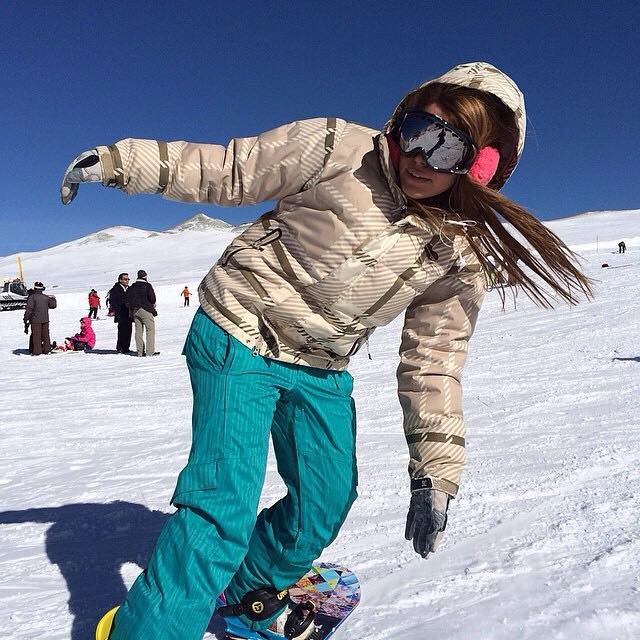
Young woman snowboarding in Tochal, Iran

Young woman snowboarding in Tochal, Iran

Tochal Complex is located in Velenjak, North of Tehran, Iran and consists of many recreational and sports facilities.

The Tochal Telecabin Project started in 1974 and has been open to the public since 1978. It starts at the Velenjak valley in north of Tehran at an altitude of 1900m. and ends at the last station at an altitude of 3740m, near the main ridge of Mount Tochal. This 7500m long gondola lift is used for accessing ski resorts and other recreational centres on the mountain to enjoy this area’s beautiful landscape, mountain fresh air and a multitude of fresh water springs.

The gondola lift has four stations:
Station 1 is at an elevation of 1900m and located at the beginning of Velenjak valley (end of Velenjak Street). Parking, inns and some other facilities are available.
Station 2 is at 2400m and has very limited facilities.
Station 5 is at 2935 m. There is a restaurant and a rescue centre. This station is also accessible through several climbing paths like Shirpala shelter, Osoon valley and Palang-chal shelter. In order to get to Station 7 you have to change here.
Station 7 is at 3740 m. and very close to the Tochal main ridge. It is the last station of the gondola lift. This station is in the middle of the Tochal ski slope. The Tochal main peak is a 30-minute walk from this point. This station is also reachable from Hezar-cham climbing path from Station 5.

Tochal Skiing Resort is one of the popular recreational places in Tehran. The main ski slopes are located in Station 7:
Peak: This 1200m slope starts from the foot of Tochal (at 3850m) and ends at the hotel (3550m). There is one Doppelmayr chairlift and one teleski for transferring skiers and a half pipe. Because of the height of the ski slope in station 7 (more than 3500m above sea level), similar to the Alvares Ski Resort in Sabalan, Ardabil Province, Iran, these slopes are covered with snow for more than 8 months during the year.
Western Foothill: This slope is located on the western foothill of the Tochal Mountain. The length of the ski slope is 900m, having its peak at 3750m above sea level and its lowest spot at Tochal Hotel (3550m above sea level). A Poma chairlift is built in this slope for skiers.

Sources: Wikipedia | Tochal Complex, Mehr News Agency | Photos, ISNA | Photos, Tasnim News Agency | Photos

Photo gallery: Christmas 2014 in Iran – Armenian Christmas Food

Every holiday has its own traditional food, in Iran or anywhere else in the world. Iranian Christians, including Armenians, celebrate Christmas and the Christian new year with special dishes, pastries and drinks.

Many Iranians are under the impression that Iranian Armenians, like many other Christians in the world — and especially Americans — celebrate the new year, Christmas and Easter by feasting on turkey. In fact, turkey is as  popular among Armenians as it is among other Iranians in general.

So what is an Armenian Christmas dinner like? The Iranian calendar year starts with the spring equinox, on March 20 or 21, and Iranians celebrate with a dish of herb rice and fish. As it happens, this dish is also a staple of the Armenian Christmas dinner in Iran.

But the Armenian Christmas table has other dishes as well. A key part of the meal is vegetable kuku, an Iranian dish consisting of eggs, vegetables, herbs and sometimes nuts and dried berries. If you ask an Armenian where this tradition comes from the answer is more often than not “I don’t know”.

“On their Christmas eve, Iranian Armenians often dine on rice, fish and vegetable kuku,” writes the Iranian Armenian writer and documentary filmmaker Robert Safarian. “Since childhood we thought that this was a Christmas tradition until the borders to Armenia opened and we learned that there is no dish in Armenia called vegetable kuku. It is an Iranian dish that  has become an Armenian tradition.”

Armenian Christmas pastries follow a tradition too. The two most well known and popular ones are perok (or pirok) marmalade cake and gata pastry. In the past, these two dishes were only popular among Armenians but now they are among the highest-selling pastries in Tehran confectionaries.

Coins of Fortune

Gata varies in its ingredients, size and in how it is decorated, depending on the region or the cook’s preferences. It consists of layers of dough with alternating layers of butter or margarine. Ingredients include flour, sugar, butter, eggs, yeast, milk and salt. Sometimes rosewater or spices such as cardamom are added, though they are not part of the standard recipe. After about an hour in the oven, the layers rise and the final gata takes shape.

One of the most popular variations of gata is made with nuts, especially walnuts. Sometimes a coin is hidden at the center of the gata and the belief is that fortune will smile on whoever finds the coin in her or his gata.

Gata is generally known as a sweet pastry but a salty version is popular too; many Armenian households prepare them for Christmas or the new year.

Perok, the other favorite holiday pastry, is made from a dough very similar to that used to make pie. Its center consists of marmalade; variations in perok are defined by the type of marmalade used.

The ingredients for perok are: pastry flour, sugar, eggs, baking powder, vanilla, grated orange peel, grated walnut, and marmalade. First you mix the butter and sugar, then add eggs one by one as you continue to mix. Then mix flour, baking powder, vanilla, grated orange peel and walnuts together in a separate bowl. For the third step, pour the contents of the bowl into a mixer. After a short while, turn the mixer off and continue to combine the ingredients by hand. Put about one-fourth of the dough aside and place the rest in a Pyrex dish and cover it with marmalade.

Cut the dough you have put aside into narrow ribbons and place them on the marmalade surface, making an “X” pattern. Put into an oven pre-heated to about 175 degrees centigrade and bake for about 40 minutes, or when the perok is golden.

Do-It-Yourself Wine

Like many Christians in the world, cookies and chocolates shaped like Christmas trees, Santa Claus or other symbols of the holiday are popular with Armenians. Families put them under Christmas trees and give them to children as treats and gifts.

You must add coffee and wine to this feast — they have a religious significance for all Christians. Under the Islamic Republic of Iran, trade in alcoholic beverages is forbidden, so the Armenian community makes its own wine and other alcoholic drinks. The law allows religious minorities to make wine for religious purposes.

One last point. The Armenians celebrate Christmas on January 6, so after the new year. As to why, well, that is another story, as they say.

This article was originally published in IranWire

Photo gallery: Christmas 2014 in Iran – Christmas Shopping

Mirza Shirazi Avenue, formerly known as Nader Shah, is located in one of the main Armenian neighborhoods in Tehran. At the moment, the avenue is decorated for Christmas and the approaching new year. Shop windows display Santa Claus dolls and the sidewalks are filled with pine trees, which will decorate the homes of Iranian Christians.

But Christmas is not only visible in this central Tehran street. It is also being celebrated in the east Tehran neighborhood of Majidieh, where many residents are preparing for Christmas and the new year period, now just a few days away.

Every year, starting in late November, shops in the two streets are decorated with gifts, pine trees, Santa Claus dolls and other seasonal items —  and shoppers are ready.

Pictures of Christmas Season in different Iranian cities. Click the photos to open them in enlarged gallery mode:

“From the first day of Azar (November 22), we get ready and make sure we have the merchandise,” says K., a shopkeeper on Mirza Shirazi Avenue. […] “The shoppers are not only Armenians and Christians. Many Muslims buy pine trees, Santa Clauses and other Christmas items and celebrate the holidays,” he explains. “They say it is a joyous and beautiful celebration. I don’t find it unusual, because Armenians celebrate the Iranian new year and participate in some Muslim religious ceremonies as well.” […]

“If you have an Armenian friend, remember not to call him on December 25, when all the radios and TVs and newspapers talk about Christmas and congratulate Christians on the birth of Jesus,” wrote the Armenian writer and documentary filmmaker Robert Safarian on his blog a few years ago. “The Armenian Christmas is on January 6, when probably nobody calls anyone to celebrate the holiday.”

“On their Christmas Eve, Iranian Armenians often dine on rice, fish and vegetable kuku (an Iranian dish made with whipped eggs, vegetables and herbs),” wrote Safarian. “Since childhood, we thought that this was a Christmas tradition until the borders to Armenia were opened and we learned that there is no dish in Armenia called vegetable kuku. It is an Iranian dish that has become an Armenian tradition.”

Because religious occasions in Iran are observed according to the Islamic lunar calendar, this year’s Christmas coincides with a mourning period for Muslims, and Shias in particular. But Iranian Christians have not encountered any restrictions in their preparations for Christmas and the new year. It continues to be a celebration that manifests itself in color and light in a few streets in the center of the Iranian capital.
This text is part of an article published on IranWire

Sources
DeutscheWelle
IranWire

Iran’s Hormozgan Province: Minab – Harvesting Watermelons for Yalda

Minab is a city in Hormozgan Province, Iran. At the 2006 census, its population was 76,776. In ancient times Minab had the name of Harmosia (or Harmozeia).

Minab is not far from Bandar Abbas. It is famous for fishing (especially shrimps) and for agriculture (especially date palms and mangoes). It lies on the main official road connecting Bandar Abbas, the Makran and the Baluchistan Province. The population are mainly Shi’a Muslims but there is also a Sunni minority, and the language they speak is Minabi (locally Minow), a dialect which is something between Bandari and Balochi and Persian. Once a week, a well known bazaar called “Panjshambe bazar” or in Minabi language “Peyshambe Bazar” (English: Thursday’s Bazaar) attracts people from all over Hormozgan, and beyond.

Sources: wikipedia | Minab, Mehr News Agency | Photos

Preparations in Iran for Yalda – The Longest Night of the Year (Photos)

Shab-e Chella(-e bozorg) (“night of (the great) forty”‎) or Shab-e Yalda (“Yalda night”‎) is an Iranian festival celebrated on the “longest and darkest night of the year,” that is, in the night of the Northern Hemisphere’s winter solstice. Calendarically, it is celebrated in the night between the last day of the ninth month (Azar) and the first day of the tenth month (Dae) of the Iranian civil calendar, which corresponds to the night of December 20 or 21 each year.

The longest and darkest night of the year is a time when friends and family gather together to eat, drink and read poetry (especially Hafez) until well after midnight. Fruits and nuts are eaten and pomegranates and watermelons are particularly significant. The red color in these fruits symbolizes the crimson hues of dawn and glow of life. The poems of Divan-e-Hafez, which can be found in the bookcases of most Iranians families, are intermingled with peoples’ life and are read or recited during various occasions like this festival and at Nowruz.

In the 1st-3rd centuries, significant numbers of Eastern Christians settled in Arsacid and Sassanid territories, where they had received protection from religious persecution. Through them, Western Iranians came in contact with Christian religious observances, including, it seems, Nestorian Christian Yalda, which in Syriac (a Middle Aramaic dialect) literally means “birth” but was also one of the Syriac words for Christmas, which — because it fell nine months after Annunciation — was celebrated on eve of the winter solstice. Although it is not clear when and where the Syriac word was adopted into Persian, gradually ‘Shab-e Yalda’ and ‘Shab-e Cheleh’ became synonymous and the two are used interchangeably.

An association with the 40-day “chella” period is preserved amongst Iranian Azerbaijanis, who call it Chilla Gejasi, which means the beginning of the first 40 days of winter. The Iranian concept also survives in Urdu-speaking Kashmir, India, where Chillai Kalan designates the 40-day harshest winter period.

In pre-Islamic Zoroastrian tradition the longest and darkest night of the year was a particularly inauspicious day, and the practices of what is now known as “Shab-e Chelleh/Yalda” were originally customs intended to protect people from evil (see dews) during that long night. People were advised to stay awake most of the night, lest misfortune should befall them, and people would then gather in the safety of groups of friends and relatives, share the last remaining fruits from the summer, and find ways to pass the long night together in good company. The next day (i.e. the first day of Dae month) was then a day of celebration. Although the religious significance of the long dark night have been lost, the old traditions of staying up late in the company of friends and family have been retained in Iranian culture to the present day.

Food plays a central role in the present-day form of the celebrations. In most parts of Iran the extended family comes together and enjoys a fine dinner. A wide variety of fruits and sweetmeats specifically prepared or kept for this night are served. Foods common to the celebration include watermelon, pomegranate, nuts, and dried fruit. These items and more are commonly placed on a korsi, which people sit around.

After dinner the older individuals entertain the others by telling them tales and anecdotes. Another favourite and prevalent pastime of the night of Chelleh is divination by the Divan of Hafez (fal-e Hafez). It is believed that one should not divine by the Divan of Hafez more than three times, however, or the poet may get angry.

Since the first night of winter ( 21th of December) is the longest night and from that night on the days get longer and the warmth and light of the sun increases, that night was supposed to be the time for the re-birth of sun. The Aryan tribes, in India, Iran and Europe celebrated sun’s birth at the beginning of winter. Yalda is a Syriani word meaning birth. The Roman used the word natalis for birth.

Sources
wikipedia
Tasnim News
ISNA
IRNA

Photo Series: Autumn in Iran – Snowfall in Zanjan

Photos of autumn snow in Zanjan, Iran. Click on the pictures to start the gallery:

Source: Mehr News Agency

Photo Series: Autumn in Iran – Hamedan Province (Part 2)

Some beautiful pictures of Hamedan in autumn:

You can find another photo gallery of this beatiful region and some information about Hamedan in: The other Iran | Photo Series: Autumn in Iran – Hamedan Province (Part 1)

Source: IRNA

Memorial honoring Jewish heroes of Iraq-Iran war unveiled in Tehran, Iran

Earlier this week, authorities in Tehran unveiled a monument to slain Iranian Jewish soldiers who died during the country’s long and bitter war with Iraq between 1980 and 1988. Death tolls for the hideous conflict differ, but casualty counts usually reach more than 1 million for both countries.

A public ceremony marked the memorial’s opening on Monday, with speeches that took place at a dais flanked by the Iranian flag and a menorah. Banners showed the images of fallen soldiers, hailed as “martyrs” in Farsi and Hebrew inscriptions.

[…]

After Israel, Iran has the Middle East’s second-largest community of Jews — with its current population estimated between 20,000 and 30,000.

“We are not tenants in this country. We are Iranians, and we have been for 30 centuries,” Ciamak Morsadegh, the Iranian Jewish parliamentarian, told Washington Post reporter Rezaian last year.

“There is a distinction between us as Jews and Israel,” added a shopkeeper in the historic city of Isfahan. “We consider ourselves Iranian Jews, and it has nothing to do with Israel whatsoever. This is the country we love.”

Sources:
Washington Post
IRNA

Iran’s Gilan Province: Anbu – Pomegranate Harvest

Anbu (also known as Anbuh-e Mashayekh) is a village in Talesh County, Gilan Province, Iran. At the 2006 census it had a population of 385 inhabitants.

Citizens of Anbu, a village in the south of Gilan, harvest pomegranates as fall arrives.

Sources: Wikipedia | Anbu, Iran, Mehr News Agency | Photos