Tag Archives: People

185 Iranian journalists condemn Charlie Hebdo terrorist attack carried out by sunni extremists in Paris, France

185 Iranian Journalists condemn Charlie Hebdo attacks

cartoon by Firoozeh Mozaffari published by Iranian daily Etemaad

One Hundred eighty-five Iranian journalists condemned the January 7, 2015 terrorist attack on the Charlie Hebdo magazine offices in Paris, which led to the deaths of 12 individuals. “We, Iranian journalists, condemn the January 7 terrorist attack that took the lives of several journalists and citizens in Paris,” said the statement.

“In our opinion, committing violence against freedom of speech and the free activities of the media, and assassination of journalists in any context, in any form, and on any excuse, and in the hands of any individuals or groups, with any faith or belief, is condemned. Today we stand side by side with the Charlie Hebdo victims and all freedom-seeking people of the world and consider defending freedom of expression and thought against any suppression and violence our most obvious duty,” added the statement.

Source: Payvand

See also how Iranians reacted on the attacks of 11th of September 2001 ( 9/11) carried out by mostly Saudi attackers:
The other Iran | Iran’s exceptional reaction to 911 attacks: candlelit vigils for the victims and 60k soccer fans respected a minute’s silence

Photo gallery: Armenian Iranian Christians celebrate Christmas on 6th of January in Isfahan, Iran

Some Iranian Christians celebrate Christmas on Dec. 25 and New Years’ on Jan. 1, while Armenians celebrate Christmas at the same time as the Epiphany on Jan. 6.

More content on Iranian Christians on this blog: The other Iran | Christians

Sources: Mehr News Agency | Photos, Al-Monitor: the pulse of the Middle East | Iran’s Christians celebrate Christmas

Photo gallery: Christmas 2014 in Iran – Christmas shopping part 3

Some Iranian Christians celebrate Christmas on Dec. 25 and New Years’ on Jan. 1, while Armenians celebrate Christmas at the same time as the Epiphany on Jan. 6.


More content on Iranian Christians on this blog: https://theotheriran.com/tag/christians/

Sources: MEHR, IRNA

Today Milad Tower hosts food festival to support children with cancer

Tehran Milad Tower will host an Iranian food festival as a charity for supporting children with cancer.

With the collaboration of University of Applied Science, the festival is scheduled to be held in January 8, where Iranian traditional cuisine will be sold to the donors and visitors and the collected sum will be used to support children with cancer and their treatment.

http://en.mehrnews.com/detail/News/105399

Photo gallery: Christmas 2014 in Iran – Armenian Christmas Food

Every holiday has its own traditional food, in Iran or anywhere else in the world. Iranian Christians, including Armenians, celebrate Christmas and the Christian new year with special dishes, pastries and drinks.

Many Iranians are under the impression that Iranian Armenians, like many other Christians in the world — and especially Americans — celebrate the new year, Christmas and Easter by feasting on turkey. In fact, turkey is as  popular among Armenians as it is among other Iranians in general.

So what is an Armenian Christmas dinner like? The Iranian calendar year starts with the spring equinox, on March 20 or 21, and Iranians celebrate with a dish of herb rice and fish. As it happens, this dish is also a staple of the Armenian Christmas dinner in Iran.

But the Armenian Christmas table has other dishes as well. A key part of the meal is vegetable kuku, an Iranian dish consisting of eggs, vegetables, herbs and sometimes nuts and dried berries. If you ask an Armenian where this tradition comes from the answer is more often than not “I don’t know”.

“On their Christmas eve, Iranian Armenians often dine on rice, fish and vegetable kuku,” writes the Iranian Armenian writer and documentary filmmaker Robert Safarian. “Since childhood we thought that this was a Christmas tradition until the borders to Armenia opened and we learned that there is no dish in Armenia called vegetable kuku. It is an Iranian dish that  has become an Armenian tradition.”

Armenian Christmas pastries follow a tradition too. The two most well known and popular ones are perok (or pirok) marmalade cake and gata pastry. In the past, these two dishes were only popular among Armenians but now they are among the highest-selling pastries in Tehran confectionaries.

Coins of Fortune

Gata varies in its ingredients, size and in how it is decorated, depending on the region or the cook’s preferences. It consists of layers of dough with alternating layers of butter or margarine. Ingredients include flour, sugar, butter, eggs, yeast, milk and salt. Sometimes rosewater or spices such as cardamom are added, though they are not part of the standard recipe. After about an hour in the oven, the layers rise and the final gata takes shape.

One of the most popular variations of gata is made with nuts, especially walnuts. Sometimes a coin is hidden at the center of the gata and the belief is that fortune will smile on whoever finds the coin in her or his gata.

Gata is generally known as a sweet pastry but a salty version is popular too; many Armenian households prepare them for Christmas or the new year.

Perok, the other favorite holiday pastry, is made from a dough very similar to that used to make pie. Its center consists of marmalade; variations in perok are defined by the type of marmalade used.

The ingredients for perok are: pastry flour, sugar, eggs, baking powder, vanilla, grated orange peel, grated walnut, and marmalade. First you mix the butter and sugar, then add eggs one by one as you continue to mix. Then mix flour, baking powder, vanilla, grated orange peel and walnuts together in a separate bowl. For the third step, pour the contents of the bowl into a mixer. After a short while, turn the mixer off and continue to combine the ingredients by hand. Put about one-fourth of the dough aside and place the rest in a Pyrex dish and cover it with marmalade.

Cut the dough you have put aside into narrow ribbons and place them on the marmalade surface, making an “X” pattern. Put into an oven pre-heated to about 175 degrees centigrade and bake for about 40 minutes, or when the perok is golden.

Do-It-Yourself Wine

Like many Christians in the world, cookies and chocolates shaped like Christmas trees, Santa Claus or other symbols of the holiday are popular with Armenians. Families put them under Christmas trees and give them to children as treats and gifts.

You must add coffee and wine to this feast — they have a religious significance for all Christians. Under the Islamic Republic of Iran, trade in alcoholic beverages is forbidden, so the Armenian community makes its own wine and other alcoholic drinks. The law allows religious minorities to make wine for religious purposes.

One last point. The Armenians celebrate Christmas on January 6, so after the new year. As to why, well, that is another story, as they say.

This article was originally published in IranWire

Photo gallery: Christmas 2014 in Iran – Christmas Shopping

Mirza Shirazi Avenue, formerly known as Nader Shah, is located in one of the main Armenian neighborhoods in Tehran. At the moment, the avenue is decorated for Christmas and the approaching new year. Shop windows display Santa Claus dolls and the sidewalks are filled with pine trees, which will decorate the homes of Iranian Christians.

But Christmas is not only visible in this central Tehran street. It is also being celebrated in the east Tehran neighborhood of Majidieh, where many residents are preparing for Christmas and the new year period, now just a few days away.

Every year, starting in late November, shops in the two streets are decorated with gifts, pine trees, Santa Claus dolls and other seasonal items —  and shoppers are ready.

Pictures of Christmas Season in different Iranian cities. Click the photos to open them in enlarged gallery mode:

“From the first day of Azar (November 22), we get ready and make sure we have the merchandise,” says K., a shopkeeper on Mirza Shirazi Avenue. […] “The shoppers are not only Armenians and Christians. Many Muslims buy pine trees, Santa Clauses and other Christmas items and celebrate the holidays,” he explains. “They say it is a joyous and beautiful celebration. I don’t find it unusual, because Armenians celebrate the Iranian new year and participate in some Muslim religious ceremonies as well.” […]

“If you have an Armenian friend, remember not to call him on December 25, when all the radios and TVs and newspapers talk about Christmas and congratulate Christians on the birth of Jesus,” wrote the Armenian writer and documentary filmmaker Robert Safarian on his blog a few years ago. “The Armenian Christmas is on January 6, when probably nobody calls anyone to celebrate the holiday.”

“On their Christmas Eve, Iranian Armenians often dine on rice, fish and vegetable kuku (an Iranian dish made with whipped eggs, vegetables and herbs),” wrote Safarian. “Since childhood, we thought that this was a Christmas tradition until the borders to Armenia were opened and we learned that there is no dish in Armenia called vegetable kuku. It is an Iranian dish that has become an Armenian tradition.”

Because religious occasions in Iran are observed according to the Islamic lunar calendar, this year’s Christmas coincides with a mourning period for Muslims, and Shias in particular. But Iranian Christians have not encountered any restrictions in their preparations for Christmas and the new year. It continues to be a celebration that manifests itself in color and light in a few streets in the center of the Iranian capital.
This text is part of an article published on IranWire

Sources
DeutscheWelle
IranWire

Iran-USA Simultaneous Art Installation: A Portal Between Tehran and New York City

Shared Studios is launching the first public installation of Amar Bakshi’s Shared Studio project “A Portal BetweenTehran & NYC: Open for Conversation” by conversing through a live audio-visual connection with an individual in Tehran.

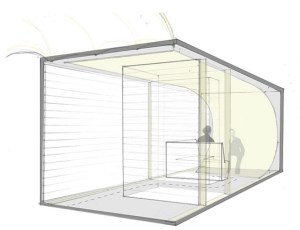
Portals are shipping containers equipped with specialized communications technology. Individuals enter one at a time and converse with a person in the other location as if they were in the same room. Simultaneous text translation is available. This first pairing unites the Lu Magnus Gallery in NYC and the M-40 Studio in Tehran.

OPEN FOR CONVERSATION
DECEMBER 5 – 19, 2014
Special Open Hours: 7:30A – 1:30P, Mon – Sun
LU MAGNUS GALLERY and M-40 STUDIO TEHRAN

Each individual is invited to enter a Portal and converse with whoever happens to be in the Tehran location, or with someone in particular upon advance request. To schedule your visit, please visit SHAREDSTUDIOS.SCHEDULISTA.COM

Powerful new technologies allow us to connect across boundaries as never before; yet we too often use them to cocoon ourselves in our own cultural, political, or ideological communities. Portals puncture hardened stereotypes of the other by facilitating one-on-one encounters. They serve as a catalyst for conversation between communities that would not typically engage with one another due to language barriers, technological limitations and hardened stereotypes of the other meeting people whom they only hear about unidirectionally in the news.

Visit the gallery for special Q&A sessions with the artist and the following New York guests:

Amy Chua and Jed Rubenfeld (Fri Dec 5, 1:00pm-2:00pm)
Yale Law professors and bestselling authors Amy Chua and Jed Rubenfeld. Chua’s books include Battle Hymn of the Tiger Mother and World on Fire. Rubenfeld’s books include The Death Instinct and Freedom and Time.

Jonah Bokaer & James Koroni (Sat Dec 6, 1:30pm-2:30pm)
Jonah & James perform a curated dance live in the New York space, streamed live to Tehran.

Fareed Zakaria (Mon Dec 8, 10:30am-11:30am)
CNN host, Atlantic Monthly writer and bestselling author of The Post-American World and The Future of Freedom

Morgan Spurlock (Wed Dec 10, 10:00am-11:00am)
Documentary filmmaker whose titles include Supersize Me and The Greatest Movie Ever Sold.

Tania Bruguera (Thu Dec 11, 1:30pm-2:30pm)
Tania Bruguera is a Cuban installation and performance artist.

Rob Storr (Fri Dec 12, 9:00am-10:30am)
Robert Storr is the Dean of the Yale School of Art. Formerly, he was Senior Curator at the Museum of Modern Art.

Mohsen Namjoo (Sat Dec 13, 1:30pm-2:30pm)
Mohsen Namjoo is an Iranian artist, songwriter, singer, music scholar and setar (traditional Persian lute) player based in California.

Nicky Nodjoumi (Sun Dec 14 – Dec 15, 11:30pm)
Nicky Nodjoumi’s works are conceived of as theatrical stages, where compositions of figures both serious and ridiculous, in the words of Phong Bui, “house meanings without irony, narratives without stories, humor without morality, above all creating a space that heightens the awareness of old and new history.”

Keller Easterling (Wed Dec 17, 9:00am-10:15am)
Architect, professor and author of books including Extrastatecraft: the Power of Infrastructure Space and Enduring Innocence: Global Architecture and Its Political Masquerades.

Sources: Shared Studios, Lu Magnus Gallery, Spacesmith


Theater Performance: “London, Tehran, Rome, Amsterdam” opened in Tehran, Iran

“London, Tehran, Rome, Amsterdam, Reconsider Your Image Of Me” will play from November 16 to December 12 of 2014, every night (apart from Saturdays), at 21:00 o’clock in the Hafez Hall, Tehran.

This performance, a co-production between the Virgule Performing Arts Company (Iran) and STET The English Theatre (Netherlands) is supported by the Embassy of the Kingdom of the Netherlands. The opening ceremony was held on Sunday, Nov. 16 with the Dutch ambassador to Tehran attending the ceremony.

The performance examines a current topic between Iran and the West, namely what are the images that we have of ‘the Other’ and to what extent fears, fantasies and imaginations are based on truth. By initiating a direct meeting with the Other and listening to each other’s stories, this group aims to create new images, based on the stories of the people who wouldn’t usually make the headlines.

The piece is a multi-media, highly physical, speech performance. It includes the actors’ own stories, dialogue between the actors, video installations with short documentaries about daily life in the countries of origin of the actors and video collages of cultural milestones from these cultures. The physical form of the piece produces a third language.

The project has brought together an international cast to create this piece during a 2 month rehearsal period in Tehran. The company includes Dutch actress Marene van Holk, Italian actress Marta Paganelli, British actress Amy Strange, Iranian actresses Melodie Aramnia and Neda Jebreilli and Iranian actor Meysam Mirzaei, and the piece has been conceived and directed by Arvand Dashtaray.

The production will be performed in the Netherlands in the autumn of 2015.

Sources
Embassy of the Kingdom of the Netherlands in the Islamic Republic of Iran
Mehr News Agency

Haft Negah art exhibition, held in Tehran, closes tomorrow (Nov 28)

The Niavaran Culture Center in Tehran is hosting the 7th annual edition of Iran’s Seven Views (Haft Negah), an art expo coordinated since 2006 by seven major art galleries.

This year, fourteen galleries  take part in the expo. The Aria, Elaheh, Dey, Golestan, Haft Samar, Valli, Mah-e Mehr, The Aran, Etemad, Hanna, Dastaan Basement, Seen, Seyhun, and Tarrahan-e Azad galleries will all participate in this years celebrations taking place from November 14 to 28.

The exhibition will showcase paintings, sculptures, and calligraphy from 350 artists featuring 400 works that respond to this year’s exhibition motto, “Every Iranian Home, One Artwork”.

Some of the well-known artists showcasing their artworks this year include Sohrab Sepehri, Mohammad Ehsaii, Aidin Aghdashlu, Parviz Tanavoli, Iran Darrudi, Farideh Lashaii and Parvaneh Etemadi.

Make sure not to miss this one of a kind artistic event!

Sources: Tara Gallery, Mehr News Agency

Photo Gallery: Iranian Cyclists Mark World Diabetes Day

TEHRAN (Tasnim) – Iranian cyclists gathered to pedal in the streets of the capital, Tehran, to mark the World Diabetes Day (WDD).

World Diabetes Day is the primary global awareness campaign of the diabetes world and is held on November 14 of each year. It was introduced in 1991 by the International Diabetes Federation and the World Health Organization in response to the alarming rise of diabetes around the world. World Diabetes Day is a campaign that features a new theme chosen by the International Diabetes Federation each year to address issues facing the global diabetes community. While the campaigns last the whole year, the day itself marks the birthday of Frederick Banting who, along with Charles Best, first conceived the idea which led to the discovery of insulin in 1922.

Sources:
http://multimedia.tasnimnews.com/Media/Gallery/557647
http://en.wikipedia.org/wiki/World_Diabetes_Day

Iran’s Book and Book Reading Week: Museums in Tehran host events for children to encourage book reading

kids-children-in-tehran-museum

Museums in Tehran host events for children to encourage book reading

The Cultural Heritage and Tourism Research Center is to implement a “Seven Museums, Seven Tales” plan as of Saturday [November 15] to mark the national Book and Book Reading Week.

The plan which is to be carried out in seven museums in the capital aims to promote book reading and introduce [Iran’s] legends and myths as a symbol of oral and intangible heritage.

It also intends to create more attractiveness in museums and revive the art of storytelling.

Creative instructors of storytelling and members of Children’s Book Council will come together in seven museums, namely Iran’s Post Museum, National Museum of Iran, Golestan Palace Museum, Carpet Museum of Iran, Tehran Peace Museum, Moghadam Museum and Bagh-e-Negarestan [Complex] to host Iranian children and their parents as well as other guests between November 15 and 21.

The museums will open their doors to visitors at 11:00 a.m. local time.

Source: Iran Front Page

ABC Australia – Misunderstanding shields us from Iran’s reality

Don’t believe all the stereotypes: the mood inside Iran is hopeful for change and increased positive engagement with the West…

When I told my friends I was travelling to Iran they didn’t believe me.

“That’s the sort of place people go missing and don’t come back,” they said.

“Don’t worry,” I reassured them, “I’m white and Jewish, nobody will be able to miss me, and they won’t be wanting me to stay.”

I was right on the first count, wrong on the second.

Despite a sophisticated English-language tourist infrastructure, there are almost no Western visitors, so Iranians are especially excited to meet Europeans or North Americans. Seemingly insecure, many would ask us whether we were enjoying Iran, responding with scepticism when we said yes.

In a dusty desert town in the centre of the country, a father encouraged his young daughter to ask my Dutch colleague for a photo with him.

“You look just like Louis Tomlinson from One Direction,” she told him excitedly.

People on the street were constantly stopping us, they would ask where we were from, give us drinks, and generously welcome us to their country.

The image of Iran as being full of wild-eyed Arabs chanting ‘death to America’ is wrong on many levels, not least of all because Iranians aren’t actually Arab (and they’re sick of pointing that out).

In the cafes of Tehran the headscarves are skimpy and men and women laugh together over cans of coke, you’re more likely to see iPhones in the streets than AK-47s, and while it’s true that you’d better keep homosexuality behind well-padlocked doors, the prosecution and persecution of gay people isn’t a popular public sport the way it is in a number of other countries.

Don’t get me wrong, Iran is no liberal Mecca, but it’s no worse than many other countries where the West has chosen to use engagement, rather than isolation, to encourage progress.

Don’t Believe the Hype

Tehran itself has a lively and well-educated youth population which bucks at the regime at every turn.

Iranians have access to illegal alcohol, openly mount banned satellite dishes, hold lively house parties, and hack their way around internet restrictions on social media.

Indeed, when we spoke with a group of young Iranians, the only topics off limits were spoilers to the season finale of Game of Thrones.

Even on Israel, the views we encountered were surprisingly moderate. Broaching the subject with one group made them bashful. They thought that as Westerners we would be offended by their ‘extreme’ views.

They supported a two-state solution based on the 1967 border agreement. Imagine their surprise when I told them this was roughly official US policy.

Misunderstanding, it seems, goes both ways.

Western leaders talk tough on Iran to make themselves look strong and Israeli politicians exploit Iran’s nuclear intentions to gain traction internationally.

We have short memories in international affairs, only 35 years ago Iran was ruled by a relatively liberal dictatorship and was a key Western ally, but our distorted perceptions are not entirely our fault. Stereotypes have been encouraged not only by films like Argo, but by authority figures with their own agendas.

Western leaders talk tough on Iran to make themselves look strong and Israeli politicians exploit Iran’s nuclear intentions and poor engagement to gain traction internationally.

Even Iran’s own leaders are prone to spout hatred of the West to pander to their own support bases of hardliners and clerics.

Such statements will gladly be emphasised and taken out of context by those on the other side, and so the cycle continues.

One Iranian told me when he was a kid they were offered the day off school if they would take a bus to Tehran to shout anti-western slogans for international cameras. The kids were enthusiastic because they got the day off school, but when the cameras were off even adults went up to journalists to ask about US culture and tell them how much they wanted to visit New York.

The gap between the rhetoric on Iran and the reality amongst Iranians is perhaps best demonstrated by this month’s inauguration of the country’s new president.

Hassan Rohani was the most liberal of the six candidates permitted to run, and he won just over 50 per cent of the vote.

Rohani is a former nuclear negotiator, has appointed numerous women to high-level government positions, and spoke of the US-Iranian relationship as a ‘wound which must be healed’.

The mood inside Iran is hopeful for change and increased positive engagement with the West, but it would be wrong to say most are optimistic.

A Narrow Path

Iranians have had their hopes crushed before. Every young person we met in Tehran had a friend who was killed in the green movement protests against the legitimacy of Mahmoud Ahmadinejad’s 2009 re-election.

The demonstrations were brutally crushed by the regime, and many of the protestors who weren’t killed have simply vanished, their friends have no idea where they’ve gone.

Iran is a proud country with many sophisticated and well-educated people who remember their liberal past, but it is also a country with a clandestine religious government, not impervious to its own internal power struggles.

With Rohani assuming the presidency, and still holding the goodwill of the people and the religious leadership, now is an opportune moment for the West and for Iran.

The path to a peaceful resolution of tensions is narrow but walkable, and will and restraint is required from both sides.

Remaining cool and rising above provocation isn’t naïve and it doesn’t excuse the often brutal Iranian government, but it does offer the best chance of progress for both the West, and the millions of Iranians who suffer from their regime’s intransigence.

Information about the author:

Ben Winsor is a Law and International Studies graduate currently undertaking a placement with the Presidency of the International Criminal Court in The Hague. He is studying a Masters in Law at the Australian National University. All views expressed are his own and do not reflect those of his employer. View his full profile here.

http://www.abc.net.au/news/2013-09-06/winsor-an-australian-in-iran/4937548

Series: Tehran’s parks and gardens – Javanmardan Garden

Tehran, Iran - Tehran City - Javanmardan Garden 02

Javanmardan Garden – Tehran, Iran

Javanmardan Garden

Javanmardan-e-Iran garden with a total area of 150 hectares is one of the largest gardens located at the northwest area of the capital.

A total area of over 20 hectares is devoted to green space and the complex is powered by solar energy.

There are different special spaces: from a musical fountain with mechanical technologies and laser shows to the house of health and sports or the pond of birds.

The complex has also a 24km walking route, an 8km recreational carriage route and a 8.7km cycling route.

There is a children’s playground, soft games and a Highland Park for children under 14 years old. For youths over 14 years old: a 4600m2 training and professional skate park, a rappel complex , a playground with mechanical games, multifunctional playgrounds, a chess playing site, table tennis and table football playgrounds.

In the botanical garden and all over the garden, the plants and trees have been introduced with special plaques in order to increase the botanical knowledge of the visitors.

The Artists Garden has a traditional tea house and reception pavilion, cultural pavilion and available forestation green spaces.

Sources:
http://www.untoldiran.com/tehran/attractions/park/javanmardan%20park.shtml
http://en.irna.ir/PhotoDetail.aspx?NID=02733085

Nellie’s Journey to Iran: from Persian architecture to outstanding hospitality

Posing with friendly Iranians

Photo Highlights of Iran: from Persian Architecture to Outstanding Hospitality
By Nellie Huang

I’ve just completed my Silk Road journey through Central Asia with Oasis Overland. Our trip started in Kyrgyzstan and we traveled through Kazakhstan, Uzbekistan, Turkmenistan, Iran and ended in Turkey. During this overland trip, we spent just under three weeks traversing through Iran, from the eastern corner to the western edge. It was the highlight of our trip and I hope these photos will show you what an amazing country it is.

Mention Iran and many think of burkha-clad women, burning flags and war. But these stereotypes can’t be further from the truth.

For those who are curious and open to new discoveries, Iran is packed full of surprises. It is a relatively safe country to visit and there’s so much to see and do in terms of historical and cultural sights: wander through the thousand-year-old ancient city of Persepolis, get lost in the mud-brick alleys of Yazd, contemplate in the beautiful turquoise-domed mosques that dot Esfahan, meet locals in the gardens surrounding Shiraz and pray with thousands of pilgrims at the country’s holiest city Mashad. The Islamic Republic has an extremely rich cultural heritage and its attractions can definitely rival those of world-famous tourist destinations. Best of all, you won’t find hordes of tourists here. It won’t take you long to question how such a charming country can be portrayed in such a negative light by the media.

Beyond the stereotypes is a country desperate to been seen for what it is, rather than what it is depicted to be. The Iranians are undoubtedly the friendliest people I’ve ever met in the world. Travelers will often find themselves getting invited to stranger’s homes, being treated to endless flow of tea from a shop vendor and getting a free ride from helpful drivers along the way. Locals tend to come up to you, ask where you’re from and genuinely want to get to know you. I’ve always agreed with the saying “it’s the people that makes a place”. It can’t be more true here in Iran where experiences with locals truly live the longest in your memory.

While traveling in Iran, the two topics that most find impossible to escape are religion and politics. These are complex issues that aren’t black or white, but as I discovered, if you’re respectful of their opinions, the Iranians will be more than happy to discuss them with you. It’s also important to note that the government’s views may not be in line with what average Iranians think. Regardless, if you do choose to travel here, a journey to Iran will certainly change your perspective of the country, and perhaps, the world.

Natural Landscapes and Ancient Cities

The abandoned mud brick city of Kharanaq: In the abandoned mud-brick city of Kharanaq, we got lost amidst the alleys and crumbling paths that overlooked this beautiful valley.

The abandoned mud brick city of Kharanaq


The rock cut temples of Naqsh-e-Rostam
: Right at the outskirts of Shiraz, we stumbled upon the spectacular rock tomb of Naqsh-e-Rostam. The ragged cliffs that the tombs are carved into remind me of those in Wadi Rum, Jordan.

The rock cut temples of Naqsh-e-Rostam


Persian Architecture

Amir Chakhmagh: Amir Chakhmagh in is an iconic landmark in Yazd and while it’s now nothing more than a gate (the rest of the building is gone), the unique architecture still makes it quite an impressive sight.

A gate in Yazd


Royal Palace in Shiraz
: The interior of Persian buildings is often just as impressive. This photo shows the interior of the Royal Palace in Shiraz, characterized by arches, spiraled columns and carvings.

Inside a palace in Shiraz


Iranian Way of Life

Colorful spices in the bazaar of Shiraz: Bazaars are an important part of Iranian life. They trace their roots back to the Silk Road days and even until today, Iranians are still known to be excellent traders and businessmen. Spices are of course a common sight in the bazaars.

Colorful spices in the bazaar of Shiraz
Friendly students in Tehran: The Iranians are exceptionally warm and friendly, with many people stopping to strike up a conversation with us seeing that we’re foreigners. I met this bunch of students at the Golestan Palace in Tehran and they were all excited to practice their English with me.

Friendly students in Tehran

More pictures of Nelly’s Journey:
http://www.wildjunket.com/2014/10/22/photo-highlights-iran/

About Nellie Huang: Nellie is a professional travel writer and editor with an eye for adventure and a love for the unknown. Originally from Singapore, she pursued an Engineering degree and spent her days dreaming of travel – the day after graduation, she packed her bags and headed off to experience the world.

She then spent the next few years working as a teacher, translator and project analyst. With sheer will and hard work, she eventually found her way into travel writing and fulfilled her lifetime dream.

Her work has since been published in numerous publications including National Geographic Intelligent Travel, CNN, BBC Travel, Travel+Leisure Asia, Wend, Women Adventure Magazine, Food&Travel, International Lifestyle, TNT Magazine, and Explorer, amongst others. Click to see her portfolio.

She is also a contributing guidebook author of VIVA Travel Guide Guatemala (1st Edition) and writer for World Travel Guides.

Kambiz Derambakhsh is Knight of the Order of Arts and Letters

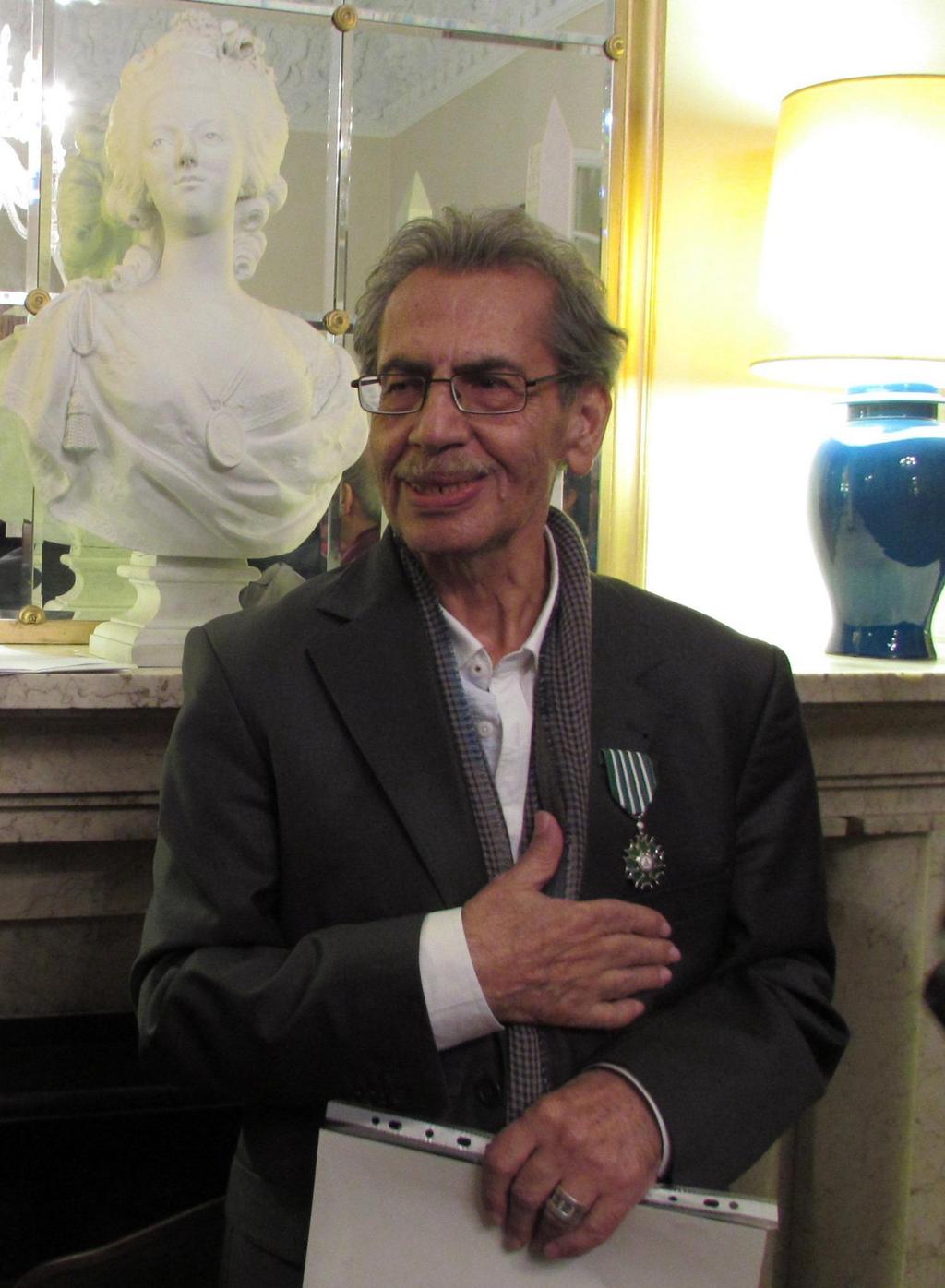
Kambiz Derambakhsh at the French Embassy in Tehran on Sunday, 26th of October 2014

Kambiz Derambakhsh at the French Embassy in Tehran on Sunday, 26th of October 2014

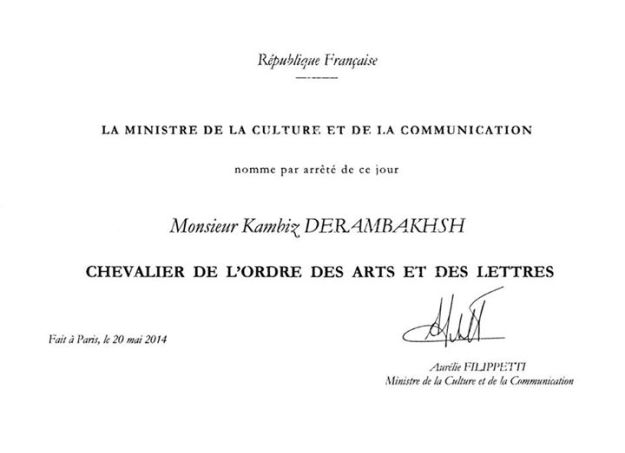
Iranian cartoonist Kambiz Derambakhsh received the Chevalier of the Legion of Honor Medal during a ceremony held at the Embassy of France in Tehran on Sunday evening.

The medal, which is the highest decoration awarded by the French government, was presented to Derambakhsh by French Ambassador Bruno Foucher during a ceremony at his residence in Tehran.

Derambakhsh is the first Iranian visual artist to have received the award, the Persian service of Honaronline, a Persian news website, announced on Monday.

Iranian scientist Mahmoud Hessaby, filmmaker Abbas Kiarostami, stage director Pari Saberi, mythologist Jalal Sattari, poet Mohammad Sepanlu, vocalists Shahram Nazeri and Mohammareza Shajarian, and actress Leila Hatami previously received the honor.

Derambakhsh, 72, has previously held many exhibits across the world and his works are on display in many museums, including the Tehran Museum of Contemporary Art, Istanbul’s Museum of Cartoon and Comic, and the Cartoonmuseum Basel in Switzerland.

More about Kambiz Derambakhsh: Iranian Roots | Kambiz Derambakhsh

Kambiz Derambakhsh - Cartoonist 03

Sources: Tehran Times, twitter.com | @FranceenIran, Facebook | Kambiz Derambakhsh

Aftabe, an Iranian app downloaded 1.5 million times and counting

Aftabeh-app-programmersMohammad Amin Moradi, 19, who studies Mechanical Engineering, Seyyed Hamed Valizadeh, who is also 19 and studies Software Engineering at Sharif University of Technology, and Amir Ala Masoumi, who is 20 and is studying Architecture at Tehran University, have jointly developed the app.

They seem to enjoy plunging gamers into deep thought for hours. The game they have developed is simple and complicated at the same time. In this app an image appears on screen and the gamer must guess what word that image refers to in order to advance to the next round.

Source: http://iranfrontpage.com/news/society/sci-tech/2014/09/aftabe-iranian-app-downloaded-1-5-million-times-counting/

Art for Humanity WFP Exhibition in Iran

Art for Humanity

The UN World Food Programme (WFP) exhibition features 130 works by 100 prominent Iranian artists in painting and other fields of visual arts.

“This move can serve as a model for the artists in the other countries,” said UN representative, Garry Lewis, during the opening ceremony of the exhibition.

http://iranfrontpage.com/news/cultures/arts/2014/10/art-humanity-wfp-exhibition-opens-tehran/

Speaking at the ceremony, director of the center Abbas Sajjadi hoped to celebrate the end of hunger one day. “In our culture, helping others is a precious value that we have inherited.”

“The project began with 33 artists last year, but we are proud to have 100 artists this year,” she said, adding that the artworks have been priced by the artists themselves.

Gary Lewis also said that many steps need to be taken to eradicate hunger in the world. Sufficient food is being produced in the world, however there is still hunger not only in the poor countries but in the rich and developed ones, he said.

He added all the money raised in this exhibit will provide food for different individuals including Afghan nationals who are being supported by the country of Iran.

He thanked all the Iranian artists who have displayed their heart and compassion in their works.

Hossein Mahjubi, Jalal Shabahangi, Reza Bangiz, Mostafa Asadollahi, Mohammad Farnud and Sorush Sehhat attended the opening ceremony.

Nahid Aryan, Shima Esfandiari, Simin Ekrami, Minu Emami, Bahram Dabiri, Hamed Rashtian, Mohamamd Salahshur, Asal Fallah and Ario Farzi are among the participating artists in the exhibit.

Source: http://www.payvand.com/news/14/oct/1106.html

Jewish Australian Ben Winsor: Truth about Iran – Facts that may surprise westerners

mosque in iran

Isfahan Iran, Naghsh-e Jahan Square

Since the Iranian revolution and hostage crisis of 1979, Iran has had antagonistic relations with the U.S. and other Western nations, with little official communication between heads of state, fierce rhetoric on opposing sides, and increasing sanctions.

Given this history, it’s not surprising that many Westerners fail to appreciate ways in which Iran is a relatively advanced and even liberal state.

It certainly took me by surprise when I traveled there last year.

A Positive Opinion Of Westerners

Opinion polls show the majority of Iranians hold a favorable opinion of Americans, making Iran second only to Israel as the most supportive country in the Middle East.

To travel as a Westerner in Iran is to be routinely stopped on the street and welcomed by curious and generous strangers. You will be given cool drinks, invited to parties, and offered free tours of anything nearby.

Young Iranians get their hands on iPhones despite the sanctions, use VPN software to hack past their regime’s ban on Facebook, and watch American TV shows and movies online.

As reported in The Atlantic, a clear majority of Iranians want the current Iranian–U.S. nuclear talks to succeed. If talks fail, however, many expect that moderates like the current president would lose power to religious hardliners.
[…]
Related articles: https://theotheriran.com/tag/foreigners-in-iran/

Better Gender Equality Than Some Countries

Unlike in Saudi Arabia, a close U.S. ally, women in Iran have the right to vote, drive, and travel alone. Women have served in parliament and in cabinet, though they are banned from running in presidential elections, and they attend universities, though some have restricted them from taking certain courses.

The issue of women’s rights highlights the conflict between Iranian President Hassan Rouhani — who is on the more moderate end of the country’s religious-conservative ruling clique — and the country’s Supreme Leader, Ayatollah Ali Khamenei.

On International Women’s Day in April, Rouhani spoke live on television and criticized those who consider women a threat, saying Iran had “a long way to go” and that he “will not accept the culture of sexual discrimination.”

Iranian mother, daughter and some christmas trees

Iranian mother, daughter and some christmas trees

Articles on Iranian women: https://theotheriran.com/tag/women/

Birth Control

After the Iran–Iraq war, when focus shifted from conflict to the economy in 1988, the same Ayatollah who legalized sex-changes issued a ruling making birth control free and widely available. He was convinced a high birth-rate would be bad for the economy.

With family planning sessions provided to all newlyweds, the birth-rate fell more than half, allowing parents to invest more in their children’s education and giving women the chance to gain ground in the workforce. More than 60% of Iranian university students are now women, with numbers even higher in some science and engineering courses, the BBC reported.

An American Ally?

Iran has found itself partially aligned with the West in fighting groups like the Taliban in Afghanistan, and jihadists in Iraq and Syria.

After 9/11, Iran supported overthrowing the Taliban in Afghanistan and assisted NATO with strategy and the formation of a new government.

Iran also had no great love for Iraq’s regime, having fought a brutal war against Saddam Hussein in the 1980s. Backed by the Reagan Administration at the time, Hussein used sarin gas and other chemical weapons  on thousands of Iranian soldiers.

The dynamic changed in 2013, however, when Iranians elected President Rouhani, a reformist who has staked his presidency on mending ties with America.

Iranian policy in Iraq has now also refocused with the rise of Sunni ISIS jihadists. Iran worries that ISIS is destabilizing the region and jeopardizing the current pro-Iranian governments in Iraq and Syria.

Kurds battling ISIS in northern Iraq report that Iran was the first country to respond when they requested support.

Related articles: https://theotheriran.com/tag/usa/

Source: http://www.businessinsider.com/the-truth-about-iran-2014-9#ixzz3GW9CEQAj

Iranian children to draw paintings for the disabled

Iranian Children paint for disabled

Iran Paralympics Committee has invited Iranian children to take part in a national drawing contest dubbed “Disability is not Limitation”.

Iran Sports Federation for the Disabled holds the drawing contest “Disability is not Limitation” for children of age 4-12.

The contest is designed to mark Paralympics Week and select works will be awarded on Islamic holiday Eid Ghadeer on October 13.

The paintings should be about the disability and overcoming limitations.

Source: http://iranfrontpage.com/news/cultures/arts/2014/09/iranian-children-draw-paintings-disabled/

Iran’s Mahak won an international Achievement Award for its exceptional support of children suffering from cancer

Mahak

Iran’s Mahak secured an Achievement Award from the International Project Management Association.

MahakThe IPMA, a non-governmental organization headquartered in Amsterdam, handed out its 2014 Achievement Award to Iran’s Mahak, the Society to Support Children Suffering from Cancer, Khabaronline news website reported.

Mahak was the only finalist in the category of internationally funded humanitarian aid project for its two-year operational and developmental project between March 21, 2012 and March 21, 2014.

At the Award Gala, on September 30 in Rotterdam, the Netherlands, the Iranian charity, which has been active for 23 years and says to have provided care for over 21,000 children suffering from cancer so far, walked away with the award.

Source Iran Front Page: http://iranfrontpage.com/news/society/healthcare/2014/10/mahak-iranian-charity-received-achievement-award-ipma/

Another article about Mahak:
https://theotheriran.com/2013/11/08/iranian-charity-provides-medical-care-to-refugee-children/

John Simpson: Iran is the most charming country on Earth

For John Simpson, Iran’s incredible monuments, dazzling landscapes and hospitable people make it a holiday destination beyond compare.

Iran, Tehran, Golestan Palace

Iran, Tehran, Golestan Palace


Think of a country, largely cut off from the outside world, with a lovely dry climate, sophisticated and charming people, superb archaeological monuments, mountains, deserts, the Caspian Sea. If recent history had been different, it would be the India of the travel business, only without the beggars and the chaos. Iran is, quite simply, the most charming country I know.

What always strikes me in Iran is the normality of it. If you wandered down the street in Tehran – say Dr Fatemi Avenue, where the old and much-loved hotel, the Laleh, stands – you would find it suspended between West and East, between the modern and something altogether older and more attractive: the Persian past.

This is not Saudi Arabia: women drive cars, run businesses and often forget to cover their hair as they’re supposed to do.

I first became aware of this affection in the Eighties, when I ventured out to cover an anti-British demonstration in the city. I was a lot younger then, and accompanied by a charming, fatherly cameraman. The crowd pushed and shoved, and shouted “Marg bar Tacher” – “death to Thatcher”. I asked the cameraman to stand on a low wall and film me as I walked through the angry demonstrators. “I really don’t think you should do this, John,” he said, with a troubled look at the mob. But I’d seen it done before, by an American correspondent. I weaved my way through the crowd, smiling and explaining that I was a Brit, and they opened up a pathway for me, shaking hands and bowing.

I finally reached the ringmaster, a professional demonstrator who was beating his chest, the spittle shooting from his mouth in his anti-British fervour. “Welcome, welcome to Iran, sir,” he said, and actually kissed my hand. It went down well on the news that night, I promise you.
All right, you’re saying, that was decades ago. But, you see, Iran has been cut off from the West for so long since then that the longing for contact with westerners has actually grown. If you spend an evening wandering round Isfahan, the incomparable city of Shah Abbas on the Zayandeh River, with the distant foothills of the Zagros purple in the fading light, your main problem will be saying no to the kindly people picnicking in the parks and gardens who beg you to join them.

Iran is recommended by the Telegraph Travel team as one of the 20 top destinations to visit in 2014. For more on what’s on offer, read our guide to holidaying in Iran.

http://www.telegraph.co.uk/luxury/travel/44626/john-simpson-iran-is-the-most-charming-country-on-earth.html

Other travel articles on Iran: https://theotheriran.com/tag/travel/

Farhad Eskandari – disabled Iranian war veteran becomes the oldest Mera Peak conqueror

Farhad Eskandari Iranian Mountain Climber

Farhad Eskandari, who is almost 80 years of age and has recently had his name recorded as the oldest climber of Mera Peak in the Himalayas, has scaled high peaks across Iran and around the world for more than four decades.

Never before has anyone managed to pull off such a great accomplishment at such an advanced age. Among the peaks he has conquered are Damavand [the highest peak in Iran, 5,670m], Sahand [the highest in the province of East Azerbaijan, 3,707 m], Sabalan [in Ardabil Province of northwestern Iran, 4,811m], Alam-Kuh [in the Alborz mountain range in the northern Iranian province of Mazandaran, 4,848 m] and lots of others in Iran. Mr. Eskandari, who is originally from Zanjan [the capital of Zanjan Province in northwestern Iran], has conquered Ararat, and Sobhan in Turkey four times and some other peaks in Central Asia.

Mr. Eskandari, who suffered injuries in his eyes and hands during the 8-year war between Iran and Iraq in the 80s, has added the title of the oldest climber of Mera Peak to his trophy cabinet. He has set his sights on Mount Everest with an elevation of 8,848m.

http://iranfrontpage.com/news/society/sports/2014/08/disabled-iranian-war-veteran-becomes-oldest-mera-peak-conqueror/

Series American couple in Iran: Traveling to Iran as Americans

Audrey hanging with a group of Iranian women in Masouleh.

Audrey hanging with a group of Iranian women in Masouleh.

Traveling to Iran as an American citizen may sound complicated and dangerous. It’s not. We’re here to dispel the myths and answer the questions piling up in our inbox based on our visit to Iran just a few weeks ago.

Our aim in the following Q&A is to answer actual reader queries and to help demystify the process of traveling to Iran.

Are American citizens legally allowed to visit Iran?
Although the United States has imposed sanctions against Iran, there are currently no restrictions on American citizens visiting Iran as tourists. Currently, about 1,000-1,500 Americans visit Iran each year. […]

As an American, how will Iranians treat me?
Iranian people were often shocked to discover that we were American and that we were able to get a visa to their country. Once this fact set in, they often went over the top in welcoming us — everything from cordial greetings, to smiles, hugs, gifts and invitations to homes — especially when our guide was out of sight. We joke that it’s the closest we’ve felt to being rock stars.

Iranian University Students - Esfahan, Iran

Read the whole article if interested in details about getting a visa and organizing the trip:
Uncornered Market – Travel and Life Adventure | Traveling to Iran as Americans

Anyhow the blog is just great:
Uncornered Market – Travel and Life Adventure | Travel | Iran

Series American couple in Iran: A Poem to the People

Iranian Hospitality on Train from Iran

Iranian hospitality on train from Iran to Turkey

My heart sank as I watched the news from Iran this morning, scenes of the British Embassy being charged by an angry mob in Tehran. It saddens me – angers me, really – that narrow groups like this who define the world’s perception of Iran and the Iranian people are in reality such a small percentage of the country’s population.

My experience tells me they are the outliers, yet circumstances conspire to convince us on the outside to see them as the norm.

I thought back to all the people we met across Iran, from families in small mountain villages to shopkeepers on the busy streets of Tehran, virtually all of them welcoming us Americans – the supposed enemy — almost always with open arms and quite often bearing gifts. I remembered our conversations with Iranian people of all ages who longed for engagement — not only with us, but with the rest of the world.

I felt like yet another door closed on them today.

Continue to read the whole story here:
Uncornered Market – Travel and Life Adventure | Iran: A Poem to the People

Series: An American Couple in Iran

Audrey and Dan at Persepolis

Audrey spoke to IranWire about how the country defied all her expectations:

What was your overriding impression of the country and its people?
We felt very welcome in Iran and were impressed by the level of hospitality shown by ordinary Iranians that we met on the streets, in markets, anywhere. Additionally, the ancient sites, the architecture and the deep history. […]

Where did you visit during your trip to Iran?
We spent the first two weeks on a small group tour with G Adventures where we visited Tehran, Hamedan, Kermanshah, Ahvaz and Susa, Shiraz (and Persepolis), Yazd, Esfahan, Abyaneh and back to Tehran. Then we had a private guide for a week where we visited Rasht, Massouleh, Ardabil, Tabriz, Kandovan and the St. Stephanos Church near Jolfa. […]

When you continued your travels, and eventually went back to the U.S., what was the most commonly asked question about your time in Iran?
“Was it safe for you?” Many Americans only see Iranians when they appear on the news, and this is usually during demonstrations or political speeches. They don’t realize that there is a whole other Iranian world outside of this. So we would surprise American friends and family when we joked that Iran was the place that we felt most like rock stars because of the kindness and attention we felt. We told stories of being invited to tea by strangers or people buying us gifts. […]

What was your favorite place in Iran? Do you have one memory that stands out for you?
Our top three places: Shiraz: Beautiful mosques and sights, and we found the people to be incredibly friendly and warm; Persepolis: Impressed not only by the engravings and ruins, but also the history and multiculturalism of the Persian Empire that we learned about while there; Northwestern Iran, especially Tabriz and the Armenian Monastery.

Continue to read the full article: IranWire | An American Couple in Iran

American athletes get star treatment in Iran: “USA, USA” chants for US athletes

“People look at me like I have two heads,” said James Ravannack, describing the reaction he gets when he explains to people what a fabulous time he had in Iran. Ravannack, president of USA Wrestling, told Al-Monitor that he “can’t wait to go back” and wants to take his family along to stay for a month. […]

For Americans, who tend to view Iran through the lens of the 1979 hostage crisis or President George W. Bush’s “axis of evil” speech, going to Iran and actually meeting its people can be mind-blowing.

Robby Smith, 27, the number one US heavyweight Greco-Roman wrestler, told Al-Monitor that the reception he got from Iranian fans was “the most incredible I’ve ever experienced.” […]

The Iranians kept chanting, “ ‘R. Smith’ and ‘USA, USA!’ ” Smith said. The same thing happened after he came from behind against an Armenian wrestler and when he returned, in plain clothes, toward the end of the event. “Thousands of Iranians chanting ‘USA!’” […] Fraser, who estimates that he has visited 50 countries in 19 years with USA Wrestling, said, “Iran was, if not the top, then at the top” of all of them. He added, “[Iranians] are some of the nicest people I’ve ever met. They treated us like royalty.” […]

This reporter was present in 1998 when US wrestlers returned to Iran for the first time since the 1979 revolution. The US flag was displayed in Tehran’s Azadi stadium — not burned as usual in an anti-American demonstration — and Iranian fans cheered as much or more for the Americans as they did for their own team. […]

A unique feature of the recent trip to Iran by the US wrestlers is that their current team leader — a Minneapolis wrestling enthusiast named Christina “Kiki” Kelley — is a woman. […] Kelley, who like the other members of the US delegation, had expected a grim, strict Islamic state, came prepared with ultra-conservative black clothes — which elicited giggles, she said, from many Iranians. Asked to participate in the opening ceremonies for the competition, she changed into red, white and blue.

“I kept my head bowed until we were two-thirds of the way around, when I realized that men were standing and that they were not booing, they were cheering,” […]

Kelley was invited by her Iranian hosts to stay an extra six days, which gave her a chance to travel to Isfahan and to go to schools, an orphanage and numerous cultural sites, including a private art collection at the parliament in Tehran. She, like Ravannack, said she wants to go back with her family and is also considering becoming a sports and cultural ambassador to Iran if the US government decides to appoint one.

Source: Al-Monitor | US athletes get star treatment in Iran, Facebook | Steven H Fraser | Photos, Muftah | Iran and the United States Wrestle with Love

UNHCR Praises Iran for Supporting Foreign Refugees

Head of the United Nations High Commissioner for Refugees (UNHCR)‘s Office in Tehran Sivanka Dhanapala praised Iran’s performance in hosting and aiding foreign refugees, specially the Afghans. Dhanapala announced on Thursday that Iran has been successful in hosting the highest number of refugees in the world, and praised the country’s contribution to the promotion of refugees’ welfare and upgrading their educational level.

Afghan refugee boys in Iran (source: UNHCR)

Afghan refugee boys in Iran (source: UNHCR)

The literacy rate of the Afghan refugees that stood at six percent upon arrival in Iran, dramatically rose to 60 percent in 2013, he said, adding that this is an indication of Iran’s success in that regard.

“No host country can gain such an achievement,” Dhanapala said.

Praising Iran’s hospitality, he said, along with Lebanon and Pakistan, Iran has been the major refugee hosting country around the world.

Iran has been a generous host for more than 2 million Afghan refugees for two decades, with little help from the international community.

http://www.payvand.com/news/14/jun/1197.html

Israeli reporter approaches Iranian fans in Brazil at World Cup 2014

https://www.youtube.com/watch?v=cEVAg5m_ITE

Series: Interesting photos from the FIFA worldcup 2014

Ronny Edry and Iranian Jewish Iran fans in Tel Aviv cheering for the Iranian team

Ronny Edry and Iranian Jewish Iran fans in Tel Aviv cheering for the Iranian team

“The idea is to show solidarity from the Israeli side,” said Ronny Edry, who set up the Facebook page two years ago, and continues to promote communication between the sides over social media. “It’s pretty easy through sports.”

In fact, several days earlier a group of partying Iranian soccer fans in Brazil for the World Cup pre-empted Mr. Edry’s move. When approached by a Israeli television reporter, one fan bellowed “Israel good! Israel good!” and then kissed the reporter while another fan insisted, “Israel and Iran are brothers.”

Watch the full video here:

Israeli reporter approaches Iranian fans in Brazil at World Cup 2014

Related Article:

https://theotheriran.com/iran-israel-the-people/


The American Soccer Coach on Iran’s Bench

FBL-WC-2014-IRI-TRAINING

Dan Gaspar coaches Iran’s goalkeepers for 2014’s Football World Cup in Brazil

[…] “It’s been a fantastic experience these last three years in Iran,” Gaspar tells TIME. “I’ve never felt being an American was a detriment. I have found it interesting, and everyone has been very respectful.” […]

“It’s quite a challenge. We look it as an advantage — our guiding principle has always been team above individual,” says Gaspar. “We have established a team that is humble, committed, that’s willing to follow a discipline that we have created.” […]

Read the full story here: Time | The American Soccer Coach on Iran’s Bench

Blog recommendation: American woman backpacking in Iran

Read the blog and enjoy Silvia’s descriptions and pictures. Here are the links to the posts on Iran:

http://www.heartmybackpack.com/blog/backpacking-solo-through-iran/

http://www.heartmybackpack.com/blog/kafka-cigarettes-tehran/

http://www.heartmybackpack.com/blog/isfahan-iran/

If you are lazy just read some quotes here and go to the links to enjoy the pictures:

“I mean, Iran is home to one of the world’s oldest civilizations, hosts thirteen UNESCO World Heritage Sites, and boasts beautiful landscapes stretching from dense rain forests to snowcapped mountains to desert basins. Plus, so many travelers whom I met in Central Asia absolutely raved about Iran. The hospitable people, delicious food and historic sites – how could I not add Iran to my travel itinerary?”

“My first Couchsurfing hosts in Tehran, a young Ph.D. student and her roommate, said they were so excited to be hosting an American girl, and that they hope more tourists will start to come to Iran. They were incredibly warm and welcoming hosts, cooking delicious Persian food and asking me countless questions about Norway and the U.S. and foreigners’ impressions of Iran.”

“The thing is, I haven’t felt alone once since I landed in Iran. The receptionist at my first hotel took me in as her daughter, accompanying me to breakfast and lunch and suggesting sites for me to visit, my Couchsurfing hosts were like cool older sisters, chatting with me about religion and politics as well as the plot twists of Lost and J-Lo’s divorce (I’m so out of touch), and Rana truly has adopted me as her sister, with an invitation to lunch turning into a trip to visit Esfahan and then several days with her family in Tehran.”

“So far my experience in Iran has only been one of warmth and hospitality, and really, really amazing food! Though, in a few hours Rana and I are heading to Marivan, a small Kurdish city on the border to Iraq. So you know, maybe I’ll have some more eventful things to share from there! (Kidding, family, Kurdistan is of course totally safe.)”

“My stay in Tehran was far too short and left much of the city unexplored, but I did leave with an overwhelming crush on a city so full of life and passion. Shopkeepers greeted me with warmth (if also a degree of surprise), and the discussions I had with people there were always filled with genuine interest and reflection. ”

“While now a bustling modern city, Isfahan was once one of the largest cities in the world as it sat on a major intersection of the main north-south and east-west  routes crossing Iran. We seemed to stumble on reminders of Isfahan’s past glory around every corner, from impressive squares and tree-lined boulevards to covered bridges, palaces and mosques.”

“Moreover, while Isfahan might be dominated by Islamic architecture, the city is also home to important Christian, Jewish and Zoroastrian sites. Rana and I visited the Church of Saint Joseph of Arimathea, built by an Armenian community that settled in Isfahan in the early 1600s.”

Ok if you read so far, just make sure to visit the links above


Ararat Armenian Sports Club and it’s stars

The Vanak neighborhood of central Tehran is home to a high concentration of Armenians; half of the approximately 80,000 Armenians in Iran live in Tehran, and most of those Tehrani Armenians live within Vanak and its orbit. […]

The Ararat Armenian Sports Club predates the Revolution and predates Reza Shah Pahlavi. […] The Sports Club is home to FC Ararat Tehran, a borderline-defunct soccer club that produced two heroes of Iranians, Armenians, and of course Armenian-Iranians. Andranik Eskandarian played for two years at Ararat before moving onto Taj (now Esteghlal due to yet another Revolution-necessitated makeover) as a stalwart defender. His national teams won the 1968, ‘72, and ‘76 and went to the country’s first World Cup in 1978. Andranik would later move to the United States to play for a legendary New York Cosmos side. A generation later, Andranik Teymourian would play youth ball for Ararat before moving on to Bolton in the English Premier League.

Teymourian collapes after Iran’s game against AngolaOne of the most iconic images from the 2006 World Cup

Someone like Teymourian can be a hero for Iranians of all religions without a hint of conflict.

The situation of Armenians (and other Christians) in Iran is of course far more normal than prevailing Western discourse may have an outside observer understand. Armenians have different treatment from most Iranians, with special privileges to consume pork, alcohol, and having Sundays off work that Muslims do not enjoy. But they are still effusively Iranian. Surp Khatch, for example, was built in part to memorialize the thousands of Armenian service members killed in the Iran-Iraq War. When Teymourian crosses himself before a match, his countrymen cheer this act as the mark of a pious Iranian. […]

Unfortunately, these days Ararat FC is far from its glory days. The team last competed in Iran’s top league in the 1995-1996 season.

Source: Ajam Media Collective (ajammc.com)

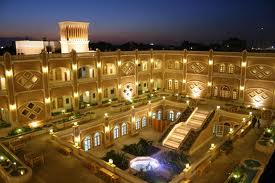
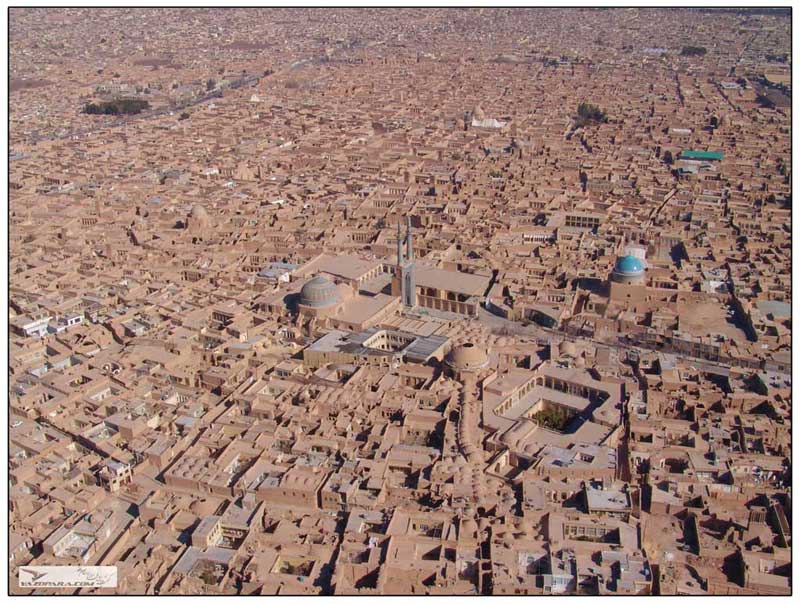
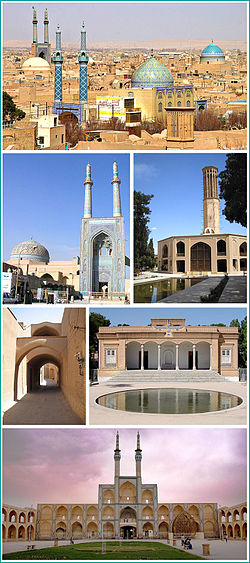
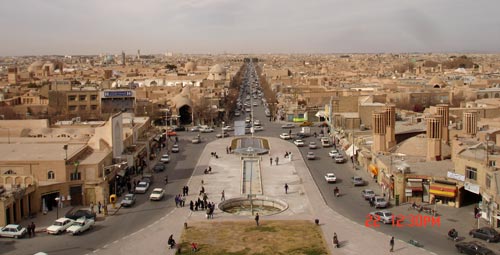
Yazd, one of the oldest cities of the world

http://en.wikipedia.org/wiki/Yazd

Yazd (About this sound pronunciation (help·info) [jæzd]; Persian: یزد‎)[1] is the capital of Yazd Province, Iran, and a centre of Zoroastrian culture. The city is located 270 km (170 mi) southeast of Isfahan.”

“The city has a history of over 3,000 years, dating back to the time of the Median empire, when it was known as Ysatis (or Issatis)”

RooftopsYazdIran2008_w500 yazd Yazd_C1 Yazd_In_1_frame

IRAN Documentary Yesterday and Today : Rick Steves

http://www.youtube.com/watch?v=D61uriEGsIM

Description
Rick takes us beyond Europe to Iran, a place that’s rich with history… and mystery. Visiting Tehran, Shiraz, Persepolis, and a small village, we’ll get a rare present-day look at some of civilization’s most important historical sites, and a sense of Iran’s 21st-century culture. From architecture and art to faith and everyday living, “Rick Steves’ Iran” offers a rare, candid, and humanizing look at a powerful and perplexing nation. – Rick Steves’ Iran Pledge Special

I was actually scared to go to Iran. We almost left our big camera in Athens and took our little sneak camera instead. I thought people would be throwing stones at us in the streets. And when I got there, I have never felt a more friendly welcome because I was an American. It was just incredible. I was in a traffic jam in Tehran, a city of 10 million people, and a guy in the next car saw me in the back seat and had my driver roll the window. He then handed over a bouquet of flowers and said, “Give this bouquet to the foreigner in your back seat and apologize for our traffic.” […]

”Steves has produced a loving portrait of the demonized country. Characteristic Steves-on-the-street interviews open closed minds to the sophistication of Iranian citizens and their lack of antipathy toward Americans. In one scene, a man in a car pokes his head out the window and says to Steves, “Your heart is very kind.” […]

He wants us to please shed our geographic ego. “Everybody should travel before they vote,” he has written.

Read more here: SALON | The other side of Rick Steves

Another view on Iran (where according to Netanyahu you cannot wear Jeans)

http://imgur.com/gallery/VMAvt

vbvMfaX ctHJmMA drn7E80 mgDFxgA

Iran-Israel a viral TED Video by Ronny Edry

Also consider that the people in Iran are living in a dictatorship, which strongly limits their freedom of speech. Still for every Israeli love-message there was an iranian response.

This is the reality. the reality is not what politicians make up, like what you can read in the following article by the Christian Science Monitor:

http://www.csmonitor.com/World/Middle-East/2011/1108/Imminent-Iran-nuclear-threat-A-timeline-of-warnings-since-1979/Israel-paints-Iran-as-Enemy-No.-1-1992

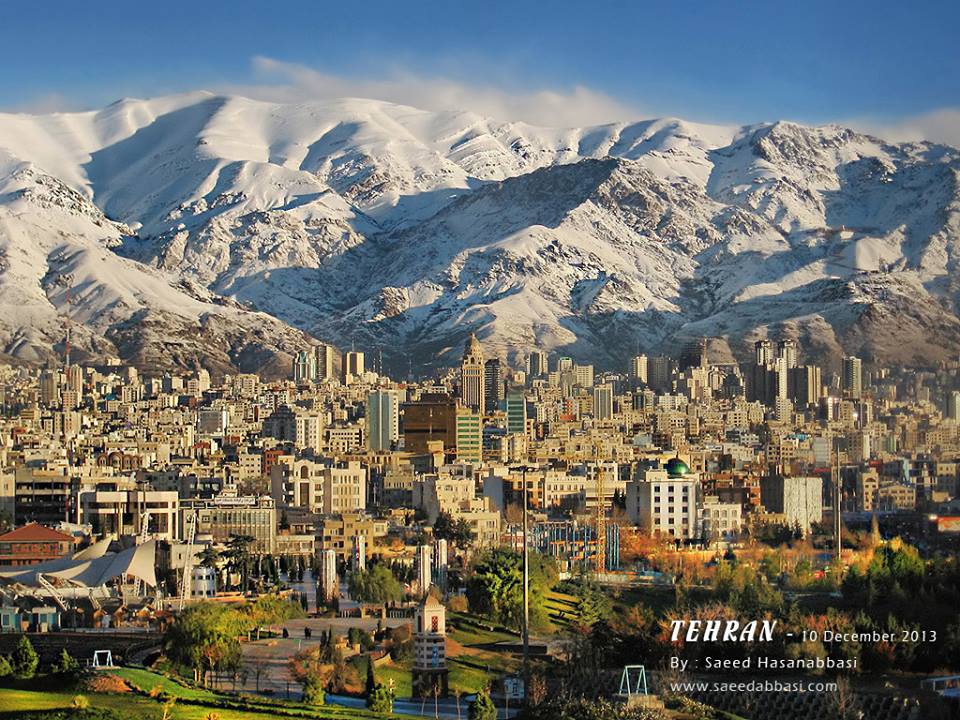
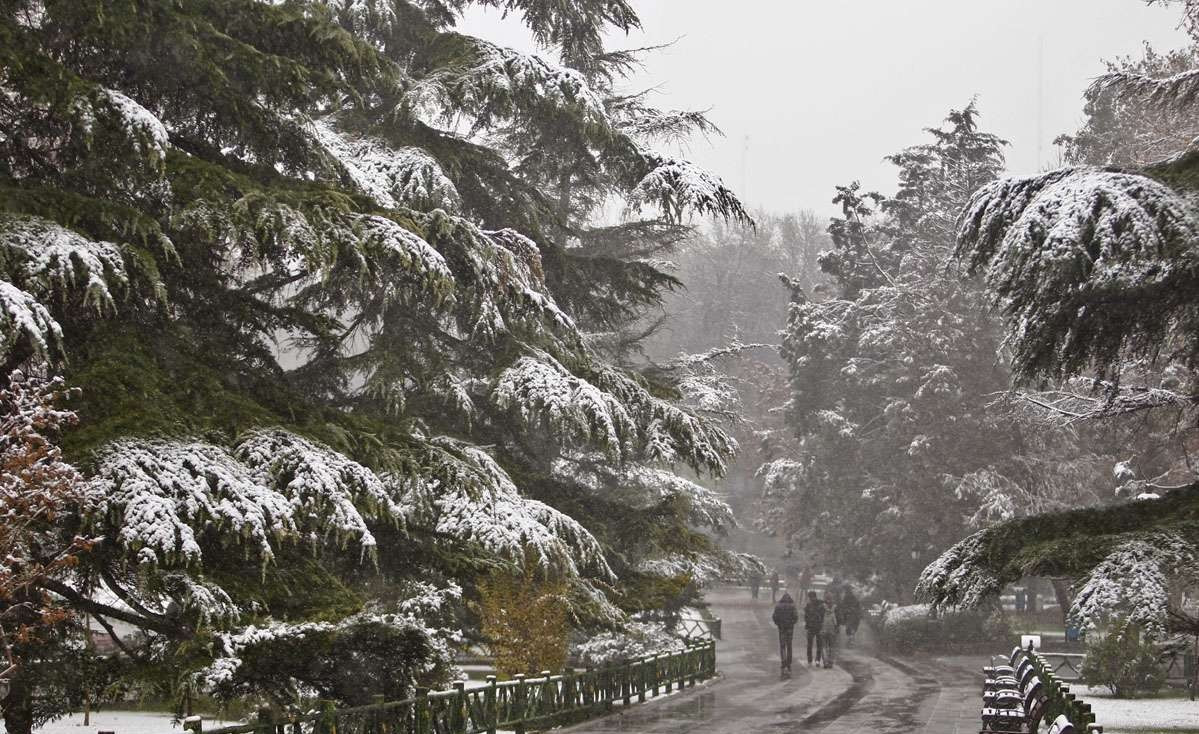
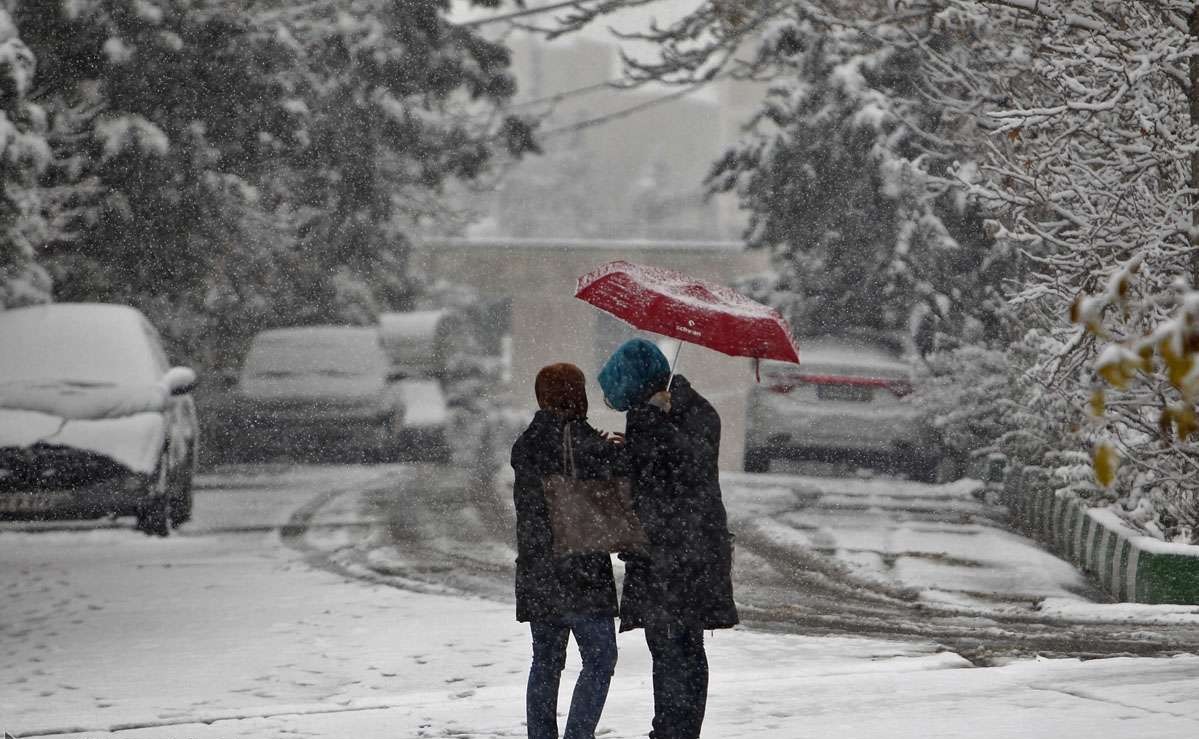
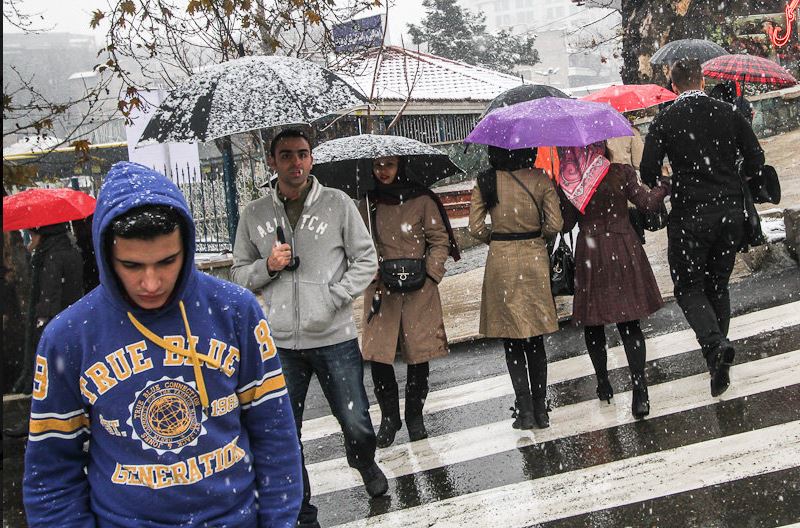
Tehran (Iran) received its first snow of the season

http://imgur.com/a/hbQsE

RexsqHb BXq2ZbC JfZ7PBR MWgnBpW