Author Archives: socialinform

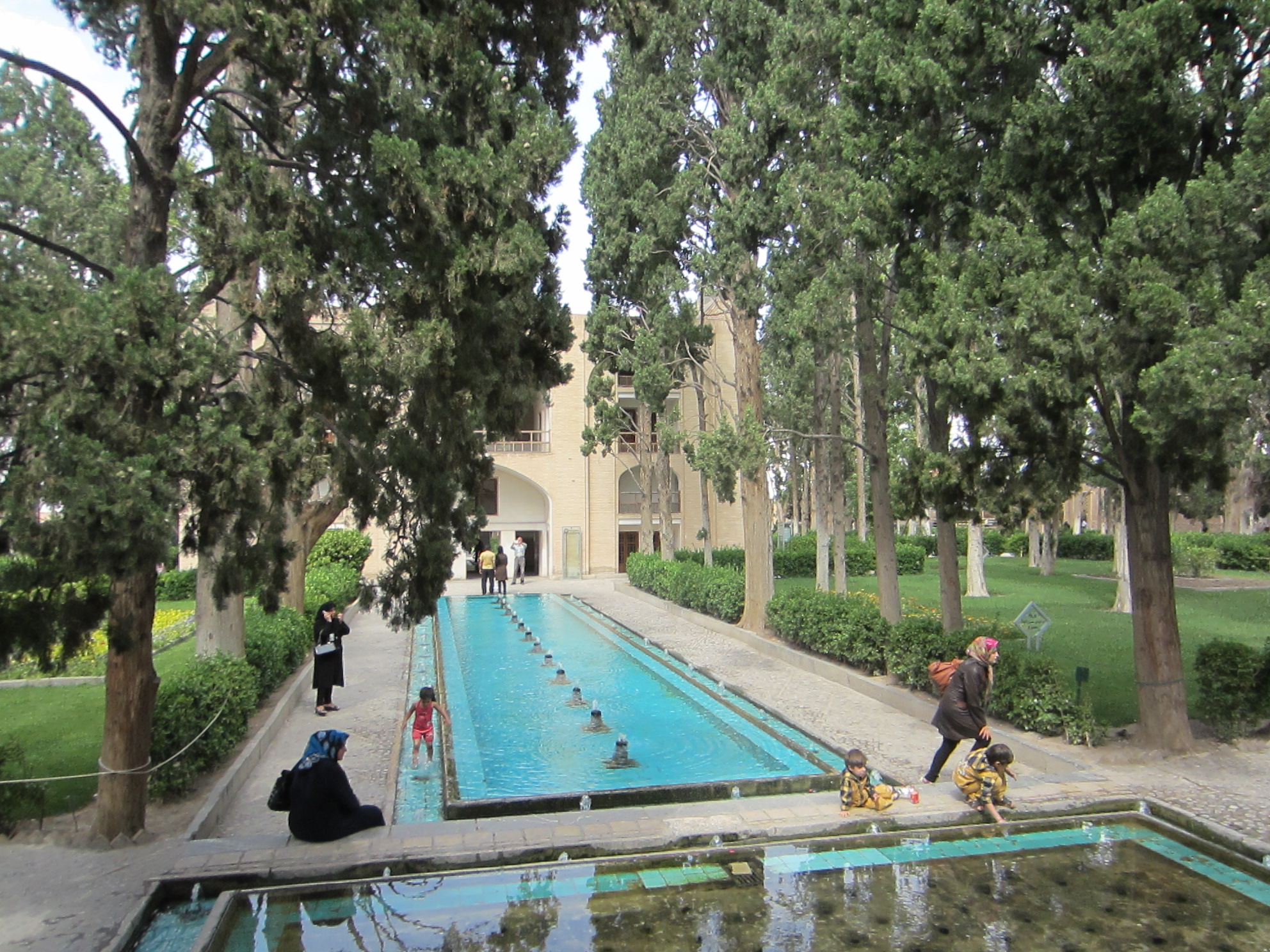
Iran’s Isfahan Province: Kashan – Fin Garden Series

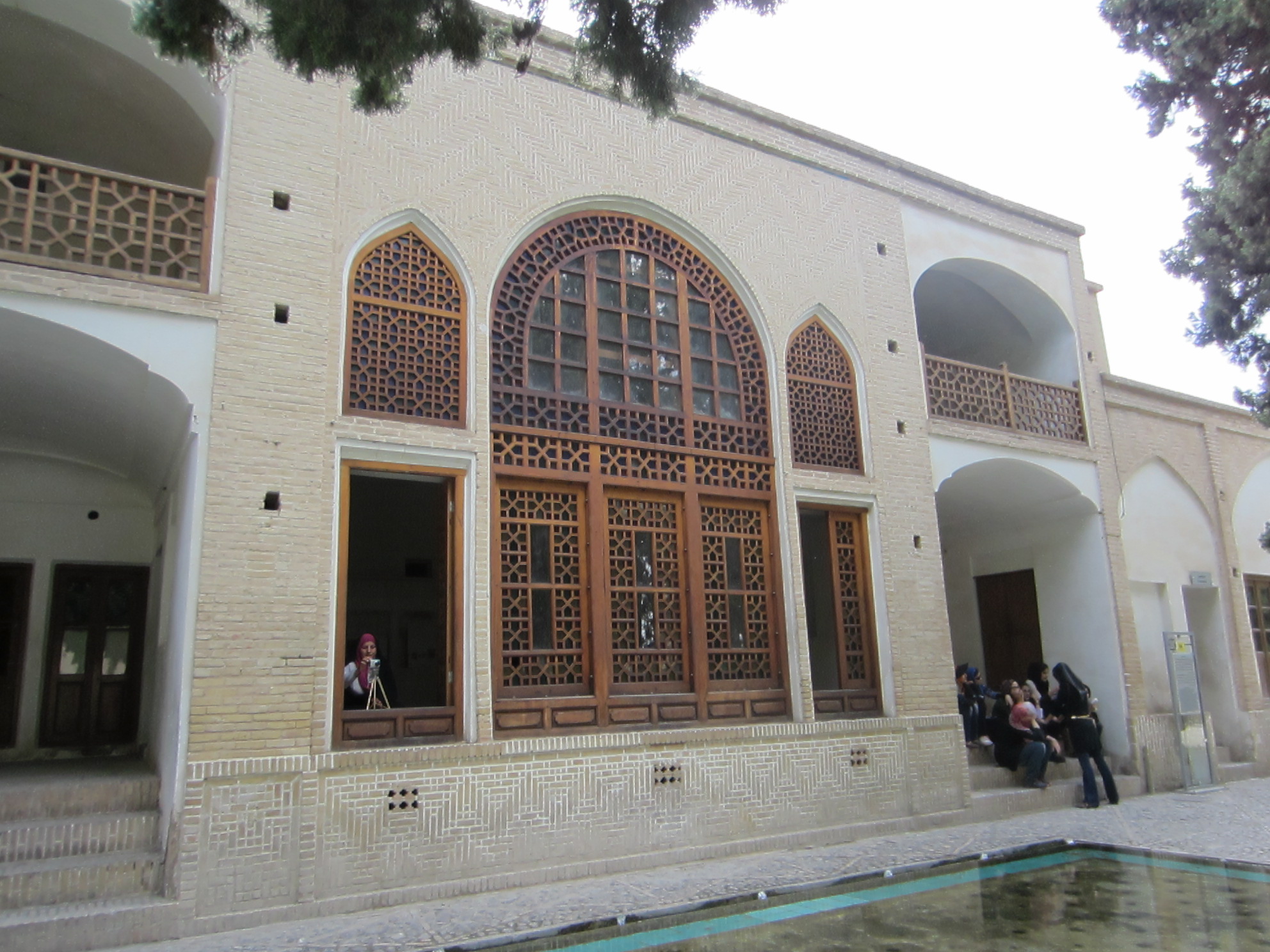
Fin Garden in Kashan, Esfahan Province, Iran

Fin Garden in Kashan, Esfahan Province

The tradition and style in the design of Persian Gardens has influenced the design of gardens from Andalusia to India and beyond.

Fin Garden, or Bagh-e Fin, located in Kashan, Iran, is a historical Persian garden. It contains Kashan’s Fin Bath, where the reformist Qajarid chancellor, Amir Kabir, was murdered by an assassin sent by King Nasereddin Shah in 1852. Completed in 1590, the Fin Garden is the oldest extant garden in Iran. Unesco declared the garden a World Heritage Site.

The origins of the garden may be anterior to the Safavid period but the settlements of the garden in its present form were built under the reign of Abbas I of Persia (1571-1629), as a traditional bagh near the village of Fin, located a few miles southwest of Kashan.

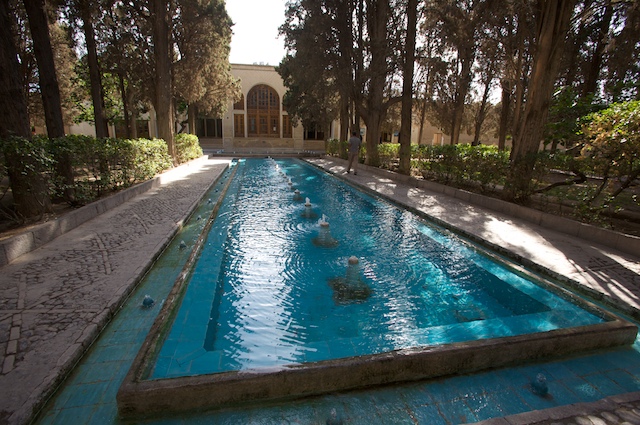
The garden covers 2.3 hectares with a main yard surrounded by ramparts with four circular towers. In keeping with many of the Persian gardens of this era, the Fin Garden employs many water features.

These were fed from a spring on a hillside behind the garden, and the water pressure was such that a large number of circulating pools and fountains could be constructed without the need for mechanical pumps.

The garden contains numerous cypress trees and combines architectural features of the Safavid, Zandiyeh and Qajar periods.

Source: Wikipedia | Fin Garden, Wikipedia | Persian Gardens

Fin Garden (or Bagh-e Fin) in Kashan, Esfahan Province, Iran

Fin Garden (or Bagh-e Fin) in Kashan, Esfahan Province

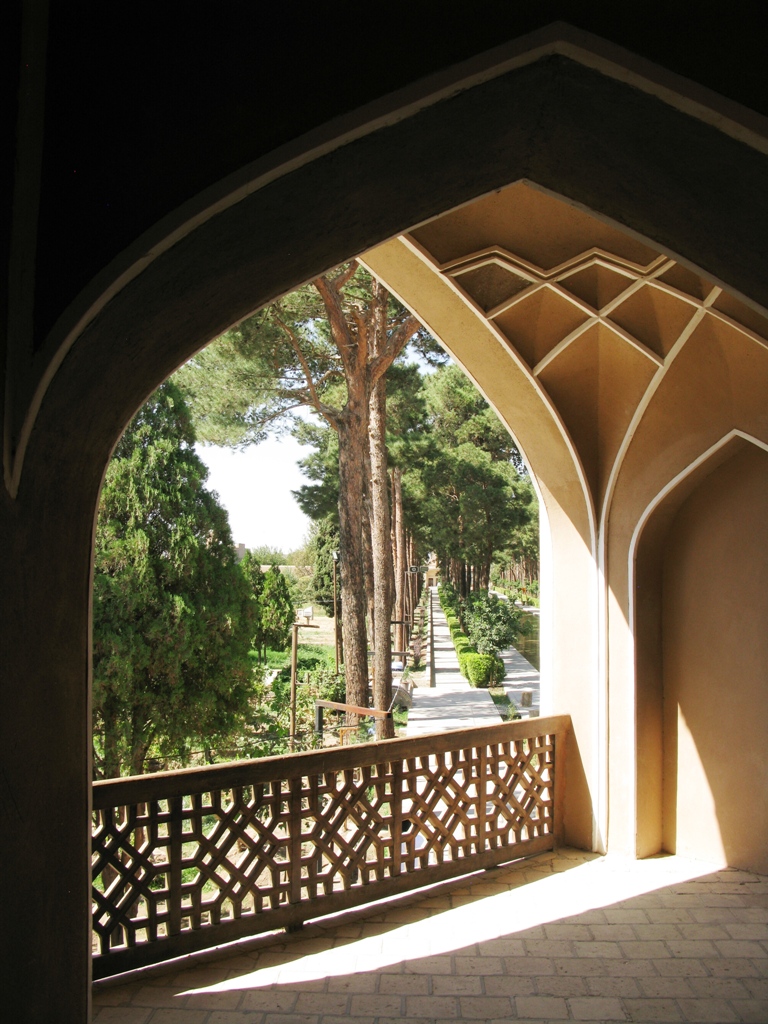
Fin Garden in Kashan, Esfahan Province

Fin Garden in Kashan, Esfahan Province

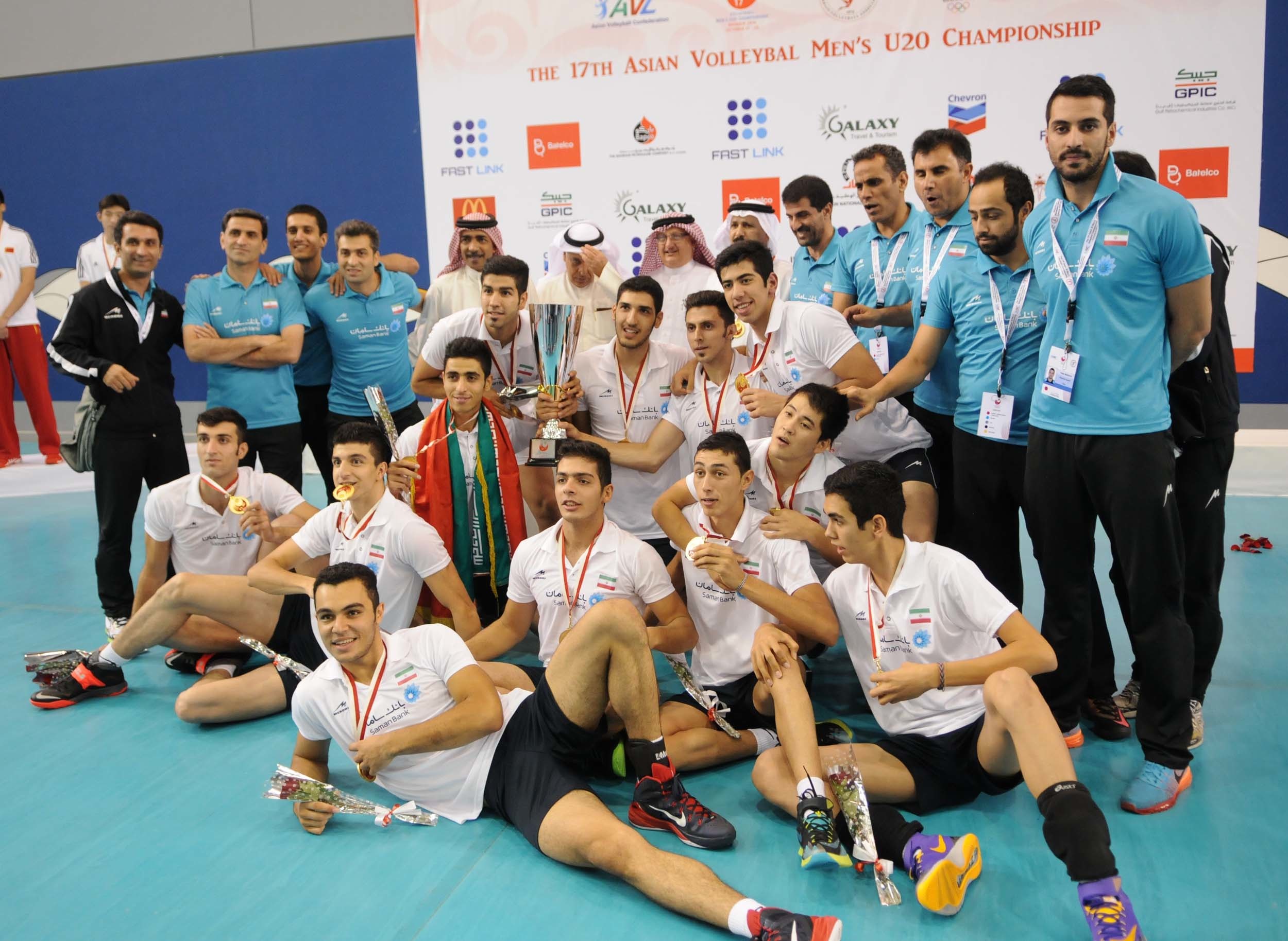
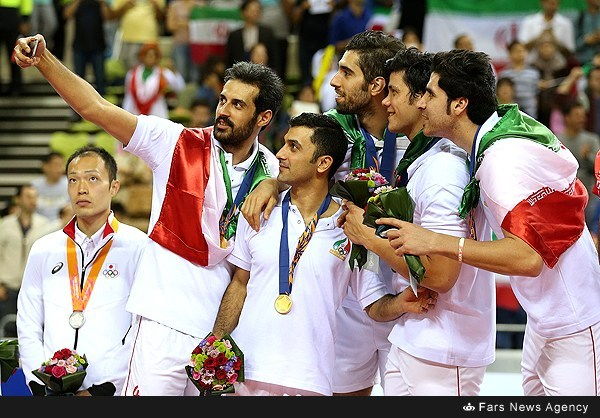
Iran beat China to lift U-20 Asian volleyball crown

2014 Asian U20 Men Volleyball Championship in Bahrain - Gold Medal Match - Iran 3 - China 0_01

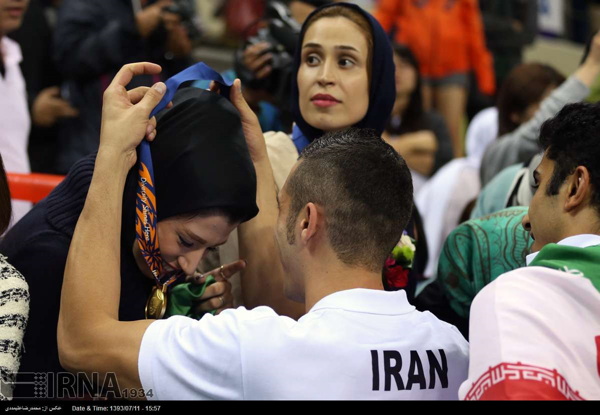
The Iranian team wearing their gold medals

Iran has pulled off a stunning straight-sets victory over China to take gold at the 17th Asian U20 Men’s Volleyball Championships in Bahrain. A match billed as a clash of the Asian junior titans became a volleyball clinic, with Iran strolling to its fifth Asian U20 title, all achieved in the past nine championships.

With the exception of the first five points of the match, which China won, Iran was in total control. The seeds were sown in the sixth point of the opening set, when Rahman Taghizadeh rose to block a Runtao Xia spike. That block not only stopped the Chinese momentum, it also signaled a change in direction for his teammates. […]

Zhejia Zhang, the Chinese blocking machine later named the tournament’s best middle blocker, managed just one for the night. Runtao Xia, later to be named best outside spiker, was restricted to just seven points.

Iran played almost all its pool matches with just ten players, after visa problems left two of its players cooling their heels in Tehran. […]

“They worked very hard for this, working, working, working, step-by-step. Today the players showed they were one team and they were the best in the competition.”

It was a powerful display by Iran, and guarantees Asia will be well served at next year’s U23 World Championships in Mexico. “In 2007 I was with the Iran youth team when we won the gold medal, and I hope next year we can repeat history and win another gold medal,” coach Farhad said.

Final result: Iran vs. China 3-0 (25-19, 25-18, 25-19)

Final standings – TOP 5
1. IRAN
2. CHINA
3. KOREA
4. BAHRAIN
5. JAPAN

Individual awards
Best setter: Yu Yaochen (China)
Best outside spiker: Valaei Akbar (Iran)
Best outside spiker: Xia Runtao (China)
Best middle blocker: Alla Verdian Sahand (Iran)
Best middle blocker: Zhang Zhejia (China)
Best libero: Lee Sanguk (Korea)
Best opposite spiker: Mohamed Anan (Bahrain)
Most valuable player: Mohammadjavad Manavinezhad (Iran)

Source: asianvolleyball.org

Iran finishes 4th in 2014 Asian Para Games

2014 Asian Para Games - Athletes
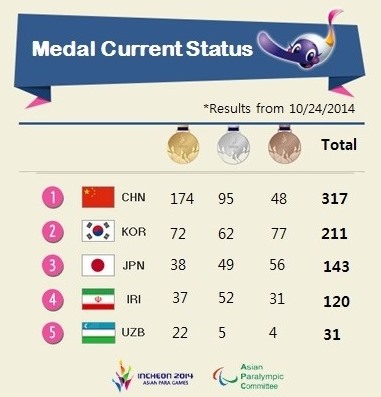
2014 Asian Para Games - Final Medal Count

2014 Asian Para Games – Final Medal Count

INCHEON, South Korea
(by Masoud Hossein for TehranTimes)

Iran came fourth in the 2nd edition of the Asian Para Games held in Incheon, South Korea.

A total of 4,500 athletes competed in 23 sports. The 2nd Asian Para Games opened on October 18 and closed on October 24 following 6 days of competition.

Iran finished in fourth place winning 120 medals, including 37 gold, 52 silver and 31 bronze medals. Iran was just one gold medal short of third place Japan whose silver and bronze medals were less than Persians. […]

Source: Tehran Times

Cycling 2000 kilometers through Iran and some practical considerations

Iran, Gonbad-e Sultanieh, a spectacular 14th century domed mausoleum

Iran, Gonbad-e Sultanieh, a spectacular 14th century domed mausoleum

Probably if I were to sum up my experience in Iran in couple of words it would be exactly like this day has been, great people but a lot of traffic.

After a quick search and a phone call I’m able to finally find Hashem’s house and what follows is an evening filled with the incredible hospitality the Iranian people are known for. Dinner with the family and with the neighboring relatives, with traditional dishes and with the crusty rice which I haven’t encountered before or after Iran, and most of all with genuine curiosity about how life is in other countries and in other parts of the world.

Before travelling through Iran I read stories about the Iranian hospitality and after almost a month of travelling through Iran I can only confirm it. The Iranians are also over polite between themselves, and it’s customary to refuse something 3 times just to be sure that an offer is genuine, but somehow when foreigners are involved this is combined with a genuine curiosity and with trying to somehow mend the bad image Iran has at a personal level. I have been asked countless times by locals what I think about Iran and about Iranians after travelling through the country and just as many times I’ve answered that I think that the Iranians are more or less incredible. There have been countless situations when complete strangers spent time and/or money to help with whatever problems I was facing. This of course doesn’t mean that everything is rose and perfect but the percentage of people doing seems to be way higher than in other countries.

Temperature wise in April it really changed a lot and there was a cold spell which brought temperatures way bellow freezing in the area around Tabriz only to encounter summer like temperatures in the the desert after Teheran. On the other hand I wouldn’t chose another time to cross it as I’m not a big fan of the 40 degree temperatures which define the summer in Iran.

And now for some more practical informations

1. Visas (Iran and onward travel)

Probably the easiest place to obtain the Iranian Visa is Trabzon in Turkey, but for more information the caravanistan section is also very helpful. From Iran I picked up visas for Uzbekistan and for Turkmenistan (in that order). The Uzbek visa took 1 day with a letter of invitation and for the Turkem visa I applied for it in Teheran and I picked it up one week later in Mashad.

2. Money (what the hell is a tumen?)

Iran can be a confusing country and the subject of money is no exception. The first thing you become when you enter Iran is a millionaire as in 2014 the exchange rate was around one dollar to 30000 Rial. The best place to exchange money I think is at exchange booths at bazars, banks will exchange at the official rate which is considerably lower. But then when you start spending it you discover that almost everthing is handled in tumens, 1 tumen beeing equal to 10 Rial. It takes a bit to get used to it especially when you add in consideration the fact that all the prices are written using Arabic characters.

3. Prices.

When comming from Turkey Iran is a pretty cheap country and when you get over the fact that paper notes just keep flying away (keep in mind that they still have a 500 Rial note which is worth around 0.016 dollars) and when you consider that you do get invited a lot Iran has been quite cheap to travel through. Food seemed to be almost half of what it was in Turkey, with restaurant meals starting at 2-3 dollars and alternatively buying food for one day from a shop for a bit more than that. On the other hand there isn’t much diversity regarding things you buy in small shops. A night in a cheap guesthouse / hotel was a bit less than 10 dollars.

4. People.

 As I’ve said before the people are incredibly warm, curios and welcoming and they would be the main reason why I would visit this country once again. Just as an example, after being stopped by the police for a checkup after leaving Hashem’s house he came to the police station with me and tried to help as a translator, spending quite a bit of time in the process. Somehow the Iranians didn’t seem to be as conservative as the Turkish people (at least in the eastern part of Turkey), and even though religion is important there is quite a bit of difference between the laws and what the people think about them.

5. Mobile and Internet.

Yes there is internet, yes all social media is officially banned but everyone still has access to them using vpn’s. While in Iran I bought a cheapish sim card for my phone from Hamrah-e-Avvall, after trying an Irancell sim card which didn’t work and which seemed to be restricted for phones manufactured for Iran. I haven’t tried internet cafes but when I had access to an internet connection is was generally pretty slow.

5. Places.

Iran’s culture and history is amazing and my only regret is that I didn’t have enough time to take a detour in the southern and central part of the country. But from the places which I did see one there were a couple of places and moments which became stuck in my mind. Riding my bicycle through the narrow alleyways of the Tabriz bazar after all the shops were closed was one of them, and the entire place seemed to be taken from the tales of the “One thousand and one nights”. The huge dome of Soltanyeh on a crisp spring day was another one, together with the old caravan-sarais from the barren desert east of Teheran.

And now in short, 2200 kilometers in photos.

Heading towards the stormy border of Iran.

Heading towards the stormy border of Iran.

The first morning in Iran.

The first morning in Iran.

Winter on the iranian plateau

Winter on the Iranian plateau

Endless wheat fields in the middle of the desert.

Endless wheat fields in the middle of the desert.

After 230 kilometers through the desert with almost no villages in between.

After 230 kilometers through the desert with almost no villages in between.

One of the restored caravan-serais.

One of the restored caravan-serais.

Semna ale primaveri.

Semna ale primaveri.

The pilgrimage complex from Mashad, one of Iran's religious centers.

The pilgrimage complex from Mashad, one of Iran’s religious centers.

About the Author: http://www.diaconescuradu.com/en/about-me

Source: http://www.diaconescuradu.com/en/cycling-2000-kilometers-iran-practical-considerations

Mozart Medal holder Shajarian and Shahnaz ensemble to perform in London’s Appolo Hammersmith on October 26.

Mohammad Reza Shajarian

The world-renowned musician ensemble, Shahnaz, started its music tour at the Malmo Arena in Sweden on September 27.

Composer and tar virtuoso Majid Derakhshani, kamancheh virtuoso Saeed Farajpouri and several other musicians are accompanying Shajarian on this tour.

Shajarian is known as Iran’s contemporary traditional music legendary who has invented new string instruments dubbed Bam Sorahi, Saghar and Kereshmeh, designed for traditional Persian music.

The maestro, Shajarian, was honored with UNESCO’s Mozart Medal in 2006 and the 1999 prestigious Golden Picasso Medal.

http://iranfrontpage.com/news/cultures/music/2014/10/shahnaz-music-ensemble-go-stage-germany/

Photos: Christians in Isfahan celebrate the 350th anniversary of the famous Vank cathedral

Photos: Middle East’s largest planetarium opens in Tehran

The largest planetarium in the Middle East, Dome of Mina, was inaugurated on Monday October 6th.

The planetarium, which is located at Abbasabad neighborhood of Tehran, is designed as a sphere showing all stars, planets and other celestial bodies for entertainment and educational purposes, IRNA reported.


Source: http://www.payvand.com/news/14/oct/1123.html

Aftabe, an Iranian app downloaded 1.5 million times and counting

Aftabeh-app-programmersMohammad Amin Moradi, 19, who studies Mechanical Engineering, Seyyed Hamed Valizadeh, who is also 19 and studies Software Engineering at Sharif University of Technology, and Amir Ala Masoumi, who is 20 and is studying Architecture at Tehran University, have jointly developed the app.

They seem to enjoy plunging gamers into deep thought for hours. The game they have developed is simple and complicated at the same time. In this app an image appears on screen and the gamer must guess what word that image refers to in order to advance to the next round.

Source: http://iranfrontpage.com/news/society/sci-tech/2014/09/aftabe-iranian-app-downloaded-1-5-million-times-counting/

Art for Humanity WFP Exhibition in Iran

Art for Humanity

The UN World Food Programme (WFP) exhibition features 130 works by 100 prominent Iranian artists in painting and other fields of visual arts.

“This move can serve as a model for the artists in the other countries,” said UN representative, Garry Lewis, during the opening ceremony of the exhibition.

http://iranfrontpage.com/news/cultures/arts/2014/10/art-humanity-wfp-exhibition-opens-tehran/

Speaking at the ceremony, director of the center Abbas Sajjadi hoped to celebrate the end of hunger one day. “In our culture, helping others is a precious value that we have inherited.”

“The project began with 33 artists last year, but we are proud to have 100 artists this year,” she said, adding that the artworks have been priced by the artists themselves.

Gary Lewis also said that many steps need to be taken to eradicate hunger in the world. Sufficient food is being produced in the world, however there is still hunger not only in the poor countries but in the rich and developed ones, he said.

He added all the money raised in this exhibit will provide food for different individuals including Afghan nationals who are being supported by the country of Iran.

He thanked all the Iranian artists who have displayed their heart and compassion in their works.

Hossein Mahjubi, Jalal Shabahangi, Reza Bangiz, Mostafa Asadollahi, Mohammad Farnud and Sorush Sehhat attended the opening ceremony.

Nahid Aryan, Shima Esfandiari, Simin Ekrami, Minu Emami, Bahram Dabiri, Hamed Rashtian, Mohamamd Salahshur, Asal Fallah and Ario Farzi are among the participating artists in the exhibit.

Source: http://www.payvand.com/news/14/oct/1106.html

Jewish Australian Ben Winsor: Truth about Iran – Facts that may surprise westerners

mosque in iran

Isfahan Iran, Naghsh-e Jahan Square

Since the Iranian revolution and hostage crisis of 1979, Iran has had antagonistic relations with the U.S. and other Western nations, with little official communication between heads of state, fierce rhetoric on opposing sides, and increasing sanctions.

Given this history, it’s not surprising that many Westerners fail to appreciate ways in which Iran is a relatively advanced and even liberal state.

It certainly took me by surprise when I traveled there last year.

A Positive Opinion Of Westerners

Opinion polls show the majority of Iranians hold a favorable opinion of Americans, making Iran second only to Israel as the most supportive country in the Middle East.

To travel as a Westerner in Iran is to be routinely stopped on the street and welcomed by curious and generous strangers. You will be given cool drinks, invited to parties, and offered free tours of anything nearby.

Young Iranians get their hands on iPhones despite the sanctions, use VPN software to hack past their regime’s ban on Facebook, and watch American TV shows and movies online.

As reported in The Atlantic, a clear majority of Iranians want the current Iranian–U.S. nuclear talks to succeed. If talks fail, however, many expect that moderates like the current president would lose power to religious hardliners.
[…]
Related articles: https://theotheriran.com/tag/foreigners-in-iran/

Better Gender Equality Than Some Countries

Unlike in Saudi Arabia, a close U.S. ally, women in Iran have the right to vote, drive, and travel alone. Women have served in parliament and in cabinet, though they are banned from running in presidential elections, and they attend universities, though some have restricted them from taking certain courses.

The issue of women’s rights highlights the conflict between Iranian President Hassan Rouhani — who is on the more moderate end of the country’s religious-conservative ruling clique — and the country’s Supreme Leader, Ayatollah Ali Khamenei.

On International Women’s Day in April, Rouhani spoke live on television and criticized those who consider women a threat, saying Iran had “a long way to go” and that he “will not accept the culture of sexual discrimination.”

Iranian mother, daughter and some christmas trees

Iranian mother, daughter and some christmas trees

Articles on Iranian women: https://theotheriran.com/tag/women/

Birth Control

After the Iran–Iraq war, when focus shifted from conflict to the economy in 1988, the same Ayatollah who legalized sex-changes issued a ruling making birth control free and widely available. He was convinced a high birth-rate would be bad for the economy.

With family planning sessions provided to all newlyweds, the birth-rate fell more than half, allowing parents to invest more in their children’s education and giving women the chance to gain ground in the workforce. More than 60% of Iranian university students are now women, with numbers even higher in some science and engineering courses, the BBC reported.

An American Ally?

Iran has found itself partially aligned with the West in fighting groups like the Taliban in Afghanistan, and jihadists in Iraq and Syria.

After 9/11, Iran supported overthrowing the Taliban in Afghanistan and assisted NATO with strategy and the formation of a new government.

Iran also had no great love for Iraq’s regime, having fought a brutal war against Saddam Hussein in the 1980s. Backed by the Reagan Administration at the time, Hussein used sarin gas and other chemical weapons  on thousands of Iranian soldiers.

The dynamic changed in 2013, however, when Iranians elected President Rouhani, a reformist who has staked his presidency on mending ties with America.

Iranian policy in Iraq has now also refocused with the rise of Sunni ISIS jihadists. Iran worries that ISIS is destabilizing the region and jeopardizing the current pro-Iranian governments in Iraq and Syria.

Kurds battling ISIS in northern Iraq report that Iran was the first country to respond when they requested support.

Related articles: https://theotheriran.com/tag/usa/

Source: http://www.businessinsider.com/the-truth-about-iran-2014-9#ixzz3GW9CEQAj

Iranian children to draw paintings for the disabled

Iranian Children paint for disabled

Iran Paralympics Committee has invited Iranian children to take part in a national drawing contest dubbed “Disability is not Limitation”.

Iran Sports Federation for the Disabled holds the drawing contest “Disability is not Limitation” for children of age 4-12.

The contest is designed to mark Paralympics Week and select works will be awarded on Islamic holiday Eid Ghadeer on October 13.

The paintings should be about the disability and overcoming limitations.

Source: http://iranfrontpage.com/news/cultures/arts/2014/09/iranian-children-draw-paintings-disabled/

Iran hosts retrospective on Christian Iranian composer Loris Tjeknavorian’s music arts

A number of Iran’s leading music artists and cineastes attended the opening gala held on Oct. 9. […] Tjeknavorian was also honored with the lifetime achievement award during the gala.

Tjeknavorian has made nearly 100 recordings and written more than 75 compositions, including symphonies, operas, requiems, chamber music, ballet music, concertos, choral works and an oratorio.

He has conducted international orchestras throughout the world in numerous countries including Austria, the UK, the US, Canada, Hungary, Finland, the former USSR, Armenia, Thailand, Hong Kong, South Africa, and Denmark. […] The literary opera, Rostam and Sohrab and the requiem Departed and the Survived are among his best-known works.

Tjeknavorian has received numerous international awards such as Austria’s Cross of Honor for Science and Art First Class.

More info: http://iranianroots.com/2014/06/07/christian-composer-and-coductor-loris-tjeknavorian-one-of-the-most-celebrated-cultural-figures-in-iran/

Video: Face to Face – Iran music maestro Loris Tjeknavorian talks to PressTV (1 and 2)

Source: http://www.payvand.com/news/14/oct/1069.html

Iranian artists contribute to the efforts of the United Nations food agency to take on global hunger.

WFP-LOGO

Up to 100 Iranian artists are to sell their works at a charity event at Niavaran Cultural Center on Friday (October 17, 2014) to help the World Food Programme (WFP) with its efforts to ease global hunger, Khabaronline quoted Negar Gerami of the WFP as telling a news conference in Tehran.

“There is plenty of food to go around in the world,” she said, adding, “Our efforts are meant to reduce the number of people who go hungry to zero.”

She went on to say that Iran is not among countries that grapple with hunger, but that does not mean we can be indifferent to this global problem.

“October 16th has been designated as World Food Day, and we at WFP make efforts to draw public attention to global measures to eliminate hunger,” she said, adding, “This year, works of art by Iranian artists are being used as a tool to raise public awareness. Around 100 artists have donated their works of art to be sold at the event. The proceeds will go to the WFP drive to take on world hunger.”

Parviz Kalantari, an Iranian painter, told the same news conference, “We need to stay clear of politics…. The Iranian people have always joined forces for charitable causes; still, efforts should be made to press home the fact that one should not be indifferent to global problems.”

Shokufeh Malek-Kiani, an Iranian photographer and an artistic consultant of the UN, said the number of artists who donated their works for the charity event, which features visual arts, has risen from 32 last year to around 100 this year.”

Source:
http://iranfrontpage.com/news/cultures/arts/2014/10/iranian-artists-organize-charity-event-help-hungry/

World-known Japanese composer Kitaro in Tehran, Iran

iran-kitaro-concert

Distinguished Japanese composer and instrumentalist Kitaro is in Tehran to stage concerts October 15-17.

“My heart is beating hard and I am so excited to see the audience in concerts,” Kitaro said on his arrival.

He also wished to have the opportunity to get acquainted with rich Persian music.

Former instrumentalists of Tehran Symphony Orchestra are to accompany the musician in the concerts.

A winner of a Grammy Award and a Golden Globe Award, Kitaro is regarded as a pioneer of New Age music. Kitaro has received fifteen Grammy Award nominations, winning once in 2000.

Source: http://iranfrontpage.com/news/cultures/music/2014/10/world-known-japanese-composer-kitaro-tehran/

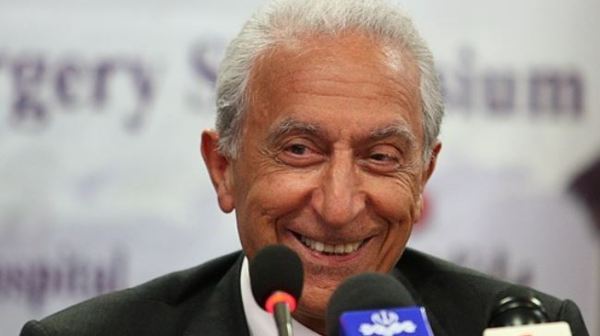
Majid Samii, the world-famous Iranian medical scientist, has been named by World Academy of Neurological Surgery as the world’s top neurosurgeon.

Iranian Professor Majid Samii Golden Neuron Award World's top neurosurgeon

Iranian Professor Majid Samii – Golden Neuron Award World’s top neurosurgeon

The world-renowned Iranian scientist in neurological surgery Professor Majid Samii has garnered the 2014 Golden Neuron Award.

The award was announced during a ceremony held at the biannual meeting of the World Academy of Neurological Surgery in Vienna on October 11.

Many leading scientists and neurological surgery scholars have flocked to the biannual meeting that kicked off on October 9 and will run until October 12.

Iranian neurosurgeon and medical scientist, Professor Samii, had earlier received the 2014 Leibniz Ring Prize in Berlin.

Prof. Samii is renowned worldwide for his life trajectory and especially for his work in the Project Africa 100.

Source:
http://iranfrontpage.com/news/society/healthcare/2014/10/professor-majid-samii-named-world-top-neurosurgeon/

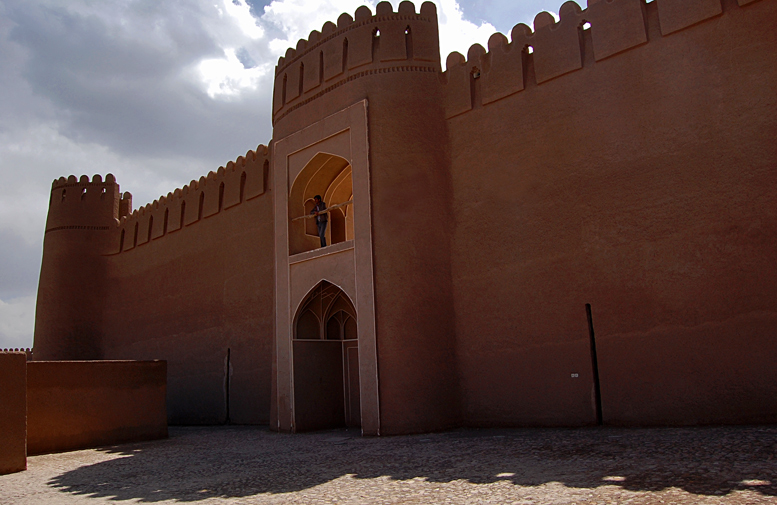
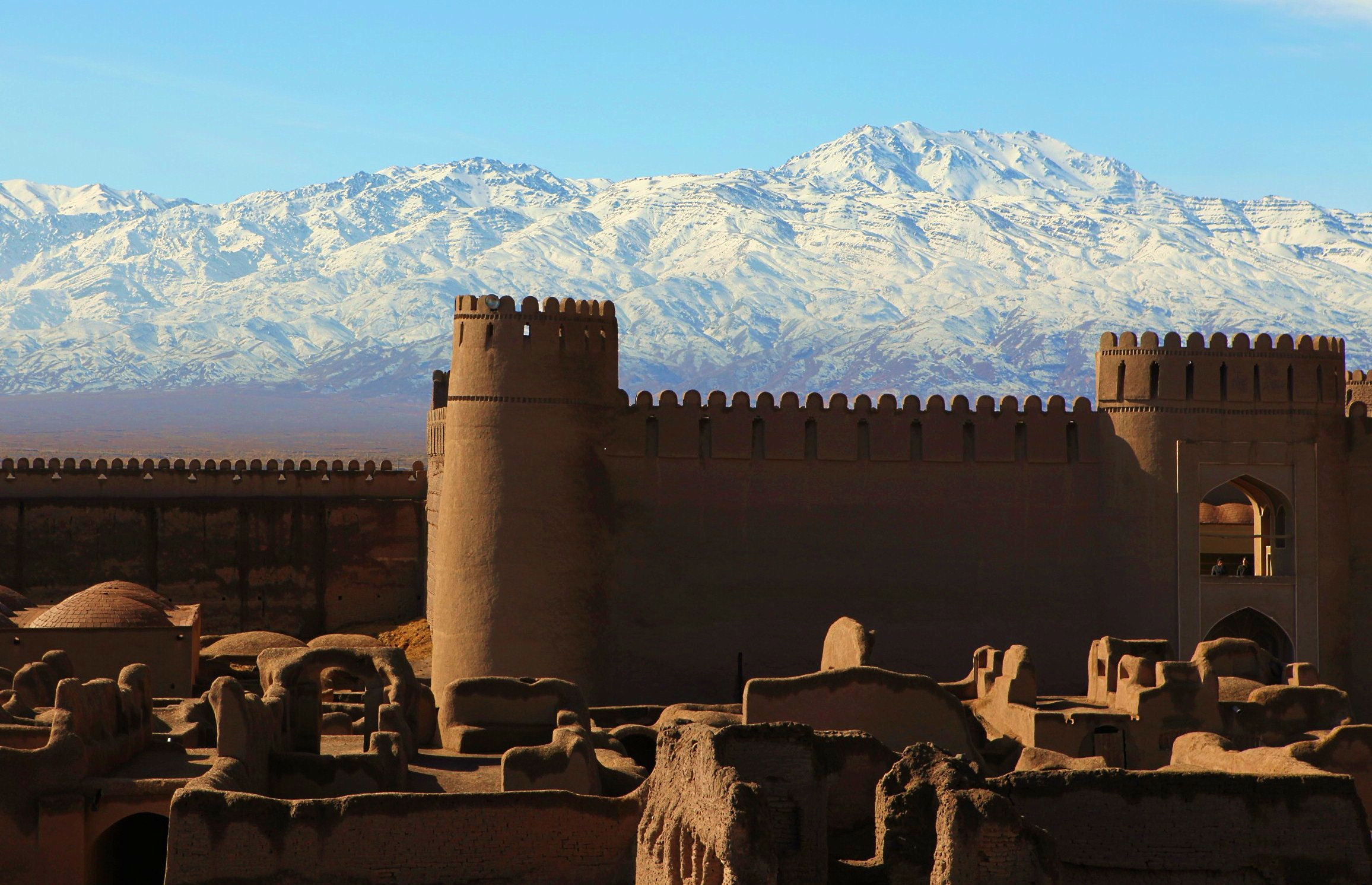
Rayen Castle – more than 1000 year old adobe castle in Kerman, Iran

Rayen Castle (in Persian Arg-e Rayen) is an adobe castle in Kerman Province, Iran. The medieval mudbrick city of Rayen is similar to the Arg-e Bam city which was destroyed in an earthquake in December 2003. Rayen displays all the architectural elements of a deserted citadel. It is extremely well preserved, despite numerous natural disasters that have destroyed similar structures nearby, and it is one of the most interesting sites in Iran.

Rayen Castle was inhabited until 150 years ago and, although believed to be at least 1,000 years old, may in fact have foundations from the pre-Islamic Sassanid era.

Adobe castle of Rayen Rayen Kerman Iran - arg-e-rayensh

Adobe castle of Rayen Rayen Kerman Iran – Arg-e-Rayensh

Adobe castle of Rayen Rayen Kerman Iran

Adobe castle of Rayen, Kerman, Iran

Source: Wikipedia | Rayen Castle

Also check this related post: The other Iran | Arg-é Bam

Iranian women shine in Asian Games 2014 (Asiad) in Incheon Korea

Iranian women were by far the most successful women from the middle east in the Asian Games 2014, like in previous edition of the games too.

They were awarded medals in Athletics, Kabaddi, Martial Arts, Shooting and Canoeing.

 Gold Hamideh Abbasali Karate Women’s +68 kg
 Gold Najmeh Khedmati Shooting Women’s 10 m air rifle
 Silver Leyla Rajabi Athletics Women’s Shot put
 Silver Salime Abdollahbakhsh
Hengameh Bourghani Farahani
Marzieh Eshghi
Sahar Ilat
Sadighe Jafari Kalokan
Saeideh Jafarkoochi
Ghazal Khalaj
Zahra Masoumabadi
Malihe Miri
Tahereh Tirgar
Mozhgan Zare
Farideh Zarif Doost
Kabaddi Women’s Team
 Silver Narjes Emamgholinejad Shooting Women’s 10 m air rifle
 Silver Najmeh Khedmati
Narjes Emamgholinejad
Elaheh Ahmadi
Shooting Women’s 10 m air rifle team
 Silver Fatehem Rouhani Taekwondo Women’s 73 kg
 Silver Akram Khodabandeh Taekwondo Women’s +73 kg
 Silver Elaheh Mansourian Wushu Women’s sanda 52 kg
 Bronze Arezou Hakimi Canoeing Women’s K-1 200 m
 Bronze Sonia Gomari Canoeing Women’s slalom C-1
 Bronze Fatemeh Chalaki Karate Women’s 61 kg
 Bronze Nasrin Doosti Karate Women’s 50 kg
 Bronze Soulmaz Abbasi Rowing Women’s Lightweight single sculls
 Bronze Nazanin Malae
Soulmaz Abbasi
Homeira Barzegar
Mahsa Javar
Rowing Women’s lightweight quadruple sculls
 Bronze Sousan Hajipour Taekwondo Women’s 53 kg

Source: http://en.wikipedia.org/wiki/Iran_at_the_2014_Asian_Games

Must reads on Iranian women: https://theotheriran.com/tag/women/

Photos: European tourists arrive in Isfahan by train for first time

The group was composed of 65 tourists from Australia, France, Germany, Britain and Austria.
[…]
The tourists arrived in Iran on Oct 5 and after visiting Tehran, Yazd, Isfahan, Shiraz and Zanjan will leave for Turkey via Razi border.
[…]

Read more about the new “Orient Express” between Hungary and Iran:
https://theotheriran.com/2014/09/02/five-star-orient-express-to-link-hungary-and-iran/

Photos from their trip to the ruins of Persepolis (Persia’s capital 550-330 before Christ):

Persepolis was the ceremonial capital of the Achaemenid Empire (ca. 550–330 BC)

Persepolis was the ceremonial capital of the Achaemenid Empire (ca. 550–330 BC)

Tomb of Cyrus the Great (559–530 BC)

Tomb of Cyrus the Great (559–530 BC)

https://i0.wp.com/www.payvand.com/news/14/oct/European-tourists-in-Iran-6-HR.jpg

Read more about travelers in Iran: https://theotheriran.com/tag/foreigners-in-iran/

Nature photos from Iran: https://theotheriran.com/tag/nature/

Source: http://www.payvand.com/news/14/oct/1048.html

Iranian documentary ‘Banooye Urmia’ awarded in Finland fest

An Iranian documentary, Banooye Urmia, (Lady Urmia) won jury award of Finland Environmental Film Festival held in Vaasa City. The event is held every two years.

Lady Urmia Awarded in Finland and US Rhode Island Film Festival

Lady Urmia Awarded in Finland and US Rhode Island Film Festival

The film directed by Mohammad Ehsani was shown in the 7th edition of the event on October 1-5 in Vaasa. It is a poetic documentary about Lake Urmia, in the Iranian Azerbaijan, which is drying up completely.

Released in 2012 in Iran and distributed by EhsaniPictures, it has also been awarded in the US Rhode Island International Film Festival (RIIFF) and Croatian Environment Film Festival.

Lake Urmia (Orumieh) is a salt lake in northwestern Iran near Turkey. The lake is between the provinces of East Azarbaijan and West Azarbaijan, west of the southern portion of the similarly shaped Caspian Sea. It is the largest lake inside Iran, and the third salt water lake on earth, with a surface area of approximately 5,200 km square (2,000 mile square).

The environmental catastrophe will not only affect Iran, but also Iranian neighbors such as Iraq and Turkey. The film is narrated in the voice of the Lake itself, asking for help and trying to gain international reaction.

Source: http://www.payvand.com/news/14/oct/1041.html

Iran most successful middle eastern nation in Asian Games 2014 (Asiad) in Incheon Korea

The 2014 Asian Games, officially known as the XVII Asiad, was a multi-sport event celebrated in Incheon, South Korea from September 19 – October 4, 2014.

Some 9,500 athletes from 45 countries competed at the Games, the world’s second-biggest multi-sport event after the Olympics, with 439 gold medals in 36 sports up for grabs.

Iran has participated in the games with 276 athletes in 22 sports.

Source: http://iranfrontpage.com/news/society/sports/2014/09/irans-shot-putter-rajabi-wins-silver-asiad/


Medal table (top 5 of 45 countries)

Rank Nation Gold Silver Bronze Total
1  China (CHN) 151 108 83 342
2  South Korea (KOR) 79 71 84 234
3  Japan (JPN) 47 76 77 200
4  Kazakhstan (KAZ) 28 23 33 84
5  Iran (IRI) 21 18 18 57

Source: http://en.wikipedia.org/wiki/2014_Asian_Games_medal_table


Iran won medals in a variety of sports:

Sport Gold Silver Bronze Total
Archery 1 0 1 2
Basketball 0 1 0 1
Boxing 0 2 1 3
Athletics 1 1 0 2
Canoeing 0 2 3 5
Cycling 1 1 1 3
Fencing 0 1 0 1
Kabaddi 0 2 0 2
Karate 3 0 2 5
Rowing 1 0 3 4
Shooting 1 2 0 3
Taekwondo 4 2 1 7
Volleyball 1 0 0 1
Weightlifting 1 1 0 2
Wrestling 6 1 5 12
Wushu 1 2 1 4
Total 21 18 18 57

Source: http://en.wikipedia.org/wiki/Iran_at_the_2014_Asian_Games

Iran’s Mahak won an international Achievement Award for its exceptional support of children suffering from cancer

Mahak

Iran’s Mahak secured an Achievement Award from the International Project Management Association.

MahakThe IPMA, a non-governmental organization headquartered in Amsterdam, handed out its 2014 Achievement Award to Iran’s Mahak, the Society to Support Children Suffering from Cancer, Khabaronline news website reported.

Mahak was the only finalist in the category of internationally funded humanitarian aid project for its two-year operational and developmental project between March 21, 2012 and March 21, 2014.

At the Award Gala, on September 30 in Rotterdam, the Netherlands, the Iranian charity, which has been active for 23 years and says to have provided care for over 21,000 children suffering from cancer so far, walked away with the award.

Source Iran Front Page: http://iranfrontpage.com/news/society/healthcare/2014/10/mahak-iranian-charity-received-achievement-award-ipma/

Another article about Mahak:
https://theotheriran.com/2013/11/08/iranian-charity-provides-medical-care-to-refugee-children/

‘Hush’ scoops main awards at San Francisco Iranian Film Festival

Hush-Girls-don't-scream - Iranian Film Festival in San Francisco.Iran’s social drama Hush! “Girls Don’t Scream” by Pouran Derakhshandeh has swept several main awards at the 7th Annual Iranian Film Festival in San Francisco.

The film took Best Film, Best Director, Best Actress and Best Screenplay awards of the year’s event.

Leading Iranian director Derakhshandeh was also paid tribute during a ceremony held at the event.

The film tells the story of abused children and ignorant families who do not make enough time in their day to listen and solve their children’s issue.

Sponsored by Iran’s Farabi Cinematic Foundation, the film won Best Film Award at the 2012 Fajr International Film Festival.

The movie competed at the 2014 edition of Irvine International Film Festival (IIFF) in the United States.

Derakhshandeh’s drama received a great attention from the movie goers in Canada and the United States. The film also garnered the Best Feature length Award of the fourth edition of London Iranian film festival.

Oscar Academy had earlier requested a copy of screen script of the movie during a letter signed by the center’s Script Librarian Gregory Walsh.

The 2014 San Francisco Iranian Film Festival also honored the Iranian actor Faramarz Qaribian with the Best Actor award for his role in Sinners.

Wildlife ambulance service launched in Sistan and Baluchestan

Iran wildlife ambulance

The provincial environment department in the southeastern Iranian province of Sistan and Baluchestan has launched a wildlife ambulance service.

On September 17, Iran newspaper quoted Saeed Mahmoudi, the head of the environment department as saying that the move is primarily designed to save protected species such as bears, cheetahs, foxes, etc. that are injured in road accidents.

In parallel, a messaging service has been launched to allow residents to easily report accidents to authorities, he said.

Source Iran Front Page:
http://iranfrontpage.com/news/society/environment/2014/09/wildlife-ambulance-service-in-iran-sistan-and-baluchestan/

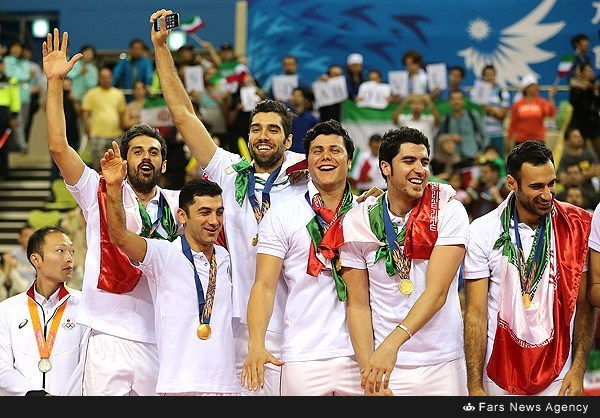
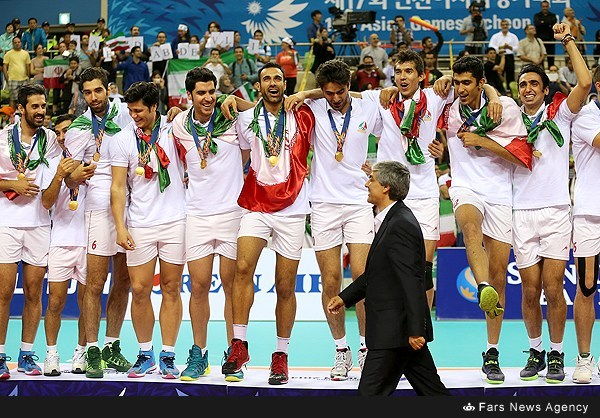
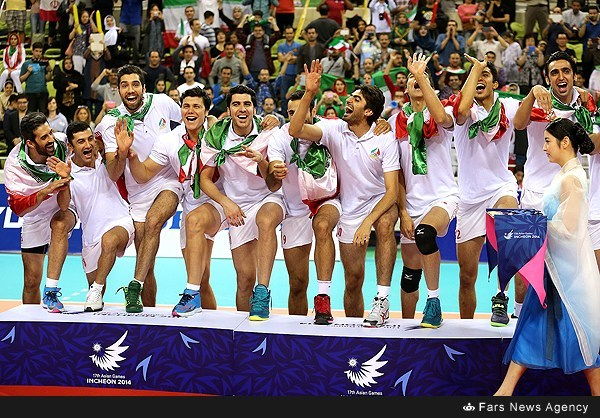
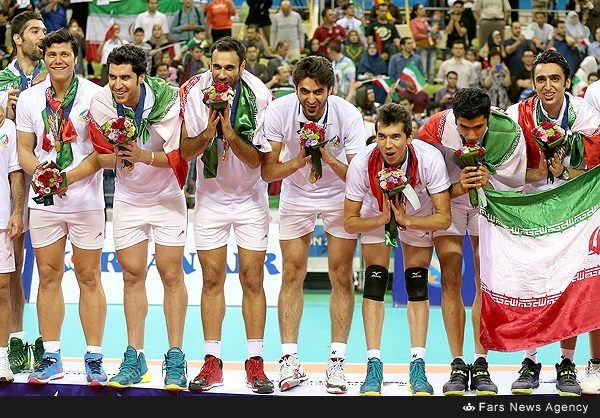
Iran national volleyball team wins gold at the 2014 Asian Games in Incheon, South Korea

Iran-Japan-Volleyball_AsiaGames-2014-13

Iran men’s national volleyball team has finished in the first place at the 2014 Asian Games in Incheon, South Korea, after it achieved a convincing victory over the Japanese squad.

On Friday, Iranians ended their campaign with a well-earned win over the Japanese outfit and overpowered their opponents 3-1 (28-26, 23-25, 25-19 and 25-19) at the Songnim Gymnasium.

Iran-Japan-Volleyball_AsiaGames-2014-12 Iran wins gold medal

Iran-Japan-Volleyball_AsiaGames-2014-12 Iran wins gold medal

Iran-Japan-Volleyball_AsiaGames-2014-12 Iran wins gold medal

Iran-Japan-Volleyball_AsiaGames-2014-12 Iran wins gold medal

Iran-Japan-Volleyball_AsiaGames-2014-12 Iran wins gold medal

Iran-Japan-Volleyball_AsiaGames-2014-12 Iran wins gold medal

Iran-Japan-Volleyball_AsiaGames-2014-12 Iran wins gold medal

Iran-Japan-Volleyball_AsiaGames-2014-12 Iran wins gold medal

Iran-Japan-Volleyball_AsiaGames-2014-12 Iran wins gold medal

Iran-Japan-Volleyball_AsiaGames-2014-12 Iran wins gold medal

Iran-Japan-Volleyball_AsiaGames-2014-12 Iran wins gold medal

Iran-Japan-Volleyball_AsiaGames-2014-12 Iran wins gold medal


The complete text and much more nice photos:

http://iranfrontpage.com/news/society/sports/2014/10/iran-volleyball-players-win-2014-asian-games-gold/

Smiles from the ‘Axis of People’ – Reflecting on Iran

Get this headline writers – Iran may just be the friendliest place in the world!

It’s certainly the friendliest country I work in. I smile and laugh as much in Iran as I do at home in South East Asia’s Lands of Smiles…

Whenever we stop for a wander in a small Iranian town there’s an echoing chorus of “Salam” as shopkeepers and customers greet us one by one. Cars slow, their drivers wind down their window and shout “Welcome to Iran!” Excited children gather to shout “Which country?” or “Where from?” – the few words of English they can remember from school. It’s worth noting that these small towns are where Islamic faith is at its strongest…

Iran - Axis of People - Land of smiles - 1

Iran – Axis of People – Land of smiles – 1

From relatively modern Tehran to stylish Shiraz and stunning Isfahan to the tiny tea stop villages, the welcome is universal – whether a handshake and a “salam”, a gentle tap on the heart or a “hello mister”. It’s also surprising how much English is spoken – we shared our picnic with a homeless man in a park recently who thanked and blessed us warmly in English.

British, Australian, Irish and, yes, Americans, are greeted just the same. “No problem for me, only the government”, a hotel manager said to me when I handed him a trio of US Passports. Whose government he was referring to didn’t matter; both are equally guilty of historic paranoia and mistrust. Majid, a chemist we met in the desert town of Yazd said “if governments talked to each other like you and I are talking there would be no problem”; wise and hospitable are not adjectives Western media use liberally when talking about Iran.

The best way to enjoy Persian hospitality is to indulge in the national pastime of picnicking. The weekend (Friday) is a great day to join families around the kettle and stoves in parks and public places across Iran to share friendship and laughter. In the small village of Bazm in the lush Bavanat Valley, we stopped beside a village Emamzadeh (shrine) armed with a couple of flasks of tea and some famed Yazd home made confectionary. We soon found ourselves nestled under trees in the adjacent park, enjoying the holiday atmosphere, lounging on mats with a dozen or so extended families. Sauces bubbled away in pots and saffron rice steamed perfectly atop burners – the Persian picnic is a full-on culinary experience!

Iran - Axis of People - Land of smiles - 2

Iran – Axis of People – Land of smiles – 2

In the park we met Nilafar, who studied engineering on the Persian Gulf (60% of engineering graduates in Iran are women – another statistic for the headline writers).

“Have you seen an American before?”

“Only in the movies”, she replied calmly.

There was no alarmed reaction – just a scramble for photos.

The Friday call to prayer from the mosque briefly interrupted the chatter and laughter around the park. A hapless looking priest wandered outside looking for business, but here, as elsewhere in Iran, people are voting with their flasks…

My final memory of an amazing month spent in Iran is the holiday atmosphere in the mighty Naghsh-e Jahan Square in Esfahan. Its size may no longer be ‘half the world’ but it’s beauty and grassy verges draw Esfahanis and visiting Iranians every Friday evening. Long gone are the days when the Safavid Rulers sat on the terrace of the Ali Qapu Palace overlooking the square to watch polo; the square belongs to the people now.

After 10pm the square is still full of families, sitting on mats beside spurting fountains and coloured lights surrounded by beautifully tiled Islamic domes. Young children – up way after western bedtimes – run around with oversized saffron ice creams. Beside the tea flasks, kebab burners and pots and pans are everything from toy cars to table football games. Everyone wants to offer us food, drink and friendship. It’s hard to imagine such a sober, cultured and friendly atmosphere in a western park late on a Friday night.

In addition to the natural beauty and historical sites, we visited mosques and madrassas on our travels. Often called ‘hotbeds of religious fervor’, we found them to be tranquil oases of study and peace, where the warmth of the welcome humbled us. Learned people from the religious schools came to greet us, interested in our nationalities and religions, before posing for photographs.


More details and photos:

http://www.wildfrontierstravel.com/en_GB/community/blog/post/smiles-from-the-axis-of-people-reflecting-on-iran

Series: Iran in Asia Games (Asiad) 2014 – Iran’s cyclist Mohammad Daneshvar clinches gold

Iran’s Mohammad Daneshvar claimed a gold medal in the men’s keirin final in the 2014 Asian Games.
https://i0.wp.com/english.irib.ir/media/k2/items/cache/8e803a93444d5a73a9823bf953077a2b_XL.jpg

Kazunari Watanabe of Japan claimed a silver medal and Malaysian Josiah Ng finished in third place.

http://english.irib.ir/radioculture/sport/item/196646-iran%E2%80%99s-cyclist-mohammad-daneshvar-clinches-gold-in-asiad

Intro Asia Games (Asiad):

Some 9,500 athletes from 45 countries are competing at the Games, the world’s second-biggest multi-sport event after the Olympics, with 439 gold medals in 36 sports up for grabs.

Iran has participated in the games with 276 athletes in 22 sports.

http://iranfrontpage.com/news/society/sports/2014/09/irans-shot-putter-rajabi-wins-silver-asiad/

Series: Iran in Asia Games (Asiad) 2014 – Iranian Woman Kayaker Arezo Hakimi Shines At Asian Games 2014

An Iranian female athlete bagged silver medal of women’s kayak single 200m on Monday at the Asian Games 2014 in Incheon, South Korea.

Intro Asia Games (Asiad):

Some 9,500 athletes from 45 countries are competing at the Games, the world’s second-biggest multi-sport event after the Olympics, with 439 gold medals in 36 sports up for grabs.

Iran has participated in the games with 276 athletes in 22 sports.

http://iranfrontpage.com/news/society/sports/2014/09/irans-shot-putter-rajabi-wins-silver-asiad/

More photos:

http://www.payvand.com/news/14/sep/1169.html

Series: Iran in Asia Games (Asiad) 2014 – Female Shot-Putter Leila Rajabi wins Silver Medal

The Iranian athlete won the silver medal with a throw of 17.80 meters at the Incheon Asiad Main Stadium.

“I am so happy because of winning the silver medal. My rival (Gong Lijiao) who won the gold medal is a world champion,” Rajabi said.

Intro Asia Games (Asiad):

Some 9,500 athletes from 45 countries are competing at the Games, the world’s second-biggest multi-sport event after the Olympics, with 439 gold medals in 36 sports up for grabs.

Iran has participated in the games with 276 athletes in 22 sports.

http://iranfrontpage.com/news/society/sports/2014/09/irans-shot-putter-rajabi-wins-silver-asiad/

Farzaneh Sharafbafi – female professor of Aeronautical Engineering

Farzaneh Sharafbafi

When it comes to air transportation few people know that the first woman who got a Ph.D. in aerospace is the very person whose invention in college years made her Iran’s top student of mechanical engineering.

Today she is the director of Training and Human Resources Development at the Iranian Civil Aviation Organization, head of Iran Air Aviation Training Center, deputy managing director of Iran Air, and a legal expert who arbitrates disputes among airlines. She is also a professor at Amir Kabir University of Technology and Shahid Sattari University of Aeronautical Engineering.

Zan-e Rooz (Today’s Woman) weekly featured an interview with Farzaneh Sharafbafi about the path she has taken and her goals. What comes below is an excerpt of the interview:

How come you developed an interest in this field?

Basically, a child’s character forms at an early age, between 10 and 12, when s/he faces questions about their future job. When I was a child I would repair home appliances on the fritz. My family provided me with the opportunity to learn through trial and error. I could fix all devices […] and I was very much interested in technical issues. That I could repair the vacuum cleaner prompted my parents to call me “The Engineer” at home. I started with simple things.

My dad was a physics professor at Sharif University and this helped me see many lab tests objectively. I had some inventions like airbag shoes under which I had placed a pair of spring to help the wearer jump higher […]

I was always an active student in school and took extracurricular courses. When I was admitted to university, I wanted to change the world. […] I was admitted to Sharif University to study shipbuilding.

Right then mechanical engineering had two subdivisions: aerospace and shipbuilding. The latter was not all that popular among women because its job prospects were dim.

What was the focus of your undergraduate thesis?

I chose a scientific topic and went so far as building a plane wing. It turned out to be a good one. […] I built the parts needed for the plane wing all by myself; I tried to learn machining because I wanted to build it all by myself. It was not easy to make a part. Thanks to my thesis, I finished first in mechanical engineering in Iran. […]

It was when I was hired by Iran Air. […] There we were trying to make something to cushion the blow of landing when the plane touched down.

We found a plane, disassembled its wheels and collected the needed items from different places. […] Humans can develop a better sense of appreciation through touching something than just talking about it. I wanted to go ahead and build the item. We did it but we worked our fingers to the bone, so to speak. […].

Later I became a Ph.D. student in Sharif University. I never skipped class. I attended my first class two days after I gave birth to my second kid.

What did you work on for your Ph.D. thesis?

I studied aircraft structures for MS. I pursued my studies in fracture mechanicsat the PhD level. It deals with a part when it breaks as a result of aging. I picked that since I was working at Iran Air and I could see firsthand that the planes were aging. I wanted to solve this problem.

I wondered if I could find the cause of such breakage and prove it mathematically. It took me about three and a half years to complete it. […]

As for the air industry, I’m seeking to find self-healing parts for planes, something which can repair itself in case of malfunctioning. This may sound hard to believe, but it could be done if we think outside the box. We can copy the models God has placed in nature, for instance, human skin which has a self-healing ability. I floated the idea in a conference. I’m still following that. […]

When I proved the math equation, I was told that I couldn’t release it in Iran and I had to have an essay released through the Institute for Scientific Information (ISI) before getting my Ph.D. I was also told I had to find a foreign professor to register the equation under his/her name. Earlier I had sent an essay to England where a gentleman released it in his own name! I didn’t want to repeat that experience.

I had bad feelings because nobody supported me and I was about to miss a deadline to complete my Ph.D. program. I couldn’t register the work under another person’s name either. Finally I found a place in England which accepted to assess the essay for £600. My husband paid for it and my essay was accepted.

I was asked to go there and personally prove the case. It was a tough situation. I had no visa and it wasn’t an easy job to get to England in a few days. Furthermore, the conference was to be held in Southampton, which was quite a distance from London. At last, I secured my visa after going through many hardships and my husband and I went there. […]

When I arrived at the conference hall having the Islamic covering on, all participants surprisingly asked me, “Have you come from Iran?” and I said yes. They didn’t expect to see me there. An Israeli man who was a full professor was in the front row. He would ask anyone presenting their article two very difficult questions.

I solved the math problem to the best of my knowledge and ended my speech on time. It earned me an almost one-minute standing ovation. When I was asked what my final words were, I turned to the Israeli man and told him that I was ready to answer his questions, if any. “No need for that since everything was perfect,” he said. I felt a sense of pride for the honor I had earned for my homeland.

Source – Iran Front Page:
http://iranfrontpage.com/news/society/lifestyles/2014/09/invitation-serious-life/

Iran traveller Mike Milotte: Don’t skip Tehran’s unmissable sights

Tehran is the city travellers love to hate, with many avoiding a stay here altogether en route to Iran’s more popular tourist destinations. But as Mike Milotte discovers, the capital’s gorgeous galleries, sociable locals and exhilarating pace give it a beautiful side too.

Iranian friends and our guide/interpreter alike think we’re mad, but we persist with our plan to spend 10 days of our month-long visit to Iran in the polluted and architecturally unattractive capital, Tehran.


For my part, eleven museums, six art galleries and three bazaars later – not to mention two mountain trips, one cinema visit and a memorable night at home with a Tehrani family – I’m glad we persevered.

The plaza outside the main bazaar is a great spot for people-watching. The streets are teeming, not with mullahs or gun-toting police as I had anticipated, but with seemingly carefree shoppers, armed with mobile phones. There are lots of head-to-toe black chadors, but just as many women wear cheerful loose-fitting headscarves, tight jeans and dramatic makeup.


Meeting Tehranis is remarkably easy and richly rewarding. As we try to buy saffron, piled high at the very un-touristy Tajrish bazaar, a young woman asks in broken English if we need help. We get talking. ‘N’ is an artist, and one of her friends has an exhibition at the renowned Seyhoun art gallery. We’re invited along, and are soon chatting to half a dozen of the city’s brightest young painters, N’s friends, who excitedly show us their work on smart phones and tablets. We adjourn to a working studio, home to illicit life drawing classes, where we drink tea and leave with a fabulous landscape painting that will grace our living room.

Next day, in the unpeopled galleries of the Museum of Contemporary Art, a staff member tells us 3,000 works by western painters like Picasso, Van Gogh, Bacon, etc –  all deemed degenerate – languish in the basement while ‘safe’ Iranian art bedecks the walls. ‘That’s why no-one bothers coming,’ our informant asserts. Later, in the Carpet Museum next door, an attendant eagerly points out some 18th century Persian rugs depicting erotic imagery where more than female heads are laid bare. ‘How come they’re still on show?’ I ask. He just smiles back.

As the only foreigners in most of the places we visit, we are an endless source of interest to shyly curious Tehranis. One such encounter, during a lung-reviving mountain walk at Darband, ends with an invitation to dinner in the family home. The women all wear party dresses and have their heads and arms uncovered, illegal, even at home, when a male stranger is present. French wine and Russian vodka, smuggled from Iraq, are offered, and after an unforgettable meal of lamb with walnuts and pomegranate, we settle down to watch television.

An Iranian family go for a stroll in Tehran. Image by Amos Chapple / Lonely Planet Images / Getty

Zigzagging back to our hotel in a bone-shaking taxi without seatbelts, our driver, a talkatively wise man with reasonable English, points out ranks of enormous SUVs – gleaming Porsches, Mercs, BMWs and Audis – waiting for their owners to spill out of fashionable and expensive eateries in Tehran’s northside. ‘Sanctions’, he says, ‘have made a small number of businessmen with political friends fantastically rich.’

Am I imagining it, or is it beginning to feel more and more like home here?

A young couple admire the view of Tehran at dusk. Image by Amos Chapple / Lonely Planet Images / Getty

A young couple admire the view of Tehran at dusk. Image by Amos Chapple / Lonely Planet Images / Getty

Glass and Ceramics Museum 
Stunning artefacts from the 2nd millennium BC onwards, beautifully displayed and annotated. We were the only visitors which meant we could ooh and aah without embarrassment.

A display at the Glass and Ceramics Museum. Image by Mike Milotte / Lonely Planet

A display at Tehran’s Glass and Ceramics Museum. Image by Mike Milotte / Lonely Planet

Reza Abbasi Museum
The exhibits, starting from around 2000BC, are without exception quite exquisite – especially the gold work – and as few people seem to visit, you might have it entirely to yourself.

Jameh Bazaar
A massive Asian flea market staged on Fridays only, when the main bazaar is closed. Come prepared to buy stuff you neither need nor want but will treasure for ever. Increase the pleasure by haggling hard.

Carpet Museum of Iran
Look out for two enormous carpets depicting (among others) Napoleon, and see if you can spot the difference in how he’s depicted. The carpets are beautiful but unlike its Turkish equivalent in Istanbul, this museum’s signage isn’t great.

Colourful detail in the Carpet Museum of Iran. Image by Mike Milotte / Lonely Planet

Colourful detail in the Carpet Museum of Iran. Image by Mike Milotte / Lonely Planet

Taxi ride across town
You’ll probably survive it, and you’ll certainly never forget it. Tehran traffic seems chaotic yet it flows smoothly. The secret is in the weaving and dodging performed by drivers who appear mad but who never lose their tempers, let alone their bumpers.
Read more: http://www.lonelyplanet.com/iran/travel-tips-and-articles/tehrans-top-attractions#ixzz3CBhjP749


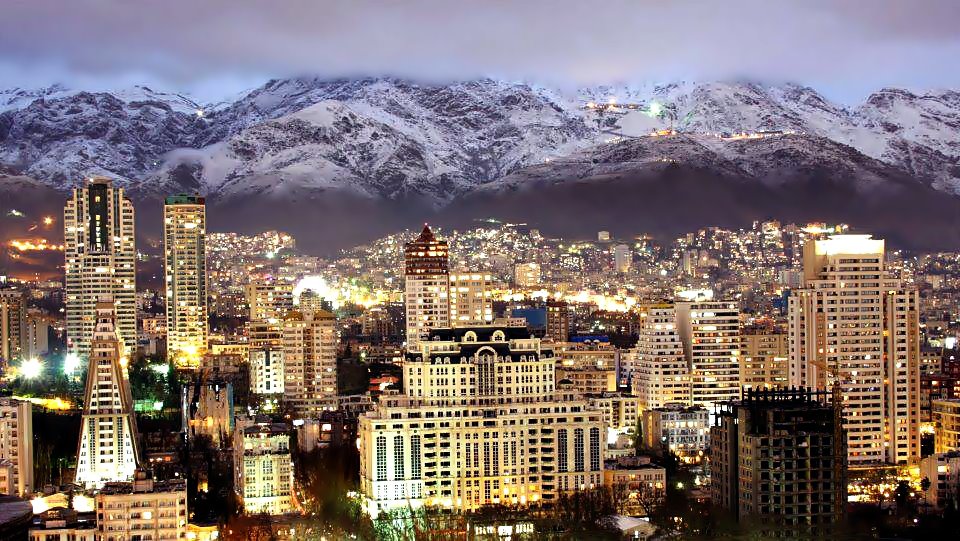
Tehran Night Series

Other photos from Tehran: https://theotheriran.com/tag/tehran/

Tehran, Iran-Night

Tehran, Iran-Night

Series: Iranian Handicraft and Art – Khatamkari

Khatam means incrustation in Persian and Khatamkari refers to incrustation work. It consists in the production of incrustation patterns (generally star shaped) with thin sticks of wood (ebony, teak, zizyphus, orange, rose), brass (golden parts) and camel bones (white parts). Ivory, gold or silver can also be used for collection objects.

Many objects can be decorated in this fashion, such as jewelry/decorative boxes, chessboards, pipes, desks, frames or some musical instruments. Khatam can also be used in Persian miniatures, making it a more attractive work of art. This craft was so popular in the court during the Safavid period that princes learned it at the same level of music or painting.

Based on techniques imported from China and improved by Persian know-how, khatam has existed for more than 700 years and is still practiced in Shiraz and Isfahan.

Source. IranReview

Academy Award winning Iranian filmmaker Asghar Farhadi named Busan Film Festival jury president

Asghar Farhadi named Busan Film Festival jury president

Academy Award winning Iranian filmmaker has been selected to preside over the jury for the New Currents section at the 19th Busan International Film Festival in South Korea.

Farhadi will head the festival’s jury panel that is comprised of French philosopher Jacques Ranciere, Professor of film studies at the Scotland’s University of St. Andrews Dina Iordanova, Indian actress Suhasini Maniratnam, and Korean filmmaker Bong Joon-ho.
The Iranian director Mohammad Mehdi Asgarpour’s drama We Have a Guest is also scheduled to compete at the festival which will take place from October 2 to 11.
https://i0.wp.com/i.telegraph.co.uk/multimedia/archive/02151/a-separation_2151511i.jpg

Academy Award winning Iranian filmmaker Asghar Farhadi

Born in 1972, Farhadi received his Bachelors in Theater from University of Tehran’s School of Dramatic Arts in 1998 and his Masters in Stage Direction from Tarbiat Modarres University a few years later.

His 2011 family drama A Separation became a sensation and received rave reviews from numerous international film events and festivals.

The film won the award for the Best Foreign Language film at the Golden Globe Award and Academy Award in 2012.

“Farhadi is a filmmaker who makes one becomes familiar with the rich culture of Iran. His works remind us of Victor Hugo,” The mayor of Paris, Bertrand Delanoe had earlier said during an award ceremony during which the Grand Medal of Vermeil from the City went to Farhadi for his latest drama The Past (Le Passé).

The Past has scooped numerous awards so far such as two prizes at the 66th Cannes film festival including the Best Actress award and the Prize of the Ecumenical Jury (prix du Jury œcuménique).

Dancing in the Dust (2003), The Beautiful 2004), Fireworks Wednesday (2006) and About Elly (2009) are his other directorial works.

Iran’s Gilan Province: Photos (Part 1)

More photos of Iran: http://comeseeiran.tumblr.com/

John Simpson: Iran is the most charming country on Earth

For John Simpson, Iran’s incredible monuments, dazzling landscapes and hospitable people make it a holiday destination beyond compare.

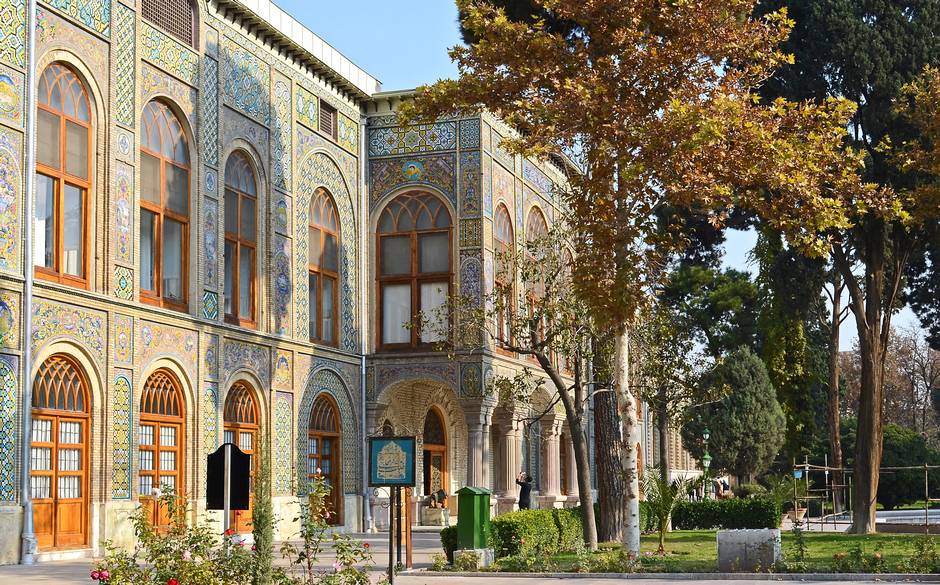
Iran, Tehran, Golestan Palace

Iran, Tehran, Golestan Palace


Think of a country, largely cut off from the outside world, with a lovely dry climate, sophisticated and charming people, superb archaeological monuments, mountains, deserts, the Caspian Sea. If recent history had been different, it would be the India of the travel business, only without the beggars and the chaos. Iran is, quite simply, the most charming country I know.

What always strikes me in Iran is the normality of it. If you wandered down the street in Tehran – say Dr Fatemi Avenue, where the old and much-loved hotel, the Laleh, stands – you would find it suspended between West and East, between the modern and something altogether older and more attractive: the Persian past.

This is not Saudi Arabia: women drive cars, run businesses and often forget to cover their hair as they’re supposed to do.

I first became aware of this affection in the Eighties, when I ventured out to cover an anti-British demonstration in the city. I was a lot younger then, and accompanied by a charming, fatherly cameraman. The crowd pushed and shoved, and shouted “Marg bar Tacher” – “death to Thatcher”. I asked the cameraman to stand on a low wall and film me as I walked through the angry demonstrators. “I really don’t think you should do this, John,” he said, with a troubled look at the mob. But I’d seen it done before, by an American correspondent. I weaved my way through the crowd, smiling and explaining that I was a Brit, and they opened up a pathway for me, shaking hands and bowing.

I finally reached the ringmaster, a professional demonstrator who was beating his chest, the spittle shooting from his mouth in his anti-British fervour. “Welcome, welcome to Iran, sir,” he said, and actually kissed my hand. It went down well on the news that night, I promise you.
All right, you’re saying, that was decades ago. But, you see, Iran has been cut off from the West for so long since then that the longing for contact with westerners has actually grown. If you spend an evening wandering round Isfahan, the incomparable city of Shah Abbas on the Zayandeh River, with the distant foothills of the Zagros purple in the fading light, your main problem will be saying no to the kindly people picnicking in the parks and gardens who beg you to join them.

Iran is recommended by the Telegraph Travel team as one of the 20 top destinations to visit in 2014. For more on what’s on offer, read our guide to holidaying in Iran.

http://www.telegraph.co.uk/luxury/travel/44626/john-simpson-iran-is-the-most-charming-country-on-earth.html

Other travel articles on Iran: https://theotheriran.com/tag/travel/

Series -Yazd, Iran: Tezerjan Glacier

Yazd, Iran, Terzejan Glacier

Yazd, Iran, Terzejan Glacier

Yazd, Iran, Terzejan Glacier

Yazd, Iran, Terzejan Glacier

Yazd, Iran, Terzejan Glacier

Yazd, Iran, Terzejan Glacier

Tezerjan Glacier is a natural glacier on Shirkouh mountain and Tezerjan village is located on its foothill. ( Top of Tezerjan mountain is 4005m from the sea level). Not long ago, a great of ice and snow were carried 60km to Yazd on hot days during the year, using pack animals, in order to chill beverages, especially Yazdian Paloude (sweet beverage containing thin fibers of starch jelly), so Yazdian Paloude is related to this natural glacier.

http://yazdphoto.com/panoramic%20photography.htm

Alireza Taghaboni: Iranian award-winning architect builds rotating home in Tehran

Sharifi-ha House, a seven-story building designed by contemporary Iranian architect Alireza Taghaboni, is located in upscale north Tehran and includes rotating levels. The three revolving bedrooms of the house allow its residents to always enjoy the sun and the best views over the city.

In order to change the view from the windows and enjoy the mid-afternoon sun, all you need to do is to push a button. Alternatively, the windows can tuck into the structure to provide a closed, more private environment.

“Our design scenario was based on seasons. In winter, when balconies are not usually used, and the outside view is not very important, the structure gets closed, and all attention is shifted towards the void inside the house. In summer, the cubes are extended outwards, and balconies are activated. Now all attention is towards the outside,” Taghaboni said.

Privacy has always been a top priority for the Iranians and this was taken seriously in the design of the rotating home. Instead of providing large windows, a void or empty space has been used in the middle of the building to allow sunlight into the house.

The void also resembles ancient Iranian architecture. “Our main reference for this project is ancient Iranian buildings, but with a complete revision based on a reading of our own, which obviously uses a modern design language,” Taghaboni said.

Around three million euros (USD 4 million) was spent on designing and building the house. Taghaboni says only one seventh of the money was used for building the rotating boxes.

The revolving home has been nominated for an international prize at an event called the World Architecture Festival which is to be held in Singapore in October, 2014.

Sources: Iran Review, archdaily.com (for more photos and detailed information)

Series: Iranian Handicraft and Art – Painting

Oriental historian Basil Gray believes Iran “has offered a particularly unique [sic] art to the world which is excellent in its kind”.

Painting in Iran is thought to have reached a climax during the Tamerlane era when outstanding masters such as Kamaleddin Behzad gave birth to a new style of painting.

Qajarid paintings, for instance, are a combination of European influences and Safavid miniature schools of painting such as those introduced by Reza Abbasi. Masters such as Kamal-ol-molk, further pushed forward the European influence in Iran. It was during the Qajar era when “Teahouse painting” emerged.

Source: Iran Review

Sar Yazd Castle in Yazd, Iran wins the grand prize for the 2014 UNESCO Asia-Pacific Cultural Heritage

The grand prize for the 2014 UNESCO Asia-Pacific Cultural Heritage went to Sar Yazd Castle in Yazd, Iran.

In June 2014, a panel of judges composed of international experts in conservation and restoration evaluated 46 projects from countries in the Asia-Pacific Region.

Among the projects, Sar Yazd Citadel restoration project from Iran managed to receive the grand prize. The grand prize was awarded to Iran due to the role of private institutions in preserving this historical location which has consequently influenced the socio-economic status of the locals in regard to creating job opportunities.

Sar Yazd is situated 30km south of Yazd province. Some speculate that the castle belongs to the Sassanid era.

Conserved and restored sites with more than 50 years of age which have been finished within last 10 years and have been open to visitors for at least a year have been considered eligible for this contest.

Yazd, Iran - Saryazd citadel - inside

Yazd, Iran – Saryazd citadel – inside

The 2014 and 2015 contests are held with the financial support from Beijing Sino-Ocean Charity Foundation.

Call for participation in the 2015 UNESCO Asia-Pacific Heritage Conservation contest will be announced in October 2014 via the contest’s website.

Source: Iran Review | Iranians’ Achievements (scroll down)

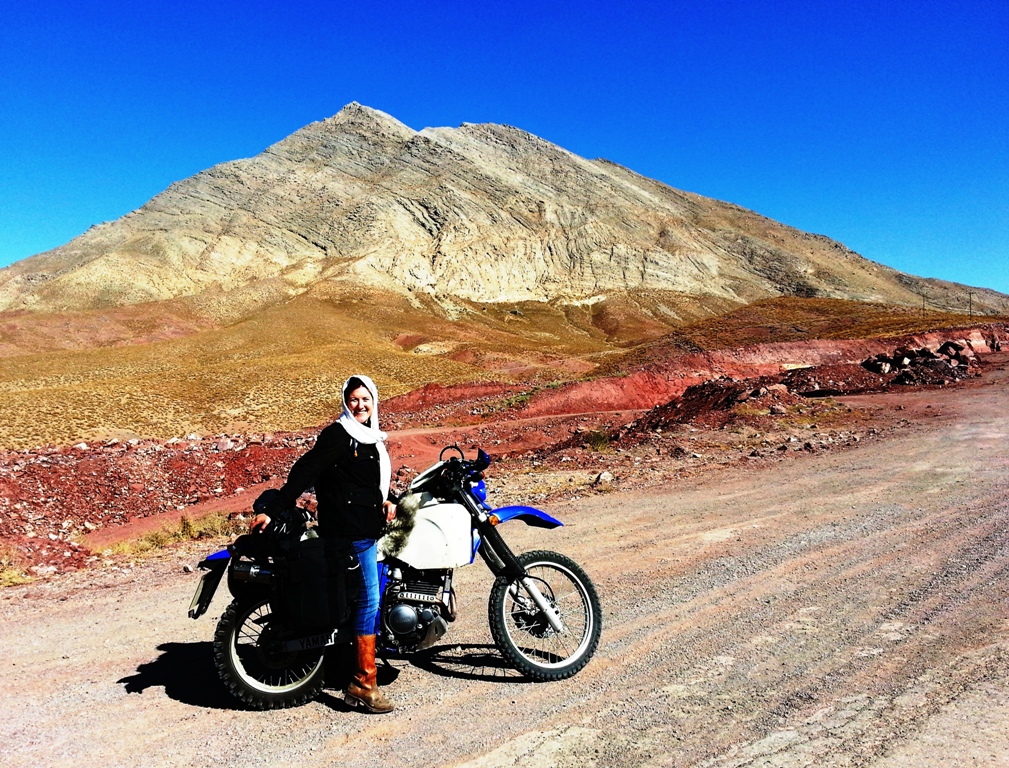
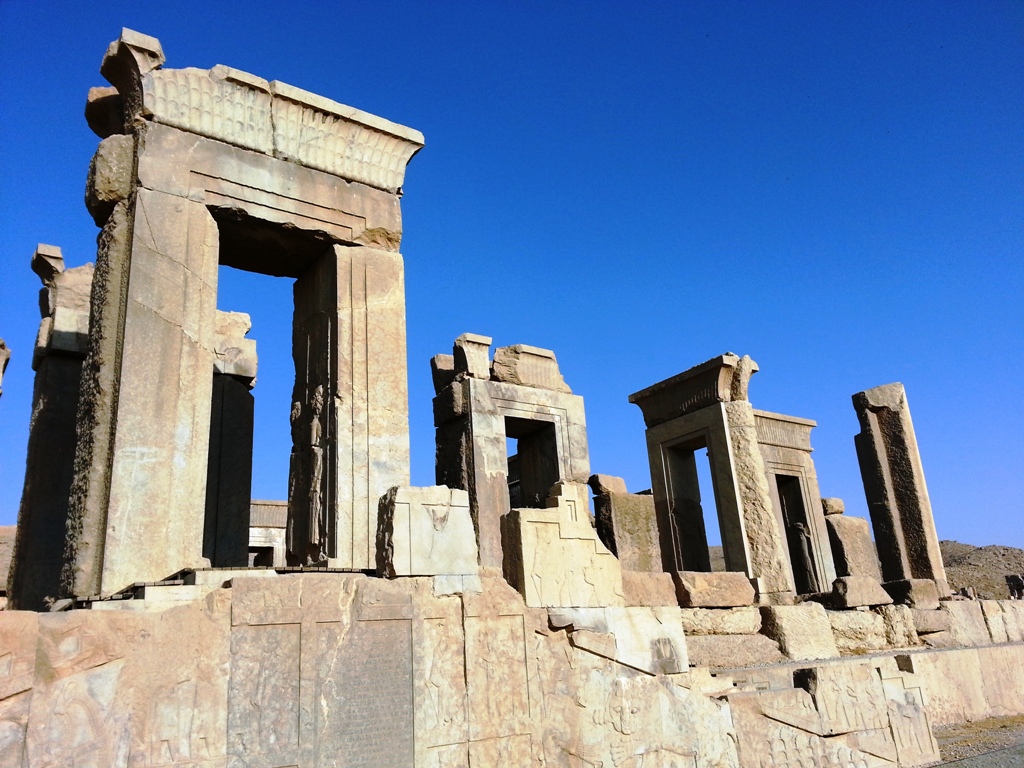
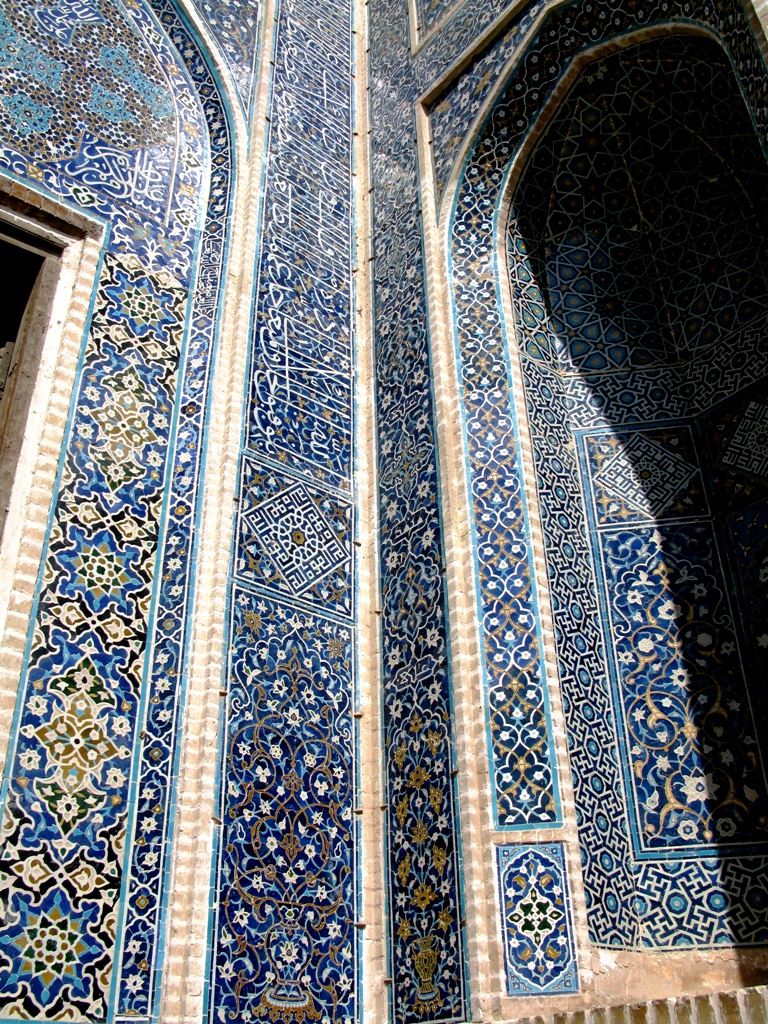
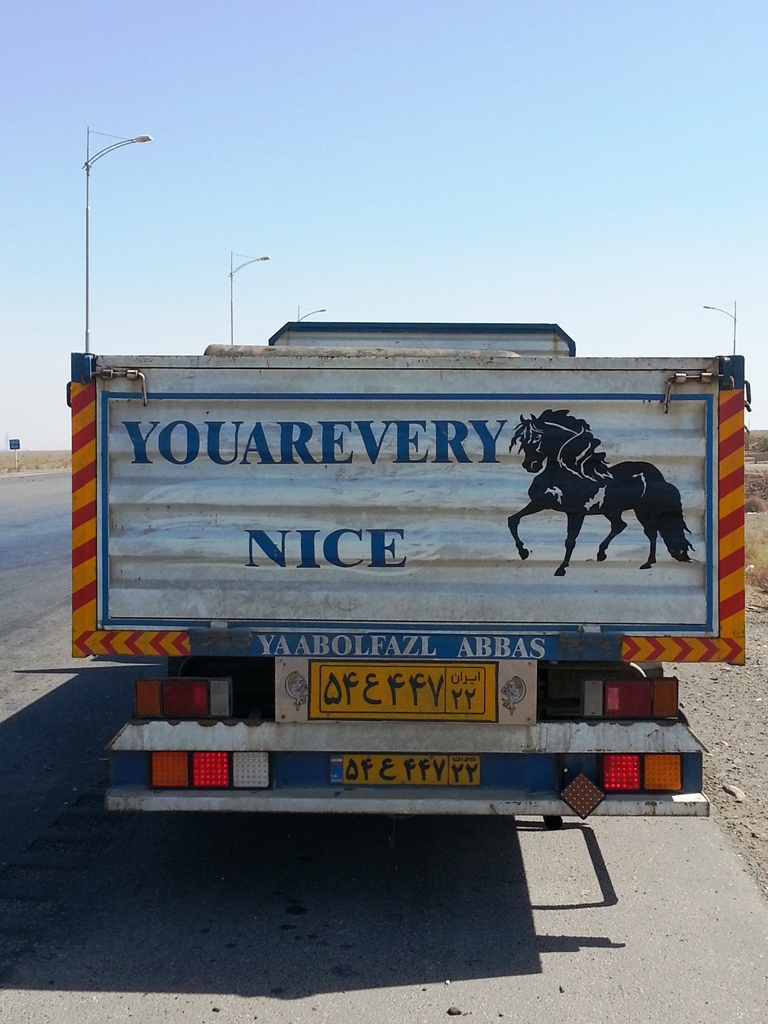
Series: Female British biker on Iranian roads – Photos

road-to-yadz-me-on-bike

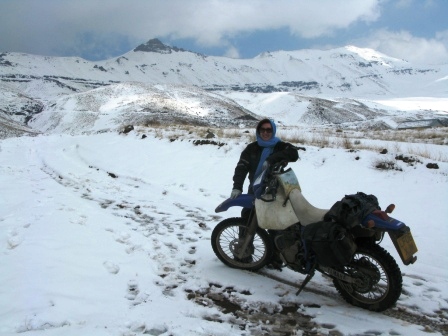
 bike-snow-alamut-valley

yadz-garden-window tehran-azadi-tower

persepolis-gates

yadz-mosque-tiling truck-youarevery-nice

Find the other parts of this Series (Story and Video) here: https://theotheriran.com/tag/travel/

Iranian actor Peyman Moaadi – lead male role in Oscar-winning “A Separation” now male lead in US production Camp X-Ray

The lead male role in Oscar-winning A Separation, Peyman Moaadi, has made male lead again, this time in a US-produced movie, titled Camp X-Ray.

The movie has been credited for moving performances by both of the stars.

Peter Sattler’s directorial debut, Camp X-Ray premiered at the Sundance Film Festival and is due for US screening on October 17.

Moaadi started his acting career in director Asghar Farhadi’s About Elly (2009). Two years later, he received the Silver Bear award for Best Actor from the Berlin International Film Festival for his leading role in Farhadi’s A Separation. The latter flick saw him doing justice to the character of a father in a family faced with a difficult decision – to move to another country or to stay in Iran and look after a deteriorating parent.

Source: Iran Review

Series: Female British biker on Iranian roads -Video

Find other parts of this series and other travel posts here: https://theotheriran.com/tag/travel/

Iranian movie ‘The Pearl’ wins at Bucharest film festival after also winning the UNICEF award at the 2012 International Film Festival for Children and Young Adults

Iranian screen production The Pearl directed by Sirous Hassanpour has garnered award at the 2014 edition of Bucharest International Film Festival, Romania.

The award went to the film’s cinematography director Saed Nikzat for his particular way and gorgeous imagery used in the film.

Nikzat as a director of photography contributed to more than 20 short and feature films.

Produced by Iran’s Farabi Cinematic Foundation, The Pearl also competed in Damah Film Festival that took place in the Japanese city of Hiroshima on August 2 and 3, 2013.

The film chronicles the life of a pearl hunter, Karim, who is living in a little town of southern Iran. Karim who suffers from heart trouble, finds out that he needs an urgent surgery for the disease but he cannot afford it. His two children think that they have to grow up sooner than expected time to help their dad.

The movie won the UNICEF award at the 2012 International Film Festival for Children and Young Adults in Isfahan.

The report also says that the film portrays the finer aspects of human relationships and moral values with beautiful cinematic skills.

http://www.iranreview.org/content/Documents/Iranian-Film-Wins-Venice-Int-l-Film-Festival-Top-Award.htm

FIVB Volleyball World Championship 2014 – Iran leads Pool E ahead of France, USA, Poland, Serbia, Argentina, Italy and Australia

FIVB Volleyball World Championships - Iranian Players celebrating important win

FIVB Volleyball World Championships – Iranian Players celebrating important win

After yesterday’s matches, France stood at the top spot with 10 points from forth matches, and are followed by Poland (9 points), Serbia (9 points), Iran (8 points), the US (7 points), Argentina (3 points), Italy (2 points) and Australia (0).

Now Iran have 11 points and stand atop their Pool for the time being.

Three Iranian volleyball athletes were selected as the best blocker, the best setter and the best receiver at the end of the first round of the 2014 FIVB Men’s World Championship in Poland.

Seyyed Mohammad Mousavi was named as the best blocker, Capitan Saeid Marouf as the best setter, and Farhad Qaemi as the best receiver of first round of FIVB World Championship.

http://english.farsnews.com/newstext.aspx?nn=13930620000825

Series: 60s and 70s in Iran – Andy Warhol in Isfahan 1976

Andy Warhol in Isfahan 1976

Andy Warhol in Isfahan 1976

Statue of Omar Khayyam to be set up in Manhattan

A statue of Persian classic poet Omar Khayyam (1048-1131) is scheduled to be installed in Manhattan, New York City. Created by the Iranian sculptor Hossein Fakhimi, the two-meter tall statue was sent from Tehran to New York on Monday evening.

“I have conducted two years of studies before starting the carving of the statues, since it was important for me to know different aspects of Khayyam’s character,” Fakhimi told the Persian service of MNA.

Khayyam is not an only a poet, but he is a great astrologer, philosopher and mathematician, he added.

He said that in addition to his studies, he had conversations with scholars Hossein Elahi-Qomsheii and Gholamhossein Ebrahimi-Dinani on Khayyam.

One of the statues was transferred to Neishabur on the National Day of Khayyam on September 2, 2014 and it will be erected in an appropriate place designed for the statue.

Another copy of the statue will be installed in Florence, following an order by Iran’s cultural attache in Rome during the Khayyam commemoration ceremony in Italy in 2010.

Omar Khayyam, a Persian mathematician, astronomer, and poet was renowned in his own country and in his own time for his scientific achievements, but is chiefly known to English-speaking readers through the translation by the English writer Edward Fitzgerald of a collection of his Rubaiyat (“quatrains”) in “The Rubaiyat of Omar Khayyam” (1859).

http://www.payvand.com/news/14/sep/1016.html


Iranian director Rakhshan Bani-Etemad wins Best Screenplay Award at Venice Film Festival

Bani-Etemad received the Best Screenplay award for her film Tales during the awards ceremony on the closing day of the festival on September 6, 2014 at Venice Lido.

Iranian filmmaker Rakhshan Bani-Etemad receiving her award at the Venice Film Festival

Iranian filmmaker Rakhshan Bani-Etemad receiving her award at the Venice Film Festival

Tales is composed of seven short episodes, in which Bani-Etemad reveals the fate of some of the main characters in her previous films like The Blue-Veiled, Under the Skin of the City and Mainline. […]

Best-known for addressing social problems in her films, Bani-Etemad has directed numerous feature-length and short films as well as documentaries, which have garnered many international and national awards.

“The characters in my films are real, [from among] the people whom I might meet every day,” she had earlier stated. […]

Another Iranian film maker Nima Javidi’s debut feature-length film Melbourne received critical acclaim at the festival. The film opened Critics’ Week section of the event.

French film composer Alexandre Desplat was the head of the international jury at this year’s Venice Film Festival. The 71st annual Venice Film Festival took place in Venice, Italy from August 27 to September 6, 2014.

Source: Payvand News of Iran

Roya Beheshti Zavareh – Associate Professor of Mathematics, winner of multiple important grants and honors

Roya Beheshti Zavareh

Roya Beheshti Zavareh

General Information
Born: 1977, Esfahan, Iran
Citizenship: Iranian

Education
Massachusetts Institute of Technology, Cambridge, Massachusetts.
Ph.D. in Mathematics, 1999-2003
Thesis Advisor: Prof. Johan de Jong

Sharif University of Technology, Tehran, Iran
B.S. in Mathematics, 1995-1999


Research Interests
Algebraic geometry

Positions
Associate Professor, Washington University in St. Louis, 2013 – present.
Assistant Professor, Washington University in St. Louis, 2007 – 2013.
Postdoctoral Fellow (Complementary Program), MSRI, Berkeley, 2006 – 2007
Postdoctoral Fellow, Queen’s University, Kingston, Canada, 2004 – 2006
Postdoctoral Fellow, Max-Planck-Institut fur Mathematik, Bonn, Germany, 2003 – 2004

Grants
National Science Foundation, DMS1204567, 07/2012-06/2015
Simons Collaboration Grants for Mathematicians, 2011-2016
AWM travel grant, June 2010
Fund for Scholarly and Professional Development (2006), Queen’s University

Honors
Rosenblith Fellowship, Department of Mathematics, MIT, 2000
Liberty Mutual Fellowship, Department of Mathematics, MIT, 1999
International Olympiad in Informatics (Netherlands 1995), bronze medal
International Mathematical Olympiad (Hong Kong 1994), silver medal

Source: http://www.math.wustl.edu/~beheshti/web-cv.pdf

Roya Beheshti was class mate and friend of Maryam Mirzakhani, the first woman winner of the Fields Prize (“Nobel Prize in Mathemathics”): https://theotheriran.com/2014/08/14/iranian-mathematician-maryam-mirzakhani-the-first-women-to-win-the-nobel-prize-of-mathematics/

Series: Female British biker on Iranian roads

This is what she writes on her blog:

In autumn 2013 and spring 2014 I spent two months riding 3000 miles around Iran. Of all my journeys, this is the one that has affected me most profoundly.

The popular image of Iran here in the West is of course, hardly welcoming, and I admit I set off with some trepidation – was it really wise for me to ride a motorcycle alone in this pariah nation of Islamic extremists, with all its gruesome facts and figures surrounding women’s rights, free speech and treatment of political prisoners?

But if I’ve learned anything from my travels it’s that a nation’s government and its people are entirely unconnected (I mean, really, would I want a foreigner to judge me on David Cameron’s actions?!). And as soon as I crossed the border it became apparent that the Iranian people were going to make me fall head over heels in love with their country.  I have never experienced such a warm welcome and effortless kindness and hospitality from a nation.

http://www.loisontheloose.com/my-adventures/iran/

The Telegraph writes:

“I was run off the road a lot of the time; at first I thought people were trying to mow me down, or Islamists; and it turned out they just wanted to give me bags of pomegranates.”

“You find that you just can’t eat any more food. It’s mad. I had heard Iranian hospitality was legendary, and it really is. There was none of the dour religiosity you usually hear about.”

Other aspects of the country have also given her a taste for more, including the “incredibly beautiful” architecture and mosaics of the mosques, striking modernist buildings such as the Azadi tower in Tehran, and the “unique” desert city of Yadz.

“My bike is still out there with some wonderful people I stayed with in Tehran,” she says. “I’m hoping to go back next year and visit the areas I missed.”

http://www.telegraph.co.uk/travel/activityandadventure/10462760/Iran-one-womans-solo-motorbike-tour.html#disqus_thread

Farhad Eskandari – disabled Iranian war veteran becomes the oldest Mera Peak conqueror

Farhad Eskandari Iranian Mountain Climber

Farhad Eskandari, who is almost 80 years of age and has recently had his name recorded as the oldest climber of Mera Peak in the Himalayas, has scaled high peaks across Iran and around the world for more than four decades.

Never before has anyone managed to pull off such a great accomplishment at such an advanced age. Among the peaks he has conquered are Damavand [the highest peak in Iran, 5,670m], Sahand [the highest in the province of East Azerbaijan, 3,707 m], Sabalan [in Ardabil Province of northwestern Iran, 4,811m], Alam-Kuh [in the Alborz mountain range in the northern Iranian province of Mazandaran, 4,848 m] and lots of others in Iran. Mr. Eskandari, who is originally from Zanjan [the capital of Zanjan Province in northwestern Iran], has conquered Ararat, and Sobhan in Turkey four times and some other peaks in Central Asia.

Mr. Eskandari, who suffered injuries in his eyes and hands during the 8-year war between Iran and Iraq in the 80s, has added the title of the oldest climber of Mera Peak to his trophy cabinet. He has set his sights on Mount Everest with an elevation of 8,848m.

http://iranfrontpage.com/news/society/sports/2014/08/disabled-iranian-war-veteran-becomes-oldest-mera-peak-conqueror/