Category Archives: People & Society

Jewish Australian Ben Winsor: Truth about Iran – Facts that may surprise westerners

mosque in iran

Isfahan Iran, Naghsh-e Jahan Square

Since the Iranian revolution and hostage crisis of 1979, Iran has had antagonistic relations with the U.S. and other Western nations, with little official communication between heads of state, fierce rhetoric on opposing sides, and increasing sanctions.

Given this history, it’s not surprising that many Westerners fail to appreciate ways in which Iran is a relatively advanced and even liberal state.

It certainly took me by surprise when I traveled there last year.

A Positive Opinion Of Westerners

Opinion polls show the majority of Iranians hold a favorable opinion of Americans, making Iran second only to Israel as the most supportive country in the Middle East.

To travel as a Westerner in Iran is to be routinely stopped on the street and welcomed by curious and generous strangers. You will be given cool drinks, invited to parties, and offered free tours of anything nearby.

Young Iranians get their hands on iPhones despite the sanctions, use VPN software to hack past their regime’s ban on Facebook, and watch American TV shows and movies online.

As reported in The Atlantic, a clear majority of Iranians want the current Iranian–U.S. nuclear talks to succeed. If talks fail, however, many expect that moderates like the current president would lose power to religious hardliners.
[…]
Related articles: https://theotheriran.com/tag/foreigners-in-iran/

Better Gender Equality Than Some Countries

Unlike in Saudi Arabia, a close U.S. ally, women in Iran have the right to vote, drive, and travel alone. Women have served in parliament and in cabinet, though they are banned from running in presidential elections, and they attend universities, though some have restricted them from taking certain courses.

The issue of women’s rights highlights the conflict between Iranian President Hassan Rouhani — who is on the more moderate end of the country’s religious-conservative ruling clique — and the country’s Supreme Leader, Ayatollah Ali Khamenei.

On International Women’s Day in April, Rouhani spoke live on television and criticized those who consider women a threat, saying Iran had “a long way to go” and that he “will not accept the culture of sexual discrimination.”

Iranian mother, daughter and some christmas trees

Iranian mother, daughter and some christmas trees

Articles on Iranian women: https://theotheriran.com/tag/women/

Birth Control

After the Iran–Iraq war, when focus shifted from conflict to the economy in 1988, the same Ayatollah who legalized sex-changes issued a ruling making birth control free and widely available. He was convinced a high birth-rate would be bad for the economy.

With family planning sessions provided to all newlyweds, the birth-rate fell more than half, allowing parents to invest more in their children’s education and giving women the chance to gain ground in the workforce. More than 60% of Iranian university students are now women, with numbers even higher in some science and engineering courses, the BBC reported.

An American Ally?

Iran has found itself partially aligned with the West in fighting groups like the Taliban in Afghanistan, and jihadists in Iraq and Syria.

After 9/11, Iran supported overthrowing the Taliban in Afghanistan and assisted NATO with strategy and the formation of a new government.

Iran also had no great love for Iraq’s regime, having fought a brutal war against Saddam Hussein in the 1980s. Backed by the Reagan Administration at the time, Hussein used sarin gas and other chemical weapons  on thousands of Iranian soldiers.

The dynamic changed in 2013, however, when Iranians elected President Rouhani, a reformist who has staked his presidency on mending ties with America.

Iranian policy in Iraq has now also refocused with the rise of Sunni ISIS jihadists. Iran worries that ISIS is destabilizing the region and jeopardizing the current pro-Iranian governments in Iraq and Syria.

Kurds battling ISIS in northern Iraq report that Iran was the first country to respond when they requested support.

Related articles: https://theotheriran.com/tag/usa/

Source: http://www.businessinsider.com/the-truth-about-iran-2014-9#ixzz3GW9CEQAj

Iranian children to draw paintings for the disabled

Iranian Children paint for disabled

Iran Paralympics Committee has invited Iranian children to take part in a national drawing contest dubbed “Disability is not Limitation”.

Iran Sports Federation for the Disabled holds the drawing contest “Disability is not Limitation” for children of age 4-12.

The contest is designed to mark Paralympics Week and select works will be awarded on Islamic holiday Eid Ghadeer on October 13.

The paintings should be about the disability and overcoming limitations.

Source: http://iranfrontpage.com/news/cultures/arts/2014/09/iranian-children-draw-paintings-disabled/

Iran’s Mahak won an international Achievement Award for its exceptional support of children suffering from cancer

Mahak

Iran’s Mahak secured an Achievement Award from the International Project Management Association.

MahakThe IPMA, a non-governmental organization headquartered in Amsterdam, handed out its 2014 Achievement Award to Iran’s Mahak, the Society to Support Children Suffering from Cancer, Khabaronline news website reported.
Mahak was the only finalist in the category of internationally funded humanitarian aid project for its two-year operational and developmental project between March 21, 2012 and March 21, 2014.

At the Award Gala, on September 30 in Rotterdam, the Netherlands, the Iranian charity, which has been active for 23 years and says to have provided care for over 21,000 children suffering from cancer so far, walked away with the award.

Source Iran Front Page: http://iranfrontpage.com/news/society/healthcare/2014/10/mahak-iranian-charity-received-achievement-award-ipma/

Another article about Mahak:
https://theotheriran.com/2013/11/08/iranian-charity-provides-medical-care-to-refugee-children/

Smiles from the ‘Axis of People’ – Reflecting on Iran

Get this headline writers – Iran may just be the friendliest place in the world!

It’s certainly the friendliest country I work in. I smile and laugh as much in Iran as I do at home in South East Asia’s Lands of Smiles…

Whenever we stop for a wander in a small Iranian town there’s an echoing chorus of “Salam” as shopkeepers and customers greet us one by one. Cars slow, their drivers wind down their window and shout “Welcome to Iran!” Excited children gather to shout “Which country?” or “Where from?” – the few words of English they can remember from school. It’s worth noting that these small towns are where Islamic faith is at its strongest…

Iran - Axis of People - Land of smiles - 1

Iran – Axis of People – Land of smiles – 1

From relatively modern Tehran to stylish Shiraz and stunning Isfahan to the tiny tea stop villages, the welcome is universal – whether a handshake and a “salam”, a gentle tap on the heart or a “hello mister”. It’s also surprising how much English is spoken – we shared our picnic with a homeless man in a park recently who thanked and blessed us warmly in English.

British, Australian, Irish and, yes, Americans, are greeted just the same. “No problem for me, only the government”, a hotel manager said to me when I handed him a trio of US Passports. Whose government he was referring to didn’t matter; both are equally guilty of historic paranoia and mistrust. Majid, a chemist we met in the desert town of Yazd said “if governments talked to each other like you and I are talking there would be no problem”; wise and hospitable are not adjectives Western media use liberally when talking about Iran.

The best way to enjoy Persian hospitality is to indulge in the national pastime of picnicking. The weekend (Friday) is a great day to join families around the kettle and stoves in parks and public places across Iran to share friendship and laughter. In the small village of Bazm in the lush Bavanat Valley, we stopped beside a village Emamzadeh (shrine) armed with a couple of flasks of tea and some famed Yazd home made confectionary. We soon found ourselves nestled under trees in the adjacent park, enjoying the holiday atmosphere, lounging on mats with a dozen or so extended families. Sauces bubbled away in pots and saffron rice steamed perfectly atop burners – the Persian picnic is a full-on culinary experience!

Iran - Axis of People - Land of smiles - 2

Iran – Axis of People – Land of smiles – 2

In the park we met Nilafar, who studied engineering on the Persian Gulf (60% of engineering graduates in Iran are women – another statistic for the headline writers).

“Have you seen an American before?”

“Only in the movies”, she replied calmly.

There was no alarmed reaction – just a scramble for photos.

The Friday call to prayer from the mosque briefly interrupted the chatter and laughter around the park. A hapless looking priest wandered outside looking for business, but here, as elsewhere in Iran, people are voting with their flasks…

My final memory of an amazing month spent in Iran is the holiday atmosphere in the mighty Naghsh-e Jahan Square in Esfahan. Its size may no longer be ‘half the world’ but it’s beauty and grassy verges draw Esfahanis and visiting Iranians every Friday evening. Long gone are the days when the Safavid Rulers sat on the terrace of the Ali Qapu Palace overlooking the square to watch polo; the square belongs to the people now.

After 10pm the square is still full of families, sitting on mats beside spurting fountains and coloured lights surrounded by beautifully tiled Islamic domes. Young children – up way after western bedtimes – run around with oversized saffron ice creams. Beside the tea flasks, kebab burners and pots and pans are everything from toy cars to table football games. Everyone wants to offer us food, drink and friendship. It’s hard to imagine such a sober, cultured and friendly atmosphere in a western park late on a Friday night.

In addition to the natural beauty and historical sites, we visited mosques and madrassas on our travels. Often called ‘hotbeds of religious fervor’, we found them to be tranquil oases of study and peace, where the warmth of the welcome humbled us. Learned people from the religious schools came to greet us, interested in our nationalities and religions, before posing for photographs.


More details and photos:

http://www.wildfrontierstravel.com/en_GB/community/blog/post/smiles-from-the-axis-of-people-reflecting-on-iran

Iran traveller Mike Milotte: Don’t skip Tehran’s unmissable sights

Tehran is the city travellers love to hate, with many avoiding a stay here altogether en route to Iran’s more popular tourist destinations. But as Mike Milotte discovers, the capital’s gorgeous galleries, sociable locals and exhilarating pace give it a beautiful side too.

Iranian friends and our guide/interpreter alike think we’re mad, but we persist with our plan to spend 10 days of our month-long visit to Iran in the polluted and architecturally unattractive capital, Tehran.


For my part, eleven museums, six art galleries and three bazaars later – not to mention two mountain trips, one cinema visit and a memorable night at home with a Tehrani family – I’m glad we persevered.

The plaza outside the main bazaar is a great spot for people-watching. The streets are teeming, not with mullahs or gun-toting police as I had anticipated, but with seemingly carefree shoppers, armed with mobile phones. There are lots of head-to-toe black chadors, but just as many women wear cheerful loose-fitting headscarves, tight jeans and dramatic makeup.


Meeting Tehranis is remarkably easy and richly rewarding. As we try to buy saffron, piled high at the very un-touristy Tajrish bazaar, a young woman asks in broken English if we need help. We get talking. ‘N’ is an artist, and one of her friends has an exhibition at the renowned Seyhoun art gallery. We’re invited along, and are soon chatting to half a dozen of the city’s brightest young painters, N’s friends, who excitedly show us their work on smart phones and tablets. We adjourn to a working studio, home to illicit life drawing classes, where we drink tea and leave with a fabulous landscape painting that will grace our living room.

Next day, in the unpeopled galleries of the Museum of Contemporary Art, a staff member tells us 3,000 works by western painters like Picasso, Van Gogh, Bacon, etc –  all deemed degenerate – languish in the basement while ‘safe’ Iranian art bedecks the walls. ‘That’s why no-one bothers coming,’ our informant asserts. Later, in the Carpet Museum next door, an attendant eagerly points out some 18th century Persian rugs depicting erotic imagery where more than female heads are laid bare. ‘How come they’re still on show?’ I ask. He just smiles back.

As the only foreigners in most of the places we visit, we are an endless source of interest to shyly curious Tehranis. One such encounter, during a lung-reviving mountain walk at Darband, ends with an invitation to dinner in the family home. The women all wear party dresses and have their heads and arms uncovered, illegal, even at home, when a male stranger is present. French wine and Russian vodka, smuggled from Iraq, are offered, and after an unforgettable meal of lamb with walnuts and pomegranate, we settle down to watch television.

An Iranian family go for a stroll in Tehran. Image by Amos Chapple / Lonely Planet Images / Getty

Zigzagging back to our hotel in a bone-shaking taxi without seatbelts, our driver, a talkatively wise man with reasonable English, points out ranks of enormous SUVs – gleaming Porsches, Mercs, BMWs and Audis – waiting for their owners to spill out of fashionable and expensive eateries in Tehran’s northside. ‘Sanctions’, he says, ‘have made a small number of businessmen with political friends fantastically rich.’

Am I imagining it, or is it beginning to feel more and more like home here?

A young couple admire the view of Tehran at dusk. Image by Amos Chapple / Lonely Planet Images / Getty

A young couple admire the view of Tehran at dusk. Image by Amos Chapple / Lonely Planet Images / Getty

Glass and Ceramics Museum 
Stunning artefacts from the 2nd millennium BC onwards, beautifully displayed and annotated. We were the only visitors which meant we could ooh and aah without embarrassment.

A display at the Glass and Ceramics Museum. Image by Mike Milotte / Lonely Planet

A display at Tehran’s Glass and Ceramics Museum. Image by Mike Milotte / Lonely Planet

Reza Abbasi Museum
The exhibits, starting from around 2000BC, are without exception quite exquisite – especially the gold work – and as few people seem to visit, you might have it entirely to yourself.

Jameh Bazaar
A massive Asian flea market staged on Fridays only, when the main bazaar is closed. Come prepared to buy stuff you neither need nor want but will treasure for ever. Increase the pleasure by haggling hard.

Carpet Museum of Iran
Look out for two enormous carpets depicting (among others) Napoleon, and see if you can spot the difference in how he’s depicted. The carpets are beautiful but unlike its Turkish equivalent in Istanbul, this museum’s signage isn’t great.

Colourful detail in the Carpet Museum of Iran. Image by Mike Milotte / Lonely Planet

Colourful detail in the Carpet Museum of Iran. Image by Mike Milotte / Lonely Planet

Taxi ride across town
You’ll probably survive it, and you’ll certainly never forget it. Tehran traffic seems chaotic yet it flows smoothly. The secret is in the weaving and dodging performed by drivers who appear mad but who never lose their tempers, let alone their bumpers.
Read more: http://www.lonelyplanet.com/iran/travel-tips-and-articles/tehrans-top-attractions#ixzz3CBhjP749


John Simpson: Iran is the most charming country on Earth

For John Simpson, Iran’s incredible monuments, dazzling landscapes and hospitable people make it a holiday destination beyond compare.

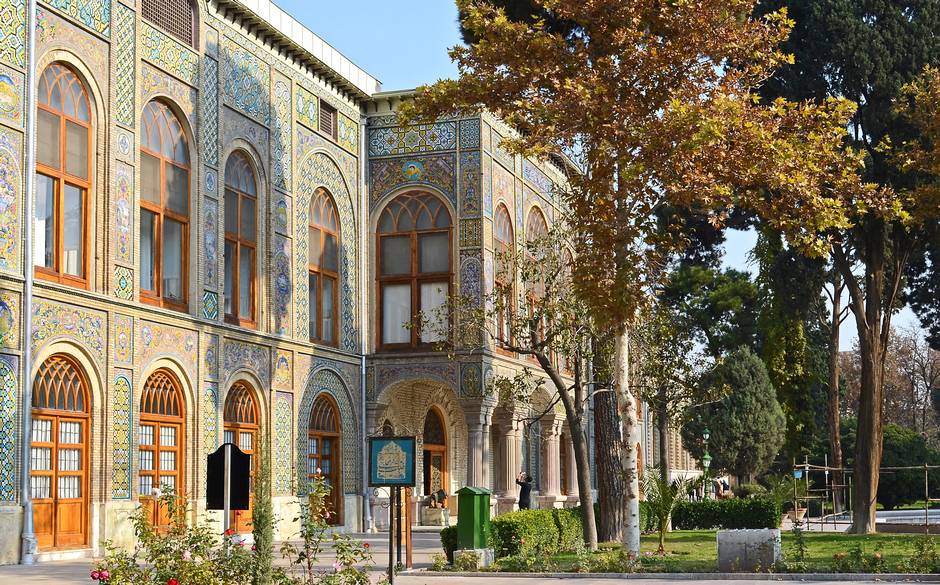
Iran, Tehran, Golestan Palace

Iran, Tehran, Golestan Palace


Think of a country, largely cut off from the outside world, with a lovely dry climate, sophisticated and charming people, superb archaeological monuments, mountains, deserts, the Caspian Sea. If recent history had been different, it would be the India of the travel business, only without the beggars and the chaos. Iran is, quite simply, the most charming country I know.

What always strikes me in Iran is the normality of it. If you wandered down the street in Tehran – say Dr Fatemi Avenue, where the old and much-loved hotel, the Laleh, stands – you would find it suspended between West and East, between the modern and something altogether older and more attractive: the Persian past.

This is not Saudi Arabia: women drive cars, run businesses and often forget to cover their hair as they’re supposed to do.

I first became aware of this affection in the Eighties, when I ventured out to cover an anti-British demonstration in the city. I was a lot younger then, and accompanied by a charming, fatherly cameraman. The crowd pushed and shoved, and shouted “Marg bar Tacher” – “death to Thatcher”. I asked the cameraman to stand on a low wall and film me as I walked through the angry demonstrators. “I really don’t think you should do this, John,” he said, with a troubled look at the mob. But I’d seen it done before, by an American correspondent. I weaved my way through the crowd, smiling and explaining that I was a Brit, and they opened up a pathway for me, shaking hands and bowing.

I finally reached the ringmaster, a professional demonstrator who was beating his chest, the spittle shooting from his mouth in his anti-British fervour. “Welcome, welcome to Iran, sir,” he said, and actually kissed my hand. It went down well on the news that night, I promise you.
All right, you’re saying, that was decades ago. But, you see, Iran has been cut off from the West for so long since then that the longing for contact with westerners has actually grown. If you spend an evening wandering round Isfahan, the incomparable city of Shah Abbas on the Zayandeh River, with the distant foothills of the Zagros purple in the fading light, your main problem will be saying no to the kindly people picnicking in the parks and gardens who beg you to join them.

Iran is recommended by the Telegraph Travel team as one of the 20 top destinations to visit in 2014. For more on what’s on offer, read our guide to holidaying in Iran.

http://www.telegraph.co.uk/luxury/travel/44626/john-simpson-iran-is-the-most-charming-country-on-earth.html

Other travel articles on Iran: https://theotheriran.com/tag/travel/

Series: Female British biker on Iranian roads -Video

Find other parts of this series and other travel posts here: https://theotheriran.com/tag/travel/

Farhad Eskandari – disabled Iranian war veteran becomes the oldest Mera Peak conqueror

Farhad Eskandari Iranian Mountain Climber

Farhad Eskandari, who is almost 80 years of age and has recently had his name recorded as the oldest climber of Mera Peak in the Himalayas, has scaled high peaks across Iran and around the world for more than four decades.

Never before has anyone managed to pull off such a great accomplishment at such an advanced age. Among the peaks he has conquered are Damavand [the highest peak in Iran, 5,670m], Sahand [the highest in the province of East Azerbaijan, 3,707 m], Sabalan [in Ardabil Province of northwestern Iran, 4,811m], Alam-Kuh [in the Alborz mountain range in the northern Iranian province of Mazandaran, 4,848 m] and lots of others in Iran. Mr. Eskandari, who is originally from Zanjan [the capital of Zanjan Province in northwestern Iran], has conquered Ararat, and Sobhan in Turkey four times and some other peaks in Central Asia.

Mr. Eskandari, who suffered injuries in his eyes and hands during the 8-year war between Iran and Iraq in the 80s, has added the title of the oldest climber of Mera Peak to his trophy cabinet. He has set his sights on Mount Everest with an elevation of 8,848m.

http://iranfrontpage.com/news/society/sports/2014/08/disabled-iranian-war-veteran-becomes-oldest-mera-peak-conqueror/

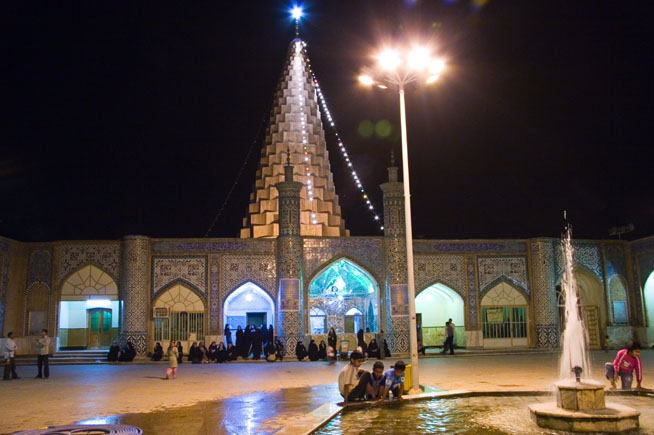
Tomb of Hebrew prophet Daniel in Susa, Iran

The Book of Daniel mentions that Daniel lived in Babylon and may have visited the palace of Susa‌, Iran, but the place where he died is not specified; the tradition preserved among the Jews and Arabs is that he was buried in Susa. Today the Tomb of Daniel in Susa is a popular attraction among local Muslims and Iran’s Jewish community alike.

Susa, Iran - Tomb of Daniel at night

Susa, Iran – Tomb of Daniel at night

Source: wikipedia

Series American couple in Iran: Audry’s cites on Persepolis: Ancient Persia, Modern Lessons

Although Persepolis is one of Iran’s top archeological and tourist sites, I was careful to keep my expectations in check before visiting. After all, what would remain of the 2,500 year-old capital of the Achaemenid Empire? Amidst crumbled columns, I found great detail that blew me away and a surprising connection to the present.

Gate of All Nations - Persepolis, Iran

Gate of All Nations – Persepolis, Iran

When I first entered Persepolis through the Gate of All Nations, I was struck by the scale of it all – the statues, the columns, the great stone. I tried to imagine the process of transporting the raw materials to this place, constructing the city and palace, and fashioning it all without the mechanical means we have today. […]

Persepolis eastern staircase leading to Apadana Palace, all 23 subject nations represented.

Persepolis eastern staircase leading to Apadana Palace, all 23 subject nations represented.

Like a camera lens, my eyes began to focus on stone-carved details — hair, faces, beards, hats, and clothes, gifts carried in hands. That you could still make out every curl in a beard, eyelash on a camel and softened skin of soldiers holding hands — 2,500 years later – struck me as truly spectacular. […]

And it went on like this, through the citizens of each member nation — Egyptians, Assyrians, Indians, Tajiks, and so on. Each was easily identifiable, their physical appearance and cultural trappings preserved in stone from 500 B.C. […]

It was the whole of these details that to me seemed to define the character of the Achaemenid Empire: a multi-ethnic ancient empire built on respecting – if not maintaining — the diversity of many cultures amidst a unifying loyalty to one king. […]

Persian and Median soldiers holding hands, leading the way to the king.

Persian and Median soldiers holding hands, leading the way to the king.

Cyrus the Great’s Human Rights Charter
While it was Darius the Great who built this palace at Persepolis, it was his father-in-law – Cyrus the Great – who attempted to set the foundation of mutual respect within the Achaemenid Empire. In his Babylon Cylinder (539 B.C.), Cyrus put forth some of the first recorded mentions of human rights, an expression of tolerance, and of religious, linguistic and racial equality across the empire.

History tells us that great civilizations have come and gone, risen and fallen, ascended and crumbled. The pity of the great Persian empire — 23 nations under one roof and the nascent echoes of human rights — was that a great man came and went well before his time. […]

Head over to: Uncornered Market – Travel and Life Adventure | Persepolis to see all photos, and read the whole text.

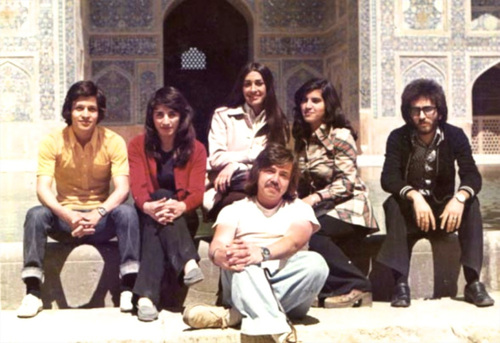
Series: 60s and 70s in Iran – Students II

Iranian Students in the 70s

Iranian Students in the 70s

Series: 60s and 70s in Iran – Students

Students in the 70s

Students in the 70s

Series American couple in Iran: A Poem to the People

Iranian Hospitality on Train from Iran

Iranian hospitality on train from Iran to Turkey

My heart sank as I watched the news from Iran this morning, scenes of the British Embassy being charged by an angry mob in Tehran. It saddens me – angers me, really – that narrow groups like this who define the world’s perception of Iran and the Iranian people are in reality such a small percentage of the country’s population.

My experience tells me they are the outliers, yet circumstances conspire to convince us on the outside to see them as the norm.

I thought back to all the people we met across Iran, from families in small mountain villages to shopkeepers on the busy streets of Tehran, virtually all of them welcoming us Americans – the supposed enemy — almost always with open arms and quite often bearing gifts. I remembered our conversations with Iranian people of all ages who longed for engagement — not only with us, but with the rest of the world.

I felt like yet another door closed on them today.

Continue to read the whole story here:
Uncornered Market – Travel and Life Adventure | Iran: A Poem to the People

Series: An American Couple in Iran

Audrey and Dan at Persepolis

Audrey spoke to IranWire about how the country defied all her expectations:

What was your overriding impression of the country and its people?
We felt very welcome in Iran and were impressed by the level of hospitality shown by ordinary Iranians that we met on the streets, in markets, anywhere. Additionally, the ancient sites, the architecture and the deep history. […]

Where did you visit during your trip to Iran?
We spent the first two weeks on a small group tour with G Adventures where we visited Tehran, Hamedan, Kermanshah, Ahvaz and Susa, Shiraz (and Persepolis), Yazd, Esfahan, Abyaneh and back to Tehran. Then we had a private guide for a week where we visited Rasht, Massouleh, Ardabil, Tabriz, Kandovan and the St. Stephanos Church near Jolfa. […]

When you continued your travels, and eventually went back to the U.S., what was the most commonly asked question about your time in Iran?
“Was it safe for you?” Many Americans only see Iranians when they appear on the news, and this is usually during demonstrations or political speeches. They don’t realize that there is a whole other Iranian world outside of this. So we would surprise American friends and family when we joked that Iran was the place that we felt most like rock stars because of the kindness and attention we felt. We told stories of being invited to tea by strangers or people buying us gifts. […]

What was your favorite place in Iran? Do you have one memory that stands out for you?
Our top three places: Shiraz: Beautiful mosques and sights, and we found the people to be incredibly friendly and warm; Persepolis: Impressed not only by the engravings and ruins, but also the history and multiculturalism of the Persian Empire that we learned about while there; Northwestern Iran, especially Tabriz and the Armenian Monastery.

Continue to read the full article: IranWire | An American Couple in Iran

American athletes get star treatment in Iran: “USA, USA” chants for US athletes

“People look at me like I have two heads,” said James Ravannack, describing the reaction he gets when he explains to people what a fabulous time he had in Iran. Ravannack, president of USA Wrestling, told Al-Monitor that he “can’t wait to go back” and wants to take his family along to stay for a month. […]

For Americans, who tend to view Iran through the lens of the 1979 hostage crisis or President George W. Bush’s “axis of evil” speech, going to Iran and actually meeting its people can be mind-blowing.

Robby Smith, 27, the number one US heavyweight Greco-Roman wrestler, told Al-Monitor that the reception he got from Iranian fans was “the most incredible I’ve ever experienced.” […]

The Iranians kept chanting, “ ‘R. Smith’ and ‘USA, USA!’ ” Smith said. The same thing happened after he came from behind against an Armenian wrestler and when he returned, in plain clothes, toward the end of the event. “Thousands of Iranians chanting ‘USA!’” […] Fraser, who estimates that he has visited 50 countries in 19 years with USA Wrestling, said, “Iran was, if not the top, then at the top” of all of them. He added, “[Iranians] are some of the nicest people I’ve ever met. They treated us like royalty.” […]

This reporter was present in 1998 when US wrestlers returned to Iran for the first time since the 1979 revolution. The US flag was displayed in Tehran’s Azadi stadium — not burned as usual in an anti-American demonstration — and Iranian fans cheered as much or more for the Americans as they did for their own team. […]

A unique feature of the recent trip to Iran by the US wrestlers is that their current team leader — a Minneapolis wrestling enthusiast named Christina “Kiki” Kelley — is a woman. […] Kelley, who like the other members of the US delegation, had expected a grim, strict Islamic state, came prepared with ultra-conservative black clothes — which elicited giggles, she said, from many Iranians. Asked to participate in the opening ceremonies for the competition, she changed into red, white and blue.

“I kept my head bowed until we were two-thirds of the way around, when I realized that men were standing and that they were not booing, they were cheering,” […]

Kelley was invited by her Iranian hosts to stay an extra six days, which gave her a chance to travel to Isfahan and to go to schools, an orphanage and numerous cultural sites, including a private art collection at the parliament in Tehran. She, like Ravannack, said she wants to go back with her family and is also considering becoming a sports and cultural ambassador to Iran if the US government decides to appoint one.

Source: Al-Monitor | US athletes get star treatment in Iran, Facebook | Steven H Fraser | Photos, Muftah | Iran and the United States Wrestle with Love

UNHCR Praises Iran for Supporting Foreign Refugees

Head of the United Nations High Commissioner for Refugees (UNHCR)‘s Office in Tehran Sivanka Dhanapala praised Iran’s performance in hosting and aiding foreign refugees, specially the Afghans. Dhanapala announced on Thursday that Iran has been successful in hosting the highest number of refugees in the world, and praised the country’s contribution to the promotion of refugees’ welfare and upgrading their educational level.

Afghan refugee boys in Iran (source: UNHCR)

Afghan refugee boys in Iran (source: UNHCR)

The literacy rate of the Afghan refugees that stood at six percent upon arrival in Iran, dramatically rose to 60 percent in 2013, he said, adding that this is an indication of Iran’s success in that regard.

“No host country can gain such an achievement,” Dhanapala said.

Praising Iran’s hospitality, he said, along with Lebanon and Pakistan, Iran has been the major refugee hosting country around the world.

Iran has been a generous host for more than 2 million Afghan refugees for two decades, with little help from the international community.

http://www.payvand.com/news/14/jun/1197.html

Video: “The daily show” by Jon Stewart in Iran – yes Iran

Series: Interesting photos from the FIFA worldcup 2014 – from inside Iran

Image

Posts on Iranian women: https://theotheriran.com/tag/women/

All posts with photos: https://theotheriran.com/tag/photos/

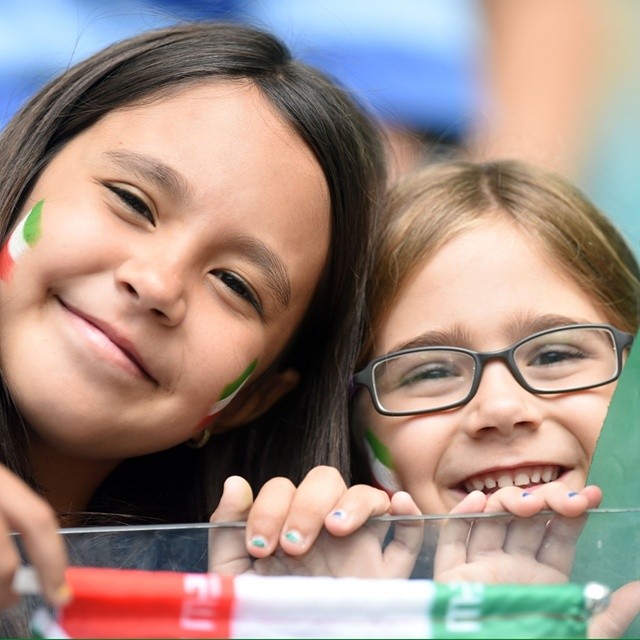
Series: Interesting photos from the FIFA worldcup 2014 – kids

Image

Check out other cool Iran related photos here: https://theotheriran.com/tag/photos/

Photos: young women and men decorating walls in Tehran

https://i0.wp.com/shahrefarang.s3.amazonaws.com/wp-content/uploads/2013/08/Shahrak-Gharb-01.jpg

https://i0.wp.com/shahrefarang.s3.amazonaws.com/wp-content/uploads/2013/08/Shahrak-Gharb-03.jpg

https://i0.wp.com/shahrefarang.s3.amazonaws.com/wp-content/uploads/2013/08/Shahrak-Gharb-05.jpg

https://i0.wp.com/shahrefarang.s3.amazonaws.com/wp-content/uploads/2013/08/Shahrak-Gharb-09.jpg

تزئین دیوارهای میدان صنعت

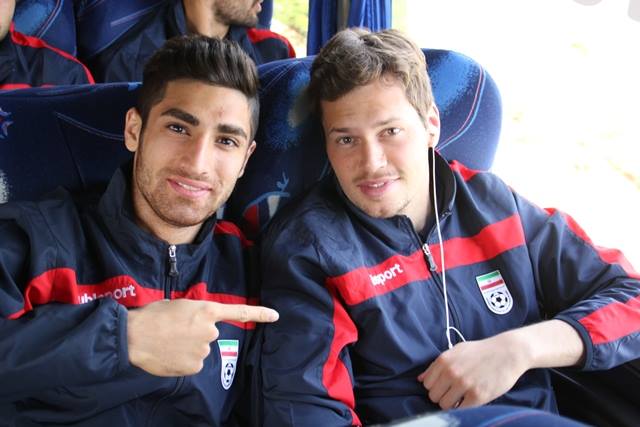
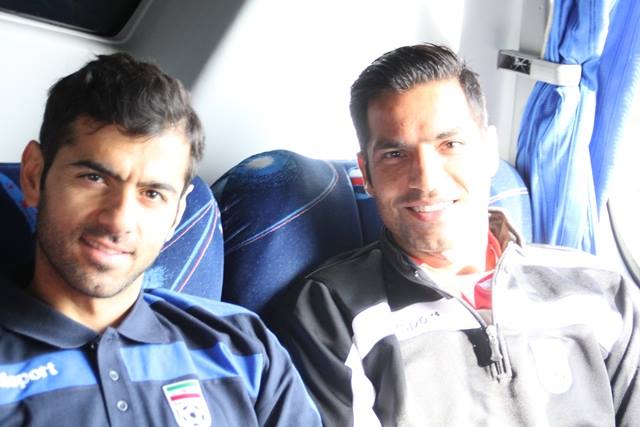
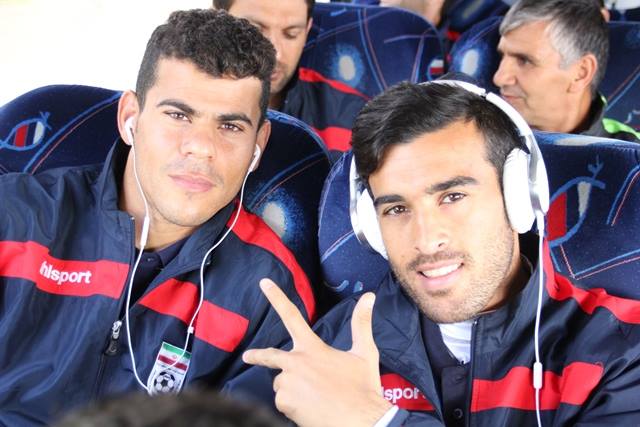
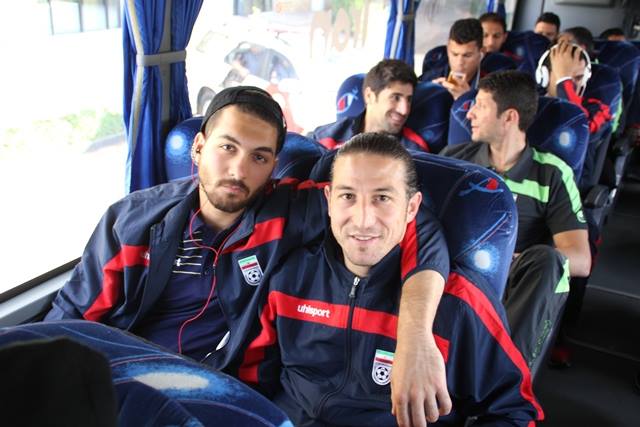
Series: Interesting photos from the FIFA worldcup 2014 – national team in bus

ImageImageImageImage

Israeli reporter approaches Iranian fans in Brazil at World Cup 2014

https://www.youtube.com/watch?v=cEVAg5m_ITE

Series: Interesting photos from the FIFA worldcup 2014

Ronny Edry and Iranian Jewish Iran fans in Tel Aviv cheering for the Iranian team

Ronny Edry and Iranian Jewish Iran fans in Tel Aviv cheering for the Iranian team

“The idea is to show solidarity from the Israeli side,” said Ronny Edry, who set up the Facebook page two years ago, and continues to promote communication between the sides over social media. “It’s pretty easy through sports.”

In fact, several days earlier a group of partying Iranian soccer fans in Brazil for the World Cup pre-empted Mr. Edry’s move. When approached by a Israeli television reporter, one fan bellowed “Israel good! Israel good!” and then kissed the reporter while another fan insisted, “Israel and Iran are brothers.”

Watch the full video here:

Israeli reporter approaches Iranian fans in Brazil at World Cup 2014

Related Article:

https://theotheriran.com/iran-israel-the-people/


Photos: Iranians celebrate their teams performance in the Football World Cup after Iran-Argentina game

https://i0.wp.com/www.payvand.com/news/14/jun/Iranians-celebrate-after-Argentina-game-1-HR.jpg

Although Iran lost the game with the last minute goal by Lionel Messi, the Iranian team, regarded as the obvious underdog against the powerhouse Argentina, surprised all expectations blocking every attack in the first half and even raised hopes of a possible victory in the second half with several strong strikes against the Argentine goal.

https://i0.wp.com/www.payvand.com/news/14/jun/Iranians-celebrate-after-Argentina-game-2-HR.jpg

https://i0.wp.com/www.payvand.com/news/14/jun/Iranians-celebrate-after-Argentina-game-27-HR.jpg

More photos:

http://www.payvand.com/news/14/jun/1146.html

The American Soccer Coach on Iran’s Bench

FBL-WC-2014-IRI-TRAINING

Dan Gaspar coaches Iran’s goalkeepers for 2014’s Football World Cup in Brazil

[…] “It’s been a fantastic experience these last three years in Iran,” Gaspar tells TIME. “I’ve never felt being an American was a detriment. I have found it interesting, and everyone has been very respectful.” […]

“It’s quite a challenge. We look it as an advantage — our guiding principle has always been team above individual,” says Gaspar. “We have established a team that is humble, committed, that’s willing to follow a discipline that we have created.” […]

Read the full story here: Time | The American Soccer Coach on Iran’s Bench

Photos: Animal Hospital in Tehran, Iran


https://i0.wp.com/shahrefarang.s3.amazonaws.com/wp-content/uploads/2014/03/Animal-Hospital-Tehran-9757.jpg

https://i0.wp.com/shahrefarang.s3.amazonaws.com/wp-content/uploads/2014/03/Animal-Hospital-Tehran-8866.jpg

https://i0.wp.com/shahrefarang.s3.amazonaws.com/wp-content/uploads/2014/03/Animal-Hospital-Tehran-8908.jpg

https://i0.wp.com/shahrefarang.s3.amazonaws.com/wp-content/uploads/2014/03/Animal-Hospital-Tehran-9397.jpg

https://i0.wp.com/shahrefarang.s3.amazonaws.com/wp-content/uploads/2014/03/Animal-Hospital-Tehran-0038.jpg

https://i0.wp.com/shahrefarang.s3.amazonaws.com/wp-content/uploads/2014/03/Animal-Hospital-Tehran-0104.jpg

https://i0.wp.com/shahrefarang.s3.amazonaws.com/wp-content/uploads/2014/03/Animal-Hospital-Tehran-0144.jpg

https://i0.wp.com/shahrefarang.s3.amazonaws.com/wp-content/uploads/2014/03/Animal-Hospital-Tehran-0150.jpg


More pictures:
http://shahrefarang.com/en/animal-hospital-in-tehran/

Environment week sees 40 Iranian hunters swear off hunting

Forty hunters in Mazandaran Province took part in Environment Week by taking an oath to give up hunting and guns. IRNA reports that the hunters expressed remorse for hurting nature and they signed a promise and recited an oath never to take up a gun or go hunting.

Nasser Mehrdadi, the head of Mazandaran Environmental Protection, lauded the hunters and said: “Farewell oaths by hunters and asking forgiveness from nature are aimed at promoting the culture of environment and wildlife protection.”

The Sabz Chia Association, an environmental group, received the National Environment Award for its campaign against hunting in Kurdistan.


Pharell Williams – Happy IV – In the streets of Tehran, Iran

Check also the other Happy Videos here on this blog:
https://theotheriran.com/tag/tehran/

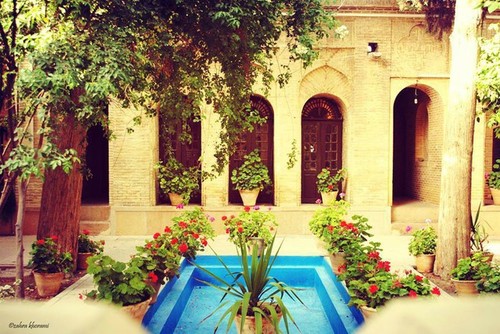
Shiraz – typical atrium

Image

Underground musicans in Iran

https://i0.wp.com/originalworldtravel.com/wp-content/uploads/2014/04/iran_0330.jpg

In fact, music is becoming one of the most potent avenues for a new generation of newly empowered women, who sense a tide shifting in their opportunities in the country. They are expressing themselves in ways that previous generations could not have imagined since the Islamic Revolution. But the moderate stance of current president Hassan Rouhani has encouraged more artists and musicians to ply their wares, and tourists and travelers are taking notice.

ABC News met a young “underground” singer in Iran this week. She’s one of many young men and women who perform everything from metal and rock to jazz and R&B, including covers of famous American artists. ABC News spoke with Rana Farhan, a well-known Iranian singer based in New York.

What musical genres are most popular among young Iranians?

Iranian young people are like most young people. Their taste ranges from rock to hip-hop and R&B to traditional Iranian music. Although they can’t legally buy it, they find ways to grab songs from the Internet and share them. For instance, my website is blocked in Iran, but if any of my fans send me an email, I will send them my latest mp3s and encourage them to share.

Rest of the interviewcan be read here:

http://originalworldtravel.com/travel-news/?WPACRandom=1398533411393#comment-97

Australian travelers Kane and Narelle clear up some misconceptions about Iran

Lastly as a fittingly end this blog we would like to clear up a few western ideologies about Iranians and our travels in Iran:

  • Is Iran safe to travel in? It certainly is and we did not have any issues what so ever. Narelle and I have travelled near and far and it’s rather uncanny that the two most sanctioned places in the world (Iran and North Korea) are the two countries where we have felt the safest and most welcomed. We have consistently felt safer here in Iran than what we have at times in our own city of Canberra.
  • Are Iranians all violent or terrorists? Totally US, Israel and UK (CNN and BBC) driven propaganda. From south to north and east to west we have met nothing but normal peace loving people who want a good life for their family and friends. Just like us!
  • Are all Muslims bad? Are all Christians or Catholics bad…! Yes there are bad apples everywhere but the vast majority of people are just normal people who want to freely practise their religion while detesting violence and war.
  • Do all women wear black chadors with a tiny hole to see through? Hell no…these are govt imposed restrictions on tight clothing and head scarfs but other than that Iranians are extremely fashionable people. Dare I say it but they are actually more fashionable than the majority of Australians.
  • Do the police bother westerners? Absolutely not, unless you are doing the wrong thing. Our bags were searched once and the very kind policeman then apologised and proceeded to say have a wonderful trip in Iran.
  • Do Iranians treat westerners with suspicion? Absolutely not! They are very open, friendly and highly educated people who are naturally intrigued by the world outside of Iran. They loved seeing photos of our family, friends, country and home town. They are very hospitable people and if you are holding a map expect someone to immediately help you.
  • Travelling in Iran as an devout atheist? No issues at all and the people, although intrigued as to my religious beliefs or lack there of, don’t try to convert you. I have had more mormons at my front door try convert me in the last six months.
  • Would I come back to Iran? Absolutely, the first opportunity we get we will be back in this land of endless smiles, handshakes and hellos!

Pharrell Williams – Happy in Tehran II – Iranians going crazy

Check out other videos on Iran at: https://theotheriran.com/tag/video/

Pharrell Williams – Happy (We are from Tehran).

Other interesting videos on Iran:
https://theotheriran.com/tag/video/

Prof. Richard Foltz: Canadian Iranologist says that Iranian people have historically attached high importance to love and beauty, and gives his view on Iranian contributions to science

Prof. Richard Foltz: The Importance of Love Is at the Center of Iranian Spirituality

Prof. Richard Foltz is a specialist in the history of Iran and the history of religions. He has extensively studied Islam and Zoroastrianism and teaches at the Department of Religion at Concordia University, Montréal, Canada. He holds a Ph.D. in Middle Eastern history from Harvard University and also has a degree in Persian language from the University of Utah.

Q: Which of the great Iranian poets fascinate you the most?

A: I admire Ferdowsi for the purity of his language, Mowlana (Rumi) for his emotional intensity, Sa’di for his wit, and Hafiz for the richness of his expression.

Q: How did the emergence of Islam contribute to the progress of science, arts and culture in Iran? We already know that people such as Al-Farabi, Avicenna, Al-Khawrizmi and Rhazes rose to prominence in the post-Islamic era. What’s your viewpoint regarding the impact of Islam on the scientific and artistic achievements of the Iranians?

A: I would put it the other way around, and say that Iranians had a major impact on the development of Islamic civilization. The academy at Gundeshapour, which was the most important academic institution in the world during Sassanid times, is a prime example of this; it simply became Islamicized after the Arab conquests. Iranians were an advanced nation before the coming of Islam and they were central to the emergence of the civilization we refer to as Islamic. The great cultural achievements of the Abbasid period were largely due to Iranians, but these ideas did not emerge suddenly out of a vacuum; they were built on ideas that already existed in the past.

Q: And finally, what’s your viewpoint regarding the contribution of Iranian artists, scientists and scholars to the international community?

A: I can say that here in Canada Iranians are statistically the second most highly educated immigrant group, after the Germans. I guess in the US the situation is similar. In most fields there exist prominent Iranians, as one would expect from such a rich and long-established culture.

Read the whole interview here:

http://english.farsnews.com/newstext.aspx?nn=13930124000344

Related Article:
http://iranianroots.com/2014/01/24/mit-iranian-americans-among-most-highly-educated-in-u-s-and-contribute-substantially-to-the-u-s-economy/

How I visited every country in the world – without a single flight – cites on Iran

http://www.telegraph.co.uk/travel/activityandadventure/9710860/How-I-visited-every-country-in-the-world-without-a-single-flight.html

On the morning of January 1 2009 I took a ferry from Buenos Aires to Colonia in Uruguay. This would be the first of many border crossings as I embarked on what I knew would be the biggest adventure of my life: the Odyssey Expedition, the first surface journey to every country in the world. It would take me to more than 200 countries, 60 islands and six continents. I thought I could do it in a year. It took the best part of four.

One place that will always stick in my mind is Iran. Instead of the stern, joyless place I expected, it turned out to be the warmest and most hospitable nation in the world. I was treated like an honoured guest by everybody I met. On an overnight bus, an old Persian grandmother smiled at me and passed me her mobile phone. I took it from her, a little nonplussed, and put it to my ear. The guy on the other end told me in perfect English that I was sitting behind his grandmother and she was concerned about me. When I asked why, he told me that the bus got in very early the next day and she was worried that I wouldn’t have anything to eat. She wanted to know if she could take me home with her and cook me breakfast.

What I have learnt from this adventure is that there are good people all over the world; people who will go out of their way to help out a stranger in need. I have learnt that people wherever they live are not that different: we all just want a fair deal. My faith in humanity has been restored, although my faith in politicians is even lower than it was when I started.

Photo: Youth in Iran, not unlike young people in other parts of the world

Image

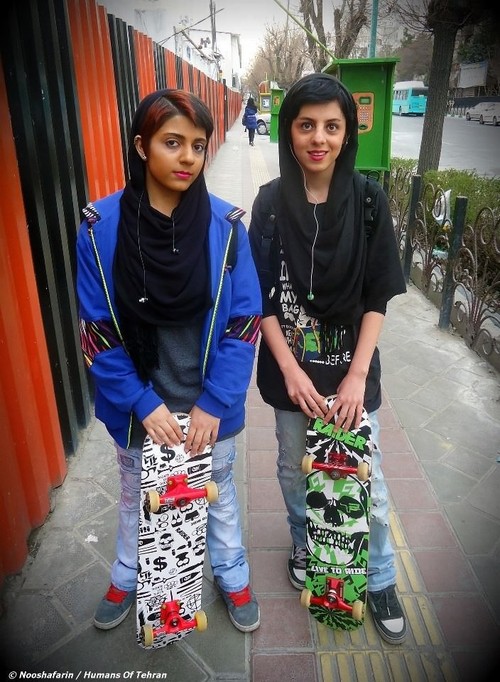
Skater girls in Tehran

Other surprising photos from Iran: https://theotheriran.com/tag/photos/

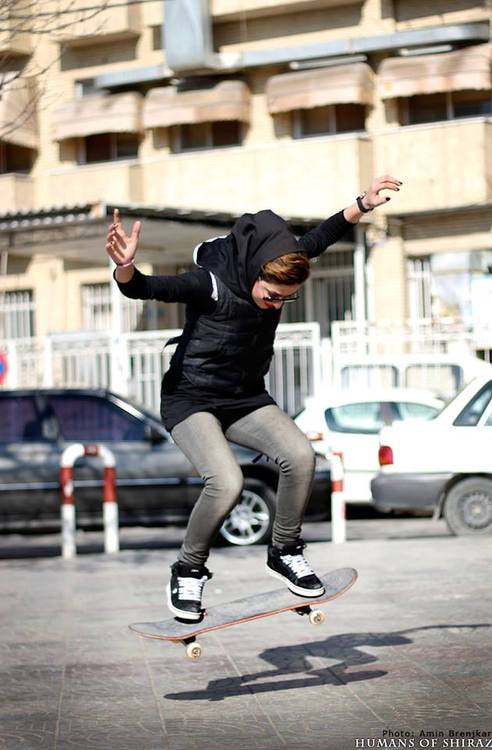
Skating girl in Shiraz, Iran

Image

https://theotheriran.com/tag/photos/

Bowling in Isfahan

Image
Other interesting photos from Iran: https://theotheriran.com/tag/photos/

Iranian women enjoying parkour and gymnastics

http://www.rferl.org/media/photogallery/iran-women-parkour-tehran/25311769.html


World class US and European skateboarders skating in Iran

While skateboarding has a firm footing across major cities of the world, Iran certainly isn’t a name you’d associate with skating. Bridging an in-depth skateboarding video with documentary film, Thrasher Magazine and producer Patrik Wallner venture into Iran for an episode of “Visualtraveling.”

Here, they meet MJ, skateboard enthusiast and skate deck craftsman who takes the crew through the country. Running into their fair share of challenges, the crew of skaters find out first hand what it’s like to skate in the Persian region. Clocking in at just under 30 minutes, the film is a mind-expanding piece that’s definitely worth your while.

Other USA – Iran related articles: The other Iran | Tag | USA

Source:
HYPEBEAST | Thrasher Magazine travels to Iran for “Visualtraveling: The Persian Version”

Blog recommendation: American woman backpacking in Iran

Read the blog and enjoy Silvia’s descriptions and pictures. Here are the links to the posts on Iran:

http://www.heartmybackpack.com/blog/backpacking-solo-through-iran/

http://www.heartmybackpack.com/blog/kafka-cigarettes-tehran/

http://www.heartmybackpack.com/blog/isfahan-iran/

If you are lazy just read some quotes here and go to the links to enjoy the pictures:

“I mean, Iran is home to one of the world’s oldest civilizations, hosts thirteen UNESCO World Heritage Sites, and boasts beautiful landscapes stretching from dense rain forests to snowcapped mountains to desert basins. Plus, so many travelers whom I met in Central Asia absolutely raved about Iran. The hospitable people, delicious food and historic sites – how could I not add Iran to my travel itinerary?”

“My first Couchsurfing hosts in Tehran, a young Ph.D. student and her roommate, said they were so excited to be hosting an American girl, and that they hope more tourists will start to come to Iran. They were incredibly warm and welcoming hosts, cooking delicious Persian food and asking me countless questions about Norway and the U.S. and foreigners’ impressions of Iran.”

“The thing is, I haven’t felt alone once since I landed in Iran. The receptionist at my first hotel took me in as her daughter, accompanying me to breakfast and lunch and suggesting sites for me to visit, my Couchsurfing hosts were like cool older sisters, chatting with me about religion and politics as well as the plot twists of Lost and J-Lo’s divorce (I’m so out of touch), and Rana truly has adopted me as her sister, with an invitation to lunch turning into a trip to visit Esfahan and then several days with her family in Tehran.”

“So far my experience in Iran has only been one of warmth and hospitality, and really, really amazing food! Though, in a few hours Rana and I are heading to Marivan, a small Kurdish city on the border to Iraq. So you know, maybe I’ll have some more eventful things to share from there! (Kidding, family, Kurdistan is of course totally safe.)”

“My stay in Tehran was far too short and left much of the city unexplored, but I did leave with an overwhelming crush on a city so full of life and passion. Shopkeepers greeted me with warmth (if also a degree of surprise), and the discussions I had with people there were always filled with genuine interest and reflection. ”

“While now a bustling modern city, Isfahan was once one of the largest cities in the world as it sat on a major intersection of the main north-south and east-west  routes crossing Iran. We seemed to stumble on reminders of Isfahan’s past glory around every corner, from impressive squares and tree-lined boulevards to covered bridges, palaces and mosques.”

“Moreover, while Isfahan might be dominated by Islamic architecture, the city is also home to important Christian, Jewish and Zoroastrian sites. Rana and I visited the Church of Saint Joseph of Arimathea, built by an Armenian community that settled in Isfahan in the early 1600s.”

Ok if you read so far, just make sure to visit the links above


Iranians participating in Earth Hour 2014 throughout Iran

Earth Hour is a worldwide movement for the planet organized by the World Wide Fund for Nature (WWF). The event is held worldwide annually encouraging individuals, communities, households and businesses to turn off their non-essential lights for one hour, from 8:30 to 9:30 p.m. on the last Saturday in March, as a symbol for their commitment to the planet.

Source: Wikipedia

Ararat Armenian Sports Club and it’s stars

The Vanak neighborhood of central Tehran is home to a high concentration of Armenians; half of the approximately 80,000 Armenians in Iran live in Tehran, and most of those Tehrani Armenians live within Vanak and its orbit. […]

The Ararat Armenian Sports Club predates the Revolution and predates Reza Shah Pahlavi. […] The Sports Club is home to FC Ararat Tehran, a borderline-defunct soccer club that produced two heroes of Iranians, Armenians, and of course Armenian-Iranians. Andranik Eskandarian played for two years at Ararat before moving onto Taj (now Esteghlal due to yet another Revolution-necessitated makeover) as a stalwart defender. His national teams won the 1968, ‘72, and ‘76 and went to the country’s first World Cup in 1978. Andranik would later move to the United States to play for a legendary New York Cosmos side. A generation later, Andranik Teymourian would play youth ball for Ararat before moving on to Bolton in the English Premier League.

Teymourian collapes after Iran’s game against AngolaOne of the most iconic images from the 2006 World Cup

Someone like Teymourian can be a hero for Iranians of all religions without a hint of conflict.

The situation of Armenians (and other Christians) in Iran is of course far more normal than prevailing Western discourse may have an outside observer understand. Armenians have different treatment from most Iranians, with special privileges to consume pork, alcohol, and having Sundays off work that Muslims do not enjoy. But they are still effusively Iranian. Surp Khatch, for example, was built in part to memorialize the thousands of Armenian service members killed in the Iran-Iraq War. When Teymourian crosses himself before a match, his countrymen cheer this act as the mark of a pious Iranian. […]

Unfortunately, these days Ararat FC is far from its glory days. The team last competed in Iran’s top league in the 1995-1996 season.

Source: Ajam Media Collective (ajammc.com)

Iran grabs the crown at the 2014 Men’s Freestyle World Cup in Los Angeles

On Sunday evening, the Iranian outfit landed in the first position of chart after it won over the Russian outfit 4-2 in the final bouts at The Forum in city of Inglewood, southwest of downtown Los Angeles.

The Iranian team was the top-ranked squad at the end of the 2013 Freestyle Wrestling World Cup staged at the 12,000-seat hall of the Azadi Sports Complex in west Tehran on February 21-22. Russia landed in the second place, while the United States stood third.


http://www.payvand.com/news/14/mar/1105.html

Fajr International Music Festival announces winners

Read about the winners here:

http://www.payvand.com/news/14/feb/1154.html

Interview with Roxanne Varza, Startup Weekend Birjand Key Speaker

Without any doubt, Roxanne Varza is not unknown for Iranian startup ecosystem. She was previously interviewed by various Iranian newspaper & blog. In addition, lately she has accepted being one of the key speakers of Startup Weekend Birjand in Iran. Here we try to have a glance at Iran startup ecosytem and its drawbacks with her.

Roxanne Varza


Finally, what’s your thoughts and feelings about helping running your first Iranian stratup weekend event so far by being as a speaker?

I am THRILLED ! To be honest, I didn’t even know where Birjand was before I was told about the Startup Weekend event (shameful, I know). Actually, I really want to learn more about the Iranian ecosystem and help the Iranian entrepreneurs however I can. I grew up in the US but always had a very strong affinity for my Iranian origins and I wish I was able to spend more time learning about and discovering Iran. I feel that I finally have that opportunity, thanks to Startup Weekend Birjand and hopefully more events down the line.

Read more:

http://parhizi.ir/en/?p=5

A canadian family in Iran

A canadian family in Iran

Parkour in Shiraz, Iran

https://www.youtube.com/watch?v=D3gqCPpdqjY

Parkour in Shiraz, Iran

IRAN Documentary Yesterday and Today : Rick Steves

http://www.youtube.com/watch?v=D61uriEGsIM

Description
Rick takes us beyond Europe to Iran, a place that’s rich with history… and mystery. Visiting Tehran, Shiraz, Persepolis, and a small village, we’ll get a rare present-day look at some of civilization’s most important historical sites, and a sense of Iran’s 21st-century culture. From architecture and art to faith and everyday living, “Rick Steves’ Iran” offers a rare, candid, and humanizing look at a powerful and perplexing nation. – Rick Steves’ Iran Pledge Special

I was actually scared to go to Iran. We almost left our big camera in Athens and took our little sneak camera instead. I thought people would be throwing stones at us in the streets. And when I got there, I have never felt a more friendly welcome because I was an American. It was just incredible. I was in a traffic jam in Tehran, a city of 10 million people, and a guy in the next car saw me in the back seat and had my driver roll the window. He then handed over a bouquet of flowers and said, “Give this bouquet to the foreigner in your back seat and apologize for our traffic.” […]

”Steves has produced a loving portrait of the demonized country. Characteristic Steves-on-the-street interviews open closed minds to the sophistication of Iranian citizens and their lack of antipathy toward Americans. In one scene, a man in a car pokes his head out the window and says to Steves, “Your heart is very kind.” […]

He wants us to please shed our geographic ego. “Everybody should travel before they vote,” he has written.

Read more here: SALON | The other side of Rick Steves

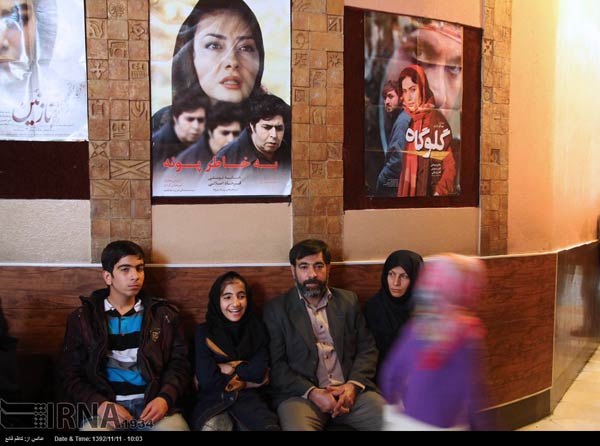
Greetings to Cinema Day – Iranians flock to movie theaters on free admission day

Image

Iran’s movie theaters across the country hosted thousands of filmgoers, who, once again after a lapse of several years, were offered free admission on Thursday, the day named Greetings to Cinema Day by the Iran Cinema Organization (ICO). People who had not gone to cinema for many years along with interested filmgoers waited in the long queues to watch movies from the early hours of the day

Moreover, Iranians can also watch their favorite movies in theaters free of charge on one more day, September 12, which is Iran’s National Day of Cinema.

http://www.payvand.com/news/14/feb/1002.html