Author Archives: socialinform

Blog recommendation: American woman backpacking in Iran

Read the blog and enjoy Silvia’s descriptions and pictures. Here are the links to the posts on Iran:

http://www.heartmybackpack.com/blog/backpacking-solo-through-iran/

http://www.heartmybackpack.com/blog/kafka-cigarettes-tehran/

http://www.heartmybackpack.com/blog/isfahan-iran/

If you are lazy just read some quotes here and go to the links to enjoy the pictures:

“I mean, Iran is home to one of the world’s oldest civilizations, hosts thirteen UNESCO World Heritage Sites, and boasts beautiful landscapes stretching from dense rain forests to snowcapped mountains to desert basins. Plus, so many travelers whom I met in Central Asia absolutely raved about Iran. The hospitable people, delicious food and historic sites – how could I not add Iran to my travel itinerary?”

“My first Couchsurfing hosts in Tehran, a young Ph.D. student and her roommate, said they were so excited to be hosting an American girl, and that they hope more tourists will start to come to Iran. They were incredibly warm and welcoming hosts, cooking delicious Persian food and asking me countless questions about Norway and the U.S. and foreigners’ impressions of Iran.”

“The thing is, I haven’t felt alone once since I landed in Iran. The receptionist at my first hotel took me in as her daughter, accompanying me to breakfast and lunch and suggesting sites for me to visit, my Couchsurfing hosts were like cool older sisters, chatting with me about religion and politics as well as the plot twists of Lost and J-Lo’s divorce (I’m so out of touch), and Rana truly has adopted me as her sister, with an invitation to lunch turning into a trip to visit Esfahan and then several days with her family in Tehran.”

“So far my experience in Iran has only been one of warmth and hospitality, and really, really amazing food! Though, in a few hours Rana and I are heading to Marivan, a small Kurdish city on the border to Iraq. So you know, maybe I’ll have some more eventful things to share from there! (Kidding, family, Kurdistan is of course totally safe.)”

“My stay in Tehran was far too short and left much of the city unexplored, but I did leave with an overwhelming crush on a city so full of life and passion. Shopkeepers greeted me with warmth (if also a degree of surprise), and the discussions I had with people there were always filled with genuine interest and reflection. ”

“While now a bustling modern city, Isfahan was once one of the largest cities in the world as it sat on a major intersection of the main north-south and east-west  routes crossing Iran. We seemed to stumble on reminders of Isfahan’s past glory around every corner, from impressive squares and tree-lined boulevards to covered bridges, palaces and mosques.”

“Moreover, while Isfahan might be dominated by Islamic architecture, the city is also home to important Christian, Jewish and Zoroastrian sites. Rana and I visited the Church of Saint Joseph of Arimathea, built by an Armenian community that settled in Isfahan in the early 1600s.”

Ok if you read so far, just make sure to visit the links above


Spring Snow in Tabriz, Iran

Image

http://www.payvand.com/news/14/apr/1005.html

Iranians participating in Earth Hour 2014 throughout Iran

Earth Hour is a worldwide movement for the planet organized by the World Wide Fund for Nature (WWF). The event is held worldwide annually encouraging individuals, communities, households and businesses to turn off their non-essential lights for one hour, from 8:30 to 9:30 p.m. on the last Saturday in March, as a symbol for their commitment to the planet.

Source: Wikipedia

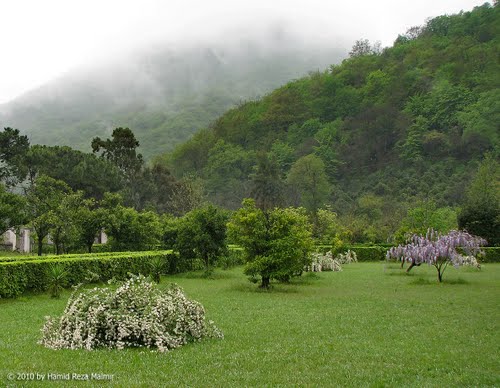
Ramsar, Iran

Ramsar, Iran

Ramsar, Iran

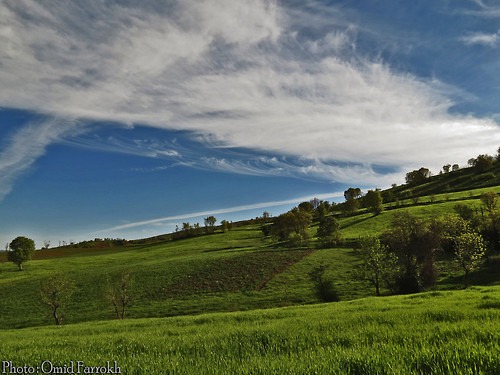
Sardasht in Province Kurdistan, Iran

Sardasht in Province Kurdistan

Sardasht in Iran’s Province Kurdistan

BBC: Iran’s proud Jews – “anti-Semitism is a European phenomenon”

Although Iran and Israel are bitter enemies, few know that Iran is home to the largest number of Jews anywhere in the Middle East outside Israel.

About 25,000 Jews live in Iran and most are determined to remain no matter what the pressures – as proud of their Iranian culture as of their Jewish roots. […]

It is dawn in the Yusufabad synagogue in Tehran and Iranian Jews bring out the Torah and read the ancient text before making their way to work. It is not a sight you would expect in a revolutionary Islamic state, but there are synagogues dotted all over Iran where Jews discreetly practise their religion.

“Because of our long history here we are tolerated,” says Jewish community leader Unees Hammami, who organised the prayers. He says the father of Iran’s revolution, Imam Khomeini, recognised Jews as a religious minority that should be protected. As a result Jews have one representative in the Iranian parliament.

“Imam Khomeini made a distinction between Jews and Zionists and he supported us,” says Mr Hammami. […]

In the Yusufabad synagogue the announcements are made in Persian – most Iranian Jews don’t really speak Hebrew well.

Jews have lived in Persia for nearly 3,000 years – the descendants of slaves from Babylon saved by Cyrus the Great. […]

It is one of only four Jewish charity hospitals worldwide and is funded with money from the Jewish diaspora – something remarkable in Iran where even local aid organisations have difficulty receiving funds from abroad for fear of being accused of being foreign agents.

Most of the patients and staff are Muslim these days, but director Ciamak Morsathegh is Jewish.

“Anti-Semitism is not an eastern phenomenon, it’s not an Islamic or Iranian phenomenon – anti-Semitism is a European phenomenon,” he says, arguing that Jews in Iran even in their worst days never suffered as much as they did in Europe. […]

In one of Tehran’s six remaining kosher butcher’s shops, everyone has relatives in Israel. […]

In between chopping up meat, butcher Hersel Gabriel tells me how he expected problems when he came back from Israel, but in fact the immigration officer didn’t say anything to him. […]

“Whatever they say abroad is lies – we are comfortable in Iran – if you’re not political and don’t bother them then they won’t bother you,” he explains. […]

His customer, middle-aged housewife Giti agrees, saying she can easily talk to her two sons in Tel Aviv on the telephone and visit them. […]

“In the last five years the government has allowed Iranian Jews to go to Israel freely, meet their families and when they come back they face no problems,” says Mr Mohtamed. […]

The exodus of Jews from Iran seems to have slowed down – the first wave was in the 1950s and the second was in the wake of the Iranian Revolution.

Those Jews who remain in Iran seem to have made a conscious decision to stay put.

“We are Iranian and we have been living in Iran for more than 3,000 years,” says the Jewish hospital director Ciamak Morsathegh.

Source: BBC News

Mary Apick – awarded Iranian actress, writer, and producer

https://i0.wp.com/festivalofarts.com/achievers/upload/2013/08/03/20130803144143-1010640f.jpg
Mary Apick (in Persian: مری آپیک; born in 1954) is an Iranian actress, writer, and producer. She won the award for Best Actress at the 10th Moscow International Film Festival for her role in the 1977 film Dead EndHer other notable works as actress:

Ref: wikipedia.org/wiki/Mary_Apick

Statues of 4 Iranian scientists, astronomer, physicist at the UN office in Vienna Austria

Photo: ‎در مقابل ساختمان سازمان ملل در کشور اتریش شهر وین ، تندیس چهار ستاره شناس پزشک و عالم بزرگ تاریخ را ساخته اند ...    1- ابو علی سینا( ابوعلی حسین بن عبدالله بن سینا، مشهور به ابوعلی سینا و ابن سینا و پور سینای بلخی (زادهٔ ۳۵۹ ه. ش در بخارا -درگذشتهٔ ۲ تیر ۴۱۶ در همدان، ۹۸۰-۱۰۳۷ میلادی) فیلسوف و دانشمند ایرانی ، نویسنده کتاب شفا یک دانشنامه علمی و فلسفی جامع است و القانون فی الطب یکی از معروف‌ترین آثار تاریخ پزشکی است    2- ابوریحان البیرونی ( ابوریحان محمد بن احمد بیرونی<br /><br /><br />  زادهٔ ۱۴ شهریور ۳۵۲، کاث، خوارزم -<br /><br /><br />  درگذشتهٔ ۲۲ آذر ۴۲۷، غزنین) ، دانشمند بزرگ و ریاضی‌دان، ستاره‌شناس، تقویم‌شناس، انسان‌شناس، هندشناس و تاریخ‌نگار بزرگ ایرانی در سده چهارم و پنجم هجری است. بیرونی را بزرگ‌ترین دانشمند مسلمان و یکی از بزرگ‌ترین دانشمندان ایرانی و همه اعصار می‌دانند. همین‌طور او را پدر علم انسان‌شناسی و هندشناسی می‌دانند.    3- حکیم خیام نیشاپوری (نام کامل: غیاث‌الدین ابوالفتح عُمَر بن ابراهیم خیام نیشابوری - زادهٔ ۲۸ اردیبهشت ۴۲۷ خورشیدی در نیشابور - درگذشته ۱۲ آذر ۵۱۰ خورشیدی در نیشابور) فیلسوف،<br /><br /><br />  ریاضی‌دان، ستاره‌شناس و رباعی سرای ایرانی<br /><br /><br />  در دورهٔ سلجوقی    4- زکریای رازی ( ابوبکر محمّد زَکَریای رازی ۲۵۱ ه.ق. – ۳۱۳ ه.ق.) پزشک، فیلسوف و شیمی‌دان ایرانی که آثار ماندگاری در زمینهٔ پزشکی و شیمی و فلسفه نوشته است و به‌عنوان کاشف الکل و جوهر گوگرد (اسید سولفوریک) مشهور است.    اين چهار دانشمند در زير چهار طاقی بزرگ ايران تربيت يافتند و دانش خويش را به چهار سوی جهان پراکنده اند، که يادآور مشارکت مردم ايران در دانش و علوم نوع بشر می باشد. جالب است بدانید معماری این طاق همانطور که مشاهده می شود همانند معماری پارسه بنا شده است.‎
Statues of 4 Iranian Scientists,Astronomer,Physisian opposit the Building of UN office in Wien Austria
 
Ibn Sina, Avicenna, was a Persian who wrote almost 450 works on a wide range of subjects, of which around 240 have survived. In particular, 150 of his surviving works concentrate on philosophy and 40 of them concentrate on medicine. His most famous works are The Book of Healing, a vast philosophical and scientific encyclopedia, and The Canon of Medicine,[8] which was a standard medical text at many medieval universities.


Abu reyhan Biruni,
(born 4/5 September 973 in Kath, Khwarezm,] died 13 December 1048 in Ghazni)was a PersianKhwarezmian Muslim scholar and polymath from the Khwarezm region.Al-Biruni is regarded as one of the greatest scholars of the medieval Islamic era and was well versed in physics, mathematics, astronomy, and natural sciences

Umar Khayyam Nishaburi,
(18 May 1048 – 4 December 1131; Persian‎,  was a Persian polymath, philosopher, mathematician, astronomer and poet. He also wrote treatises on mechanics, geography, mineralogy, music

Muhammad ibn Zakariyā Rāzī(Persian(854 CE – 925 CE), was a Persian,polymath, physician, alchemist and chemist, philosopher and important figure in the history of medicine and as the discoverer of alcohol and vitriol (sulfuric acid) is well known.[

Ref. Wikipedia

Female Pianist Dena Taherianfar awarded with the Bita Prize

Stanford, California – In a ceremony held at Stanford University last Wednesday evening, March 12, 2014, global philanthropist and humanitarian Bita Daryabari awarded the First Annual Bita Prize for Young Persian Artists to acclaimed seventeen-year-old concert pianist Dena Taherianfar.

About Dena Taherianfar
Dena was born in Tehran, in November of 1996. She began taking lessons in piano when she was six years old. Her first teacher was Mrs. Shohreh J. Ghajar. Dena gave her debut concert in the renowned Roudaki Concert Hall of Tehran in 2008. At her teacher’s suggestion, Dena eventually moved to Vienna with her Mother (her father still in Iran) where she began to study piano with Prof. Stanislaw Tichonow at the Joseph Haydn Conservatory. She has won numerous national and international prizes. She performed at the Gala Concert in the House of “Music House” in Vienna and won two first prizes in the Austrian Youth Competitions “Prima La Musica.” She has also won first prizes in the International Competition “Concours Flame 2011” in Paris, “Valsesia Musica 2012” in Italy, and the “21st Century Art 2013” in Vienna.

http://www.payvand.com/news/14/mar/1144.html

Vahid Shamsaei: Futsal’s top international goalscorer of all time

Vahid Shamsaei (born 21 September 1975 in Tehran, Iran) is an Iranian futsal player who is futsal’s top international goalscorer of all time. […] He is the leading goalscorer for the national team, the seven time Top Goalscorer of the Asian Futsal Championship.

On May 19, 2007 after scoring 1 goal against Japan in Iran’s 4–1 victory in the final of the 2007 AFC Futsal Championship, he scored his 316th national goal. He was officially the world’s Top Futsal Goalscorer with 14 goals ahead of Manoel Tobias of Brazil national futsal team, the previous holder of the title with 302 goals (as of May 19, 2007). […]

HONOURS

Country
* AFC Futsal Championship:
– Champion (8 times) in 2000, 2001, 2002, 2003, 2004, 2005, 2007 and 2008
– Third place (twice) in 2006 and 2012
* Asian Indoor Games: Champion in 2005
* Confederations Futsal Cup: Champion in 2009
* WAFF Futsal Championship: Champion in 2012

Club
* AFC Futsal Club Championship: Champion (twice) in 2010 with Foolad Mahan and in 2015 with Tasisat Daryaei

Individual
* Best player
– AFC Futsal Player of the Year (3 times) in 2007, 2008 and 2015
– MVP AFC Futsal Championship (5 times) in 1999, 2000, 2005, 2007 and 2008
– MVP AFC Futsal Club Championship (twice) in 2010 and 2015
– MVP Futsal Confederations Cup in 2009
Iran Football Federation Awards:
– International Special Award (2007–08) shared with Ali Daei
– Best futsal player of Iran (2007–08)

* Top Goalscorer
– World’s Top Futsal Goalscorer of All Time (with 390 goals)
– AFC Futsal Championship Top Goalscorer of All Time (with 183 goals)
– AFC Futsal Championship (8 times) in 2001 (with 31 goals), 2002 (26), 2003 (24), 2004 (33),  2005 (23), 2006 (16), 2008 (13) and in 2012 (with 7 goals and 6 assists)
– Asian Indoor Games  2005 (31)
– AFC Futsal Club Championship (twice) in 2010 (17) and in 2015 (10)
– WAFF Futsal Championship in 2012 (8 goals)

Ref: wikipedia.org

The Iranian national futsal team – 6th strongest team in the world

The “Kings of Asian Futsal” have won ten editions of Asian Futsal Championship[2] and are the 6th strongest team in the world according to the most recent Futsal World Ranking. Iranians have played in five editions of FIFA Futsal World Championship reaching the semi-finals in their first appearance in 1992.[3] Iran have won the first FIFA Confederations Cup in Libya in 2009, and reached the finals of Grand Prix de Futsal known as Futsal Mini-World Cup in 2007 and 2009 editions.

http://en.wikipedia.org/wiki/Iran_national_futsal_team

Ararat Armenian Sports Club and it’s stars

The Vanak neighborhood of central Tehran is home to a high concentration of Armenians; half of the approximately 80,000 Armenians in Iran live in Tehran, and most of those Tehrani Armenians live within Vanak and its orbit. […]

The Ararat Armenian Sports Club predates the Revolution and predates Reza Shah Pahlavi. […] The Sports Club is home to FC Ararat Tehran, a borderline-defunct soccer club that produced two heroes of Iranians, Armenians, and of course Armenian-Iranians. Andranik Eskandarian played for two years at Ararat before moving onto Taj (now Esteghlal due to yet another Revolution-necessitated makeover) as a stalwart defender. His national teams won the 1968, ‘72, and ‘76 and went to the country’s first World Cup in 1978. Andranik would later move to the United States to play for a legendary New York Cosmos side. A generation later, Andranik Teymourian would play youth ball for Ararat before moving on to Bolton in the English Premier League.

Teymourian collapes after Iran’s game against AngolaOne of the most iconic images from the 2006 World Cup

Someone like Teymourian can be a hero for Iranians of all religions without a hint of conflict.

The situation of Armenians (and other Christians) in Iran is of course far more normal than prevailing Western discourse may have an outside observer understand. Armenians have different treatment from most Iranians, with special privileges to consume pork, alcohol, and having Sundays off work that Muslims do not enjoy. But they are still effusively Iranian. Surp Khatch, for example, was built in part to memorialize the thousands of Armenian service members killed in the Iran-Iraq War. When Teymourian crosses himself before a match, his countrymen cheer this act as the mark of a pious Iranian. […]

Unfortunately, these days Ararat FC is far from its glory days. The team last competed in Iran’s top league in the 1995-1996 season.

Source: Ajam Media Collective (ajammc.com)

Iranian players handed white roses (a symbol of peace in Iran) to the US players prior to soccer match

All must read USA – Iran posts: The other Iran | Tag | USA

The game was an exceptionally fair game and both teams received the 1998 World Cup FIFA Fair Play Award “for the two countries’ good sportsmanship surrounding the World Cup match between their teams, despite their mutual political tensions for nearly 20 years.”

Below more photos from the match and the episode “Breaking Barriers: USA vs. Iran, 1998” from Fox Sports’ “Rise as One Series”:

Vigen or Viguen: popular Armenian-Iranian artist

Vigen.jpg

Vigen, born Vigen Derderian (November 23, 1929 – October 26, 2003), known as “Sultan of Pop” and “Sultan of Persian jazz”, was an immensely popular Iranian pop music singer and actor, well known throughout the Near East.

Vigen’s innovative and upbeat style of music had a great influence on paving the way for a new genre of Iranian music, influenced by Western European and Latin American styles.

Among his notable songs are Chera nemiraghsi? (Why you are not dancing?), Mahtab (Moonlight), Lala’ee (Lullaby), and Zane Irooni take (Iranian woman is unique). Ref: Wikipedia

Varand Armenian-Iranian poet and Professor of Armenian literature in Tehran

Varand (also known as Soukias Hacob Koorkchian (Persian: سوکیاس هاکوب کورکجیانArmenian: Վարանդ Քիւրքչեան) born March 10, 1954, Tehran is an Iranian poet, playwright, lyricist, author, translator and painter of Armenian descent. He has published 27 collections of poetry since 1972.
He translates both Persian classics as well as modern poetry into the Armenian language.
Varand was the chairman of the Armenian Writers Society of Iran founded in 1961 for over ten years and the professor of the Armenian literature at Azad University of Foreign Languages in Tehran.
Some of his works:
The Road of The Sun (1972) Tehran
Sword And Shadow (1982) Tehran
Roses of Sin (1989) Tehran
Leave of No Return (1999) Tehran
The Sun of Iran In My Soul (2009) Persian Poetry

Ref:.wikipedia.org/wiki/Varand

Loris Tjeknavorian: Armenian-Iranian composer and holder of Iran’s “Top Medal of Art”

Tjeknavorian, Loris - Iranian composer and conductor - Foto by Arash Mirsepasi for Young Journalists ClubLoris Tjeknavorian (also spelled Cheknavarian) is an Iranian-Armenian composer and conductor. He was born in 1937 in Borujerd in the province of Lorestan, southwestern Iran, and was educated in Tehran.

In the course of his career, Tjeknavarian has made about 100 recordings (with RCA, Philips, EMI, ASV, etc.) and written more than 75 compositions (symphonies, operas, a requiem, chamber music, concerto for piano, violin, guitar, cello and pipa (Chinese lute), ballet music, choral works and an oratorio. And over 45 Film mosaics.

Tjeknavarian also has conducted international orchestras throughout the world: in Austria, UK, US, Canada, Hungary, Iran, Finland, former USSR, Armenia, Thailand, Hong Kong, South Africa, Denmark, Israel, etc. In October 2010 he became the Music Director and Principal Conductor of the Glendale Symphony Orchestra in Southern California. Glenn Treibitz, president of the Glendale Symphony said; “with Loris Tjeknavorian at the helm, our orchestra will automatically become one of the most prominent in the Western USA.”

Awards
– Austria’s Presidential Gold Medal of Artistic Merit (2008)
– Austria’s Cross of Honor for Science and Art, first class (2008)
– Awarded “Top Medal of Art”, Iran’s highest medal for performing arts (2002)

Sources: Wikipedia | Loris Tjeknavorian

Iran grabs the crown at the 2014 Men’s Freestyle World Cup in Los Angeles

On Sunday evening, the Iranian outfit landed in the first position of chart after it won over the Russian outfit 4-2 in the final bouts at The Forum in city of Inglewood, southwest of downtown Los Angeles.

The Iranian team was the top-ranked squad at the end of the 2013 Freestyle Wrestling World Cup staged at the 12,000-seat hall of the Azadi Sports Complex in west Tehran on February 21-22. Russia landed in the second place, while the United States stood third.


http://www.payvand.com/news/14/mar/1105.html

About famous Armenian churches in Iran and Armenian Iranians in general

One of the finest examples of Iranian architecture in the neighborhood of Vanak is an Armenian chapel, Surp Khatch. Surp Khatch Chapel holds a peculiar significance within Armenian-Iranian life.

There are dozens of Armenian churches within Iran, mostly in Tehran and the western provinces. Vank in New Julfa deserves special recognition, of course, for its role as the heart of the Isfahani community, brought to Persia by Shah Abbas I in the 17th century.

The Prelacy – the bureaucratic head of the Armenian Church in Iran – makes its home in Saint Sarkis, a church that dates back to 1970.

Armenian-Iranian architecture, particularly Surp Khatch, fits comfortably within the Iranian modernist idiom. The situation of Armenians (and other Christians) in Iran is of course far more normal than prevailing Western discourse may have an outside observer understand. Armenians have different treatment from most Iranians, with special privileges to consume pork, alcohol, and having Sundays off that Muslims do not enjoy. But they are still effusively Iranian. Surp Khatch, for example, was built in part to memorialize the thousands of Armenian service members killed in the Iran-Iraq War. When Teymourian (popular Armenian Iranian football star) crosses himself before a match, his countrymen cheer this act as the mark of a pious Iranian.

The negotiating of political space for religious minorities in an explicitly Islamic Republic is an ongoing political issue that is going strong on its fourth decade. But political concerns hardly frame daily life; Armenians and other religious minorities in Iran generally name their primary concerns as drug use and a rapidly deteriorating economy. The communities’ problems aren’t necessarily their status as minorities, but the general problems that stem from being Iranian. Indeed, minorities in Iran are well-integrated not only socially and culturally but politically as well. There are five Armenians in Parliament (compared to four Assyrian and Chaldean Christians, three Jews, and two Zoroastrians in the 290-seat Majlis). There are also Armenian observers to the Expediency Council and the Guardian Council.

Source: Ajam Media Collective | Towards an Armenian-Iranian Modern: Tehran Church Architecture & Post-Revolutionary Soccer Culture

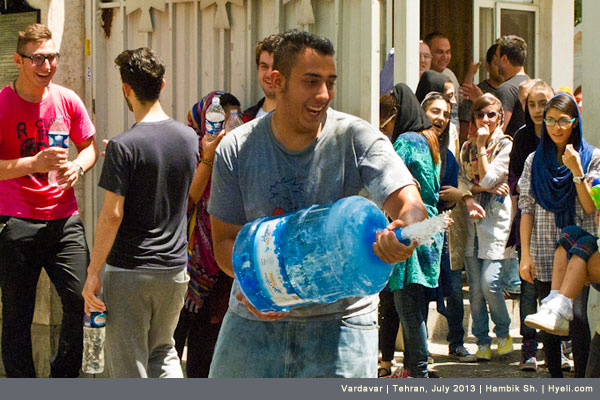
Armenians of Tehran Celebrate Vardavar

Visit this great blog to learn more about Armenians and Armenian Iranians in particular. The blog has lots of nice photos and posts.

Hambik Sh.'s avatarHayaxk (ՀԱՅԱՑՔ)

07_07_2013_vardavar

Vartavar (also known as Vardevar or Vardavar) is an Armenian festival, where people of all ages drench each other with water.

View original post 48 more words

Marcos Grigorian – Armenian-Iranian artist and a pioneer of Iranian modern art


Marcos Grigorian (December 5, 1925 – August 27, 2007) was a notable Iranian-Armenian artist and a pioneer of Iranian modern art. In 1975 Grigorian helped organize the group of free painters and sculptors in Tehran and was one of its founder members. Artists Gholamhossein Nami, Massoud Arabshahi, Morteza Momayez and Faramarz Pilaram were amongst the other members of the group.

Grigorian was a trend setter in experimenting with Earth Art, in Iran. Some of his works are now on display at the Museum of Modern Art in New York, the Tehran Museum of Contemporary Art, the Museum of Contemporary Art in Kerman, and the National Gallery of Armenia. Ref. Wikipedia, iranicaonline.org

Women given senior positions in Iran’s Sistan-Baluchistan province

The Iranian president has appointed two women to the position of governor in the southeastern province of Sistan-Baluchistan. Massoumeh Parandvar is now serving as the governor of Hamoon, while Homeira Rigi, with a history of leadership roles in the health and interior ministries, is now governor of Qasreqand.

Zahra Arbabi, the head of Hassan Rohani’s campaign headquarters in Sistan-Baluchistan, was appointed as the Deputy of Human Resource Development and Management, and Sameih Baluchzehi, with a background in natural resource engineering, became the first women to become a mayor in Sistan-Baluchistan.

Source: payvand.com

Fajr International Music Festival announces winners

Read about the winners here:

http://www.payvand.com/news/14/feb/1154.html

Iran Heritage Foundation’s Norouz Gala 2014 in London

Iran Heritage Foundation invites you to celebrate The Persian New Year NOROUZ with its legendary hospitality on Saturday 22nd March 2014 at The Grosvenor House, Park Lane, London W1K 7TN. Featuring: Rising Star Rana Mansour.

About Rana Mansour
Rana Mansour has performed her original song entitled “No Place Like Home” on Bravo TV’s hit show The Real Housewives of Beverly Hills. A Finalist of the VH1 ‘Song of the Year’ Competition, Rana earned her Bachelor’s in Music with honors at the acclaimed Berklee College of Music in Boston, Massachusetts. Currently, Rana lives in Los Angeles where she is working on releasing her first Persian album with producer Erwin Khachikian (Serj Tankian) while also continuing to pursue her music career in the American market with their new project ‘The Animates‘. The Animates released their first single ‘IN mY hEAd‘ in January 2014.

Interview with Roxanne Varza, Startup Weekend Birjand Key Speaker

Without any doubt, Roxanne Varza is not unknown for Iranian startup ecosystem. She was previously interviewed by various Iranian newspaper & blog. In addition, lately she has accepted being one of the key speakers of Startup Weekend Birjand in Iran. Here we try to have a glance at Iran startup ecosytem and its drawbacks with her.

Roxanne Varza


Finally, what’s your thoughts and feelings about helping running your first Iranian stratup weekend event so far by being as a speaker?

I am THRILLED ! To be honest, I didn’t even know where Birjand was before I was told about the Startup Weekend event (shameful, I know). Actually, I really want to learn more about the Iranian ecosystem and help the Iranian entrepreneurs however I can. I grew up in the US but always had a very strong affinity for my Iranian origins and I wish I was able to spend more time learning about and discovering Iran. I feel that I finally have that opportunity, thanks to Startup Weekend Birjand and hopefully more events down the line.

Read more:

http://parhizi.ir/en/?p=5

In Memoriam of Dr. Akbar Ghahary: well known inventor and philanthropist

socialinform's avatarRemarkable people with Iranian roots

Dr. Ghahary received his master’s in mechanical design and engineering from Aria Mehr University in Iran and his Ph.D., in 1983, in thermoset plastics composition and design in affiliation with Lowell University of Massachusetts. He is well-known for his expertise in polymer design and composites and owns many US and international patents, mostly in polymers and advanced composites. As CEO of Safas Corporation, he created Granicoat (R), the award-winning product that Safas Corporation manufactures and markets worldwide.
A strong supporter of the younger generation of Iranian Americans, Dr. Ghahary was instrumental in funding and promoting PAAIA’s Capitol Hill Internship Program (CHIP).

Ref: http://www.payvand.com/news/14/feb/1188.html

View original post

Farzaneh Rezasoltani: female cross-country skier

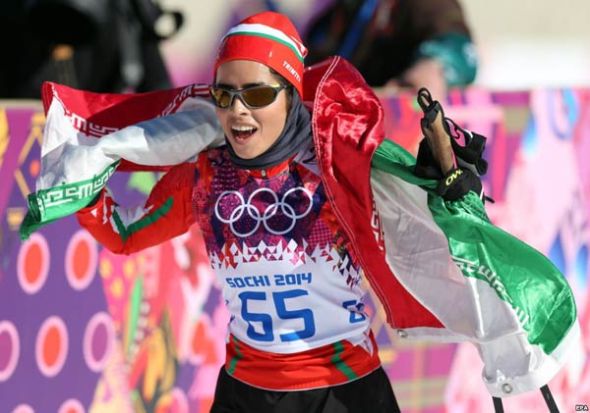
Farzaneh Rezasoltani, first female cross-country athlete from Iran at Sochi Winter Olympic Games (2014)

Farzaneh Rezasoltani, born on September 13, 1985, is a cross-country skier competing for Iran. She is the first Iranian female athlete to participate in an international cross-country competition (World Ski Championship at Val di Fiemme, Italy, 2013).

The 2014 Winter Olympics in Sochi is her second international competition. She crossed the finish line in 42:31:03, achieving the 73rd place. This is the first time Iran has sent a female athlete to participate in cross-country skiing competitions at the Olympic Games.

Information on her current competitions:
International Ski Federation | Biographies | Farzaneh Rezasoltani

Sources: Wikipedia | Farzaneh Rezasoltani, Iran Ski Federation | News

Alenush Terian “Mother of Modern Iranian Astronomy”

Alenush-Terian-Mother-Iranian-Astronomy

“Mother of Modern Iranian Astronomy”

Alenush Terian was born in 1920 to an Armenian family in Tehran, Iran. After graduating in 1947 from the Science Department of the University of Tehran, she began her career in the physics laboratory of the same University. She was promoted the same year as the chief of laboratory operations.In france 1956 she obtained her doctorate in Atmospheric Physics from Sorbonne University.

Upon this she returned to Iran and became Assistant Professor in thermodynamics at University of Tehran. Later she worked in Solar Physics in the then West Germany for a period of four months through a scholarship that was awarded by the German government to University of Tehran. In 1964 Dr Terian became the first female Professor of Physics in Iran.

In 1966, Professor Terian became Member of the Geophysics Committee of University of Tehran. In 1969 she was elected chief of the Solar Physics studies at this university and began to work in the Solar Observatory of which she was one of the founders. Professor Terian retired in 1979. She proved to the world that not only being a women, but also being part of a both a ethnic and religious minority. You can succeed.

The Armenian scientist was honored during a birthday ceremony in the Iranian capital,  to commemorate the 90th birthday of Iran’s first female astronomer, physics professor and founder of modern Iranian astronomy. Members of the Iranian Parliament and more than hundered Armenians paid tribute to the Armenian scientist.

“She always said she had a daughter named sun and a son named moon,” said lawmaker Hassan Ghafourifard, Terian’s former student at Tehran University. Alenoush Terian passed away in March 4, 2011 at the age of 90 years.

Source: armenianhighland.tumblr.com

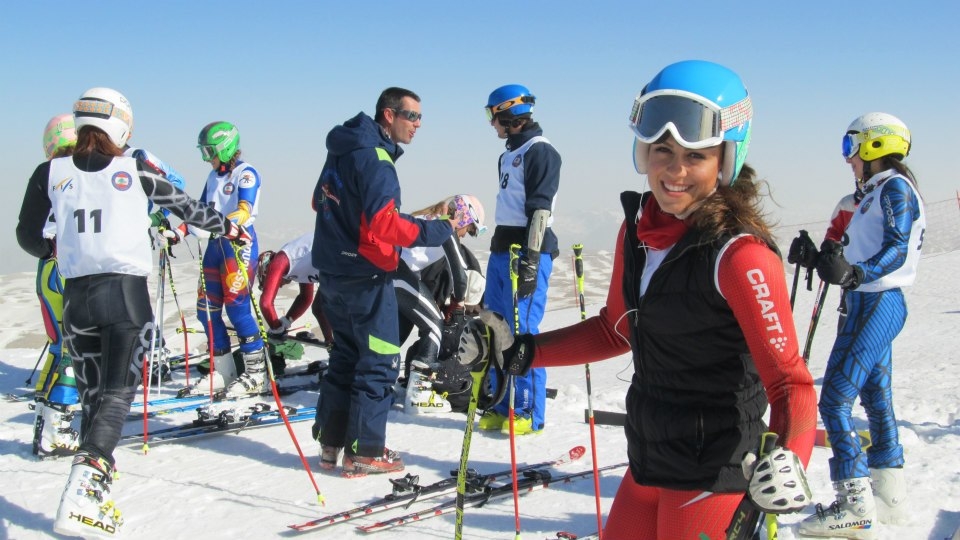
Forough Abbasi female alpine skier

Forough Abbasi (born September 15, 1993 in Shiraz, Iran[1]) is an alpine skier from Iran.

Image

Manuchehr Mohammadi honored by UNESCO for “outstanding contribution to the promotion and preservation of cultural diversity through film,”

Iranian film The Painting Pool’s producer Manuchehr Mohammadi has been honored by UNESCO during a ceremony held in the capital city of Tehran.

The Painting Pool won the UNESCO Award for “outstanding contribution to the promotion and preservation of cultural diversity through film,” the APSA jury had earlier commented on the film at the award ceremony in Brisbane in December 2013.
APSA is endorsed by UNESCO, with which it shares a common goal of fostering cultural diversity and promoting mutual understanding, dialogue and peace.
The annual Asia Pacific Screen Awards (APSA) is an international cultural initiative of the State Government of Queensland, Australia, through Events Queensland, to honor and promote the films, actors, directors, and cultures of Asia-Pacific to a global audience.


http://presstv.com/detail/2014/02/22/351786

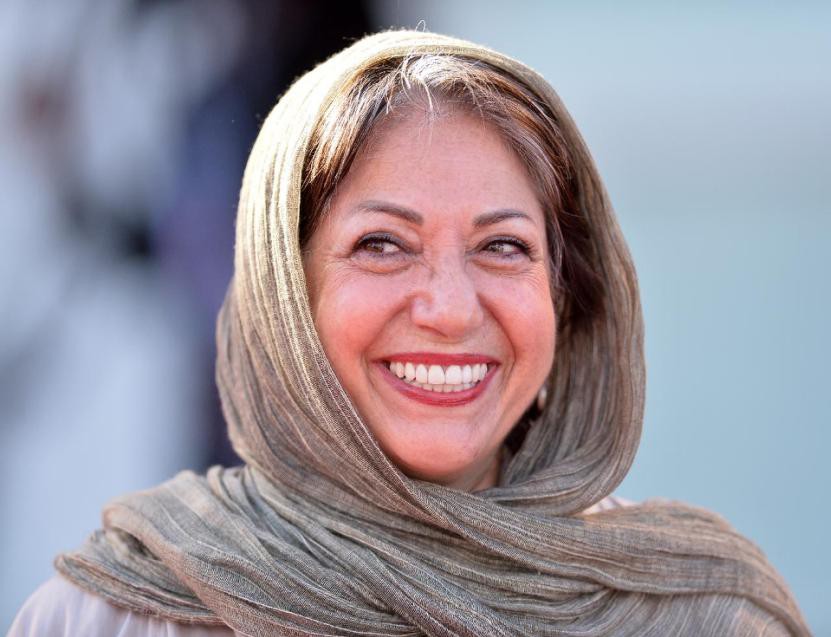
Rakhshan Bani-E’temad – Film director and screenwriter: “First Lady of Iranian Cinema”

Bani-E'temad, Rakhshan - Iranian film director and screenwriter

Iranian director Rakhshan Bani-Etemad arrives for the screening of her movie “Ghessea” (Tales) at the 71st Venice Film Festival on August, 2014 (AFP Photo/Tiziana Fabi)

Rakhshan Bani-E’temad, (Persian: رخشان بنی اعتماد‎, born April 3, 1954 in Tehran, Iran) is an internationally and critically acclaimed Iranian film director and screenwriter. She is widely considered Iran’s premier female director, and her films have been praised at international festivals as well as being remarkably popular with Iranian critics and audiences.

Her title as “First Lady of Iranian Cinema” is not only a reference to her prominence as a filmmaker, but it also connotes her social role of merging politics and family in her work.

Bani-E’temad did not receive immediate praise upon entering the film industry. Her early feature films were met by harsh criticism. However, she finally earned critical and popular success in 1991 with her film Nargess. She received the Best Director Award from the Fajr Film Festival, marking the first time in the history of the festival that a woman was awarded the Best Director prize.

Bani-E’temad’s films are considered socially and politically conscious social documentaries. She aims to reflect the realities of Iranian people’s daily life experiences. Her documentaries are centered on issues of poverty, criminality, divorce, polygamy, social norms, cultural taboos, women’s oppression, and cultural expectations.

With her 2002 film Our Times, Bani-E’temad became the first female filmmaker to explicitly confront the Iran-Iraq war, placing her in an important role in Iranian film history. She has been known to challenge censorship codes to the very edge.

She has donated her international prize for the movie Ghesseh-ha to build a shelter for homeless women. Previously she has also donated some of her awards to help disadvantaged women.

Filmography (as a director)
– 1986: Kharej az Mahdudeh (Off-Limits)
– 1988: Zard-e Ghanari (Canary Yellow)
– 1989: Pul-e Khareji (Foreign Currency)
– 1992: Nargess
– 1995: Rusari Abi (The Blue-Veiled)
– 1998: Banoo-ye Ordibehesht (The May Lady)
– 1999: Baran-O-Bumi (Baran and the Native – short)
– 2001: Zir-e Pust-e Shahr (Under the Skin of the City)
– 2002: Ruzegar-e ma (Our Times – documentary)
– 2004: Gilane
– 2006: Khoon Bazi (Mainline)
– 2009: We Are Half of Iran’s Population
– 2014: Ghesseh-ha (Tales)

Honors and Awards
– Bronze Leopard, 48th Locarno Film Festival (for The Blue-Veiled) (1995)
– The Prince Claus Award (1998)
– Special Golden St. George, 23rd Moscow International Film Festival (for Under the Skin of the City) (2001)
– Best Achievement in Directing, Asia Pacific Screen Awards (for Mainline, with Mohsen Abdolvahab) (2007)
– Honorary doctorate, SOAS, University of London (2008)
– Best Screenplay Award, 71st Venice International Film Festival (for Tales, with Farid Mostafavi) (2014)

Sources: Wikipedia | Rakhshan Bani-E’temad

Iran and its Youth: A Series of Dialogues


Source: The Global Dialogue on the Future of Iran

The Munk School of Global Affairs at the University of Toronto is pleased to present a series of interactive conversations that will take place in Berlin, Toronto, London, and Silicon Valley – all live online – during the first week of March 2014. These discussions will bring together experts, thought-leaders, media, and entrepreneurs from the international Iranian community together virtually with youth inside Iran to share a broad range of views on Iran’s future.

Each of these events will be broadcast live in Farsi and will address topics that specifically matter to Iranian youth: technological innovation, entrepreneurship, news and media, information and communication, civil society, and more. Each of these dialogue themes were informed by an online survey conducted with over 19,000 Iranians inside Iran. Learn more about each city and its topic below.

Connect with us and watch the event! Share your opinion on the Global Dialogue’s social media pages! And most importantly, participate in the discussion – ask anything.

Rome’s House of Cinema hosts Iranian film week

Some six Iranian screen productions are slated to be presented at the one-week long program.

Gold and Copper by Homayoun Asaadian, Saadatabad by Maziar Miri, Fireworks Wednesday by Asghar Farhadi, Facing Mirrors directed by Negar Azarbaijani, Here without Me by Bahram Tavakkoli, and Mr. Yusef by Ali Rafiei are among the film lineup.

Azarbaijani’s debut drama Facing Mirrors has opened the screening programs.

The film’s producer Fereshteh Taerpour also attended the opening ceremony.

“It is a great opportunity to watch Facing Mirrors with the Italian audiences,” Taerpour had earlier stated.

The well-praised movie Facing Mirrors weaves together the lives of two women with different social and cultural backgrounds.

The film has been lauded at many international festivals and received several awards such as the Best Narrative Feature Award at the 2012 International Three Dollar Bill Cinema in Seattle.

The House of Cinema in Rome has organized the program with the collaboration of Iranian cultural office in Italy.

All the movies in lineup will be presented with Italian subtitles.

http://theiranproject.com/blog/2014/03/01/romes-house-of-cinema-hosts-iranian-film-week/

A canadian family in Iran

A canadian family in Iran

Parkour in Shiraz, Iran

Parkour in Shiraz, Iran

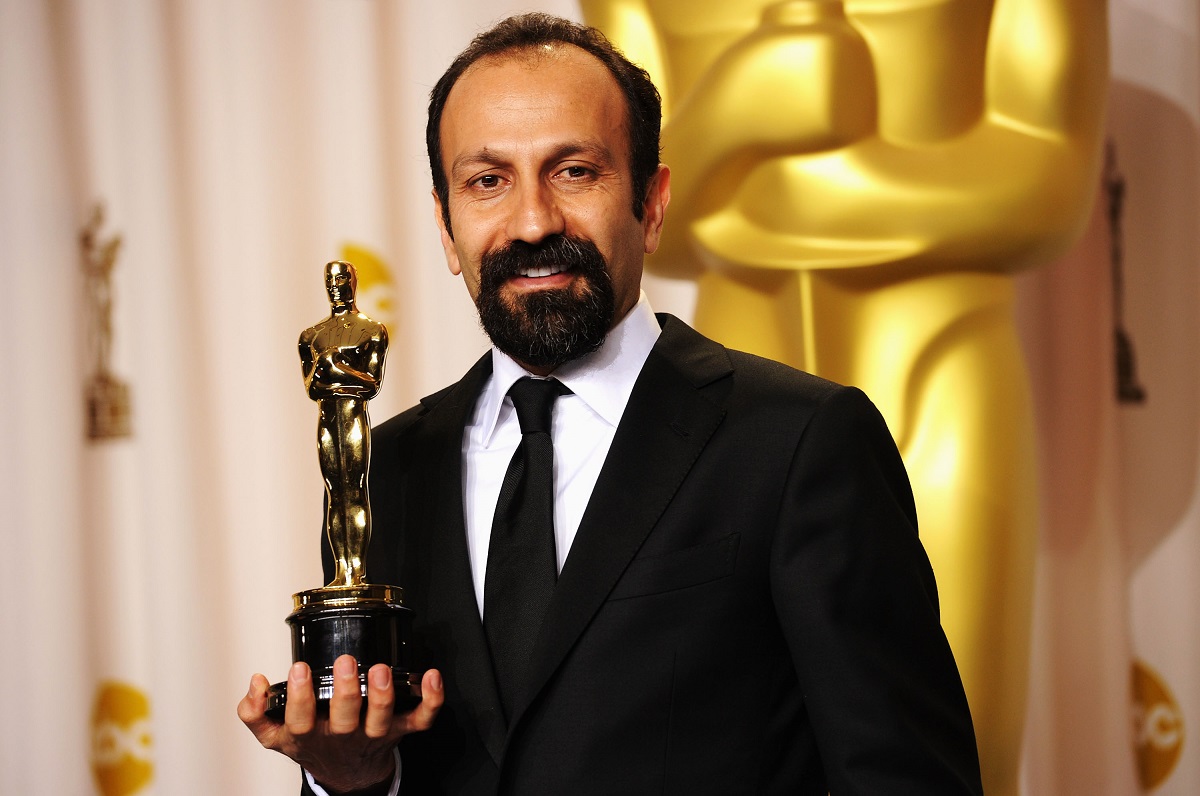
France honors the Iranian filmmaker Asghar Farhadi with L’Ordre des Arts et des Lettres (the Order of Arts and Letters)

Asghar Farhadi receives the Oscar for "A Separation"

Asghar Farhadi receives the Oscar for “A Separation”

The culture minister of France presents the order to a person who has made significant contributions to the arts, literature, or the dissemination of these fields.

Farhadi made his latest film “The Past” in France. The French-language drama brought its star Bérénice Bejo the Palme d’Or for Best Actress at the Cannes Film Festival in 2013. He received the first EU MEDIA prize for “The Past” in 2012 when the film was in its preproduction stage.

His previous film “A Separation” won the Oscar for best foreign-language film at the Academy Awards in 2012. He previously received France’s César award for best foreign film for “A Separation”.

Source: Tehran Times

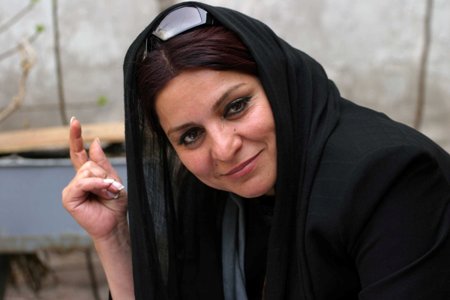
Tahmineh Milani highly awarded Iranian female film director, screenwriter, and producer

Milani, Tahmineh - Iranian film directorTahmineh Milani is an Iranian film director, screenwriter, and producer.

Milani was born 1960 in Tabriz, Iran. After graduating in architecture from the University of Science and Technology in Tehran in 1986, she apprenticed as a script girl and an assistant director following a screen workshop in 1979. She started her career as a movie director with Children of Divorce in 1989.

Feminist filmmaker Milani is known for touching controversial and sensitive issues, including women’s rights.

Among her most notable films are Children of Divorce, Two women, The Hidden Half, The Fifth Reaction, The Unwanted Woman and Cease Fire.

Filmography (as a director)
– 1989: Bach’che’ha-ye Talagh (Children of Divorce)
– 1991: Afsaneh-ye Ah (The Legend of Sigh)
– 1992: Digeh che khabar? (What Else Is New?)
– 1996: Kakadu
– 1999: Do Zan (Two Women)
– 2001: Nimeh-ye Penhan (The Hidden Half)
– 2003: Vakonesh Panjom (The Fifth Reaction)
– 2005: Zan-e Ziadi (The Unwanted Woman)
– 2006: Atash Bas (Cease Fire)
– 2007: Tasvie Hesab (Settling Scores)
– 2008: Superstar
– 2011: Yeki Az Ma Do Nafar (One of Our Two)
– 2014: Atash Bas 2 (Cease Fire 2)

Awards and honors
– 2006: Best director, Best film and Best screenplay at the 51st Asia Pacific Film Festival for The Unwanted Woman
– 2005: Best film Los Angeles Film Festival for The Unwanted Woman
– 2003: Grand Prix ‘Cinéma Tout Ecran’, Geneva Cinéma Tout Ecran for The Fifth Reaction
– 2003: Best Screenplay at the 27th Cairo International Film Festival for The Fifth Reaction
– 2001: Best Artistic Contribution at the 25th Cairo International Film Festival for the The Hidden Half
– 1999: Award for best screenplay at Iran’s Fajr International Film Festival for Two Women

Source: Wikipedia | Tahmineh Milani

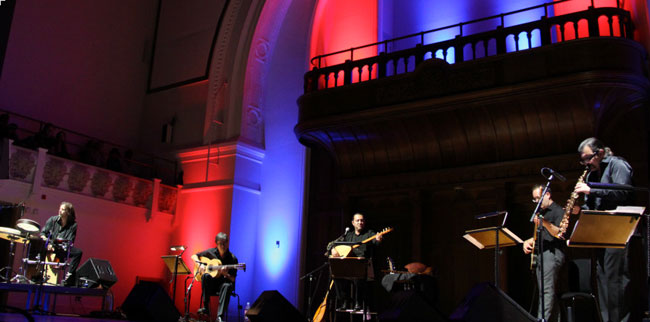
Hamed Nikpay and International ensemble performing Persian-Flamenco fusion in London

Image

A couple of weeks ago I was in London with a great Persian singer and multi-instrumentalist called Hamed Nikpay to play a show and do a live in-studio recording for the BBC Persia channel. The show was at Cadogan Hall in Chelsea, and the recording session was at one of London’s famous rehearsal and recording studios, Premises Studios and was for the BBC’s Persian channel.

I had never played with Hamed before (or with any Persian musicians – except for a few rehearsals and a little warm-up gig we did in L.A. before we left), but he always has a flamenco guitarist with him (usually my good friend Alfredo Cáceres, who couldn’t make these dates), as he likes the vibe that gives. I don’t know much about Persian music, but apparently this is fusion and that’s the sound he likes, and it certainly sounds right. The musical director was sax player Farzin Farhadi, the percussionist was Greg Ellis , 

and the bass player was Eric Klerks, who besides being a great bass player is the one of the guitarists with the Magic Band. There were also two dancers – Paris-based Persian dancer Sharokh Moshkin Ghalam and Paris-based flamenco dancer Karen Gonzales.

You can see some of the great photos shot for the BBC at Cadogan Hall here, and you can see some of my not-so-amazing photos of the trip in the gallery below. Here’s a video that has some interviews with the guys in Farsi and some good footage of the show.

http://www.guitarsalon.com/blog/?p=4690#more-4690

Spanish cartoonist wins Golden Tooba at Fajr International Festival of Visual Arts in Iran

Spanish cartoonist David Vela Cervera won the Golden Tooba (Tree of Heaven) in the cartoon section at the 6th Fajr International Festival of Visual Arts.

Six Iranian artists received the Lifetime Achievement Award: Illustrator Gholamali Maktabi, graphic designer Ebrahim Haqiqi, miniaturist Mohammad-Baqer Aqamiri, cartoonist Javad Alizadeh, sculptor Taher Sheikholhokamaii and painter Iraj Eskandari.

David Vela Cervera was born in 1967 in Zaragoza, Spain. He graduated at the University of Zaragoza, with the degree of Doctor in Spanish Philology specializing in the graphic illustration of the first third of the 20th century. He is working as a freelance artist concentrated mainly to illustrations and creations of cartoons. David Vela participated at many international cartoon competitions winning won various prizes and mentions.
Source: Payvand Iran News, Cartoon Gallery | David Vela, jamaran.ir

Bahman Kiarostami’s “The Statues of Tehran” to be screened in San Francisco

The Statues of Tehran, a documentary by director Bahman Kiarostami, will be showing at Roxie Theatre in San Francisco on Tuesday, February 25.

Kiarostami’s materful film explores how a revolution and autocratic regime attempt to redefine public space, national symbols and monuments, but more interestingly, it also engages with the experience of artists negotiating with official bodies, public commission, popular aspirations, official discourse and creative freedom.

“Docunights” are hosted by National Iranian American Council (NIAC)‘s Arts & Culture Executive Team Chairman, Ahmad Kiarostami

Tuesday, February 25, 7:00 pm
Roxie Theatre
3117 16th Street, San Francisco

Buy Tickets

The Statues of Tehran – Iran, 2008, 60 min, Persian with English subtitles

http://www.payvand.com/news/14/feb/1155.html

About Bahman Kiarostami:

Image

Bahman Kiarostami (Persian: بهمن کیارستمی‎) (b. 11 August 1978- in Tehran) is an Iranian film director, cinematographer, film editor, film producer and translator, son of the critically acclaimed Abbas Kiarostami.

In 1996 he made his first film ” Morteza Momayez: Father of Iranian Contemporary Graphic Design”.

The main theme in Bahman Kiarostami’s films is “art and music”.

Awards

  • Best Director Award, Mid East Film Festival (2003)
  • “Special Mention” honor, 26th Festival des 3 Continents, Nantes, France (2004)

http://en.wikipedia.org/wiki/Bahman_Kiarostami

IRAN Documentary Yesterday and Today : Rick Steves

Description
Rick takes us beyond Europe to Iran, a place that’s rich with history… and mystery. Visiting Tehran, Shiraz, Persepolis, and a small village, we’ll get a rare present-day look at some of civilization’s most important historical sites, and a sense of Iran’s 21st-century culture. From architecture and art to faith and everyday living, “Rick Steves’ Iran” offers a rare, candid, and humanizing look at a powerful and perplexing nation. – Rick Steves’ Iran Pledge Special

I was actually scared to go to Iran. We almost left our big camera in Athens and took our little sneak camera instead. I thought people would be throwing stones at us in the streets. And when I got there, I have never felt a more friendly welcome because I was an American. It was just incredible. I was in a traffic jam in Tehran, a city of 10 million people, and a guy in the next car saw me in the back seat and had my driver roll the window. He then handed over a bouquet of flowers and said, “Give this bouquet to the foreigner in your back seat and apologize for our traffic.” […]

”Steves has produced a loving portrait of the demonized country. Characteristic Steves-on-the-street interviews open closed minds to the sophistication of Iranian citizens and their lack of antipathy toward Americans. In one scene, a man in a car pokes his head out the window and says to Steves, “Your heart is very kind.” […]

He wants us to please shed our geographic ego. “Everybody should travel before they vote,” he has written.

Read more here: SALON | The other side of Rick Steves

Photos: Swans arrive from Siberia in Sorkhroud, northern Iran

In the recent years, during winter about 5000 swans migrate from Siberia to the wetlands of the Caspian town of Sorkhroud in northern Iran. The swans return back to Siberia after the the cold season ends. The swans bring life and beauty to the wetlands and attract many visitors. Environmental activists are also busy trying to educate the public to be a good host to their guests!

More beautiful pictures at: Payvand News

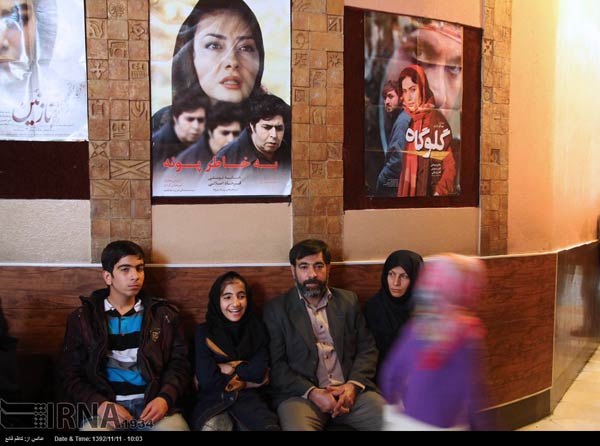
Greetings to Cinema Day – Iranians flock to movie theaters on free admission day

Image

Iran’s movie theaters across the country hosted thousands of filmgoers, who, once again after a lapse of several years, were offered free admission on Thursday, the day named Greetings to Cinema Day by the Iran Cinema Organization (ICO). People who had not gone to cinema for many years along with interested filmgoers waited in the long queues to watch movies from the early hours of the day

Moreover, Iranians can also watch their favorite movies in theaters free of charge on one more day, September 12, which is Iran’s National Day of Cinema.

http://www.payvand.com/news/14/feb/1002.html

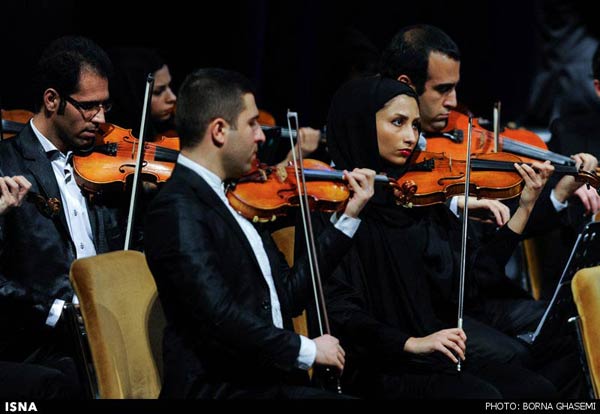
A possible revival of Tehran’s and Iran’s National Symphony Orchestras

Image

WASHINGTON — Alexander Rahbari fondly recalls his last stint conducting the Tehran Symphony Orchestra. It was the fall of 2005, Beethoven’s Ninth Symphony was on the card, and the Iranian capital’s Vahdat Hall was packed.

“I conducted Beethoven’s Ninth in Tehran for seven nights. If I said I conducted the Ninth for seven nights in New York or Austria, I would be asked if there was anyone in the audience — after two nights the hall would be empty,” Rahbari said.

“But [in Tehran] it was full — so many people came. Later some newspapers complained that, after returning to Iran after so many years, I conducted the symphony for only seven nights.” […]

In 2012, the funding problems that Rahbari and his successors complained about silenced the Tehran Symphony Orchestra, whose roots dating back to the 1930s made it one of the oldest in the Middle East.

Meanwhile, Iran’s National Orchestra, founded by Iranian-born composer and conductor Farhad Fakhreddini in 1998, suffered similar difficulties. Fakhreddini himself resigned in 1999, and the orchestra that performed only classical Iranian music dissolved in October 2012. […]

The election of President Hassan Rohani in 2013 has provided a glimmer of hope for the country’s orchestra scene, however.

“I’m very sorry that the [Tehran] Symphony Orchestra and the National Orchestra have been shut down,” Rohani said in a January 8 speech to artists and cultural figures. “This government will revive them in the coming months.” […]

Iran’s culture minister, Ali Jannati, added to the optimism when he said at the Fajr International Music Festival last week that the government aims to strengthen Music.

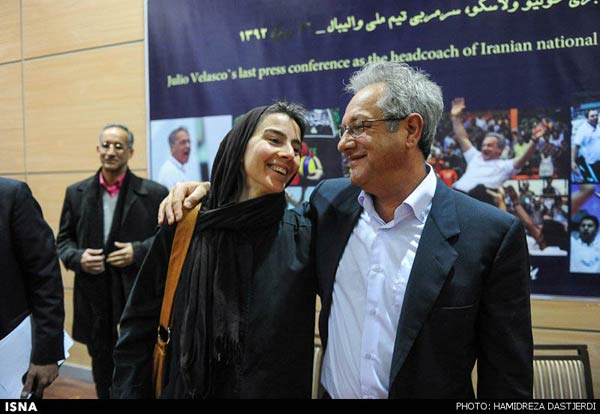
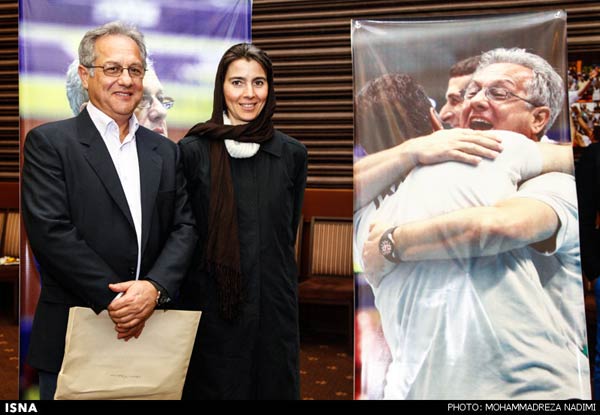
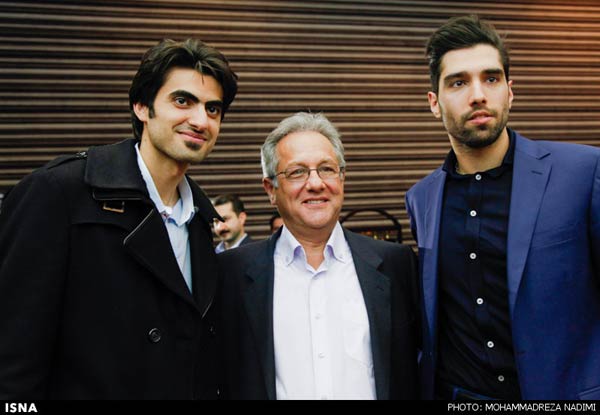
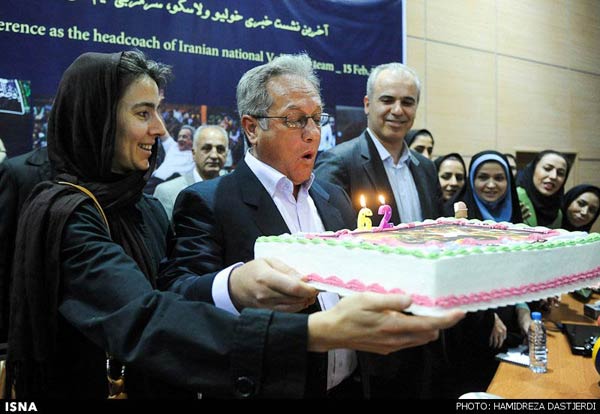
Argentinian volleyball coach Julio Velasco: “Iran will always be in my heart”

Image
Image Image Image

Velasco, who was appointed as Iran volleyball coach in 2011, will leave the team to lead his homeland team after Argentine President Cristina Fernandez de Kirchner asked him to take charge of the team.

“Iranian volleyball players inspired me to do more. They have the bright futures and I have to say they still have so many things to say,” he said.


More pictures:

http://www.payvand.com/news/14/feb/1106.html

Iran hosted 114 – 300 thousand Christian and Jewish Polish refugees in World War II

In 1939, Poland was invaded by Germany and the Soviet Union. The war and the destruction caused by heavy bombardment resulted in the displacement of millions of Polish civilians. Most of them were sent by Joseph Stalin to Russia as prisoners in labor camps in Siberia and other parts of the Soviet Union. It was not until Hitler invaded the Soviet Union in 1941 that Stalin freed the Poles and agreed to the creation of a Polish army to fight the Nazis, and that’s when the great journey started. Iran was chosen as the rendezvous point of the now-free Polish prisoners in Russia. […] Every day, more ships came from Russia bringing more Poles to Bandar-e Anzali. Some Poles also entered Iran from the north-eastern city of Mashhad.

The healthy men and women were organized in an army and were sent to join the war effort. The rest were sent to Tehran and Ahvaz. The sick were treated in hospitals in Tehran, and the American and British Red Cross donated clothes and food. Additionally, Polish language classes were established for the kids. The orphans were sent to Isfahan. Ryszard Antolak claimed that Iranian civil authorities and certain private individuals vacated the premises to accommodate the children. Schools, hospitals and social organizations sprang up quickly all over the city to cater to the growing colony. The new Shah took special interest in the Polish children of Isfahan. He allowed them the use of his swimming pool and invited groups of them to his palace for dinner. […]

After the war was over, many Polish men, women, and children who lived in Iran went back home. The Poles who lived in Iran, even for a little while, however, always remember Iran as a great host. As said by Ryszard Antolak, “The deepest imprint of the Polish sojourn in Iran can be found in the memoirs and narratives of those who lived through it. The debt and gratitude felt by the exiles towards their host country echoes warmly throughout all the literature. The kindness and sympathy of the ordinary Iranian population towards the Poles is everywhere spoken of.” In the summer of 2008, the Polish postal service issued a stamp commemorating the role of Isfahan in caring for Polish children. Source: www.mypersianspeakingfriends.org

In all, between 114,000 and 300,000 Poles are thought to have made it to Iran. […] “The friendly Persian people crowded round the buses shouting what must have been words of welcome and pushed gifts of dates, nuts, roasted peas with raisins and juicy pomegranates through the open windows,” wrote Krystyna Skwarko, a schoolteacher who came with her own two sick children to take charge of a growing orphanage in Isfahan. Skwarko’s book, “The Invited,” recounts a journey from Anzali, through Persia and on to New Zealand, where she and 700 orphans were eventually resettled. She died in 1995. More than 13,000 of the arrivals in Iran were children, many orphans whose parents had died on the way. In Russia, starving mothers had pushed their children onto passing trains to Iran in hopes of saving them. Skwarko’s impossible task was to wipe the scars of war from children who had been robbed of their childhood. […] Jewish orphans were cared for by a Jewish organization in Iran and later sent to Israel. Others went on to new lives in the United States, Britain, Australia, South Africa, New Zealand and elsewhere. Source: Cornell University Library

Book on this topic: The Children Of Esfahan – Polish Refugees in Iran by Abolqasem Jala

Photos: University Dissertation Presented On The Wall!

Image

6 Iranian women (Bita, Elham, Mahzad, Setayesh, Simin, Zahra), who are university students majoring in Graphics, did their dissertation by doing a painting on the outside wall of a sports club in Tehran. Here are snapshots of the women at work and their amazing work of art!

check more cool photos:

http://www.payvand.com/news/14/jan/1187.html

Photos: Heavy Snow in Rasht, Northern Iran

First snow of the winter season gave a white cover to the caspian coast city of Rasht in northern Iran on Saturday. Rasht is the capital of Gilan Province and the largest city on Iran’s Caspian Sea coast with a population of 551,161 (2006 census). Rasht is a major trade center between Caucasia, Russia and Iran using the port of Bandar-e Anzali. Rasht is also a major tourist center with the resort of Masouleh in the adjacent mountains and the beaches of Caspian as some of the major attractions.

Gilan has a humid Subtropical climate with plenty of annual rainfall, while Rasht is known internationally as the “City of Silver Rains” and within Iran as the “City of Rain”. The Alborz range provides further diversity to the land in addition to the Caspian coasts. Despite of the abundant humidity, Gilan is known for its moderate, mild and Mediterranean-like climate.

More photos: Payvand News of Iran

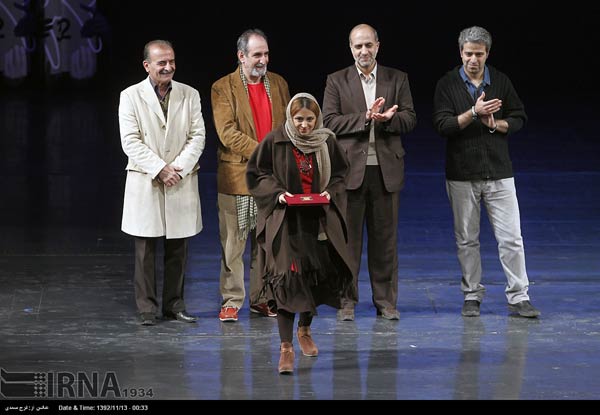
Hamlet wins at 32nd Fajr Theater Festival hold in Teheran and five other Iranian cities.

Image

An Iranian troupe won the grand prix of the international section at the 32nd Fajr International Theater Festival for their performance of Shakespeare’s magnum opus “Hamlet”. The play also brought Arash Dadgar the best director and best stage designer awards in this section.

“Ibsen’s Women-Put an Eagle in a Cage” directed by Juni Dahr from Norway received the jury special award and Iranian playwright Hossein Kianizadeh won best dramatist award for his collaboration in “Salt Marsh”.

The best actress award went to Spanish actress Nicole Heesters for her role in “House of Bernard Alba” directed by Calixto Bieito from the National Theater of Mannheim in Germany.

The best director award of the national section of the festival was presented to Shahram Karami for “The End of Tooba’s Long Trip” and Saeid Hassanlu won the best stage designer award for his collaboration in the play.

Iranian actor/director Anushiravan Arjmand, actor Ferdows Kaviani, playwright/actor Nosratollah Masudi and actress Nahid Moslemi were also honored with lifetime achievement awards at the ceremony.

http://www.payvand.com/news/14/feb/1017.html

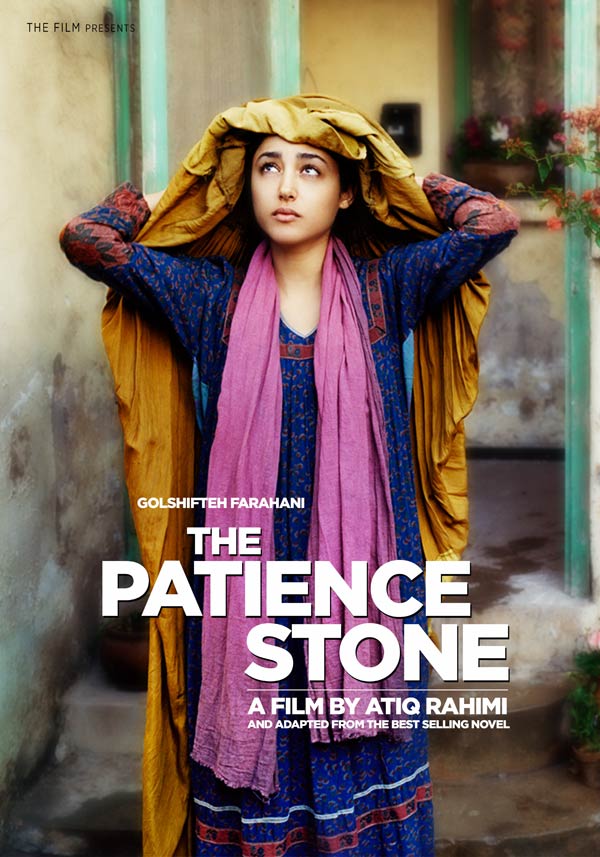
Iranian film, actress score nominations for French awards

Image

Asghar Farhadi’s The Past has been nominated in five categories for France’s Cesar Awards, while Iranian actress Golshifteh Farahani has also been nominated in the female newcomer category for her role in Afghan filmmaker Atiq Rahimi’s The Patience Stone (Sang-e Sabour).

Farhadi’s film The Past has been nominated in the categories of best director, best film, best original screenplay, best editing and best actress.

France’s Cesar Awards are the local equivalent to the Oscars, and the award ceremony will take place on February 28 in Paris.

http://www.payvand.com/news/14/feb/1005.html

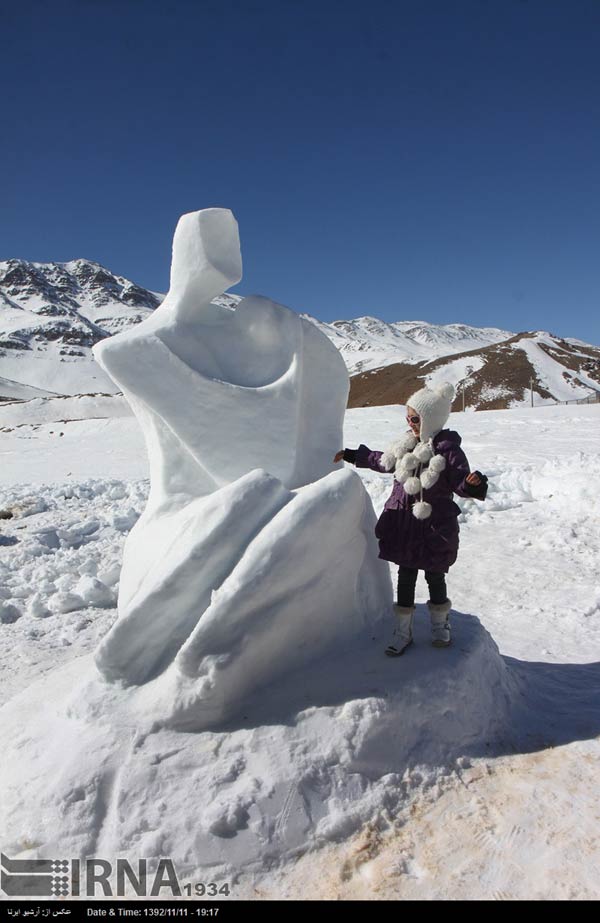
Snowy City Festival in Boroujen

Image

179 people in 39 groups had registered for the competitions. Among the participating groups, 13 were from other provinces. These groups created many giant snow sculptures which decorated the landscape and captivated the visiting people.

Boroujen is well known by its extremely cold weather, usually mentioned as one of the coldest Iran cities in national weather forecasts. It is located on an altitude of about 2197 meters from sea levels. Its climate is usually combined of moderate summer climates as well as very cold winters. Snow days are normally 122 days per year, and the temperature could reach -27°C. The maximum observed temperature has been 36°C. Average annular precipitation is 243 mm (24% in the spring, 1% in the summer, 33% in the fall, and 44% in the winter).

More photos:

http://www.payvand.com/news/14/feb/1016.html