Author Archives: socialinform

Series: Iranian Handicraft and Art – Ghalamkar and Termeh

Ghalamkar (Qalamkaar, also qalamkar, kalamkar) fabric is a type of Textile printing, patterned Iranian Fabric. The fabric is printed using patterned wooden stamps. It is also known as Kalamkari in India which basicaly is a type of hand-painted or block-printed cotton textile.

Termeh

Termeh is a handwoven cloth of Iran, primarily produced in the Yazd province.

Weaving Termeh requires a good wool with tall fibers. Termeh is woven by an expert with the assistance of a worker called “Goushvareh-kesh”. Weaving Termeh is a sensitive, careful, and time-consuming process.Greek historians commented on the beauty of Persian weavings in the Achaemenian (532 B.C.), Ashkani (222 B.C.) and Sasanidae (226-641 A.D.) periods and the famous Chinese traveller Hoang Tesang admired Termeh.

Due to the difficulty of producing Termeh and the advent of mechanized weaving, few factories remain in Iran that produce traditionally woven Termeh. Rezaei Termeh is the most famous of the remaining factories.

http://www.iranreview.org/content/Documents/Iran%E2%80%99s_Art_Heritages_and_Handicrafts.htm

All-female pop band to perform at Tehran’s Vahdat Hall on September 4 and 5

An all-female Iranian pop band, will appear again to perform concerts at Tehran’s Vahdat Hall on September 4 and 5.

The band, which is composed of five singers and 12 musicians, will perform a repertoire of Persian, English, French, Arabic, and Hindi songs during the performances.

Band leader Bahar Ilchi said that her band is the first all-female Iranian pop group to perform live in concert in Iran since the victory of the Islamic Revolution in 1979.

More infos and more photos:

http://www.payvand.com/news/14/sep/1017.html

Volleyball: Dream World Championship starts for Iran as they beat World League Champion U.S.

Krakow, Poland, September 2, 2014 – Iran provided another major hit at FIVB Men’s World Championship in Poland as they claimed their second win in Krakow, this time in a thrilling five-setter over USA by 3-2 (25-23, 25-19, 19-25, 18-25, 17-15).

USA’s Matthew Anderson and Taylor Sander emerged as the game’s most prolific scorers, with 26 and 25 points respectively, but it wasn’t enough for a complete American comeback. Meanwhile, Iran was led by Amir Ghafour (21 points), a key player in the final set. Teammate Mojtaba Mirzajanpour chipped in with 13 tallies.

http://www.payvand.com/news/14/sep/1013.html

‘Five-star’ Orient Express to link Hungary and Iran

An Orient Express carriage, on which the new Hungary-Iran train styles itself (AFP)

An Orient Express carriage, on which the new Hungary-Iran train styles itself (AFP)

Railway enthusiasts with a taste for nostalgia will soon be able to indulge their Orient Express fantasies after Hungarian Railways said it was launching a luxury Budapest-Tehran train service.

With ticket prices of between 10,000 and 23,000 euros ($13,000-31,000) per person, guests will receive “five-star” treatment…

The first “Golden Eagle-Danube Express” train, which comprises 13 lavishly-decorated wood-panelled 1950s carriages and berths for about 70 guests, will set off from Budapest on October 15.

The two-week trip will cross Hungary, Romania, Bulgaria and Turkey, and take passengers through the ancient Iranian cities of Shiraz and Persepolis before reaching the capital Tehran.

“Nostalgia fans needn’t panic, another five trips are scheduled for 2015,” she said.

The last Orient Express – which traditionally linked Paris and Istanbul – ran in 2009, with the luxury Venice Simplon-Orient Express continuing to run services between London and Venice.

http://www.middleeasteye.net/news/five-star-orient-express-link-hungary-and-iran-759845650


The train is a joint venture between the Danube Express, the only private train in Central Europe to have en suite facilities, and the “rail-cruise” tour operator Golden Eagle Luxury Trains. It will travel through Hungary, Romania, Bulgaria and Turkey before entering Iran, where five days will be spent exploring historic cities, World Heritage Sites and towns off the beaten track.

There will be two “Jewels of Persia” trips in 2014: eastbound departing on October 14, costing from £8,695 per person, and westbound on October 27, costing from £9,395, not including flights. Two more trips are being arranged for 2015. For details see danube-express.com; goldeneagleluxurytrains.com.

http://www.telegraph.co.uk/travel/journeysbyrail/10291133/All-aboard-the-first-private-train-to-Iran.html

10 Iranians on list of World’s Most Influential Scientific Minds

Ten Iranian scientists have been named to Thomson Reuters’ list of The World’s Most Influential Scientific Minds 2014. The list includes more than 3,200 scientists from around the world who have published the highest number of articles that are cited the most frequently by other researchers.


See the full list at http://highlycited.com

The scientists have all recently published at least 15 papers with notably higher levels of citations.

Thomson Reuters is a leading producer of bibliometric statistics and one of the main sources of impact factors used in the assessment of scientific articles and careers.

http://www.payvand.com/news/14/jul/1033.html

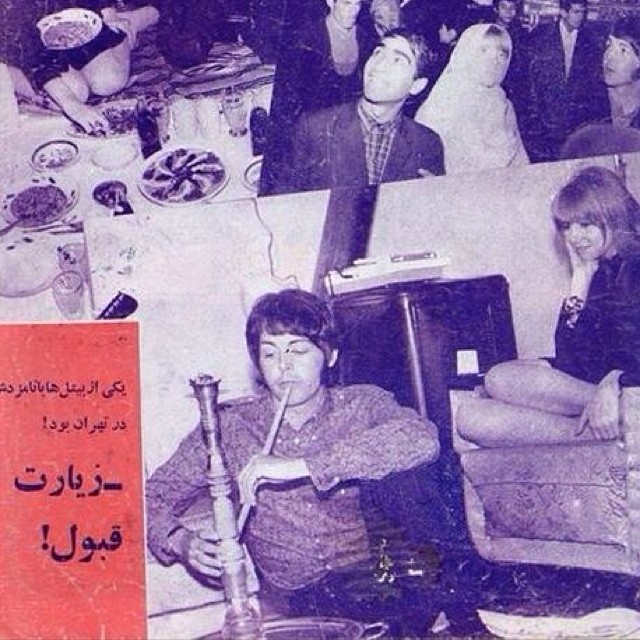
Series: 60s and 70s in Iran – Paul McCatrney in Iran – 1968


Paul McCatrney in Iran - 1968

Paul McCatrney in Iran – 1968

http://iranian.com/Jan96/Articles/Beatelha.html

UNHCR: Afghan girl who came as refugee to Iran enjoyed the Iranian education system and is now obsterics surgeon

Afghan refugee Nasibah is now an obstetrics surgeon in Iran, an achievement she and her family never felt possible.


Afghan refugee Nasibah Heydari sits in her office. With hard work and determination, she has achieved a dream by qualifying to become an obstetrics surgeon in Iran.

Following the Soviet invasion of Afghanistan in 1979, Nasibah’s farmer father, her mother and older sister fled to Iran from a small village in Kandahar province. After several days walking across mountains, rivers and deserts, they sought refuge in north-east Iran. Empty-handed, they settled in the city of Mashhad, where Nasibah was later born.

“The chance to access education from primary school to university is the greatest service that Iran has extended me and many other refugees in this country,” said Nasibah. Her story is just one example of how Iran, with the support of UNHCR, tries to provide support to refugees through education, health, vocational skills and opportunities so they can eventually help rebuild their own country.

There are more than 840,000 Afghan refugees living in Iran. The Iranian government assists refugees with medical services, education, literacy classes and also employment.

Nasibah hopes peace and stability will prevail in Afghanistan so she can return. “When I go back I will take many good memories from Iran and I will be grateful to have had the opportunity to have lived and studied in peace and security for such a long time. I hope in the future, I will be able to help women back home with the knowledge I have acquired in Iran,” she said.

http://www.payvand.com/news/14/jun/1190.html


Series: Iranian Handicraft and Art – Carpet weaving

The art of carpet weaving in Iran dates backs to 2,500 years and is rooted in the culture and customs of its people and their instinctive feelings. Weavers mix elegant patterns with a myriad of colors.

The Iranian carpet is similar to the Persian garden: full of florae, birds and beasts. The colors are usually extracted from wild flowers, and are rich in colors such as burgundy, navy blue and accents of ivory.

The proto-fabric is often washed in tea to soften the texture, giving it a unique quality. Depending on where the rug is made, patterns and designs vary.

http://www.iranreview.org/content/Documents/Iran%E2%80%99s_Art_Heritages_and_Handicrafts.htm

Series: Iranian Handicraft and Art – Minakari

Enamel working and decorating metals with colorful and baked coats are one of the distinguished artwork in Isfahan. Mina, is defined as some sort of glass-like colored coat which can be stabilized by heat on different metals particularly copper.

Although this course is of abundant use industrially for producing metal and hygienic dishes, it has been paid high attention by painters, goldsmiths and metal engravers since a long time. It is categorized as enamel painting, charkhaneh (or chess-like enamel) and cavity enamel.

Enamel painting is practiced in Isfahan and specimens are kept in the museums of Iran and abroad, indicting that Iranian artists have been interested in this art and used it in their metalwork ever since the rule of Achaemenian and Sassanid dynasties. Since enamels are delicate, we do not have many of them left from ancient times. Most of the enameled dishes related to the past belong to the Qajar dynasty during 1810–90.

Source: IranReview

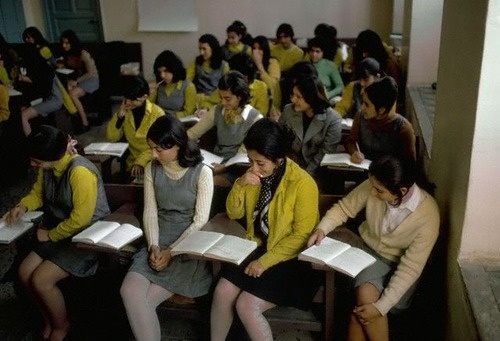
Series: 60s and 70s in Iran – School girls

School girls in Iran, 1960s

School girls in Iran, 1960s

Professor Hossein Baharavand – Iranian Scientist Wins UNESCO Biology Award

Professor Hossein Baharavand from the Stem Cell Research Center of Royan Institute was qualified to win the 2014-2015 UNESCO-Equatorial Guinea International Prize.


UNESCO-Equatorial prize is awarded to those projects and activities of an individual, individuals, institutions, other entities or non-governmental organizations for scientific research in life sciences, which have led to improving the quality of human life.

Hossein Baharvand is an Iranian stem cell and developmental biologist and director of Iran’s Royan Institute for Stem Cell Biology and Technology.


Hossein Baharvand was born in 1972 and obtained his PhD degree in 2004 in the field of Developmental Biology from Khwarizmi University (formerly Tarbiat Moallem University), Tehran, Iran.


He began work at the Royan Institute in Tehran from 1996. He is currently full professor and head of Department of Stem Cells and Developmental Biology at Royan institute for Stem Cell Biology and Technology.


Moreover, Baharvand is the head of department of Developmental Biology at University of Science and Culture in Tehran.


He and his colleagues have established several human embryonic stem cell lines since 2003 and later human induced pluripotent stem cells. This has enabled them to pursue many avenues of research into methods of generating therapeutic cells from stem cells and made them the pioneer in stem cell research throughout the Middle East.


Professor Baharvand has published more than 150 peer-review papers in national and international journals, as well as 4 international books and 9 books in Persian. He is editor of Trends in Stem Cell Biology and Technology book. He is an editorial board member of five international journals. He has won 11 national and international awards and presented as invited speaker in several meetings.


http://www.payvand.com/news/14/aug/1134.html

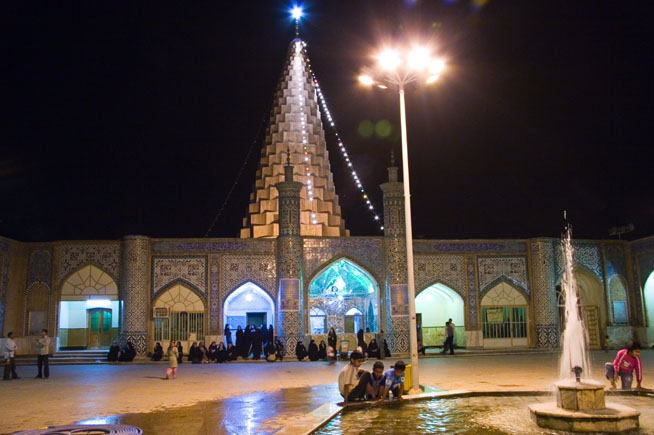
Tomb of Hebrew prophet Daniel in Susa, Iran

The Book of Daniel mentions that Daniel lived in Babylon and may have visited the palace of Susa‌, Iran, but the place where he died is not specified; the tradition preserved among the Jews and Arabs is that he was buried in Susa. Today the Tomb of Daniel in Susa is a popular attraction among local Muslims and Iran’s Jewish community alike.

Susa, Iran - Tomb of Daniel at night

Susa, Iran – Tomb of Daniel at night

Source: wikipedia

Italy’s former ambassador to Iran: No, Iranians Don’t Hate You

Roberto Toscano - Italy’s ambassador to Iran, 2003-2008

Roberto Toscano – Italy’s ambassador to Iran, 2003-2008

In 2004, when I was Italy’s ambassador to Iran, I had the occasion to tour the country together with a couple of American friends, at the beginning rather hesitant to come and visit, but then overwhelmed by the hospitality and politeness that are so typically Iranian and even more by the “extra” of both hospitality and politeness that came out when people realized that they were American.

One episode has remained marked in their memory (and in mine too): at the end of a visit to the tomb of the poet Saadi in Shiraz a mullah, who had been listening to the English translation of our guide, and had asked him where those tourists were from, went up to my friend, shook his hand, said (in English) “God bless you” and left.

[…] Most people who have seen the recent movie Argo […] are convinced that what they see is contemporary Iran: still hostile, still radical, still violently and massively anti-American. The truth is rather different. Certainly the regime finds in anti-Americanism a sort of marker of identity […] What is interesting, however, is that anti-American rhetoric is not focused on what America is, but on what America does. […] the 1953 Anglo-American coup against Mossadeq or the support given to Saddam in its 1980 aggression against Iran.

The fact is, however, that this regime narrative, and the hostility toward the U.S., is not really shared by the majority of Iranians. […]

Iran — and this will surprise the average American — is not a closed country, and its citizens can travel abroad, if they get the necessary entry visas, of course. In the second place, educated Iranians (not a narrow minority, differently from other countries in the area) have access to reliable information about the world and also about the U.S., in spite of the attempts of the regime to filter “subversive” material in both TV programs and internet traffic. […]

Actually, I found that in Iran there is a lot of admiration for America: not necessarily for its policy, but for its economy and for its culture, wildly popular especially among Iranian youth. […] A strong proof of the fact that America is not hated by Iranians came with September 11, when thousands of Iranians went spontaneously to the streets for a candlelight vigil in homage and solidarity to the victims of the attack on the Twin Towers.

The lack in Iran of the generalized and often virulent anti-Americanism that characterizes Middle Eastern populations is something that Americans traveling in Iran, even in the present tense political situation, can testify. Not only is there no hostility toward American citizens, but instead we see curiosity and friendship at the same time, though often combined with criticism for specific U.S. policies and behavior.

Definitely crowds chanting ‘marg bar Amrika’ (death to America) are today both very rare and not very much convinced: they tend to be formed by activists bused to the demonstrations. […]

Many, if not most Iranians, may be fed up with the regime, especially in its present incarnation in President Ahmadinejad, but they are a proud, patriotic people. They have problems with their leaders, but not with their country, especially in the event of an external attack.

The full article: The Huffington Post | Roberto Toscano | No, Iranians don’t hate you

Series American couple in Iran: Traveling to Iran as Americans

Audrey hanging with a group of Iranian women in Masouleh.

Audrey hanging with a group of Iranian women in Masouleh.

Traveling to Iran as an American citizen may sound complicated and dangerous. It’s not. We’re here to dispel the myths and answer the questions piling up in our inbox based on our visit to Iran just a few weeks ago.

Our aim in the following Q&A is to answer actual reader queries and to help demystify the process of traveling to Iran.

Are American citizens legally allowed to visit Iran?
Although the United States has imposed sanctions against Iran, there are currently no restrictions on American citizens visiting Iran as tourists. Currently, about 1,000-1,500 Americans visit Iran each year. […]

As an American, how will Iranians treat me?
Iranian people were often shocked to discover that we were American and that we were able to get a visa to their country. Once this fact set in, they often went over the top in welcoming us — everything from cordial greetings, to smiles, hugs, gifts and invitations to homes — especially when our guide was out of sight. We joke that it’s the closest we’ve felt to being rock stars.

Iranian University Students - Esfahan, Iran

Read the whole article if interested in details about getting a visa and organizing the trip:
Uncornered Market – Travel and Life Adventure | Traveling to Iran as Americans

Anyhow the blog is just great:
Uncornered Market – Travel and Life Adventure | Travel | Iran

Mitra Farahani: Awarded Iranian filmmaker

Mitra Farahani

Mitra Farahani’s biography:
She was born in Tehran in 1975 and studied painting and drawing with various Iranian masters of pictorial art, notably with Gholam Hossein Nami. After receiving a degree in graphic art at the Azad University in Tehran, she moved to Paris and took up residence in the Cite Internationale des Arts.

In 2001, she began a course of video studies at the Ecole Natioanale Superieure des Arts Decoratifs, where she made her first documentary entitled “Just a Woman”. The film was chosen for Berlin Film Festival and was awarded the Teddy Awards Special Jury Prize.

Her documentary “Zohre and Manouchehr” (Taboos) was presented at the Berlin Film Festival of 2004 and was later shown in cinemas in France and Canada.

In 2005 she made the documentary “Behjat Sadr: Suspended Time”, a portrait of one of the pioneers of abstract expressionist painting in Iran. In 2009, as part of the Three Continents Festival, Le Lieu Unique in Nantes presented her one-person multi-disciplinary exhibition. Her latest documentary film, Fifi Howls from Happiness, on painter Bahman Mohassess, premiered at the 2013 Berlin and Telluride film Festival.

More about her documentary “Fifi Howls from Happiness”:
http://www.payvand.com/news/14/aug/1104.html

Azam Iraji Zad – first Iranian (woman) selected as member of COMEST

Azam Iraji Zad, faculty member of Sharif University of Technology Physics Department was selected as member of the World Commission on the Ethics of Scientific Knowledge and Technology (COMEST). According to Public Relations Department of National Elites Foundation, she is the first Iranian scientist admitted to the commission.

COMEST is an advisory body and forum of reflection that was set up by UNESCO in 1998.

It is composed of eighteen leading scholars from scientific, legal, philosophical, cultural and political disciplines from various regions of the world.

The Commission is mandated to formulate ethical principles that could provide decision-makers with criteria that extend beyond purely economic considerations.

http://www.payvand.com/news/14/aug/1114.html


Fifi Howls from Happiness: An awarded Documentary on Iranian Artist Bahman Mohassess running in Cinemas now

Mitra Farahani’s lyrical documentary explores the enigma of provocative artist Bahman Mohassess, the so-called “Persian Picasso,” whose acclaimed paintings and sculptures dominated pre-revolutionary Iran. Irreverent and uncompromising, a gay man in a hostile world, Mohassess had a conflicted relationship with his homeland-revered by elites in the art scene and praised as a national icon, only to be censored later by an oppressive regime. Known for his iconoclastic art as well as his scathing declarations, Mohasses abandoned the country over 30 years ago for a simple, secluded life in Italy.

Reactions

Critics Pick “Addictively fascinating…The lovely meeting of artistic sensibilities makes this doc sing.” -Michael Atkinson, Village Voice

Five stars! “Stunningly multifaceted…surprising and deeply affecting.” – Keith Uhlich, Time Out NY

“Thoughtful, moving…A portrait of the artist as a refusenik, a recluse, a survivor and a stubborn question mark, “Fifi Howls From Happiness” registers, by turns, as a celebration, an excavation and an increasingly urgent rescue mission.” Manohla Dargis, The New York Times

“A fascinating portrait.” – Jay Weissberg, Variety

“The most startlingly unexpected Iranian triumph at Telluride was Mitra Farahani’s FIFI HOWLS FROM HAPPINESS, an unconventional documentary about forgotten Iranian artist Bahman Mohassess. Mohassess, who died in 2010, was a fantastic character, a viciously witty gay guy who cut a stylish swath through Europe and makes wicked fun of his dim-bulb oppressors. In the film, Farahani, gorgeous and stylishly feminine, spars skillfully with the artist, deftly penetrating his defenses through sheer intelligence and knowledge of his work, like Truffaut interviewing Hitchcock.” – Tim Appelo, The Hollywood Reporter

“A joyous celebration of freedom to create, to destroy, to live without regret.” – Lincoln Film Center

“When a film about an artist becomes itself a transcendent work of art.” – Peter Sellars

“Exceptionally clever. The final sequence makes for unforgettable cinema.” – Ken Eisner, Georgia Straight

Awards & Festivals

  • Winner! Buenos Aires Indendent Film Festival 2014 – International Competition
  • Telluride Film Festival- Official Selection
  • New York Film Festival – Official Selection
  • Berlin International Film Festival – Official Selection
  • Outfest 2014 – Official Selection

http://www.payvand.com/news/14/aug/1104.html

Series: Iranian Handicraft and Art – Intro & Part 1: Pottery

Intro

Iran held the 24th International Handicrafts Exhibition to mark World Handicrafts Day on Tuesday June 10, 2014 … at Tehran’s International Fairground.

The World Handicrafts Council was established by the United Nations Educational, Scientific and Cultural Organization (UNESCO) and 90 countries have already joined it.
Iran is home to one of the richest art heritages and handicrafts in world history and distinguished in many disciplines, including architecture, painting, weaving, pottery, calligraphy, metalworking and stone masonry.

Persians were among the first to use mathematics, geometry, and astronomy in architecture and also have extraordinary skills in making massive domes which can be seen frequently in the structure of bazaars and mosques.

Pottery

Prominent archeologist Roman Ghirshman said, “The taste and talent of these people [Iranians] can be seen through the designs of their earthenware.”

Of the thousands of archeological sites and historical ruins of Iran, almost every one of them can be found to have been filled, at some point, with earthenware of exceptional quality.

http://www.iranreview.org/content/Documents/Iran%E2%80%99s_Art_Heritages_and_Handicrafts.htm

Exhibition: Persian Caligraphy at Smithsonian’s Freer and Sackler Galleries, Washington, DC (Opening: Sept.13 – End: March 2015)

OPENING SEPT. 13, “NASTA‘LIQ: THE GENIUS OF PERSIAN CALLIGRAPHY” IS FIRST EXHIBITION ON PERSIA’S MOST POPULAR AND VISUALLY STUNNING SCRIPT

During a prolific 200-year period in the 14th-16th centuries, four master calligraphers invented one of the most aesthetically refined forms of Persian culture: nasta‘liq, a type of calligraphy so beautiful that for the first time the expressive form of the words eclipsed their meaning. “Nastaliq: The Genius of Persian Calligraphy,” opening Sept. 13 at the Smithsonian’s Arthur M. Sackler Gallery, displays 20 rarely seen masterworks created by the script’s greatest practitioners, tracing its evolution from a simple style of writing to a potent form of artistic expression.

This is the first exhibition ever to focus specifically on nasta‘liq, which was used primarily to write poetry, Persia’s quintessential form of literature. With sinuous lines, short vertical strokes and an astonishing sense of rhythm, the script was an immediate success and was rapidly adopted throughout the Persian-speaking world from Turkey to India. The exhibition shows how generations of itinerant calligraphers, bound by the master-pupil relationship, developed, enhanced and spreadnasta‘liq between major artistic centers.

Nasta‘liq represents one of the most accomplished forms of Persian art, developed at a time of cultural and artistic effervescence in Iran,” said Simon Rettig, exhibition curator and curatorial fellow at the Freer and Sackler galleries. “In a sense, it became the visual embodiment of the Persian language enthusiastically embraced from Istanbul to Delhi and from Bukhara to Baghdad.”


More info and pictures:

http://www.payvand.com/news/14/aug/1073.html


Volleyball: Iran wins vs World League Champion USA in third match in Irvine, USA

Group photo of Iran and US volleyball teams

Group photo of Iran and US volleyball teams

After falling in two previous matches to the U.S. men’s national team, Iran earned a 3-2 victory in the USA Volleyball Cup on Friday night.

Amir Ghafour had 26 points in the 24-26, 26-24, 25-27, 25-20, 15-9 victory at Viejas Arena at San Diego State. The four-match exhibition series concludes Saturday night at UC Irvine.

 
Other sports related Iran news: https://theotheriran.com/tag/sports/

Series American couple in Iran: Audry’s cites on Persepolis: Ancient Persia, Modern Lessons

Although Persepolis is one of Iran’s top archeological and tourist sites, I was careful to keep my expectations in check before visiting. After all, what would remain of the 2,500 year-old capital of the Achaemenid Empire? Amidst crumbled columns, I found great detail that blew me away and a surprising connection to the present.

Gate of All Nations - Persepolis, Iran

Gate of All Nations – Persepolis, Iran

When I first entered Persepolis through the Gate of All Nations, I was struck by the scale of it all – the statues, the columns, the great stone. I tried to imagine the process of transporting the raw materials to this place, constructing the city and palace, and fashioning it all without the mechanical means we have today. […]

Persepolis eastern staircase leading to Apadana Palace, all 23 subject nations represented.

Persepolis eastern staircase leading to Apadana Palace, all 23 subject nations represented.

Like a camera lens, my eyes began to focus on stone-carved details — hair, faces, beards, hats, and clothes, gifts carried in hands. That you could still make out every curl in a beard, eyelash on a camel and softened skin of soldiers holding hands — 2,500 years later – struck me as truly spectacular. […]

And it went on like this, through the citizens of each member nation — Egyptians, Assyrians, Indians, Tajiks, and so on. Each was easily identifiable, their physical appearance and cultural trappings preserved in stone from 500 B.C. […]

It was the whole of these details that to me seemed to define the character of the Achaemenid Empire: a multi-ethnic ancient empire built on respecting – if not maintaining — the diversity of many cultures amidst a unifying loyalty to one king. […]

Persian and Median soldiers holding hands, leading the way to the king.

Persian and Median soldiers holding hands, leading the way to the king.

Cyrus the Great’s Human Rights Charter
While it was Darius the Great who built this palace at Persepolis, it was his father-in-law – Cyrus the Great – who attempted to set the foundation of mutual respect within the Achaemenid Empire. In his Babylon Cylinder (539 B.C.), Cyrus put forth some of the first recorded mentions of human rights, an expression of tolerance, and of religious, linguistic and racial equality across the empire.

History tells us that great civilizations have come and gone, risen and fallen, ascended and crumbled. The pity of the great Persian empire — 23 nations under one roof and the nascent echoes of human rights — was that a great man came and went well before his time. […]

Head over to: Uncornered Market – Travel and Life Adventure | Persepolis to see all photos, and read the whole text.

Iranian Mathematician Maryam Mirzakhani: The first woman to win the “Nobel Prize of Mathematics”

Maryam Mirzakhani

Maryam Mirzakhani is the first woman to ever win the Fields Medal – known as the “Nobel Prize of mathematics” – in recognition of her contributions to the understanding of the symmetry of curved surfaces. […]

Mirzakhani was born and raised in Tehran, Iran. As a young girl she dreamed of becoming a writer. By high school, however, her affinity for solving mathematical problems and working on proofs had shifted her sights. […]

She became known to the international math scene as a teenager, winning gold medals at both the 1994 and 1995 International Math Olympiads – she finished with a perfect score in the latter competition. Mathematicians who would later be her mentors and colleagues followed the mathematical proofs she developed as an undergraduate.

After earning her bachelor’s degree from Sharif University of Technology in 1999, she began work on her doctorate at Harvard University under the guidance of Fields Medal recipient Curtis McMullen. […] —By Bjorn Carey for Stanford University

Interesting Interview with Mirzakhani by The Guardian:

G: What are some of your earliest memories of mathematics?

I grew up in a family with three siblings. My parents were always very supportive and encouraging. It was important for them that we have meaningful and satisfying professions …

In many ways, it was a great environment for me, though these were hard times during the Iran-Iraq war. My older brother was the person who got me interested in science in general. He used to tell me what he learned in school. My first memory of mathematics is probably the time that he told me about the problem of adding numbers from 1 to 100. I think he had read in a popular science journal how Gauss solved this problem. The solution was quite fascinating for me.

G: What experiences and people were especially influential on your mathematical education?

I was very lucky in many ways. The war ended when I finished elementary school; I couldn’t have had the great opportunities that I had if I had been born 10 years earlier. I went to a great high school in Tehran – Farzanegan – and had very good teachers. I met my friend Roya Beheshti during the first week of middle school. It is invaluable to have a friend who shares your interests, and it helps you stay motivated.

Our school was close to a street full of bookstores in Tehran. I remember how walking along this crowded street, and going to the bookstores, was so exciting for us. We couldn’t skim through the books like people usually do here in a bookstore, so we would end up buying a lot of random books. Also, our school principal was a strong-willed woman who was willing to go a long way to provide us with the same opportunities as the boys’ school.

Later, I got involved in Math Olympiads that made me think about harder problems. As a teenager, I enjoyed the challenge. But most importantly, I met many inspiring mathematicians and friends at Sharif University. The more I spent time on mathematics, the more excited I became.

G: Could you comment on the differences between mathematical education in Iran and in the US?

It is hard for me to comment on this question since my experience here in the US is limited to a few universities, and I know very little about the high school education here. However, I should say that the education system in Iran is not the way people might imagine here. As a graduate student at Harvard, I had to explain quite a few times that I was allowed to attend a university as a woman in Iran. While it is true that boys and girls go to separate schools up to high school, this does not prevent them from participating say in the Olympiads or the summer camps. […]

G: What advice would you give those who would like to know more about mathematics – what it is, what its role in society has been, and so son?

This is a difficult question. I don’t think that everyone should become a mathematician, but I do believe that many students don’t give mathematics a real chance. I did poorly in math for a couple of years in middle school; I was just not interested in thinking about it. I can see that without being excited mathematics can look pointless and cold. The beauty of mathematics only shows itself to more patient followers.
Source: The Guardian

Excerpts of an article by Erica Klarreich published in Quanta Magazine that shows some other interesting aspects about her personality:

With her low voice and steady, gray-blue eyes, Mirzakhani projects an unwavering self-confidence. She has an equal tendency, however, toward humility. Asked to describe her contribution to a particular research problem, she laughed, hesitated and finally said: “To be honest, I don’t think I’ve had a very huge contribution.” And when an email arrived in February saying that she would receive what is widely regarded as the highest honor in mathematics — the Fields Medal, which will be awarded today at the International Congress of Mathematicians in Seoul, South Korea — she assumed that the account from which the email was sent had been hacked.

Other mathematicians, however, describe Mirzakhani’s work in glowing terms. […]

As a child growing up in Tehran, Mirzakhani had no intention of becoming a mathematician. Her chief goal was simply to read every book she could find. She also watched television biographies of famous women such as Marie Curie and Helen Keller, and later read “Lust for Life,” a novel about Vincent van Gogh. These stories instilled in her an undefined ambition to do something great with her life — become a writer, perhaps. […]

In her first week at the new school, she made a lifelong friend, Roya Beheshti, who is now a mathematics professor at Washington University in St. Louis. As children, the two explored the bookstores that lined the crowded commercial street near their school. Browsing was discouraged, so they randomly chose books to buy. “Now, it sounds very strange,” Mirzakhani said. “But books were very cheap, so we would just buy them.”

To her dismay, Mirzakhani did poorly in her mathematics class that year. Her math teacher didn’t think she was particularly talented, which undermined her confidence. At that age, “it’s so important what others see in you,” Mirzakhani said. “I lost my interest in math.”

The following year, Mirzakhani had a more encouraging teacher, however, and her performance improved enormously. “Starting from the second year, she was a star,” Beheshti said. […]

In 1994, when Mirzakhani was 17, she and Beheshti made the Iranian math Olympiad team. Mirzakhani’s score on the Olympiad test earned her a gold medal. The following year, she returned and achieved a perfect score. […]

After completing an undergraduate degree in mathematics at Sharif University in Tehran in 1999, Mirzakhani went to graduate school at Harvard University, where she started attending McMullen’s seminar. […]

She started going to McMullen’s office and peppering him with questions, scribbling down notes in Farsi.

“She had a sort of daring imagination,” recalled McMullen, a 1998 Fields medalist. “She would formulate in her mind an imaginary picture of what must be going on, then come to my office and describe it. At the end, she would turn to me and say, ‘Is it right?’ I was always very flattered that she thought I would know.”
Read on here: Quanta Magazine

Other interesting articles on Mirzakhani in iranianroots.com:
http://iranianroots.com/?s=Mirzakhani

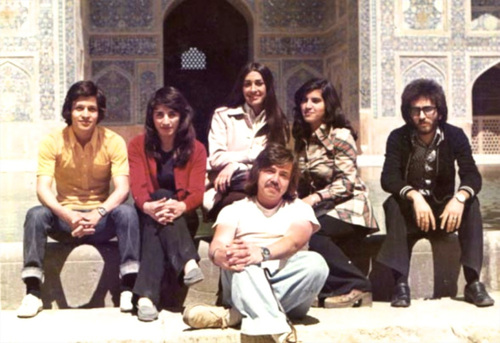
Series: 60s and 70s in Iran – Students II

Iranian Students in the 70s

Iranian Students in the 70s

Series: 60s and 70s in Iran – Students

Students in the 70s

Students in the 70s

Series American couple in Iran: A Poem to the People

Iranian Hospitality on Train from Iran

Iranian hospitality on train from Iran to Turkey

My heart sank as I watched the news from Iran this morning, scenes of the British Embassy being charged by an angry mob in Tehran. It saddens me – angers me, really – that narrow groups like this who define the world’s perception of Iran and the Iranian people are in reality such a small percentage of the country’s population.

My experience tells me they are the outliers, yet circumstances conspire to convince us on the outside to see them as the norm.

I thought back to all the people we met across Iran, from families in small mountain villages to shopkeepers on the busy streets of Tehran, virtually all of them welcoming us Americans – the supposed enemy — almost always with open arms and quite often bearing gifts. I remembered our conversations with Iranian people of all ages who longed for engagement — not only with us, but with the rest of the world.

I felt like yet another door closed on them today.

Continue to read the whole story here:
Uncornered Market – Travel and Life Adventure | Iran: A Poem to the People

Iranian female and men students win several medals at International Mathematics Competition 2014

Tehran’s Sharif University of Technology students won two gold and four bronze medals at the 21st International Mathematics Competition for University Students.

73 teams from around the world participated in the competition held in Blagoevgrad, Bulgaria, from July 29 to August 4.

Mina Dalir-Rouyfard and Pedram Safayei gwere awarded gold medals and Mojtaba Tefaq, Mahed Abroshan, Morteza Soltanipour and Mohammad Hassan Gol-Mohammadian earned bronze medals.

The competition consisted of two sessions of five hours each. Problems were posed from the fields of algebra, analysis (real and complex), geometry and combinatorics. The working language was English.

http://www.payvand.com/news/14/aug/1036.html

Related articles about Iran’s performance in science competitions: https://theotheriran.com/tag/science-competitions/

Photos: Lahijan, in Gilan Province of Iran near the Caspian Sea

Info about Lahijan: Wikipedia | Lahijan

Iranian women are the sensation at the 2014 Chess Olympiad – score perfect score in the first 3 rounds

Khademalsharieh Sarasadat has 3/3 and has helped Iran to maintain a perfect match score

Khademalsharieh Sarasadat has 3/3 and has helped Iran to maintain a perfect match score | photo: Georgios Souleidis, chess24

If the perfect score of the Iranian women’s team after three rounds was newsworthy, then perhaps the best way to angle the headline for round four is – Iranian women drop first half point! The Olympiad sensations, seeded 21st, defended their right to the top table with a resounding 3.5-0.5 win over slightly higher rated Slovakia. Only Slovakian top board IM Eva Repkova survived, and the magical Iranians continue to outpace the clear pre-tournament favorites, China.

https://chess24.com/en/olympiad2014/news/round-4-azerbaijan-iran

Iran Women and Men teams grab titles at World Cadet Taekwondo Championships

Iran showed its supremacy in taekwondo as it clinched both the overall male and female titles at the 1st WTF World Cadet Taekwondo Championships, which wrapped up in Baku, Azerbaijan on July 27, 2014.

The inaugural WTF World Cadet Taekwondo Championships, which were for the youth aged between 12 and 14, took place at the National Gymnastic Arena in downtown Baku, drawing a total of 574 athletes from 65 countries.

n the male division, Iran took home three gold medals, three silver medals and one bronze medal for a total of 82 points for the top honors. Russia came next with one gold and three silvers for a total of 53 points, followed by Korea with three golds for 45 points. The United States stood at fourth with one gold and one bronze for 41 points, while Mexico followed with one silver and two bronzes for 36 points.

In the female category, Iran grabbed four golds and one silver for a total of 74 points, followed by Turkey with two golds and five bronzes for 62 points. Chinese Taipei came next with two golds and two bronzes for 49 points, followed by Russia with two silvers and four bronzes for 49 points. France stood at fifth with two silvers and one bronze for 38 points.

http://www.worldtaekwondofederation.net/news-news/item/1508-iran-takes-overall-male-female-titles-at-1st-wtf-world-cadet-taekwondo-championships-in-baku-azerbaijan/1508-iran-takes-overall-male-female-titles-at-1st-wtf-world-cadet-taekwondo-championships-in-baku-azerbaijan

Tar virtuoso Jalil Shahnaz

Jalili Shahnaz was born in 1921 in Isfahan, Persia (Iran). Shahnaz studied under the supervision of Abdolhossein Shahnazi and Hossein Shahnaz and befriended ney player Hassan Kassai.[2]

Persian classical vocalist Shajarian named his most recent musical group “Shahnaz” in honor of Masetro Shahnaz.[4]

Jalil Shahnaz died in Tehran on 17 June 2013.

Works

  • “Atr Afshan” (tar solo, accompanied by Mohammad Esmaeili, tombak).
  • “Zaban-e tar” (tar solo, accompanied by Jahangir Malek, tombak).
  • “15 Pieces for Tar & Setar” (transcribed by Houshang Zarif). Soroud Publications, Tehran, 2000.

http://en.wikipedia.org/wiki/Jalil_Shahnaz

Here is what Shajarian said about him on his commemoration ceremony

“I am glad to come together here again and to talk with the language of heart,” Shajarian said.

“I have been living with the voice of Shahnaz’s tar for years. When he performs it is as if he tells a story. All the motifs and words of his music are of the same nature and narrate a single subject,” he added.

“Few musicians I have seen are able to perform as illustratively as Shahnaz did. Shahnaz was the god of this job. With his instrument, he pictured everything,” he stated.

Shahnaz died at the age of 92 on June 17, 2013. Shajaran said during his funeral, “The master created love and passion inside me. I owe all my achievements to the voice of his tar. He is the only person who deserves the title of master [of tar playing]. Like Hafez, he is unrepeatable. With all respect to tar players, the book of Iranian tar playing should be closed after the death of Shahnaz.”

http://www.payvand.com/news/14/jun/1130.html

Related article:

Iranian vocalist Mohammadreza Shajarian to receive France’s highest honor

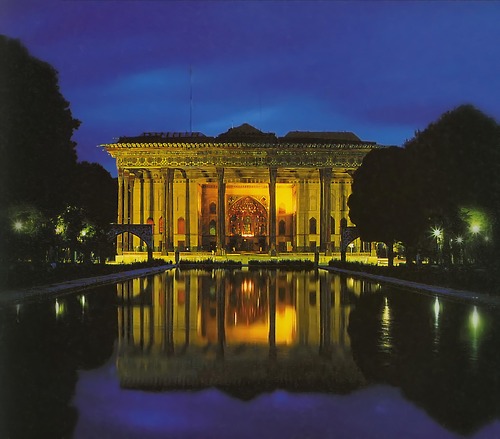
Chehel Sotoun in Isfahan, Iran

The name, meaning “Forty Columns” in Persian, was inspired by the twenty slender wooden columns supporting the entrance pavilion, which, when reflected in the waters of the fountain, are said to appear to be forty.

As with Ali Qapu, the palace contains many frescoes and paintings on ceramic. Many of the ceramic panels have been dispersed and are now in the possession of major museums in the west. They depict specific historical scenes. […] There are also less historical, but even more aesthetic compositions in the traditional miniature style which celebrate the joy of life and love.ImageSource: Wikipedia | Chehel Shotoun

Series: An American Couple in Iran

Audrey and Dan at Persepolis

Audrey spoke to IranWire about how the country defied all her expectations:

What was your overriding impression of the country and its people?
We felt very welcome in Iran and were impressed by the level of hospitality shown by ordinary Iranians that we met on the streets, in markets, anywhere. Additionally, the ancient sites, the architecture and the deep history. […]

Where did you visit during your trip to Iran?
We spent the first two weeks on a small group tour with G Adventures where we visited Tehran, Hamedan, Kermanshah, Ahvaz and Susa, Shiraz (and Persepolis), Yazd, Esfahan, Abyaneh and back to Tehran. Then we had a private guide for a week where we visited Rasht, Massouleh, Ardabil, Tabriz, Kandovan and the St. Stephanos Church near Jolfa. […]

When you continued your travels, and eventually went back to the U.S., what was the most commonly asked question about your time in Iran?
“Was it safe for you?” Many Americans only see Iranians when they appear on the news, and this is usually during demonstrations or political speeches. They don’t realize that there is a whole other Iranian world outside of this. So we would surprise American friends and family when we joked that Iran was the place that we felt most like rock stars because of the kindness and attention we felt. We told stories of being invited to tea by strangers or people buying us gifts. […]

What was your favorite place in Iran? Do you have one memory that stands out for you?
Our top three places: Shiraz: Beautiful mosques and sights, and we found the people to be incredibly friendly and warm; Persepolis: Impressed not only by the engravings and ruins, but also the history and multiculturalism of the Persian Empire that we learned about while there; Northwestern Iran, especially Tabriz and the Armenian Monastery.

Continue to read the full article: IranWire | An American Couple in Iran

American athletes get star treatment in Iran: “USA, USA” chants for US athletes

“People look at me like I have two heads,” said James Ravannack, describing the reaction he gets when he explains to people what a fabulous time he had in Iran. Ravannack, president of USA Wrestling, told Al-Monitor that he “can’t wait to go back” and wants to take his family along to stay for a month. […]

For Americans, who tend to view Iran through the lens of the 1979 hostage crisis or President George W. Bush’s “axis of evil” speech, going to Iran and actually meeting its people can be mind-blowing.

Robby Smith, 27, the number one US heavyweight Greco-Roman wrestler, told Al-Monitor that the reception he got from Iranian fans was “the most incredible I’ve ever experienced.” […]

The Iranians kept chanting, “ ‘R. Smith’ and ‘USA, USA!’ ” Smith said. The same thing happened after he came from behind against an Armenian wrestler and when he returned, in plain clothes, toward the end of the event. “Thousands of Iranians chanting ‘USA!’” […] Fraser, who estimates that he has visited 50 countries in 19 years with USA Wrestling, said, “Iran was, if not the top, then at the top” of all of them. He added, “[Iranians] are some of the nicest people I’ve ever met. They treated us like royalty.” […]

This reporter was present in 1998 when US wrestlers returned to Iran for the first time since the 1979 revolution. The US flag was displayed in Tehran’s Azadi stadium — not burned as usual in an anti-American demonstration — and Iranian fans cheered as much or more for the Americans as they did for their own team. […]

A unique feature of the recent trip to Iran by the US wrestlers is that their current team leader — a Minneapolis wrestling enthusiast named Christina “Kiki” Kelley — is a woman. […] Kelley, who like the other members of the US delegation, had expected a grim, strict Islamic state, came prepared with ultra-conservative black clothes — which elicited giggles, she said, from many Iranians. Asked to participate in the opening ceremonies for the competition, she changed into red, white and blue.

“I kept my head bowed until we were two-thirds of the way around, when I realized that men were standing and that they were not booing, they were cheering,” […]

Kelley was invited by her Iranian hosts to stay an extra six days, which gave her a chance to travel to Isfahan and to go to schools, an orphanage and numerous cultural sites, including a private art collection at the parliament in Tehran. She, like Ravannack, said she wants to go back with her family and is also considering becoming a sports and cultural ambassador to Iran if the US government decides to appoint one.

Source: Al-Monitor | US athletes get star treatment in Iran, Facebook | Steven H Fraser | Photos, Muftah | Iran and the United States Wrestle with Love

UNHCR Praises Iran for Supporting Foreign Refugees

Head of the United Nations High Commissioner for Refugees (UNHCR)‘s Office in Tehran Sivanka Dhanapala praised Iran’s performance in hosting and aiding foreign refugees, specially the Afghans. Dhanapala announced on Thursday that Iran has been successful in hosting the highest number of refugees in the world, and praised the country’s contribution to the promotion of refugees’ welfare and upgrading their educational level.

Afghan refugee boys in Iran (source: UNHCR)

Afghan refugee boys in Iran (source: UNHCR)

The literacy rate of the Afghan refugees that stood at six percent upon arrival in Iran, dramatically rose to 60 percent in 2013, he said, adding that this is an indication of Iran’s success in that regard.

“No host country can gain such an achievement,” Dhanapala said.

Praising Iran’s hospitality, he said, along with Lebanon and Pakistan, Iran has been the major refugee hosting country around the world.

Iran has been a generous host for more than 2 million Afghan refugees for two decades, with little help from the international community.

http://www.payvand.com/news/14/jun/1197.html

‘Hush! Girls Don’t Scream’ awarded Iranian movie

Hush! Girls Don’t Scream’ scoops awards in Los Angeles Filmfest

Iranian social drama Hush! Girls Don’t Scream has swept awards at the third Women’s Independent Film Festival in Los Angeles.

Directed by the leading Iranian woman filmmaker Pouran Derakhshandeh, the film swept two awards as well as an honorable mention of this year’s competition.

The film received the best screenplay award, while the best actress award went to the film’s star Tannaz Tabatabaei.

Derakhshandeh’s latest production also nabbed an honorable mention in the Narrative Feature Film Category of the event.

The film tells the story of abused children and ignorant families who do not make enough time in their day to listen and solve their children’s issue.

The movie received a great attention from the movie goers in Canada and the United States.

Oscar Academy had earlier requested a copy of screen script of Hush! Girls Don’t Scream during a letter signed by the center’s Script Librarian Gregory Walsh.

The film has been screened in numerous international competitions and garnered several awards such as Audience Special Award of the 2014 Irvine International Film Festival in the United States. 

Iran’s Khar Turan 2nd largest biosphere reserve in world

Khar Turan National Park, located southeast of the Iranian city of Shahrud, is believed to be the second largest biosphere reserve in the world. With an area of around 1.5 million hectares, it is the world’s second largest biosphere reserve after Africa’s Serengeti, says the park’s Chief Ranger Ali Akbar Ghorbanloo.

Shahrud’s Khar Turan, in the province of Semnan, is also home to the world’s last remaining Asiatic cheetah in captivity called Delbar (meaning enchanting in Persian).


Photos: A Lone Persian Cheetah at Turan National Park

The area has one of the richest diversities in terms of mammal species in the country, and has the largest population of onager in Iran as well as a good number of the two species of gazelles, wild sheep and wild goat, which ensure cheetah survival.

Series: Iranian Food – Kashke Bademjan

Kashke Bademjan

At an Iranian meal, you don’t look for the bread and butter. You look for the bread and eggplant. With fried onions, eggplant, and herbs, this creamy spread beats butter any day.

http://www.buzzfeed.com/tyanat/20-persian-foods-to-blow-your-taste-buds-away-nzgf

Iranian teams shine at International Robo Cup 2014 in Brazil

RoboCup Rescue – Simulation League
– Virtual Robot Competition
1st place: MRL, Qazvin Azad

– Agent Competition
1st place: S.O.S, AmirkabirUniversity
2nd place: MRL, Qazvin Azad

RoboCup Rescue – Robot League
2nd place: MRLQIAU, Qazvin Azad
Best-in-Class Small UAV:   YRA, Islamic Azad University of Yazd
Best-In-Class Mobility: MRL, Qazvin Azad
Best-In-Class Manipulation: YRA, Islamic Azad University of Yazd

RoboCup Soccer Humanoid League
– TeenSize Competition
1st place: Baset TeenSize, Baset

– KidSize Competition
3rd place: Baset KidSize, Baset

Source: RoboCup 2014

TripAdvisor grants Certificate of Excellence to tomb of Persian Poet Hafez in Shiraz, Iran

TripAdvisor, a U.S. travel website that provides directory information and reviews of travel-related content, has granted a Certificate of Excellence to the tomb of Hafez in the southern Iranian city of Shiraz, Fars Province.


Tomb of Persian poet Hafez in Shiraz, Iran
(photo by Amir Hussain Zolfaghary)

Hafez was a Persian mystic and poet. He was born sometime between the years 1310 and 1337 in Shiraz, Medieval Persia. John Payne, who has translated the Diwan Hafez, regards Hafez as the greatest poet of the world. His lyrical poems, known as ghazals, are noted for their beauty and bring to fruition the love, mysticism, and early Sufi themes that had long pervaded Persian poetry. Moreover, his poetry possessed elements of modern surrealism.

The official document is awarded to the historical site for its beautiful architecture, its impressive atmosphere and the good behavior of the staff, the director of the Fars Cultural Heritage, Handicrafts, and Tourism Department said in a press release on Friday.

Mosayyeb Amiri added that a poll conducted by the website introduces Hafezieh (tomb of Hafez) as one of the top historical sites in the world.

http://www.payvand.com/news/14/jul/1072.html

Series: Iranian Food – Shole Zard

Shole Zard

Almonds, pistachios, saffron, rosewater, and cinnamon — not what you normally expect in rice pudding. But you can’t have Persian rice pudding without a few extra ingredients!

http://www.buzzfeed.com/tyanat/20-persian-foods-to-blow-your-taste-buds-away-nzgf

Traditional Ice house in Abarqu, in central Iran

Ice House in Abarqu, Iran

Ice House in Abarqu, Iran

ABARQU, IRAN – MAY 30: A tourist approaches a traditional ice house May 30, 2014 in Abarqu, in central Iran.

Other interesting photos: https://theotheriran.com/tag/photos/

Futsal: Iran takes 4th spot at World University Fustal Championship

Opening ceremony of the futsal competitions

Bronze Medal Match

The match for the bronze medal opposed Iran and Belarus. It was a beautiful game with two very talented teams. At the end of regulation time, the teams were still back-to-back (3-3) and so it was the ruthless shoot on goal that would separate the two teams. After a long series of penalty kicks on goal, it is ultimately the 10th player from Belarus who succeeded his shot on goal collecting at the same time the bronze medal for his country.

(Source: David Vandenplas, FISU Media)
http://www.fisu.net/en/14th-WUC-Futsal-Russia-beats-Brazil-in-Men-s-Final-3133.html?mbID=5943

More: http://www.payvand.com/news/14/jul/1132.html

Series: Iranian Food – Zereshk Polo

Zereshk Polo

If you’re a “dessert before dinner” kind of person, you’ll love this dish. A sweet mix of rose water, barberries, and rice, with savory chicken to balance everything out.

http://www.buzzfeed.com/tyanat/20-persian-foods-to-blow-your-taste-buds-away-nzgf

Iran crowned Asian Basketball champion

http://www.tehrantimes.com/component/content/article/117131

Volleyball: Iran one of the worlds best 4 Volleyball teams

Iran’s volleyball team has advanced to the semifinals of the 2014 FIVB World League after beating nine-time world champion Brazil.

The Iranian team defeated Brazil 3-1 (25-22, 25-19, 23-25, 28-26) in a match in the Italian city of Florence on Friday, progressing to the semifinals of the event for the first time in its history.


http://www.payvand.com/news/14/jul/1114.html


Video: “The daily show” by Jon Stewart in Iran – yes Iran

Forugh Farrokhzad – awarded and influential female Iranian poet and film director

socialinform's avatarRemarkable people with Iranian roots

Foroogh.gif

Forugh Farrokhzad (Persian: فروغ فرخزاد‎;January 5, 1935 — February 13, 1967) was an Iranian poet and film director. Forugh Farrokhzad is arguably one of Iran’s most influential female poets of the twentieth century. She was a controversial modernist poet and an iconoclast
in 1962 she made a documentary film titled The House is Black won several international awards.
Translations of
Farrokhzad’s works:
Sholeh Wolpe edited the collection titled Sin: Selected poems of Forugh Farrokhzad, (Fayetteville [Arkansas]: University of Arkansas Press, 2007). ISBN 1-55728-861-5
Hasan Javadi and Susan Sallee translated Another Birth:Selected Poems of Forugh Farrokhzad with her letters and interviews in 1981.Jascha Kessler with Amin Banani, “Bride of Acacias: Selected Poems of Forugh Farrokhzad” (Caravan Books, Delmar, N.Y., 1982) ISBN 0-88206-050-3Farzaneh Milani, Veils and words: the emerging voices of Iranian women writers (Syracuse University Press, Syracuse, N.Y., 1992). ISBN 0-8156-2557-X, ISBN 978-1-85043-574-7.A Rebirth: Poems

View original post 46 more words

Ahmad Shamloo – awarded Iranian poet, writer and journalist

https://i0.wp.com/i1.ytimg.com/vi/_c9Fa-8F_wA/hqdefault.jpg
Ahmad Shamloo (Persian: احمد شاملو‎, also known under his pen name A. Bamdad (December 12, 1925 – July 24, 2000) was a Persian poet, writer, and journalist. Shamlou was arguably the most influential poet of modern Iran. His initial poetry was influenced by and in the tradition of Nima Youshij.
Shamlou has translated extensively from French to Persian and his own works are also translated into a number of languages.
His thirteen-volume Ketab-e Koucheh (The Book of Alley) is a major contribution in understanding the Iranian folklore beliefs and language. He also wrote fiction and Screenplays, contributing to children’s literature, and journalism.
Some of his books
  • The Forgotten Songs (1947)
  • Poems of Iron and Feelings (1953)
  • Blossoming in the Mist (1970)

Awards

  • Forooghe Farrokhzad Prize, 1973
  • Freedom of Expression Award given by Human Rights Watch, 1990
  • Stig Dagerman Prize, 1999
  • Free Word Award given by Poets of All Nations in Netherlands, 2000

Series: Iranian Food – Ash Reshte

Ash Reshte

You don’t know soup ‘til you’ve tried it Persian style. Fried onions, noodles, beans, and a milky topping of kashk.

http://www.buzzfeed.com/tyanat/20-persian-foods-to-blow-your-taste-buds-away-nzgf

Book from Female German Iran traveller Helena Henneken – THEY WOULD ROCK

Have you ever stood on the “axis of evil?”
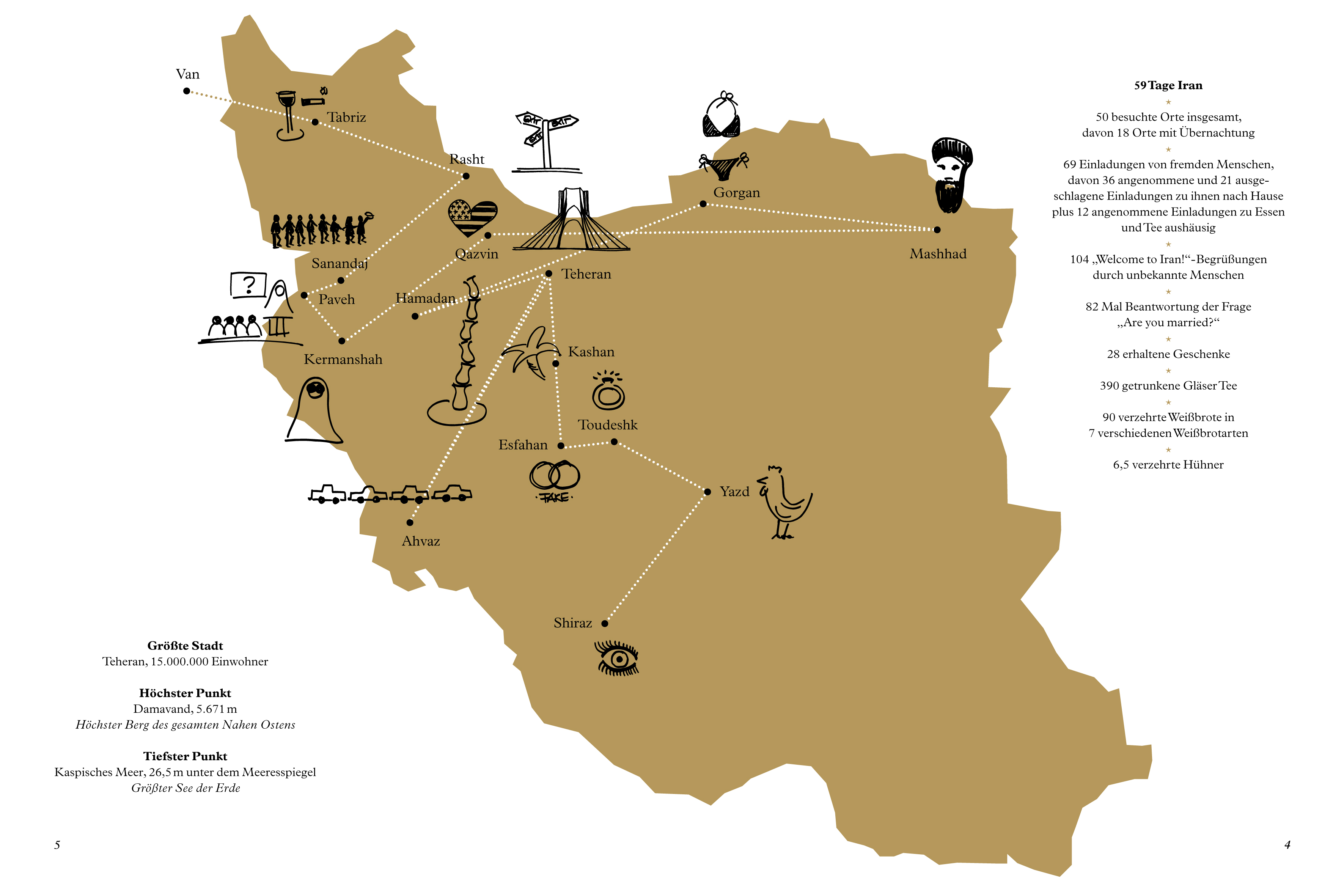
Taken a look around? And met people who live there? This book invites you to do so! A journey, 59 days in Iran. A woman with her backpack, cross-country.
Unexpected experiences, impressions, discoveries

People, who tell “we are terrorists”-jokes – and spontaneously invite foreigners to stay with their families. People who seek an exchange with the world – even though they often disappear behind their country’s image.

“If my people lived in another country, they would rock!” – that’s how a 16-year-old Iranian pictures the situation. Just one of several encounters: Helena Henneken has written a love-rock-song about the people she met in Iran.

A colourful insight into the world behind the scarf. And a book that starts “from the back” – the Persian way around.


they would rock - 59 Tage Iran

More about the book: www.theywouldrock.com
Design: Frizzi Kurkhaus
Publishing house: GUDBERG
ISBN: 978-3-943061-36-9

http://www.helenahenneken.com/?page_id=806