Category Archives: People & Society

A possible revival of Tehran’s and Iran’s National Symphony Orchestras

Image

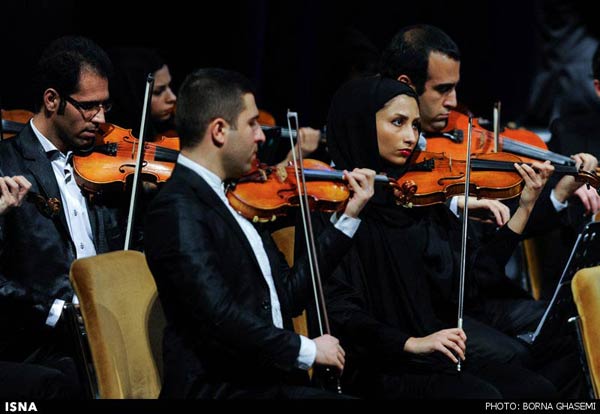
WASHINGTON — Alexander Rahbari fondly recalls his last stint conducting the Tehran Symphony Orchestra. It was the fall of 2005, Beethoven’s Ninth Symphony was on the card, and the Iranian capital’s Vahdat Hall was packed.

“I conducted Beethoven’s Ninth in Tehran for seven nights. If I said I conducted the Ninth for seven nights in New York or Austria, I would be asked if there was anyone in the audience — after two nights the hall would be empty,” Rahbari said.

“But [in Tehran] it was full — so many people came. Later some newspapers complained that, after returning to Iran after so many years, I conducted the symphony for only seven nights.” […]

In 2012, the funding problems that Rahbari and his successors complained about silenced the Tehran Symphony Orchestra, whose roots dating back to the 1930s made it one of the oldest in the Middle East.

Meanwhile, Iran’s National Orchestra, founded by Iranian-born composer and conductor Farhad Fakhreddini in 1998, suffered similar difficulties. Fakhreddini himself resigned in 1999, and the orchestra that performed only classical Iranian music dissolved in October 2012. […]

The election of President Hassan Rohani in 2013 has provided a glimmer of hope for the country’s orchestra scene, however.

“I’m very sorry that the [Tehran] Symphony Orchestra and the National Orchestra have been shut down,” Rohani said in a January 8 speech to artists and cultural figures. “This government will revive them in the coming months.” […]

Iran’s culture minister, Ali Jannati, added to the optimism when he said at the Fajr International Music Festival last week that the government aims to strengthen Music.
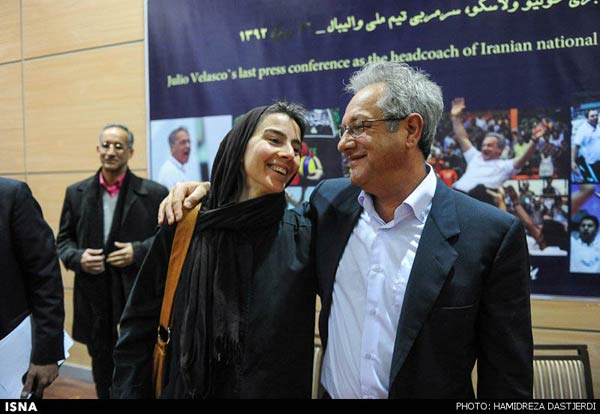
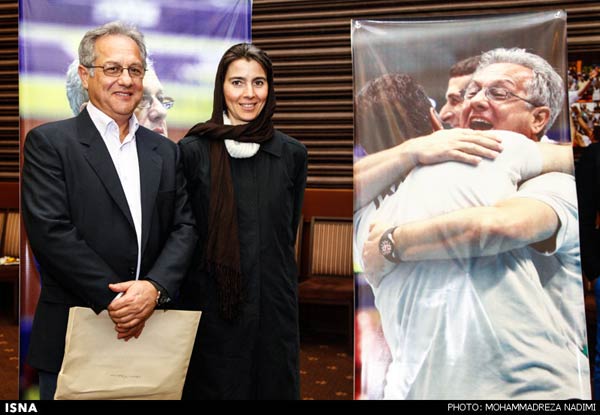
Argentinian volleyball coach Julio Velasco: “Iran will always be in my heart”

Image
Image Image Image

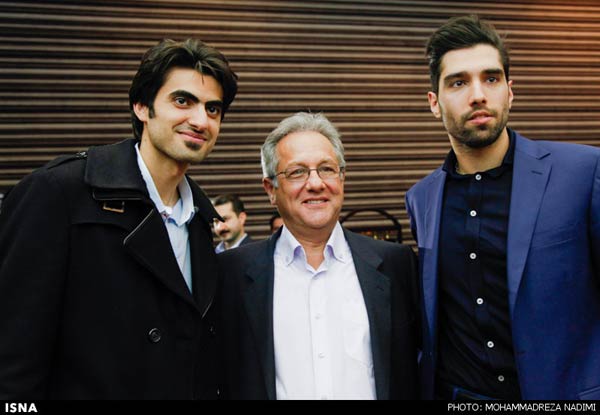
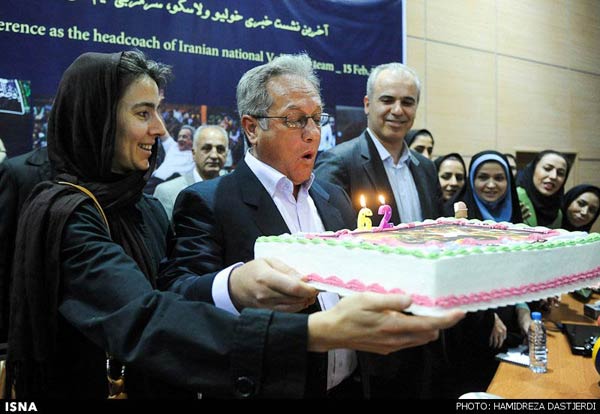
Velasco, who was appointed as Iran volleyball coach in 2011, will leave the team to lead his homeland team after Argentine President Cristina Fernandez de Kirchner asked him to take charge of the team.

“Iranian volleyball players inspired me to do more. They have the bright futures and I have to say they still have so many things to say,” he said.


More pictures:

http://www.payvand.com/news/14/feb/1106.html

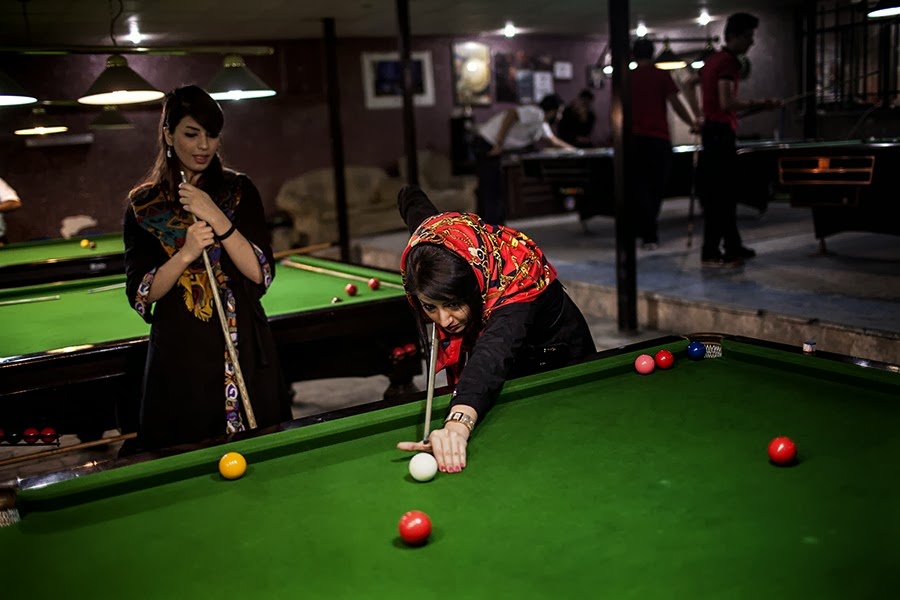
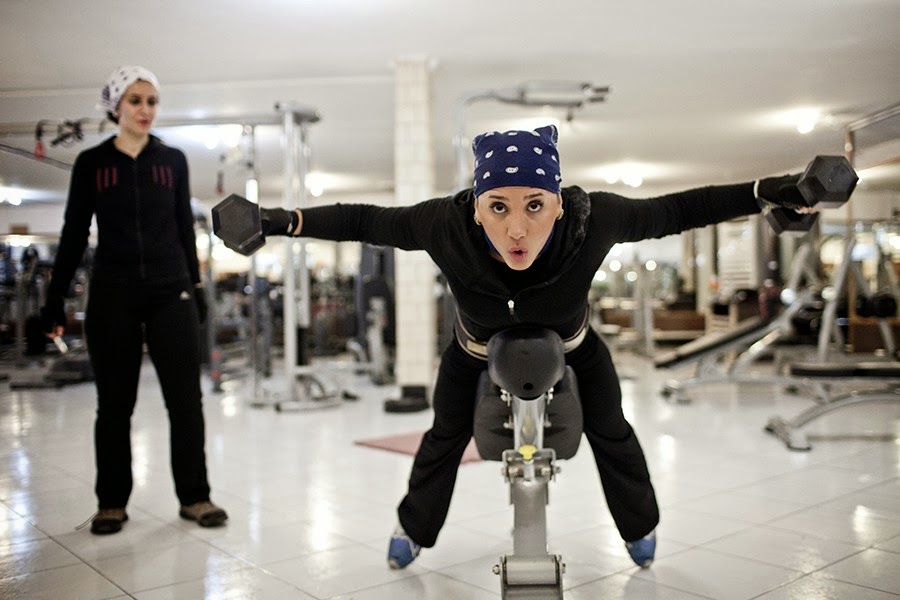
Another view on Iran (where according to Netanyahu you cannot wear Jeans)

http://imgur.com/gallery/VMAvt

vbvMfaX ctHJmMA drn7E80 mgDFxgA

The Iran Job – The story of an American basketball player in Iran

The Iran Job was shortlisted for the German Film Award and will therefore screen at the Berlinale – Feb 13 at 2pm at Zoo Palast 2 – followed by a Q&A.

Source: The Iran Job | E-Mail Campaign

Salome MC – Iran’s first female rapper

Salome Mc (Persian: سالومه, born 1985), is a female rap artist from Iran.[1]

Being questioned about being a female rapper in Iran, she mentioned in several interviews that she wouldn’t say she faced many chal­lenges just because she was a female. “I might be the first female rap­per to ever step in a stu­dio in Iran, yes, but from peo­ple around me I mostly got courage after they got over the sur­prise. The other chal­lenges that you might guess was there for my male coun­ter­parts too. Of course you get a cer­tain amount of sexist com­ments from lack of com­mon sense or edu­ca­tion, but that is a global prob­lem. “[5]

female iranian rapper

female iranian rapper

http://en.wikipedia.org/wiki/Salome_MC

What Iranians Say Now About the US

“The reactions I received as an American traveling for 10 days in Tehran, Isfahan and Qum mirrored Iran’s politics and posture in this moment — there is a serious, even eager, interest in reconnecting with the West, even as Iranians struggle with three decades of poisoned relations. […]

One important voice in advancing that transformation is Grand Ayatollah Youssef Saanei. […] He endorsed the nuclear deal and said that, “today the people in power in Iran and the people in power in the United States should forgive each other, should forget the past and start the friendship.”

Source: The New York Times | What Iranians Say Now About ‘the Great Satan’ by Carol Giacomo

Professor Parvaneh Vosough: “Iran’s Mother Theresa”

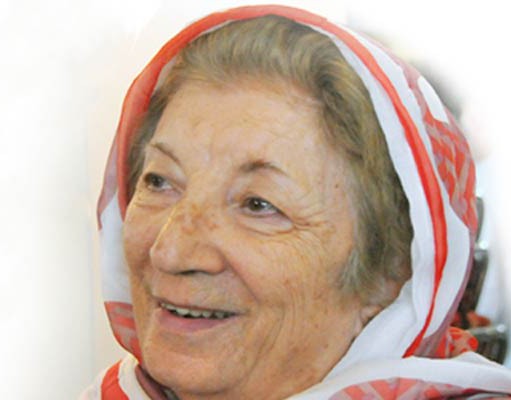
Parvaneh-VosoughProfessor Parvaneh Vosough was born in 1935 in Tafresh, central Iran. She received her MD in general medicine in 1963 in Tehran University of Medical Science. She completed her specialty and sub-specialty in Cambridge, Massachusetts, and Illinois Universities, and she attended Washington University for her graduate course. In 1971 she returned to Iran and practiced her profession in Ali Asghar Hospital in Tehran.

Her colleagues say that many times, she had been proposed residence of US and European countries for research and lucrative income, but that she had chosen providing free service to her country’s cancer-suffering children.

In the course of her medical services, Professor Vosough treated many cancer-suffering children around the world, giving them health, and she had never married. Perhaps for this reason, she was called ‘Iran’s Mother Theresa’ by some people.

Source: Payvand News | Prof. Parvaneh Vosough, angel of Iran’s Cancer Children, passes away

Iran: Females outperform males in university entrance exams

The university entrance exam, known as the konkour, is a standardized test used as one of the means to gain admission to higher education in Iran.

Of the 36 with the highest scores, 19 are females and 17 are males. Most of them are from Tehran.

1,286,813 students took this year’s university entrance exam, 773,653 of whom (about 60%) were females and 513,160 were males.

Source:
http://www.payvand.com/news/10/aug/1008.html

Photos: 26th International Film Festival for Children and Young Adults in Isfahan

Filmmakers from 40 countries have participated in the festival and 200 movies are scheduled to go on screen at Farshchian, Qods, Sahel, Sepahan, Honar and several other theaters in Isfahan during the event.

A jury composed of 60 children helped the main jury for the national competition section.

The photos can be viewed here:
http://www.payvand.com/news/12/oct/1090.html

Iranian charity provides medical care to refugee children

[…] Fortunately, UNHCR and MAHAK have worked for more than 10 years in a fruitful collaboration to provide assistance to cancer-stricken refugee children. MAHAK is a non-profit, non-political, and non-governmental charity focused on treating children with cancer. It uses the most up-to-date diagnostic, treatment and prevention methods, with both outpatient and in-patient services. It provides chemotherapy, medication, lab tests, radiation therapy, CT scan, transportation and family counseling – all without regard to religion, race or nationality of patients. MAHAK is supported by fundraising and humanitarian assistance in the form of money, goods, services and technical expertise. Under the joint UNHCR-MAHAK project for 2013, a total of 76 Afghan and Iraqi refugee children under the age of 15 who suffer from cancer will be provided with medical treatment. Under this project, the accompanying parent is also provided with counseling, accommodation and food when needed because they reside outside Tehran and face difficult economic conditions. Iran has generously hosted the second largest refugee population in the world for over three decades — currently more than 880,000 refugees, some 40,000 from Iraq and the rest from Afghanistan. The government of Iran has always provided its refugees with access to the main areas of education, livelihood and health, some of which can be life-saving. MAHAK takes every opportunity to cheer up the children. Javad Nekoonam, a famous Iranian football player, recently joined them for a short game. The staff of MAHAK convey their own hope, enthusiasm and energy to the children. Some are volunteers, families of patients who have themselves survived cancer, and strong believers in what can be achieved. Many refugee families had stories like that of Ali, all grateful for the economic and psychological help the UNHCR-MAHAK agreement has brought to their lives. There were children from 2- to 17-years-old struggling with leukemia, Hodgkin’s disease, cancerous tumors and undergoing chemotherapy and radiotherapy. About Mahak: About two decades ago a mother who had experienced having a child with cancer and had witnessed first hand the difficulties faced by her child, pledged to set up a center that would act as a refuge for children and their families in a similar situation. With the assistance of the same friends and relatives who had helped her through her own ordeal, a board of trustees was selected and MAHAK Society to Support Children suffering from Cancer was set up as a non profit, non-governmental organization and was registered under number 6567 in 1991. MAHAK has been active from that day on in helping children with cancer and their families. Sources: http://www.unhcr.org/520b65139.html http://www.payvand.com/news/13/aug/1133.html

The American behind Iran’s World Cup qualification

Read the complete article here:
http://edition.cnn.com/2013/10/31/sport/football/iran-2014-world-cup-football/

Some excerpts:

[…]

“When we first arrived, we didn’t know how to behave and how to react,” he said.

During his first few months Gaspar didn’t socialize much and rarely left his apartment, except for trips to football practice.

But Gaspar says he steadily started feeling comfortable.

He says he learned his impressions of Iran, created mostly by the media, didn’t quite match reality.

[…]

“When you listen to the news and you read the news, you see things. Sometimes during commercials I step off my couch and look out of the balcony and it’s not what I am seeing, it’s not what I am reading, it’s not what I am hearing.”

Gaspar says what he has observed during his stay in Iran is a nation full of generous people who love their country, their food and their football team.

[…]

But the highlight of Gaspar’s Iranian adventure came on the night of June 18, when Iran’s national football team recorded a 1-0 win over South Korea to qualify for the World Cup for only the fourth time.

The win sparked frenzied celebrations on the field and in the streets of Tehran.

“There were a lot of tears, a lot of hugging. You can’t describe it.”

[…]

“If I would’ve listened to the experts, and my friends, and family, I would have never been here in Iran. It’s been part of my life for three years and the memories will last a lifetime.”